On the morning of December 21, 1946, the heavy cruiser Prinz Eugen, anchored in Kwajalein Lagoon, settled noticeably by the stern and began to list. Water continued entering compartments below the waterline. Only the day before, the huge ship had appeared stable enough to remain at anchor alongside other survivors of the atomic tests. Now she needed saving.
The vessel best equipped for the job was absent. The salvage ship Conserver had left early that morning to assist another vessel, taking with her the specialists, equipment, and towing power normally relied upon in such emergencies. Small tugs and limited resources remained.
Five months earlier, Prinz Eugen had survived two nuclear explosions at Bikini Atoll. Now water was slowly accomplishing what the bombs had not.
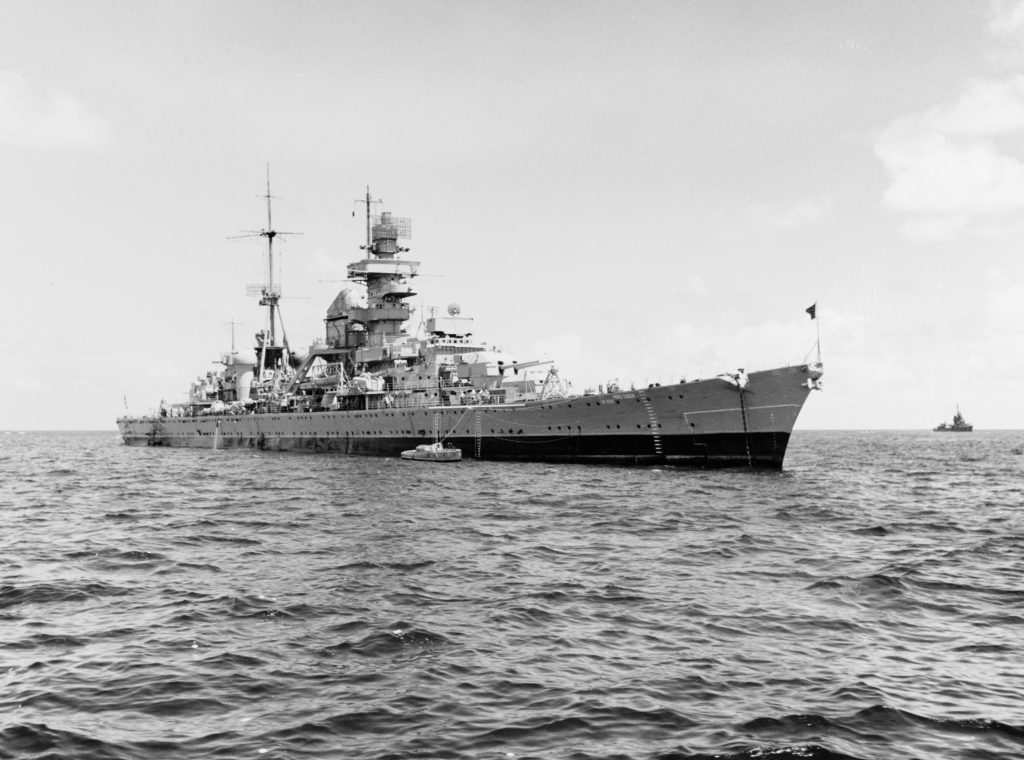
The Ship That Kept Coming Back
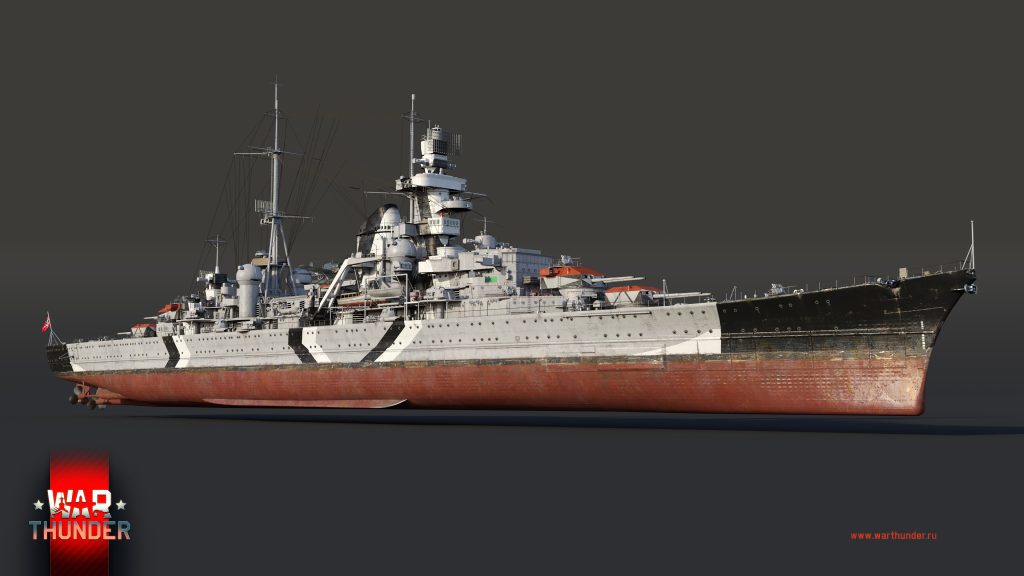
In May 1941, the cruiser sailed into the Atlantic alongside Bismarck. On the morning of May 24, the German ships encountered the British warships Hood and Prince of Wales in the Denmark Strait. Prinz Eugen’s shells started a fire aboard Hood; a subsequent hit from Bismarck triggered a catastrophic magazine explosion. Only three men survived the British battlecruiser’s destruction.
The German ships later separated. Bismarck was sunk by the British forces pursuing her, while Prinz Eugen reached Brest. Machinery problems had prevented the cruiser from continuing an independent hunt for merchant shipping. The French port proved an unreliable refuge, too: on July 2, a British bomb inflicted serious damage and killed dozens of sailors.
In February 1942, she took part in the Channel Dash alongside Scharnhorst and Gneisenau. Both battleships struck mines, but Prinz Eugen reached German waters undamaged. That reprieve was brief: on February 23, a torpedo from the British submarine Trident wrecked her stern. The cruiser was kept afloat and eventually repaired.
The following years were spent mainly in the Baltic. Prinz Eugen served as a training ship, provided naval gunfire support for ground forces, and in October 1944 severely damaged the light cruiser Leipzig by ramming her broadside. Germany’s surrender found her in Copenhagen. Battles, bombing raids, a torpedo, and a collision lay behind her. Her strangest assignment was still ahead.
A German Target for an American Bomb
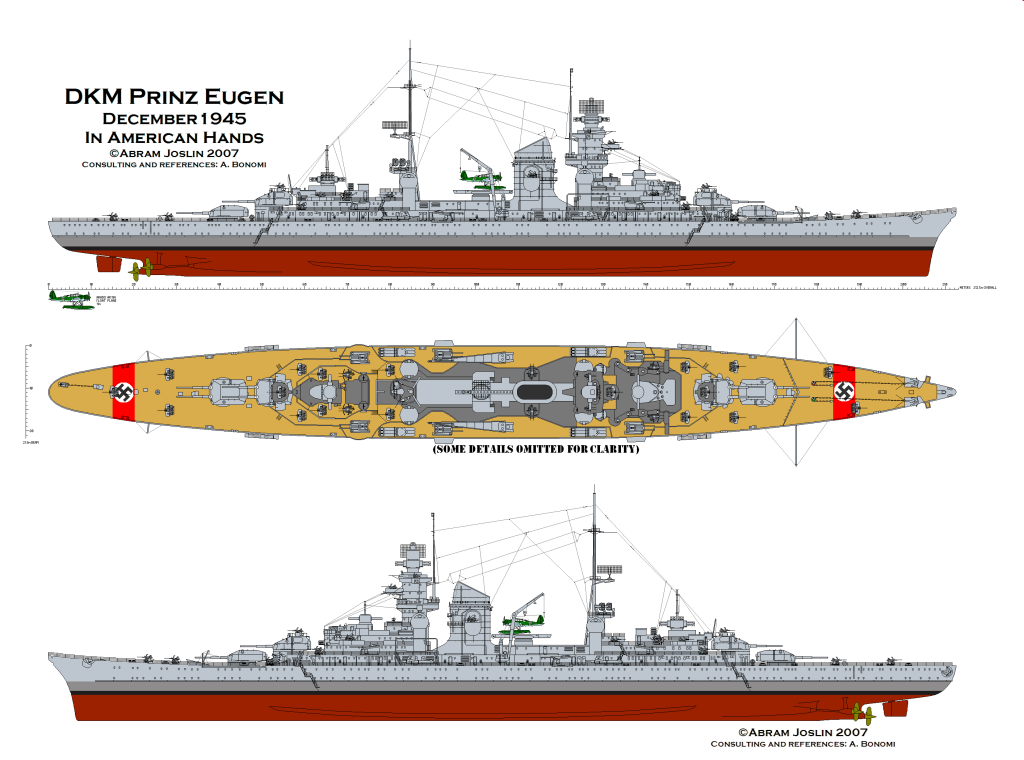
Under the division of Germany’s surviving fleet, the cruiser went to the United States. She retained her name in American service and received the designation IX-300. In early 1946, she crossed the Atlantic before passing through the Panama Canal into the Pacific.
A target fleet was assembling at Bikini for Operation Crossroads. American battleships and aircraft carriers, the Japanese battleship Nagato, and the former German cruiser were among the vessels gathered there. Military planners wanted to see what atomic weapons would do to ships, their equipment, and their armament.
The first explosion, Able, took place on July 1, 1946, when a bomb was dropped from an aircraft. The second, Baker, was detonated underwater on July 25. An enormous column of water rose above the lagoon, showering nearby ships with radioactive spray.
Prinz Eugen remained afloat after both tests. She had, however, been positioned some distance from the detonation points, and the survival of her hull represented only part of the outcome. After Baker, contamination severely restricted personnel returning aboard the ships. Work on the surviving targets became an experiment of its own: how to inspect, maintain, and clean vessels that were now hazardous to approach.
A memorandum written by Colonel A. W. Betts on August 6 illustrates the difficulty. He reported that workers aboard two other target ships, New York and Pensacola, could spend no more than half an hour below decks. An initial washing substantially reduced contamination, but subsequent attempts produced far smaller improvements. Thorough cleaning required people who could spend considerable time working aboard—the very thing conditions restricted.
A Fleet That Was Going Nowhere
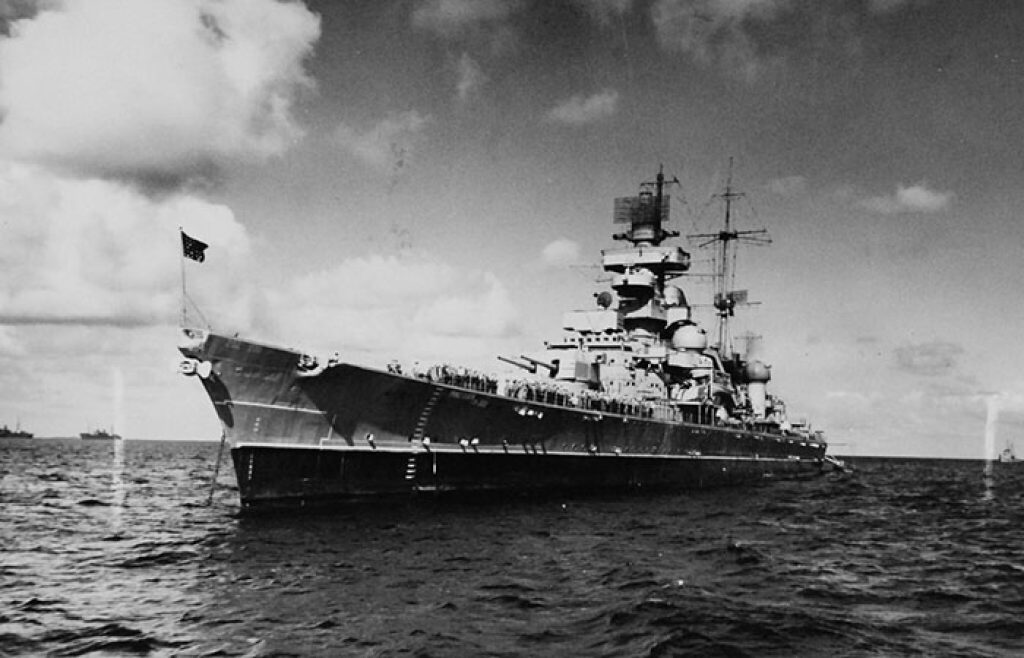
After the tests, Prinz Eugen was towed to Kwajalein. Dozens of contaminated ships gathered at anchor there. From the air, they might have looked like an impressive naval force, but their ultimate fate remained undecided.
Boarding parties removed ammunition and checked the hulls. Visits to contaminated vessels required protective clothing and radiological monitoring. Going below decks involved additional restrictions.
Prinz Eugen retained the distinctive silhouette of a heavy cruiser, but the organization that had once kept her operational was gone. During the war, flooding had meant an alarm, a trained crew responding, and immediate damage-control efforts. Now she was a contaminated target ship at anchor, dependent on shore services.
By the time her list became noticeable on December 21, the opportunity for an unhurried inspection was slipping away.
The Final Attempt
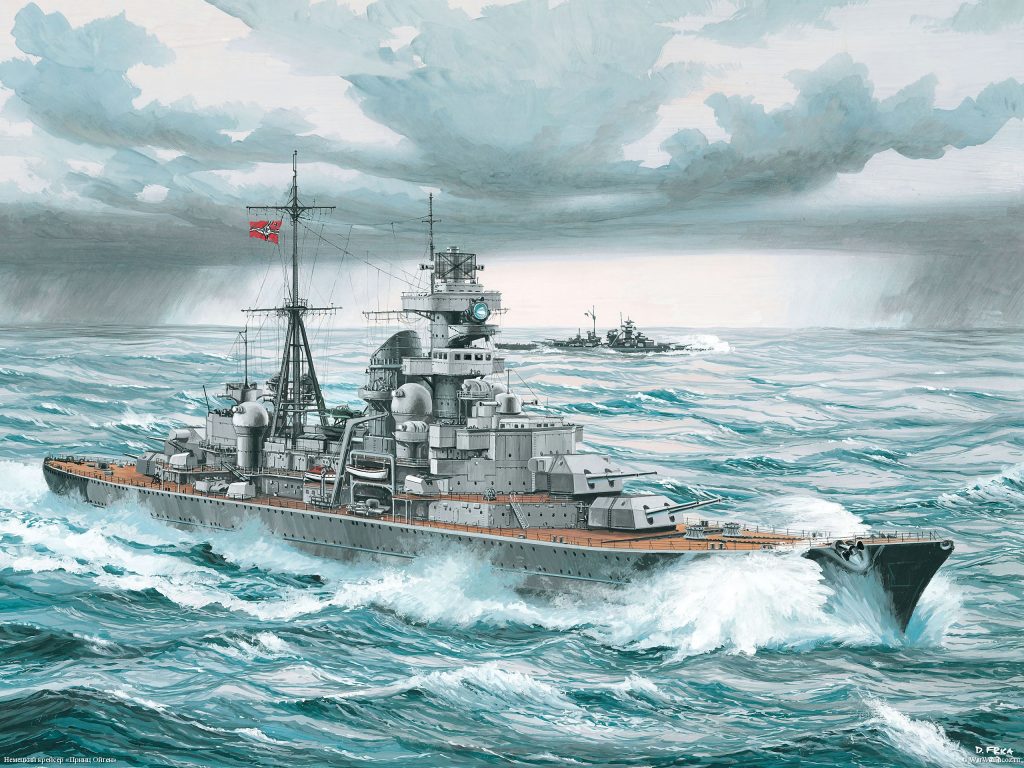
Available craft and additional pumps were sent to help. Inspection revealed extensive flooding. According to Dickey’s account, the salvage party did not descend below the third deck; concern about radioactive contamination was among the reasons. Meanwhile, the list had brought the lower row of portholes to the water’s surface, opening further routes for flooding. The pumps could not keep up.
Commodore George Seitz, commanding the forces at the atoll, decided to beach the cruiser. They needed to bring her ashore while she could still be towed. The plan was to drive her bow onto a coral shelf off Enubuj Island and prevent the hull from settling farther.
The wind intervened. The small tugs could not hold the heavy cruiser in position: she swung broadside to the shore and grounded on the coral ledge. Water continued entering, and the list increased. On December 22, 1946, Prinz Eugen capsized.
A suspected failure of a large sea valve featured in the subsequent explanation of the accident. The original source of the flooding was never conclusively established. The cruiser that had repeatedly been returned to service after severe damage ended her career upside down in the shallow waters of a Pacific lagoon.
Part of her stern, her propellers, and a rudder remained above the surface.