One of the wounded soldiers spent two days at his position. A severe leg injury prevented him from walking approximately 20 kilometres on his own, while sending a conventional evacuation team to retrieve him was considered too dangerous. A ground vehicle could not reach the area either: difficult terrain, water obstacles, and the constant threat posed by FPV drones blocked the route.
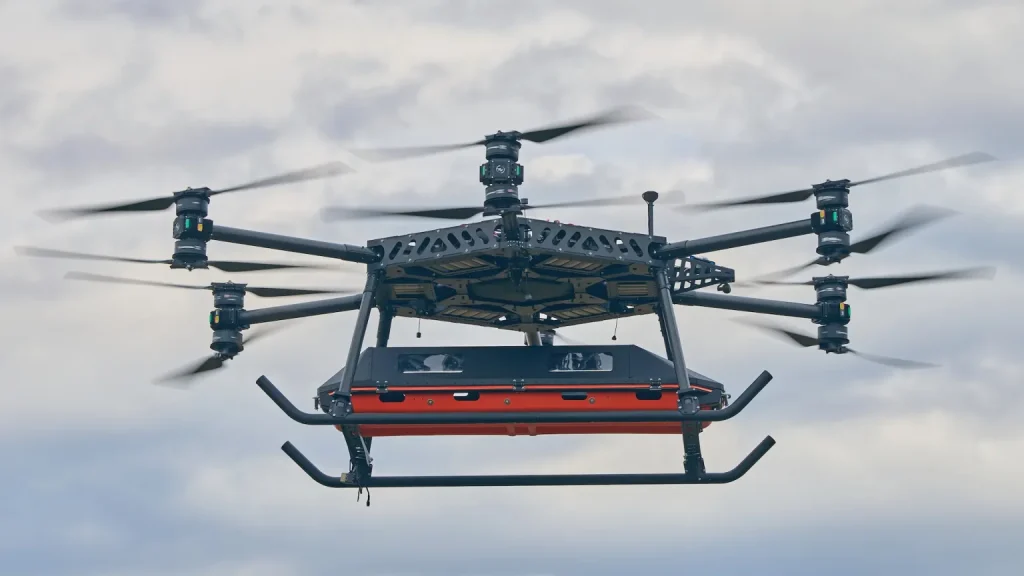
Instead of an ambulance, a six-rotor StarGate drone came for the wounded serviceman. It landed in a field, the man climbed into an enclosed transport capsule, and the aircraft carried him to a safer location. According to the Associated Press, the return flight took less than 15 minutes.
Over the course of one week, Ukraine’s 475th Separate Assault Regiment, known as CODE 9.2, reported completing two such evacuations. If further operational use confirms these results, StarGate could become the first purpose-built aerial drone to be regularly used for retrieving wounded personnel from the most dangerous parts of the conflict zone.
Why Conventional Evacuation No Longer Works Everywhere
The traditional evacuation procedure appears straightforward: an ambulance or a team of soldiers moves toward the casualty, provides first aid, and transports the wounded person to a medical facility. On some sections of the contact line, however, travelling even a few kilometres has become an operation in itself.
Vehicles are easily detected from the air, roads are under constant observation, and teams moving on foot may have to cross exposed terrain for long periods. Mines, damaged bridges, shell craters, mud, and water obstacles create additional difficulties. Even unmanned ground vehicles used for logistics and casualty evacuation can become stuck or fail to bypass a destroyed section of road.
According to representatives of CODE 9.2, a ground robot may require two or three hours to reach a position, depending on the terrain and conditions. A heavy aerial drone can cover the same distance in minutes. This difference became the main reason for developing StarGate.
The idea reportedly came from the regiment’s commander, known by the callsign “Flint,” who approached Ukrainian company SkyFall and asked it to develop an aircraft specifically for casualty evacuation. Instead of simply attaching a stretcher to an existing cargo drone, the company created a separate platform designed to carry a person.
A Flying Stretcher the Weight of a Small Car
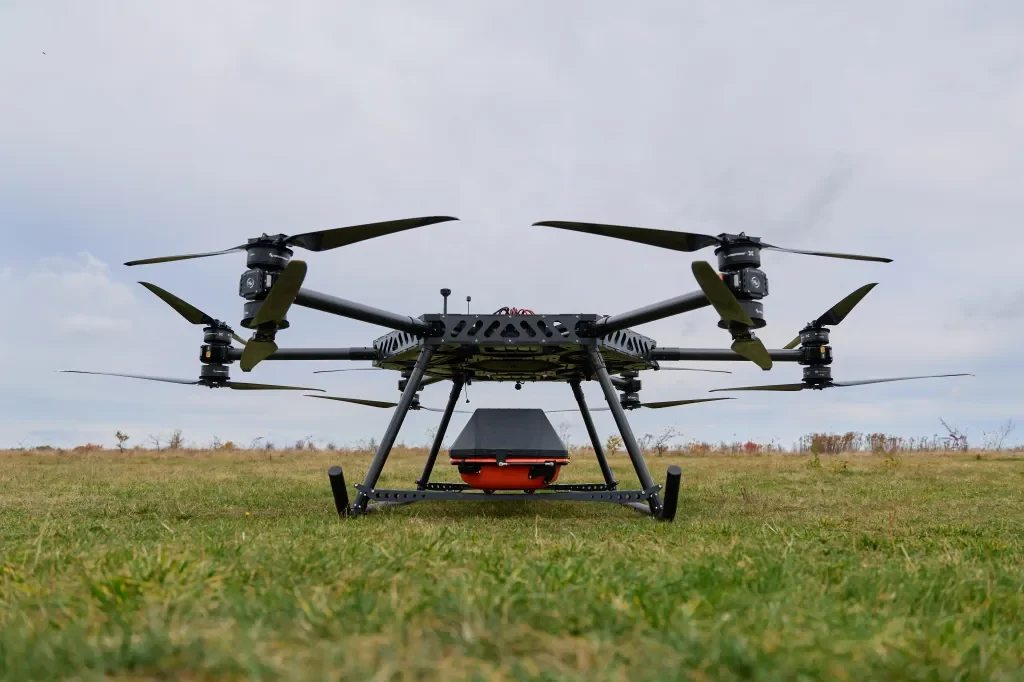
StarGate is a heavy hexacopter with six rotors mounted on detachable arms. An enclosed capsule built around a certified medical stretcher is suspended beneath the central fuselage. The casualty travels in a prone position and receives partial protection from wind, precipitation, and rotor wash. This is considerably safer than improvised systems in which a person is carried on an exposed stretcher or harness.
According to SkyFall, the drone can carry up to 150 kilograms, enough for a soldier wearing body armour and carrying equipment. Its cruising speed is approximately 65 km/h, while its maximum speed reaches 105 km/h. The manufacturer says the aircraft can be prepared for flight in about ten minutes. Thermal-imaging cameras support nighttime operations, and the drone is claimed to be capable of flying in rain and snow.
StarGate remains remotely controlled and should not be regarded as a fully autonomous aircraft. Some of its navigational functions are automated, however. The drone uses a Starlink satellite connection, SkyFall’s proprietary L-Link communications system, and software intended to maintain flight when satellite navigation is disrupted. If contact with the operator is completely lost, the manufacturer says the aircraft can independently calculate a route back to a safer area.
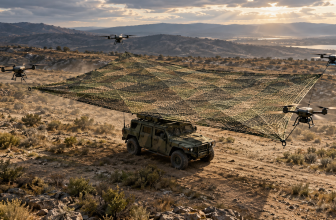
A deployable net is intended to protect the aircraft from other drones. During testing, the system intercepted an approaching small UAV. SkyFall has also claimed that StarGate can remain controllable after losing one of its six arms, although no independent operational data has yet confirmed its ability to withstand such damage under real conditions.
Two Evacuations and a Question About Range
According to CODE 9.2, StarGate was used to retrieve two servicemen with severe limb injuries. They were located in a so-called grey zone approximately five kilometres from the Russian border. Ground vehicles could not reach their positions, leaving aerial evacuation as the only acceptable option.
One of the missions reportedly took place under active electronic interference. The unit said that satellite navigation was disrupted, but the operators continued the flight with assistance from the aircraft’s automated navigation system. Other heavy drones supported the evacuation, while several units and SkyFall specialists participated in planning the operation.
This detail reveals how complex such a mission actually is. StarGate was not simply dispatched by pressing a button. Its operators had to determine a route, transport the aircraft to its launch point, maintain communications, monitor the surrounding airspace, and support the flight. In this respect, unmanned casualty evacuation still resembles a small aviation operation rather than an ordinary ambulance journey.
The reported range raises a separate question. During its initial demonstrations, the manufacturer stated that StarGate had a one-way range of approximately 15 kilometres. Representatives of the regiment later claimed that during one operational mission, the drone flew nearly 30 kilometres to the casualty and covered roughly the same distance on the return leg while carrying the wounded serviceman.
The discrepancy may reflect a different battery configuration or an altered flight profile, but no explanation has been published. The claimed 60-kilometre round trip should therefore be treated as a statement by the operating unit rather than an independently verified performance figure.
This Is Not an Unmanned Air Ambulance
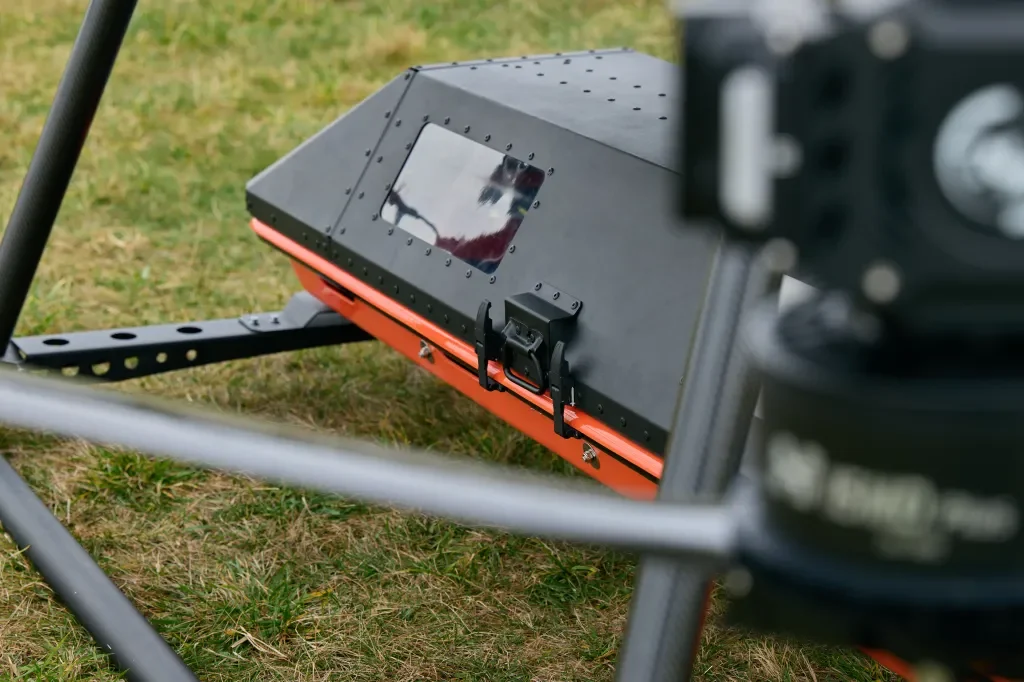
The enclosed capsule may resemble a small aerial ambulance, but StarGate’s capabilities are much more limited. No medic is carried onboard to stop bleeding, restore breathing, or monitor the patient’s condition. The drone performs a CASEVAC mission: it removes a casualty from a dangerous area using whatever transport is available, but it does not provide full medical care during the flight.
The wounded person must also be capable of entering the capsule independently or receive assistance from nearby personnel. If the casualty is unconscious, immobilised, or alone at the position, there may be nobody available to load them onto the stretcher. The aircraft can be detected by its noise, while gunfire, technical failure, or loss of control would endanger not only a drone costing at least $50,000 but also the person inside it.
Weather remains another serious limitation. The manufacturer claims the aircraft can operate in rain and snow, but strong winds are especially dangerous for a platform carrying a near-maximum payload. Its practical range will also depend on the casualty’s weight, temperature, battery condition, altitude, and the need to avoid particularly hazardous areas.
StarGate is therefore unlikely to replace ambulances, ground robots, or conventional evacuation teams. Its role lies between them: it is a last-mile solution for situations in which a casualty requires urgent assistance but reaching the position by land is impossible or considered too dangerous.
From a One-Off Rescue to a New System
Aerial drones had already been used to evacuate people in the conflict zone. Shortly before StarGate completed its first reported missions, a modified heavy hexacopter produced by Gurzuf Defence reportedly carried a wounded serviceman beneath the aircraft on an external suspension system. The operation demonstrated that aerial extraction was possible, but left the casualty exposed to wind and weather, while the swinging stretcher created additional risks.
StarGate represents the next step. Rather than being a modified strike or cargo drone, it is a purpose-built system with an enclosed capsule, redundant communications, and defensive equipment. Following the two reported evacuations, CODE 9.2 announced plans to establish a dedicated unmanned medical aviation element within its medical company. If implemented, trained operators would remain close to medical units, while the aircraft could be kept ready for immediate deployment.
Two missions are not enough to declare the technology proven. Its success rate, actual resistance to electronic interference, reliability under maximum payload, and losses during attempted evacuations remain unknown. SkyFall’s stated goal of producing as many as 1,000 StarGate drones per month is also highly ambitious and would require large-scale supplies of motors, batteries, communication systems, and medical capsules.
The basic concept, however, has already moved beyond the test range. In an area where a ground robot may need hours to reach a casualty and sending personnel would expose more people to danger, a heavy hexacopter can cover several kilometres in minutes. StarGate has not become a flying hospital, nor has it made casualty evacuation simple. It offers a possible solution for situations in which no suitable transport may previously have been available at all.