A General Doubted Military Balloons. Now the U.S. Army Is Sending Them on Missions

When John Rafferty first heard that the Army was considering high-altitude balloons for reconnaissance, the idea struck him as crazy. The military was discussing long-range weapons and new ways to detect targets — and among the proposals were balloons.
Several years later, the future head of U.S. Army Space and Missile Defense Command saw them operating during exercises in Morocco. He was impressed by their ability to remain in a designated area, conduct surveillance, and carry useful payloads. At AUSA 2026, the general described the technology as potentially game-changing.
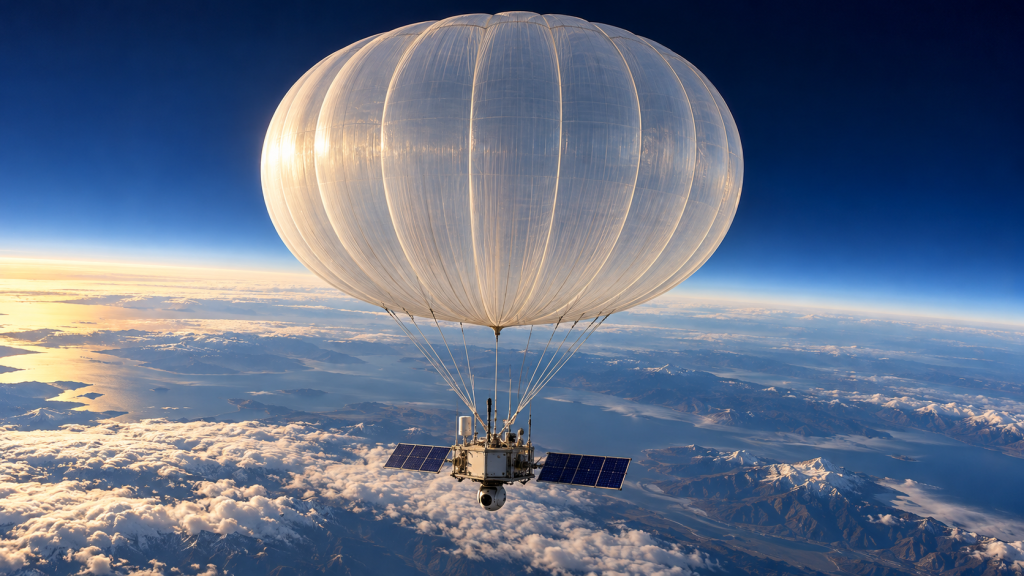
The reason for the interest is straightforward: the military needs an observer that can stay aloft for a long time. Aircraft consume fuel, satellites follow their orbits, while balloons can use gas buoyancy and solar energy to keep their equipment operating for extended periods.
How to Get Where You Need to Go Without an Aircraft Engine
The first question facing such a reconnaissance platform is obvious: what about the wind? If it carries the equipment away from the area of interest, endurance offers little benefit.
Modern navigable balloons exploit differences between air currents at different altitudes. By climbing and descending, a balloon can select a current flowing in a more favourable direction. Aerostar uses this principle to navigate its Thunderhead system.
Think of it as travelling along several aerial roads. The balloon cannot turn into the wind whenever an operator wishes: it searches for an available route by changing altitude. Accurate forecasts and an understanding of the local atmosphere therefore become part of the navigation system.
Remaining in an area also does not mean hovering motionless above a single point. The aircraft may move within an acceptable zone while maintaining a useful position relative to the area being observed. Its manoeuvring options depend on the available winds.
Almost a Year Aloft
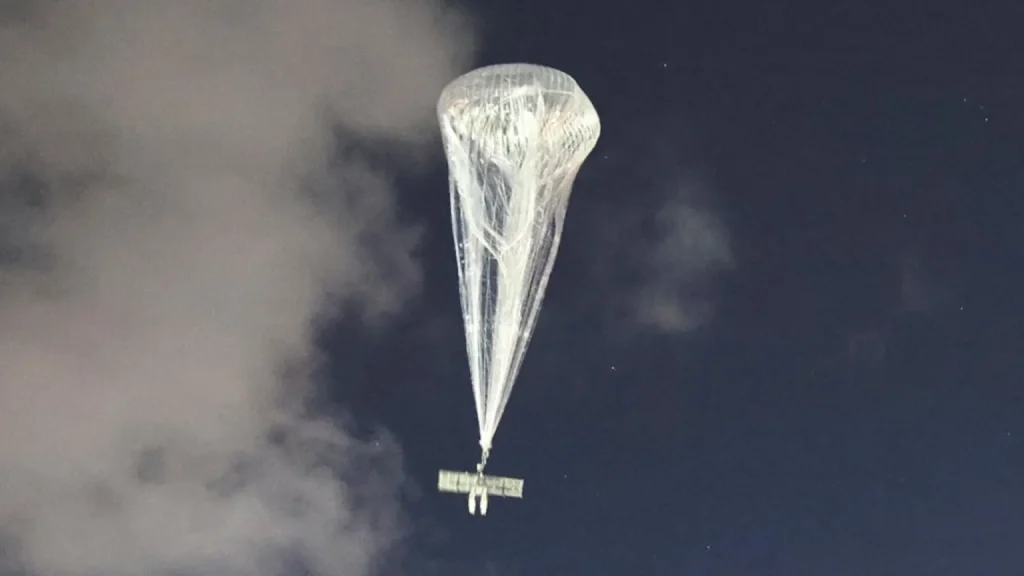
Flight endurance has already extended far beyond a few days. In March 2025, Aerostar announced the conclusion of Thunderhead HBAL684’s flight after 336 days in the stratosphere. Launched from Florida, the balloon travelled through several regions, eventually reaching the South Pacific.
This was an endurance record, rather than evidence of almost a year spent watching one target. It nevertheless demonstrates how long the platform itself can remain operational without landing.
For surveillance, that endurance has clear value. A single image may not be enough: observers need to see what has changed, whether vehicles have appeared, or whether movement has begun. A sustained presence can build a sequence of events rather than provide isolated snapshots.
Operating duration still depends on the entire system. The envelope, batteries, solar panels, communications equipment, and payload must all withstand prolonged use. Staying aloft does not guarantee that every instrument carried aboard can operate for equally long.
Between Aircraft and Satellites
U.S. military officials identified an altitude band of approximately 60,000–100,000 feet — around 18–30 kilometres — as an area of interest. From there, balloons offer broad coverage while carrying reconnaissance equipment, communications relays, and other payloads.
Altitude extends the radio horizon. For communications systems, that can help connect widely separated units; for sensors, it provides a view over a larger area. Actual detection range, however, depends on the equipment and the target. Seeing a patch of terrain and distinguishing a small object on it are different tasks.
Aerostar lists intelligence gathering, communications, and augmentation of existing networks among Thunderhead’s potential applications. The company also supports operations involving either individual balloons or constellations.
In this role, the balloon occupies a niche of its own: carrying equipment high above the ground for extended periods while retaining some ability to influence its route by selecting an altitude.
From Exercises to Operational Missions
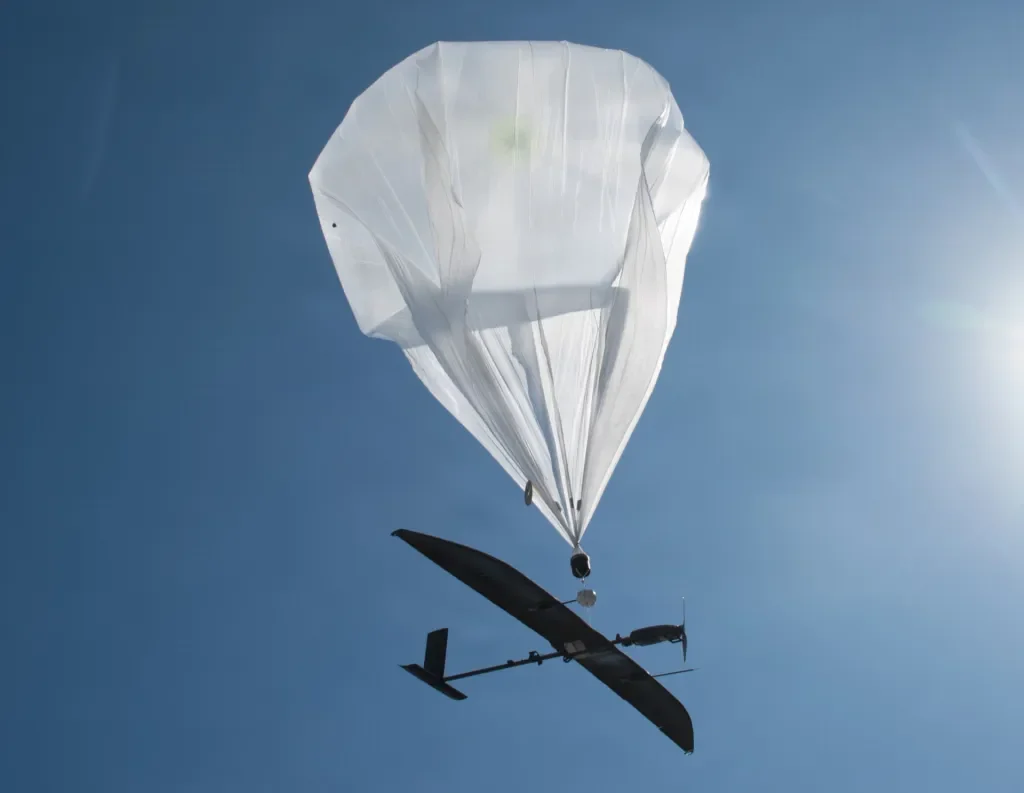
The Army’s interest has already led to practical deployment. According to TWZ, balloons intended for an experiment in the Pacific were redirected to support operations in the Middle East. Military officials said they performed their assigned mission successfully, but did not disclose the details.
It would therefore be premature to attribute specific intelligence successes to those aircraft. What is known is that they moved from an experimental scenario into operational use.
The Army is also training personnel. In spring 2026, it described a high-altitude balloon basics course at Joint Base Lewis–McChord. Such training helps units learn to operate the equipment and incorporate it into the broader sensor network.
Even a Balloon Needs Infrastructure
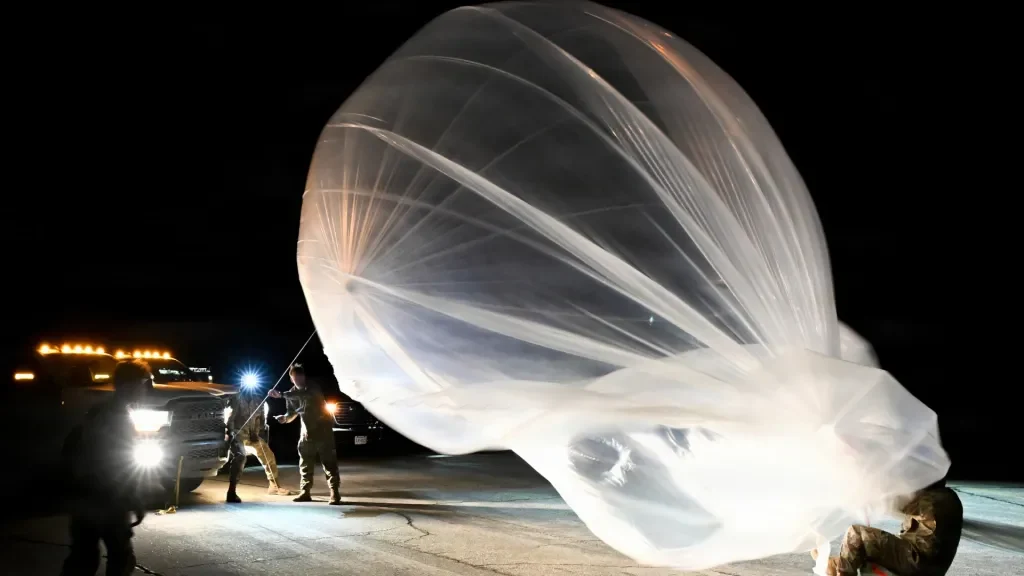
A balloon has no onboard crew, but it still needs a ground team. Someone must prepare the launch, monitor the aircraft’s condition, plan its route, receive the data, and manage the end of the flight.
Payload weight and power consumption remain constraints. Altitude does not make the aircraft invulnerable, while prolonged flight requires reliable communications and dependable systems. Weather and temperature affect operations even after the balloon reaches the stratosphere.
The technology’s main attraction is its ability to keep a useful instrument aloft for a long time without sustaining continuous powered aircraft flight. The Army must now turn individual successful missions into a routine capability.
Rafferty changed his mind after seeing the balloons at work. For everyone else, the test will be equally practical: does the necessary information arrive, and does the airborne observer remain somewhere useful?