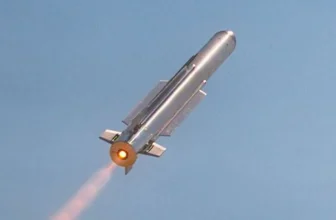
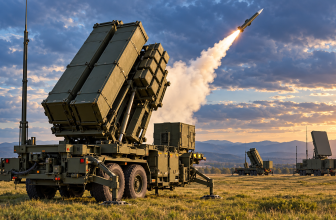
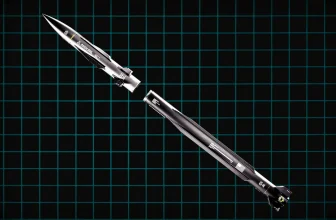
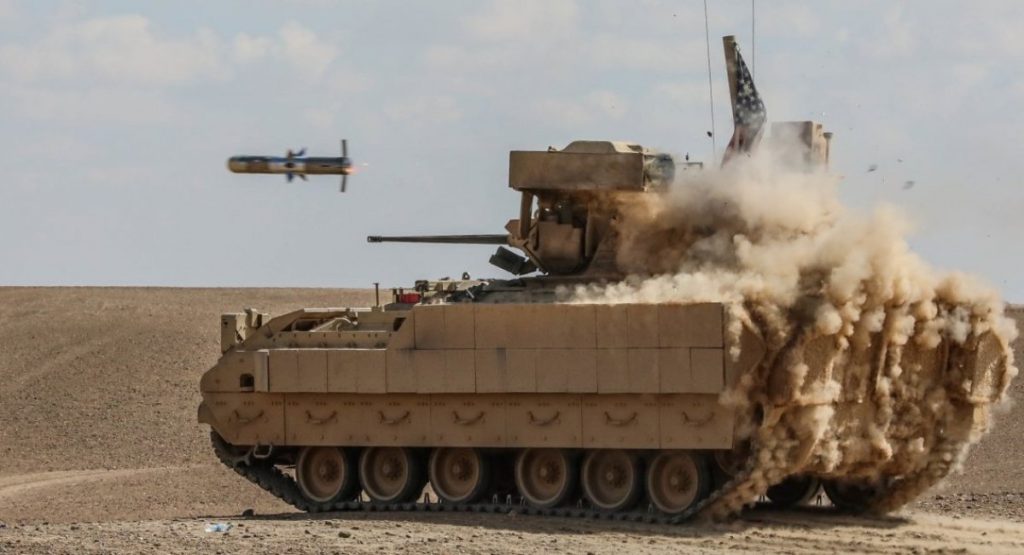
Giving an older IFV a new anti-tank missile does not necessarily require replacing its turret. At AUSA 2026, Rafael USA and Leonardo DRS presented a solution allowing Bradley vehicles to employ Spike LR2 missiles through a TOW-family launcher. The concept is attractive: retain the familiar weapon installation while expanding the choice of missiles and engagement options.
The key change is the ability to let the missile track its target independently after launch — or continue observing its flight and intervene in the engagement.
What Changes for the Crew?
When using TOW, the gunner must keep the sight’s aiming point on the target until impact. This means continuing to track the target throughout the missile’s flight.
Spike LR2 offers several operating modes. In fire-and-forget mode, the missile independently tracks a target acquired before launch. In another mode, the operator receives imagery from its seeker and retains the ability to adjust the attack. Rafael also lists engagement using target coordinates and the ability to strike targets beyond direct line of sight.
The difference is substantial: the commander gains more options for employing the weapon. Beyond-line-of-sight capability, however, does not mean the missile can independently find any concealed vehicle. Initial target information, suitable conditions, and target identification are still required.
Greater Range Is Only Part of the Advantage
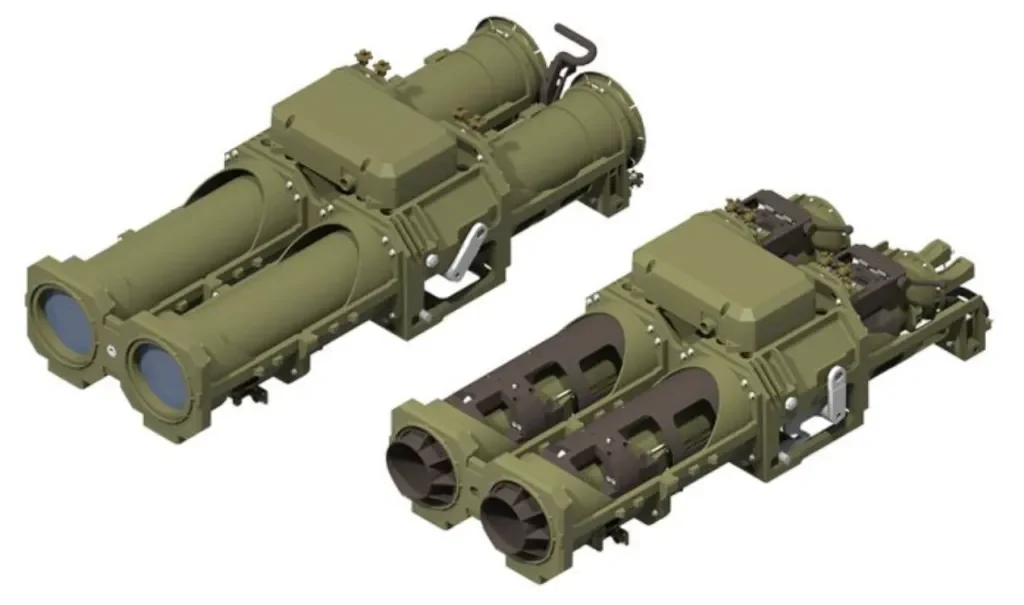
The manufacturer specifies a ground-launch range of up to 5.5 kilometres for Spike LR2. The missile has an electro-optical seeker incorporating daylight and thermal-imaging channels.
The original report rounds the range of modern TOW variants to approximately four kilometres. The increase is significant, but the upgrade’s usefulness also depends on its guidance modes. A distant target may be hidden behind terrain and detected by external surveillance assets. Exploiting that information involves more than simply extending firing range.
Key details of the proposed solution:
- Platforms: Bradley and other compatible vehicles equipped with TOW launchers.
- Upgrade kit: Multi-Purpose Missile Launcher — MPML.
- New missile: Spike LR2.
- Spike LR2 ground-launch range: up to 5.5 km.
- Guidance: electro-optical, with daylight and thermal-imaging channels.
- Operating modes: fire-and-forget, post-launch observation and adjustment, and engagement using target coordinates.
- TOW compatibility: retained.
“No Modifications” Comes with a Qualification
The Defense Express headline promises the new missile without modifications to the IFV. Leonardo DRS describes a kit comprising a TOW-based launcher, Spike LR2 adapters, and a Common Missile Control Unit. This is a complete equipment package providing compatibility between the two systems.
The manufacturer says operators can reconfigure the launcher between TOW and Spike LR2 in the field without special tools. The common control unit contains the electronics and software needed for missile selection, firing, and guidance.
The solution’s value lies in limiting the changes required to the existing platform. Installing the kit nevertheless requires compatibility checks, crew training, and arrangements to supply the new ammunition. Calling it an adapter does not remove those requirements.
TOW Remains an Option
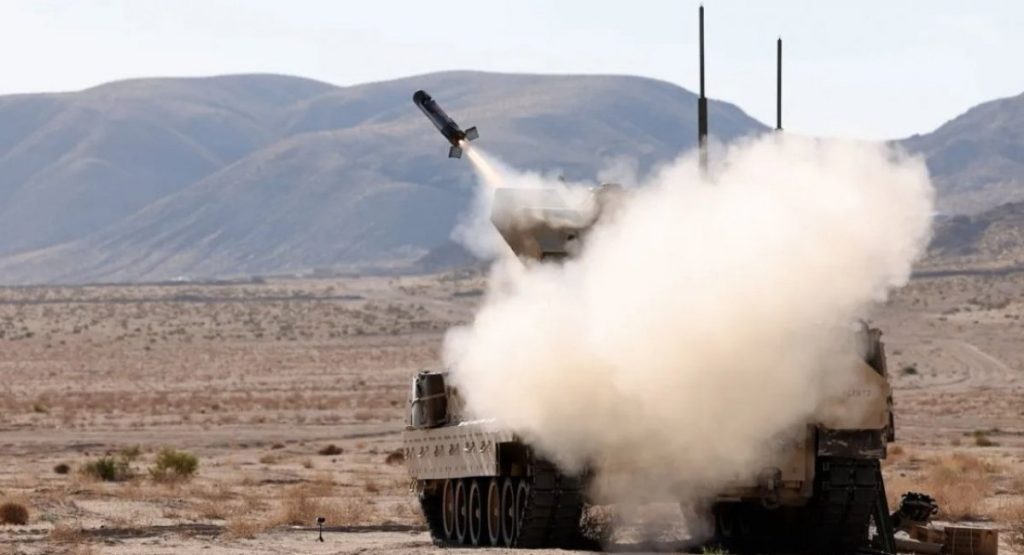
Retaining compatibility with the older missile allows the new weapon to be introduced gradually. Operators can continue using existing TOW stocks while adding Spike LR2 as procurement and crew training progress.
The exhibition debut does not, however, mean widespread installation on American Bradleys. The available material describes an industry proposal; it does not confirm a decision to rearm the entire fleet.
For a long-serving IFV, the appeal is the scope of the upgrade: the missile armament changes while the basic vehicle remains. The proposal now faces a practical test — how conveniently crews can use both missiles, and whether the additional capability justifies the cost of introducing it.