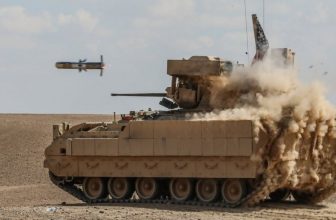
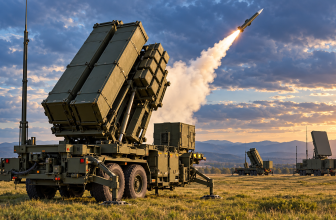
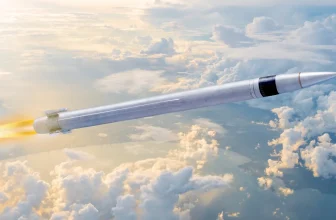
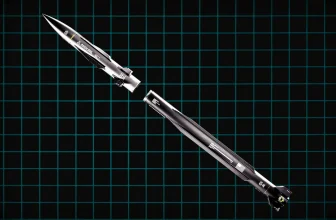
Drones are getting faster — and their hunters need to accelerate, too. Raytheon has unveiled a new Coyote interceptor variant that replaces its small turbojet engine with a solid rocket motor. Designated Block 2C+RM, the upgrade also introduces a new seeker and warhead.
At first glance, this is another update to a familiar weapon. In practice, Coyote is taking another step from a drone-like interceptor towards a compact surface-to-air missile. It needs to launch faster, reach its target sooner, and retain enough manoeuvring capability for the final seconds of an engagement.
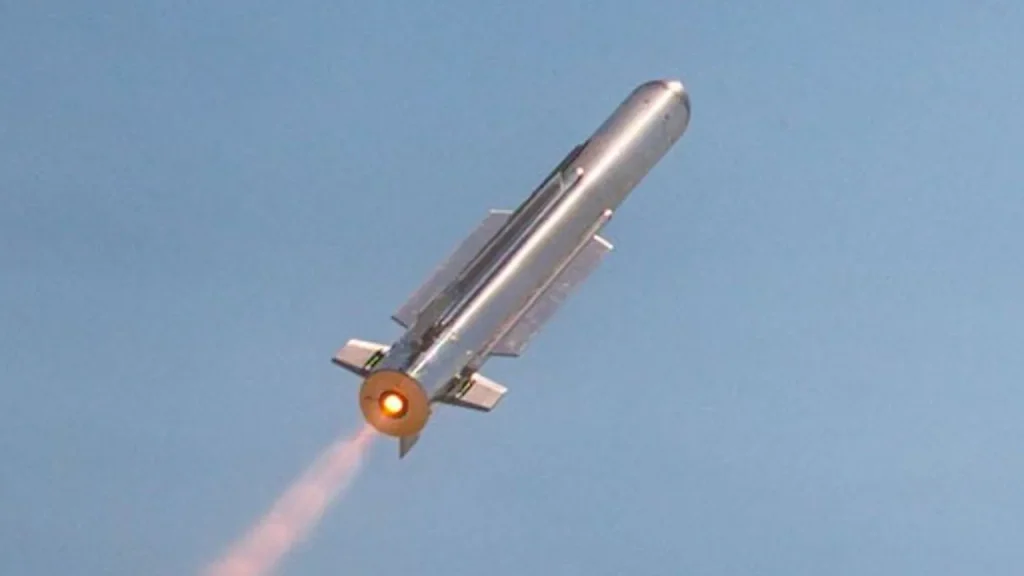
A Rocket Instead of a Small Aircraft
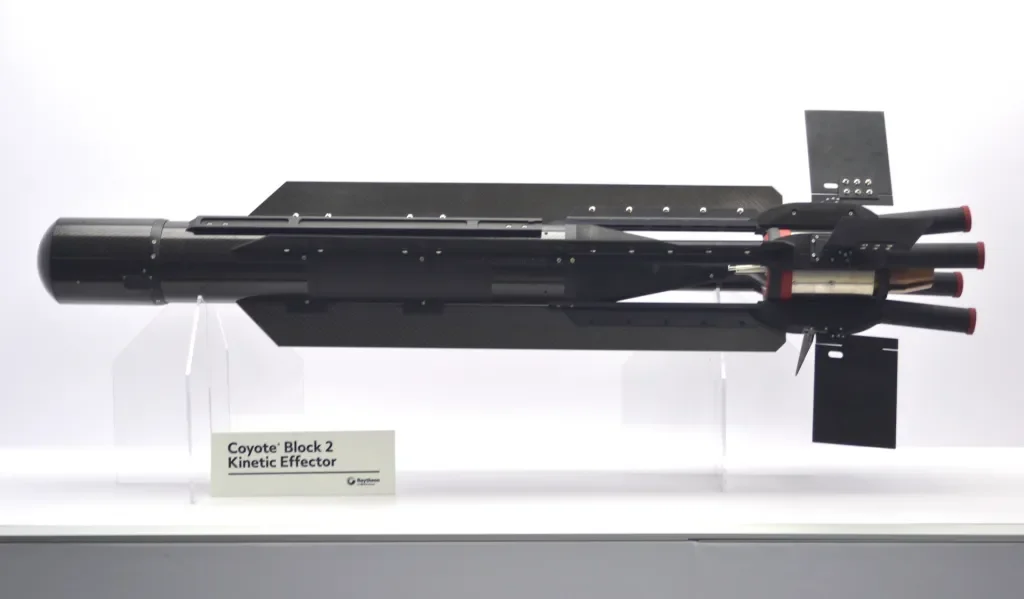
Existing Coyote Block 2 interceptors already have a rocket booster, but its job is to get them launched. A small turbojet then powers the rest of the flight. In the new version, rocket propulsion replaces that arrangement.
The difference between the engines is fundamental. A turbojet uses oxygen from the surrounding air and is suited to sustained powered flight. A solid rocket motor carries both fuel and oxidiser onboard and can deliver rapid acceleration.
Replacing the engine does not automatically increase range, however: the outcome depends on propellant capacity, aerodynamics, and flight profile. For Block 2C+RM, Raytheon claims improvements in both speed and range, but has not disclosed specific figures.
For an interceptor, speed primarily buys time. The sooner it reaches an incoming aircraft, the farther from the protected asset the interception can potentially take place.
Why a New Engine Is Not Enough
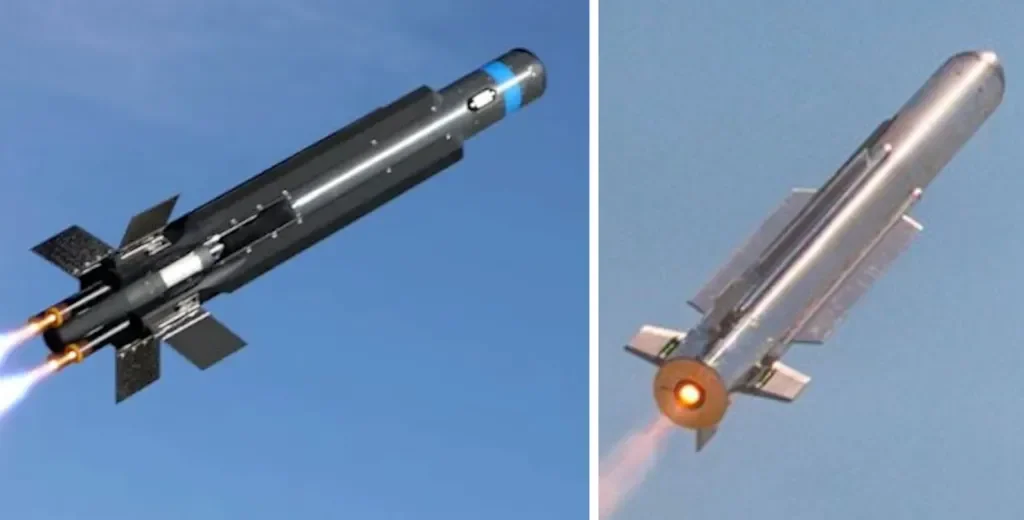
Reaching the target quickly is only half the task. The interceptor must also detect it, track it reliably, and destroy it.
Block 2C+RM therefore receives a new seeker and warhead. Their specifications have not been published. The developer links the upgrade to the need to counter increasingly sophisticated drone threats.
What matters is how all the components work together. Higher speed shortens the engagement, but also leaves less time to correct an error. The guidance system must bring the interceptor accurately to the target, and the warhead must function at the right moment.
It would nevertheless be premature to describe the new variant as a universal cruise-missile interceptor. A Raytheon representative acknowledged some potential overlap against certain cruise missiles, while stressing that performance would depend on the particular threat.
What Is Known About the New Coyote
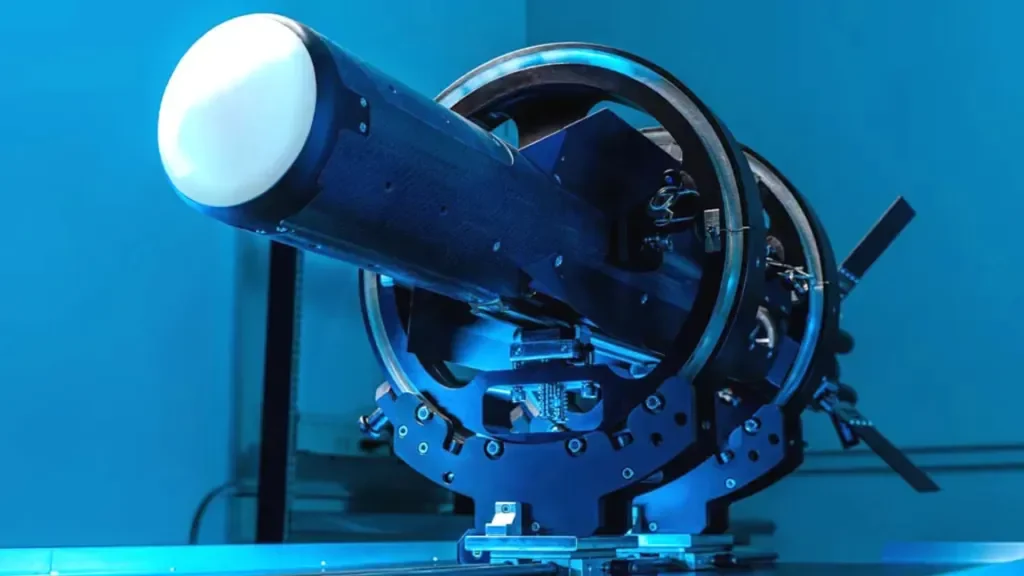
- Designation: Coyote Block 2C+RM.
- Developer: Raytheon, an RTX business.
- Propulsion: solid rocket motor.
- Other changes: new seeker and warhead.
- Testing: the company has reported three successful tests.
- Development pace: approximately 15 months from concept to testing.
- Speed, range, and price of the new variant: not disclosed.
- Status: development and testing are continuing.
Keeping the Existing Launchers
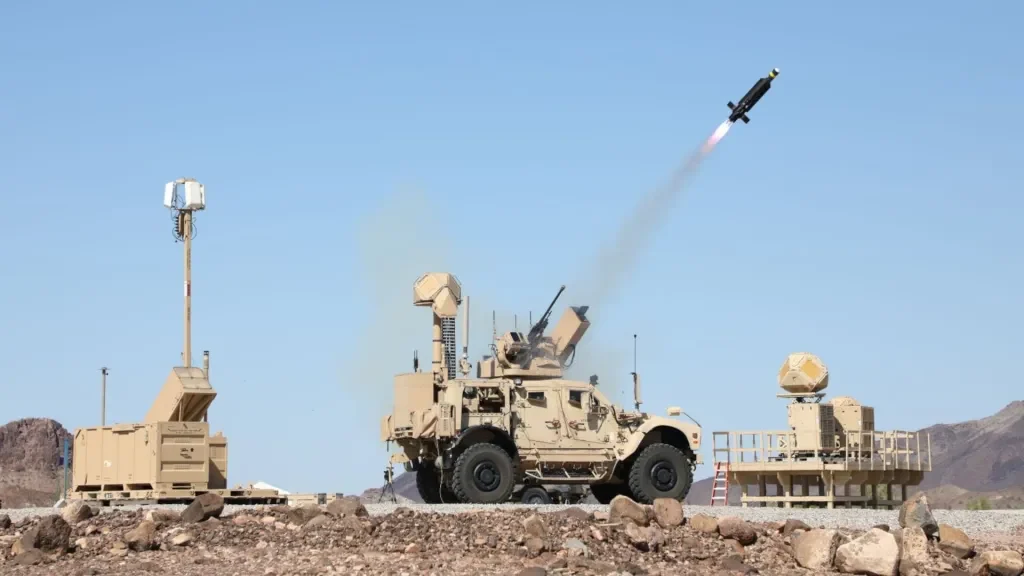
The new interceptor is designed to work with existing four- and eight-cell Coyote launchers. Production of turbojet-powered Block 2 variants is also expected to continue for now.
This approach allows operators to expand the system’s capabilities without replacing all its infrastructure at once. Compatibility must still be verified, however: the launcher and control system need to function correctly with the new munition.
RTX said the initial test series included verification of integration with the existing counter-drone architecture. The company also associates the rocket motor with shorter engagement times and faster successive launches.
That is particularly important during a mass attack. The system must keep engaging additional targets while earlier interceptors are still airborne.
The Price Matters, Too
The cost of Block 2C+RM remains unknown. It cannot be assumed to be cheaper simply because it uses rocket propulsion: its seeker, warhead, and production volume will also shape the price.
For a counter-drone weapon, this is a significant issue. A faster interceptor is useful if it can be purchased in sufficient quantities and replenished as stocks are consumed. A handful of outstanding weapons cannot replace a sustainable ammunition supply.
For now, Raytheon has demonstrated the direction of Coyote’s development: faster interception and improved performance in the final phase of an engagement. Testing must establish how much the redesign delivers. Customers will then have to decide how many they can afford to keep on launchers and in storage.