A German Leopard with a Russian Character. What Could the Bundeswehr’s Main Battle Tank with an Autoloader Have Looked Like in the 1980s?

In the mid-1980s, West Germany possessed one of the world’s finest tanks — the Leopard 2. Its powerful 120 mm gun, excellent optics, reliable powerplant, and high mobility made it a formidable opponent for the Soviet T-64B, T-72, and T-80. However, the German vehicle had one characteristic that Soviet designers had long regarded as a disadvantage: a four-man crew and the absence of an autoloader.
But what if the Germans had decided to abandon their traditional approach? What if, instead of a large tank with a four-man crew, they had developed a low-profile, compact vehicle with three crew members, powerful frontal armor, and an automatic gun-loading system?
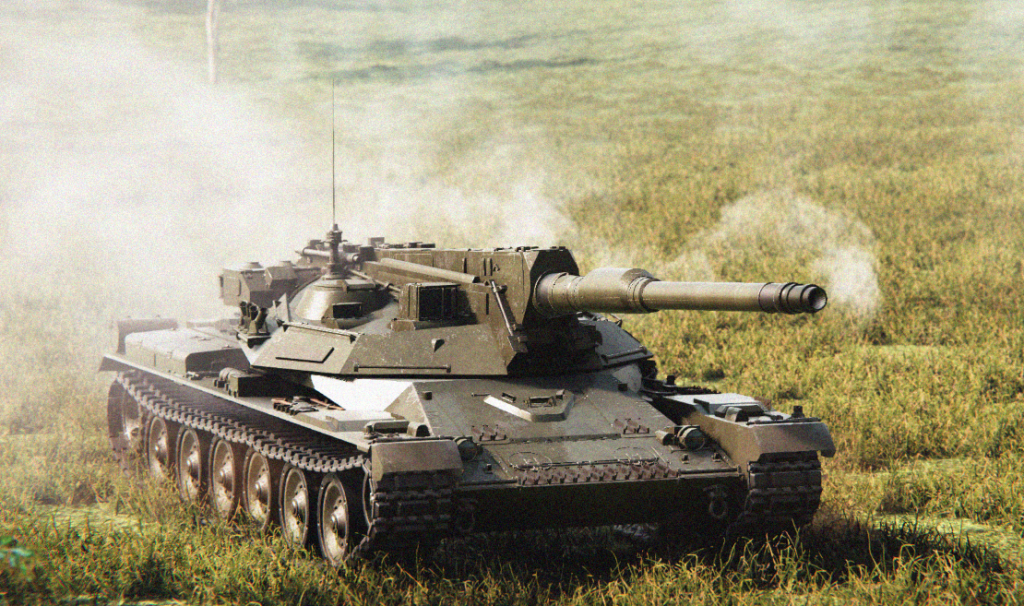
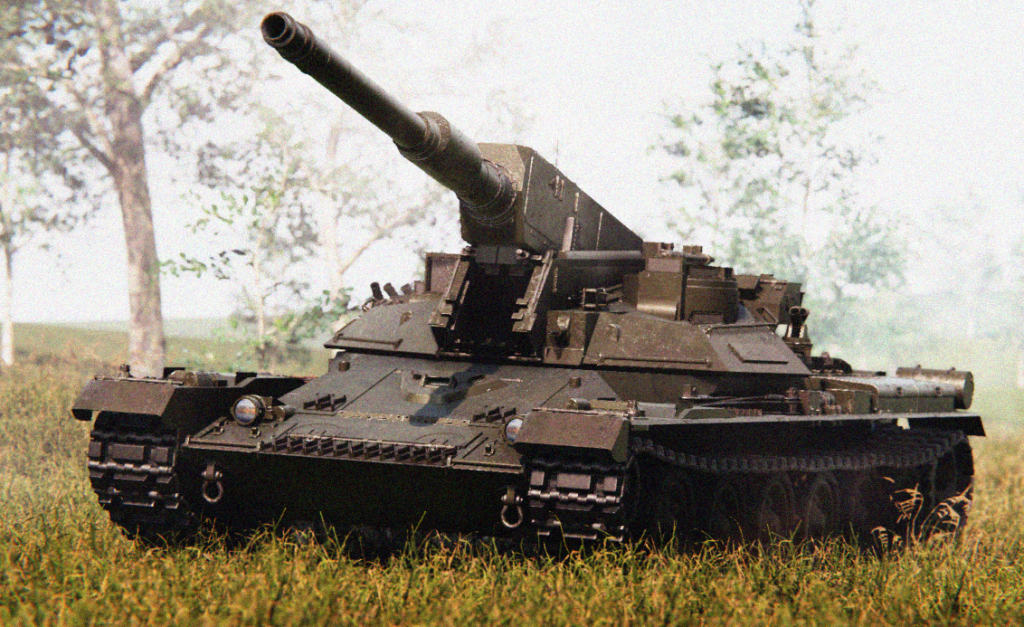
This is precisely the alternative proposed by our Western colleague SorryForThisUsername, who published his NSK-3 project on October 21, 2026. The designation stands for Niedrig-Silhouetten-Kampfpanzer, which can be translated as “Low-Silhouette Main Battle Tank.”
Moreover, the author went beyond simply creating images of a virtual tank. He developed an entire fictional history of its design, testing, and competition with the Leopard 2. Let us examine just how realistic such a vehicle might have been.
When the Germans Began Considering a New Leopard
In our timeline, the first Leopard 2 tanks entered service with the Bundeswehr in 1979. For its time, it was an exceptionally advanced fighting vehicle.
However, as early as the beginning of the 1980s, German specialists were already exploring various directions for the future development of armored vehicles.
And this is not fiction. As part of research into a prospective tank, provisionally referred to as Leopard 3, German engineers genuinely investigated new turret designs, reducing the crew to three men, and introducing an autoloader.
Furthermore, concepts involving an entirely new chassis and fighting compartment were also developed. Ultimately, however, the German military command preferred to continue improving the existing Leopard 2 through evolutionary modernization.
Now imagine that a different decision had been made.
In the early 1980s, the Bundeswehr leadership concludes that the defensive capabilities of its existing tanks are insufficient. In the event of a war with the Warsaw Pact, West Germany would need a vehicle capable not only of holding back Soviet armored formations but also of launching rapid counterattacks.
Thus, the NSK program is born.
Three Experimental Tanks Instead of One Production Model
According to the fictional background created by the project’s author, three progressively improved prototypes were developed under the NSK program.
All three shared several distinctive features: a low silhouette, a three-man crew, and an autoloader.
The first prototype, NSK-1, was primarily intended to test different layout solutions. Engineers needed to determine whether it was possible to accommodate the crew, armament, and equipment within a substantially reduced fighting compartment.
NSK-2 represented the next stage, allowing further refinement of the autoloader and running gear.
NSK-3, however, was already an almost fully developed experimental vehicle.
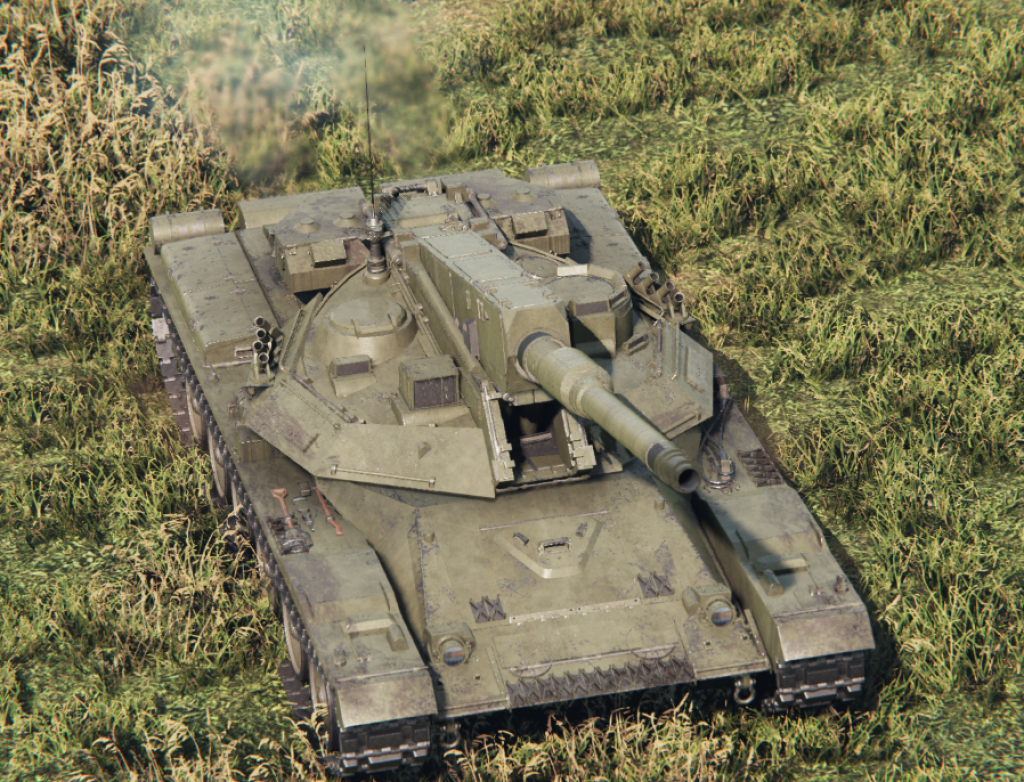
Its principal distinguishing feature was reinforced frontal armor. At the same time, the designers attempted to preserve its low overall height and the advantages associated with a smaller frontal profile.
The resulting vehicle had a rather unusual appearance. Its squat hull and compact turret resembled Soviet tanks much more than traditional German Leopards.
According to the author’s fictional history, test crews even nicknamed it Panzer aus dem Oblast Bayern — “Tank from the Bavarian Oblast” — a humorous reference to its resemblance to Soviet armored vehicles.
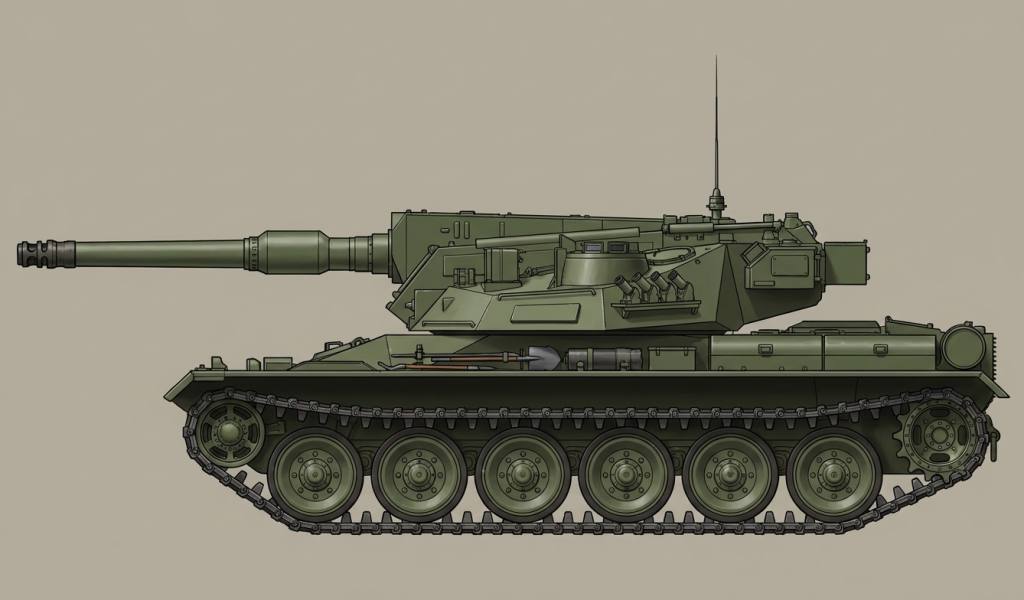
Side profile of the NSK-3
The Autoloader — A Break with German Traditions
The most radical innovation of the NSK-3 was neither its engine nor its armor protection, but its autoloader.
For West German tank designers, this represented a major departure from their traditional approach.
In the Leopard 2, loading the main gun was the responsibility of the fourth crew member. German military planners considered this arrangement entirely justified: the loader not only operated the gun but also helped maintain the tank, handle ammunition, and perform various other tasks.
Soviet designers followed a different philosophy. The T-64, T-72, and T-80 employed mechanical loading systems that made it possible to reduce the crew to three men.
In our alternative history, the Germans decided to follow the same path.
However, this raised an important question: where exactly should the ammunition-feeding mechanism be installed?
The creator of the virtual NSK-3 does not reveal the detailed design of its autoloader. We may therefore assume that German engineers opted for a system with a mechanized ammunition rack located in the rear of the turret, separated from the crew by an armored bulkhead.
Such an arrangement could potentially improve crew survivability if the ammunition were hit, although it would inevitably make the turret more complex.
Reducing the crew also offered another advantage — a smaller internal volume requiring armor protection.
This made it possible to design a more compact vehicle without necessarily sacrificing heavy armor.
Armament and Protection: A German Gun in a Soviet-Style Layout
What gun could the NSK-3 have carried?
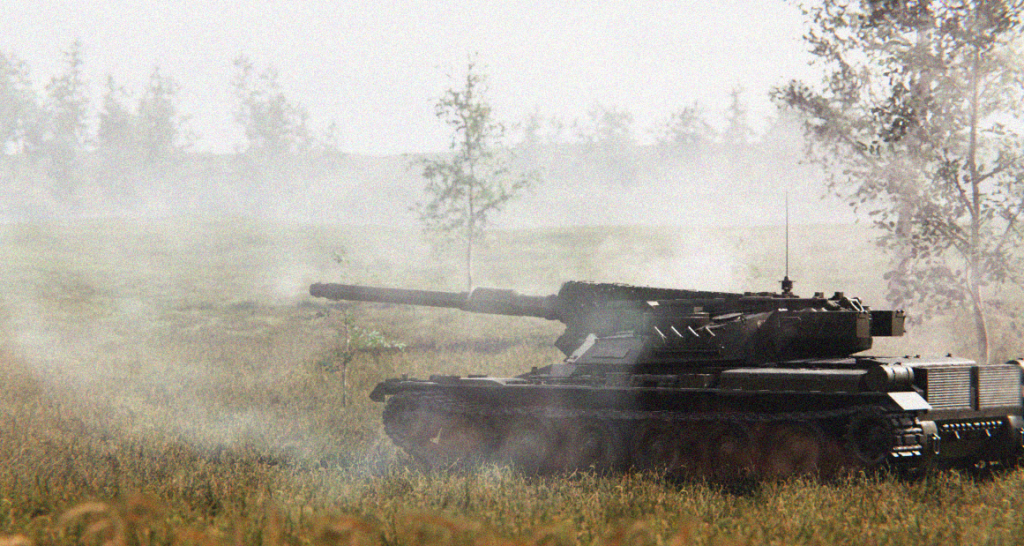
The project’s author does not specify its caliber. However, the most logical choice for a West German tank developed in the mid-1980s would have been the well-known 120 mm Rheinmetall Rh-120 L/44 smoothbore gun.
This weapon was already installed on the Leopard 2, offered excellent armor penetration, and allowed the tank to use existing ammunition types.
The main technical challenge would have been adapting the gun to work with the new autoloader.
Ensuring adequate ammunition protection would have been an equally difficult task. Given the vehicle’s compact dimensions, designers would have needed to accommodate a sufficiently large supply of 120 mm rounds without compromising crew safety.
Another distinctive feature of the NSK-3 was its reinforced frontal armor. In this respect, the tank was intended to differ fundamentally from its two predecessors.
We can assume that the designers would have employed multilayer armor arrays similar to those used in German tanks of the period.
However, the project’s author has not published the actual armor thickness or its equivalent resistance to incoming fire.
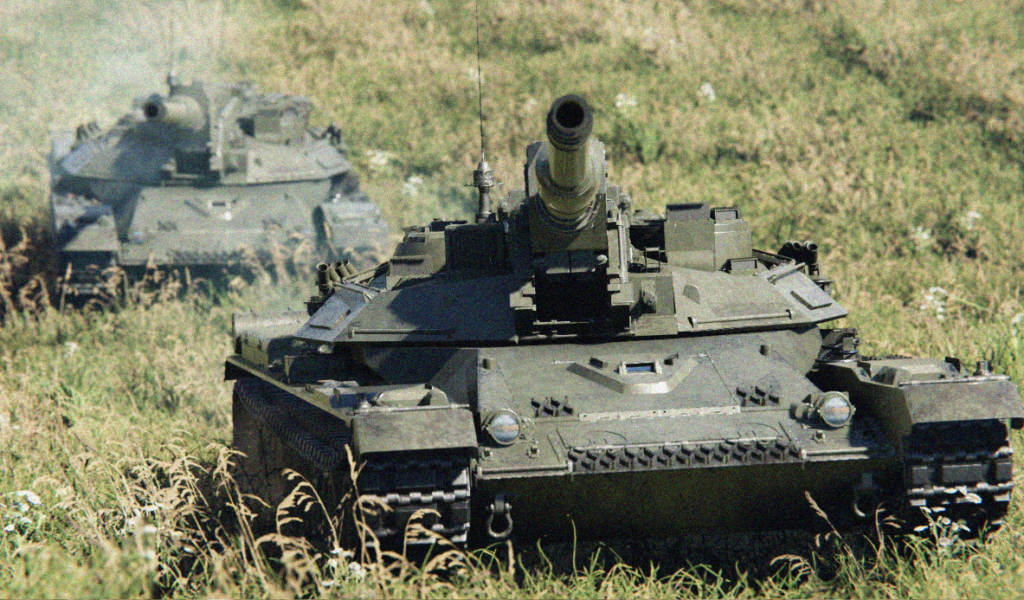
Front view of the NSK-3
Technical Characteristics of the NSK-3
Since the author does not provide detailed technical specifications, it is important to distinguish the known features of the virtual vehicle from the characteristics that a real tank might have possessed.
For a production version of such a design in the mid-1980s, we can reasonably imagine a diesel powerplant producing approximately 1,200–1,500 horsepower, an automatic transmission, and a modern fire-control system equipped with a thermal imaging sight and laser rangefinder.
At the same time, the significantly reduced volume of the fighting compartment might have allowed the vehicle’s weight to remain below that of future Leopard 2 upgrades.
But exactly how much lighter it would have been is impossible to determine without information about its armor, dimensions, and autoloader design.
Thus, the features explicitly established by the NSK-3’s creator are limited to its low silhouette, three-man crew, autoloader, and reinforced frontal protection.
Everything else remains part of our alternative-history reconstruction.
Why Did the NSK-3 Lose to the Leopard?
Perhaps the most interesting part of the fictional story concerns the results of the trials.
According to the author, the NSK-3 demonstrated better performance in offensive scenarios than the early Leopard 2A0 and 2A1.
Within the framework of the proposed concept, this is quite understandable.
A more compact tank equipped with an autoloader could offer advantages during rapid maneuvers. Its lower height would make detection more difficult, while its powerful frontal armor would provide additional protection.
However, when compared with the Leopard 2A4, the experimental vehicle fell behind in most areas.
In real history, the Leopard 2A4 received improvements that increased its reliability and combat effectiveness. Its proven design, advanced fire-control system, and ease of operation made it a formidable competitor for any experimental project.
Moreover, the new autoloader introduced additional technical risks.
If the mechanism failed, the tank could lose its ability to fire. The Leopard’s fourth crew member was also useful for repairs, maintenance, and ammunition replenishment.
Finally, introducing an entirely separate tank model would require new production facilities, crew training programs, and logistical arrangements.
Was it worth going to all this trouble for a vehicle that surpassed an already mass-produced tank only under certain conditions?
According to the author, the German military’s answer was no.
The first two prototypes were eventually sent for scrapping, while the fate of the third remained unknown.
Instead of a Conclusion
At first glance, the NSK-3 may seem like nothing more than the fantasy of an armored warfare enthusiast. However, a closer look at the actual history of West German tank development makes it clear that such a vehicle could very well have appeared.
During the 1980s, German engineers genuinely explored advanced vehicle layouts, smaller crews, and automatic loading systems.
Nevertheless, the Bundeswehr command chose to continue improving the existing Leopard 2.
Was that the right decision?
On the one hand, the Leopard 2 proved to be an exceptionally successful vehicle that, after numerous upgrades, continues to serve well into the 21st century.
On the other hand, reducing crew size and automating gun loading are becoming increasingly attractive solutions for the next generation of main battle tanks.
And it is entirely possible that, had the Germans chosen to pursue the NSK-3 in the mid-1980s, the evolution of European tank design would look very different today.
After all, sometimes a technical idea is not wrong — it is simply ahead of its time.