The Pershing Wasn’t Needed. How the Americans Could Have Turned the Sherman into a Real Nightmare for German Tigers and Panthers

By the end of World War II, American tank crews were facing an unpleasant problem. Despite all its advantages, their mass-produced M4 Sherman was finding it increasingly difficult to stand up to the latest German tanks. Even the installation of a long-barreled 76 mm gun failed to solve the problem completely. As a result, the Americans placed their hopes in an entirely new tank — the M26 Pershing. But what if they had taken a different approach?
After all, the Soviet Union had already provided a clear example. Following modernization, the T-34 received a new turret and a powerful 85 mm gun, allowing it to remain the Red Army’s principal medium tank until the end of the war.
Why couldn’t the Americans follow the same path by installing a 90 mm gun on the well-established Sherman, strengthening its armor, and equipping it with a more powerful engine?
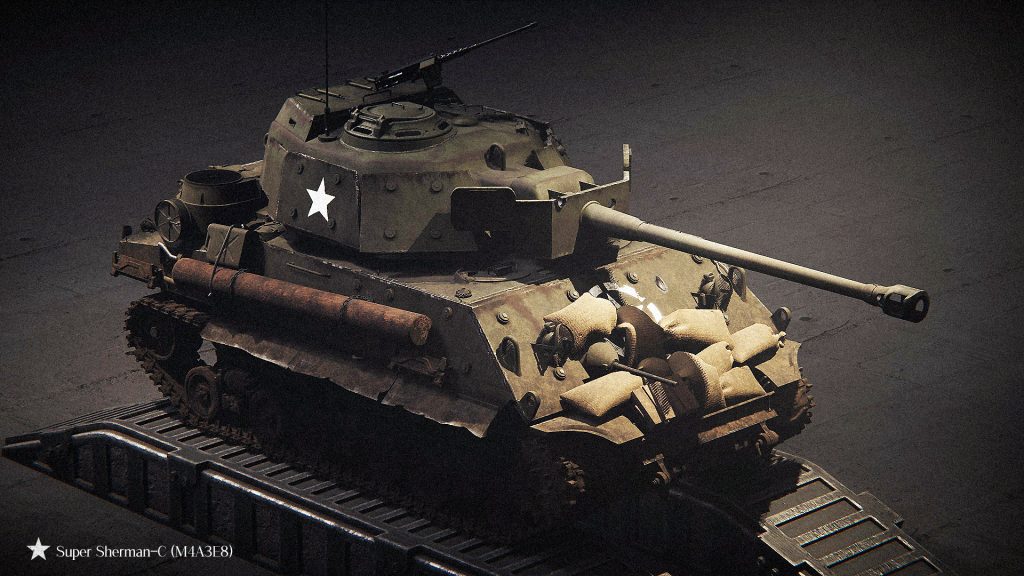
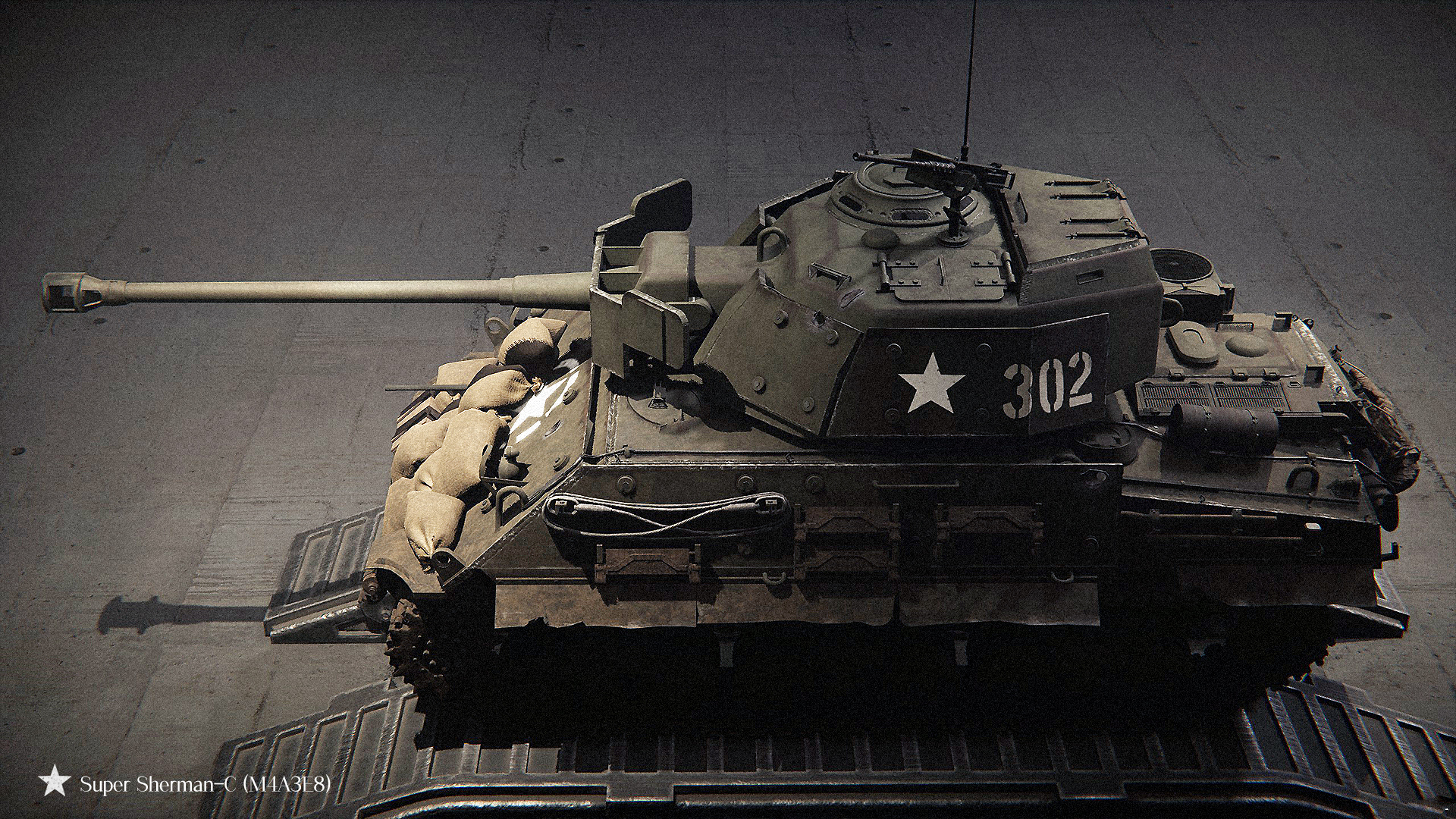
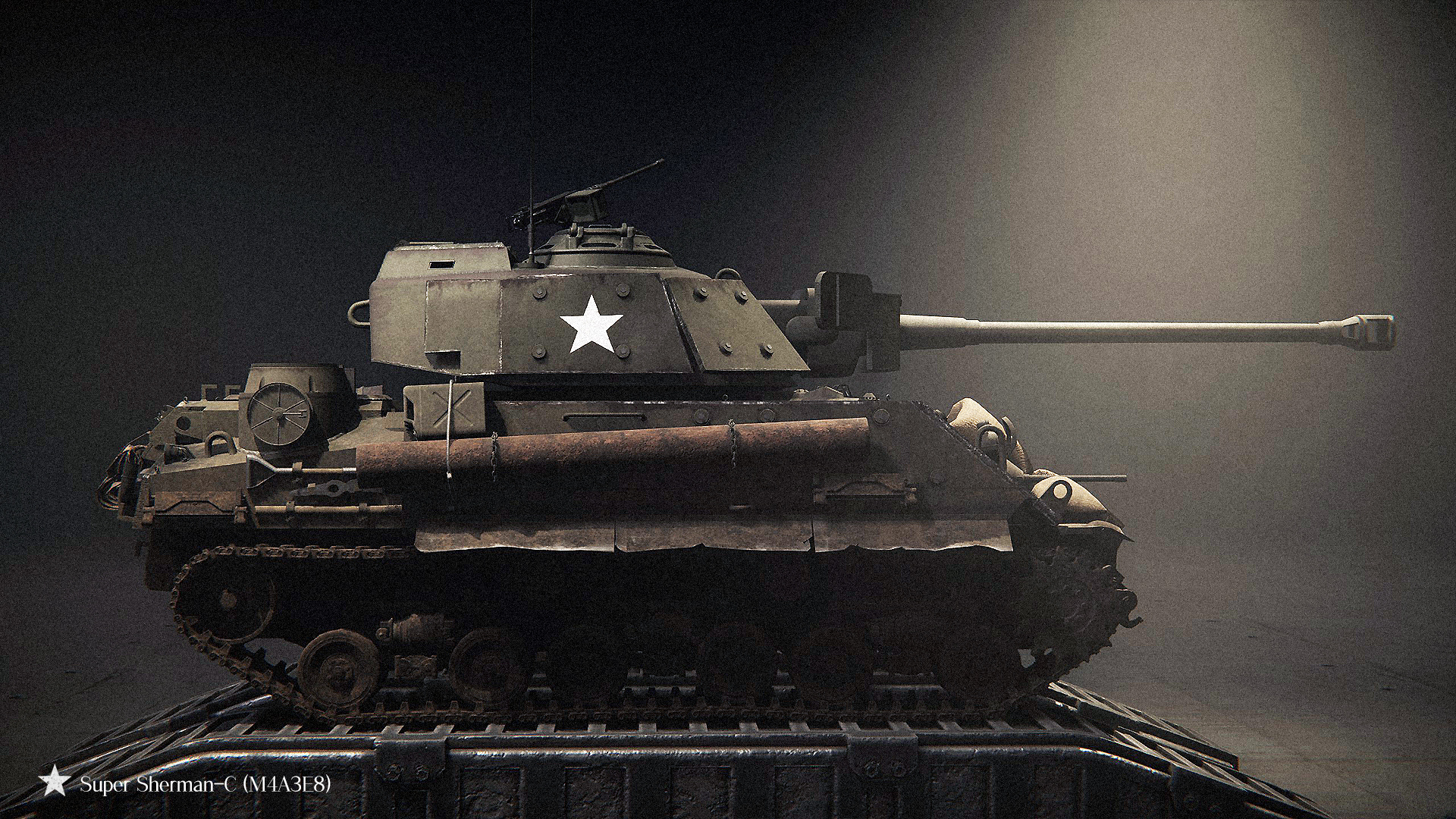
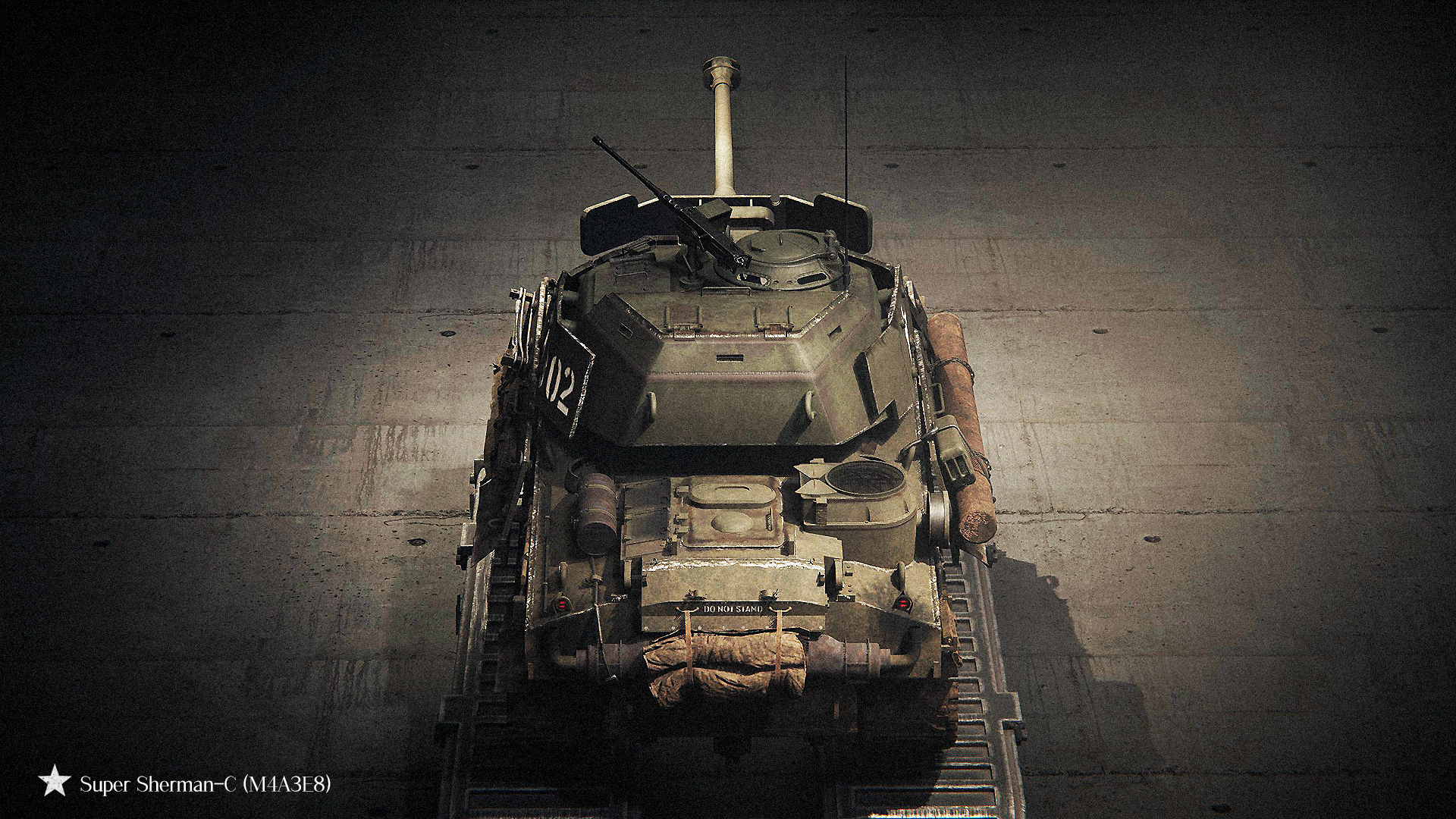
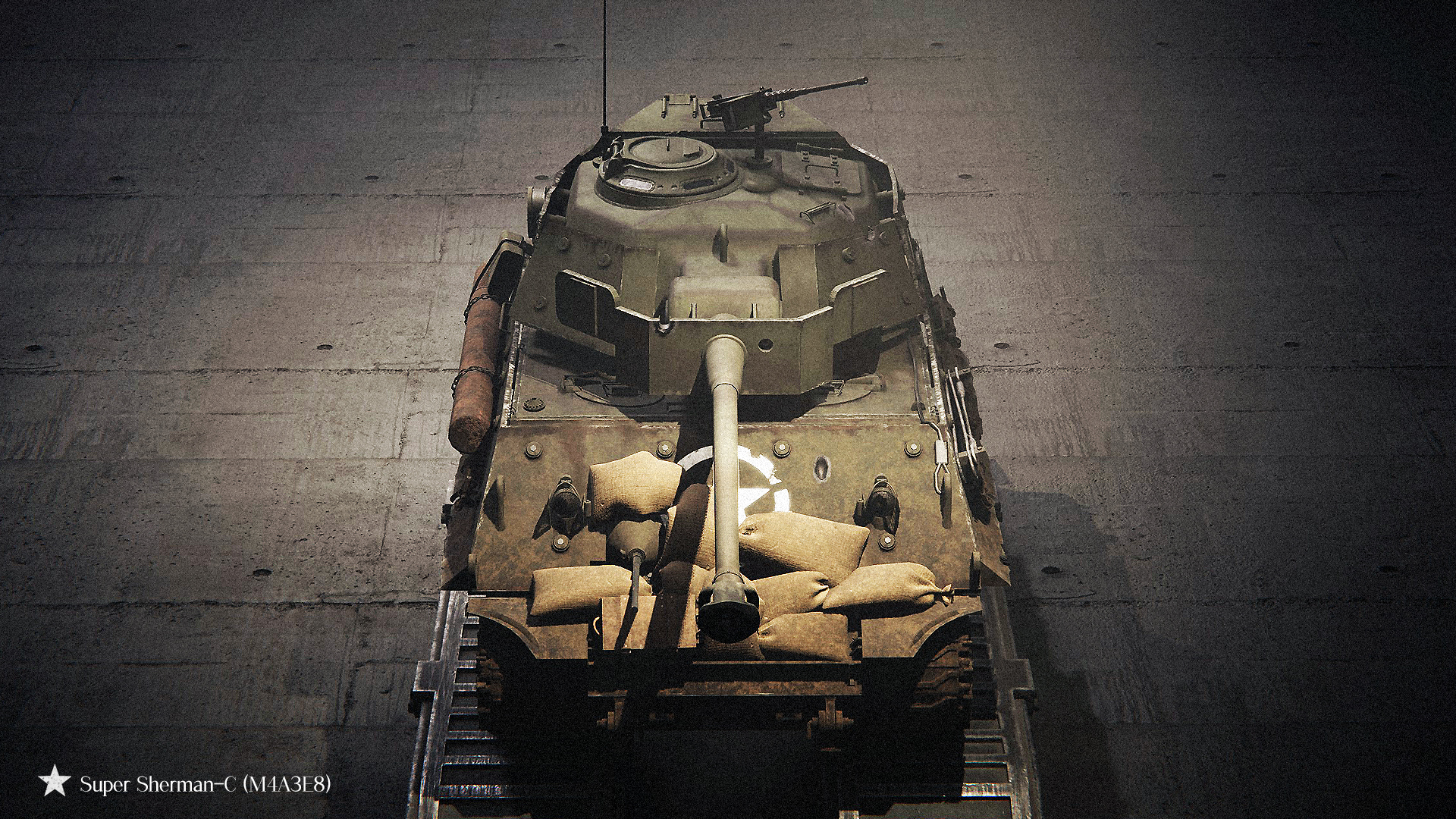
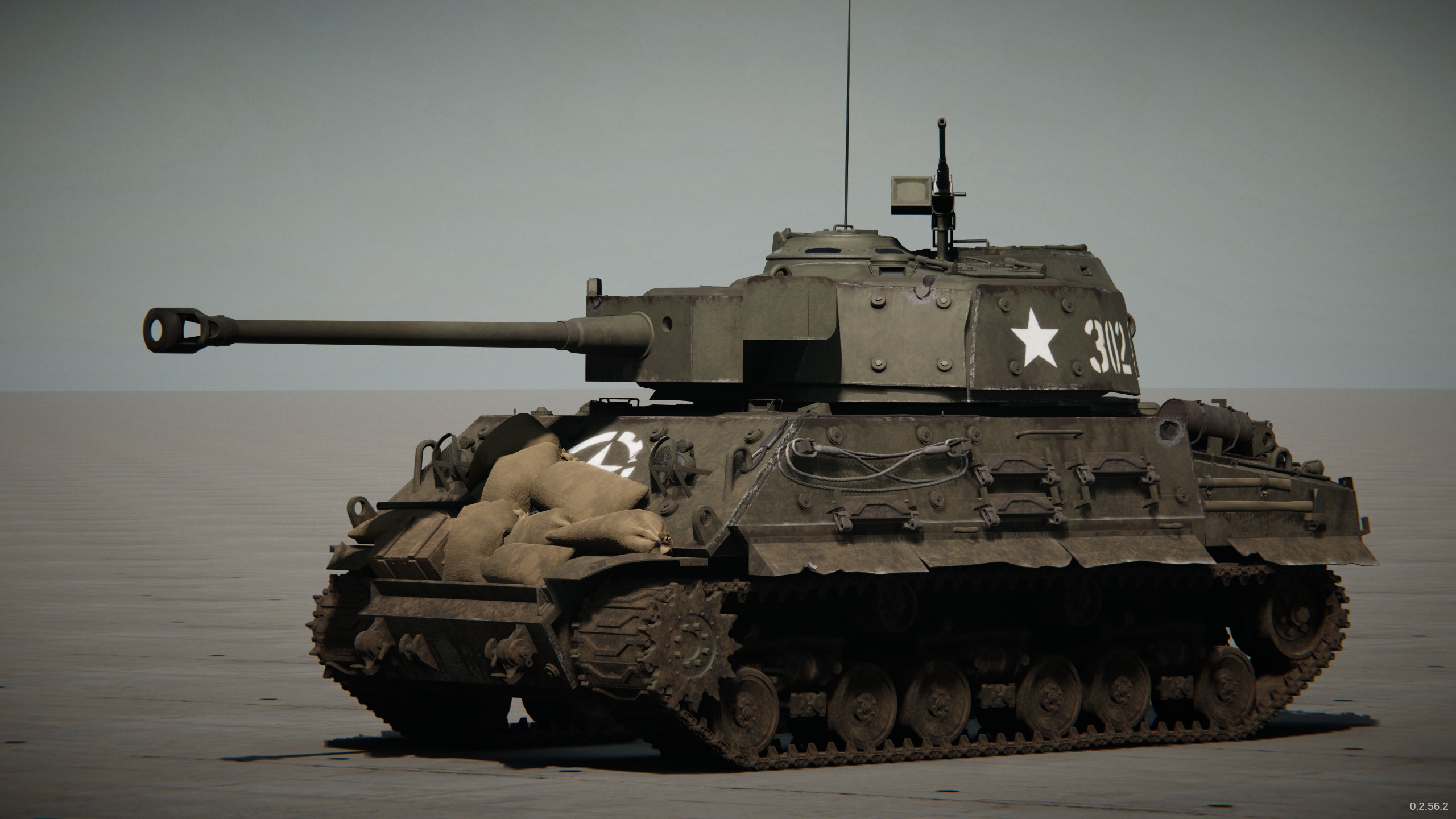
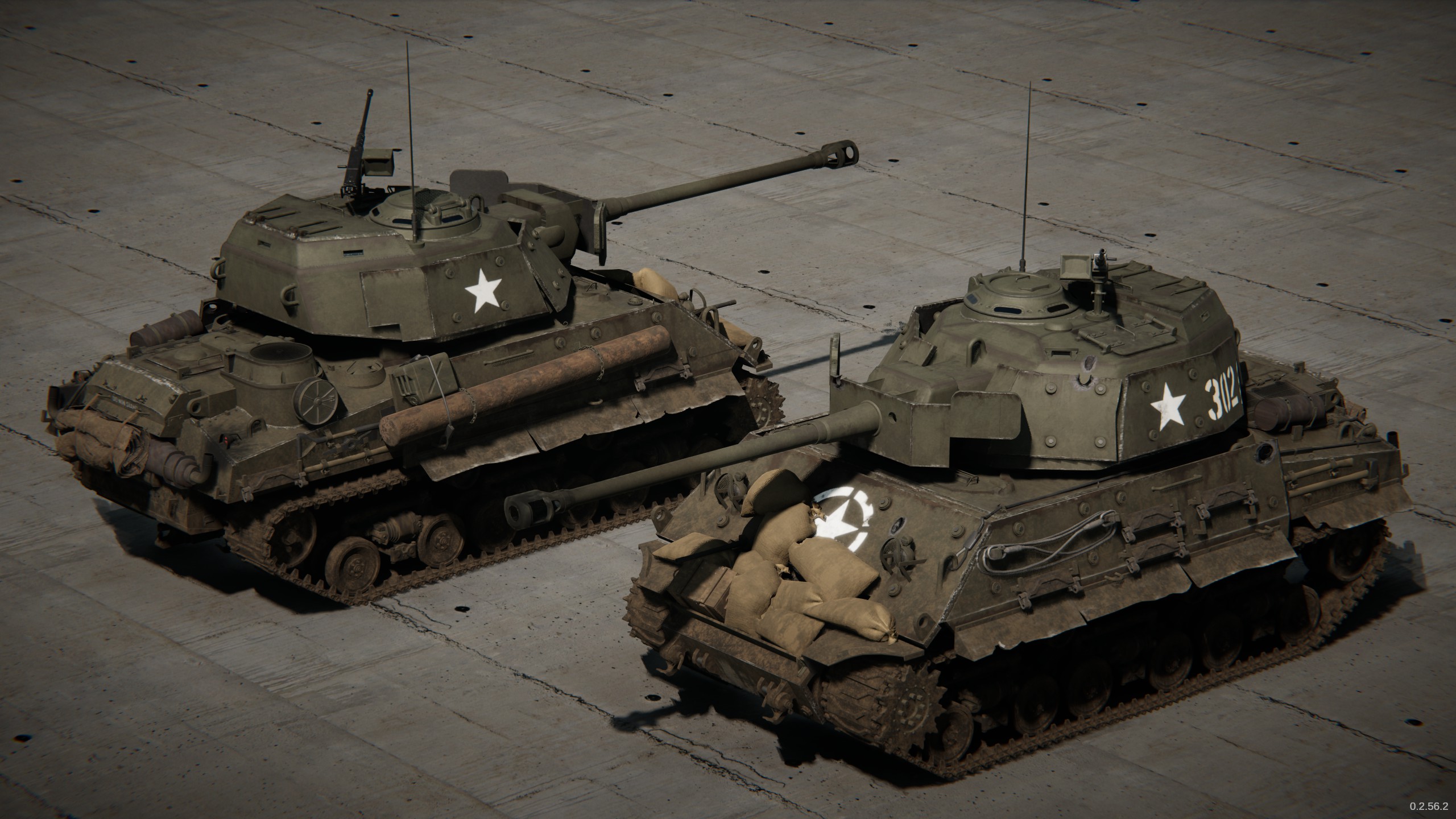
This is precisely the alternative proposed by our Western colleague MAFIALAA, who published his Super Sherman-C (M4A3E8) project on October 19, 2026.
Why Did the Americans Decide to Abandon Further Development of the Sherman?
When the M4 Sherman first appeared on the battlefields of World War II, it was a thoroughly modern fighting vehicle. Its reliable engine, ease of operation, good radio communications, and relatively spacious fighting compartment made it an excellent mass-produced tank.
However, by 1944, the situation had changed.
The German Tigers and Panthers possessed powerful guns and substantial armor protection. The Sherman’s original 75 mm gun proved insufficiently effective against their frontal armor, while the new 76 mm M1 gun only partially improved the situation.
Of course, Shermans could successfully engage German tanks by maneuvering, firing at their flanks, and using special armor-piercing ammunition. Nevertheless, the US Army command wanted a vehicle capable of more reliably destroying heavily armored targets.
This led to the development of the T26E3, initially classified as a heavy tank and later designated the M26 Pershing.
But there was another possible approach. In fact, the Americans actually attempted to pursue it.
In 1944, Chrysler engineers installed the turret of the experimental T26, armed with a 90 mm gun, onto a Sherman hull. The resulting experimental M4/T26 demonstrated that such a conversion was technically possible.
However, the project was canceled because further development was unlikely to produce a combat-ready vehicle before production of the Pershing itself began.
Now imagine that the T26 program had never progressed and that the American command had instead decided to concentrate on a radical modernization of the existing tank.
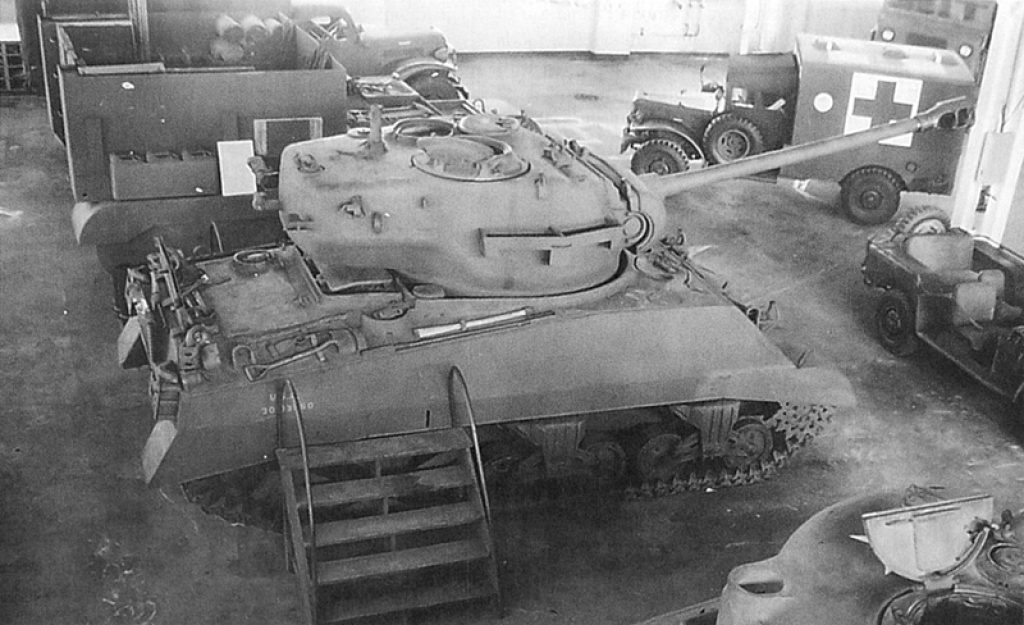
Experimental M4/T26 tank. A Sherman fitted with a Pershing turret and, naturally, a 90 mm gun.
The Birth of the Super Sherman: When Conventional Modernization Was No Longer Enough
In our alternative reality, American designers were tasked in early 1944 with creating the most heavily upgraded version of the M4A3 possible.
They selected a tank equipped with the Horizontal Volute Spring Suspension (HVSS) and wider tracks as their starting point — the vehicle that would later become widely known as the Easy Eight.
This running gear distributed the vehicle’s weight more effectively across the ground and provided a smoother ride than the earlier Vertical Volute Spring Suspension (VVSS).
However, upgrading the suspension alone was not enough.
Installing a 90 mm gun required a substantial redesign of the turret, increasing its internal volume and strengthening its structure. Additional armor increased the tank’s weight, inevitably making it necessary to upgrade the engine and transmission.
Thus, the Sherman-C was born — an extensively reinforced version of the famous American medium tank.
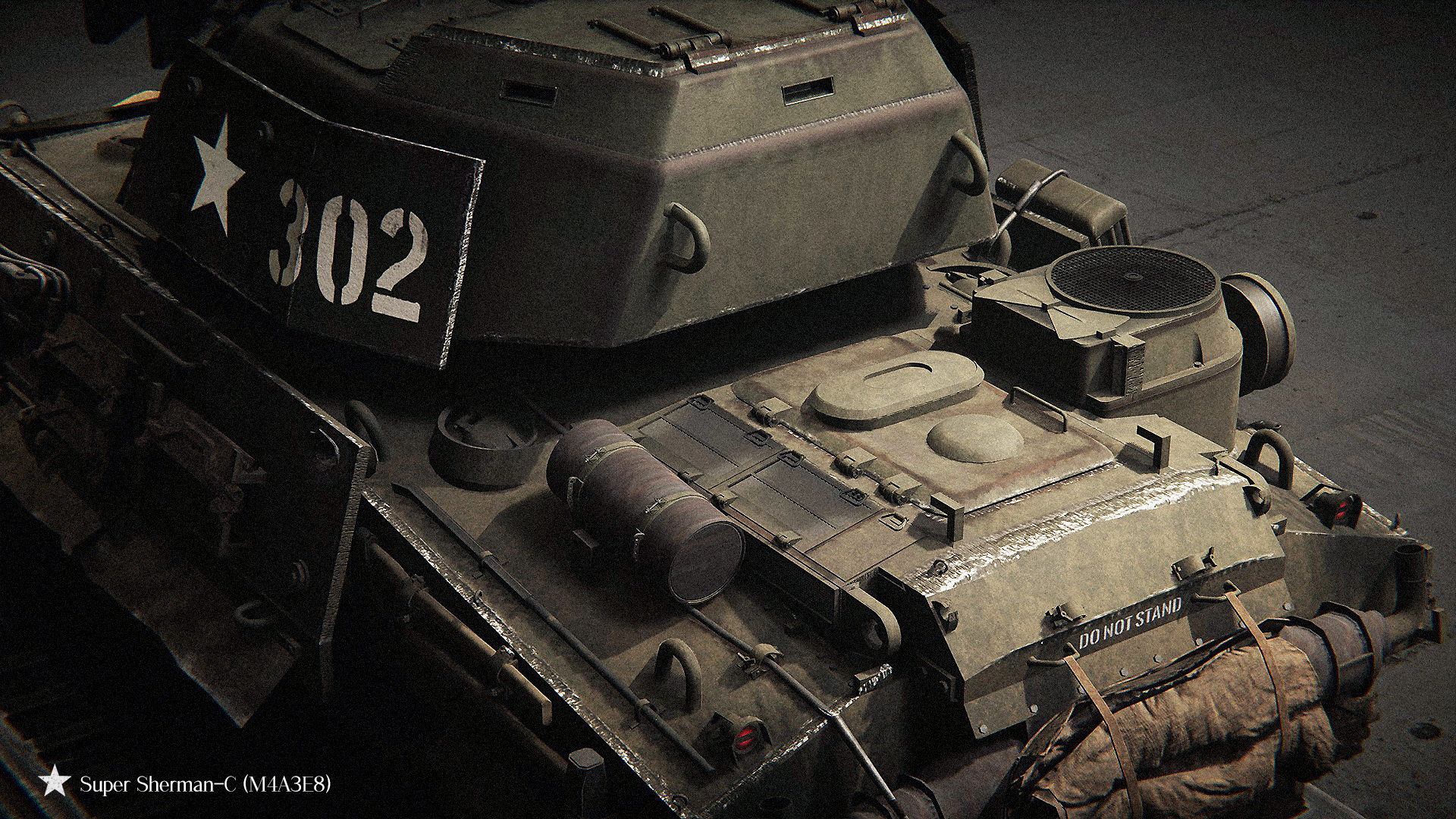
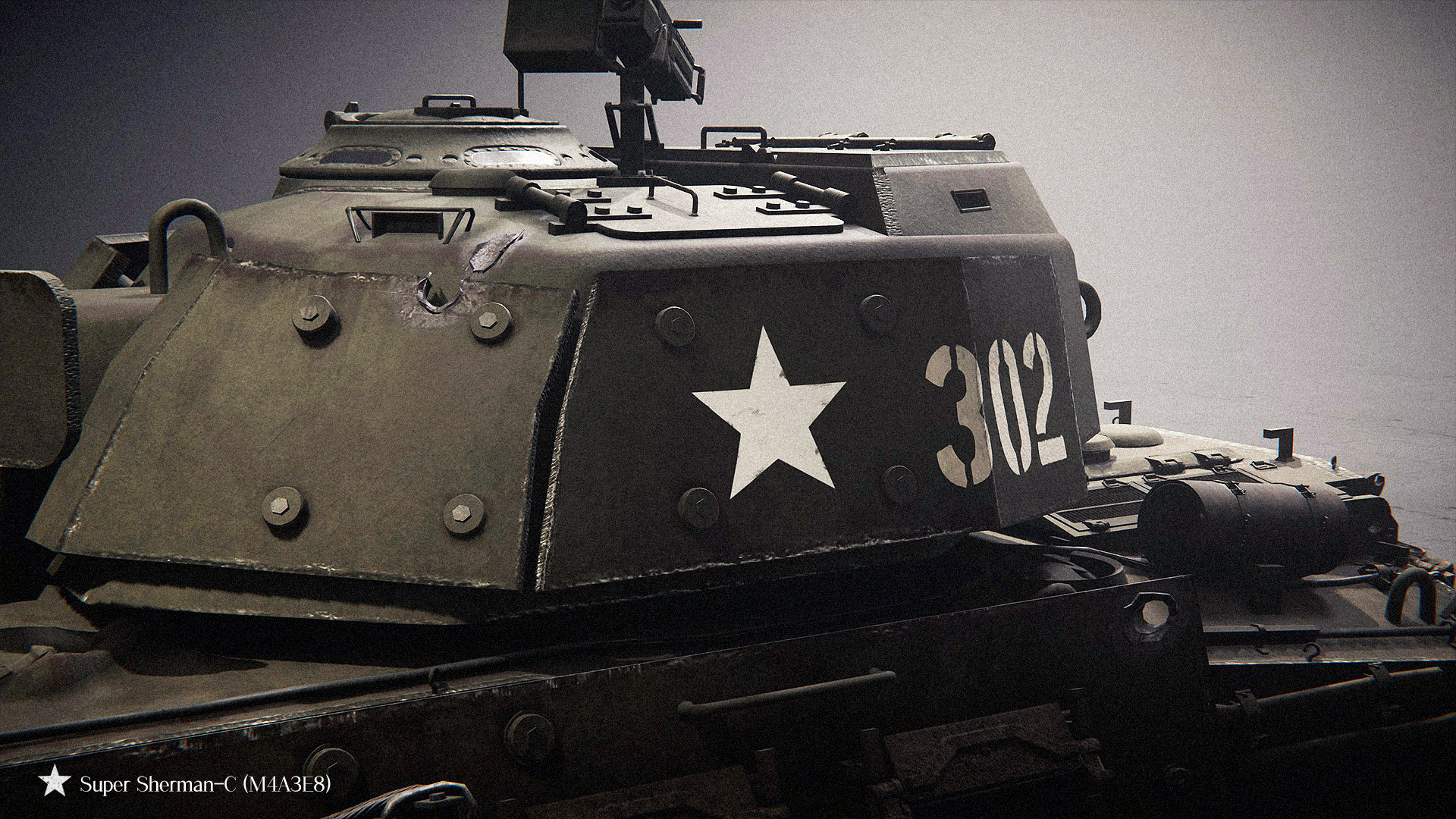
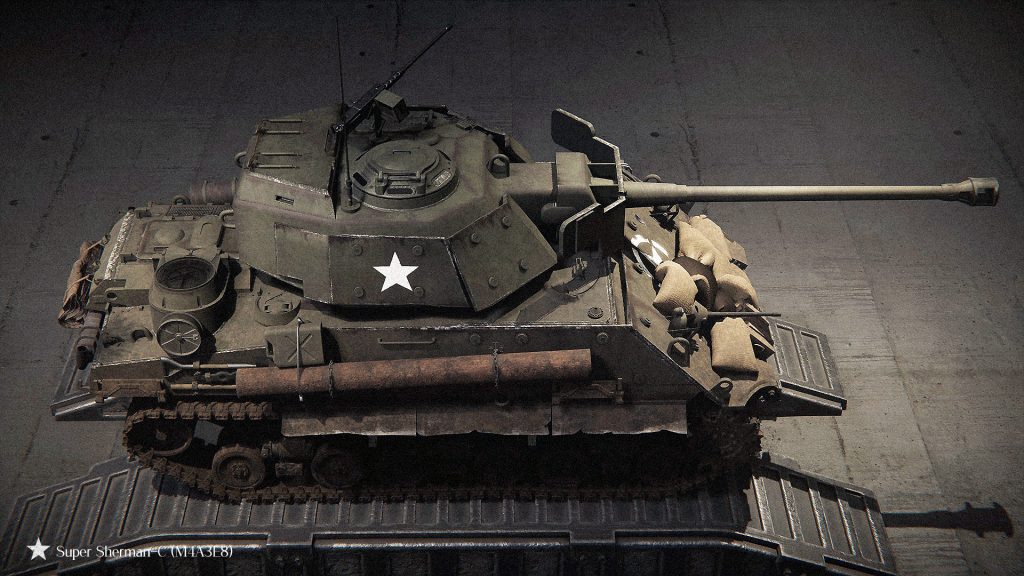
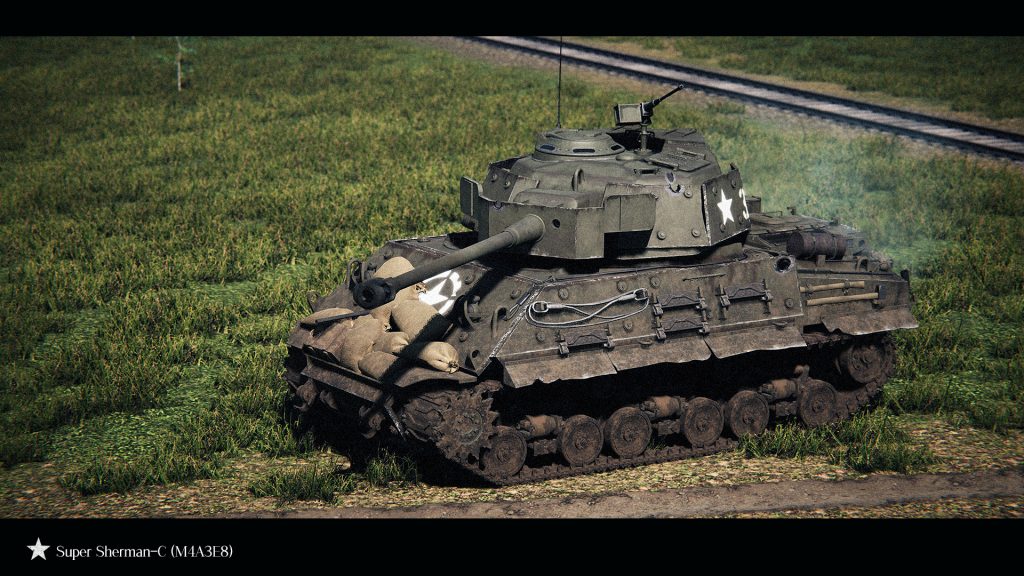
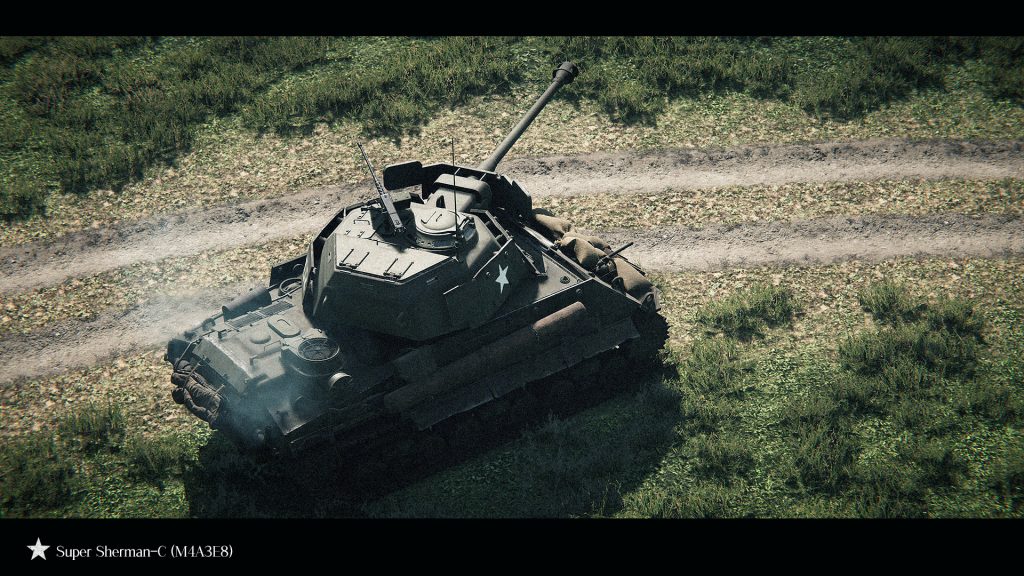
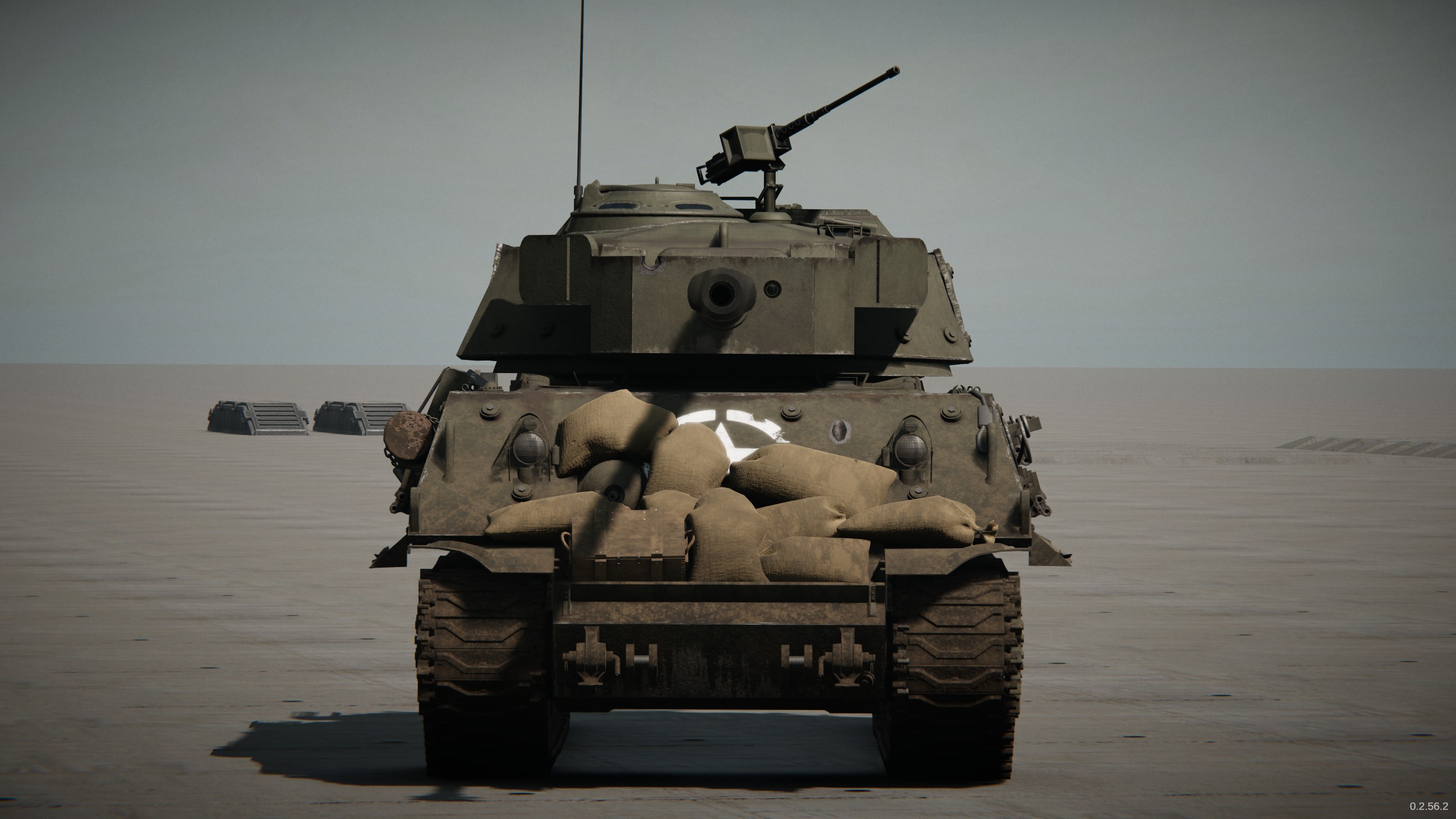
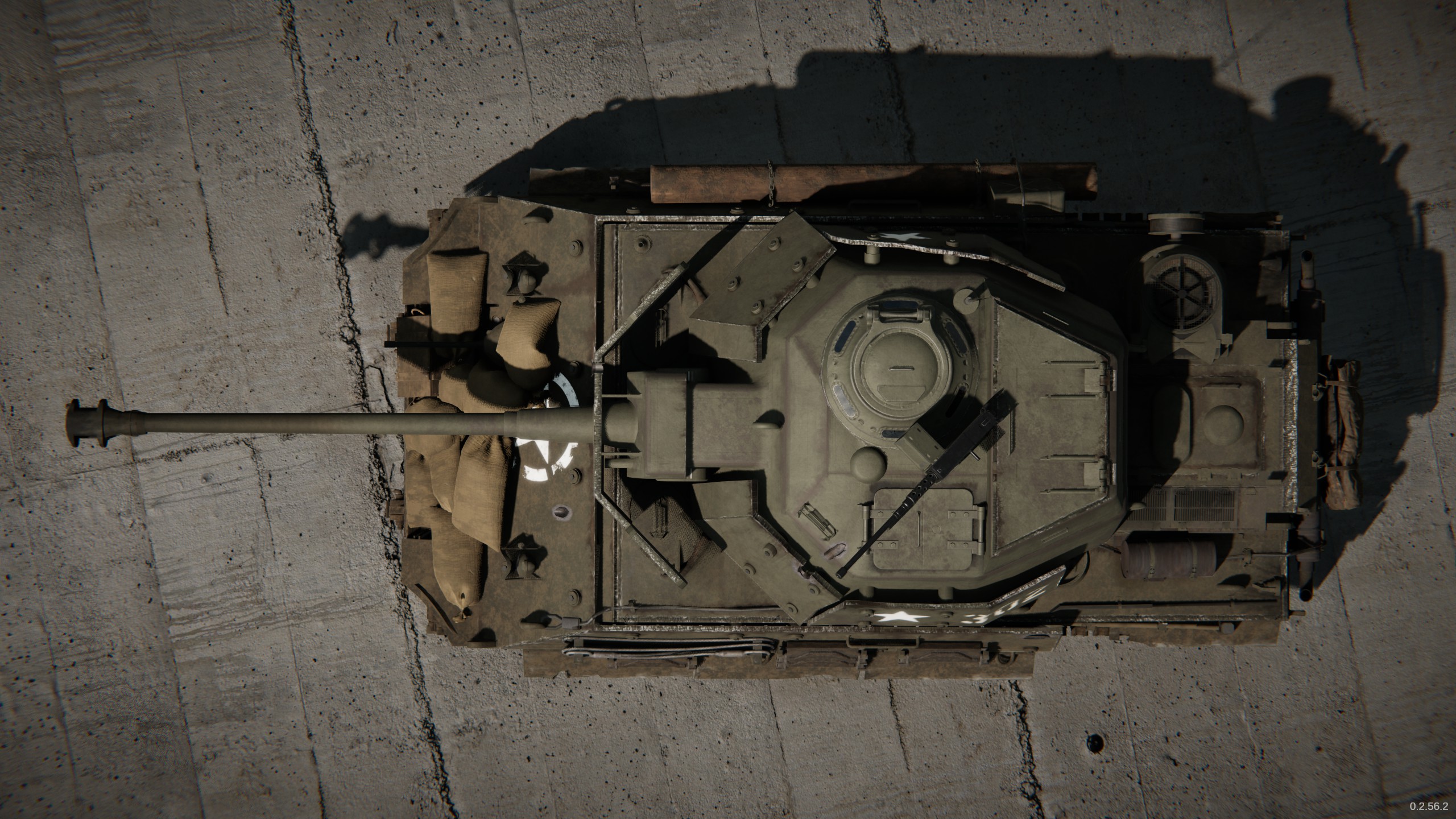
The vehicle’s most distinctive feature was an entirely new turret with a massive gun mantlet, an enlarged rear bustle, and additional armor elements.
At the same time, the designers sought to preserve the recognizable Sherman hull and maintain the greatest possible degree of standardization with existing production tanks.
This was the central idea behind the project: to create a significantly more powerful fighting vehicle without forcing American industry to completely reorganize production around an entirely new design.
Ninety Millimeters Against German Armor
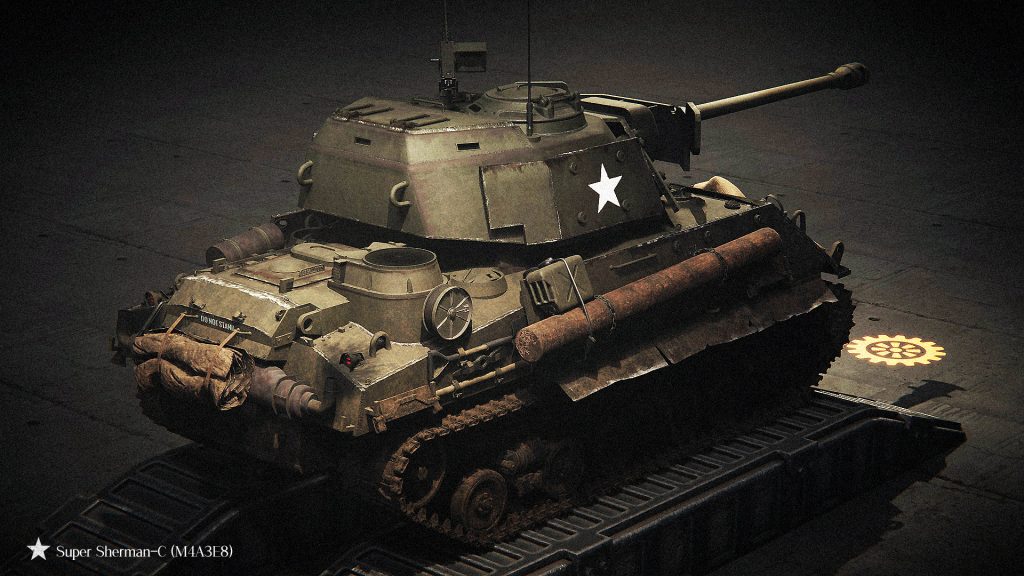
The Sherman-C’s main armament was the American 90 mm M3 gun.
This was an entirely different weapon compared with the standard 75 mm and 76 mm tank guns used by the M4 family.
The same gun was mounted on the real Pershing, as well as on the American M36 Jackson tank destroyer.
When firing suitable armor-piercing ammunition, it provided significantly better capabilities against heavily armored enemy vehicles.
In our version, the Sherman-C receives a specially designed, enlarged turret. Its rear bustle accommodates equipment and part of the ammunition supply, while the reinforced gun mantlet protects the most vulnerable frontal section of the fighting compartment.
However, a more powerful gun inevitably creates new problems.
Ninety-millimeter rounds take up more space than 76 mm ammunition, forcing a reduction in ammunition capacity. The increased weight places additional stress on the gun-laying mechanisms and turret ring, while the vehicle itself becomes noticeably heavier.
Furthermore, the recoil system and gun-balancing mechanisms have to be redesigned.
That is why creating such a tank would involve far more than simply replacing its gun.
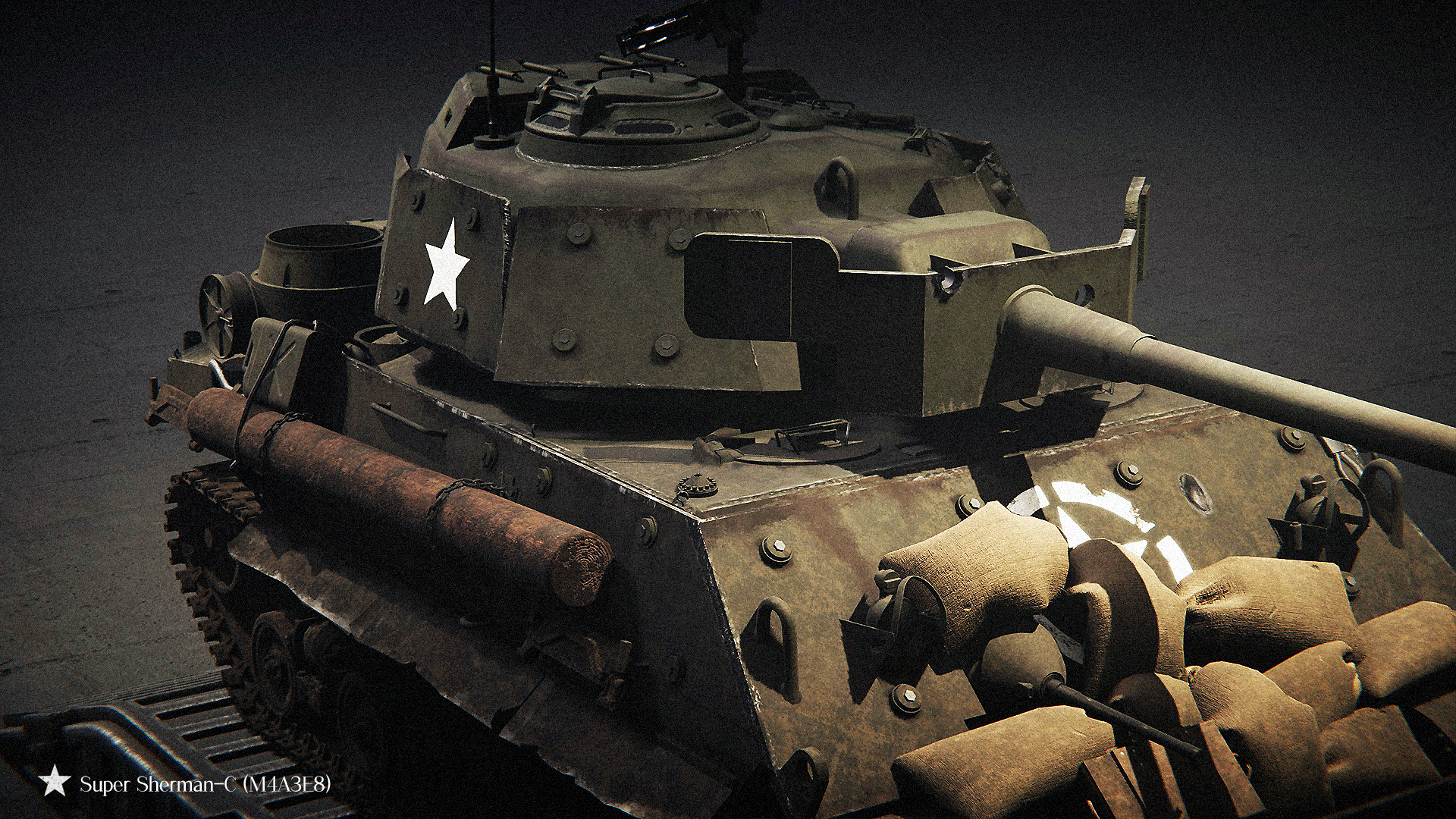
Close-up views of the Sherman-C turret and gun mantlet:
Additional Armor and a New Engine
The next major improvement concerned the tank’s protection.
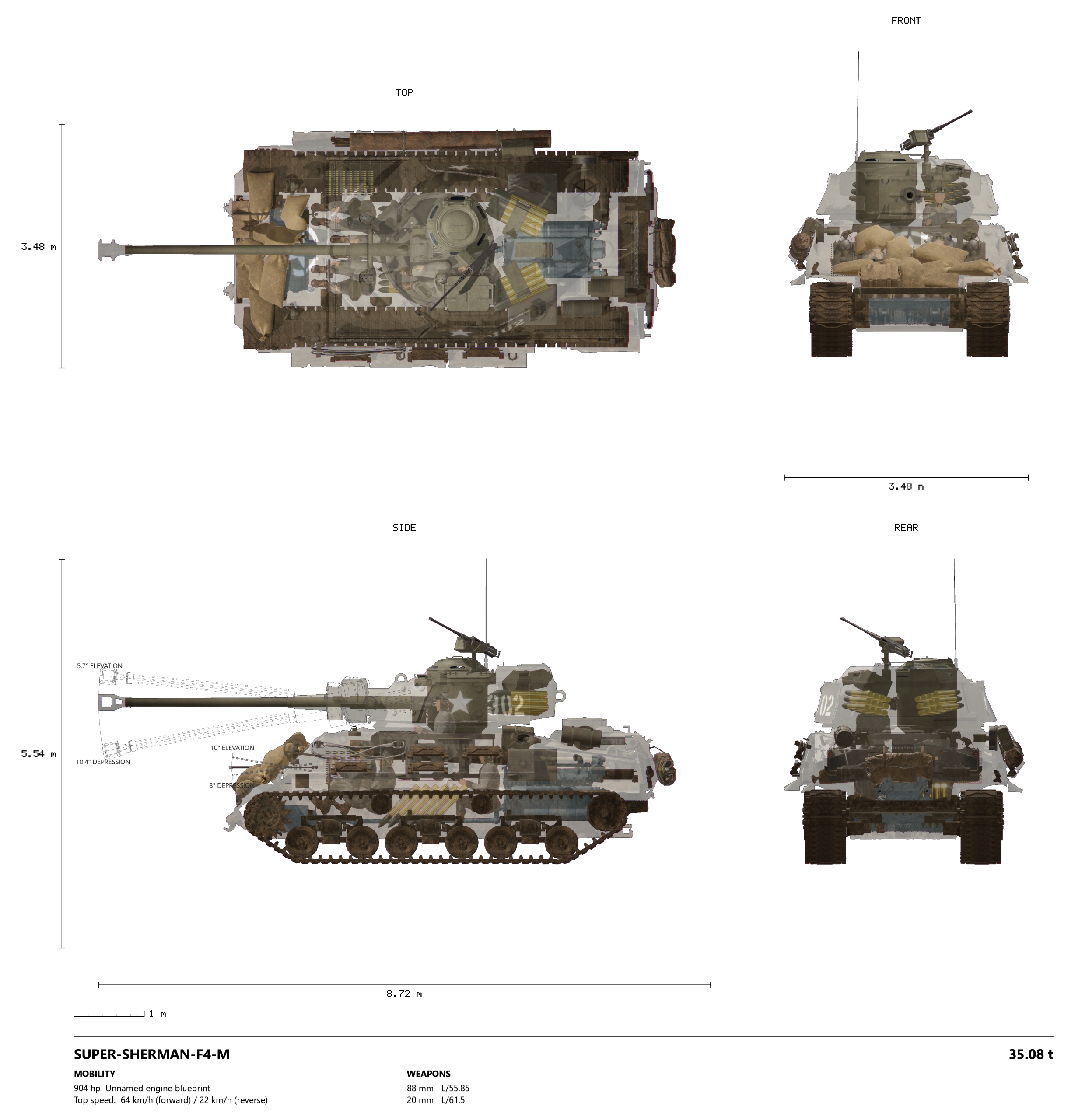
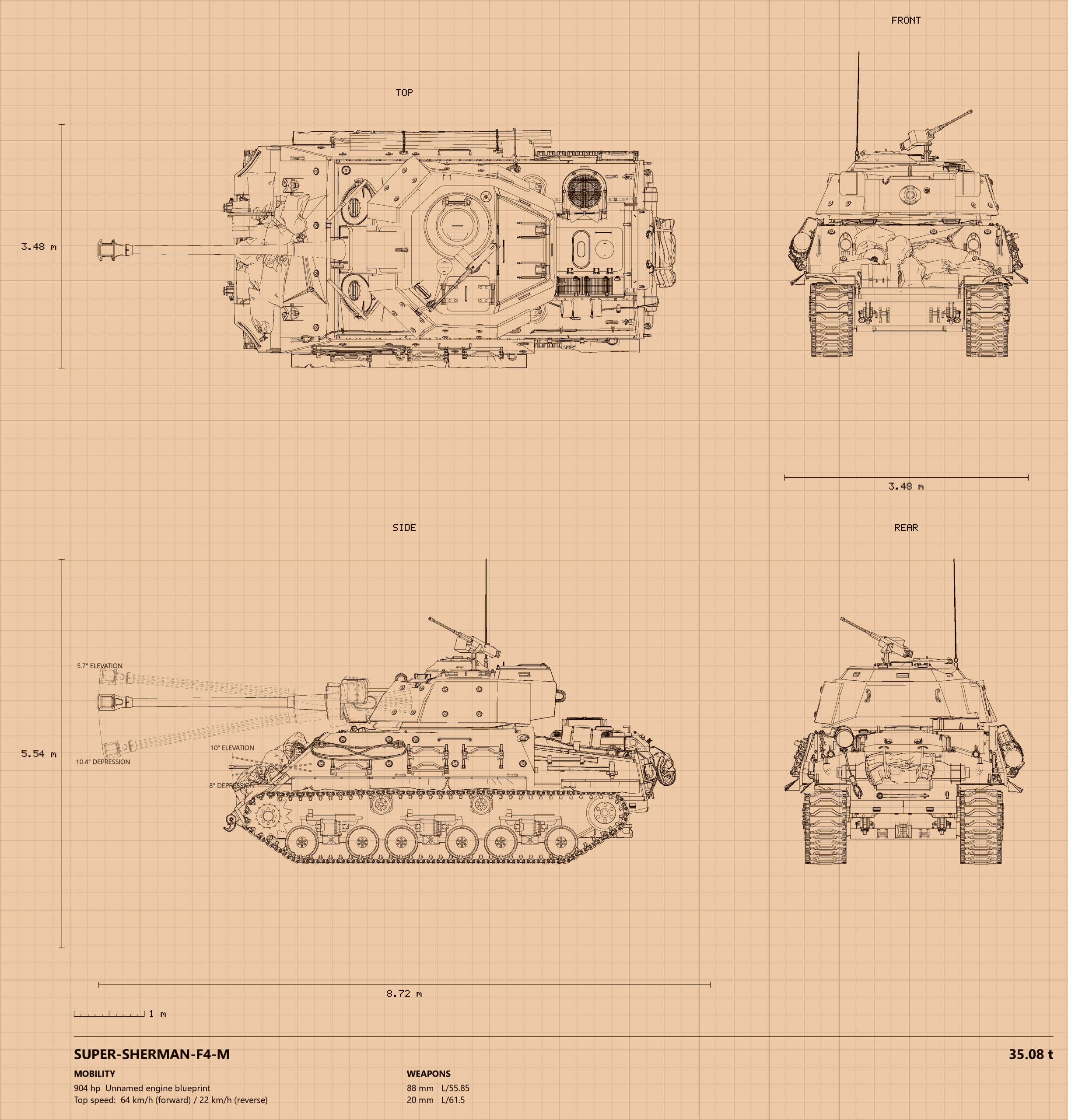
In his original design, MAFIALAA incorporated additional armor plates 50 mm thick on the forward sections of the hull sides and 40 mm thick around the turret.
These modifications gave the tank a highly unusual appearance. The vehicle began to resemble a hybrid of the familiar Sherman, the German Panther, and the American experimental Super Pershing.
Our alternative version retains this armor arrangement.
However, additional armor comes at a price — increased vehicle weight. Consequently, the standard Ford GAA engine, producing approximately 500 horsepower, would no longer be sufficient to maintain the tank’s original mobility.
American engineers would have needed either to develop a more powerful version of the existing engine or adapt a different, higher-output powerplant.
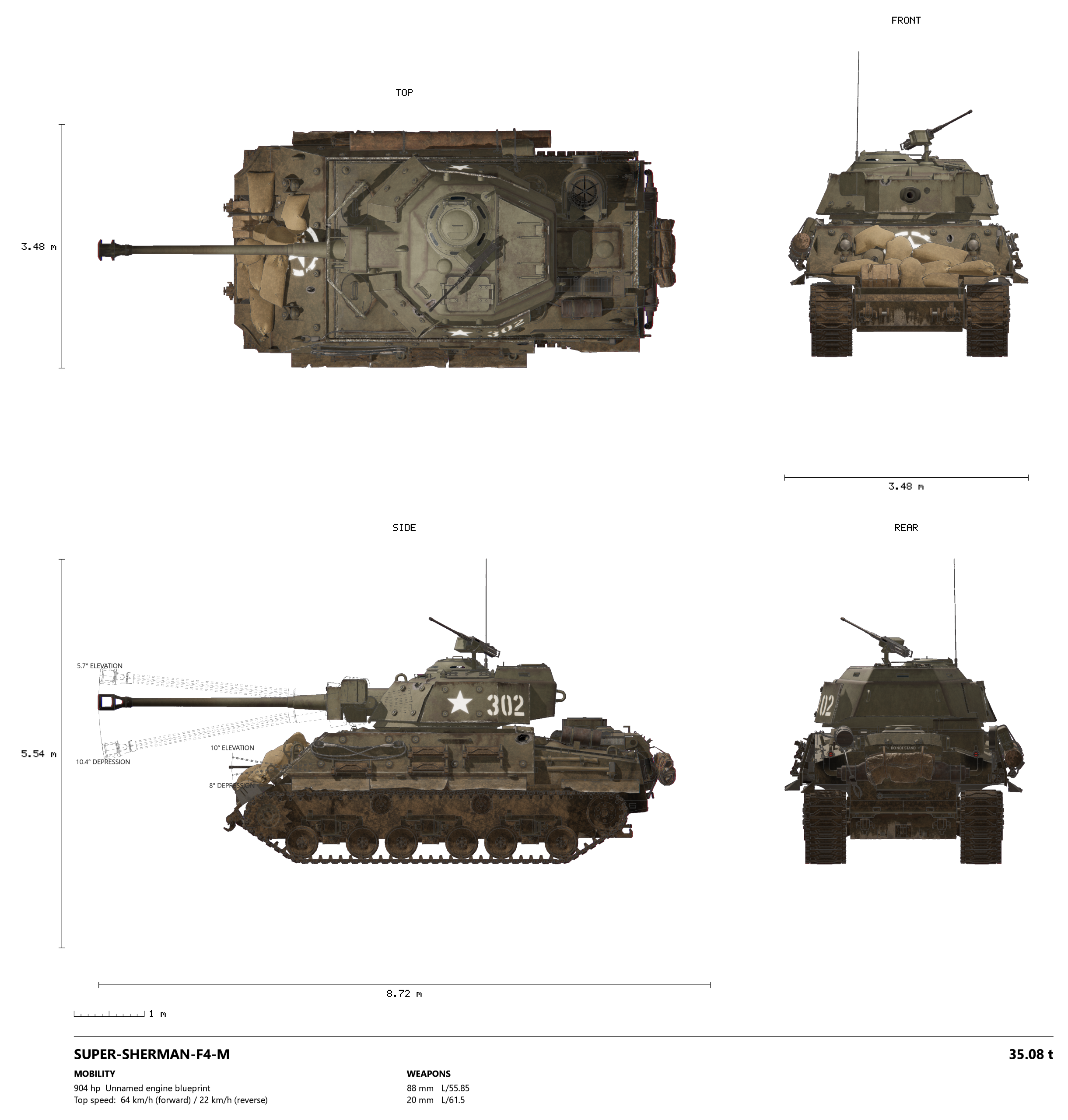
In the original virtual model, the author enlarged the engine compartment and stated that his vehicle could reach a maximum speed of 60 km/h. However, he did not specify the engine’s actual power output.
Achieving such a speed in a real production vehicle would have required substantial engineering work on both the engine and transmission.
Estimated Sherman-C Specifications
-
Base chassis: M4A3E8 Sherman
-
Classification: Extensively modernized medium tank
-
Crew: 5
-
Main armament: 90 mm M3 gun
-
Secondary armament: 12.7 mm Browning M2 machine gun mounted in the front hull
-
Additional hull armor: Up to 50 mm on the forward sections of the hull sides
-
Additional turret armor: Up to 40 mm
-
Suspension: HVSS, reinforced if necessary
-
Engine: Higher-output powerplant, exact specifications undetermined
-
Maximum speed: Up to 60 km/h, according to the creator of the virtual model
-
Combat weight: Not specified
-
Ammunition capacity: Not specified
Could the Sherman-C Have Replaced the Pershing on the Battlefield?
Let us assume that the American command decided to develop such a vehicle in early 1944. If the program had received sufficiently high priority, the first prototypes might have appeared by the end of that year, with mass production beginning in 1945.
Admittedly, it would be misleading to describe such a modernization as inexpensive.
A new turret, a more powerful engine, reinforced suspension, and additional armor would have required substantial changes to production. Nevertheless, many components and much of the manufacturing infrastructure would have remained common to the standard Sherman.
The new tank’s principal advantage would have been its powerful armament. The 90 mm gun would have enabled it to engage German heavy tanks with considerably greater confidence.
At the same time, the Sherman-C would have retained the characteristic disadvantages of the original vehicle, particularly its relatively tall hull. Even additional armor would not have guaranteed reliable protection against powerful German anti-tank guns.
Mobility deserves particular attention. The author’s claimed maximum speed of 60 km/h would have been impressive, but achieving such a figure with a significantly heavier Sherman would have been difficult in practice.
Most likely, the production vehicle would have been somewhat slower than its virtual prototype.
But the most interesting developments might have begun after the war.
If the US Army had received a sufficiently successful 90 mm-armed tank based on the M4, the urgent need to develop an entirely new generation of armored fighting vehicles might have been postponed for several years.
Instead of the Pershing’s relatively short service career and the subsequent introduction of the M46 Patton, the Americans might have continued improving the familiar Sherman.
Of course, a tank originally designed in the early 1940s could not be modernized indefinitely. Nevertheless, the history of the Israeli M50 and M51 Super Shermans, which received considerably more powerful guns, demonstrates just how much modernization potential the design possessed.
Instead of a Conclusion
Perhaps the greatest advantage of the American Sherman was neither its armament nor its armor protection, but its versatility.
The tank proved to be such a successful production platform that dozens of different fighting vehicles were developed on its chassis. Under different circumstances, American engineers might well have been able to transform it into a machine whose capabilities would have seemed almost unbelievable in 1942.
MAFIALAA’s Sherman-C perfectly illustrates this idea.
Of course, this is not a real tank but a virtual model created using the Sprocket tank-design simulator. Moreover, some of its specifications would require serious technical verification.
Nevertheless, the concept itself has a historical foundation. The Americans really did experiment with mounting a 90 mm gun on a Sherman chassis, but ultimately chose to concentrate on developing a new tank.
Whether that decision was the right one remains an interesting question.
After all, if the US Army had received a thoroughly modernized Sherman-C instead of the M26 Pershing, the entire history of postwar American tank development might have taken a very different course.
Source — MAFIALAA, Super Sherman-C (M4A3E8), Reddit, r/SprocketTankDesign, October 19, 2026.