Between the Renault and the Whippet: What the Russian Empire’s First Medium Tank, the SB-1, Could Have Been

The First World War marked the birth of the tank. However, despite its enormous army and well-developed engineering tradition, the Russian Empire never managed to acquire its own mass-produced armored tracked vehicles. Yet things could have turned out very differently. Imagine that the Allies had allowed Russian engineers access to their secret projects while the first tanks were still being developed. What would have happened if Russian designers had combined the French concept of a tank with a rotating turret and the British approach to creating a highly mobile fighting vehicle?
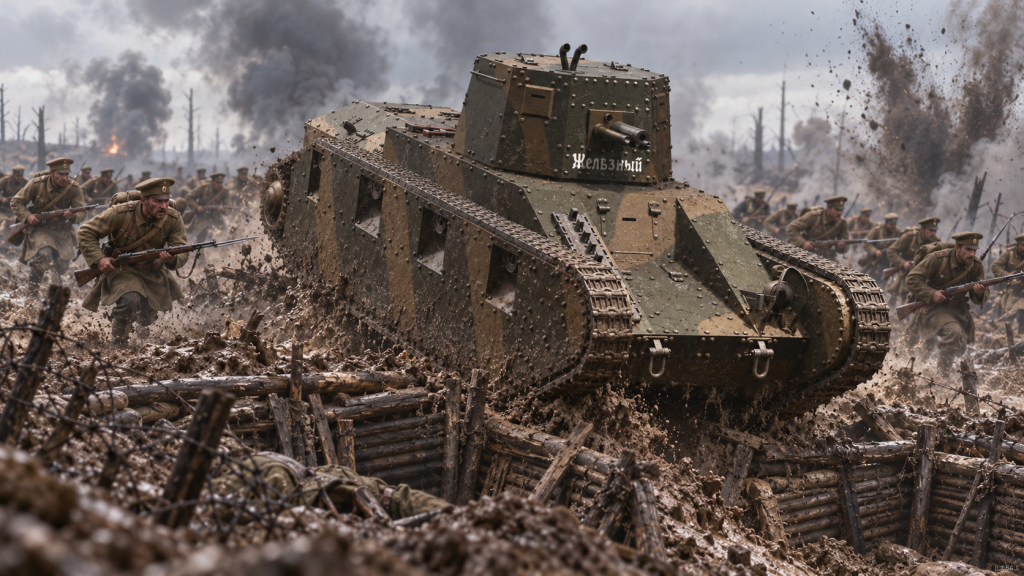
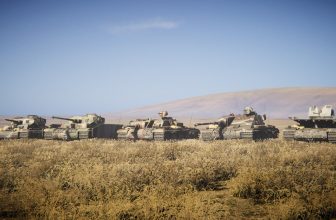
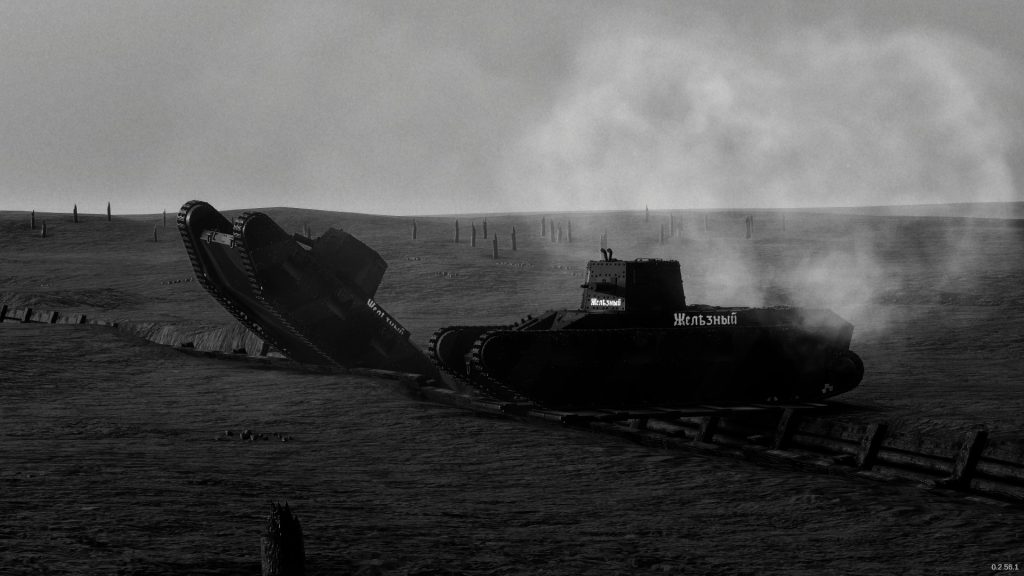
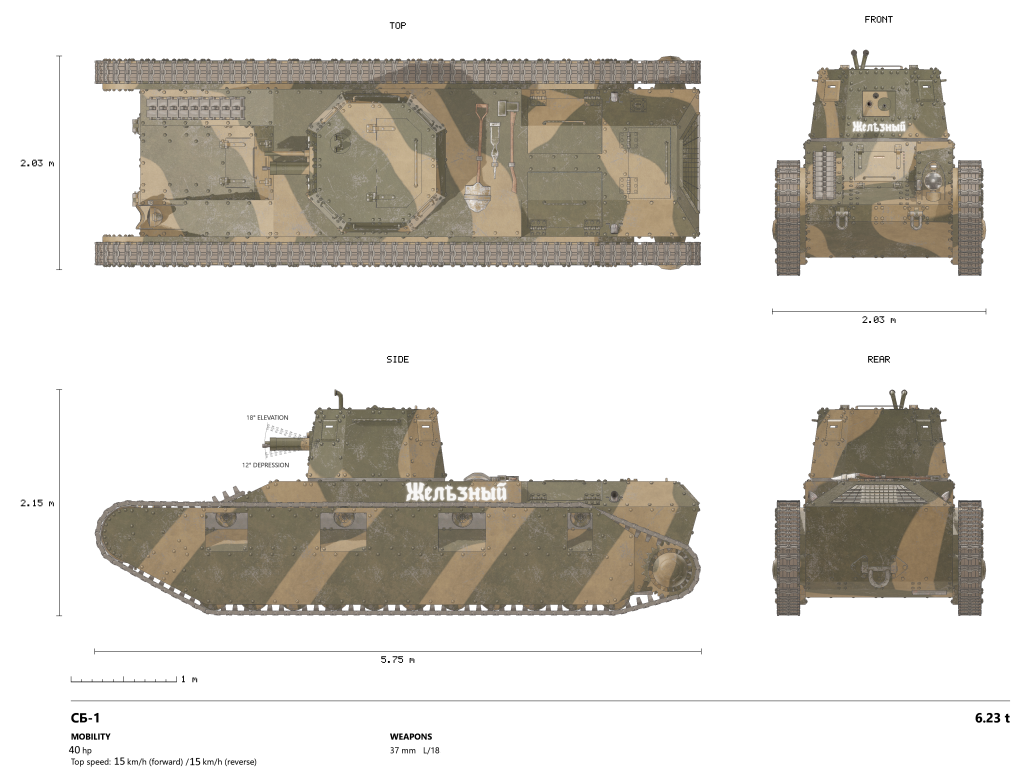
This is precisely the alternative proposed by our Western colleague, known as Cute-Twist-4116, who presented his own design for a Russian Imperial tank, the SB-1, on Reddit. Using his project as a starting point, we have slightly modified the original concept, increasing the vehicle’s weight to 16.2 tons. The result is a fully fledged medium tank with a rotating gun turret, relatively substantial armor protection for its time, and high mobility. Moreover, in our version of alternative history, Russian engineers decided not merely to copy foreign designs but to create their own vehicle capable of providing direct infantry support and breaking through fortified defensive lines.
Why Did Russia Never Develop Its Own Tanks?
By the beginning of the First World War, the Russian Empire already had experience in developing armored cars, but the situation with tracked armored vehicles was considerably more complicated. Russian engineers proposed various designs, the most famous of which were Porokhovshchikov’s Vezdekhod and Nikolai Lebedenko’s enormous wheeled vehicle, commonly known as the Tsar Tank. However, none of these projects developed into a fully fledged production tank. The problem was not simply a shortage of technical ideas but also limited industrial capacity, a lack of engines and specialized mechanisms, and the general overloading of Russian industry with military orders.
Meanwhile, Russia’s allies had made considerably greater progress. In September 1916, the British deployed their Mark I tanks in combat for the first time, while the French developed the revolutionary Renault FT. The latter effectively established the foundations of the classic tank layout: the driver was positioned at the front, the engine at the rear, and the main armament was mounted in a rotating turret. The British, meanwhile, developed the Medium Mark A Whippet, a relatively fast vehicle intended to exploit breakthroughs in enemy defenses. In our alternative world, these two approaches could have had a decisive influence on Russian engineers.
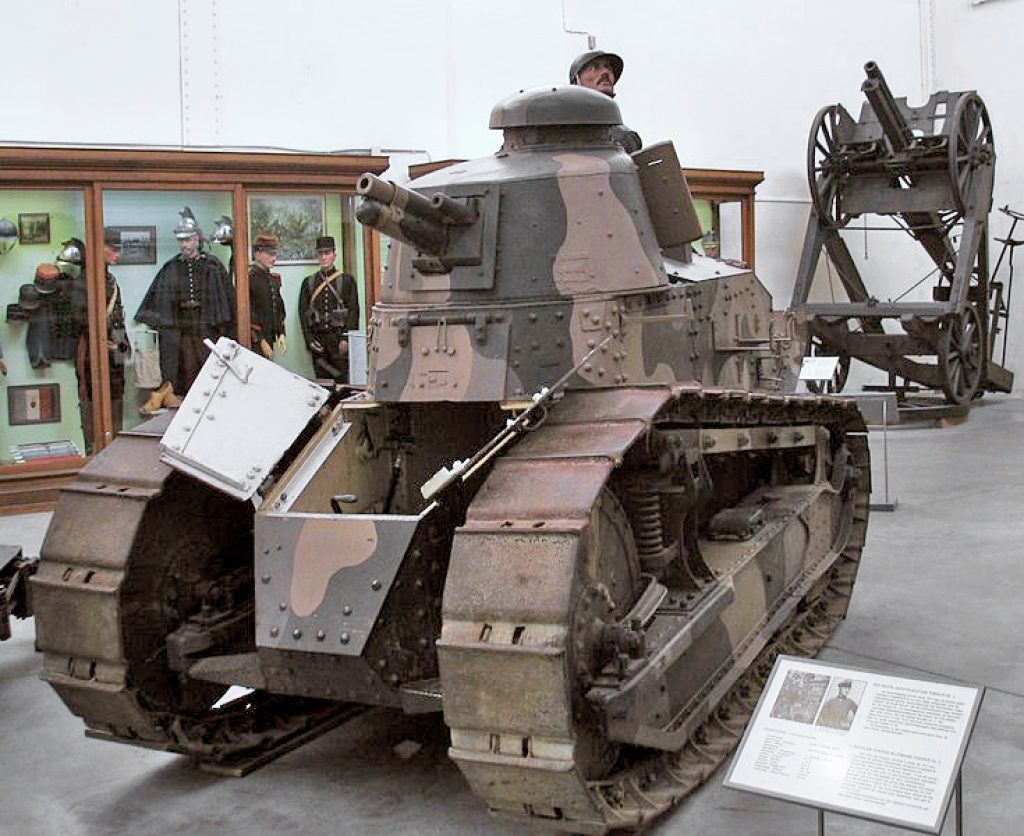
Renault FT
The Point of Divergence: The Allies Reveal Their Secrets
Imagine that as early as 1916, London and Paris decided to involve Russian specialists in the development of advanced armored vehicles. In Britain, Russian engineers studied the design of tracked running gear and the operational characteristics of heavy tanks, while in France they became acquainted with the work of Louis Renault and General Jean-Baptiste Estienne. Importantly, this would not have involved the transfer of completed production tanks, which did not yet exist, but rather access to experimental designs, blueprints, and test results.
Upon returning to Russia, the engineers concluded that directly copying the enormous British rhomboid tanks made little sense. The vast expanses of the Eastern Front required a more mobile vehicle capable of accompanying advancing infantry, suppressing machine-gun positions, and independently overcoming field fortifications. At the same time, the French Renault FT seemed too small, while the British Whippet lacked sufficient versatility because of its machine-gun armament and the absence of a rotating turret. Thus emerged the idea of developing a domestic medium tank, provisionally designated the SB-1.
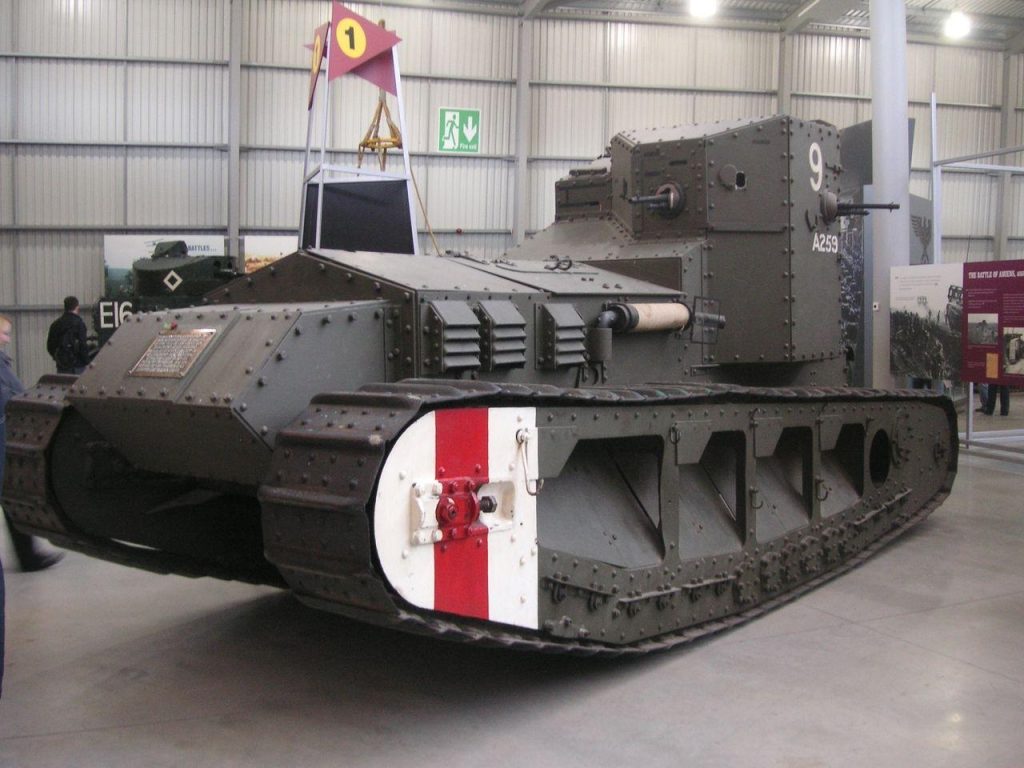
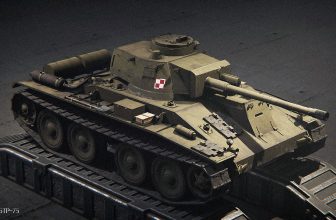
British Medium Mark A Whippet
SB-1: Russia’s Answer to the French and British
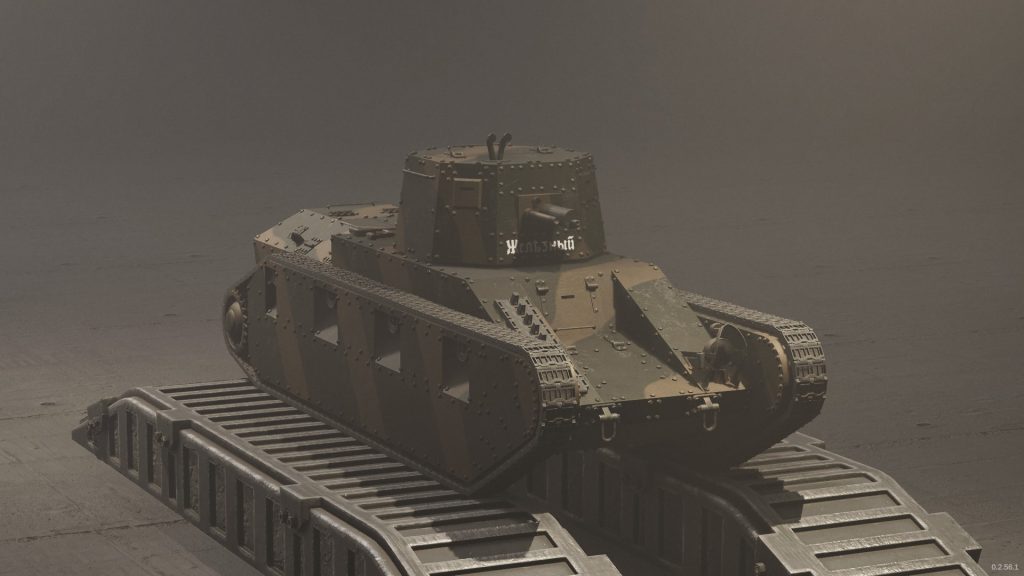
The main distinguishing feature of the SB-1 is its combination of design solutions characteristic of different approaches to early armored warfare. From the French school, it inherits a two-man crew and turret-mounted armament, while from the British it adopts an emphasis on greater mobility and the ability to operate not only directly alongside infantry formations but also after the first line of enemy defenses has been breached. Externally, the vehicle looks considerably more modern than most tanks of 1916, which is quite understandable: its designers had the opportunity to study in advance solutions that foreign specialists would arrive at only after several years of experimentation.
In our alternative version, the SB-1 has a combat weight of 16.2 tons. This is considerably more than the French Renault FT, which weighed approximately seven tons, and even somewhat more than the British Whippet. Thus, we have a fully fledged medium tank by First World War standards. The increased weight makes it possible to provide more substantial armor protection and carry a considerable ammunition load. At the same time, the SB-1 remains much more compact than the heavy British rhomboid tanks, while its rotating turret offers significantly greater flexibility in the use of its armament.
The Gun That Was Supposed to Replace Several Machine Guns
The project’s author chose the 37 mm M1915 quick-firing trench gun as the SB-1’s main armament. This caliber was a particularly suitable choice for an early tank. The gun’s relatively small dimensions allowed it to be installed in a compact turret, while high-explosive fragmentation shells made it possible to engage machine-gun nests, field shelters, and enemy personnel. At the same time, the 37 mm gun provided capabilities that the machine-gun-only British Whippets lacked. This advantage became especially noticeable when it was necessary to suppress protected firing positions.
The specified ammunition capacity is also noteworthy: 232 rounds. For a two-man vehicle, this was a very substantial supply, allowing it to support advancing infantry for a considerable period. The gun’s vertical elevation and depression angles ranged from −12 to +18 degrees, making it easier to engage targets on uneven terrain. However, the two-man crew had a serious disadvantage: the commander had to observe the battlefield, select targets, aim the gun, and operate it simultaneously. This problem subsequently became one of the main reasons for the transition to larger tank crews.
Armor and Engine: Advantages and Questions
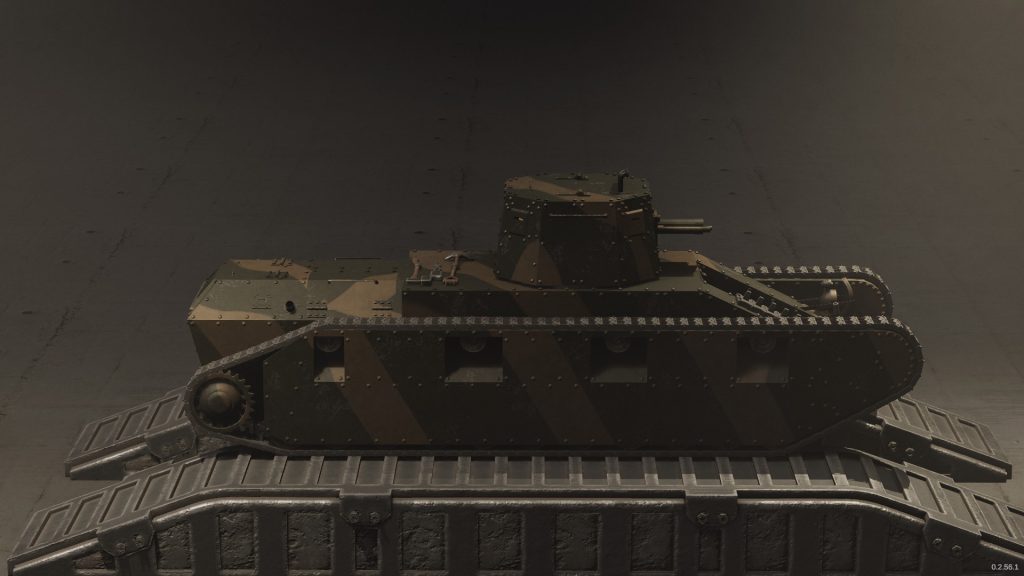
The SB-1’s armor protection was quite substantial for its time. The frontal and side armor plates of the hull were 18 mm thick, while the rear armor was 8 mm thick. The turret was protected by 18 mm of armor on all sides. Such protection was intended primarily to withstand rifle and machine-gun fire and shell fragments, although under certain conditions it could also resist armor-piercing bullets. However, the tank remained highly vulnerable to artillery, especially direct hits. Like most First World War tanks, it would have had to rely not only on its armor but also on movement, cooperation with infantry, and the timely suppression of enemy firing positions.
The situation with the powerplant is even more interesting. The author specified a four-cylinder truck engine and a maximum speed of 15 km/h both forward and in reverse. For its time, these were highly attractive figures: the British Whippet could reach approximately 13 km/h, while the Renault FT was considerably slower. However, this is where the main technical problem of our alternative version becomes apparent. To accelerate a 16-ton vehicle to the stated speed, the power of an ordinary truck engine of that period might not have been sufficient. Consequently, Russian engineers would have had to either substantially upgrade the powerplant and transmission or use a more powerful engine. Achieving the same maximum speed in both directions would have been an equally challenging task.
How Could the SB-1 Have Changed the War on the Eastern Front?
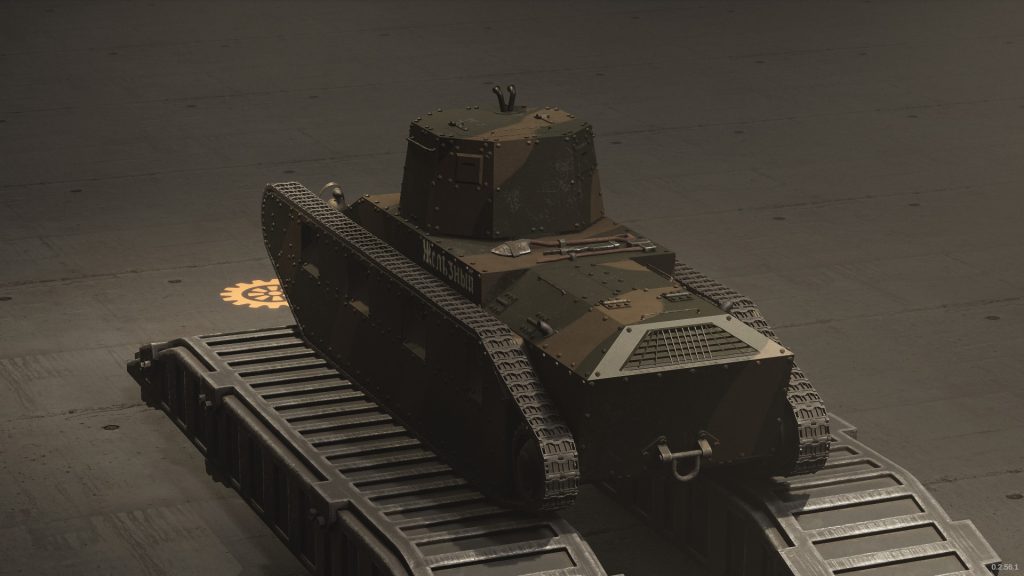
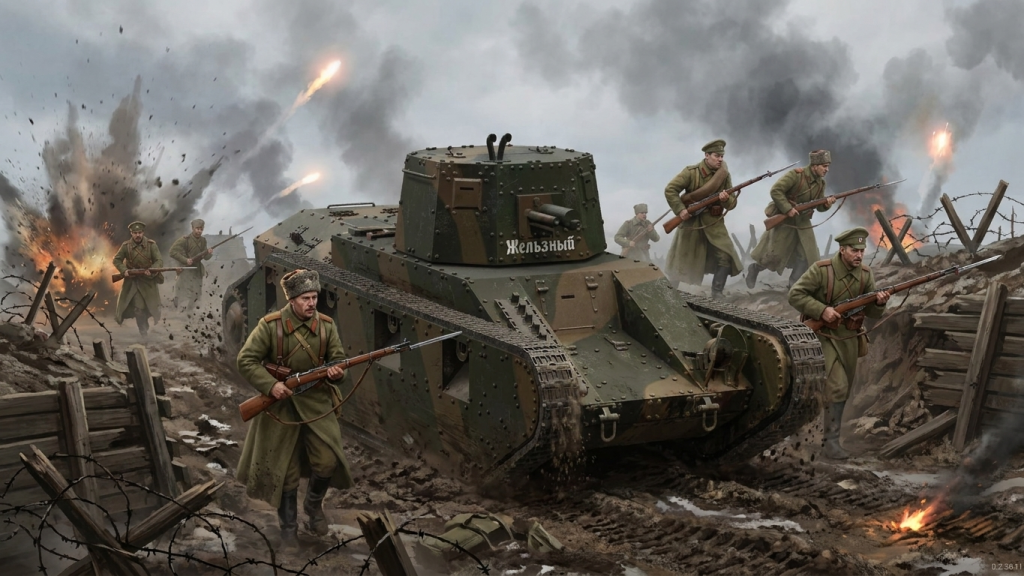
Let us suppose that the first experimental SB-1 tanks entered testing in 1917, and that by the following year Russian factories had managed to establish limited production. Under the conditions of trench warfare, these vehicles could have become a very useful means of infantry support. The rotating turret made it possible to engage targets without constantly turning the hull, while the relatively high speed allowed the tank to move more quickly between different sectors of the front. At the same time, its 16-ton weight imposed certain limitations on cross-country mobility, especially on soft ground, which was abundant on the Eastern Front.
However, the tank alone could not have solved the Russian army’s main problems. Successful employment required trained crews, spare parts, fuel, repair workshops, and well-developed tactics for cooperation with infantry and artillery. Moreover, Russian roads, bridges, and railway infrastructure imposed serious restrictions on the movement of armored vehicles. Therefore, it would be far more realistic to imagine several dozen SB-1 tanks concentrated in the most important sectors of the front than hundreds of new vehicles suddenly changing the course of the entire war. Nevertheless, if successfully employed, the first Russian medium tanks could certainly have had a noticeable influence on individual offensive operations.
Estimated Technical and Tactical Specifications of the SB-1 Medium Tank
-
Type: Medium infantry support tank
-
Combat weight: 16.2 tons
-
Crew: 2 (driver and commander/gunner)
-
Hull length: Approximately 5.2 m
-
Width: Approximately 2.4 m
-
Height: Approximately 2.6 m
-
Hull armor (front/sides/rear): 18/18/8 mm
-
Turret armor: 18 mm all around
-
Main armament: 37 mm M1915 trench gun
-
Ammunition capacity: 232 rounds
-
Gun depression/elevation: −12° / +18°
-
Engine: Modified four-cylinder carbureted truck engine
-
Estimated engine power: 90–110 hp
-
Power-to-weight ratio: 5.6–6.8 hp/ton
-
Transmission: Mechanical, with a reversing mechanism
-
Maximum forward speed: 15 km/h
-
Maximum reverse speed: 15 km/h
-
Average cross-country speed: 5–8 km/h
-
Road range: 80–110 km
-
Trench-crossing capability: Approximately 1.8 m
-
Vertical obstacle-climbing capability: Approximately 0.5 m
-
Fording depth: Approximately 0.8 m
-
Estimated development period: 1916–1917
-
Possible start of production: 1918
Instead of a Conclusion
The SB-1 designed by our colleague Cute-Twist-4116 represents an interesting attempt to imagine what Russia’s first mass-produced tank might have looked like if the Russian Empire had gained timely access to Anglo-French developments. In our alternative version, this idea has been developed further: increasing the combat weight to 16.2 tons transformed the vehicle into a fully fledged medium tank, combining the compact rotating turret of the Renault FT with the mobility of the British Whippet and relatively substantial armor protection. Of course, such versatility would inevitably have come at the cost of more complicated production and greater demands on the powerplant.
Can the SB-1 be considered a realistic project? Under certain historical assumptions, quite possibly. Especially if we assume that Russia had avoided the upheavals of 1917 and continued its industrial cooperation with the Allies. Perhaps such a vehicle would have become the starting point for the development of Russian tank manufacturing, with more advanced designs appearing on its basis during the 1920s. In that case, the history of Russian tanks would have begun not with copies of French vehicles, but with an original medium tank developed by engineers of the Russian Empire.