A vehicle the empire never lived to see: the 1917 Holt-Putilov “Alexander Nevsky” heavy tank

They really are coming thick and fast. Just a few days ago, I published an alternative Russian tank from the First World War — the 16-ton SB-1, which occupied a peculiar niche between the French Renault and the British Whippet. And now, hot on its heels, another Russian tank has appeared in the SprocketTankDesign community. This time, it is a heavy tank weighing almost 19 tons, and one built on a completely different technical foundation.
Incidentally, our colleague Comrade Sukhov had already done something similar on our website in his project “Coal Burns! A Steam-Powered Tank”. However, that vehicle was based on a Hornsby steam tractor, whereas this time the basis is a perfectly ordinary American Holt crawler tractor with a gasoline engine.
What makes this particularly interesting is that we are not dealing with some technically impossible fantasy. All the main components required for such a vehicle already existed, and the industry of the Russian Empire possessed the technologies necessary to build it.
The project’s creator, who goes by the nickname Averytheprotogen, named his creation the Holt-Putilov Heavy Tractor Model 1917 “Alexander Nevsky.”
Let us imagine that the Russian military leadership had shown a little more foresight, that the Putilov Works had received the corresponding order back in 1916, and that several of these vehicles had not only been built but had actually been sent to the front. How might their fate have unfolded?
From Artillery Tractor to Armored Fortress
The history of the Russian heavy tank “Alexander Nevsky” began in the autumn of 1916, when the Main Military Technical Directorate received detailed reports about the British use of new armored vehicles on the Somme.
Russian military specialists quickly recognized the potential of the new weapon. However, it soon became equally clear that there was little hope of receiving British tanks in large numbers anytime soon. British industry was barely managing to fulfill the orders of its own army.
It was then decided to develop a similar vehicle domestically.
Developing an entirely new tracked chassis would have meant losing precious time. Military engineers therefore proposed using the already familiar American Holt tractors, which had been supplied to Russia for the needs of heavy artillery.
The powerful Holt 120 was selected. This was a fairly large tractor with a gasoline engine and a tracked running gear that allowed it to move confidently along dirt roads and over relatively soft ground.
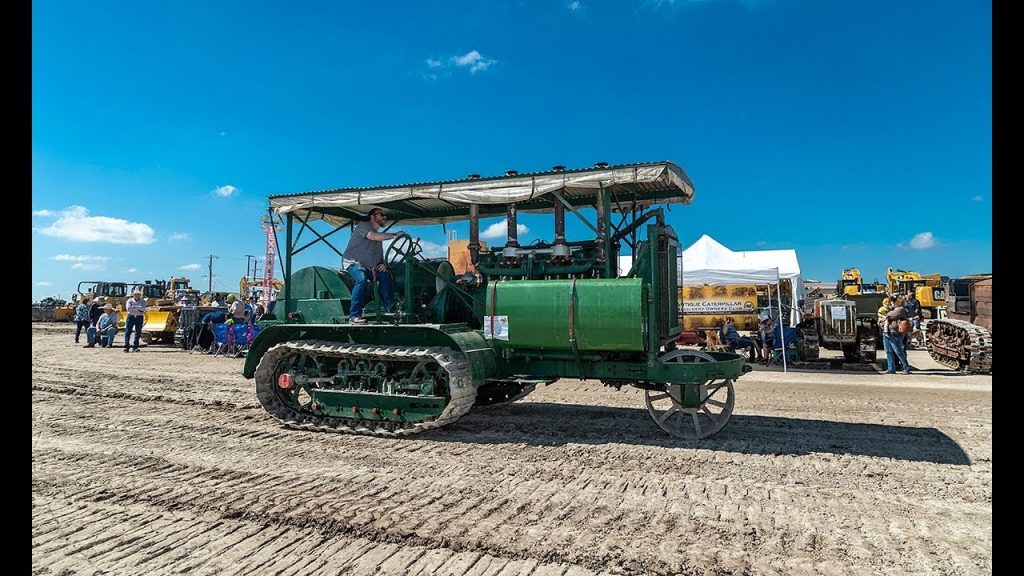
An actual Holt 120 tractor
The development of the armored hull and installation of the armament were entrusted to the Putilov Works in Petrograd.
The enterprise possessed the necessary experience. It was here that the famous Garford-Putilov armored cars, armed with 76 mm guns, had previously been manufactured. Thus, creating a heavy armored vehicle equipped with artillery was a task well within the capabilities of the Putilov engineers.
The designers decided to preserve as much of the tractor’s running gear, engine, and main transmission components as possible. This made it possible to significantly reduce development time.
By February 1917, the first experimental “Alexander Nevsky” had already rolled out of the factory gates.
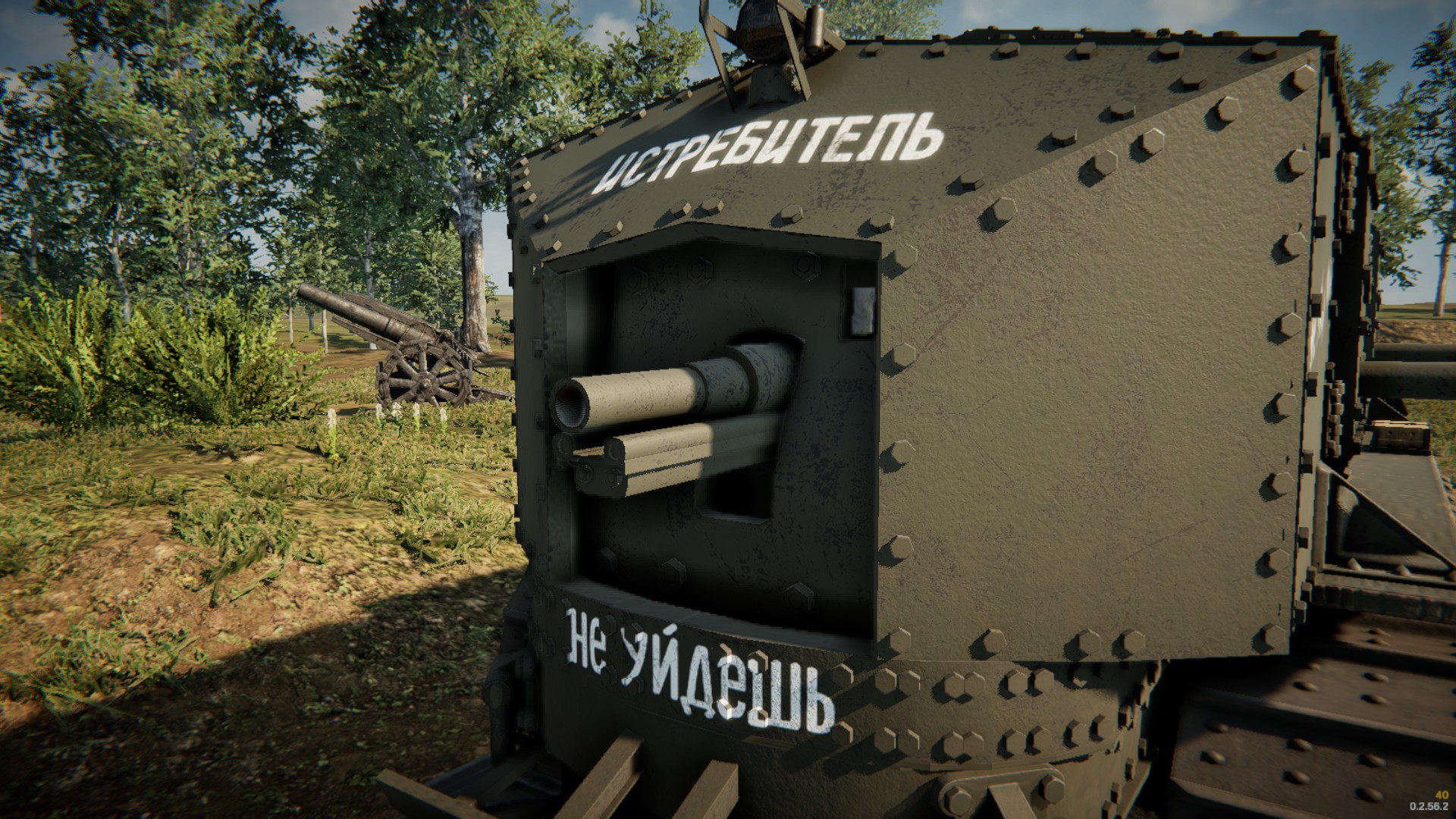
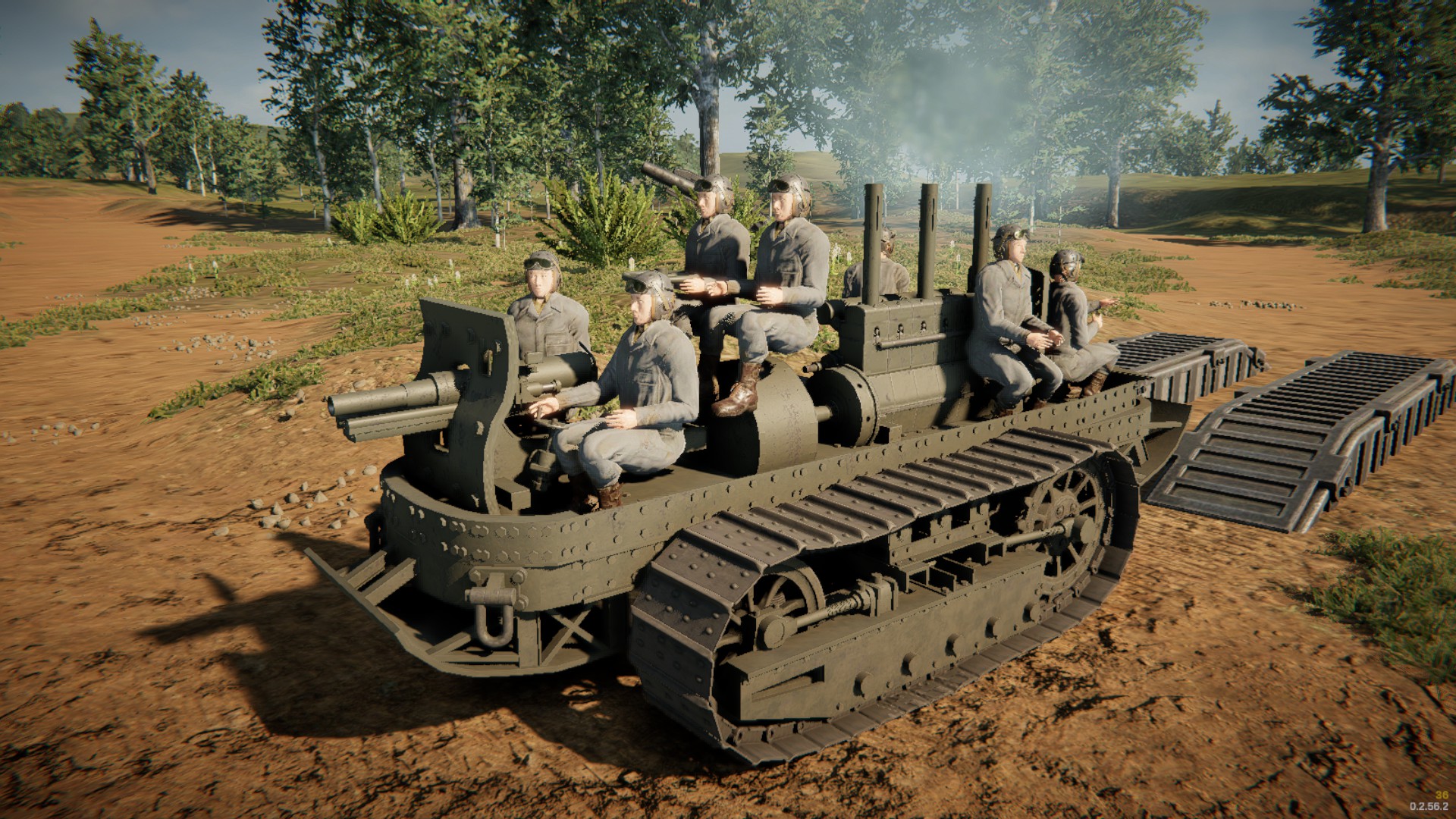
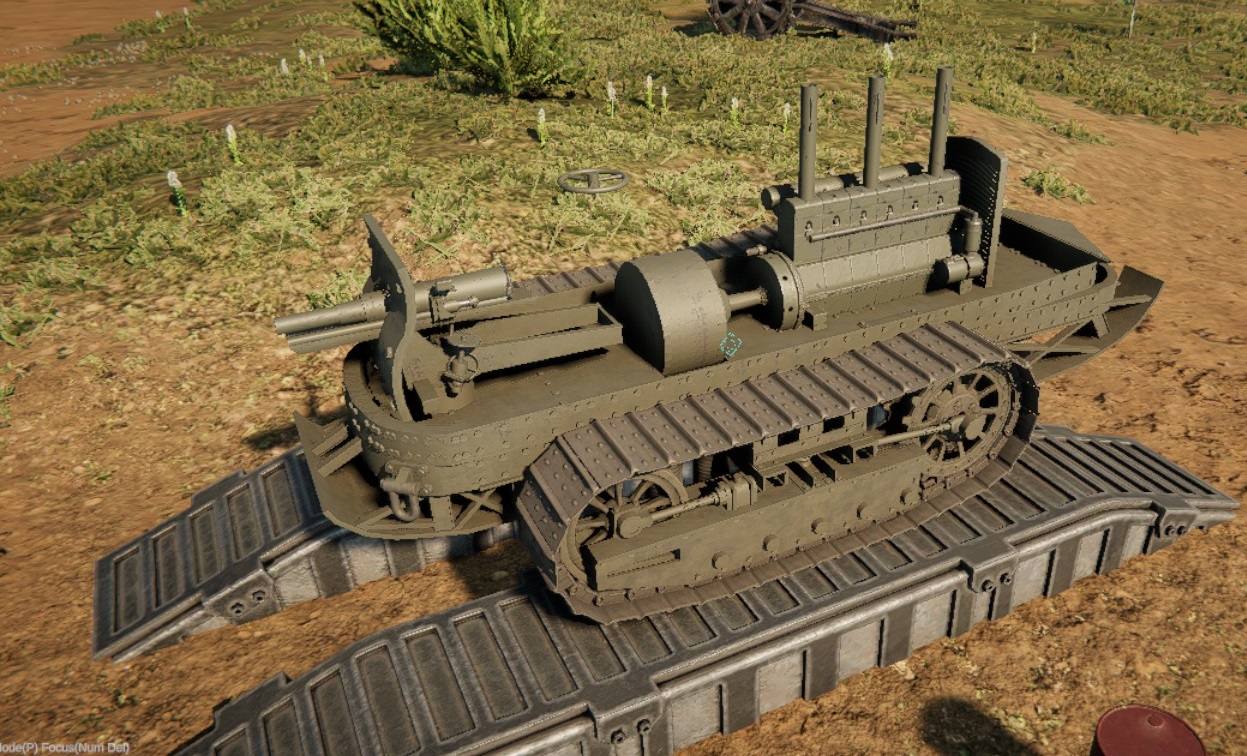
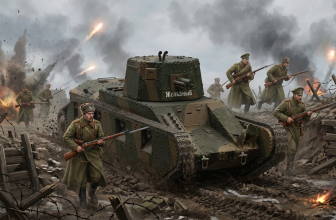
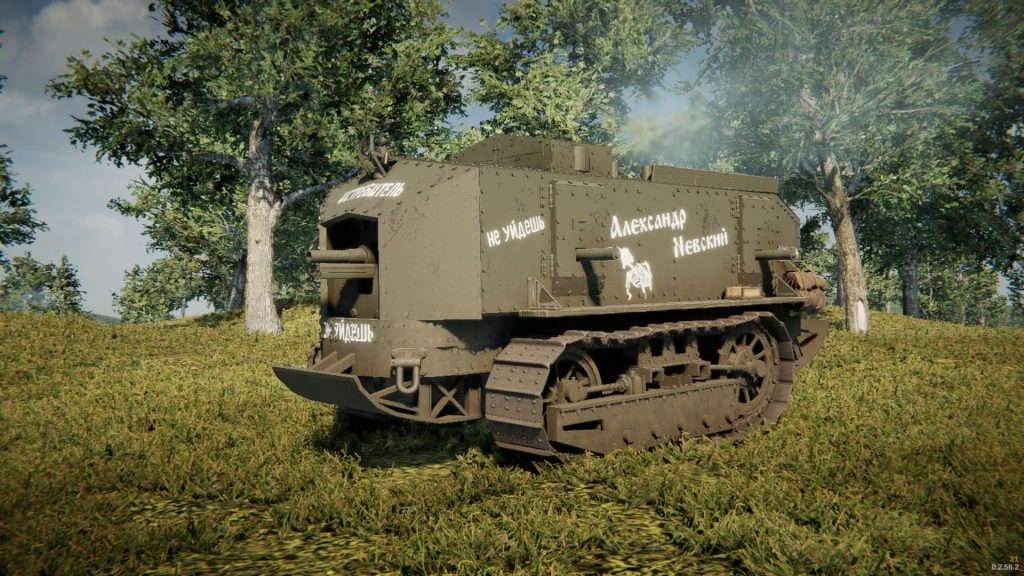
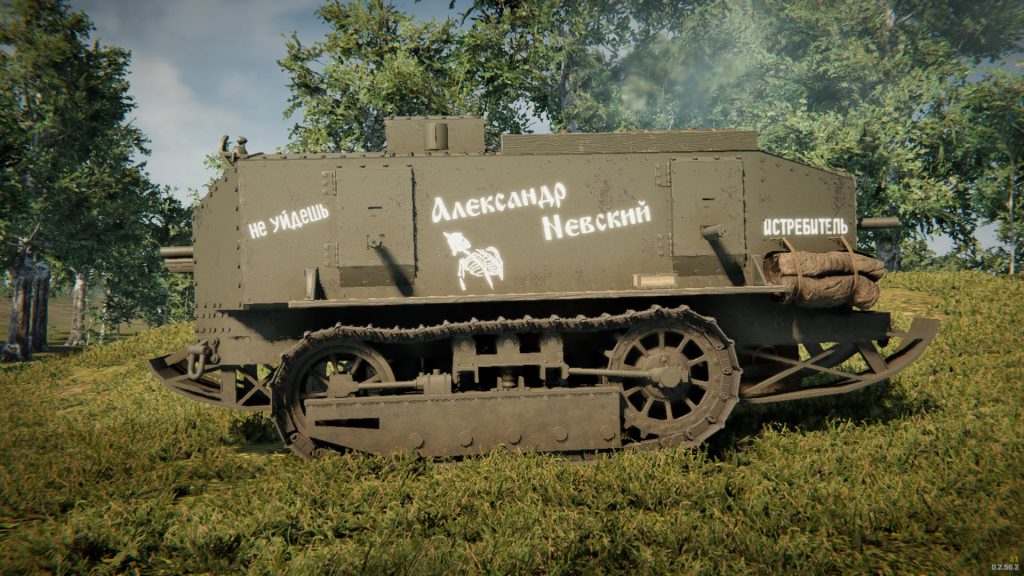
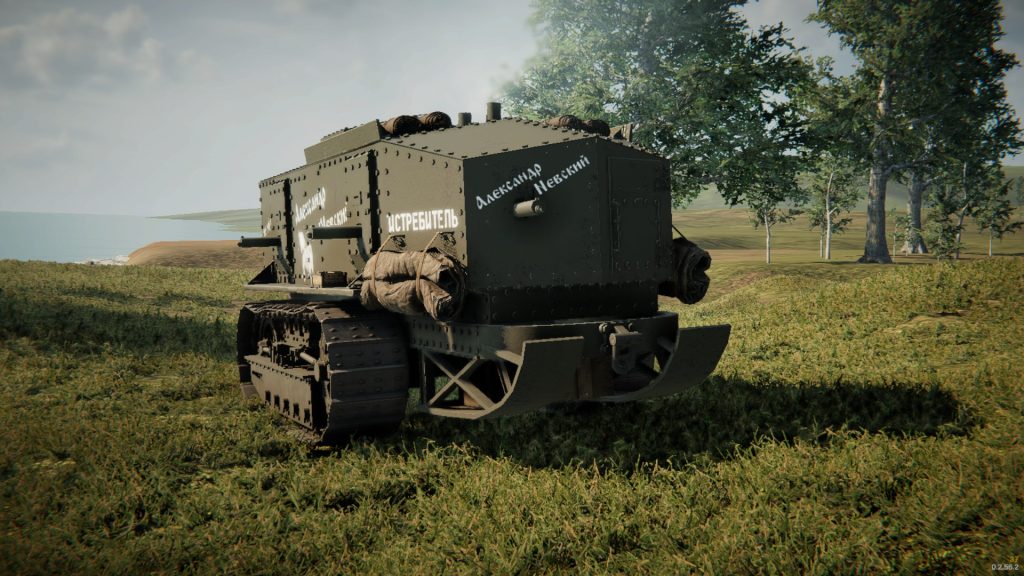
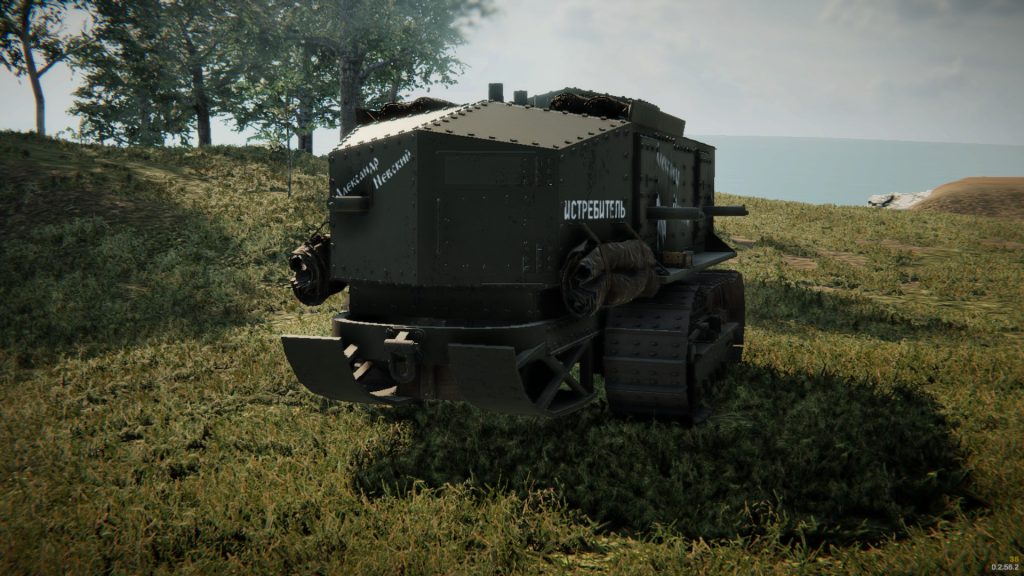
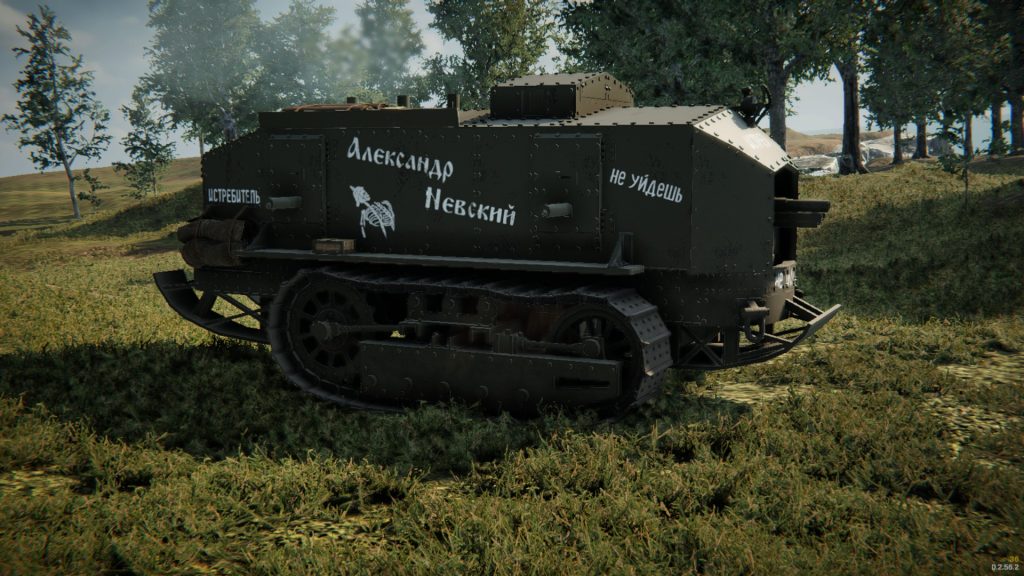
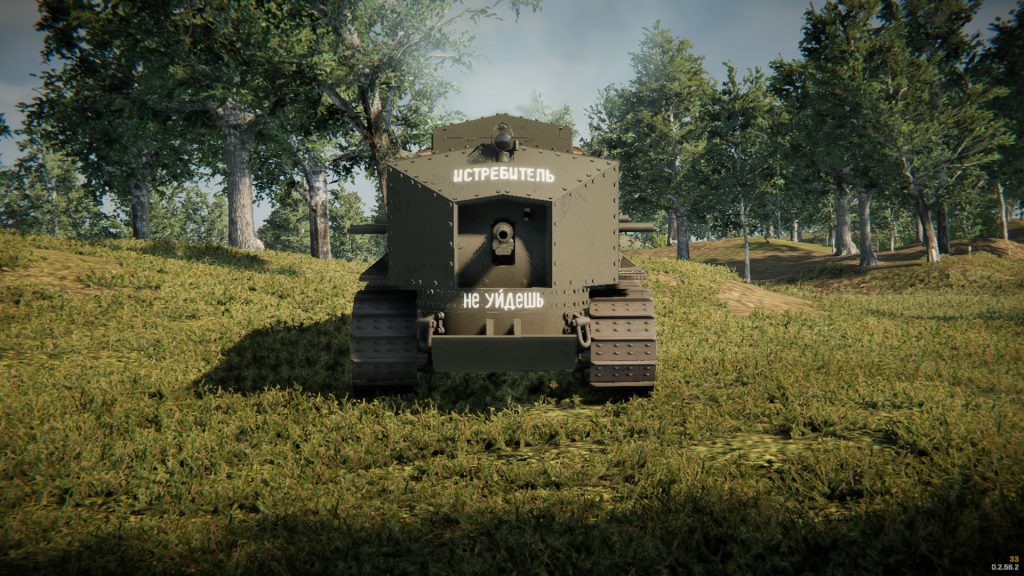
Its appearance was impressive. A massive armored hull towered over a relatively short tractor running gear, resembling a mobile artillery casemate rather than a conventional vehicle.
Nevertheless, the machine was real, could move under its own power, and was capable of firing its cannon and several machine guns.
The historical basis of this episode is entirely real: Holt tractors were indeed used by the Entente armies, and the Putilov Works had experience manufacturing cannon-armed armored cars. The story of the order and construction of the “Alexander Nevsky” itself, however, belongs to the alternative reality considered here.
Nineteen Tons of Iron and Three Inches of Artillery
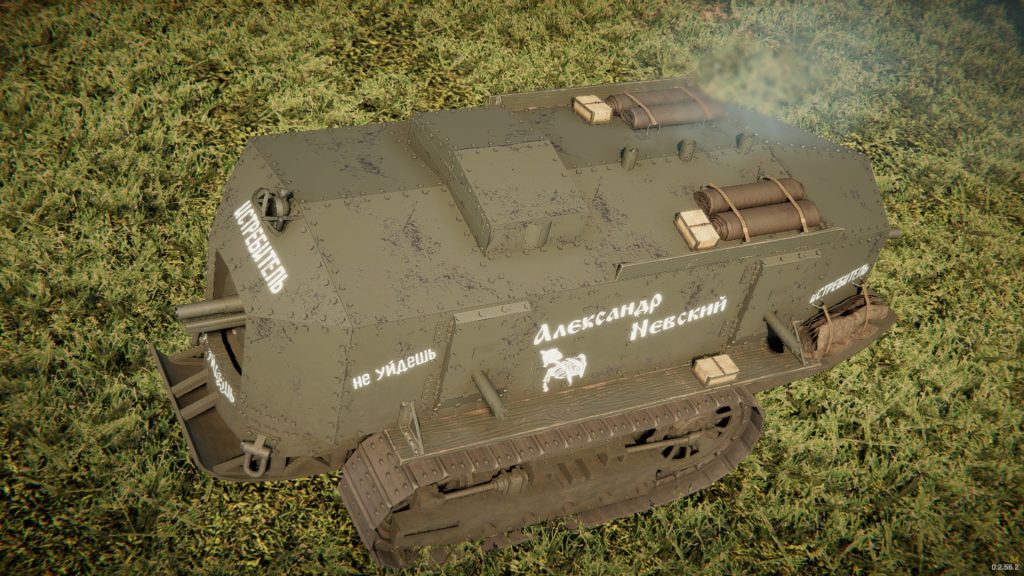
The new tank’s main weapon was a 76.2 mm mountain gun, Model 1909, developed on the basis of the Schneider-Danglis system. Its relatively compact dimensions made it possible to install the gun inside the hull without resorting to a cumbersome turret.
To combat enemy personnel, the “Alexander Nevsky” received five 7.62 mm Maxim machine guns. This allowed the vehicle to fire in several directions simultaneously, covering the infantry advancing behind it.
The crew consisted of seven men. In addition to the driver and commander, it included a gunner, a loader, and five machine gunners.
The combat weight reached 18.83 tons. A 111 hp gasoline engine allowed the tank to reach a maximum forward speed of 5.31 km/h and a reverse speed of 3.35 km/h. By modern standards, this was a snail’s pace, but in 1917 a tank was not expected to move faster than the attacking infantry. The military therefore initially considered these figures acceptable.
Factory trials showed that the vehicle moved quite confidently over firm ground and could overcome small obstacles. However, its first journeys across muddy fields revealed a serious weakness: the tractor’s short tracks.
The considerable weight of the armored hull caused the tank to bog down in soft ground, while wide trenches became almost insurmountable obstacles. Recovering a stuck vehicle required assistance from artillery tractors.
Nevertheless, the military had no intention of abandoning the project. The front suffered from a catastrophic shortage of mobile vehicles capable of providing direct infantry support, and the Putilov tank already existed in metal.
As a result, an order for a pilot batch of six vehicles followed in March 1917.
The First Russian Tanks Head to the Front
By early June 1917, the Putilov Works had completed four “Alexander Nevsky” tanks. Two more vehicles were at various stages of assembly.
It was decided to send the first four to the Southwestern Front, where the Russian army was preparing for a major summer offensive.
A separate armored tractor detachment was formed to operate and maintain the tanks. In addition to the combat vehicle crews, it included mechanics, drivers of supply vehicles, and specialists in repairing tractor engines.
Transporting the tanks to the front proved no less difficult than building them. The vehicles were carried by rail, after which they had to reach their starting positions under their own power.
It was here that an unpleasant feature of the new equipment first became apparent: even a relatively short march required stops to inspect the running gear and tighten the tracks. The column’s speed barely exceeded walking pace.
Nevertheless, by the end of June, three serviceable vehicles had taken up concealed positions near Zborov. The fourth was left in the nearby rear area because of a transmission malfunction.
The Russian army’s offensive began on June 18 (July 1), 1917. According to the command’s plan, following an artillery bombardment, the infantry was to break through the Austro-Hungarian positions and exploit the success in the direction of Lviv.
In our alternative history, it was here that Russian tanks saw combat for the first time.
Baptism of Fire at Zborov
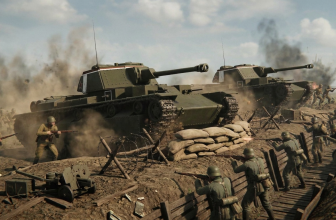
On the morning of July 1, 1917, following a heavy artillery bombardment, three heavy armored tractors began advancing toward the enemy positions.
At first, the enemy did not even understand what was happening. Massive armored structures emerged from clouds of smoke, slowly crawling across a field torn apart by shells.
Austro-Hungarian machine gunners opened fire, but rifle bullets and shell fragments could do little damage to the vehicles. The Russian Maxims answered, followed by the 76 mm guns.
The very first successful cannon shot destroyed an enemy machine-gun nest. One of the tanks then shelled the entrance to a fortified dugout, forcing its defenders to cease resistance.
The Russian infantry following the vehicles was able to approach the first line of trenches with significantly fewer casualties.
However, trouble soon began.
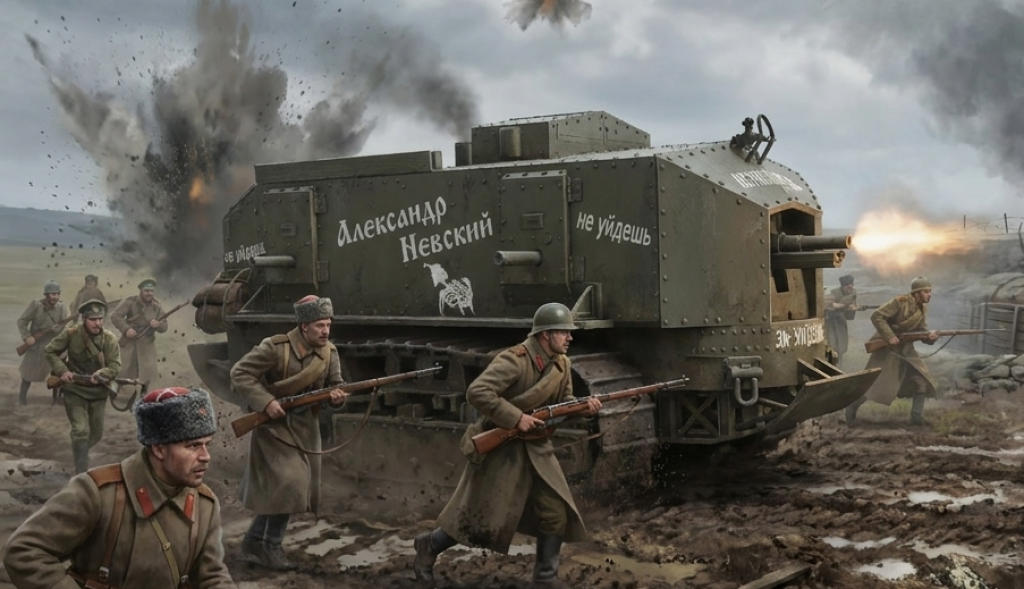
The leading “Alexander Nevsky” attempted to cross a wide trench but became stuck, its front hull pressing against the opposite wall. Its short tracks spun helplessly while the engine roared at maximum revolutions.
The second vehicle bypassed the obstacle but came under fire from Austrian field artillery. One of the shells exploded nearby, damaging a track.
The third tank managed to advance farther than the others. Its crew destroyed two more enemy firing positions and helped the infantry capture a section of the first defensive line.
By noon, all three vehicles had stopped moving. Two had been disabled by mechanical failures, while the third had suffered damage to its running gear.
Nevertheless, the Russian army’s first tank attack ended in a limited tactical success. The armored tractors accomplished their main task: they suppressed several fortified firing positions and helped the infantry cross the most dangerous section of the enemy defenses.
However, a genuine breakthrough of the front was still a long way off.
The real Battle of Zborov took place on July 1–2, 1917, and was one of the episodes of the Russian army’s June Offensive. The participation of the “Alexander Nevsky” tanks is an alternative-history addition to these events.
The Final Battles and Fate of the “Alexander Nevsky”
The first combat experience forced the military to reconsider its initial expectations of the new equipment.
It became clear that the 76 mm cannon was indeed an effective weapon against field fortifications, while the five machine guns could successfully cover advancing infantry.
However, all these advantages were undermined by the vehicle’s poor cross-country performance.
As a result, the engineers at the Putilov Works were instructed to develop an elongated running gear and reinforce the transmission. However, meeting these requirements quickly proved impossible. In effect, it was already a matter of developing an entirely new tank chassis.
Meanwhile, the situation at the front was rapidly deteriorating.
In July 1917, Austro-German forces launched a counteroffensive. Russian units began retreating, while discipline was rapidly collapsing in many formations.
During the retreat, two “Alexander Nevsky” tanks had to be abandoned because of mechanical failures, after their weapons and mechanisms had first been rendered unusable. Another tank, damaged at Zborov, was successfully evacuated to the rear.
The last vehicle of the pilot batch continued to be used for training.
The project’s subsequent fate became closely linked to the revolutionary events of 1917. Funding for new developments practically ceased, while production of vehicles requiring imported tractor components became impossible.
By early 1918, the Holt-Putilov program had been definitively canceled.
In total, six heavy armored tractors were built in our alternative reality, three of which participated in combat operations.
Technical Specifications of the Holt-Putilov Heavy Tank, Model 1917, “Alexander Nevsky”
-
Combat weight: 18.83 tons (approximately 19 tons).
-
Engine: Gasoline, producing 111 hp at 600 rpm.
-
Power-to-weight ratio: 5.9 hp/ton.
-
Maximum forward speed: 5.31 km/h.
-
Maximum reverse speed: 3.35 km/h.
-
Crew: 7 men — commander, driver, gunner, loader, and three machine gunners.
-
Main armament: 76 mm cannon with a barrel length of 191 mm (according to the project’s creator), armor penetration of 42 mm, muzzle velocity of 404 m/s, and projectile weight of 8 kg.
-
Secondary armament: Five 7.62 mm Maxim machine guns.
Note: The gun’s specifications are taken from the creator’s in-game model, rather than from the historical specifications of the actual 76 mm mountain gun, Model 1909.
Instead of a Conclusion: A Tank That Raises Far Too Many Questions
Despite the insane amount of detail, I personally did not like this tank design at all. And it is not even a matter of its unusual appearance. The creator clearly spent a great deal of time working out the design, yet managed to make a whole series of mistakes that could easily have been avoided. Some of them are so obvious that one cannot help wondering whether the designer had any idea how his vehicle was supposed to be operated.
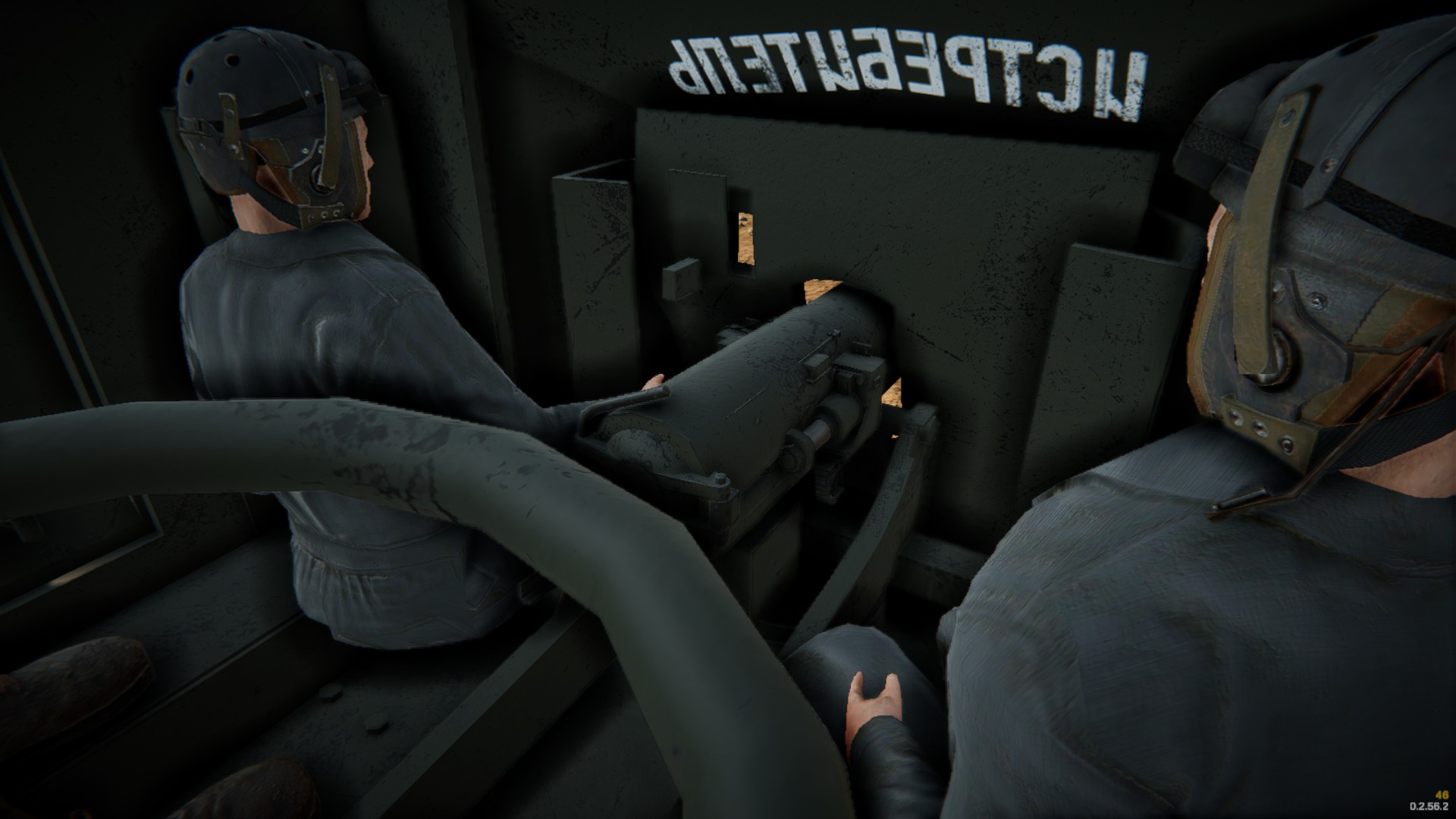
Let us start with the armament. The tank carries no fewer than five Maxim machine guns, yet only three machine gunners are supposed to operate them. How this is meant to work in actual combat is completely unclear. Of course, in theory, a machine gunner could move from one weapon to another, but that would require a sufficiently spacious fighting compartment. And space appears to be a serious problem inside the “Alexander Nevsky.”
I do not understand what prevented the creator from adding two more crew members or, alternatively, eliminating two unnecessary machine guns. The latter solution would not only have reduced the crew’s workload but also freed up some internal space.
However, the positioning of the machine gunners raises even more questions.
As can be seen in the images, the men operating the side-mounted machine guns are seated practically right against the engine, with their backs turned toward it. Considering how much heat a powerful gasoline engine generates, working under such conditions would be sheer torture. The machine gunners’ backs and, excuse me, their backsides would literally be roasting.
And this is not merely a matter of discomfort. With the engine running for extended periods, the temperature inside the fighting compartment could reach extremely unpleasant levels, especially in summer. Add to this the propellant gases, the smell of gasoline, engine noise, and poor ventilation. As a result, the machine gunners would risk suffering from heat exhaustion before even encountering the enemy.
What makes this particularly frustrating is that there was no fundamental obstacle to making the tank’s hull wider. The vehicle was already fairly heavy, so adding a few dozen centimeters to its width would hardly have radically worsened its performance. On the other hand, it would have allowed proper working positions to be arranged for the crew.
With the existing layout, I seriously doubt that the side-mounted machine gunners would be able to operate their weapons effectively at all.
Another issue is engine cooling. Where did the creator put the radiator? Personally, I could not find it anywhere on the model. It gives the impression that the designer simply ignored the need to dissipate heat from the gasoline engine.
Yet an effective cooling system is absolutely critical for a heavy tank moving at walking speed. The engine is constantly operating under a heavy load, natural airflow is minimal, and the armored hull makes heat dissipation difficult. Without a sufficiently large radiator, a fan, and properly designed air ducts, overheating would only be a matter of time.
Moreover, the cooling system must be designed together with the layout of the engine compartment, rather than attempting to find room for it inside an already completed hull.
And in general, I simply cannot understand why the creator did not use the original Holt tractor layout with a front steering wheel.
Yes, such a configuration had its own disadvantages, particularly when it came to crossing trenches. However, it would have allowed the engine and control mechanisms to be positioned separately from the main fighting compartment. In that case, there would have been considerably more room for the crew, weapons, and cooling system. Furthermore, retaining the original tractor layout would have been entirely consistent with the idea of creating the simplest possible combat vehicle based on a production tractor.
However, things are even worse when it comes to cross-country mobility.
Weighing almost 19 tons, the tank was equipped with an engine producing only 111 hp. Its power-to-weight ratio was less than 6 hp per ton. For First World War equipment, this was not particularly exceptional, but combined with the short tractor running gear, it promised a great deal of trouble.
The main problem is not even the maximum speed of 5.31 km/h. British heavy tanks were also slow-moving, but they had long tracks that allowed them to cross trenches and shell craters with reasonable confidence. The “Alexander Nevsky” has a much shorter tracked wheelbase, while its massive hull projects considerably beyond it.
As a result, a wide trench becomes an almost insurmountable obstacle. The tank would either strike the opposite edge with the front of its hull or become stranded over the trench, with its tracks losing contact with the ground.
The situation would be no better on soft ground. Much would depend on the width of the tracks and the distribution of weight, but the heavy hull, short ground-contact length, and weak engine clearly do not promise outstanding results. This would be particularly true during the autumn mud season on the Eastern Front.
There are also questions about the strength of the running gear. After all, the Holt tractor was originally designed for entirely different operating conditions. Its transmission and track assemblies were designed to withstand specific loads, not to move a heavy armored hull under artillery fire across a field torn apart by shell craters. Without strengthening the design, breakdowns could become a constant companion of the crew.
Finally, the very concept of mounting a relatively large gun in a fixed installation raises doubts. With limited horizontal traverse, shifting fire to another target would require turning the entire tank. And I do not think I need to explain how easy that would be on soft ground with an engine producing just 111 hp.
Nevertheless, it would be unfair to say that the project is completely hopeless. Its main advantage is the use of components and weapons that actually existed. With a properly redesigned hull, increased internal volume, an improved cooling system, and an elongated running gear, this design could indeed have resulted in a perfectly functional tank by the standards of 1917.
But that raises an obvious question: what would remain of the original project? Essentially, an entirely new vehicle would have to be developed, retaining only certain mechanisms from the original tractor.
Therefore, my conclusion is quite simple: as a three-dimensional model, the “Alexander Nevsky” looks interesting and is meticulously detailed, but as a real combat vehicle, it raises far more questions than it inspires admiration.
And what makes this especially frustrating is that practically all the problems listed above could have been identified during the design stage. Russian industry in 1917 was perfectly capable of building such a tank. The real question is whether it was worth building it in precisely this form.