This article is posted on the AI website with the kind permission of BAMPER.BY.
Contents:
As we’ve mentioned in previous articles, speed and endurance competitions weren’t always held with cars. Nevertheless, self-propelled vehicles—as cars were once called—began to be tested in a similar manner almost immediately after they were individually assembled.
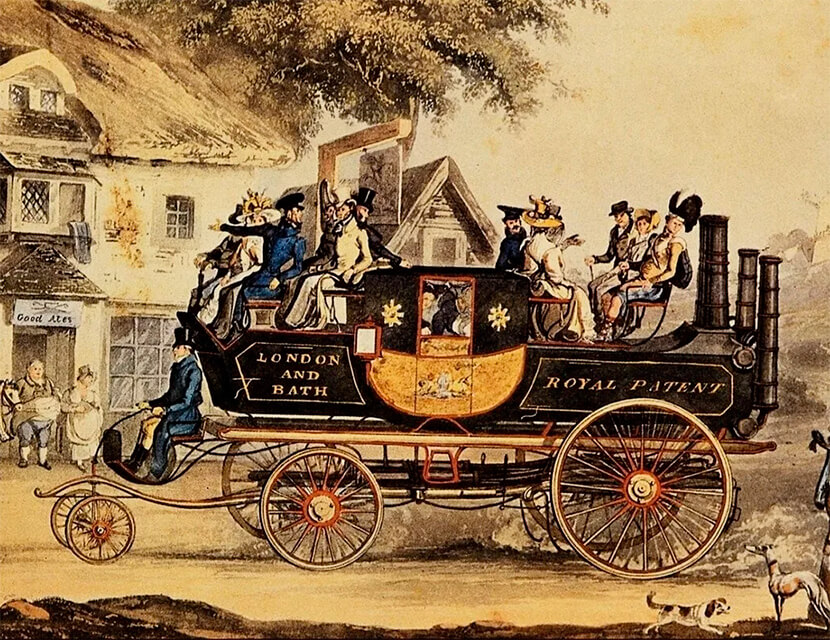
In the early days of the automotive industry, this approach was practically the only effective way for individual engineers to promote their products (with the exception of grandiose and not always effective presentations at various technical exhibitions). This makes it all the more interesting to examine the details of the first such events, which entailed great risk for those directly involved…
Steam as a Driving Force
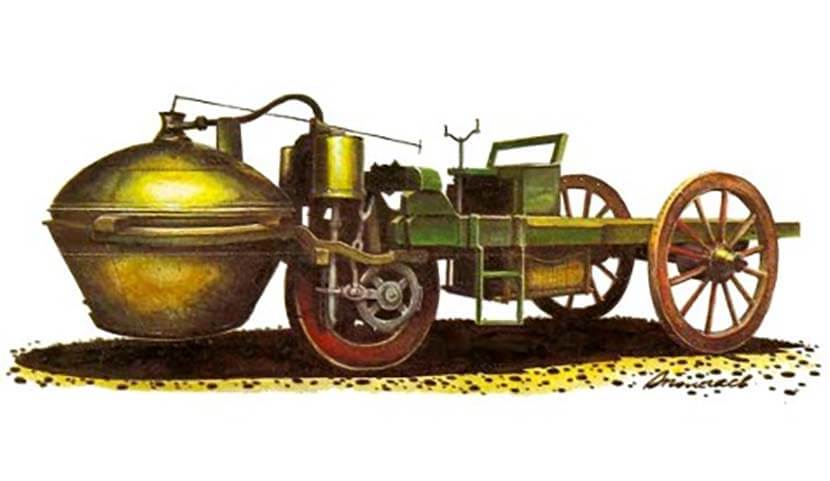
Of course, the automobile as we know it today did not appear overnight. Its precursor was the “Cugnot cart,” which French inventor Nicolas-Joseph Cugnot unveiled to his compatriots in 1769. It was a monstrous three-wheeled vehicle designed to transport artillery pieces. It was powered by an external combustion engine with a whopping 7 horsepower. One could say that this self-propelled vehicle was the forerunner of all self-propelled vehicles.
Of course, Cugnot’s vehicle was technically far from perfect. Its engine was too bulky, slow, and emitted so much smoke that it terrified the horses pulling carriages and carts through the streets of Paris. Interestingly, the first traffic accident in history involving a self-propelled vehicle is linked to Nicolas-Joseph Cugnot: in 1771, he drove one of the early prototypes of his “cart” into the stone wall of a residential building. As a result, the steam-powered vehicle underwent constant modifications and improvements over the next 100 years.
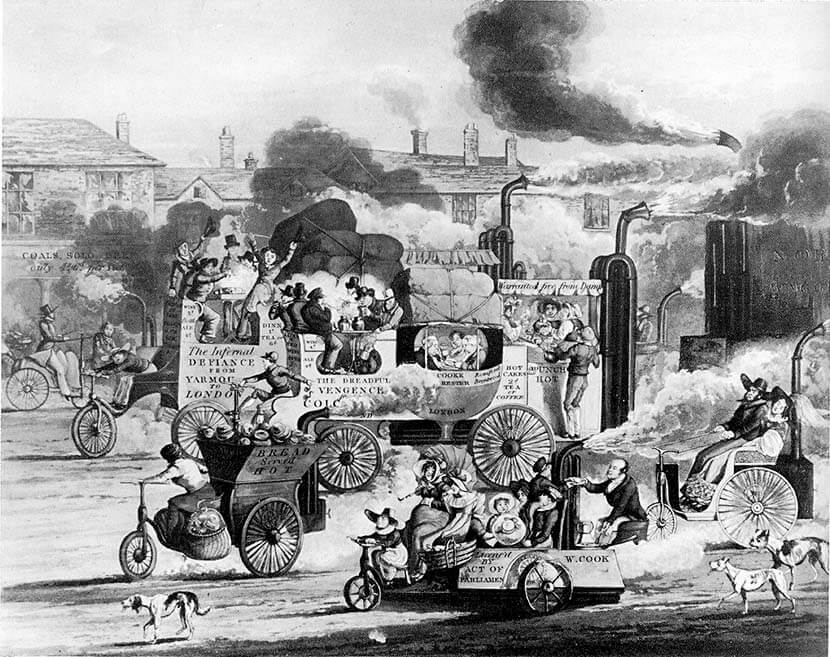
By 1850, there were so many steam-powered vehicles that this led to certain difficulties in managing urban traffic. For example, in England, a number of restrictions were imposed on steam-powered vehicles: they were prohibited from traveling in cities at speeds exceeding 3 km/h (and in villages, faster than 6 km/h), and a stagecoach or a pedestrian carrying a red flag must travel 55 meters ahead of such a vehicle to warn oncoming vehicles of potential danger; furthermore, steam engine operators were prohibited from startling horses with whistles.
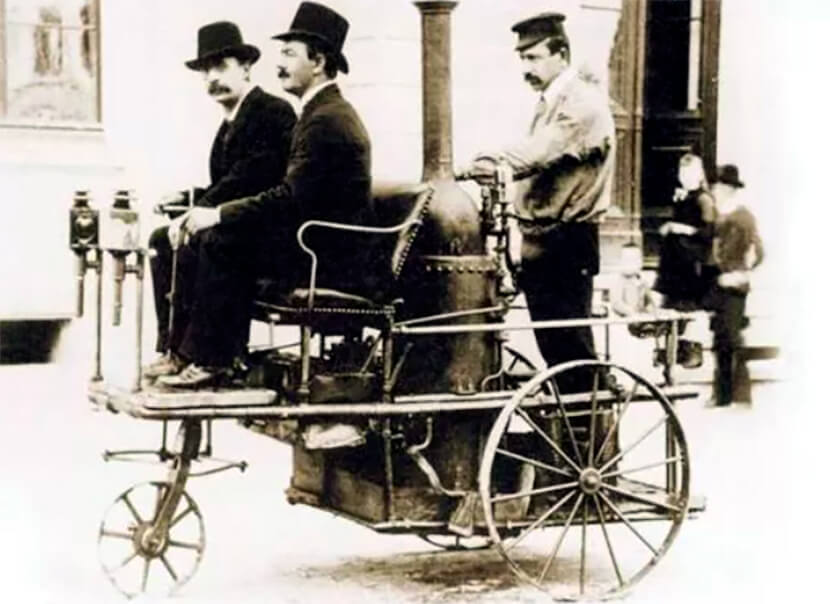
It was around this time that a division of duties emerged between the “driver” and the “chauffeur.” The former, of course, operated the self-propelled vehicle, while the latter was responsible for keeping the fire burning in its furnace and monitoring the steam. It was a spectacle that was, to put it mildly, grotesque, and even became a precursor to the cultural phenomenon known as steampunk.
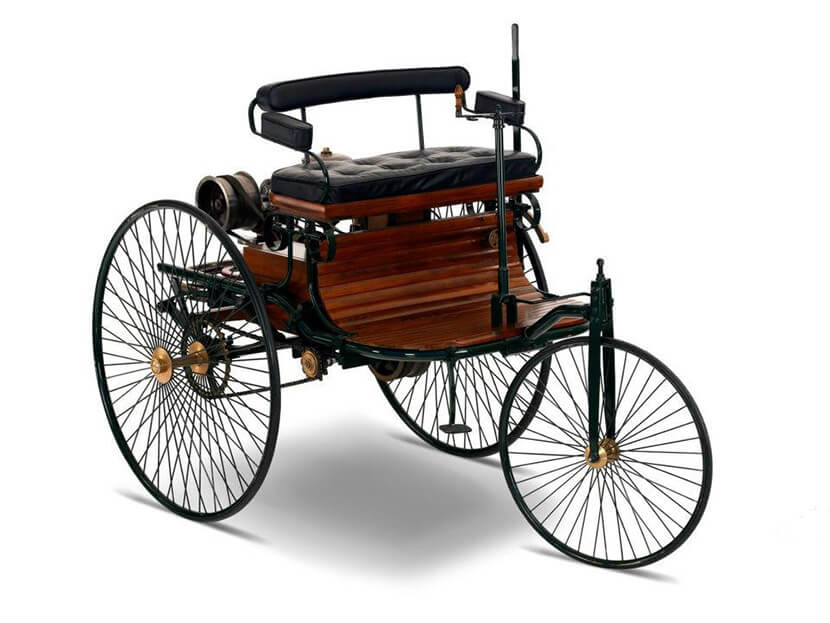
It is important to note that the Benz Patent-Motorwagen, or “Benz Patent Car,” was not built until 1886 and bore a strong resemblance in design to the “Cugnot cart.” It was not until somewhat later that such vehicles began competing in speed, so it makes sense to recount the dramatic events of 1878, which went down in history as the “Great Race.”
America’s First Road Race
Next, we’ll discuss the competition for a $10,000 cash prize, initiated by the Wisconsin state legislature. The bill was passed in 1875 to support inventors capable of creating a cheap and practical replacement for horses and other animals for farm work and transportation. Proof of such an invention’s viability was its successful and documented field testing over the course of… five years. The vague wording of the law led self-taught engineers into tedious and fruitless disputes, so it was amended in 1877.
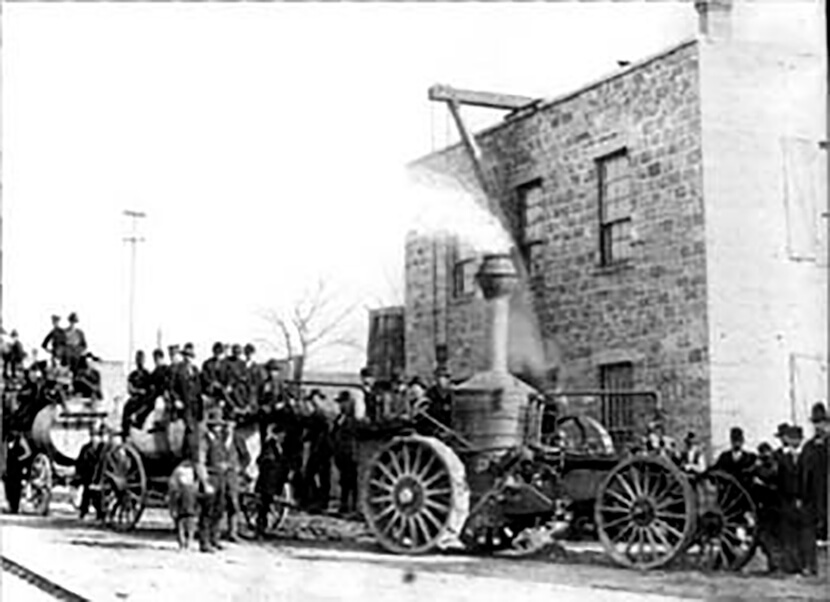
Under the new rules, the tests were considered successful if the steam-powered vehicle covered a 200-mile route at a speed of at least 5 miles per hour, was able to plow a field, and tow a loaded trailer; and the machine had to have both forward and reverse gears. The official procedure lasted no more than 10 days from the time participants were registered, and it was recorded by designated officials from the state of Wisconsin. That’s when an epic showdown erupted…
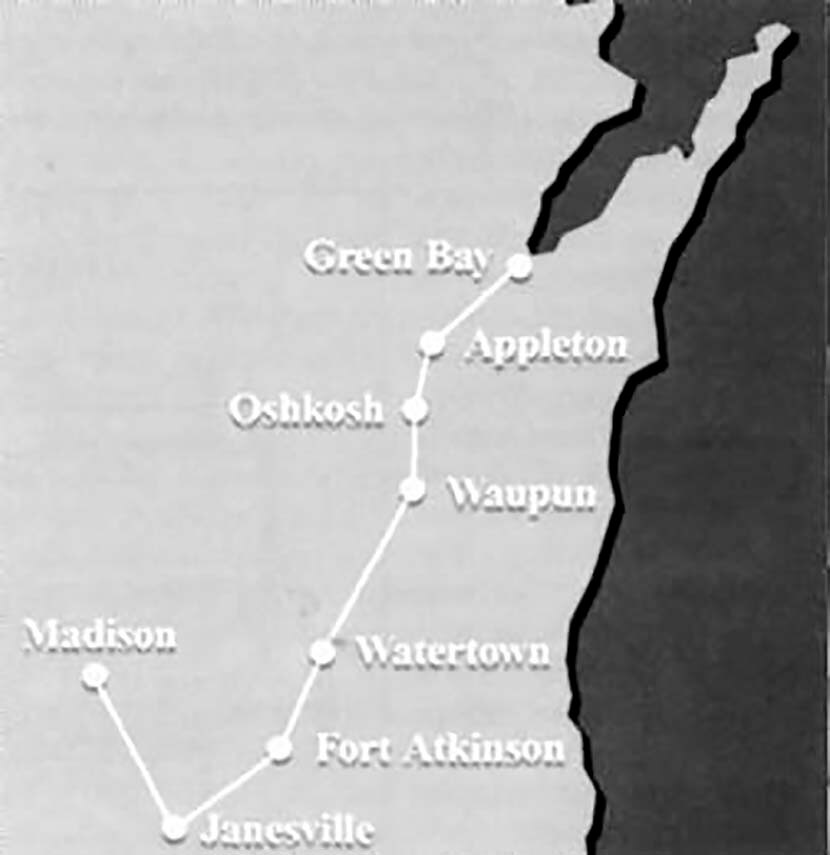
A total of six participants were registered for the race, though only two cars made it to the starting line under their own power. On July 16, the Oshkosh and Green Bay steam-powered teams arrived in Green Bay, where a 200-mile country road had been built specifically for the tests, running south to Appleton. The third vehicle, Madison, got stuck in the mud on its way to the race. The fourth, Milwaukee, simply wouldn’t start, and the fifth, Fond du Lac, was never completed. History has preserved no information at all about the sixth vehicle. Interestingly, all the cars registered for the trials were named after the cities where they were built.
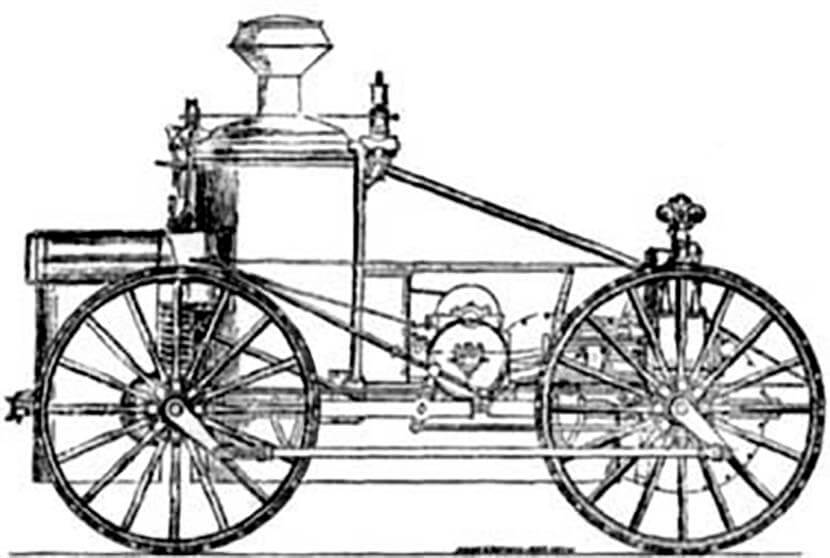
It is interesting to note that all the details of the subsequent race were extensively covered by the local press. And judging by the points emphasized in these reports by the correspondents, the sympathy of both the jury and the public was entirely on the side of the team from Oshkosh. First, this car had an elegant appearance: it weighed “only” 5,000 pounds, had a two-cylinder, 12-horsepower engine with a vertically mounted boiler, and a drive chain similar to the one used in trucks today.
Second, the Oshkosh steam car was the result of a collaborative effort. Today, we know of at least six people who were involved in its creation: Martin T. Battis and John F. Morse were managers of their own boiler houses, Anson Farrand was a steam engineer at his city’s fire department, while Alexander Gallinger and Frank Schomer were lumbermen who owned a joint venture manufacturing agricultural machinery. These skills enabled them to build their machine in just 60 days.
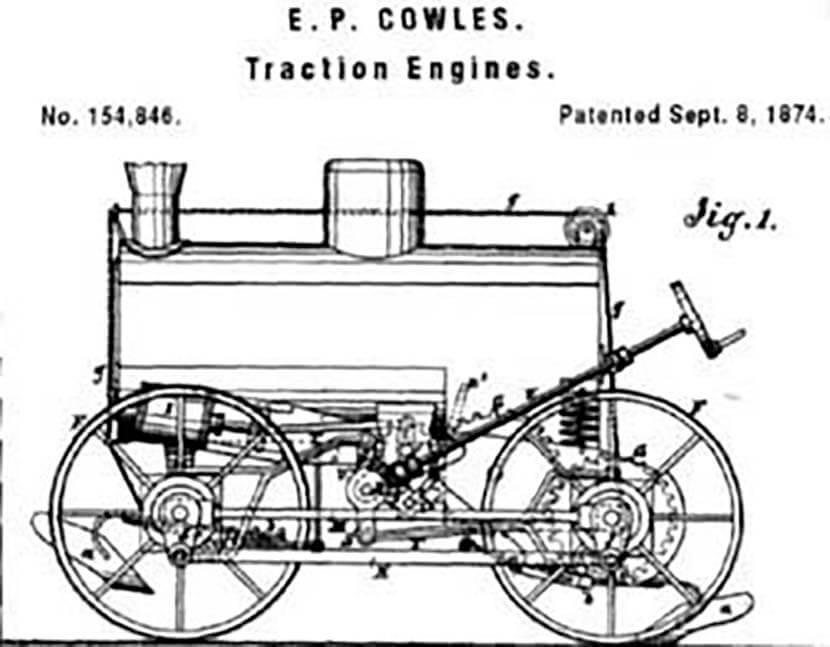
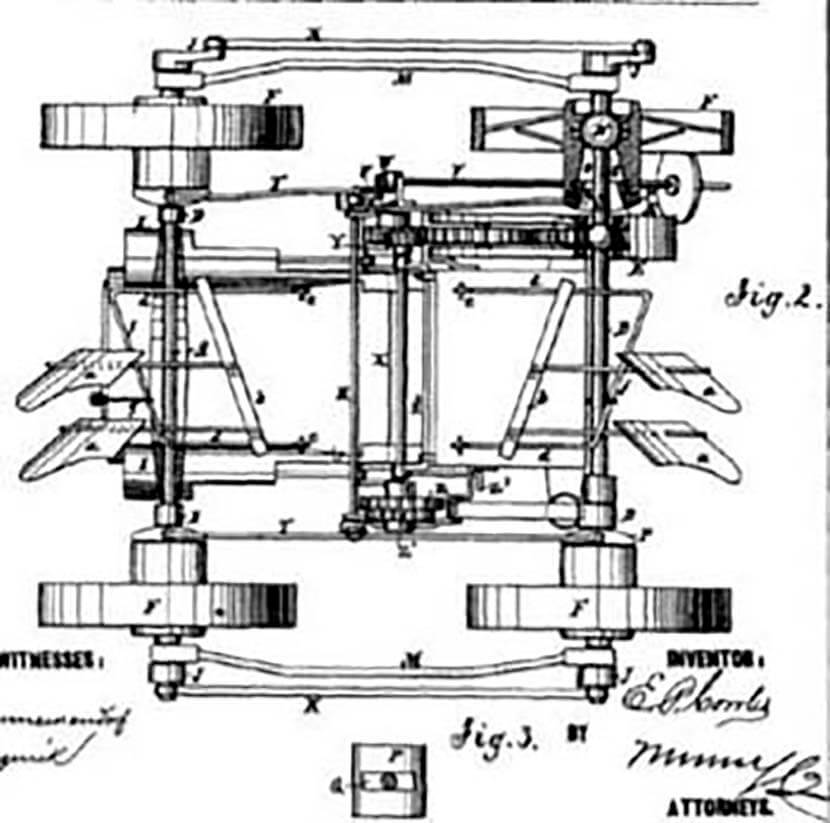
The Green Bay crew was neither graceful nor, much less, a close-knit team. No images of it have survived, but according to eyewitnesses, it looked like an armored locomotive mounted on wooden wheels, each of which, thanks to hinges, could rotate independently of its axle. The engine for this vehicle was built by Edward P. Coles as early as 1874. Its power output is unknown, but it has been established that his steam-powered vehicle weighed at least 14,000 pounds, had all-wheel drive, and a 3-speed transmission. The inventor presented the vehicle with a team of hired workers, but he took full credit for the creation of the Green Bay machine.
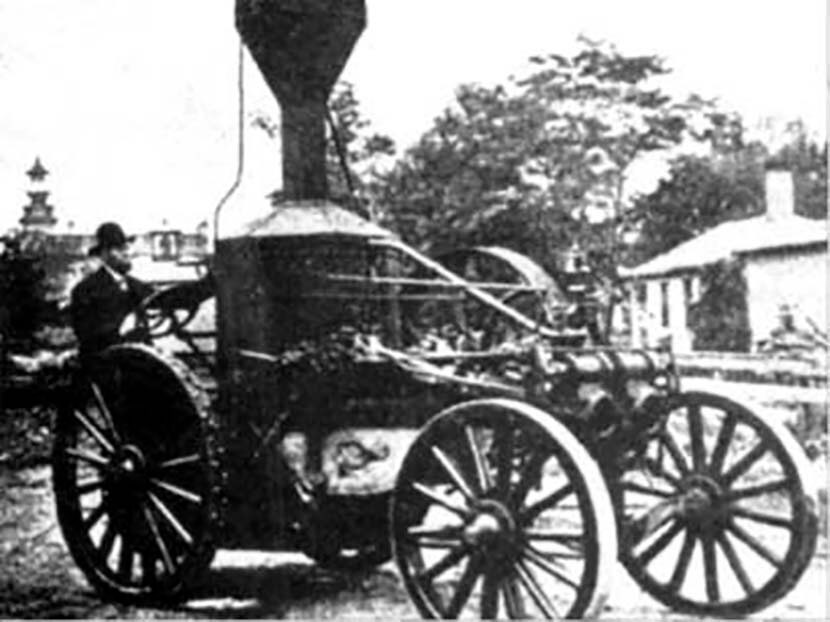
When the teams set off, the judges immediately noted the smoothness of the ride and the coordination of the team from Oshkosh. Coles’s vehicle, on the other hand, was described as clumsy and unremarkable: it moved in jerks and kept stopping due to breakdowns. That said, neither crew found this race easy. They were forced to pull loaded wagons tied together with hemp ropes. The ropes kept snapping, forcing the vehicles to stop, and getting them moving again was quite a challenge. When driving uphill, the engines lacked sufficient power, so all crew members except the driver and the chauffeur had to walk and wait for their vehicles at the top of the hill.
The race reached its climax when the Oshkosh team began to pass the heavy Green Bay truck, but a wheel caught on the soft soil at the roadside, snapping the drawbars that connected the first trailer to the truck. As a result, the cargo ended up in the ditch, causing a lengthy and unplanned delay.
* * *
In the end, the crew from Oshkosh finished alone on July 23 at around 11 p.m., having covered 201 miles. The official time for the run was 33 hours and 27 minutes, meaning the car traveled at an average speed of 6 miles per hour. Alas, to receive the coveted prize, the entire brave crew of six had to engage in a grueling debate that lasted several months. The jury congratulated the winners but suggested they split the prize with another team, a proposal that drew a storm of protest from the Oshkosh creators.
In the end, they were paid only $5,000, and the $1,000 consolation prize went to the Green Bay team’s fund. Where the remaining $4,000 went remains a mystery to this day. Nevertheless, the race generated a lot of buzz, and over the following years, the participants managed to sell between 6 and 12 of their engines each. Steam-powered vehicles continued to evolve even after the invention of internal combustion engines, but that’s another story…
Source: https://bamper.by/news/poleznosty/bodryy_start-_kak_prokhodila_pervaya_v_mire_avtogonka/