Not Aurus, but the ZIL-4122. What Would Russia’s Leaders Drive If the Soviet Union Had Survived?

The idea of the Soviet Union successfully surviving the crisis of 1991 and continuing to exist into the 21st century is quite popular among alternative history enthusiasts. Such scenarios usually assume that this USSR would produce practically everything domestically. Smartphones, for example, would be manufactured under the Elektronika brand, the Soviet internet would probably resemble China’s, and the domestic automotive industry would continue producing its own vehicles, without depending on Western manufacturers.
Naturally, one of the greatest prides of the Soviet automotive industry, Moscow’s Likhachev Automobile Plant, would not have disappeared either. It would still be entrusted with producing the country’s most prestigious automobiles, intended for the highest-ranking Party and government officials.
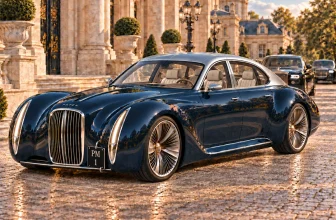
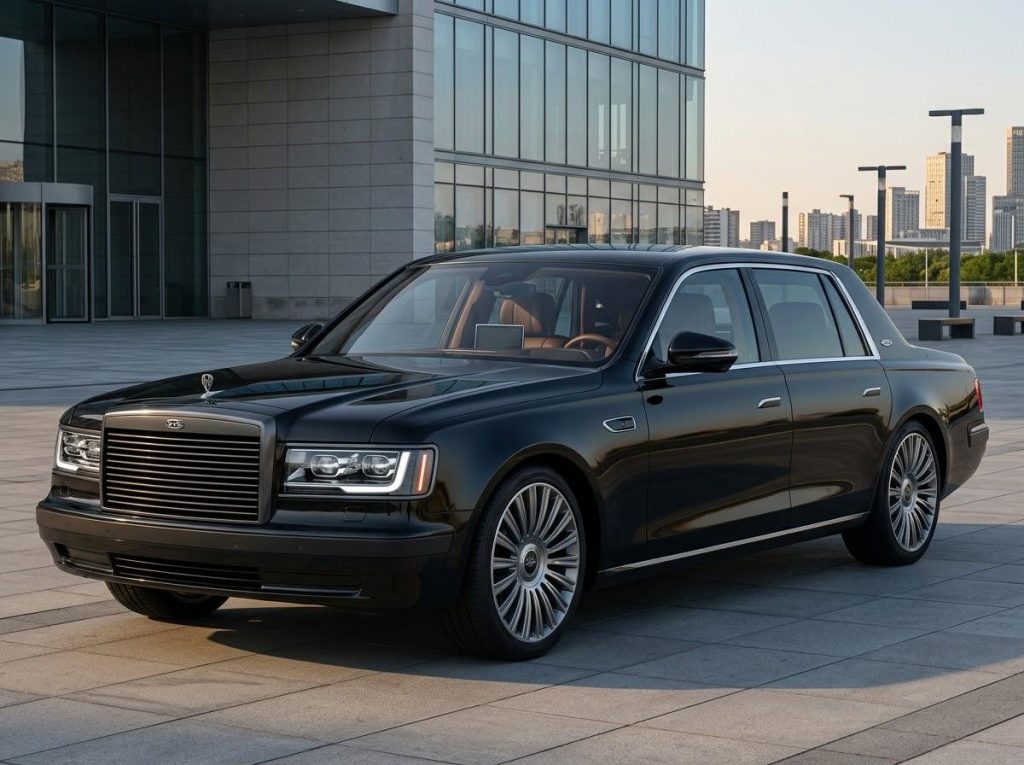
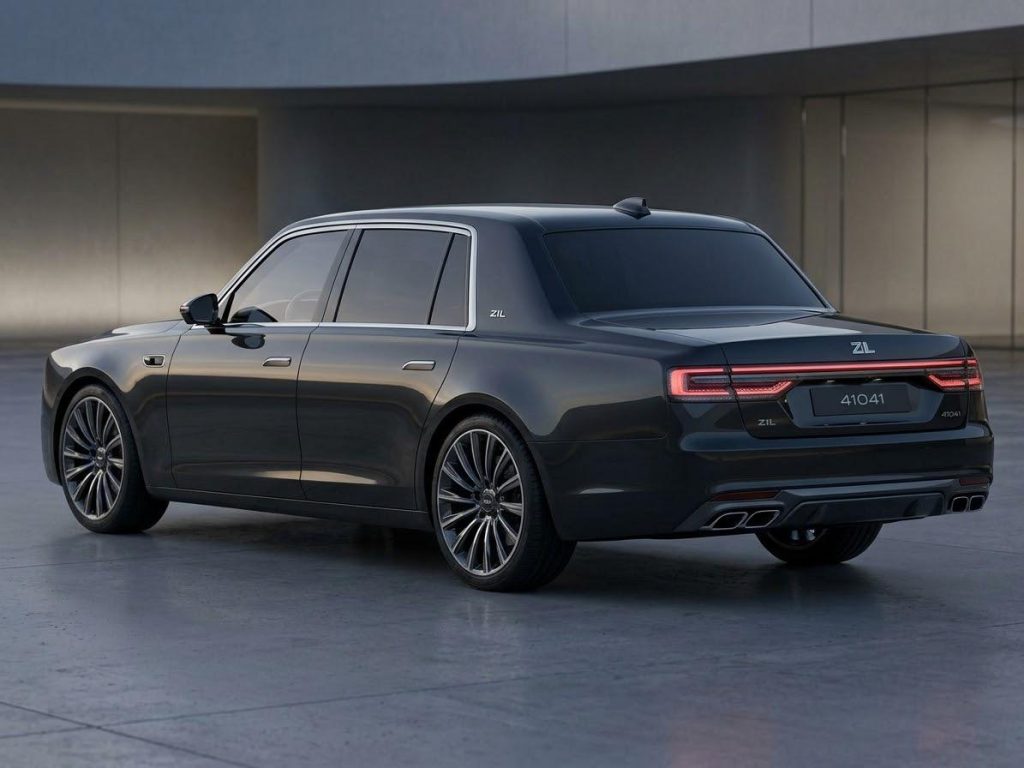
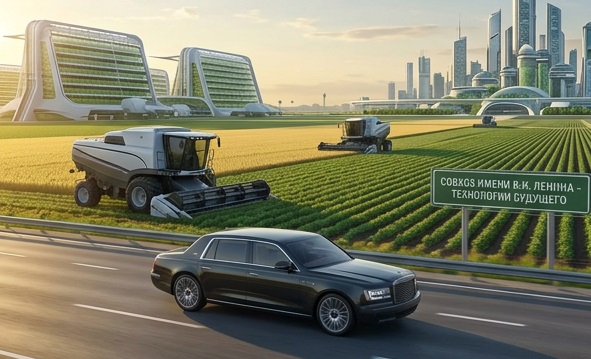
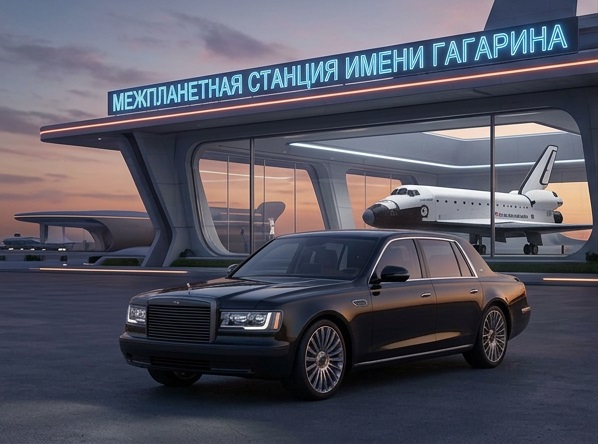
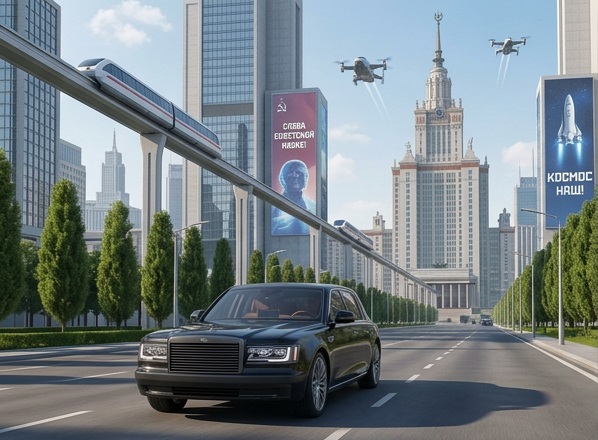
But what might Soviet government limousines have looked like in the 2020s? We will try to answer this question using an unusual creation by our Western fellow enthusiast GreekCarLover, published on Reddit under the title “2027 ZIL 41041.” The author imagined what the famous ZIL-41041 might look like after a comprehensive modernization. We, however, will go a little further and attempt to create a history of an entirely new generation of Soviet luxury automobiles — the ZIL-4122.
The Soviet Union That Never Was
First, we need to establish our point of divergence from actual history. Let us suppose that in 1991, the Soviet leadership managed to prevent the country’s collapse. The Union survived, although it underwent extensive economic reforms, gradually adopting a model somewhat similar to that of modern China.
The state retained control over the defense industry, energy sector, and strategically important enterprises, while simultaneously allowing private businesses and joint ventures with foreign companies to develop.
Under such circumstances, ZIL could easily have continued operating. Moreover, the plant would probably have been divided into several relatively independent production divisions. Trucks would be manufactured in large quantities, while government limousines would remain the responsibility of a specialized department working on state contracts.
This particular division could have become one of the most prestigious branches of the Soviet automotive industry.
From the ZIL-41047 to the ZIL-4121
In actual history, the last major family of Soviet government limousines consisted of the ZIL-4104 and its numerous modifications, including the famous ZIL-41047.
These vehicles were distinguished by their exceptionally robust construction, enormous dimensions, powerful eight-cylinder engines, and the restrained, formal styling traditionally associated with Soviet luxury automobiles.
However, by the early 1990s, they had become noticeably outdated. Therefore, in our alternative reality, a decision is made as early as 1992 to develop a fundamentally new model, designated the ZIL-4121.
Incidentally, this designation is entirely consistent with the Soviet automobile classification system. The first digit, “4,” indicates the highest passenger-car class according to engine displacement; the second digit, “1,” identifies a passenger car; and the final two digits represent the model number. In this fictional history, the designation 4121 is assigned to a new generation of government vehicles.
The first production ZIL-4121 appears in 1997. Externally, it still resembles classic Soviet limousines, but it features a more modern body, an electronic engine management system, an automatic transmission, and independent suspension.
Under the hood sits a new 6.5-liter V8 producing approximately 400 horsepower. The passenger compartment is equipped with automatic climate control, satellite telephones, and the first domestically developed multimedia systems.
In the early 2000s, the car undergoes modernization. Electronically controlled shock absorbers, modern safety systems, and an improved armored version for senior government officials are introduced.
However, by 2010, it becomes clear that even the extensively modernized ZIL-4121 is gradually falling behind the latest luxury automobiles from around the world. An entirely new vehicle is needed.
ZIL-4122: A Soviet Limousine for the 21st Century
In 2011, the USSR Ministry of the Automotive Industry approves the technical specifications for a new luxury automobile. The project receives the factory designation ZIL-4122, and its development involves not only ZIL specialists but also leading Soviet research institutes.
The first prototype begins testing in 2015, and limited production starts in 2017.
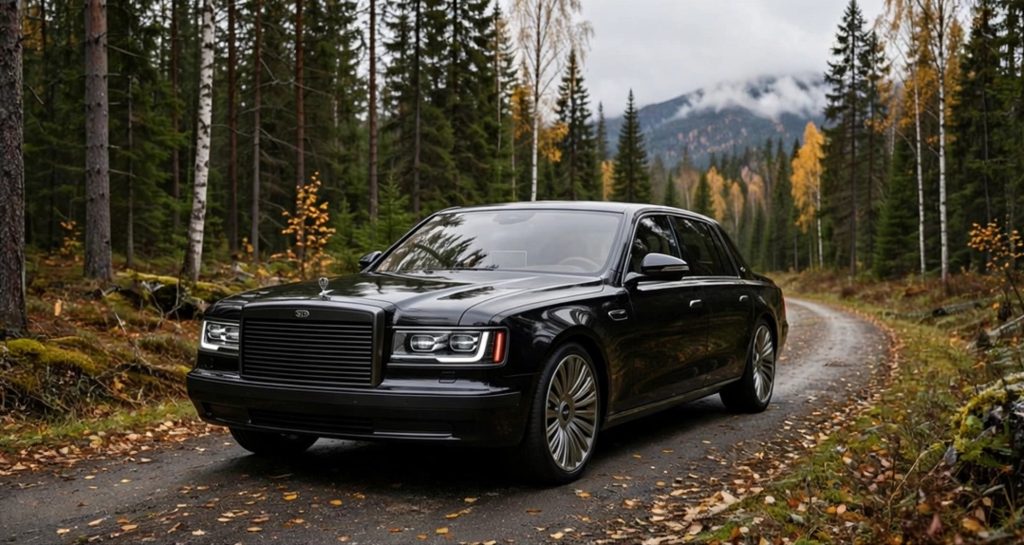
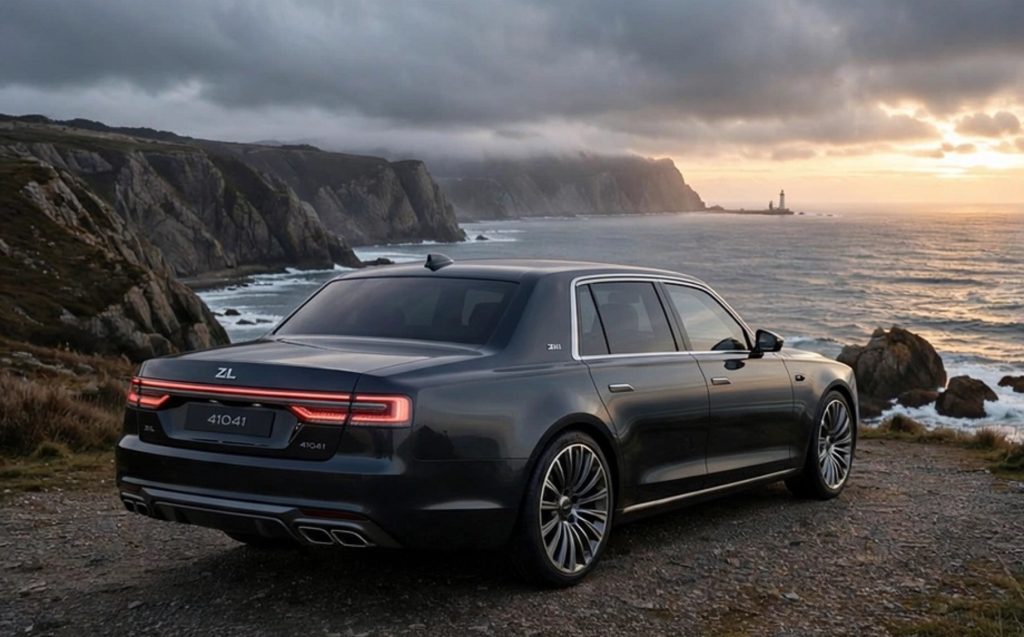
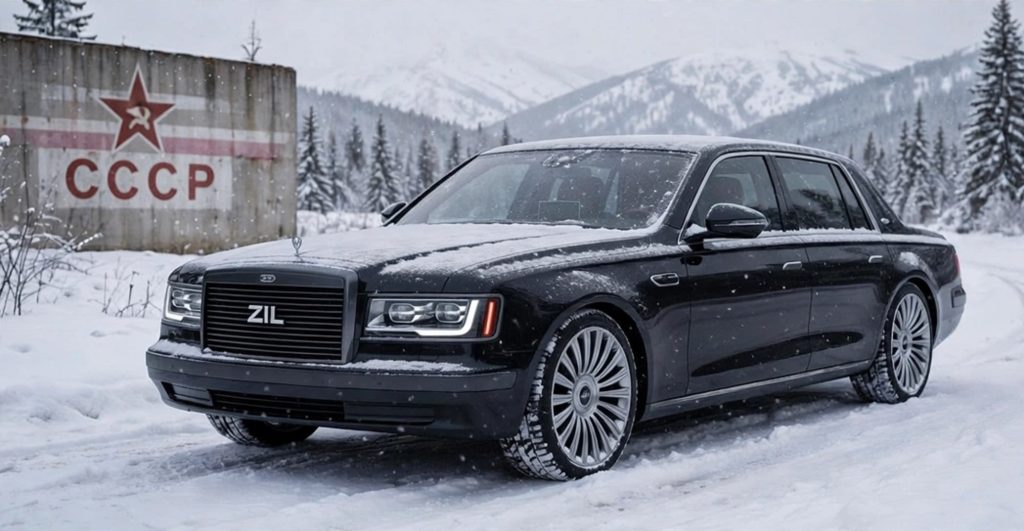
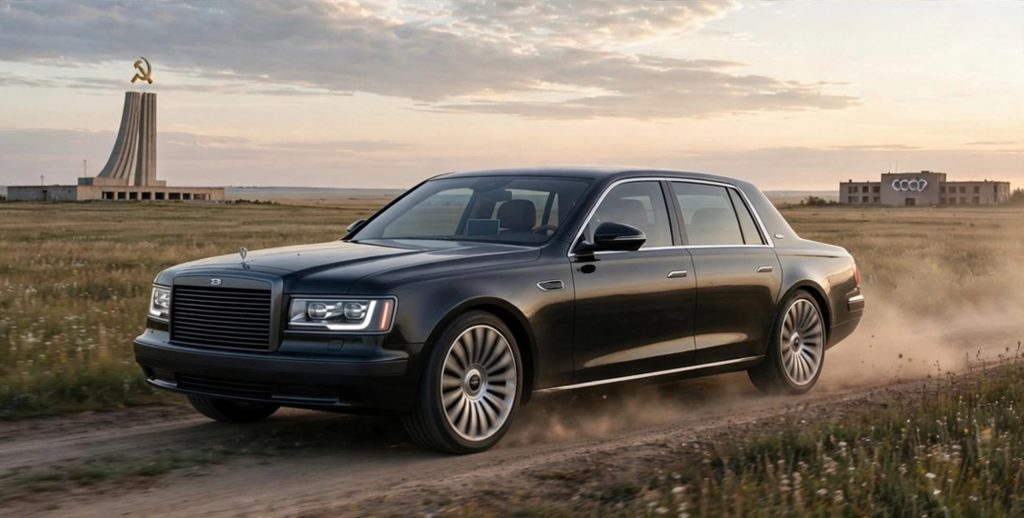
The appearance of the new vehicle combines tradition with modern technology. It retains a long hood, a formal three-box body, and a massive chrome radiator grille. However, the rectangular headlights are replaced by narrow LED units, while the body lines become considerably more streamlined.
The designers’ main objective is to ensure that the car remains instantly recognizable as a ZIL without looking like a museum exhibit.
This is precisely the approach we can see in the image created by GreekCarLover. Despite its modern styling, the vehicle retains the characteristic monumental appearance of classic Soviet government limousines.
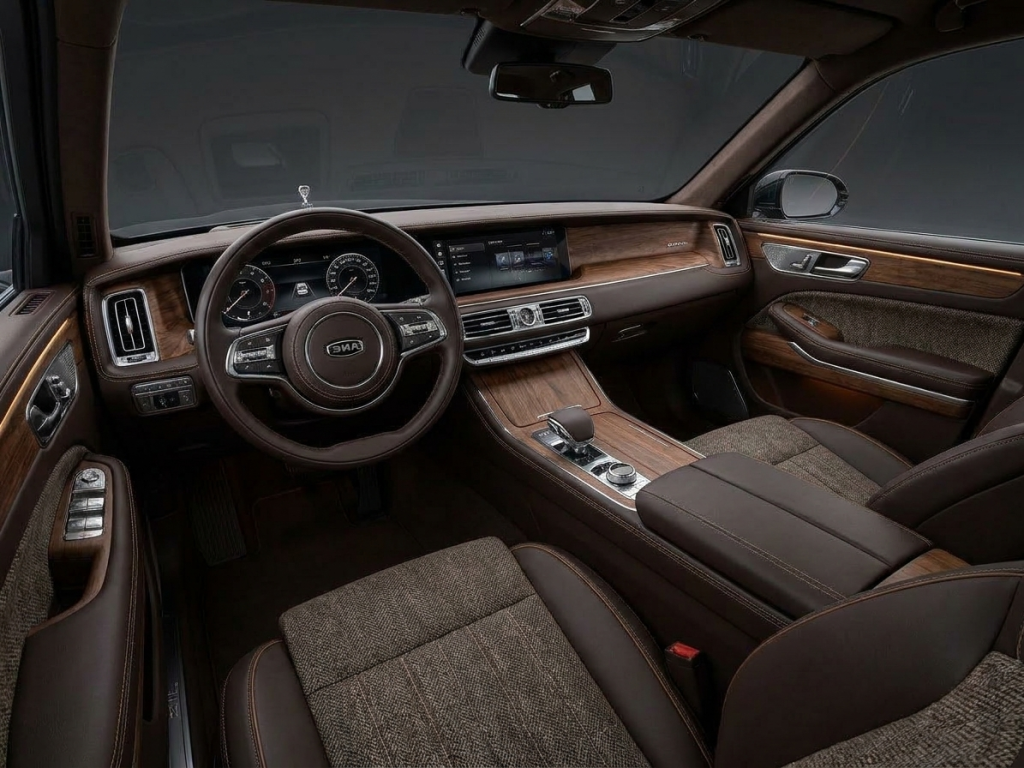
The interior deserves particular attention. Natural leather, fine wood veneers, wool fabrics, and polished metal details are used throughout. At the same time, the driver’s dashboard remains relatively conservative, while the passenger compartment receives the most advanced communication and control systems.
But the real revolution is hidden beneath the bodywork.
A Hybrid for the General Secretary
The main distinguishing feature of the ZIL-4122 is its hybrid powertrain. Moreover, in developing it, the engineers are guided not so much by fuel economy requirements as by the need to ensure exceptional ride smoothness and reliability.
Under the hood is a 5.5-liter twin-turbocharged gasoline V8 producing 480 horsepower. It is assisted by an electric motor integrated into the automatic transmission, delivering an additional 180 horsepower.
The combined system output reaches approximately 600 horsepower. However, the main advantage is not its performance, although the enormous limousine can accelerate from 0 to 100 km/h in approximately 6 seconds.
A 35 kWh lithium-ion battery allows the vehicle to travel up to 50 kilometers on electric power alone.
The use of this technology during state ceremonies is particularly interesting. Imagine a parade on Red Square. An enormous black limousine moves almost silently alongside the Kremlin wall. There is not the slightest engine vibration or transmission jerk.
Thanks to its electric propulsion and air suspension, the vehicle moves with exceptional smoothness even at extremely low speeds.
For Victory Day parades, a special open-top modification, the ZIL-41224, is developed with a reinforced body and a system that maintains a constant driving speed. This version replaces the previous ceremonial vehicles.
What Would the New ZIL Look Like in Numbers?
Proposed technical specifications of the 2017 ZIL-4122:
-
Vehicle class — full-size luxury limousine.
-
Length — 6,200 mm.
-
Width — 2,050 mm.
-
Height — 1,550 mm.
-
Wheelbase — 3,900 mm.
-
Curb weight — approximately 3,100 kg.
-
Engine — 5.5-liter twin-turbocharged gasoline V8.
-
Internal combustion engine output — 480 hp.
-
Electric motor output — 180 hp.
-
Combined system output — approximately 600 hp.
-
Transmission — 8-speed automatic.
-
Drivetrain — all-wheel drive.
-
Battery capacity — 35 kWh.
-
All-electric range — up to 50 km.
-
Maximum speed — 250 km/h.
-
Acceleration from 0 to 100 km/h — approximately 6 seconds.
-
Suspension — adaptive air suspension.
-
Average fuel consumption — approximately 14–16 liters per 100 km in mixed driving conditions.
Naturally, all the specifications listed above are part of the author’s fictional reconstruction. In actual history, the ZIL-4122 never existed.
A Car That Is Not for Sale
Despite its impressive specifications, the ZIL-4122 would hardly have become a mass-produced automobile. In fact, its production would most likely have remained extremely limited.
The factory would manufacture between 30 and 50 vehicles annually. Most would be intended for members of the Politburo, the Soviet government, the leaders of the Union republics, and the diplomatic corps.
Armored ZIL-41225 versions would be manufactured separately, featuring reinforced protection, multilayer armored glass, and special tires allowing the vehicle to continue moving even after being damaged.
An export version intended for the leaders of friendly countries might also have existed. However, such automobiles would almost certainly never have been offered for general sale.
By the mid-2020s, the ZIL-4122 would undergo another modernization. The electric component of the powertrain would become more powerful, semi-autonomous driving systems would be introduced, and the distance the car could travel without starting its gasoline engine might increase to 80 kilometers.
A Soviet Rolls-Royce or an Expensive Toy?
Could such an automobile have existed in reality? From a technical standpoint, absolutely. The USSR possessed a strong engineering tradition, extensive experience in building luxury automobiles, and its own scientific and industrial infrastructure.
However, creating a truly modern hybrid limousine would have required extensive modernization of the electronics, chemical, and automotive industries. This is precisely why successful economic reforms during the 1990s are such an important condition in our alternative history.
Nevertheless, even if the ZIL-4122 had turned out to be more expensive than its foreign competitors, this would hardly have prevented its production. After all, vehicles of this kind are built not so much for profit as for national prestige.
And who knows? Perhaps in an alternative 2027, it would not be an Aurus Senat entering Red Square, but an enormous black ZIL-4122, gliding almost silently over the cobblestones under electric power.
And somewhere on its massive radiator grille, the familiar emblem of the factory that once built automobiles for Stalin, Khrushchev, and Brezhnev would still proudly shine.
Source — https://www.reddit.com/r/AiCarArt/comments/1xi2urz/2027_zil_41041/