A might that was never seen at sea: the story of the “Drakon”-class heavy cruisers, which were intended to shift the balance of power in the Baltic

This is precisely the alternative history proposed by our Western colleague Nightmare1908648, who published his design for the Polish Dragon-class heavy cruisers on October 18, 2026. Let us explore how such a powerful Poland emerged in this reality and what its warships were like.
One Royal Family That Changed the History of Europe
Sometimes the fate of entire nations depends on circumstances that seem utterly insignificant to their contemporaries. For example, whether a monarch manages to produce legitimate heirs.
In our history, King Sigismund II Augustus of Poland married three times but died on July 7, 1572, without leaving any legitimate children. His death marked the end of the male line of the Polish-Lithuanian branch of the Jagiellonian dynasty.
The consequences were enormous. In 1573, the first free royal election was held, with the French prince Henry of Valois emerging victorious. In the following centuries, the elective monarchy, the expansion of the nobility’s privileges, and restrictions on central authority became some of the factors that weakened the Polish-Lithuanian Commonwealth. By the end of the 18th century, the state had disappeared from the political map of Europe as a result of the partitions.
But what if history had taken a different course?
In our alternative world, all three of Sigismund II Augustus’s wives were able to bear children. The king left behind five children, including three sons — Władysław, Kazimierz, and Aleksander.
As a result, the Jagiellonian dynasty did not die out. With an acknowledged heir to the throne, the Polish nobility had no such convenient opportunity to impose new conditions on the Crown concerning the election of monarchs.
Of course, the mere existence of three princes did not automatically guarantee absolute royal power. However, in our version of history, Władysław proved to be a sufficiently talented and determined ruler to gradually break the resistance of the magnates, restrict the political influence of the nobility, and transform the country into a hereditary absolute monarchy.
His younger brothers became instruments of dynastic policy. The Jagiellonians gained an opportunity to strengthen their influence in Central Europe by claiming neighboring thrones and establishing a system of dependent territories.
By the 18th century, Poland had become an entirely different state — a centralized monarchy capable of maintaining a standing army, developing industry, and pursuing an independent foreign policy.
The partitions of Poland never took place. Instead, having survived the Napoleonic era and the revolutionary upheavals of the 19th century, the kingdom became a constitutional monarchy during the European Springtime of Nations.
It was in this form that Poland entered the 20th century.
Britain’s Ally on the Shores of the Baltic
During the first half of the 20th century, the Kingdom of Poland found itself within the orbit of British foreign policy.
London had traditionally sought to prevent the emergence of a single power capable of controlling Europe’s key maritime communications. In Asia, Japan had long been one of Britain’s most important partners. In our alternative reality, Poland was assigned a similar role in the Baltic region.
It is important to understand that this cooperation went far beyond arms deliveries. Britain helped the Polish kingdom develop a modern defense industry, train naval officers, and build a powerful fleet.
In London’s strategic calculations, Warsaw was intended to become one of the principal counterweights to Russian influence in the Baltic region.
However, there was a fundamental difference between Japan and Poland. The Japanese fleet had to operate across vast oceanic expanses, while the Polish Navy was primarily expected to fight in the relatively confined waters of the Baltic Sea.
Consequently, British shipbuilders proposed a rather unusual type of warship for their ally — a compact heavy cruiser combining powerful artillery with a relatively limited operational range.
Thus, the Dragon project was born.
Dragon-Class Heavy Cruisers: British Shipbuilding Traditions and Polish Requirements
Initially, the Polish Admiralty intended to order three heavy cruisers. All the ships were to be constructed in British shipyards according to a design specifically developed for operations in the Baltic Sea.
The most distinctive feature of the new class was its unusual hull proportions.
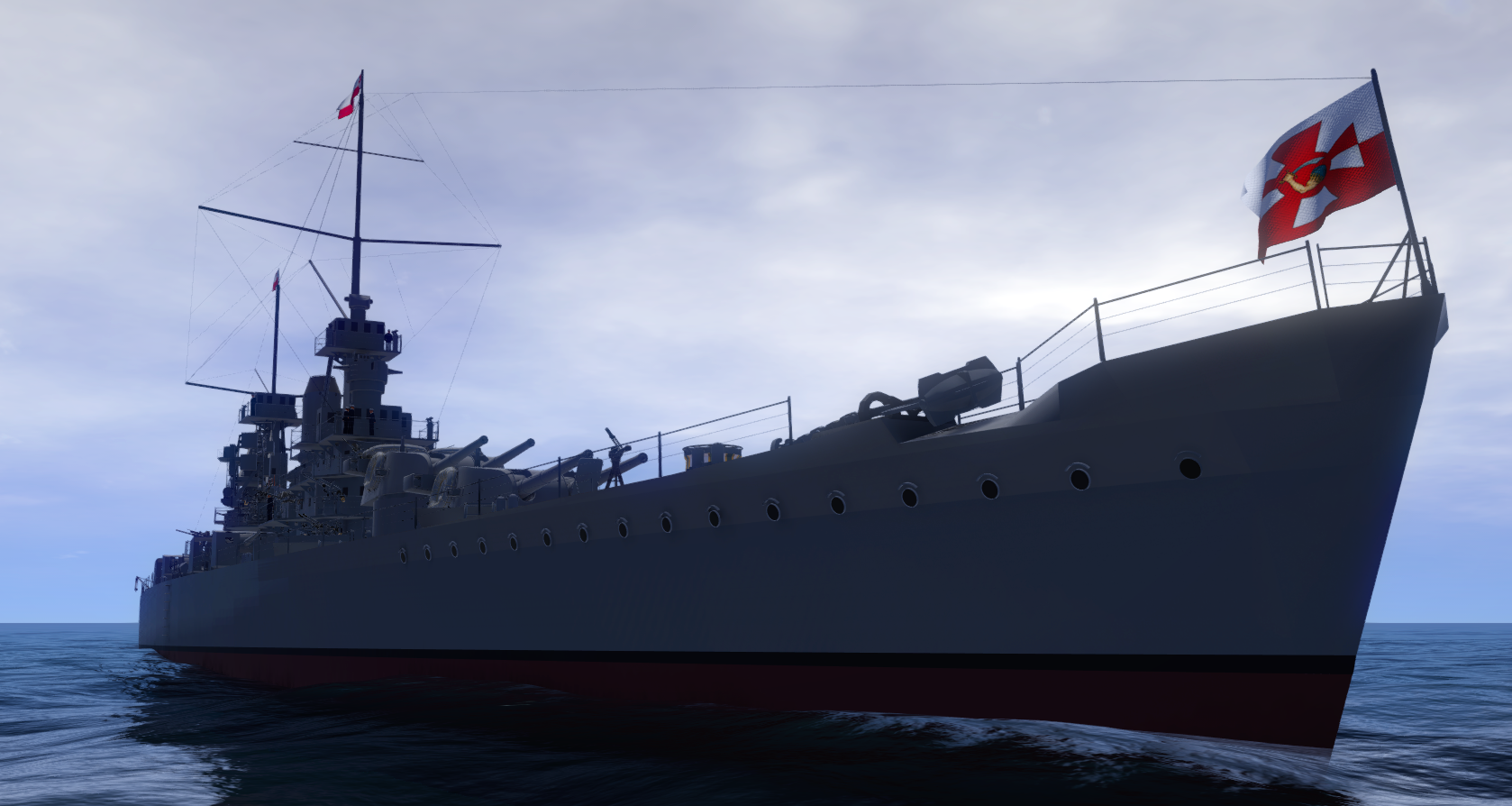
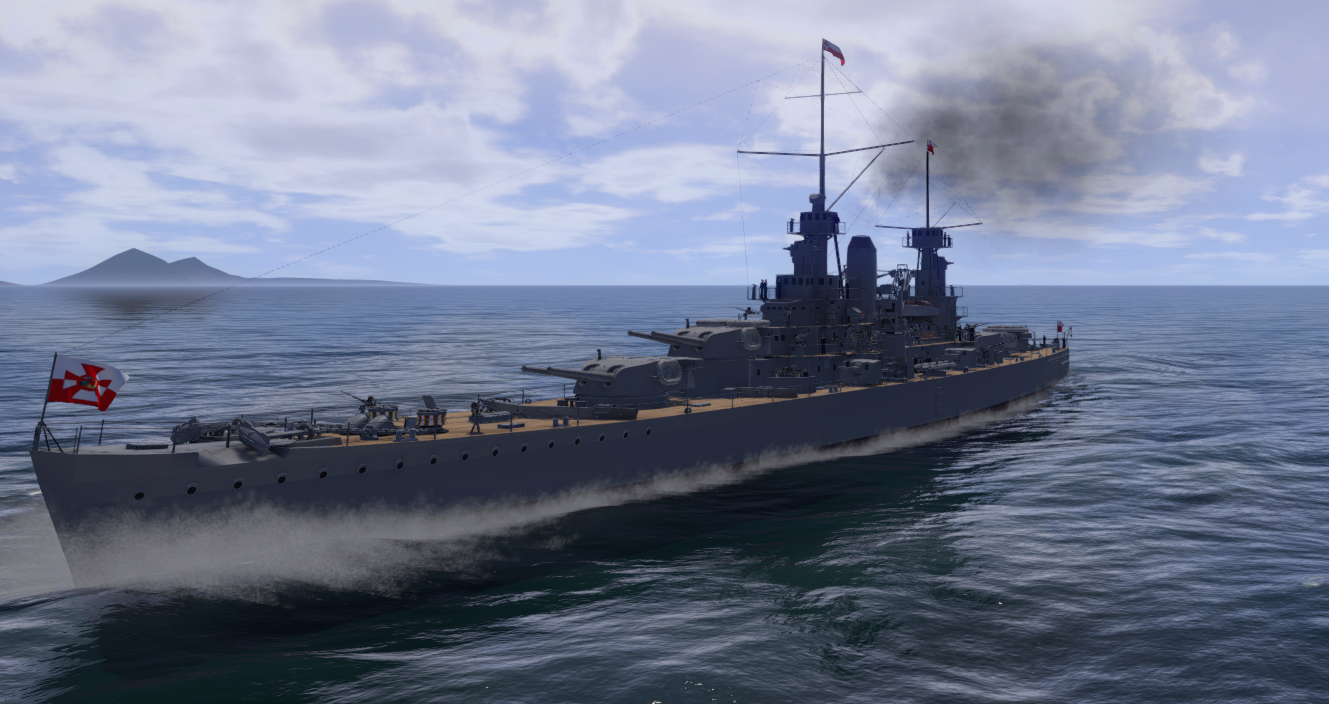
Despite being only 149.1 meters long, the cruiser had a beam of 19.3 meters — quite substantial for a ship of its class. British designers deliberately sacrificed some speed and range in favor of compactness, stability, and the ability to accommodate heavy armament.
The result was a vessel that outwardly resembled a scaled-down armored cruiser built using late-1930s technology.
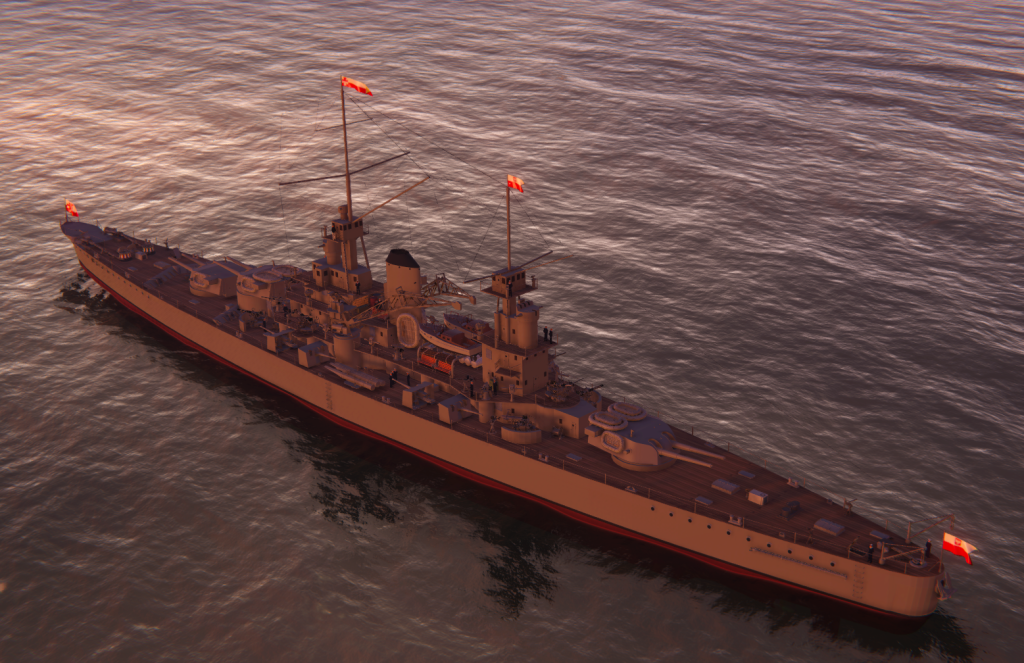
General view of the heavy cruiser ORP Dragon
Technical Specifications
-
Length: 149.1 m
-
Beam: 19.3 m
-
Draft: 5 m
-
Displacement: 9,700 tons
-
Propulsion power: 65,000 hp
-
Maximum speed: 28.2 knots
-
Cruising range: approximately 3,500 nautical miles
-
Number of propeller shafts: 2
-
Number of rudders: 2
Armament
-
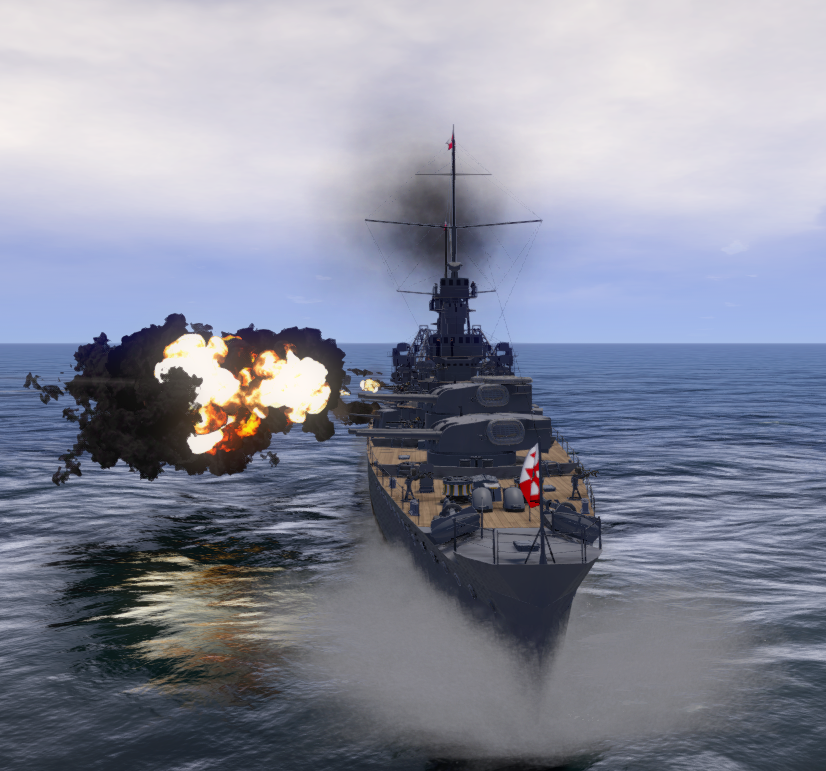
Main battery: 6 × 203 mm guns in three twin turrets
-
Secondary battery: 4 × 120 mm guns in single mounts
-
Heavy anti-aircraft artillery: 6 × 75 mm guns
-
Light anti-aircraft artillery: 14 × 40 mm Bofors autocannons in seven twin mounts
-
Automatic cannons: 12 × 20 mm guns
-
Torpedo armament: 2 × triple 533 mm torpedo launchers (three tubes each)
Note: The project’s author does not specify the thickness of the hull armor, armored decks, or gun turret protection.
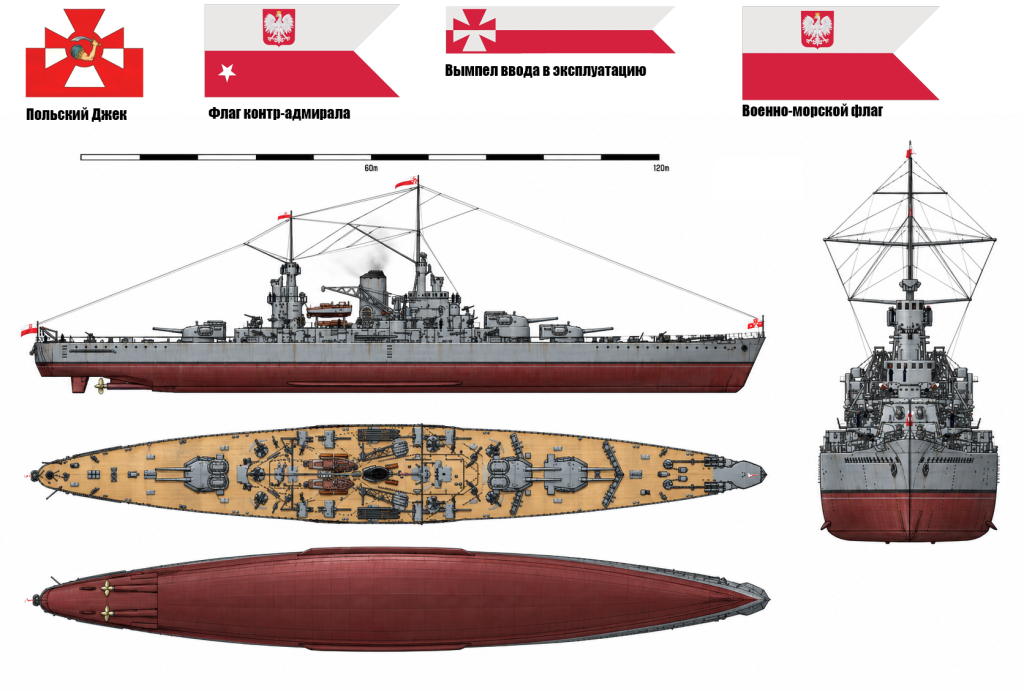
Thus, in terms of its main battery, the Dragon fully met the international definition of a heavy cruiser. Its six 203 mm guns enabled it to engage most lighter warships and posed a serious threat to enemy merchant convoys.
At the same time, it carried fewer main battery guns than many foreign heavy cruisers, which were armed with eight, nine, or even ten eight-inch guns.
Why Was the Polish Cruiser So Unusual?
For comparison, consider the British County-class heavy cruisers. With a similar standard displacement, they were considerably longer than the Polish Dragon, carried eight 203 mm guns, and could reach speeds exceeding 31 knots.
However, British cruisers were expected to operate along oceanic shipping routes, whereas the Polish vessels were designed primarily for operations in the Baltic Sea.
Therefore, Polish admirals did not consider the maximum speed of 28.2 knots a critical disadvantage. In the Baltic, artillery firepower, maneuverability in confined waters, and cooperation with land-based aircraft could be far more important.
The decision to abandon aviation facilities was equally interesting.
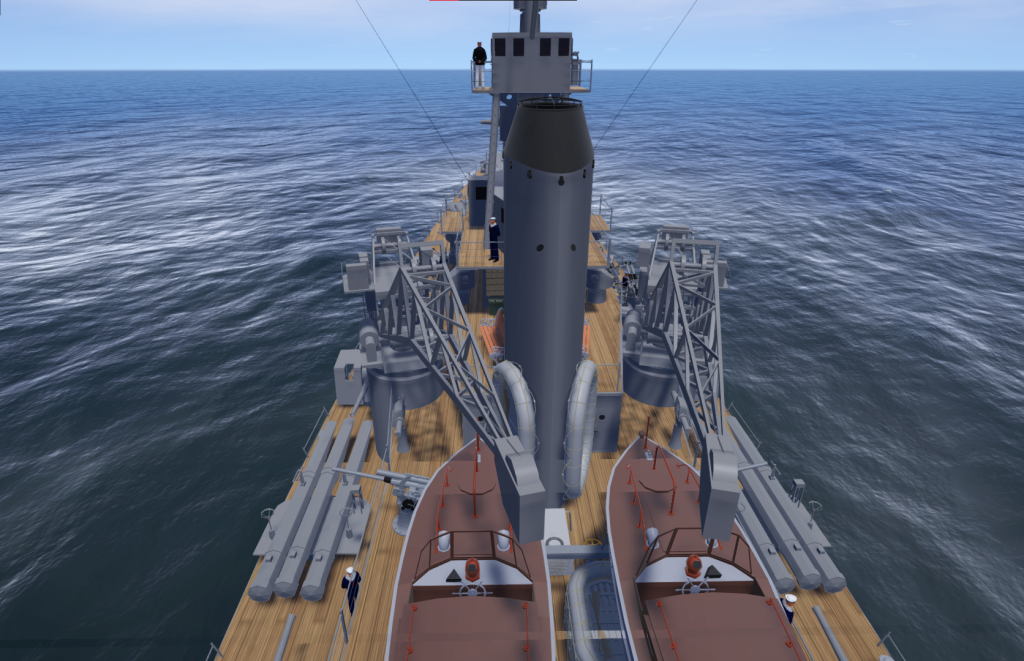
The original design included a catapult for a floatplane located behind the funnel. However, this feature was later removed, freeing additional space for weapons and shipboard equipment.
There was a certain logic behind this decision. In the Baltic, cruisers could receive reconnaissance information from land-based aircraft, making the ability to launch their own floatplanes less essential than during oceanic operations.
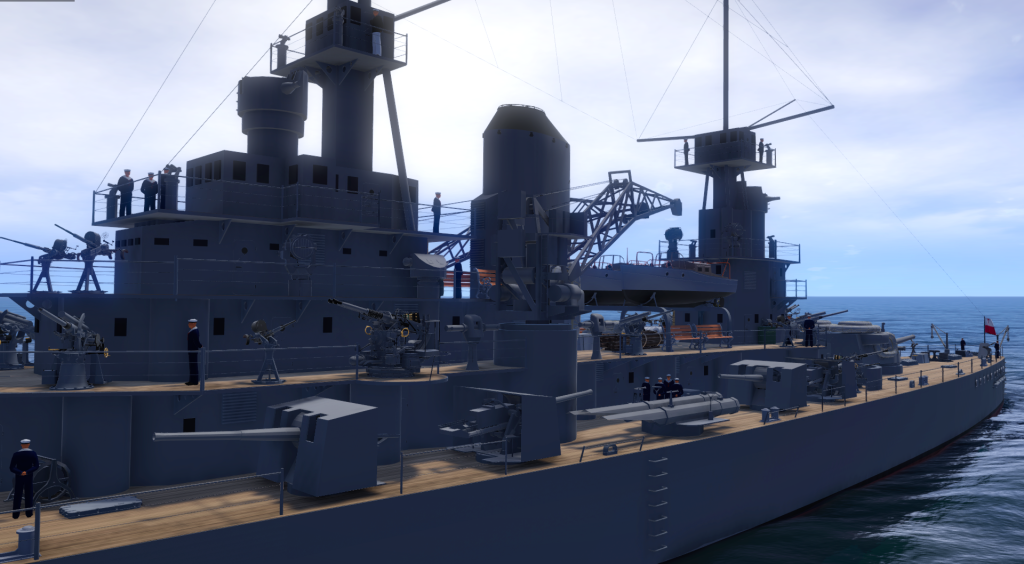
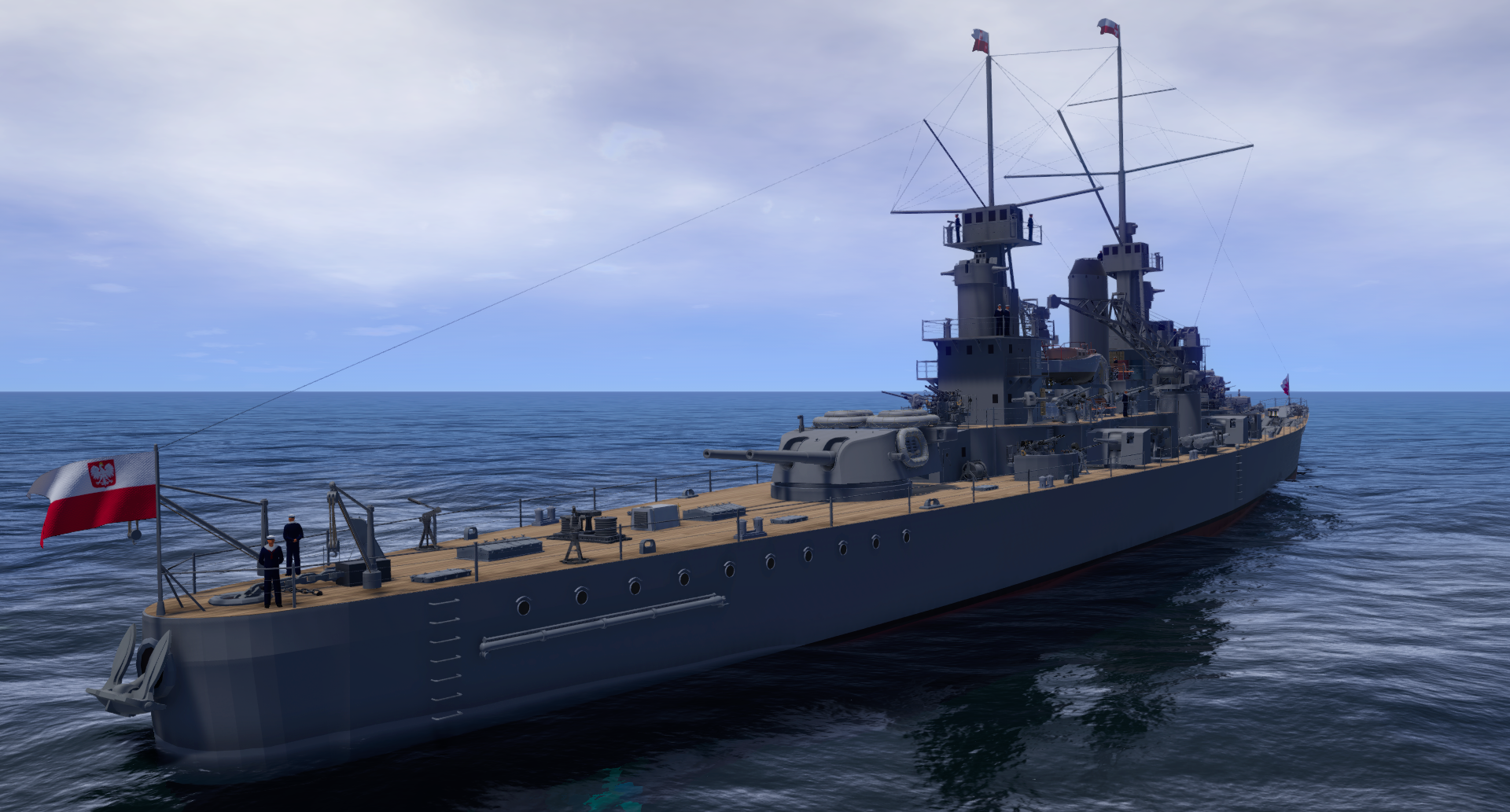
The anti-aircraft armament also deserves particular attention. In addition to six 75 mm guns, the cruisers carried fourteen 40 mm Bofors automatic cannons and twelve 20 mm guns.
Moreover, the project’s author specifically incorporated Polish weapon designs. The heavy anti-aircraft mounts were modeled after the Polish 75 mm wz.37 guns, while the 20 mm automatic cannons represented the Polish Nkm wz.38 FK aircraft and anti-tank guns.
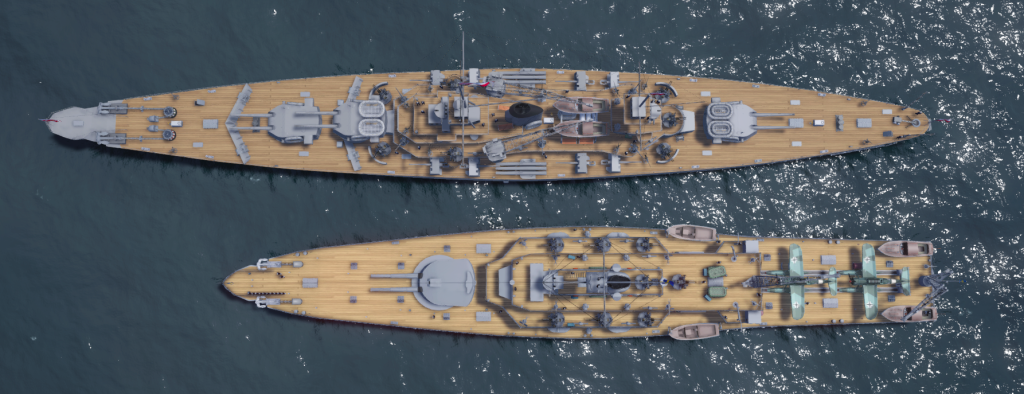
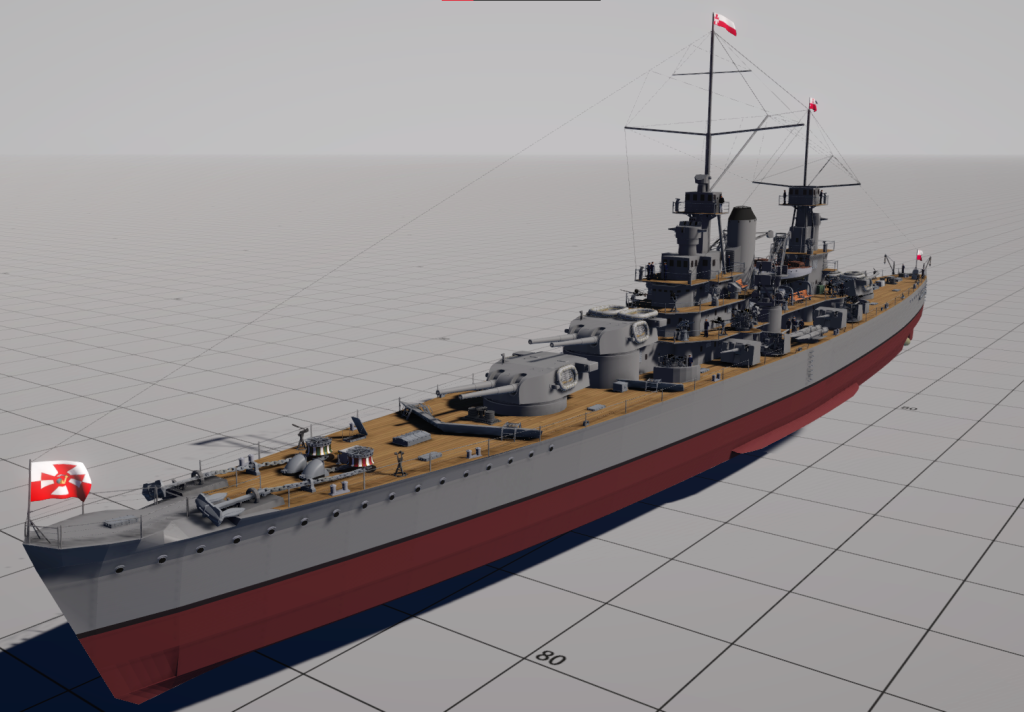
Top view of the cruiser
As a result, the ship would have been a formidable opponent for aircraft of its era, although the absence of dual-purpose medium-caliber artillery could have limited the effectiveness of its long-range anti-aircraft fire.
Two Polish Cruisers and One Canadian
Despite the ambitious plans of the Polish Admiralty, the original shipbuilding program had to be revised.
Constructing three heavy cruisers simultaneously proved too expensive even for the prosperous Kingdom of Poland. Eventually, the government canceled one vessel and concentrated its funding on the remaining two.
They were named ORP Dragon and ORP Bałtyk.
These two cruisers became the largest and most powerful artillery warships in the Polish Navy, serving as its flagships and symbols of the kingdom’s growing naval power.
In the event of a military conflict with Russia, their primary missions would have included protecting Polish sea lanes, supporting lighter naval forces, and engaging major enemy surface warships.
However, the fate of the third cruiser proved particularly interesting.
By canceling the ship, Poland effectively gave the British an opportunity to test a new type of warship at their own expense. The British Admiralty decided to complete the vessel to evaluate its combat capabilities.
Trials demonstrated that a compact heavy cruiser could indeed serve as an effective artillery platform. However, for the Royal Navy, which had to operate across vast oceanic distances, the ship’s limited cruising range and lack of aviation facilities represented significant drawbacks.
Ultimately, the Royal Navy decided against purchasing additional ships of this class.
The completed cruiser was transferred to Canada, where it was renamed HMCS Toronto.
Thus, in our alternative world, the British design resulted in three warships: two entered service with the Polish Navy, while the third sailed under the Canadian flag.
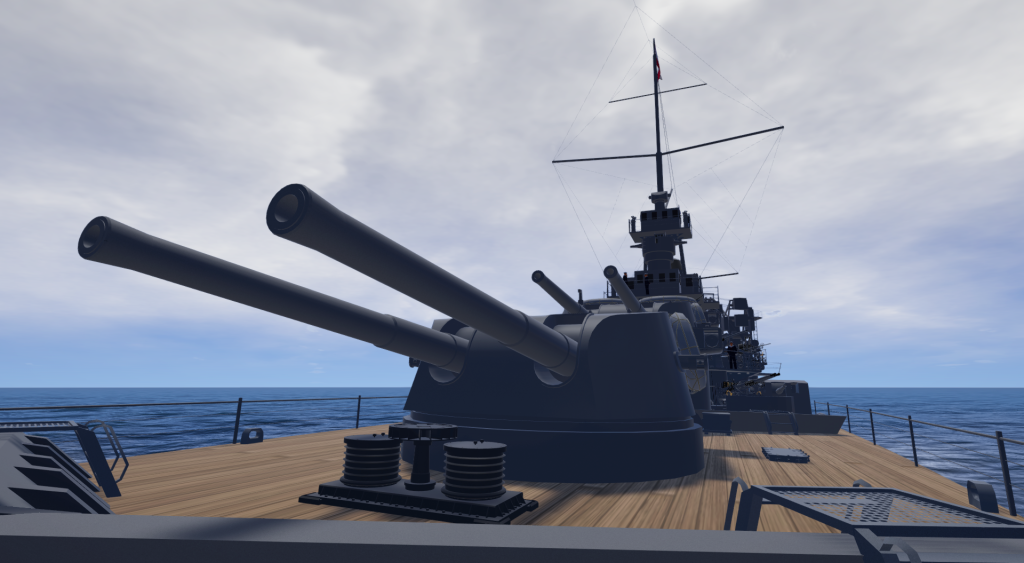
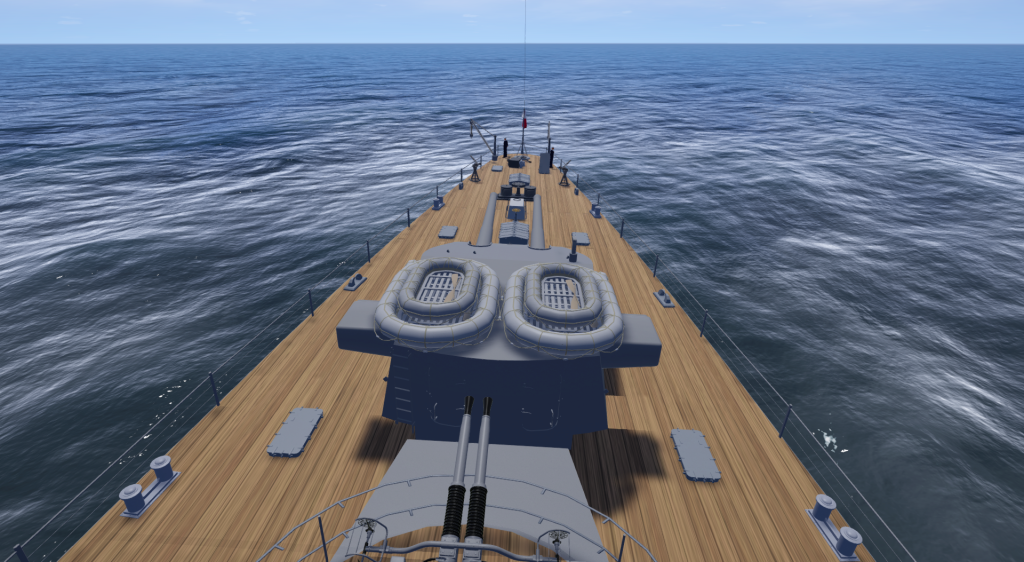
Forward main battery turrets
How Successful Was the Dragon?
It would be wrong to claim that the Polish cruisers were entirely free of shortcomings.
First of all, the combination of relatively small dimensions, displacement, and draft raises questions. With a length of 149 meters and a beam exceeding 19 meters, accommodating a displacement of nearly 9,700 tons within a hull drawing only 5 meters of water would be extremely difficult.
Readers of the original publication also pointed out this issue. The author acknowledged that the virtual model’s technical specifications required further refinement.
The claimed speed of 28.2 knots with an engine output of 65,000 horsepower also raises doubts. Such a wide and relatively short hull could encounter considerable hydrodynamic resistance.
Armor protection presents another unanswered question. Since the author did not specify the thickness of the armor belt, decks, or turrets, it is impossible to make an objective assessment of the ships’ survivability.
Nevertheless, the concept of a Baltic heavy cruiser deserves attention.
Unlike ocean-going warships, the Dragon was not required to undertake voyages covering thousands of nautical miles. It only needed to operate under the protection of its own naval bases and land-based aircraft.
Under such conditions, powerful artillery, substantial anti-aircraft defenses, and relatively shallow draft could prove more valuable than a few additional knots of speed.
Although the Polish ships would certainly have faced serious difficulties when confronting modern, fast heavy cruisers belonging to other naval powers.
Instead of a Conclusion
Perhaps the most curious aspect of this story is that a Polish cruiser named Dragon actually existed. However, in our reality, it was an entirely different ship.
In January 1943, Britain transferred the aging Danae-class light cruiser HMS Dragon, built during the First World War, to the Polish Navy. The vessel participated in operations supporting the Allied landings in Normandy and was severely damaged in July 1944.
But in the world we have described, Poland had no need to receive an outdated British warship. Instead, it commissioned modern heavy cruisers of its own and could aspire to become one of the leading naval powers in the Baltic Sea.
And all of this became possible because of a single historical divergence — the birth of legitimate heirs to Sigismund II Augustus.
Of course, the survival of the Jagiellonian dynasty would not automatically have guaranteed Poland political stability or transformation into a major naval power. Nevertheless, it would have opened an entirely different path of development, one that the country might well have followed.
As for whether it would have been wise for such a Poland to invest enormous sums in heavy cruisers rather than building large numbers of destroyers, submarines, and land-based naval aircraft — that is a question we leave to our readers.
Source – https://www.reddit.com/r/NavalArt/comments/1x97zp2/polish_dragon_class_baltic_heavy_cruiser/