The Soviet Navy's flagship missile cruiser. What if the USSR had purchased "Richelieu"-class battleships from France after the war?

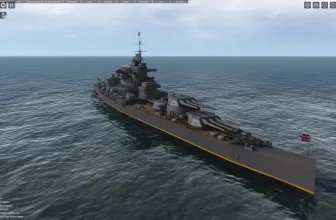
In the postwar world, when the contours of a new global balance of power were just beginning to take shape, the Soviet Union made a decision that would forever change the face of its navy. The acquisition of two “Richelieu”-class battleships from a war-weary France was not merely a major naval deal, but a strategic foundation for the future expansion of the Soviet Navy into the open oceans. These ships, originally conceived as symbols of French naval power, were given a new lease on life under the Soviet flag, becoming the core of future surface fleets. As early as 1965, the Soviet Navy began a gradual and profound restructuring, focusing on a doctrine of deploying heavy strike groups, in which the *Richelieu* and its sister ship “Jean Bart” were to play a key role.
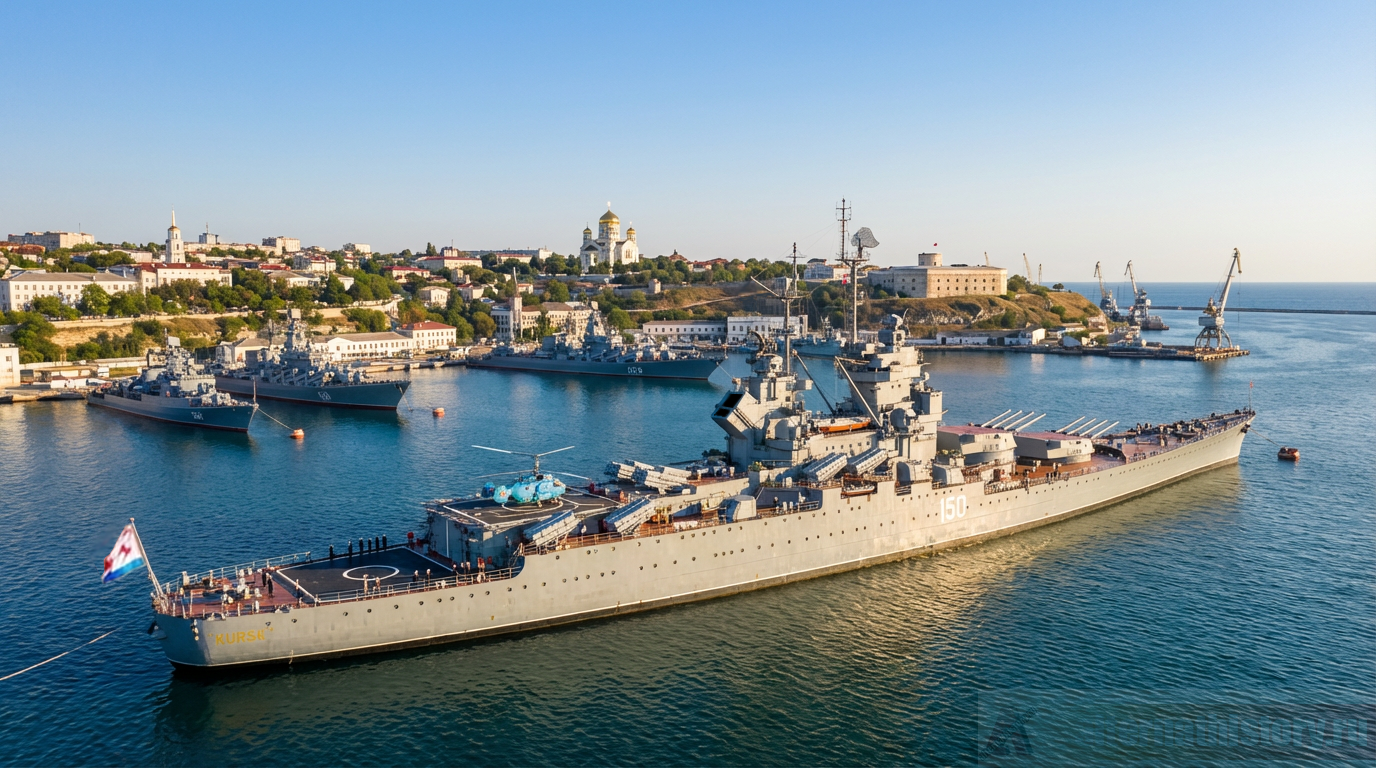
From Lorient to Sevastopol: The Birth of the “Rostov” and the “Kursk”
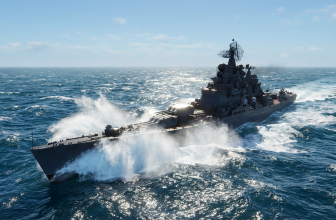
The transfer of the ships to Soviet control was accompanied by a large-scale modernization program. The Richelieu and Jean Bart underwent thorough modernization, during which their original French radar and fire-control systems were completely replaced with domestic sensors that met the standards of Soviet design practices. The artillery layout also underwent changes: three triple-barreled 6-inch secondary guns were removed, and the 100-mm guns underwent extensive modifications, allowing them to use the same ammunition as the new Soviet destroyers and frigates. To round out the armament, missile systems were deployed on the decks, consisting of anti-aircraft missiles and a large number of anti-ship cruise missiles, transforming the classic battleships into hybrid platforms. To ensure the uninterrupted operation of the main guns, the Soviets purchased all available 15-inch ammunition from France and, at the same time, established their own production. New barrels for the main guns were manufactured at Soviet steel mills, ensuring a long service life for the artillery systems.
Flagship Role and Helicopter Wing
Both ships were intended to serve as flagship vessels for surface fleets or amphibious groups. To this end, their sterns were equipped with helicopter pads and hangars designed to accommodate two helicopters. The helicopters provided limited anti-submarine defense and, more importantly, enabled the engagement of over-the-horizon targets by transmitting target coordinates to missile systems and adjusting the fire of heavy artillery. The hangar for these helicopters was constructed from recycled armor plate cut from the hulls of partially decommissioned pre-war “Kirov”-class light cruisers. This engineering solution not only conserved strategic resources but also gave the superstructures a distinctive silhouette that became the hallmark of Soviet heavy flagship vessels.
Engineering Challenges and Prospects for Modernization
Although, in theory, integrating Soviet combat systems and weapons with French hulls was entirely feasible, in practice it proved to be extremely difficult. Differences in electrical wiring standards, compartment layouts, and survivability principles required thousands of hours of work by designers. The “La Mont” boilers with forced circulation posed a particular headache. This technology was new to Soviet engineers, and maintaining it at sea required highly qualified personnel and specialized equipment. Realizing that the current configuration was transitional, the Navy command, even at the stage of commissioning the ships, planned a second major overhaul, which was to take place in the 1980s and called for a comprehensive modernization of the propulsion system and combat information systems.
Technical Specifications:
- Displacement: 37,250 long tons (37,850 metric tons), standard; full load weight: 43,992 long tons (44,698 metric tons).
- Length: 247.85 m (813 feet 2 inches).
- Width: 33.08 m (108 feet 6 inches).
- Draft: fully loaded: 9.9 m (32 feet 6 inches).
- Propulsion system: 6 forced-circulation boilers; 4 Parsons reduction-gear turbines; 4 propellers; 155,000 l.s. (116,000 kW).
- Maximum speed: 32 knots (59 km/h; 37 mph). Cruising speed: 15 knots (28 km/h; 17 mph).
- Range: 9,500 nautical miles (17,600 km; 10,900 miles) at a speed of 15 knots (28 km/h; 17 mph).
- Crew: 1,569 people.
- Armament: 8 × 380-mm (15-inch) guns; 12 × 100-mm (3.9-inch) /45 Mle 1930 multi-purpose guns, modified to use Soviet ammunition.
- Missiles: 12 × P-15M “Perm” anti-ship missiles (SS-N-2 “Styx”); 4 × K-13RM twin launchers (SA-N-3 “Granni”) (manually reloaded).
- Armor: belt: 327 mm (12.9 inches); main deck: 170 mm (6.7 inches); turrets: 430 mm (17 inches); conning tower: 340 mm (13 inches); hangar: 50 mm (2 inches).
- Radar: MR-302 Rubka (Strut Curve)—air search system; Reya (Pot Drum)—surface target search system; Don (Don Key)—navigation system; 2 × MR114 Yakhond (Owl Screech)—fire control systems (15-inch guns); 4 × SPV-42-50 (Hop Off)—fire control systems (100-mm guns); 4 × Klyon-183 (SS-N-2); 4 × Moskit (SA-N-3).
- Aviation infrastructure: a hangar and a landing pad for 2 Ka-25 helicopters.
The Legacy of Soviet Battleships
In an alternate reality where the Soviet Navy sailed into the world’s oceans under the flags of the *Rostov* and *Kursk*, the USSR’s naval doctrine took on a completely different structure. These ships proved that even hulls considered obsolete by mid-century standards could be given a new lease on life if equipped with modern weapons, target-acquisition systems, and missile armaments. Their service laid the foundation for the Soviet concept of the “heavy missile flagship,” which was subsequently embodied in subsequent generations of surface ships. Despite all the engineering difficulties associated with adapting the French hulls and boiler systems, it was this project that accelerated the development of domestic standards for combat system integration. In the history of the Soviet Navy, the *Richelieu* and *Jean Bart* remained not merely captured trophies, but a bridge between the artillery era and the missile age, forever altering the strategic balance of power on the high seas.