The ideal Russian armored cruiser that never was: How abandoning Witte’s policy could have reshaped the Russian fleet on the eve of the Russo-Japanese War

Let us imagine that by the beginning of the Russo-Japanese War, Russia had managed to concentrate in Port Arthur not seven battleships and several armored cruisers, but thirteen battleships, thirteen powerful armored cruisers, and an entire armada of light warships. Moreover, many of these vessels would be faster than their Japanese counterparts, while the cruisers would be armed with ten-inch guns capable of penetrating enemy armor at long ranges.
Sounds fantastic? Yet our colleague bayard argues that, as early as 1898, the Russian Empire already possessed almost all the technical prerequisites for carrying out such a program. In his opinion, all that was lacking was the political will and a different financial policy.
Under the original article by our esteemed colleague Andrey, “What an Armored Cruiser of the Imperial Russian Navy Should Be Like: The Admirals’ Opinions in 1902”, our colleague bayard posted an extensive comment. Its author proposed not merely an alternative design for a single ship, but an entirely different program for the development of the Russian Navy and the Far East.
I therefore decided to introduce our esteemed readers to his reasoning. After all, the proposed point of divergence goes far beyond shipbuilding, touching upon economic policy, the development of Manchuria, and even the possible outcome of the confrontation with Japan.
Let me make one thing clear from the outset: what follows is the author’s alternative-history scenario, not a reconstruction of a program actually approved by the Naval Ministry. Some of our colleague’s assumptions are quite bold, and certain assessments of historical events are debatable. But that is precisely what makes the proposed concept so interesting.
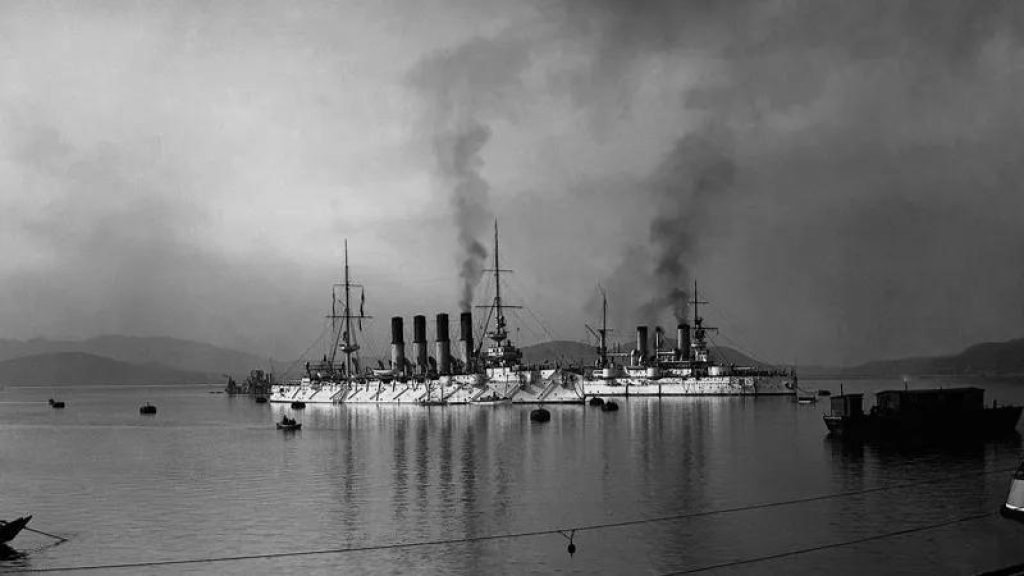
1898: The Moment When Everything Could Have Gone Differently
In actual history, the Russian Empire launched a large-scale program to strengthen its Pacific Squadron in the late nineteenth century. Japan was rapidly building a modern fleet in British shipyards, and St. Petersburg fully understood that a clash of interests in the Far East could sooner or later lead to war.
One of the most important problems was Russia’s lack of a modern armored cruiser capable of fighting Japan’s Asama-class ships on equal terms. The French-built Bayan, ordered in 1898, was a fairly successful vessel for reconnaissance duties with the fleet. With a displacement of approximately 7,800 tons, she could reach about 21 knots and possessed reasonably substantial armor protection. However, her main armament—just two 203 mm guns in single-gun turrets—was clearly inferior to the eight eight-inch guns carried by Japanese armored cruisers.
Moreover, the Japanese ships were considerably larger and were designed not only for reconnaissance but also for participation in fleet engagements. Of course, actual superiority depended on more than the number of guns alone, but Bayan’s lack of firepower was obvious.
In reality, the Russian Naval Ministry ordered three Diana-class protected cruisers—Diana, Pallada, and Aurora. They were armed with twelve 152 mm guns but had relatively modest speed and lacked proper side armor.
And this is where the first alternative point of divergence appears.
Let us suppose that the Russian leadership does not impose strict financial constraints on the designers and, instead of the three “goddesses,” decides to build improved armored cruisers based on the French Bayan design.
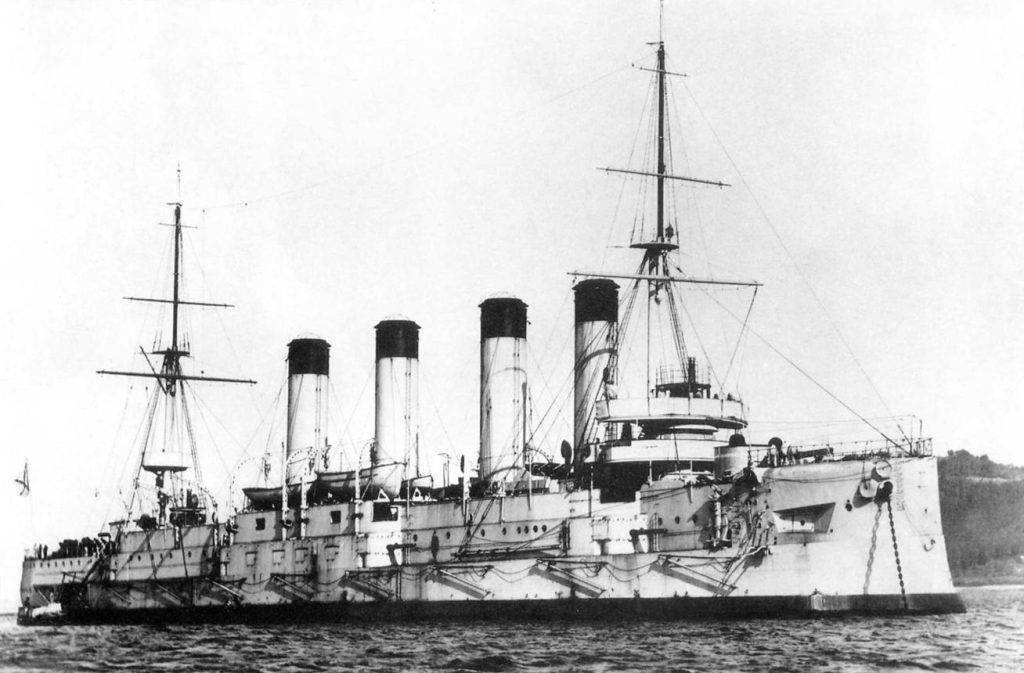
The armored cruiser Bayan
Bayan with Ten-Inch Guns: The Birth of the Ideal Cruiser
Bayard’s main idea is quite simple: if Bayan is not powerful enough to fight the Japanese Asama-class cruisers, there is no need to abandon her successful design. Instead, her displacement should be increased and the ship should be equipped with more powerful artillery.
The basis of the project is an elongated hull with a displacement exceeding 9,000 tons. Instead of the original power plant developing approximately 16,500 hp, the proposal calls for twin-shaft machinery producing 20,000 hp, similar to that installed in German-built cruisers.
The new ship’s estimated speed would be 22–22.5 knots during trials and approximately 20.5–21 knots under normal service conditions.
But the most interesting feature is her armament.
Instead of two 203 mm guns, the proposal calls for two 254 mm guns mounted in single-gun turrets. These are the same ten-inch guns used on Russian battleships of the Peresvet class and on Pobeda.
According to the author’s concept, the new artillery would allow the cruiser to engage Japanese armored warships at ranges where return fire from eight-inch guns would not yet pose such a serious threat.
The technical concept looks attractive. However, a significant problem arises here: larger turrets, magazines, ammunition-handling systems, and structural reinforcements would inevitably increase the ship’s weight. Consequently, there is no guarantee that, with a displacement of around 9,000 tons, it would be possible to retain Bayan’s protection, achieve 22 knots, and install ten-inch guns simultaneously.
Nevertheless, such a project deserves attention. Essentially, it represents an attempt to create something between a conventional armored cruiser and a fast coast-defense battleship, but with ocean-going seaworthiness.
The proposed “ideal Bayan” was intended to become a hunter of Japanese armored cruisers rather than merely a fleet reconnaissance vessel.
Bayan’s Big Brother: The Alternative Peresvet
However, the author does not propose limiting the program to relatively light armored cruisers. The second line of development would consist of large ships based on the Peresvet-class battleships.
Here, too, a major redesign is envisaged. Instead of a three-shaft propulsion system, the proposal calls for a twin-shaft installation developing approximately 20,000 hp. Displacement would increase to 12,500 tons or slightly more, while the estimated speed would reach 21 knots.
Special attention is given to the secondary battery. Twelve 152 mm guns would be mounted in protected casemates similar to those used on the battleships Retvizan and Kniaz Potemkin-Tavrichesky.
At the same time, the powerful ten-inch main armament would be retained, while the side armor would be substantially improved.
The result would be a large first-class armored cruiser capable of operating alongside squadron battleships, fighting Japanese armored cruisers, and conducting independent operations along oceanic shipping routes.
Admittedly, not much of the original Peresvet would remain in such a vessel. In essence, this would involve designing a new type of fast armored cruiser using already proven technical solutions.
Yet these are precisely the ships that bayard proposes to make one of the foundations of the future Pacific Fleet.
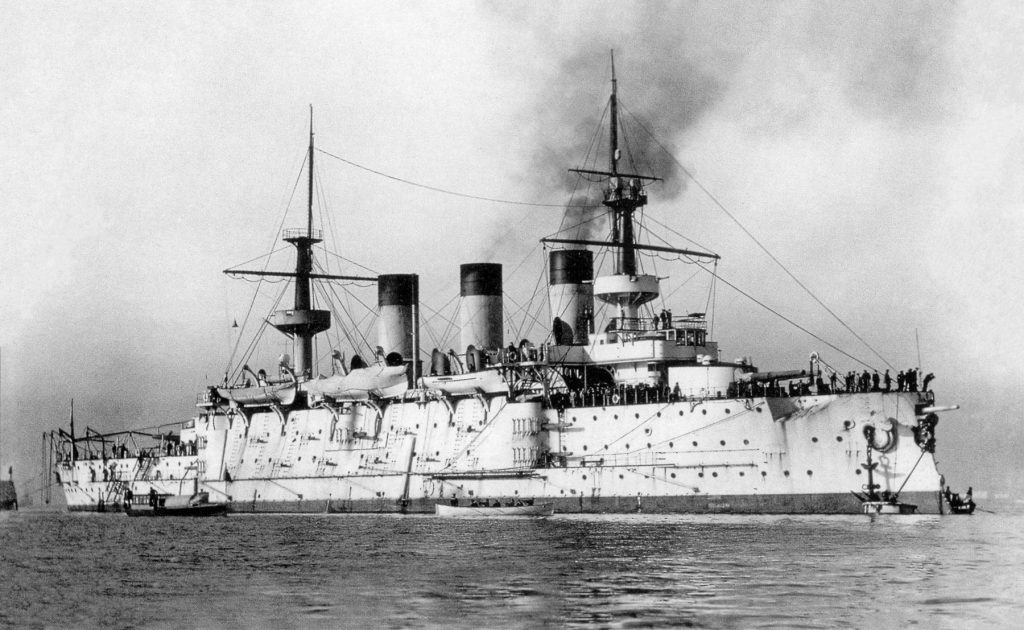
The battleship Peresvet in a historical photograph
Russian and Foreign Shipyards Working at Full Capacity
However, building several unusual cruisers would not, by itself, be enough to achieve superiority over Japan. This would require a complete revision of the naval shipbuilding program, and it would have to be done immediately, as early as 1898.
And here the author proposes a second, far more significant point of divergence. Let us suppose that Sergei Yulyevich Witte loses his influence over Emperor Nicholas II, and economic and naval policy passes into the hands of supporters of much more extensive government funding.
In that case, the Naval Ministry would be able to place orders based primarily on military and strategic requirements rather than approved financial limits.
According to bayard’s concept, Russian shipyards would begin constructing four improved Potemkin–Retvizan-type squadron battleships, two large armored cruisers based on Peresvet, and four improved Bayans armed with ten-inch guns in 1898–1899.
However, domestic production capacity would clearly be insufficient. Therefore, the main emphasis would be placed on foreign contractors.
Charles Cramp’s American company in Philadelphia would receive an order for two improved Retvizan-class battleships and two large armored cruisers. The already ordered Varyag would be replaced by a ship of the improved Bayan type, provided that the construction schedule and progress allowed it.
The French firm headed by Lagane would build two battleships based on Tsesarevich, but with a simpler casemate-mounted secondary battery, as well as two armored cruisers.
Finally, German shipyards would receive their own extensive program. Germania would build Askold-class cruisers, Schichau would construct enlarged and improved Noviks, and Vulcan would build large first-class armored cruisers.
In actual history, Russia indeed made extensive use of foreign shipyards. For example, in April 1898, Cramp’s company received orders for the battleship Retvizan and the cruiser Varyag. Therefore, the very idea of expanding foreign orders has a sound historical basis.
But the proposed scale is entirely different. Additional building slips, workers, armor, guns, propulsion systems, and equipment would be required. Equipping the ships with trained crews on schedule would be an equally difficult task.
Thus, the main problem here is no longer merely financial, but also industrial and organizational.
What Kind of Fleet Could Russia Have Had by 1903?
If we accept the author’s optimistic calculations and assume that all orders were completed on schedule, the Russian fleet in the Far East would have looked completely different by the end of 1903.
The core of the squadron would consist of eight new fast battleships built to two principal designs. They would be joined by three Poltava-class battleships and the two existing Peresvet-class ships. Thus, there would be thirteen large battleships in total.
The cruiser forces would be no less impressive. Six large first-class armored cruisers and seven improved Bayans with ten-inch guns would form the main striking force of the fast wing.
Two or three Askold-class ships, together with numerous improved Noviks, would be assigned to reconnaissance and operations against Japanese light cruisers. In addition, the fleet would include the already completed Rurik and Rossia, intended for operations against oceanic shipping.
Special attention would be given to destroyers: the author envisages no fewer than thirty new vessels of this class.
According to bayard, such a squadron would surpass the Japanese fleet so decisively that Tokyo would simply abandon its plans to start a war.
It is precisely here that the alternative history takes its most interesting turn: Russia acquires an enormously powerful fleet not to win the Battle of Tsushima, but to ensure that the battle never takes place at all.
However, completing such a grandiose program in five years is an extremely optimistic assumption. In reality, the construction of Tsesarevich and other large warships took several years, while commissioning required additional trials and crew training. Therefore, even with sufficient funding, the arrival of all these ships by 1903 seems unlikely.
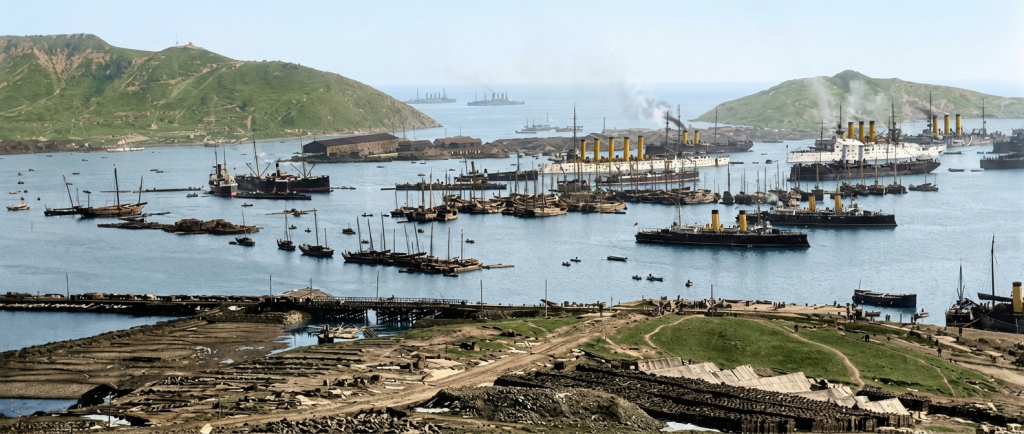
This is what the Pacific Fleet of the Russian Empire might have looked like in an alternative reality
Where Would the Money Come From? Sharapov’s Economic Alternative
Naturally, an immediate question arises: where would the Russian Empire obtain the funds for such an ambitious construction program?
Here bayard proposes not simply reallocating the budget, but changing the state’s entire financial system.
In actual history, Finance Minister Sergei Witte consistently pursued a policy of strengthening the ruble and, in 1897, carried out a monetary reform establishing the gold standard. Its supporters expected this to increase currency stability and make Russia more attractive to foreign investors.
Opponents of this policy believed that strictly linking the money supply to gold reserves restricted the state’s ability to finance industry and infrastructure.
One of the best-known critics of the gold standard was the economist and publicist Sergei Fyodorovich Sharapov. He proposed a system of so-called “absolute money,” under which the state itself would regulate the issuance of paper rubles, directing financial resources toward economic development.
In our alternative scenario, it is the supporters of such ideas who gain influence over the emperor.
Russian enterprises would receive government orders and cheap credit. Additional monetary resources would be used for domestic expenditure, while foreign contracts would be paid for using existing foreign currency and gold reserves, export revenues, and other government receipts.
There is no doubt that this school of economic thought really existed: Sharapov did indeed advocate abandoning the gold standard in favor of a managed paper ruble.
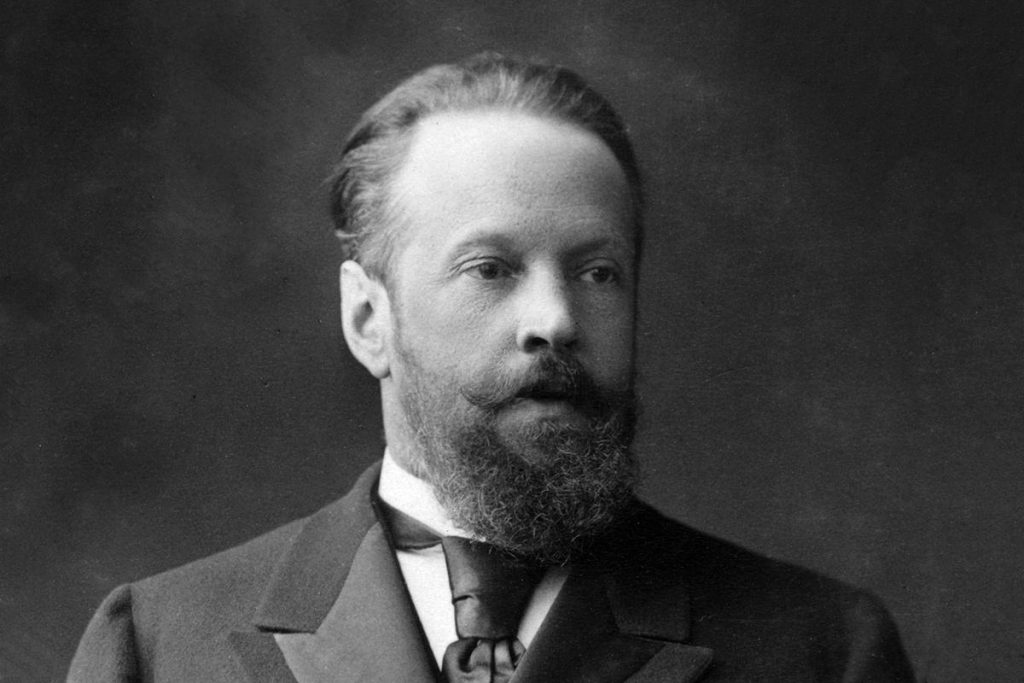
Sergei Witte
But this is where the author’s assumptions begin. Additional money creation could accelerate domestic construction, but it could not, by itself, create workers, machine tools, or naval armor. Furthermore, French and American shipyards required payment in a currency acceptable to them, rather than in Russian rubles issued at will.
Therefore, it cannot be claimed that abandoning the gold standard would automatically have financed the construction of a gigantic fleet without debt or inflation.
Nevertheless, in an alternative reality, a more active government investment policy could indeed have increased the scale of the shipbuilding program, especially if preparations had begun well in advance.
Japan Does Not Attack: What Happens Next?
And here we come to one of the most unexpected consequences of the proposed point of divergence.
Let us suppose that, by the end of 1903, Japan discovers that the Russian Pacific Fleet noticeably surpasses its own naval forces. Meanwhile, St. Petersburg is not only reinforcing Port Arthur but is also preparing to dispatch a second squadron to the Far East.
In such circumstances, the Japanese leadership might well abandon an immediate attack, hoping to gain time through diplomacy and the subsequent expansion of its own fleet.
This raises a question: would Russia not find itself burdened with an enormous number of extremely expensive battleships that would begin to become obsolete rapidly within just a few years?
Bayard answers this question as follows: the shipbuilding program should not stop.
By 1905, a second squadron is envisaged, including fundamentally new battleships with a displacement of approximately 17,000 tons, power plants developing 20,000 hp, and a speed of up to 20 knots.
The main distinguishing feature of these ships would be their artillery: the author proposes triple-gun turrets mounting 305 mm guns with barrels 45 calibers long. Improved armored cruisers and numerous light scouts would also be included.
In effect, this represents an attempt to create a transitional generation between conventional pre-dreadnought battleships and future dreadnoughts.
But this part of the scenario raises the most serious technical doubts. New twelve-inch guns, triple-gun turrets, ammunition-handling mechanisms, and reinforced hulls would have required extensive design work and testing. Building an entire series of such ships by early 1905 would have been practically impossible without a much earlier point of divergence.
Nevertheless, the idea of continuously modernizing the fleet makes sense. The only question is whether Russian industry would have been capable of maintaining such a pace.
Manchuria Instead of War: A New Economic Empire
However, the true purpose of the entire program, as interpreted by bayard, was not merely to create the strongest fleet in the Pacific Ocean. Naval superiority was intended to enable Russia to develop its Far Eastern possessions without interference and consolidate its economic presence in Manchuria.
In an alternative reality where war with Japan does not begin in 1904, St. Petersburg gains several additional years to complete railway construction, develop ports, and establish an industrial base in the region.
The author assigns a particularly important role to Manchuria. Its fertile lands are viewed as the future food-producing base of the Russian Far East, while its iron ore and coal deposits would provide the foundation for a new industrial region.
Two large shipyards are to be built at Dalny, eventually capable of servicing and independently constructing warships for the Pacific Fleet. Thus, Russia would gradually free itself from the need to continually transfer new battleships from the Baltic Sea.
The resettlement program would be even more ambitious. Bayard envisages moving millions of Russian peasants to Manchuria, providing them with land, financial assistance, and government loans. Moreover, the agricultural system would be based not on individual large landowners but on peasant communes, which would be able to use machinery collectively and introduce modern agricultural techniques.
According to the author, such a model would make it possible to combine the development of new territories, industrial growth, and social stability within the empire.
However, one extremely important circumstance must be taken into account. Manchuria was not an uninhabited territory. It was part of China, with its own population, cities, economy, and political interests. Mass Russian resettlement would inevitably have encountered resistance from the Chinese authorities and local inhabitants. Therefore, the idea that tens of millions of settlers could develop the region without interference is highly questionable.
Nevertheless, the gradual development of railways, trade, and industry while maintaining peaceful relations with China could indeed have become an important direction of an alternative Far Eastern policy.
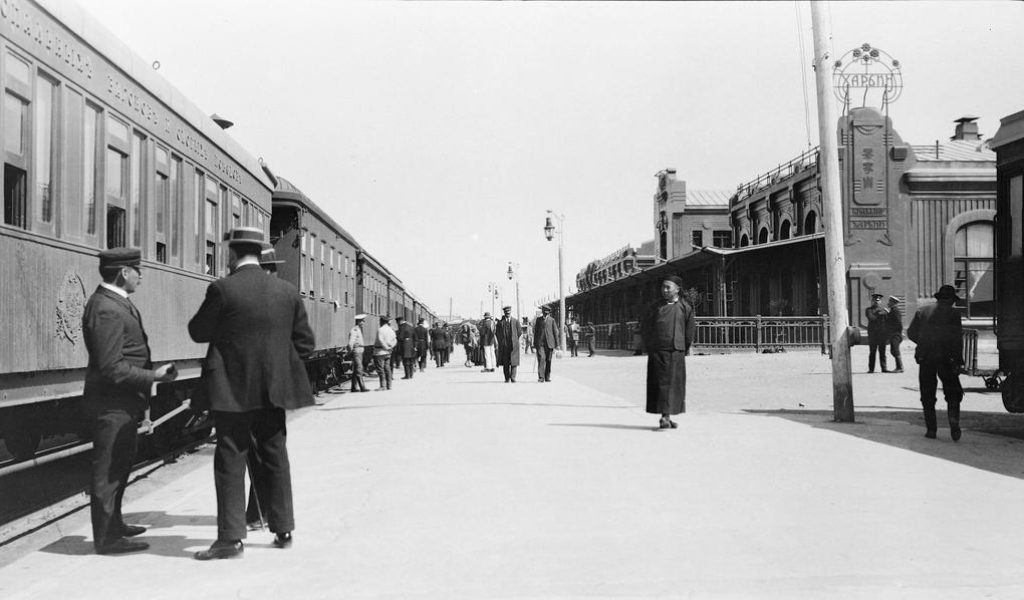
Harbin, the Chinese Eastern Railway, or the port of Dalny in the early twentieth century
Was a War with Japan Even Necessary?
Here we come to the most controversial aspect of the proposed scenario.
According to bayard’s initial reasoning, Russia builds an enormous fleet primarily to deter Japan. However, after the arrival of the second squadron, the author also allows for an offensive option—a war initiated by St. Petersburg with the aim of permanently eliminating the Japanese threat.
The assumption is that overwhelming naval superiority would make it possible to organize a landing on the Japanese islands and force Tokyo to accept Russian peace terms.
But it is precisely here that the concept begins to contradict its own original premises.
If the purpose of building the fleet was to prevent war, why start one independently when the adversary has already abandoned its plans to attack?
Furthermore, even complete superiority at sea would not guarantee the successful conquest of Japan. For a large-scale amphibious operation, Russia would require numerous transport ships, landing craft, substantial ground forces, and an extensive supply system. Above all, it would have to take into account possible British intervention, since Britain was bound to Japan by the alliance treaty of 1902.
Therefore, the most interesting outcome of this alternative reality would appear to be not the conquest of the Japanese islands, but the creation of a balance of power in which both sides would be interested in compromise.
In such a case, Russia might have preserved a stronger position in Manchuria, avoided the disasters of Port Arthur and Tsushima, and continued developing the Far East without the devastating losses of the Russo-Japanese War.
Would the Proposed Ships Really Have Been Better Than Their Japanese Counterparts?
Let us return to the central technical question: how realistic was the supposed superiority of the alternative Russian cruisers?
Ten-inch artillery would indeed have fired significantly heavier shells than the eight-inch guns of the Japanese Asama-class cruisers. All other things being equal, this would have given the Russian ship considerable advantages in destructive power.
But a larger caliber did not necessarily mean complete superiority.
Japanese armored cruisers carried numerous quick-firing guns in their main and secondary batteries. The Russian ship’s two 254 mm guns could deliver extremely damaging hits, but their relatively low rate of fire would limit their effectiveness in a prolonged engagement.
The supposed superiority in protection is equally debatable. To install heavier artillery and more powerful machinery while keeping displacement at around 9,000 tons, the designers would have had to compromise between armor thickness, cruising range, and seaworthiness.
Finally, the claimed speed of 22–22.5 knots remained an estimate. Achieving it in practice might have proved considerably more difficult.
Thus, the cruiser proposed by bayard would indeed have been an interesting potential opponent for Japanese warships. But it would be premature to speak of a guaranteed victory over Asama.
A definitive assessment would require a complete technical design, including a weight breakdown, stability calculations, an armor scheme, and the characteristics of the propulsion system.
Nevertheless, the very idea of a Russian armored cruiser displacing 9,000–10,000 tons, armed with ten-inch guns and capable of exceeding 21 knots, is worthy of development as an independent alternative-history project.
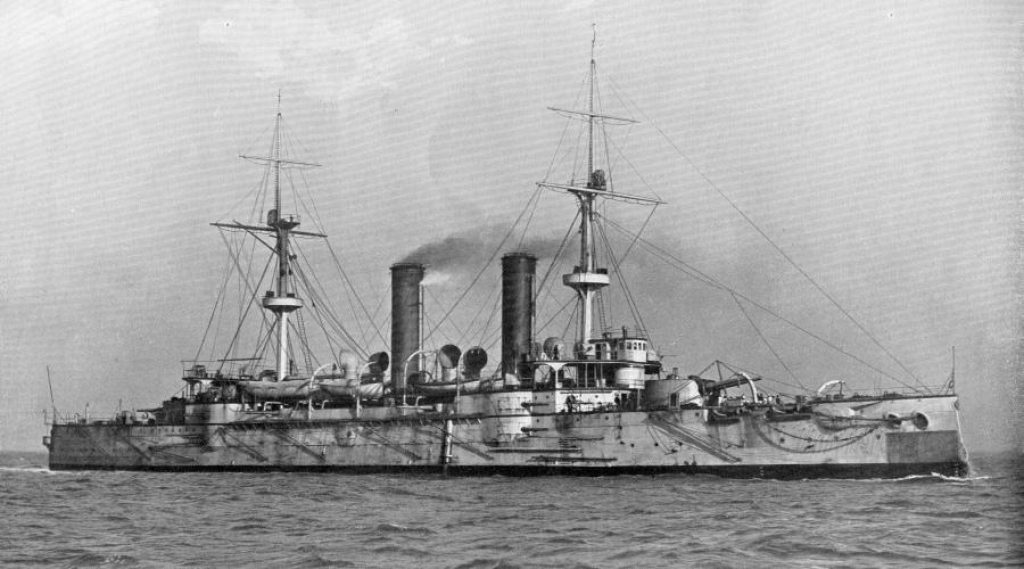
Japanese armored cruiser Asama
Conclusion: Could a Different Fleet Have Changed the Fate of the Russian Empire?
The alternative proposed by our colleague bayard is interesting above all because of its scale. The author does not limit himself to replacing one unsuccessful ship with a more advanced one. He proposes an entirely different approach to the development of the Russian Empire at the turn of the nineteenth and twentieth centuries.
Instead of financial restrictions—expanded government funding. Instead of cautiously placing orders—extensive use of Russian, American, French, and German shipyards. Instead of individual armored reconnaissance cruisers—an entire system of fast warships designed to fight Japanese squadrons.
Finally, instead of attempting to reinforce the Pacific Fleet immediately before the war—the establishment of naval superiority well in advance.
Of course, the author’s most optimistic calculations raise serious doubts. Removing Witte alone would not have been enough to produce dozens of additional warships or make Russian and foreign factories suddenly double their output. Equally debatable is the notion that financial restrictions were the sole cause of Russia’s defeat.
Nevertheless, the general principle deserves discussion: if the Russian Empire had settled on a strategy for the Far East earlier and consistently prepared its fleet for a possible conflict with Japan, the events of 1904–1905 might well have unfolded differently.
And here the main question arises. Was it really necessary to build such a gigantic squadron? Or would a few additional battleships, more advanced cruisers, better-quality shells, and better-trained crews have been enough to change the outcome of the war?
What do you think? Could the proposed “ideal Bayan,” armed with two ten-inch guns, have become the scourge of Japanese armored cruisers? Or should a ship with such armament have been designed from the outset as a full-fledged fast battleship?