Two 122-mm Guns on a T-34 Chassis. Why Did the USSR Develop the Twin-Gun SU-2-122 Self-Propelled Gun, and Why Did It Never Reach the Front?

During the Great Patriotic War, Soviet designers created many unusual armored vehicles. Some successfully passed trials and were sent to the front, others remained experimental vehicles, while still others never progressed beyond the drawing board. One of the most unusual Soviet self-propelled artillery projects, the SU-2-122, belonged to the latter category.
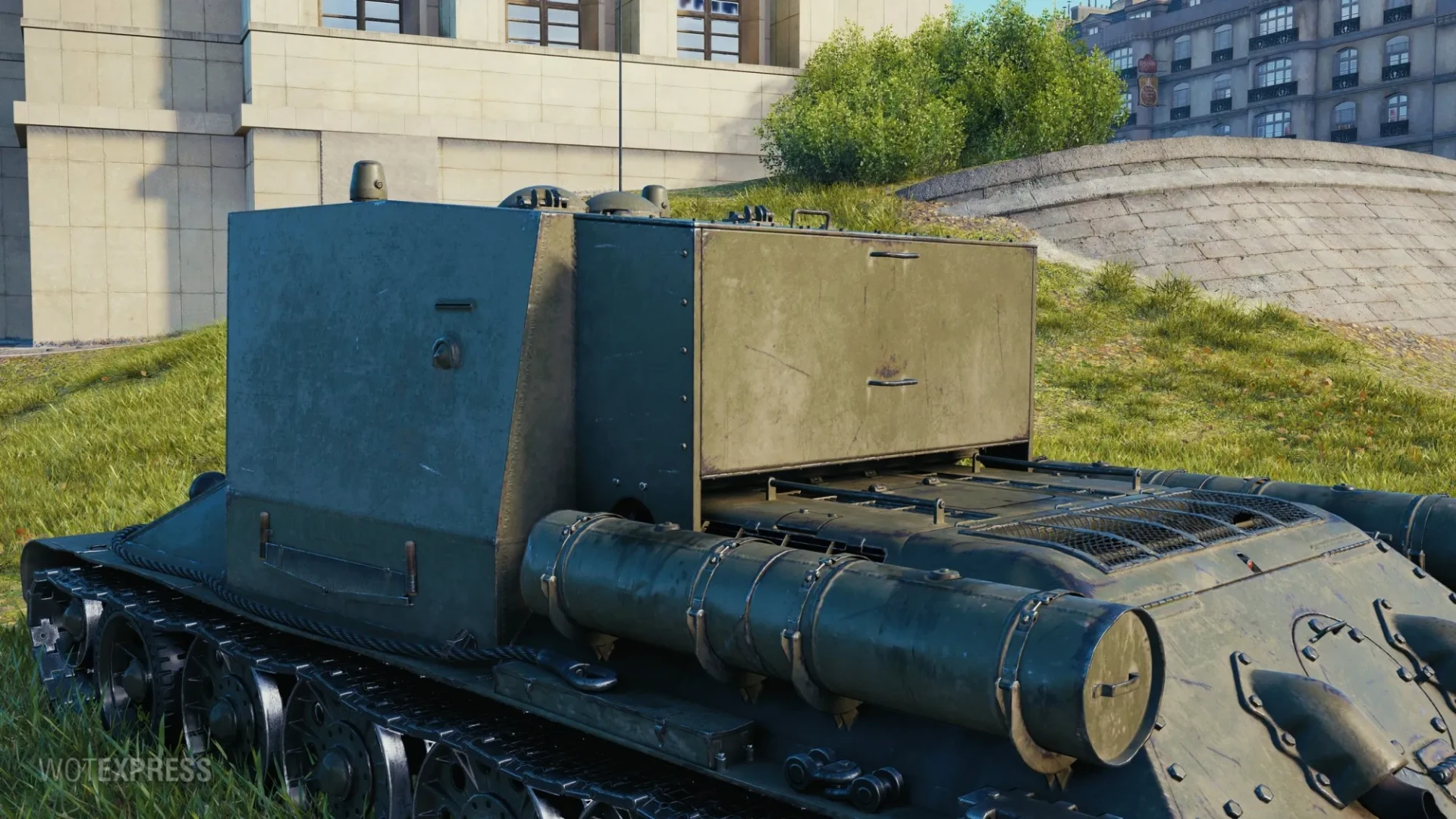
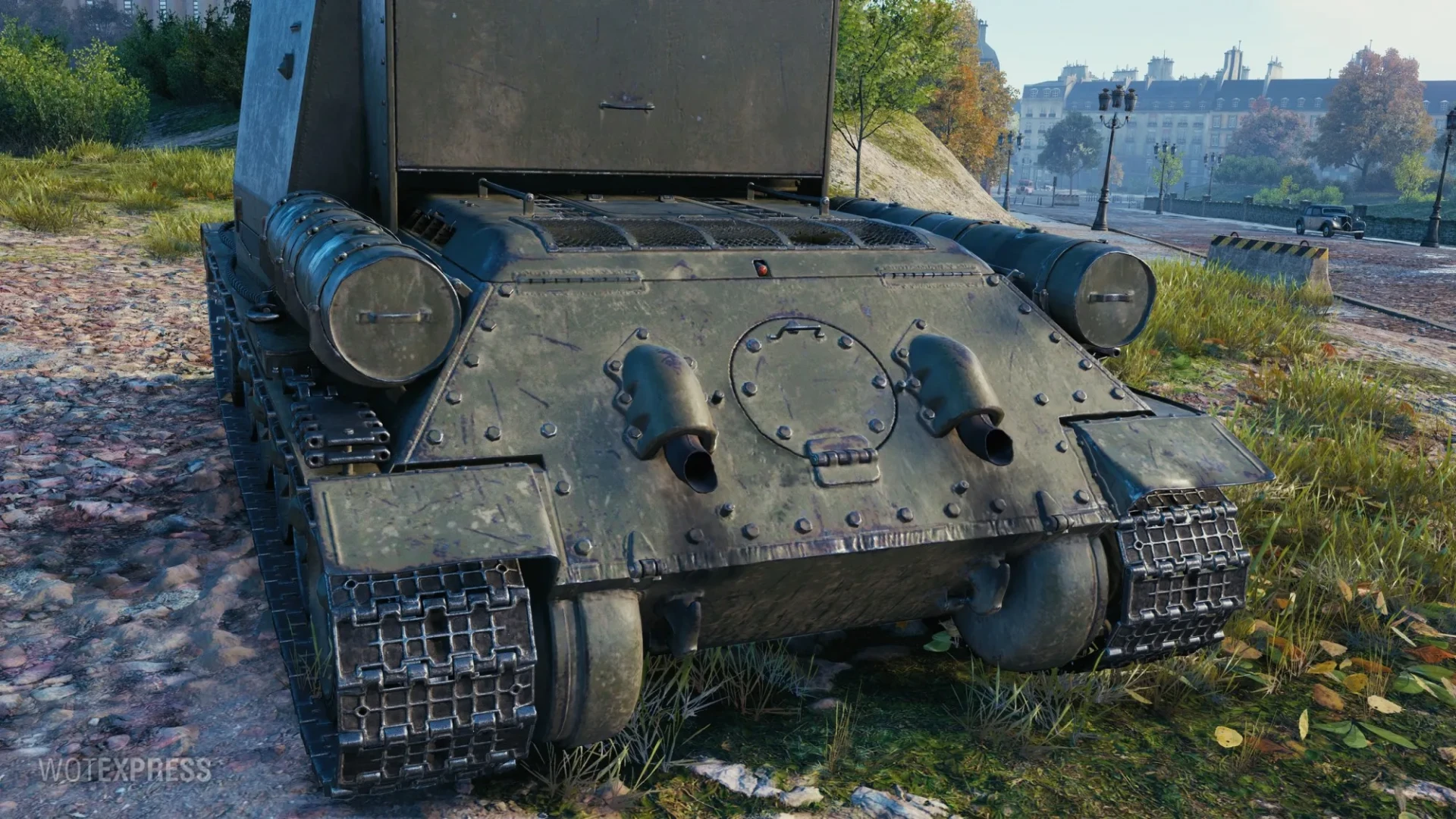
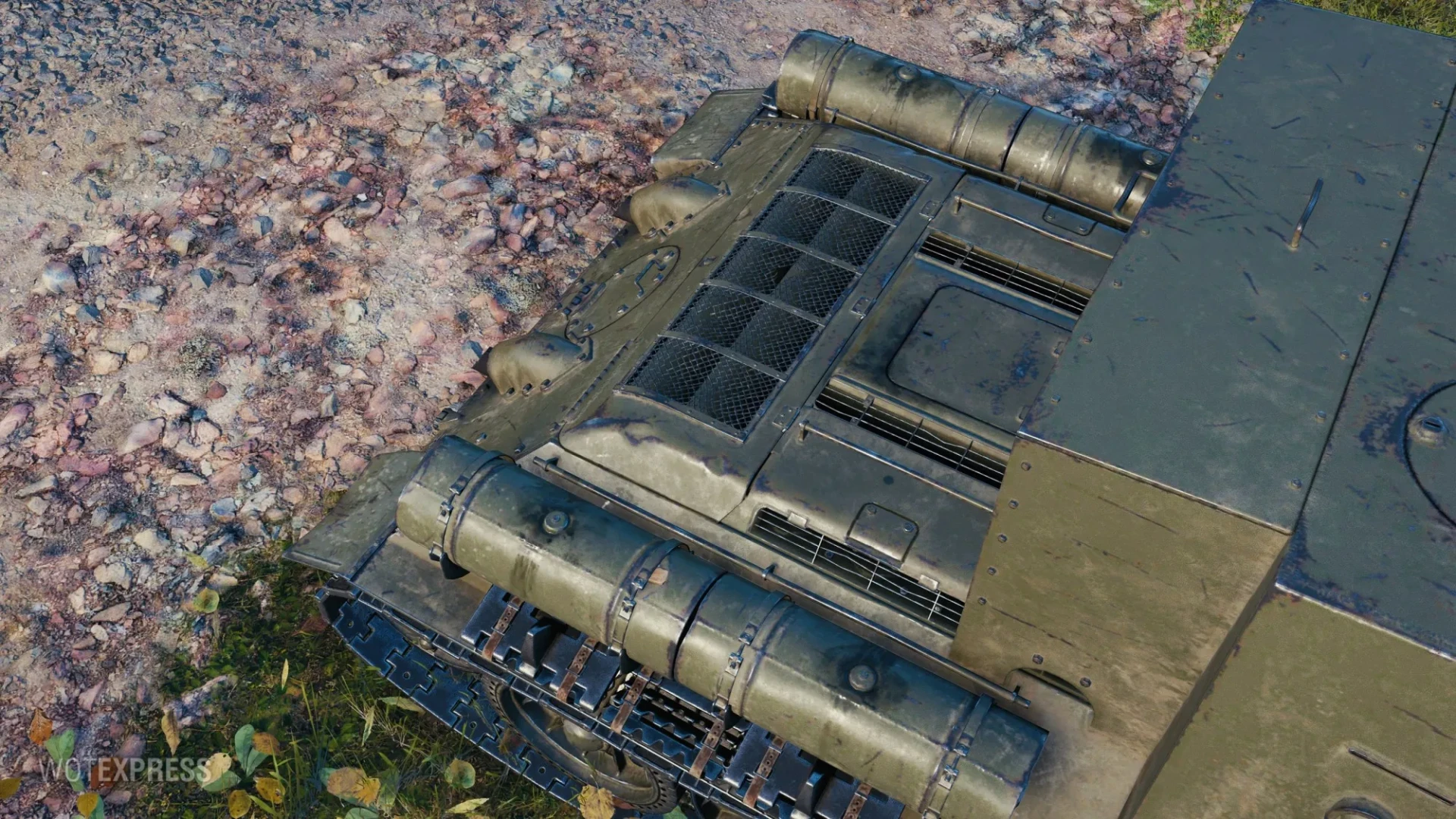
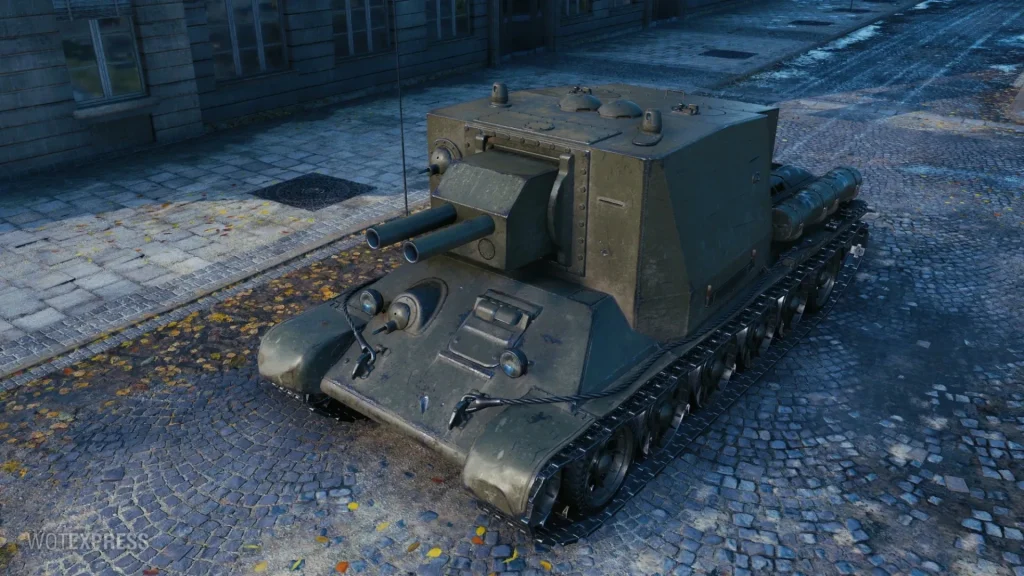
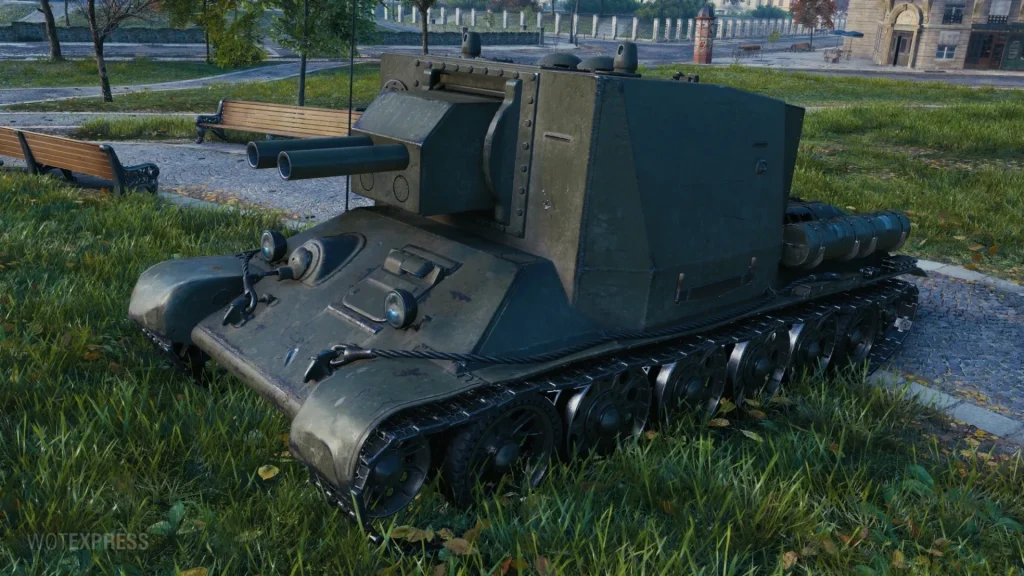
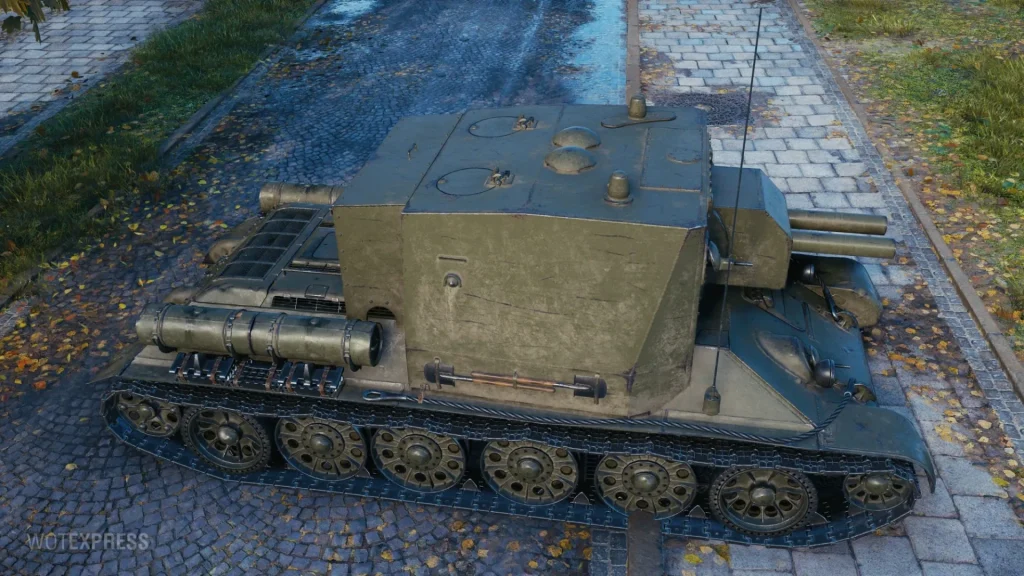
Imagine an elongated chassis of the legendary T-34, fitted with a massive armored casemate instead of a rotating turret. Protruding from it are the barrels of not one but two 122-mm howitzers. They were intended to fire either alternately or simultaneously, unleashing devastating volleys against the enemy. Such a vehicle was indeed developed in the USSR in 1943. So why did this twin-gun self-propelled vehicle fail to attract the military’s interest and fall into obscurity almost immediately after the design work was completed?
Where Did the Idea of a Twin-Gun Self-Propelled Gun Come From?
By early 1943, the Red Army already had the mass-produced SU-122 self-propelled gun, developed on the chassis of the T-34 medium tank. Its main armament was the 122-mm M-30 howitzer, intended primarily for destroying field fortifications and firing positions and supporting advancing infantry.
However, the pace of combat operations was constantly increasing, and the need to suppress German defenses quickly forced the military to seek new ways of increasing firepower.
One possible solution was to mount two artillery pieces on a single chassis. In theory, such a self-propelled gun could strike the same target with two heavy shells simultaneously or maintain a higher rate of fire by alternating shots.
Similar ideas had already been considered in the Soviet Union. One example was the experimental KV-7 heavy tank, which was used to test various twin-gun and triple-gun arrangements. However, trials showed that mounting multiple guns created serious problems with firing accuracy and the operation of the mechanisms.
Nevertheless, in late 1942, the decision was made to revisit the concept. This time, the proposed vehicle was not a tank but a specialized artillery platform.
A Secret Design Bureau and an Unusual Assignment
On December 16, 1942, Major General of the Engineering and Artillery Service A. A. Tolochkov formulated the requirements for a prospective self-propelled gun armed with two 122-mm howitzers.
Development was assigned to OKB-172, which operated at Factory No. 172 in the city of Molotov, now Perm. What made this design bureau unusual was that it had developed from a special technical bureau of the NKVD, where the personnel included imprisoned engineers and designers.
The chief designer of OKB-172 was M. Yu. Tsiryulnikov. The SU-2-122 project was directly supervised by Engineer-Colonel A. P. Androshchuk, while A. F. Smirnov served as chief engineer.
The designers faced a rather difficult task: installing two standard 122-mm M-30 howitzers on a T-34 chassis while retaining as many components of the production tank as possible.
The vehicle also had to be capable of both individual and simultaneous firing. Its projected rate of fire was four to five volleys per minute.
By April 29, 1943, the technical documentation had been prepared, and on May 12 the project was submitted to the People’s Commissariat of Armaments for consideration.
The T-34 That Had to Be Lengthened by Almost a Meter
Despite the intention to make maximum use of the existing production chassis, the designers had to substantially modify the tank’s hull.
The main problems were the dimensions of the two howitzers and the need to accommodate six crew members inside the vehicle.
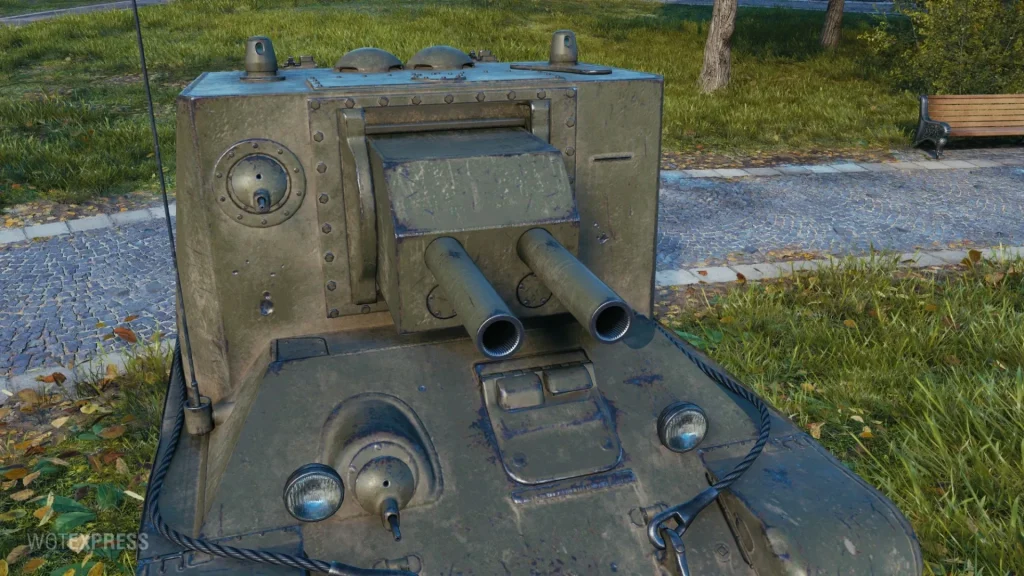
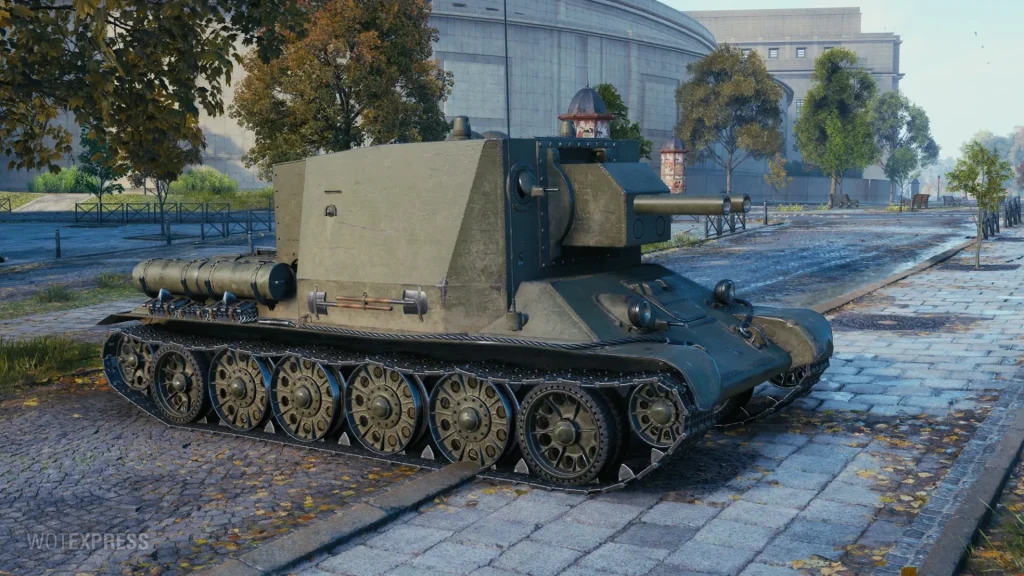
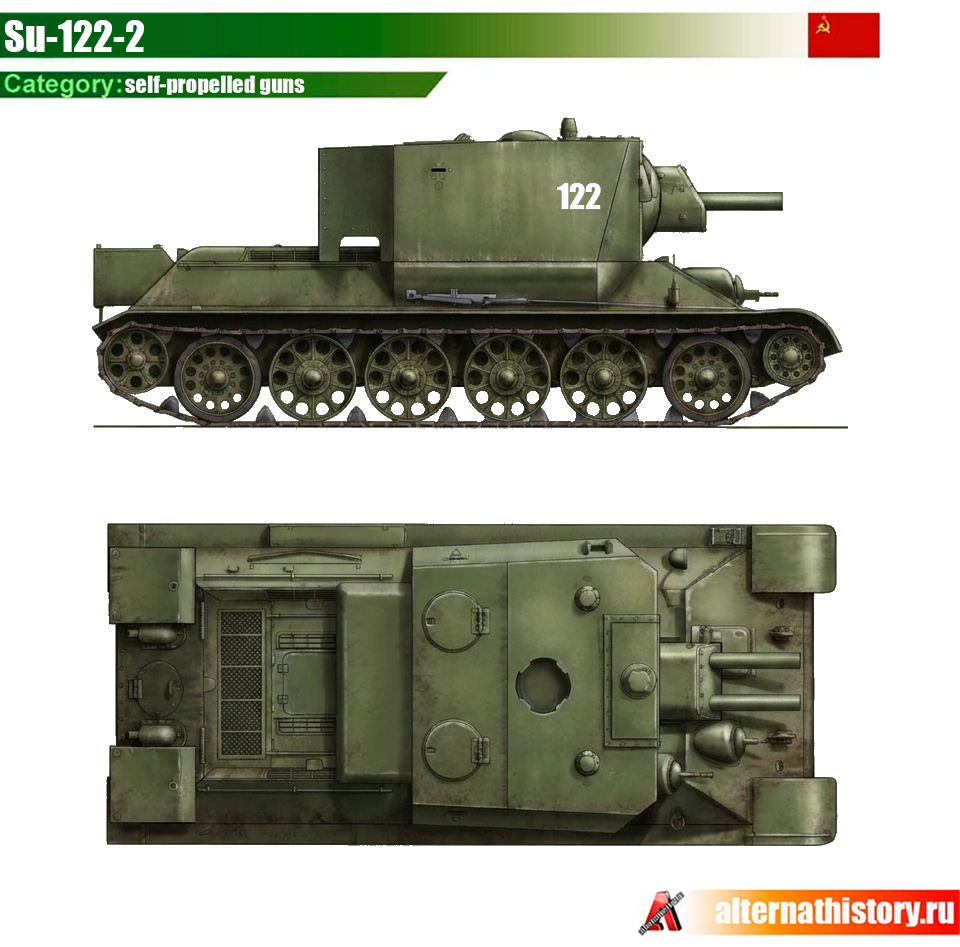
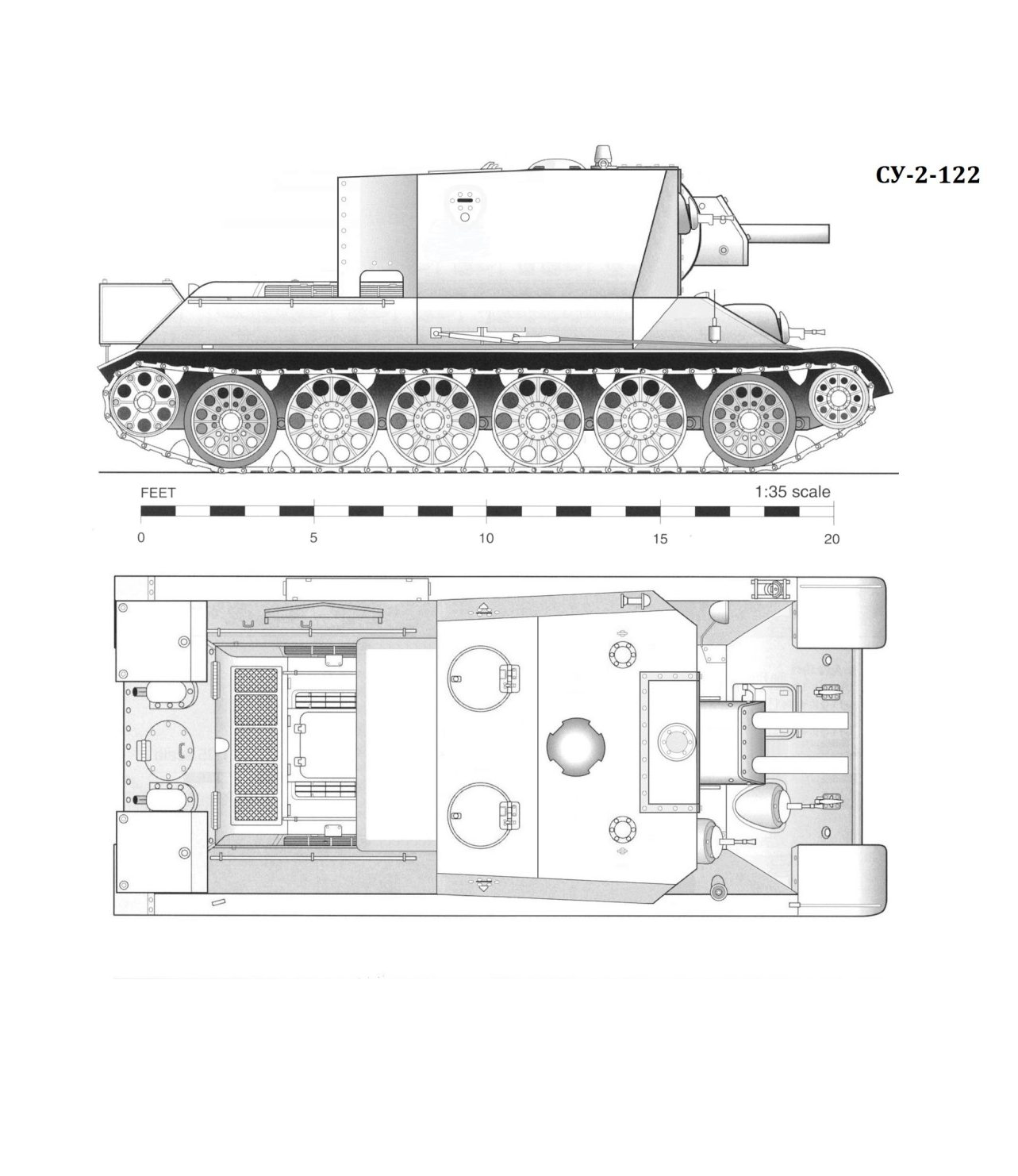
The T-34 hull was therefore lengthened by 890 mm, and an additional pair of road wheels was added to the suspension. Thus, instead of the usual five road wheels on each side, the SU-2-122 was to have six.
The turret was replaced by a tall, rectangular armored casemate occupying almost the entire width of the vehicle. Its front section housed a massive armored mounting for both howitzers.
The 500 hp V-2 diesel engine was to be retained without major modifications. However, the vehicle’s weight increased to approximately 34.5 tonnes, inevitably reducing its mobility.
Interestingly, the designers managed to provide a relatively spacious fighting compartment inside the casemate. However, some design solutions were highly questionable. For example, the loaders’ seats were positioned directly above additional fuel tanks.
Two M-30 Howitzers. How Powerful Was the Armament?
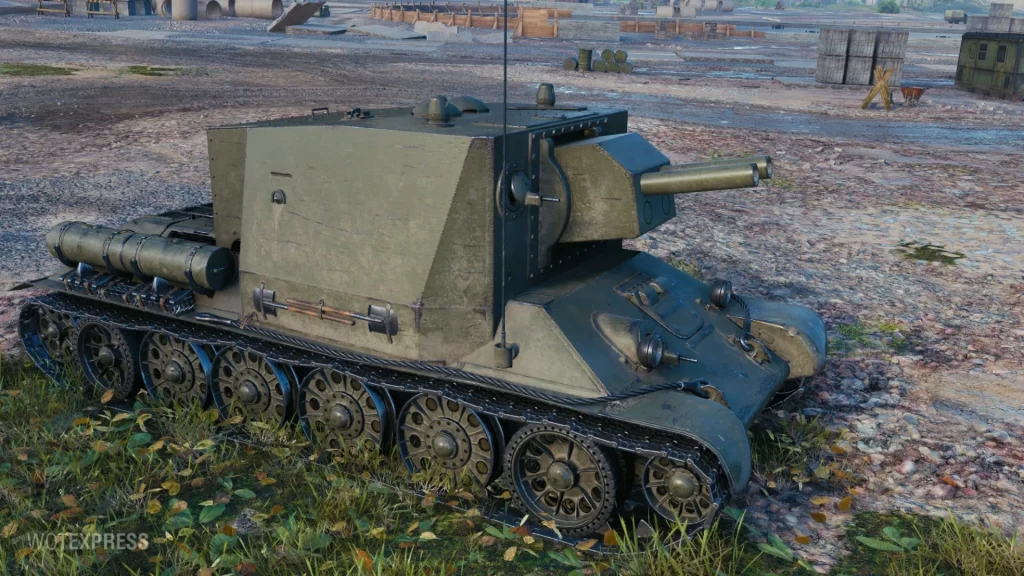
The SU-2-122’s most distinctive feature was, of course, its pair of 122-mm M-30 howitzers, Model 1938.
Each used separate-loading cased ammunition and could fire high-explosive fragmentation shells and other standard types of ammunition. A typical high-explosive fragmentation shell weighed approximately 21.8 kg.
When both howitzers fired simultaneously, two heavy shells would be sent toward the target. The combined weight of such a volley exceeded 43 kg, excluding the propellant charges.
Such firepower could have proved extremely useful for destroying field fortifications, suppressing artillery positions, and engaging infantry.
Both guns were mounted in a common installation. They were aimed together but could fire independently. This allowed the crew to alternate shots without necessarily expending two shells at once.
Two 7.62-mm DT machine guns were also planned as secondary armament.
However, the simultaneous use of two heavy howitzers was precisely what created the project’s greatest technical difficulties.
Why Doubling the Armament Did Not Mean Doubling Its Effectiveness
First and foremost, the designers encountered the problem of recoil. To accommodate the guns inside the casemate, the recoil length had to be reduced. As a result, increased loads were transferred to the structure of the artillery mounting.
Firing both howitzers simultaneously also raised questions about the vehicle’s stability and the grouping of its shots.
Moreover, loading two guns required well-coordinated crew operations, while the recoiling components posed a danger to personnel inside the fighting compartment.
The redesign of the running gear presented another serious problem. Instead of a simple, inexpensive self-propelled gun based on a mass-produced tank, the result was effectively a new vehicle with an elongated hull, increased weight, and an unconventional fighting compartment.
The need for such complications seemed particularly questionable under wartime conditions, when Soviet industry was striving to produce as much already-established equipment as possible.
As a result, the potential increase in firepower came at the cost of higher production expenses, greater manufacturing complexity, and an increased risk of mechanical failures.
Main Projected Specifications of the SU-2-122
- Year of development: 1943.
- Design organization: OKB-172, Molotov.
- Base chassis: Lengthened T-34 medium tank chassis.
- Combat weight: Approximately 34.5 tonnes.
- Length: Approximately 6.96 m.
- Width: Approximately 3 m.
- Height: Approximately 2.94 m.
- Crew: 6.
- Engine: V-2 diesel, 500 hp.
- Main armament: Two 122-mm M-30 howitzers.
- Secondary armament: Two 7.62-mm DT machine guns.
- Frontal casemate armor: Up to 70 mm.
- Side casemate armor: Approximately 30 mm.
- Projected rate of fire: 4–5 two-gun volleys per minute.
- Development status: Preliminary design; no prototype was built.
These specifications represent projected figures rather than results obtained from testing a completed self-propelled gun.
Why Was the SU-2-122 Never Built?
The most interesting aspect of this vehicle’s history is that it never even had the opportunity to demonstrate its advantages on a proving ground.
The project was submitted for consideration in May 1943, but no further development followed.
By that time, the Red Army’s requirements had changed considerably. Countering new German heavy tanks was becoming an increasingly urgent priority. This required not so much large-caliber howitzers as long-barreled anti-tank guns capable of firing shells at high muzzle velocities.
That was why, in the summer of 1943, Soviet designers concentrated their main efforts on developing the SU-85, which entered service in August.
For destroying the strongest fortifications, the Red Army already had the considerably more powerful SU-152, armed with a 152-mm gun-howitzer.
Against this background, the complex and relatively heavy SU-2-122 occupied a rather uncertain position. It surpassed the conventional SU-122 in potential volume of fire, but required extensive chassis modifications and offered no equally obvious advantage over other promising self-propelled guns.
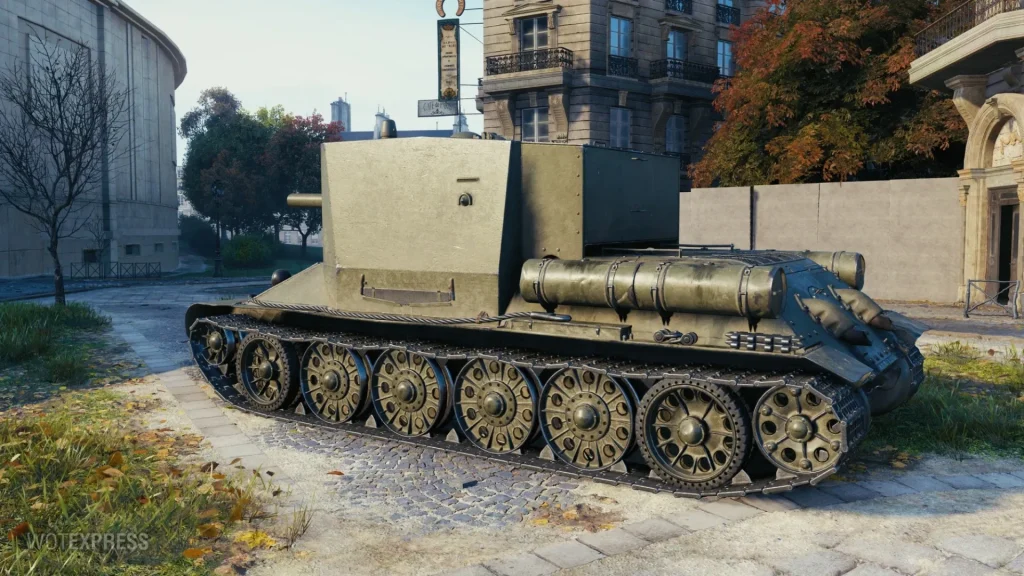
Consequently, not a single SU-2-122 prototype was manufactured. All known images of the vehicle are drawings, diagrams, or modern artistic reconstructions.
An Afterword. Did the Twin-Gun Self-Propelled Vehicle Have Any Potential?
From a modern perspective, the SU-2-122 project may seem rather strange. Why install two heavy howitzers on one chassis when it would be simpler to use two conventional self-propelled guns?
But under the conditions of 1943, such experiments were entirely understandable. Soviet designers were looking for ways to dramatically increase the firepower of armored vehicles using artillery systems that were already in production.
In theory, a twin-gun mounting could provide a high volume of fire with fewer combat vehicles. In practice, however, numerous problems involving recoil, aiming, loading, and operation would have to be solved.
Nevertheless, it cannot be ruled out that, after substantial refinement, the SU-2-122 might have proved useful in assaults on fortified positions. The problem was that the Red Army had simpler and more practical solutions available.
Thus, the SU-2-122 remained one of the most unusual yet almost completely forgotten projects in the history of Soviet self-propelled artillery. A vehicle capable of unleashing a simultaneous volley from two 122-mm howitzers existed only on paper — and never had the opportunity to demonstrate its firepower in actual combat.