The introduction of a new drone rarely signals a revolution. More often than not, it represents a gradual evolution of existing solutions. But in the case of the XRQ-73, it’s not so much about a new aircraft as it is about an attempt to shift the balance between three parameters that have long been considered mutually exclusive: range, low observability, and acoustic stealth. The catalyst was the news of the aircraft’s first flight as part of the DARPA program, but the takeoff itself is merely a starting point. What matters far more is exactly how this aircraft is designed.
Program and Development Logic
The XRQ-73 is being developed as part of the SHEPARD program—Series Hybrid Electric Propulsion Aircraft Demonstration. The name itself encapsulates the core concept: it is not just a drone, but a demonstrator of a hybrid power plant that has been developed to the point of practical application.
This is a typical approach for DARPA: rather than building production-ready vehicles, it focuses on refining an architecture that can then be quickly scaled up. The “X” designation itself indicates experimental status, but in this case, we’re not talking about a lab prototype, but rather a platform that’s as close as possible to real-world tasks.
Design: A “flying wing” with no compromises
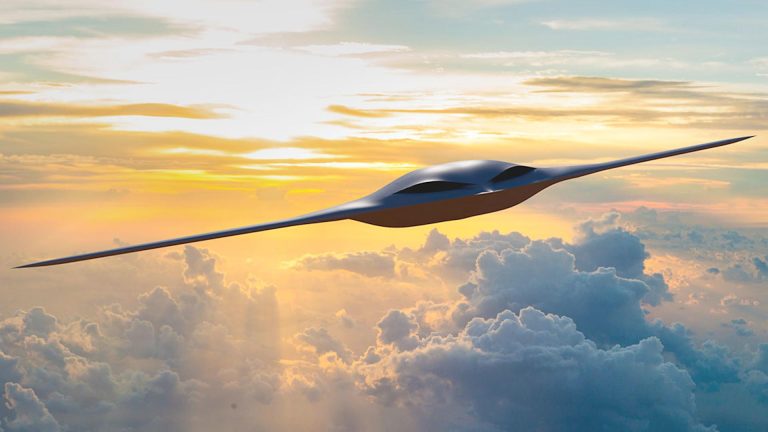
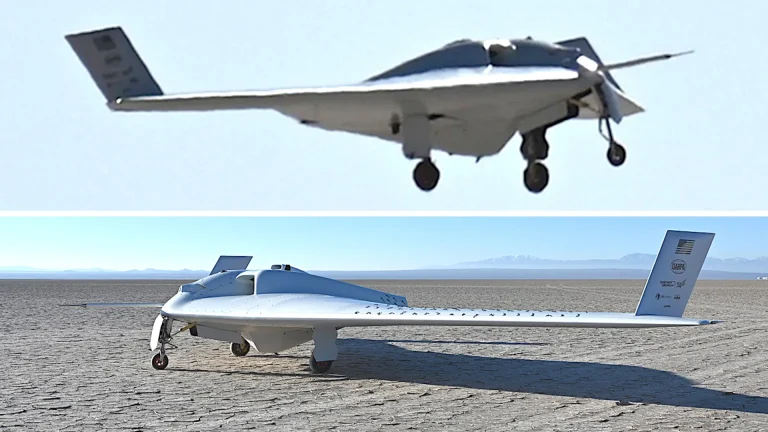
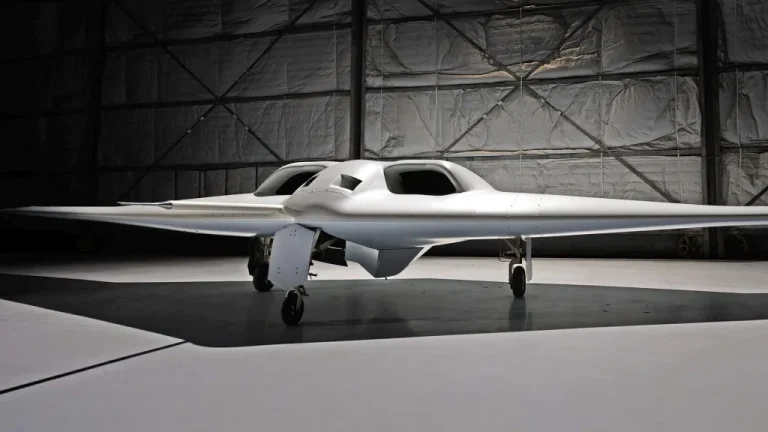
From an aerodynamic standpoint, the XRQ-73 offers nothing fundamentally new—it is a classic flying wing, lacking a tail and built around a smooth transition from the fuselage to the wing.
However, what matters is not the choice of circuit itself, but getting it to work properly. The “flying wing” serves several purposes here:
— reduced radar visibility
— reduced aerodynamic drag
— increased flight duration
At the same time, the layout is dictated not only by stealth requirements but also by the characteristics of the power plant—specifically, the placement of the air intakes and the distribution of mass within the fuselage.
Powertrain: series hybrid
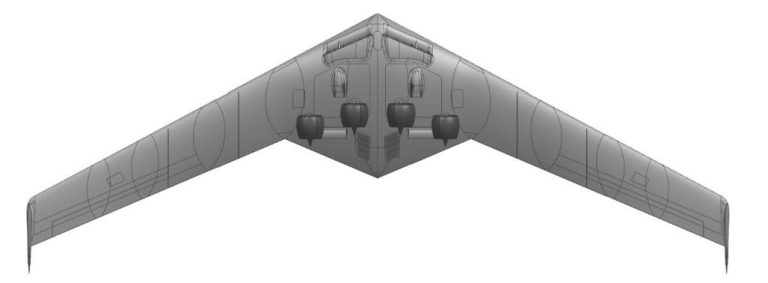
The key component of the XRQ-73 is its power circuit. It uses a series hybrid configuration, in which:
— The internal combustion engine is not directly connected to the propellers
—it functions as a generator
—electricity is supplied to the electric motors
This separation allows for flexible control of operating modes. In normal mode, the unit uses the generator, but can switch to “silent” electric operation when necessary.
From an engineering standpoint, this solution removes a number of limitations inherent in conventional aviation. The engine can be optimized for power generation rather than thrust, and the propulsion systems themselves can be optimized for efficiency and low noise.
Acoustics as a Design Parameter
While noise is a side effect in traditional aviation, here it becomes one of the key characteristics.
A hybrid system offers several advantages at once:
— reduced acoustic signature
— ability to operate briefly without engine noise—
reduced heat signature
This is critical for a reconnaissance aircraft. In an environment where radar stealth has already become the norm, sound remains one of the main factors that can give away its position.
Origin: from XRQ-72 to XRQ-73
The XRQ-73 did not appear out of thin air. It is a direct evolution of the XRQ-72 Great Horned Owl project, where a hybrid architecture featuring electric fans was first tested.
The difference between generations lies in the degree of integration.
While the XRQ-72 was more of a technology demonstrator, the XRQ-73 represents an attempt to incorporate the same concept into a “cleaner” aerodynamic form suitable for practical application.
Design and Components
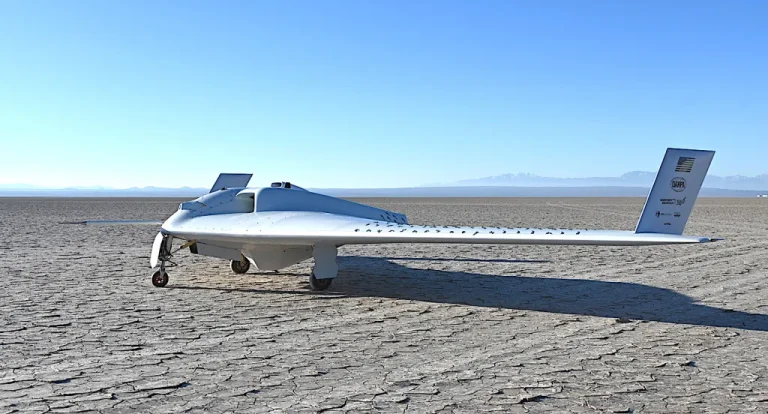
Based on the available images, several characteristic solutions can be identified:
— Top-mounted air intakes
— Smooth underside of the housing
— Integrated cargo compartments
The upper air intakes reduce the aircraft’s visibility and protect the engine during low-altitude flight. The lower section, which has no protruding elements, is optimized for sensor placement.
This indicates the aircraft’s primary purpose—reconnaissance and surveillance.
Class and Features
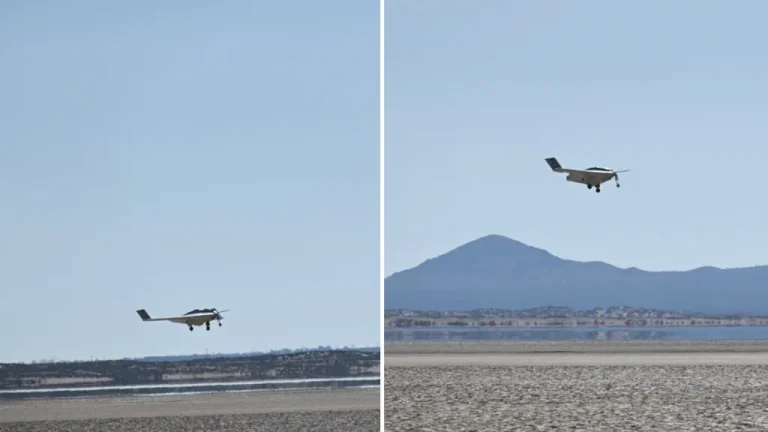
The XRQ-73 falls into Group 3 of unmanned aerial vehicles—an intermediate class between tactical drones and full-fledged aircraft.
This means:
— a long
flight duration— operation at medium altitudes
— the ability to carry a full payload
It is precisely in this segment that the hybrid design is most effective: where it is not speed that matters, but the time spent in the air.
Why is this necessary?
The purpose of the project becomes clear when you look at the problem from a broader perspective.
Modern UAVs are already capable of:
— fly long distances —
be inconspicuous —
operate autonomously
However, the following remain:
—
noisy — time-limited —
dependent on fuel or batteries
The XRQ-73 is an attempt to address all of these limitations at once.
Conclusion
The first flight of the XRQ-73 is not a demonstration of a finished solution, but rather confirmation that the chosen architecture is viable.
The hybrid power plant, the “flying wing” configuration, and the focus on reducing acoustic signature all work together as a single system, rather than as a collection of separate solutions.
And if this design is brought to the mass-production stage,
The priorities of unmanned aviation may shift—
from speed and firepower
to quiet operation, autonomy, and flight duration.