A Revolution in Anti-Submarine Warfare. The Saildrone anti-submarine drones were unveiled in the U.S. What are their capabilities?

The U.S. Navy is on the verge of a fundamental shift in its approach to anti-submarine defense. Saildrone, a recognized leader in autonomous maritime systems, has unveiled a new generation of unmanned surface vessels capable of radically improving the effectiveness of detecting and tracking enemy submarines. A key element of this revolution is the Spectre project—a large unmanned vessel designed specifically for anti-submarine warfare and reconnaissance missions. In situations where traditional patrol vessels cannot maintain a constant presence in vast bodies of water, autonomous platforms offer a cost-effective solution for maintaining round-the-clock surveillance of strategically important areas.
The Concept of Silent Hunting: Why Sails and Electricity?
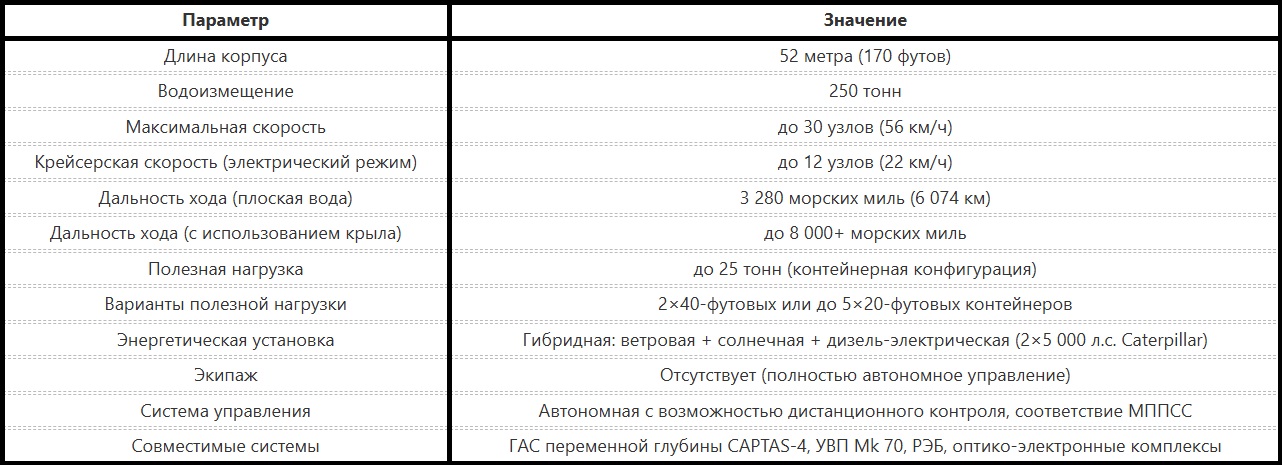
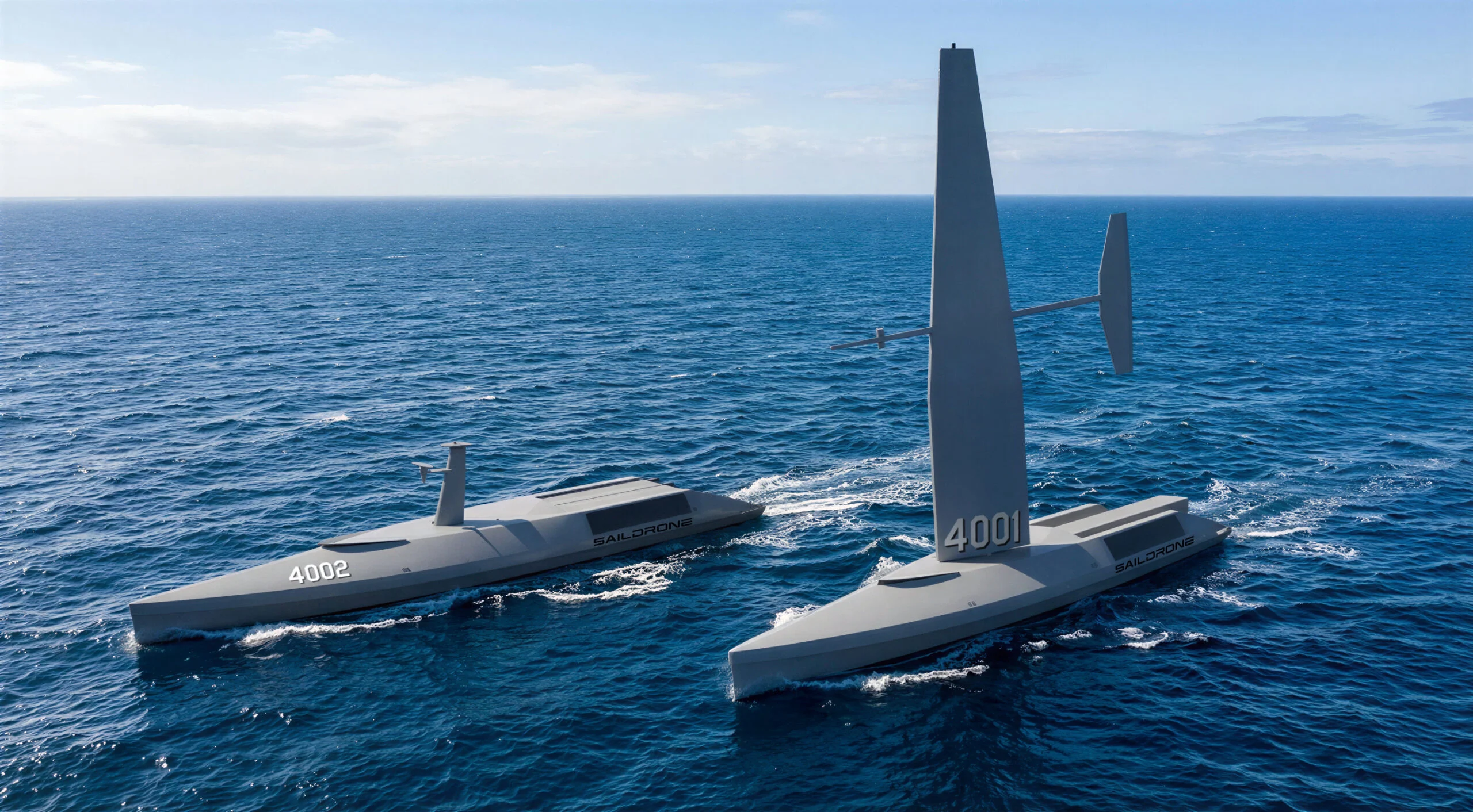
One of the Spectre’s key innovations is its use of a hybrid power plant that combines wind, solar, and diesel-electric propulsion. This configuration allows the vessel to operate for extended periods in near-silent electric mode at speeds of up to 12 knots, which is critical for working with towed hydroacoustic systems. In this mode, the vessel generates virtually no acoustic interference of its own, making it an ideal mobile platform for passive listening to the underwater environment. If necessary, the vessel can switch to powerful Caterpillar diesel engines with a combined output of 10,000 horsepower, reaching speeds of up to 30 knots for rapid deployment or to evade a threat.
The design of the hull and superstructure is of particular importance. The 52-meter-long aluminum hull, with a displacement of 250 metric tons, ensures excellent seaworthiness, while the 43-meter-tall composite wing not only provides additional thrust but also raises the antennas and sensors to a considerable height, expanding the radar detection range. At the same time, the craft’s silhouette remains low, making it difficult for the enemy to detect it visually or by radar—a key requirement for operations in a counter-air environment.
Modular Architecture and Combat Capabilities
A unique feature of the Spectre is its modular payload architecture. The concealed deck allows for the deployment of up to five 20-foot containers or two 40-foot modules, opening up a wide range of possibilities for adapting the vessel to specific missions. In its anti-submarine variant, the ship can carry a Thales CAPTAS-4 towed variable-depth hydroacoustic system, capable of detecting submarines at significant ranges even under challenging hydrographic conditions.
The partnership with Lockheed Martin involves the integration of strike systems on board, including the Mk 70 vertical launch system for various types of missiles. This transforms the Spectre from a pure reconnaissance aircraft into a multifunctional combat platform capable not only of detecting targets but also of engaging them when necessary. Additionally, the aircraft can be equipped with electronic warfare systems, communications and relay equipment, as well as optoelectronic systems for round-the-clock surveillance.
Two Sides of the Same Platform: Variations
Saildrone offers two main variants of the Spectre, designed for different application scenarios. The Silent Endurance variant retains the company’s signature composite wing, which provides an extreme patrol range—up to 8,000 nautical miles—and maximum stealth thanks to its predominantly silent electric propulsion. This configuration is ideal for long-term surveillance in a designated area and for conducting passive hydroacoustic surveillance.
The Stealth Strike variant, on the other hand, forgoes a wing in favor of a lower visual and radar signature. This configuration is designed for missions requiring high speed and minimal detectability, including strike operations and operations under active enemy countermeasures. Both variants retain the same overall architecture and can be quickly reconfigured to meet changing operational requirements.
Testing and Deployment Prospects
Before beginning construction of full-scale prototypes, Saildrone engineers conducted an extensive series of model tests in the towing tank at Force Technologies in Copenhagen. A 1:7 scale model made it possible to test the hydrodynamic characteristics, wave behavior, and propulsion system efficiency under conditions simulating real sea conditions up to Beaufort scale 5. This data formed the basis for the final optimization of the design.
The American Bureau of Shipping (ABS) has already issued preliminary approval for the project, confirming that the design meets the classification requirements for high-speed military vessels. The hulls will be built at Fincantieri Marinette Marine’s shipyards in Wisconsin, which have the capacity to produce up to five vessels per year. The composite wings will be manufactured by American Magic Services in Florida, using technologies developed during the company’s participation in the America’s Cup. The first sea trials of a full-scale Spectre are scheduled for early 2027.
Strategic Importance to the Fleet
The emergence of platforms such as Spectre addresses one of the key challenges facing modern navies—the need to maintain a constant presence in multiple regions simultaneously, without spreading their limited fleet of expensive warships too thin. Autonomous unmanned vessels are capable of patrolling remote waters for months at a time, transmitting data in real time and employing countermeasures when necessary. This frees up traditional surface forces to tackle more complex tasks that require human involvement.
In the context of anti-submarine warfare, the importance of such vehicles cannot be overstated. Modern submarines are becoming increasingly quiet and capable of traveling greater distances, while traditional methods of detecting them require significant resources. A fleet of autonomous “hunters” capable of covertly patrolling likely routes of enemy submarine deployment creates a fundamentally new level of control over the underwater situation. At the same time, the operating costs of an unmanned vehicle are significantly lower than those of maintaining a crew on a ship of comparable size.
Technical Specifications of the Saildrone Spectre Platform