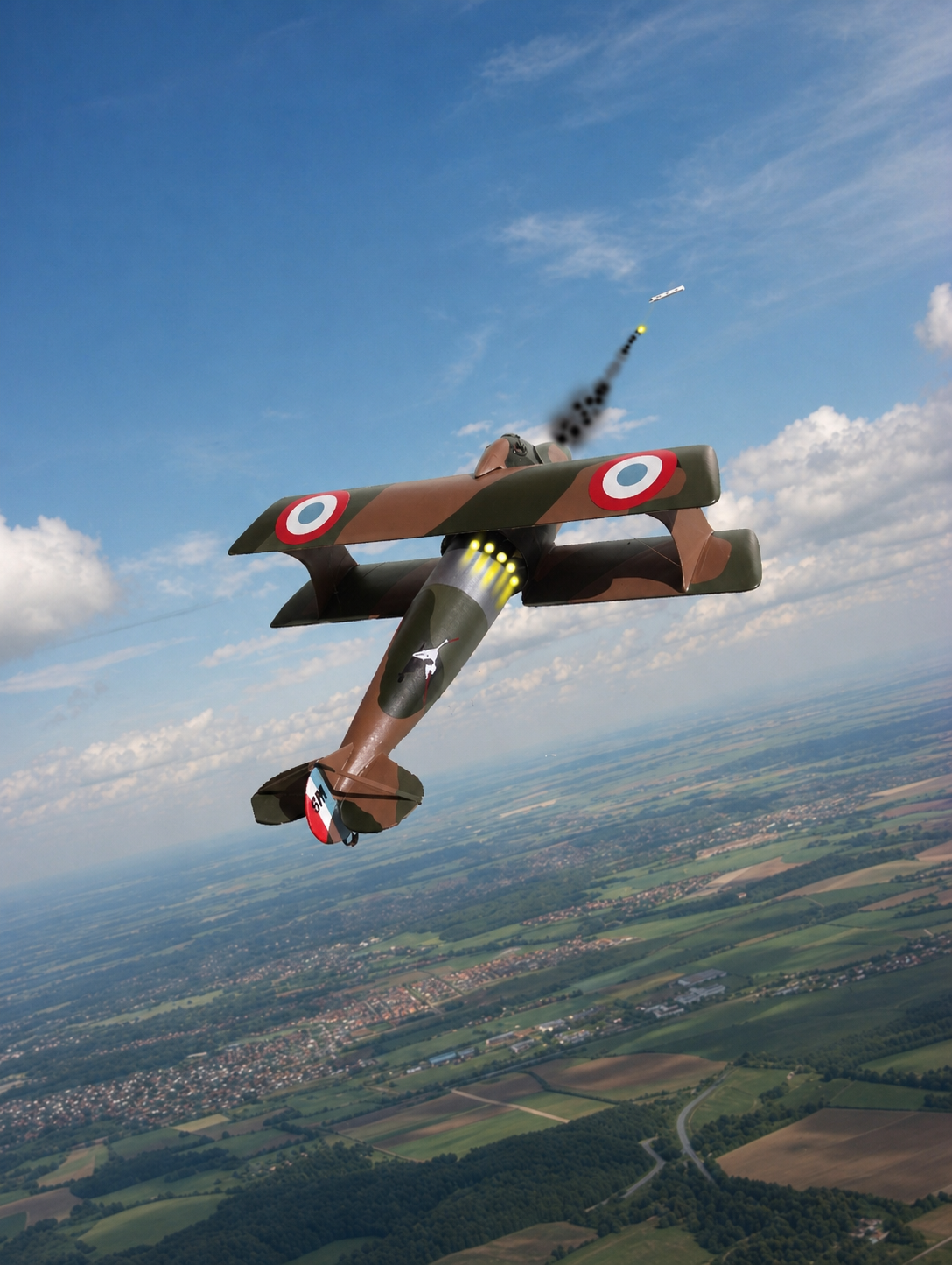
This article is being posted on the website as a follow-up to the topic of the missile interceptor project discussed in the article “The Riffard RM-1 RDP Missile Fighter (1917).”
Editor’s Foreword: During World War I, Marcel Riffard and Gabriel Mollar developed a machine capable of reaching speeds of up to 600 km/h… Marcel Riffard recalled his project during a conversation with General Jean Lissarrague (†) in 1976.
Every aviation enthusiast has heard of the Messerschmitt 163—an incredible rocket-powered interceptor from World War II that climbed to altitude at lightning speed, closing in on enemy bombers and crushing the pilot into his seat with its acceleration—a pilot who, incidentally, faced a greater threat from the aircraft itself than from the enemy.
As it turned out, the only rocket-powered fighter to enter mass production and see combat had a predecessor designed during World War I in France by young engineers Marcel Riffard and Gabriel Mollard, who worked at the Breguet design bureau. A prolific engineer who led a long and eventful life, Marcel Riffard made his mark in the automotive and aviation industries and gained worldwide fame for designing the magnificent Caudron-Renault racing airplanes, which won numerous races and set records in the 1930s.
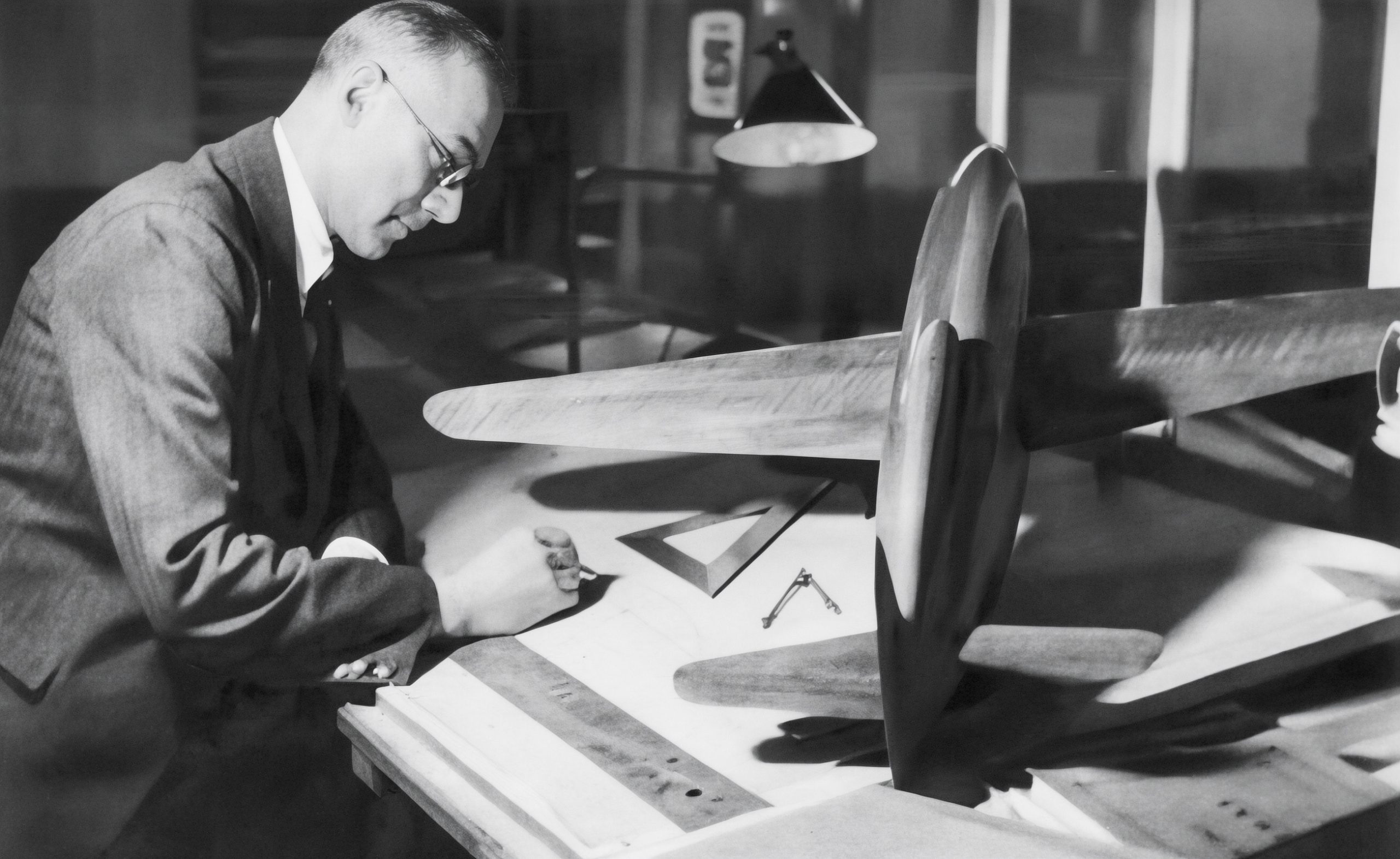
Marcel Riffard at his desk in the Caudron office in the 1930s. Among other things, Marcel Riffard contributed to the development of the Simoun and Goéland passenger aircraft, the Rafale racing aircraft, and the Caudron-Renault 714 Cyclone fighter, which was based on them. The image was processed by lmarena.ai
On July 27, 1976, the engineer, who was already ninety years old at the time, gave an interview to General Jean Lissarrague, director of the Museum of Aviation and Space in Le Bourget, and spoke about his very long career. Marcel Riffard recalled this revolutionary project, whose blueprints date back to June 26, 1917, and which could have given France an airplane capable of reaching speeds of up to 600 km/h. The transcript of the interview is provided below.
Marcel Riffard (hereinafter MR): At the time, I was working at Breguet. Together with Mollar, who has since passed away—he was under my supervision back then and was 10 years younger than me— he was an apprentice who was 18 at the time—we decided to design an aircraft that was a jet interceptor with 48 missiles in a drum. I wrote about this in the magazine *Les Ailes* 25 years ago.
Jean Lissarag (hereinafter JL): Is that so! You developed a rocket-powered aircraft?
MR: Yes! You don’t know about this? I need to show you the blueprints.
ZhL: Was it ever made?
MR: Well… Breguet agreed to manufacture it. It’s important to remember that in those years, Breguet, together with its subcontractors, produced a large number of aircraft. We were interested in the production of every single aircraft. The plant in Villacoubles produced slightly more, while the subcontractors produced slightly fewer. At one point, we reached a maximum production rate of 450 Breguet aircraft per month.
ZhL: So what time are you talking about?
MR: 1917, 1918.
ZhL: Oh, during the war?
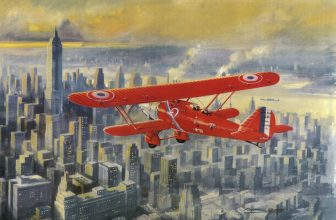
MR: Yes, right in the middle of the war. 450 a month. At that time, Breguet had no financial problems; he was making as much money as he wanted. And that’s why he was willing to build this car. So, we contacted the gunpowder supply service; I needed them to supply me with rockets. And they told me, “Oh, listen, that’s impossible. We don’t have enough gunpowder to load 75-mm shells. So we can’t mess around with your experimental aircraft and take our attention away from the gunpowder.” That’s exactly why it wasn’t done. The aircraft had a streamlined, spindle-shaped fuselage, with the pilot seated in the front. For the first time in my life, I designed a small biplane. But it was Mallard who told me that we needed to take two single inter-wing struts and use them to mount rockets on them.
In any case, it was a small biplane whose main landing gear struts were partially retracted into the interwing struts. It was equipped with 48 rockets as its propulsion system. I managed to get my hands on one armed rocket and was able to test it. The rocket was tested between Breguet’s test hangar and the neighboring maintenance hangar. The distance between the hangars was 25 or 30 meters. We attached the rocket, but we didn’t expect the thrust to be so strong: the rocket broke free from its mount, flew off, struck the wall of the technical service hangar, bounced back, struck the wall of the Breguet hangar, and so on. Eventually, it ran out of fuel and came to a stop. We were both lying on the ground, and a 10-meter-long flame was burning all around us!
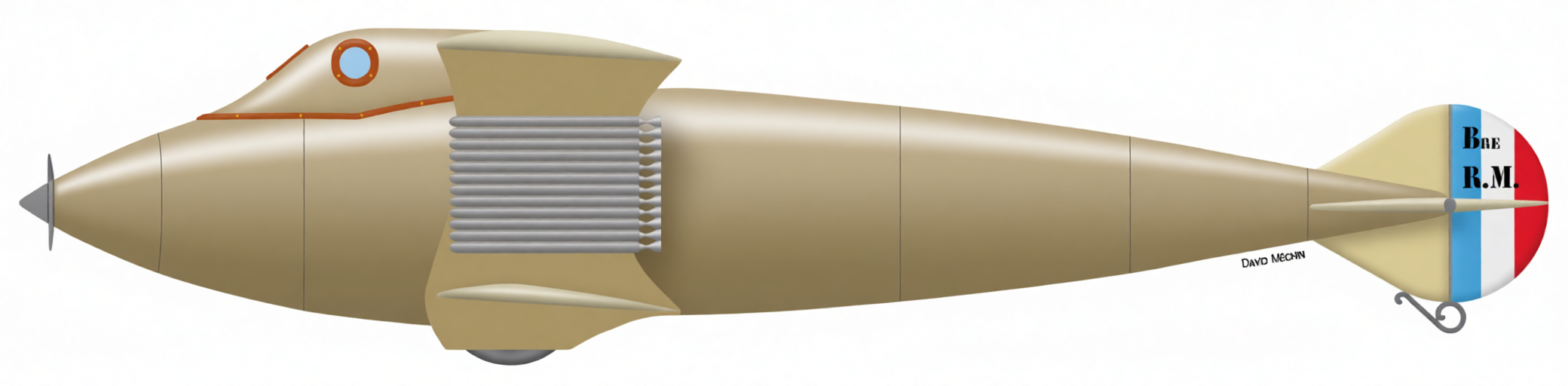
The Riffard-Mollar interceptor, designed based on Marcel Riffard’s blueprints. One might think this aircraft was the product of Jules Verne’s imagination… Illustration by David Meshen. The image was processed by lmarena.ai
ZhL: What kind of rockets were they? Did you design them?
MR: Yes, those were the rockets we ordered from Ruggeri. He was commissioned to manufacture them. They each produced 21 kg of thrust.
ZhL: But didn’t you use the Venturi effect in them?
MR: It was an extremely simple rocket. It looked like a large fireworks rocket. It was made of cardboard, with a single fuse at the end. Ignition was electric, using powdered gunpowder that was struck by a spark. Then there was a nozzle made of a porous material, something like porcelain, the rear part of which tapered in and out. And it spewed fire! We had a combustion chamber, and we had thrust. We were finally able to develop the design. With the thrust generated by the power plant, the aircraft was supposed to reach a speed of 600 km/h—roughly four times the speed of aircraft at that time.
ZhL: Did the plane have only a rocket engine, or did it also have a propeller engine?
MR: We drew everything, but I only had enough rockets.
ZhL: I mean, the basic aircraft used for takeoff had a piston engine with a propeller, right?
MR: No, no, no! It was supposed to be a dedicated rocket-powered aircraft. The plan was for it to take off right at the front lines.
ZhL: So what could he have done? How long did the rocket engines run?
MR: The rockets’ burn time was limited, but we didn’t ignite them all at once. At that time, the planes didn’t fly very high; they flew at altitudes ranging from 1,500 to 2,000 meters. I remember the calculations we made; we had enough rockets to get the plane off the ground. I also manufactured a shell. I still have two of them at home. The standard shell of that time had a caliber of 75 mm. But we needed a 150-mm caliber shell. It was a high-explosive shell with a remote fuse. I worked on developing the shell in collaboration with the agency on Place Saint-Thomas-d’Aquin [St. Thomas Aquinas Square in the 10th arrondissement of Paris. The French Army’s Technical Service and Inspectorate of Gunpowder and Explosives was located in this area—Ed.]
ZhL: Was that a rocket?
MR: It was a rocket, and the main principle behind its design was a stabilization system—such as one using a tail unit. I developed a gyroscopic stabilization system that was housed inside a tube. This tube was mounted on two ball bearings. At the front of the aircraft was a small propeller that set the tube—the casing containing the rocket—in motion. The plan was that, at the moment of launch, the rocket would rotate at a very high frequency and act as a gyroscope.
ZhL: Was the rocket launched in a spinning configuration?
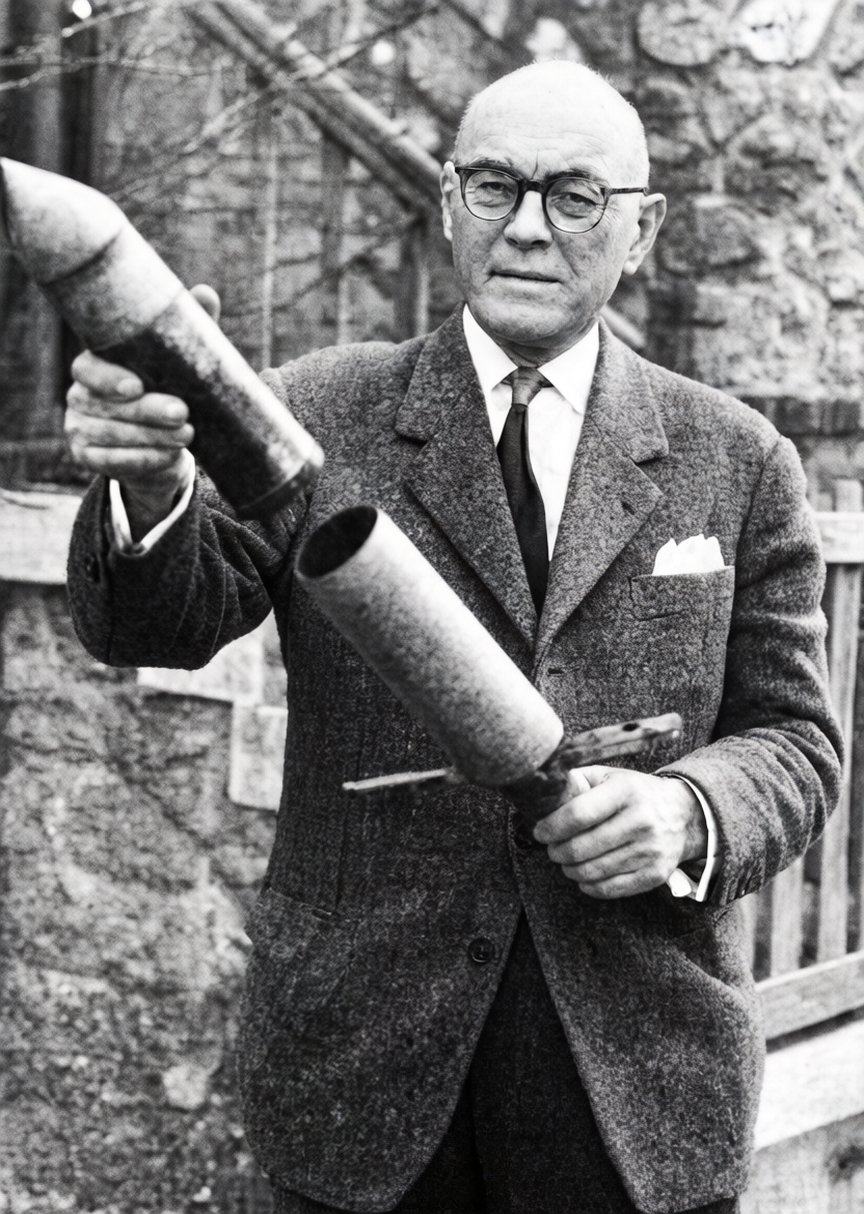
Marcel Riffar displays a missile with a high-explosive warhead, which was mounted on his interceptor missile. The image was processed by lmarena.ai
MR: Indeed, the rocket was launched in a spinning mode to achieve self-stabilization. Now, there was a captain in Saint-Thomas-d’Aquen—the top graduate of the Polytechnic University—who told me: “You see, you can fit a 150-mm rocket in there; we can pack more explosives into it than into a 240-mm naval shell.” That’s because it had thin walls. And the rocket didn’t even need to hit the target. He told me that even at a distance of 20 meters from the target, the explosive charge was sufficient to completely destroy an enemy aircraft. Airplanes at that time were made of wood and fabric, not metal.
ZhL: So the idea was that the plane was supposed to take off within the enemy’s line of sight and then return in gliding mode?
MR: Exactly! All the spent rocket engines were jettisoned; each one had a small charge at the end that exploded and jettisoned the spent rocket’s casing. After jettisoning all the rockets, the aircraft returned to base as a glider.
ZhL: How’s the glider?
MR: Yes.
ZhL: It’s a shame we didn’t do that.
MR: That’s right. It was a rocket, but a manned one. Because at that time, we didn’t yet have the technology for remote control.
ZhL: Was that one of your ideas from 1917–1918?
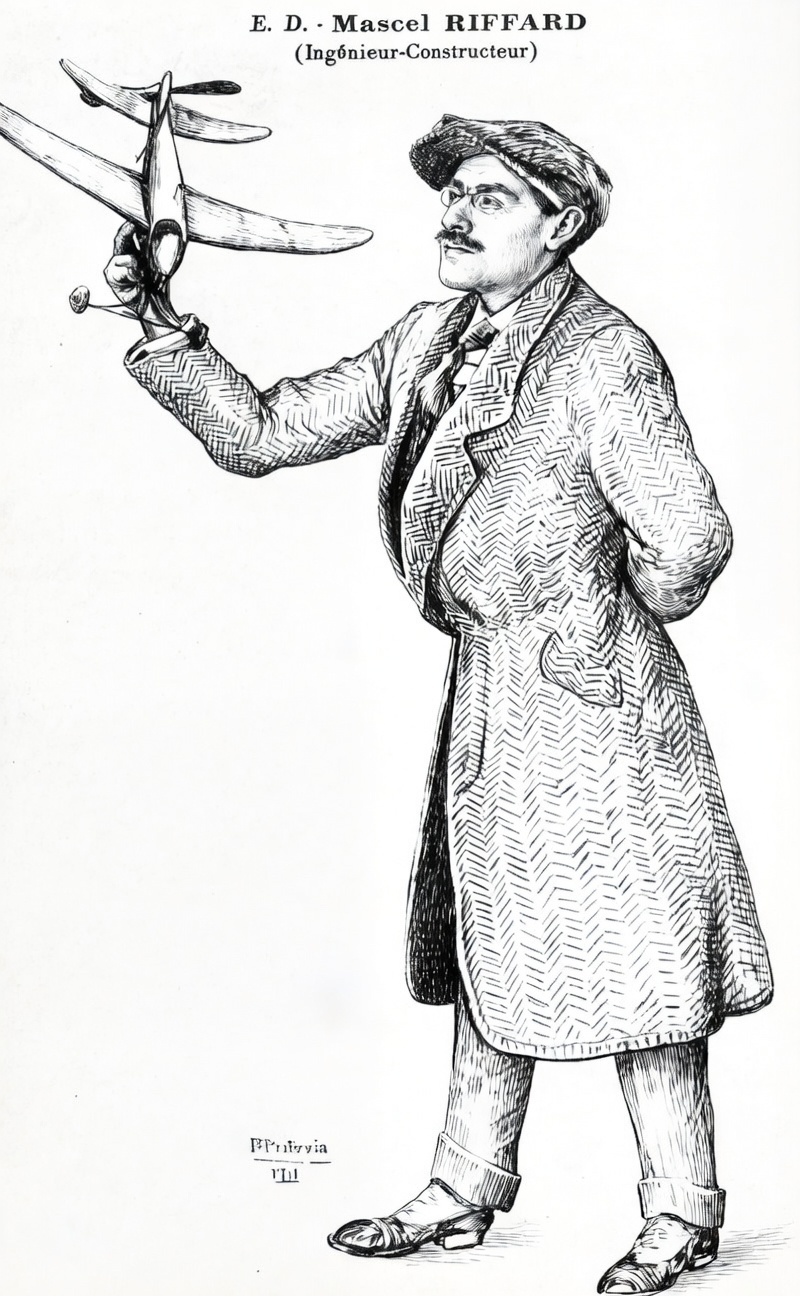
Marcel Riffard at the beginning of his career as an aeronautical engineer. A 1913 caricature. Drawing by Poitenin. The image was processed by lmarena.ai
MR: Yes! And I remember that Louis Breguet’s son-in-law, Jacques Girardet—who was the sales director—was present at the tests. He had a Bédélia car, built to resemble an airplane fuselage, with ash stringers, wire bracing, canvas covering, and an engine mounted at the rear that drove two wheels. It was a very light vehicle. And… I said to Girardet, “Listen, there’s no one on the road to Villacoublay between noon and 1:00 p.m.” During that time, there was no traffic, no cars. “We could test the rockets!” He replied, “No, we’d risk wrecking my car.” He didn’t want to lend it to me! Even though it wasn’t dangerous… But it would have been interesting!
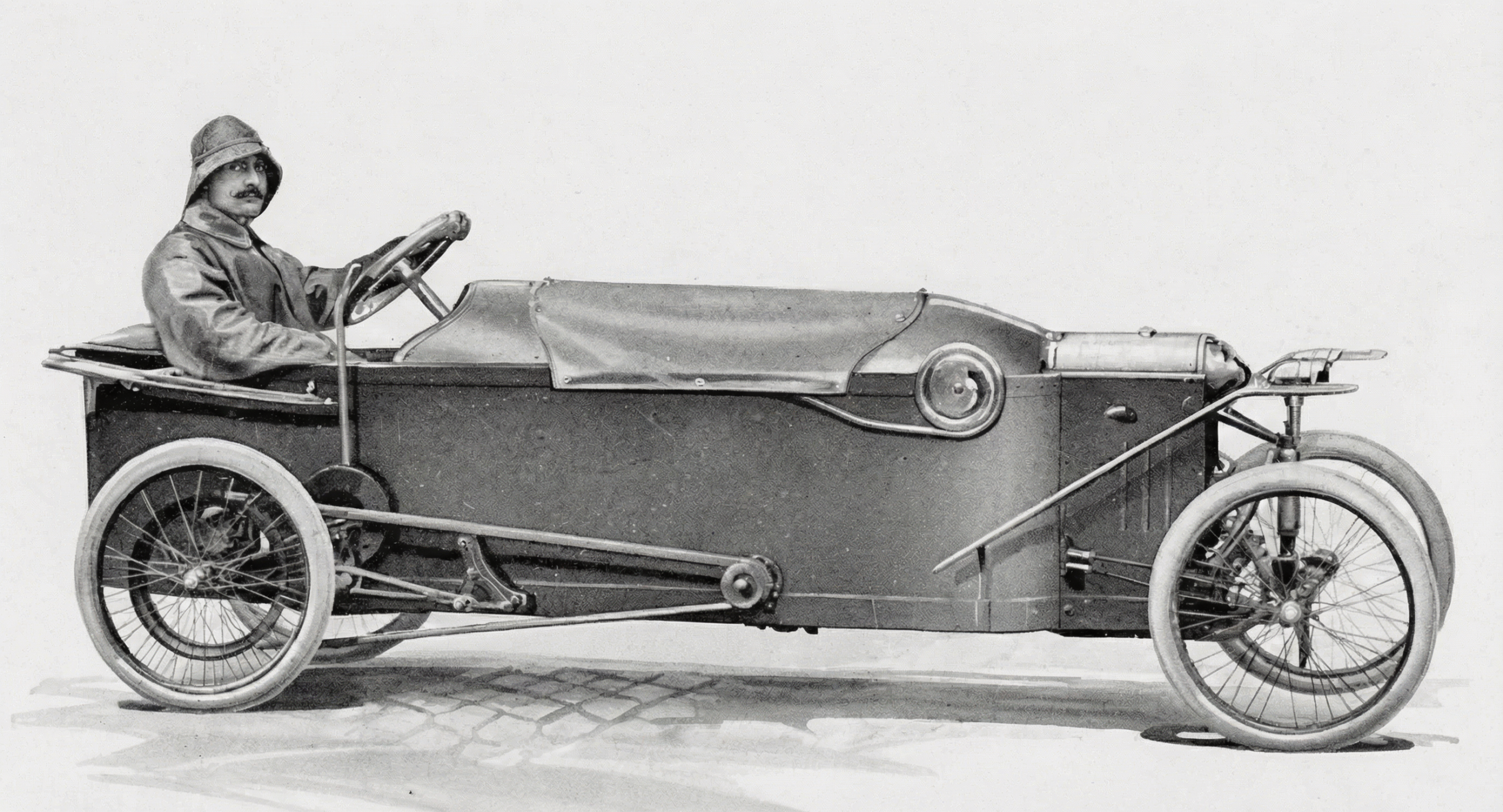
The Bédélia car that Marcel Riffar intended to use to test his rockets. Fortunately for the would-be test pilot, the test never took place… The image was processed by lmarena.ai
Source: David Méchin, “The Riffard-Mollard Interceptor: A Revolutionary Rocket Plane,” *Le Fana de L’Aviation*, April 2026, pp. 64–67
Translation first published at – https://vk.com/@710541705-intercepteur-riffard-mollard