The idea of an aircraft powered by a nuclear reactor did not spring from fantasy, but from a very specific problem of the mid-20th century. During the Cold War, strategic aviation was limited by range. Even the largest bombers remained dependent on fuel, flight paths, and time in the air. And that meant they were vulnerable.
Nuclear power seemed like a solution that was almost perfect in its logic. Unlike kerosene, a reactor does not “run out” in the conventional sense. Theoretically, an aircraft could remain airborne for weeks without returning to base, maintaining a constant patrol. For the military, this meant near-constant readiness to strike.
Against this backdrop, the idea of a nuclear-powered airplane did not seem far-fetched, but rather a perfectly rational advancement in technology.

A flying reactor, not an airplane
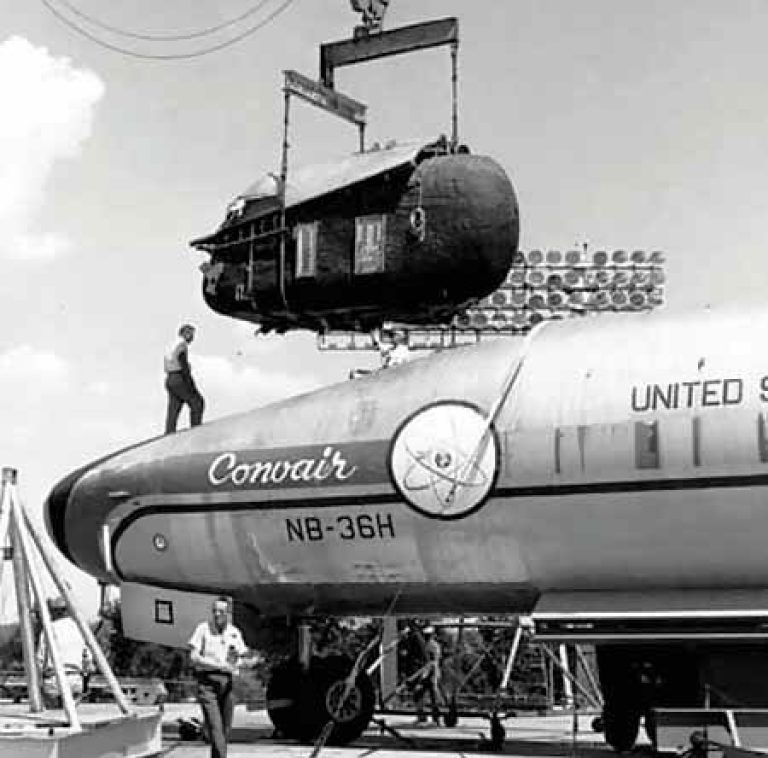
The Convair NB-36H became the practical embodiment of this concept—not a combat aircraft, but a flying laboratory. Its mission did not include using the reactor to generate thrust. The main question was much more fundamental: Is it even possible to safely lift a nuclear power plant into the air and fly the aircraft under such conditions?
The reactor was placed in the tail section, as far away from the crew as possible. The cockpit was converted into a capsule with massive protection—multilayer shielding, thick glass, and a complex insulation system. As a result, the aircraft carried not so much the reactor itself as its protective shielding.
And it was right then that it became clear for the first time that the project’s main enemy was neither the engine nor the aerodynamics.
And radiation.
The Mass That Kills an Idea

🔧 Technical Section: Protection
| Reactor mass | relatively moderate |
| Mass of the shielding | dozens of metric tons |
| Location | tail + shielded cabin |
| Conclusion | a sharp increase in the aircraft’s weight |
The reactor itself isn’t the main problem. The problem is protecting against it.
To ensure radiation levels remained safe, tons of materials were required: lead, steel, and special alloys. This dramatically increased the weight, complicated the design, and negated all the benefits of using nuclear energy.
In fact, this led to a paradoxical situation: in order to fly “indefinitely,” the airplane became so heavy that it lost its efficiency.
The second problem: how to convert heat into thrust

Even if we set aside the issue of security, the next question remains: how it works.
The reactor does not directly rotate the propeller or drive the turbine. It generates heat. This heat must be transferred to air or a working fluid to produce thrust.
Two options were considered.
Direct: when air passes through the reactor’s active zone.
Indirect: through a heat exchanger.
The first method is more efficient, but it carries the risk of radioactive contamination of the stream. The second method is safer, but it is more complicated and cumbersome, and therefore less efficient.
Both lead to an increase in mass and a decrease in efficiency.
In practice: It really did fly
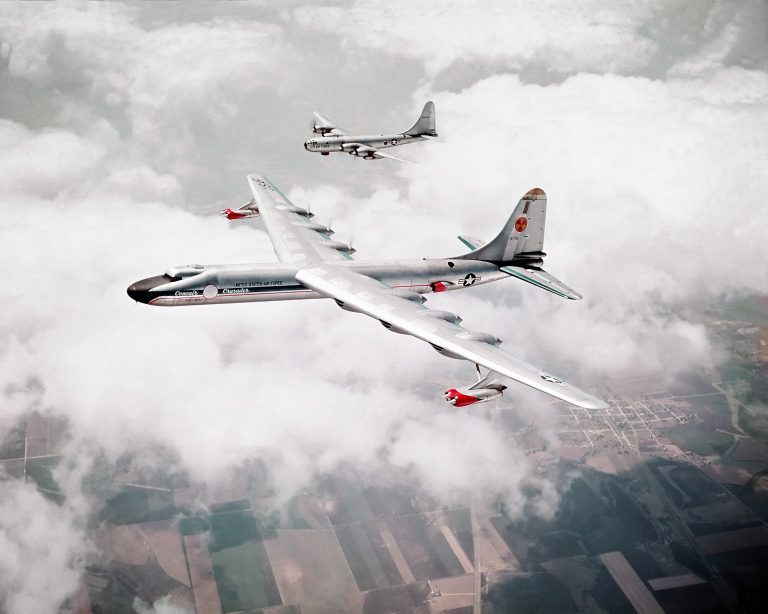
The NB-36H wasn’t just a concept on paper. It completed dozens of flights with a functioning reactor on board.
This is an important point.
The experiment proved that:
An aircraft with a jet engine can fly,
the crew can be protected,
and the system can operate under real-world conditions.
But at the same time, he revealed something else.
That’s too complicated.
Why was the project shut down?

There is no single reason for the failure.
First is weight. The protective shielding makes the aircraft heavy and inefficient.
Second is risk. A crash involving such an aircraft would result in radioactive contamination over a large area.
Third is the development of alternatives.
By the late 1950s, the situation had changed. Intercontinental missiles had been developed, which could accomplish the same task more quickly and reliably. In-flight refueling had also been introduced, removing the range limitation for conventional aircraft.
Nuclear-powered aircraft are no longer necessary.
Conclusion
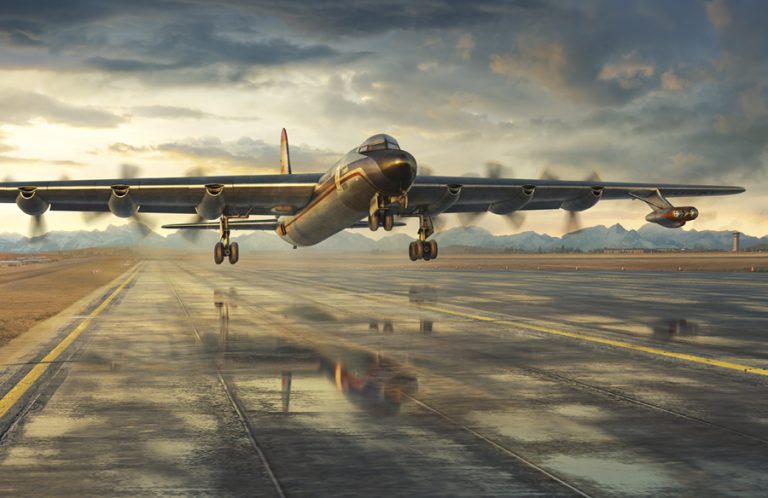
The idea of a nuclear-powered aircraft was a logical product of its time—an attempt to solve the problem of range in a radical way.
It wasn’t a failure from an engineering standpoint.
It turned out to be unnecessary.
Too heavy, too complicated, and too dangerous for the role she was supposed to play.
That is precisely why nuclear reactors have remained on land and at sea, but have never become part of aviation.