France is rightly considered by many to be the cradle of aviation. In the late 19th century and during the early years of aviation, it was in this country that the highest concentration of work in both design and the refinement of piloting skills was observed. Until 1924, France also led the way in setting speed records; however, as the advantage in speed shifted from land-based aircraft to seaplanes, the French lost their edge in this field. On the Schneider Trophy race courses, the British, Italians, and Americans competed fiercely against one another, refining their seaplanes and setting new speed records. However, this did not mean that development had come to a halt. The companies Bernard, Nieuport-Delage, and Dewoitine attempted to design and build record-breaking seaplanes, but these seaplanes were never completed on time, just as the French aircraft, for many reasons—including failures in developing very high-powered engines—did not participate in the races.
In the late 1930s, the all-metal monoplane Dewoitine D.520 C1 became a great source of hope for the French fighter aviation program. This fighter was developed under the leadership of Émile Dewoitine—a man who, at the time, was highly respected in the field of fighter aircraft design, a field in which he had been working to gradually modernize designs since the early 1930s. Lead designers Robert Castello and Jacques Henrat (Jacques Henrat) put a great deal of effort into the D.520, and it can be said that Émile Dewoitine’s team succeeded in creating an aircraft of a higher class than the Morane-Saulnier MS.406 C1, which was in service at the time. Unfortunately, the misfortune that befell the French aviation industry—in the form of a hasty and ill-conceived nationalization—resulted in a significant delay in the start of D.520 production. Consequently, its contribution to the Battle of France was not what had been expected.
One of the major problems that could not be resolved was the lack of engines with a power output of 1,000 l.s. (735 kW) or more. For this reason, the mass-produced D.520 fighters had to make do with Hispano-Suiza HS 12Y-45 engines rated at 910 l.s. (670 kW). Despite this, a fully armed D.520 reached a maximum speed of 530 km/h at an altitude of 6,000 meters. Even during the design phase of the D.520, its designers discovered that the aircraft’s highly successful aerodynamic configuration had significant reserves, which would allow for a substantial increase in speed with a specially modified airframe and a suitable engine. In the spring of 1938, the Dewoitine company—which by that time had already become part of the National Society for Aircraft Construction of Southern France (Société Nationale de Constructions Aéronautiques du Midi – SNCAM), developed a design for a lightweight, aerodynamically improved aircraft with an engine producing at least 1,200 l.s. (882 kW). The aircraft’s designers harbored some hope of restoring France’s absolute speed record, at least for a short time. The project began to take shape as the D.530 model when unexpected news arrived — on June 5, 1938, Ernst Udet, flying a Heinkel He 100 V2, set a new speed record for land-based aircraft over a distance of 100 kilometers—634.473 km/h.
With the D.530 engines available at the time, it could not achieve such high performance. Work on the D.530 program was halted, but the traditional French pursuit of prestige ultimately prevailed. In October 1938, the management of the nationalized aircraft manufacturing industry, led by Émile Devoentin, allocated funds for the development of a new record-breaking aircraft. Meanwhile, Émile Devoentin’s team continued to explore ways to help the “520” set a new speed record. The first sketches of the new D.550 model began to appear on drafting boards. In essence, it was a new aircraft that only vaguely resembled its predecessor, the D.520 fighter. The weight had to be reduced literally by the gram. For example, the weight of the wing (which, of course, was calculated together with the armament) on the D.550 was only 280 kg, compared to the 422-kg wing of the D.520 fighter. The fuselage weighed 170 kg instead of 204 kg. Wind tunnel tests showed that with an engine producing just 900 l.s. (662 kW), a speed of 650 km/h could be achieved at an altitude of 6,000 meters. However, the engine on which breaking the record depended—the HS 12Z with 1,200 l.s. (882 kW) of power and a reserve for further short-term power increases—was still unavailable.
Despite the tense situation in the aircraft manufacturing industry, production of the prototype began in December 1938. Then, on June 23, 1939, Marcel Doré, the famous aerobatic pilot and chief test pilot at Dewoitine, flew the D.550 to the Toulouse-Françazal airfield. However, it was a bad time for the French to set new speed records. The Germans had widened their lead even further. On March 30, 1939, Hans Dieterle, flying a He 100 V8, reached a speed of 746.606 km/h, and less than a month later, on April 26, Fritz Wendel in a Messerschmitt Me 209 V1 reached a speed of 755.138 km/h!
For Émile Devuantin’s team, this was a challenge. However, the only engine available was still the HS 12Y-51, which this time was capable of delivering its full power output of 1,000 l.s. (735 kW). Equipped with this engine, the D.550 was able to reach a speed of 702.2 km/h at an altitude of 6,000 meters. The 700-kilometer mark was surpassed, but German aircraft set speed records in accordance with the FAI rules in effect at the time—they flew close to the ground. The nose section of the fuselage was lengthened by 200 mm, and on February 21, 1940, new tests began. The supercharger was modified, and the large under-fuselage radiator was split into two smaller radiators mounted under the wing pylons, following the example of the Bf 109E fighter. This turned out to be a mistake, unexpectedly increasing the aircraft’s drag. The pilots discovered this on May 18, 1940, during the D.550’s first flight following the modifications. The D.550 took to the air for the last time in Toulouse on May 27, 1940—it never received the HS 12Z engine and never made its record-breaking flight.
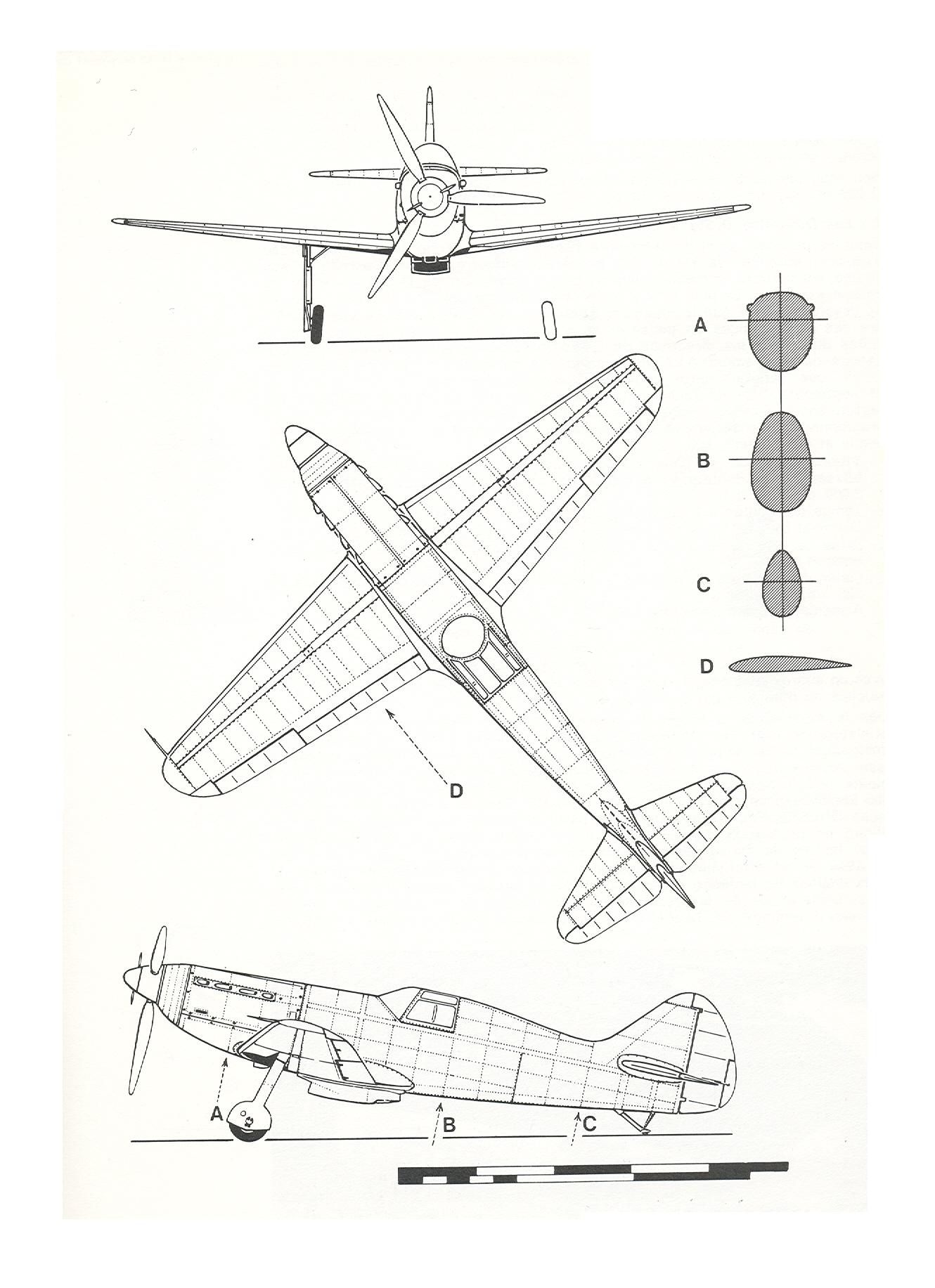
Diagram of the D.550 record-breaking aircraft before modernization. Drawing by secretprojects
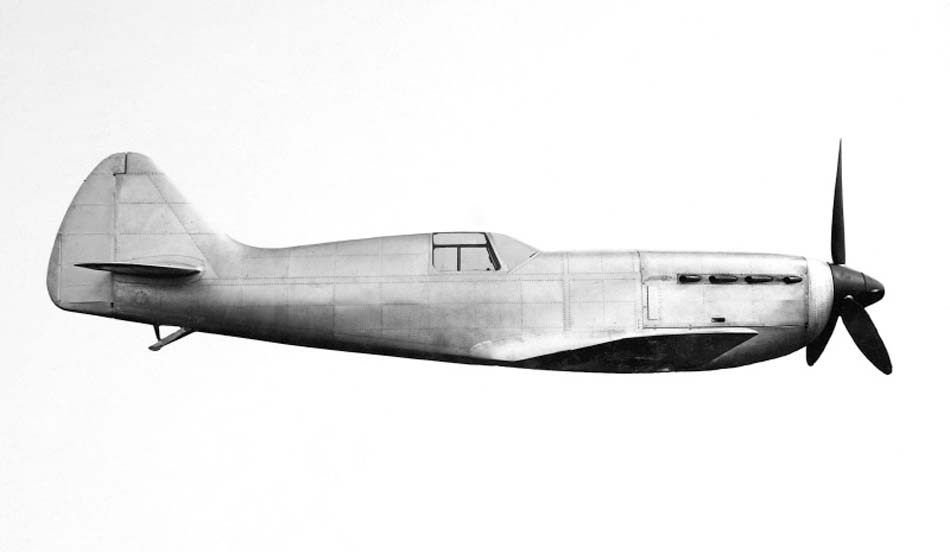
A model of the D.550 record-breaking aircraft, designed for wind tunnel testing. Photo: airwar.ru
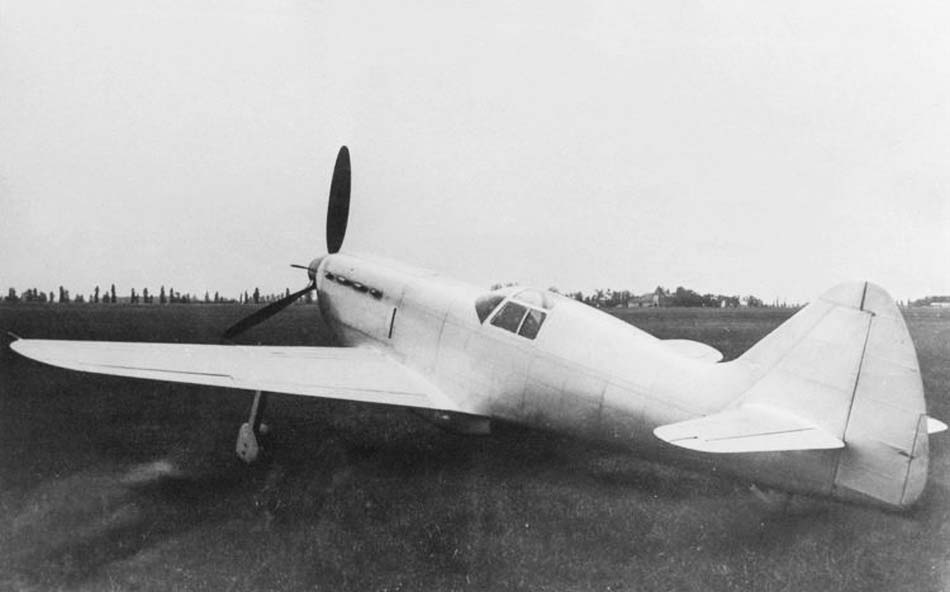
The record-breaking D.550 aircraft. Photo courtesy of airwar.ru
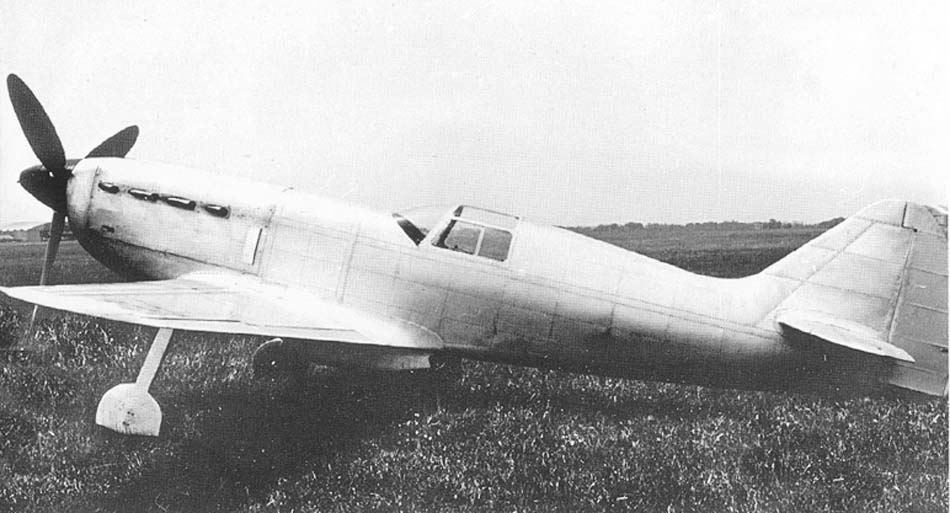
The record-breaking D.550 aircraft. Photo courtesy of airwar.ru
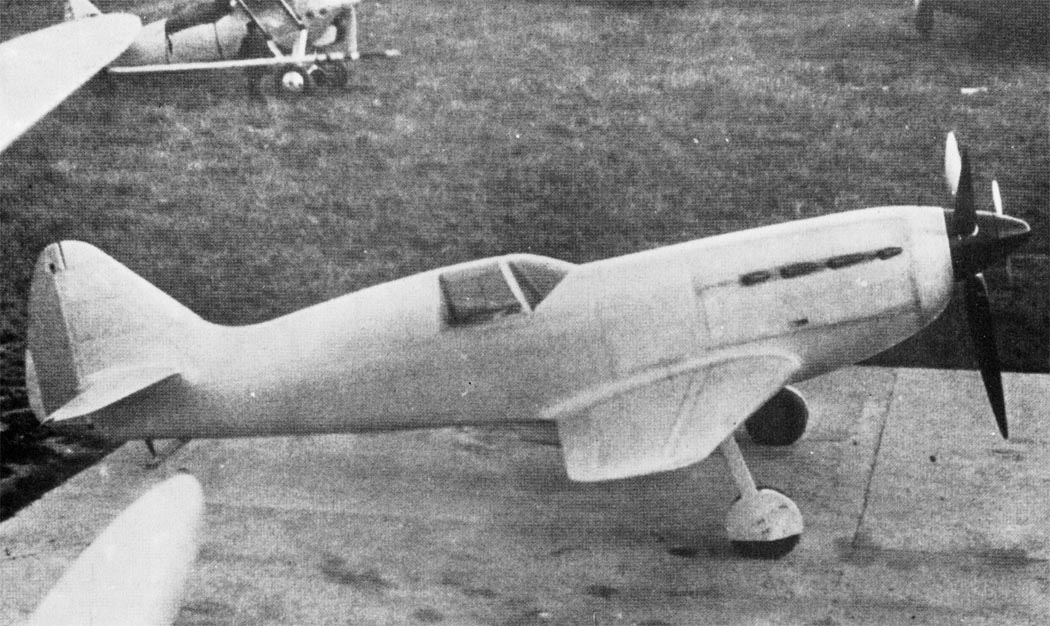
The record-breaking D.550 aircraft. Photo courtesy of airwar.ru
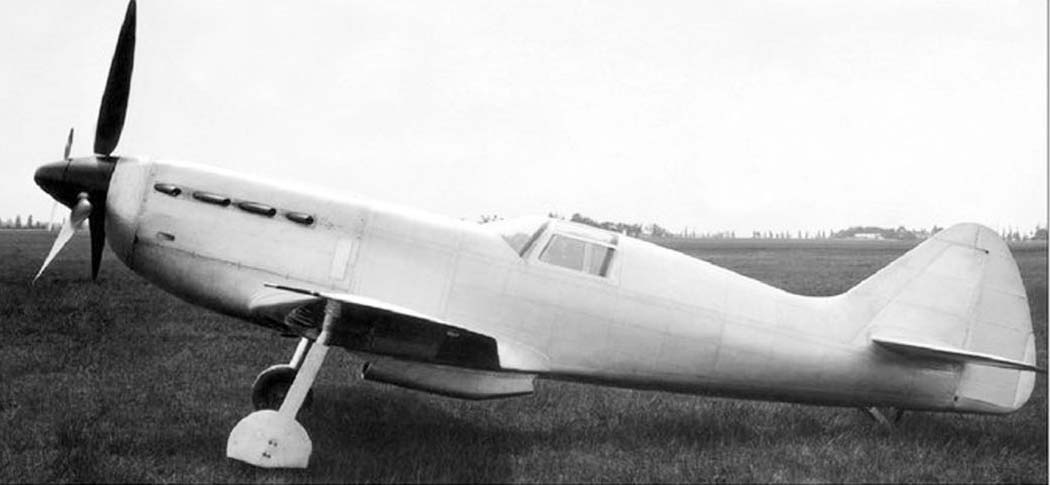
The D.550 record-breaking aircraft. Photo courtesy of airwar.ru
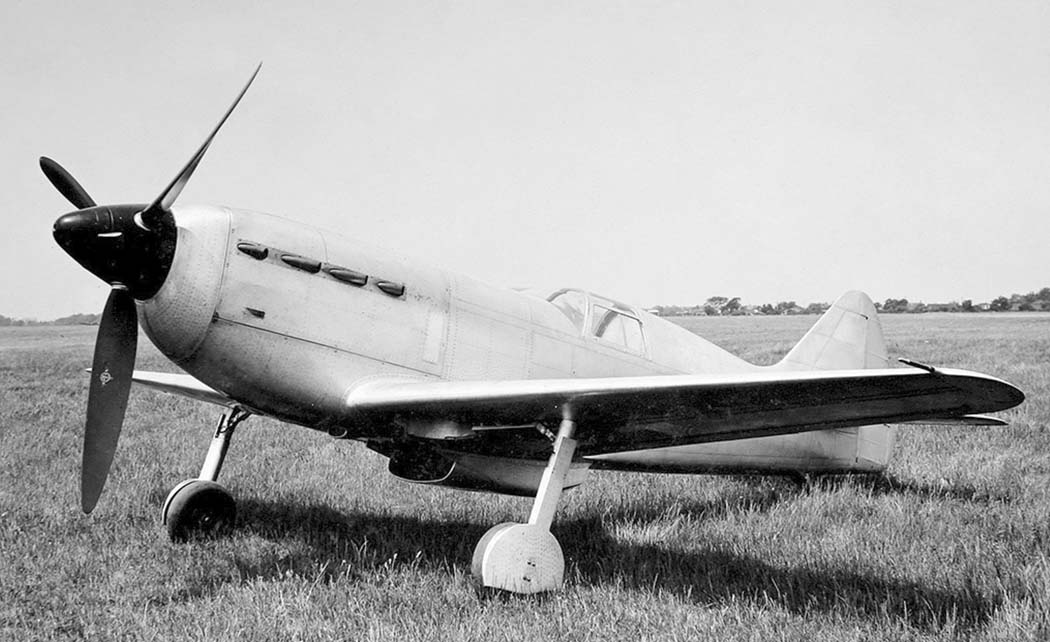
The record-breaking D.550 aircraft. Photo courtesy of airwar.ru
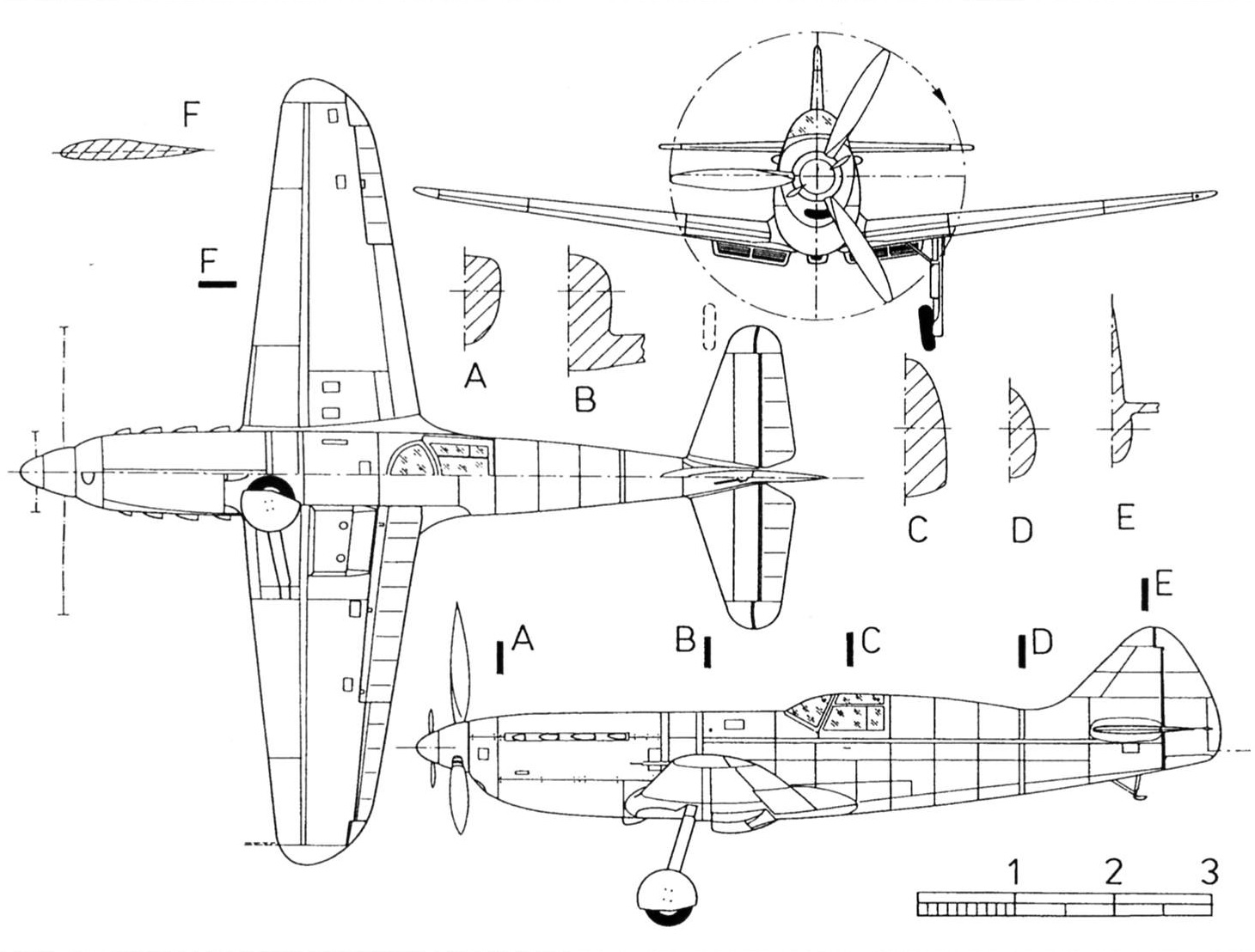
Diagram of the D.550 record-breaking aircraft after modernization
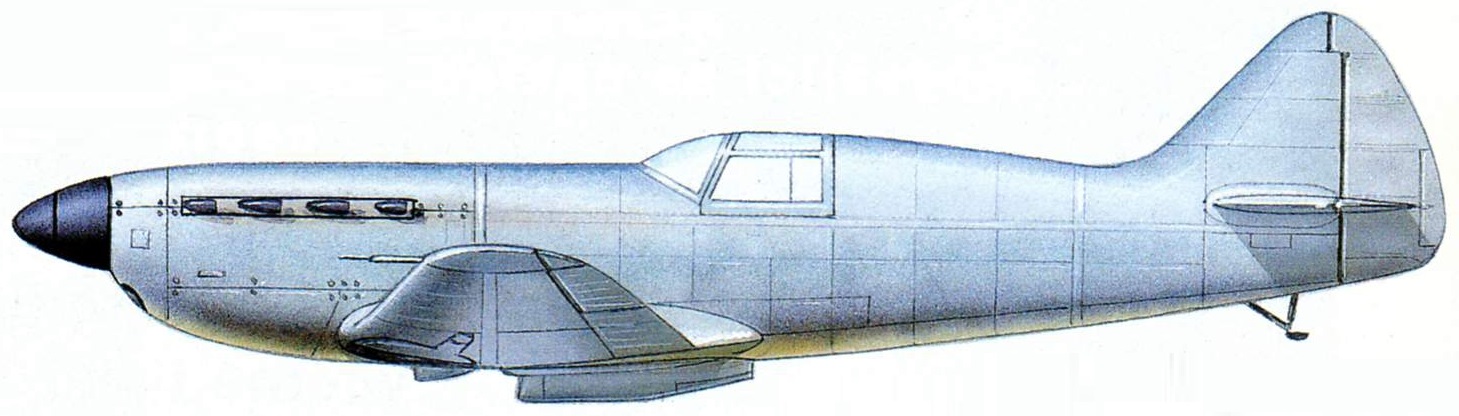
The prototype of the record-breaking aircraft was built and tested without any protective paint and was left in its natural material colors: duralumin and fabric (the covering of the control surfaces). The propeller hub fairing, the blades of the three-bladed propeller, and the two-bladed propeller driving the control mechanism were painted black. No identification marks were applied to the aircraft during testing.
According to the September 1939 program, the experience gained from the D.550 program was to be applied to the development of combat aircraft—the D.551 through D.554 fighters and the D.555 aerial reconnaissance aircraft. All of these aircraft were to be equipped with HS 12Z engines featuring turbochargers. However, only a prototype of the D.551-01 fighter, powered by the less powerful HS 12Y-51 engine, was built.
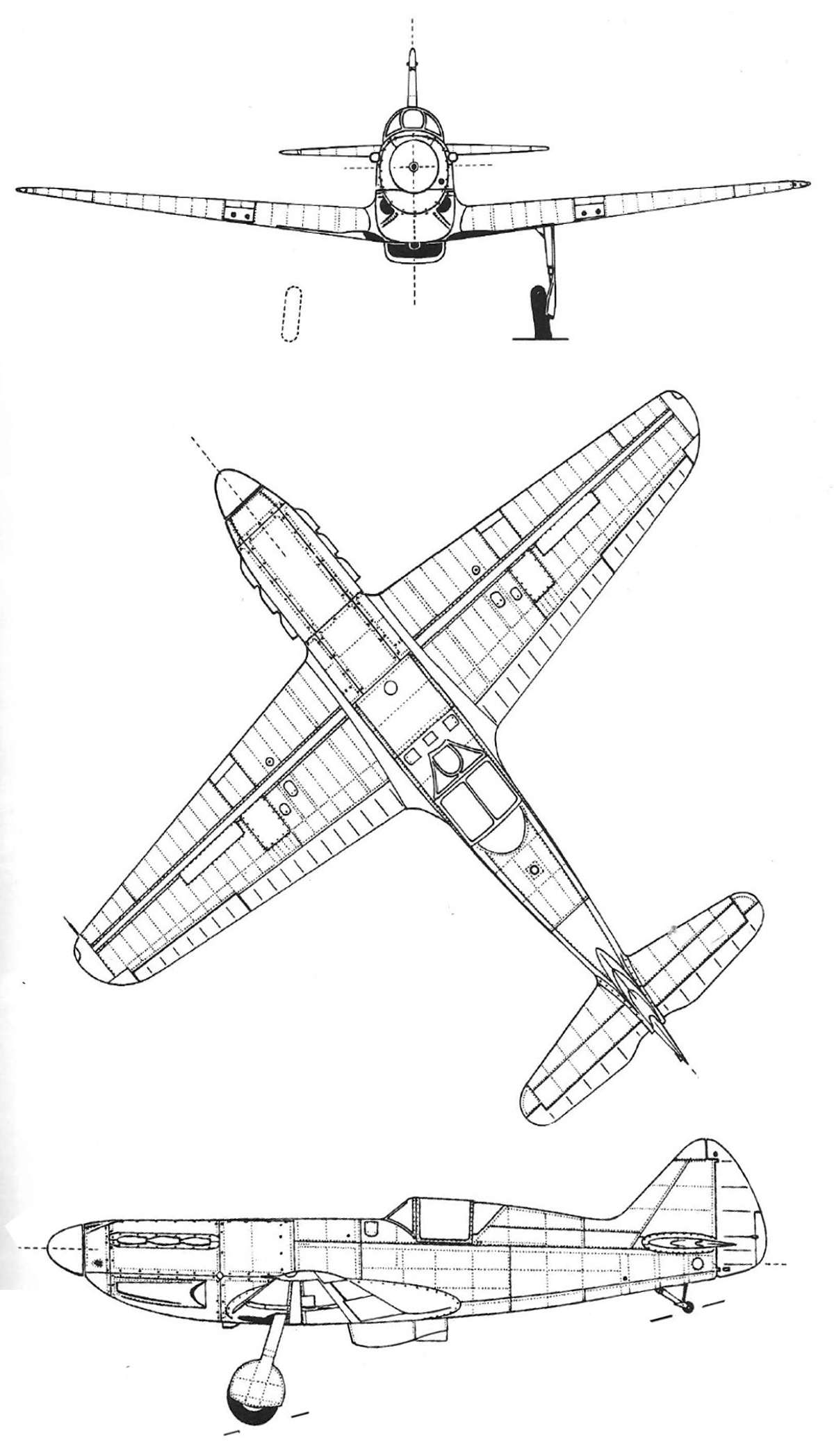
Diagram of the D.551-01 experimental fighter. Drawing from airwar.ru
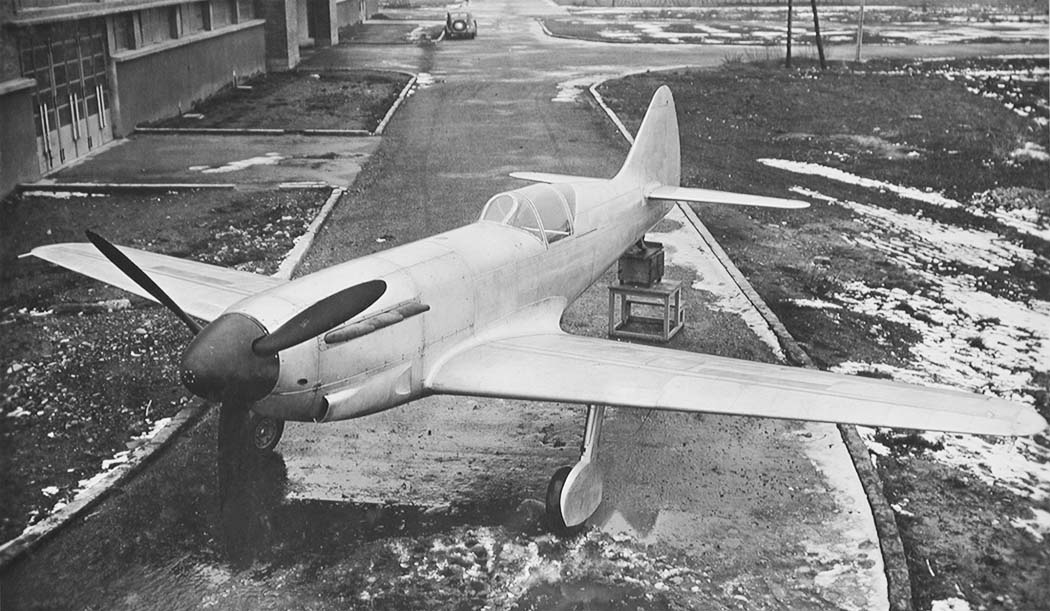
D.551-01 prototype fighter. Photo courtesy of airwar.ru
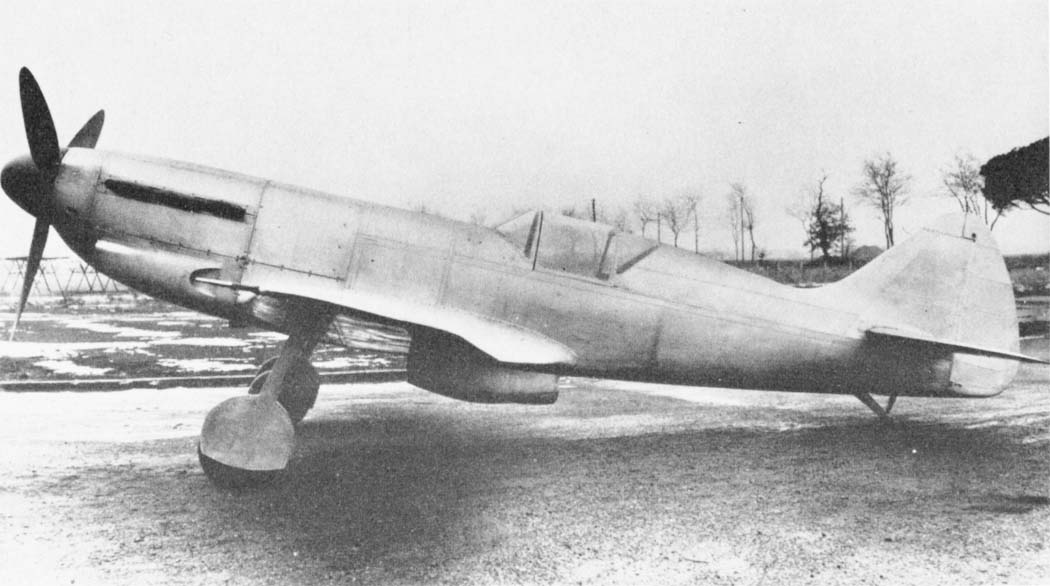
D.551-01 prototype fighter. Photo courtesy of airwar.ru
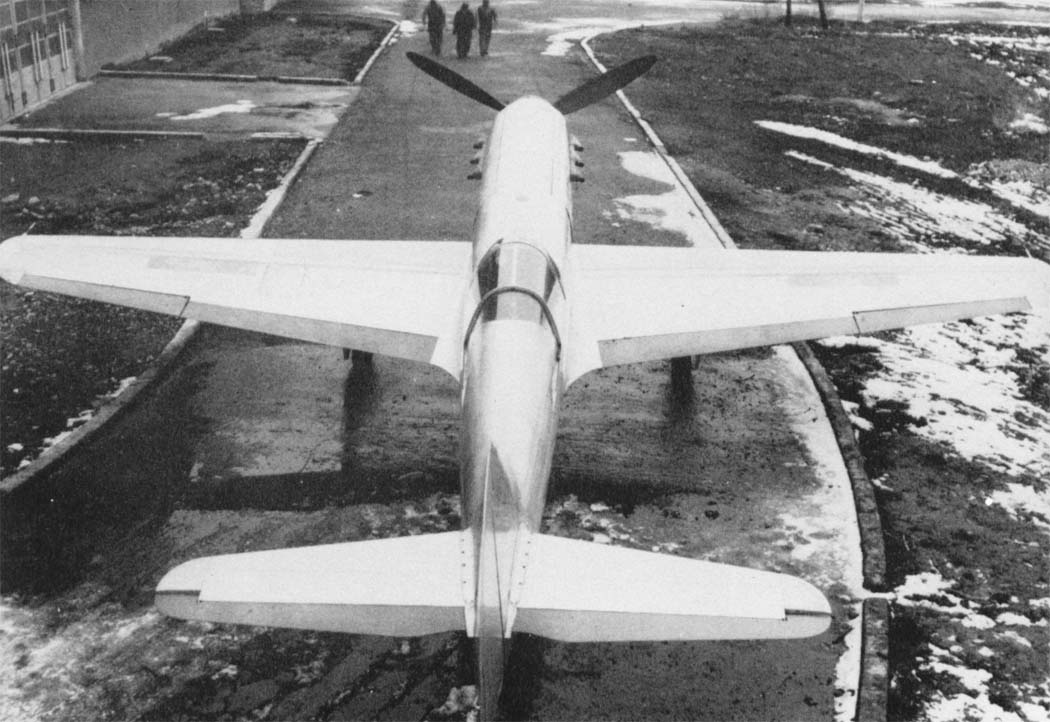
D.551-01 prototype fighter. Photo courtesy of airwar.ru
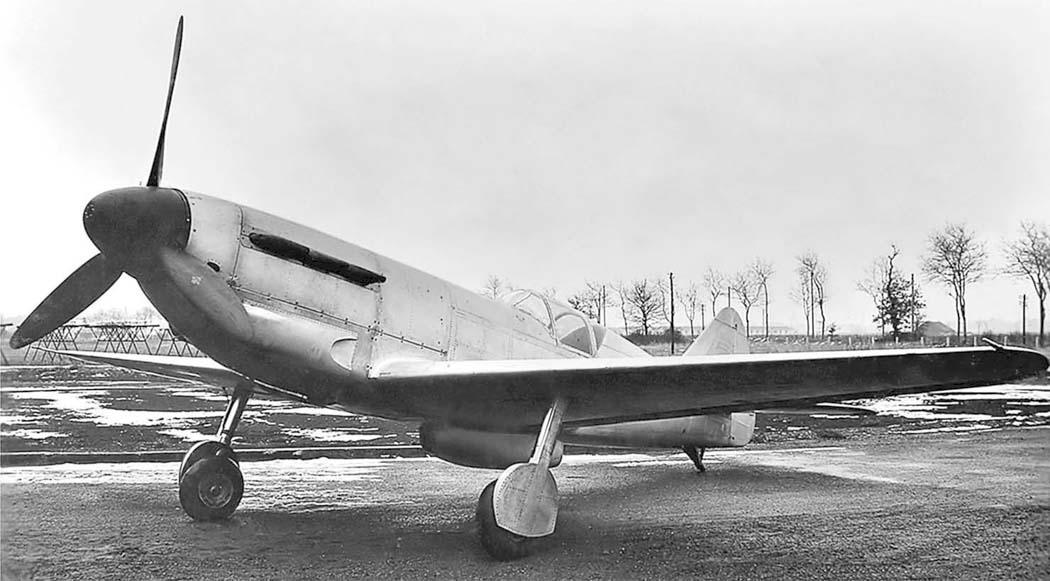
D.551-01 prototype fighter. Photo courtesy of airwar.ru
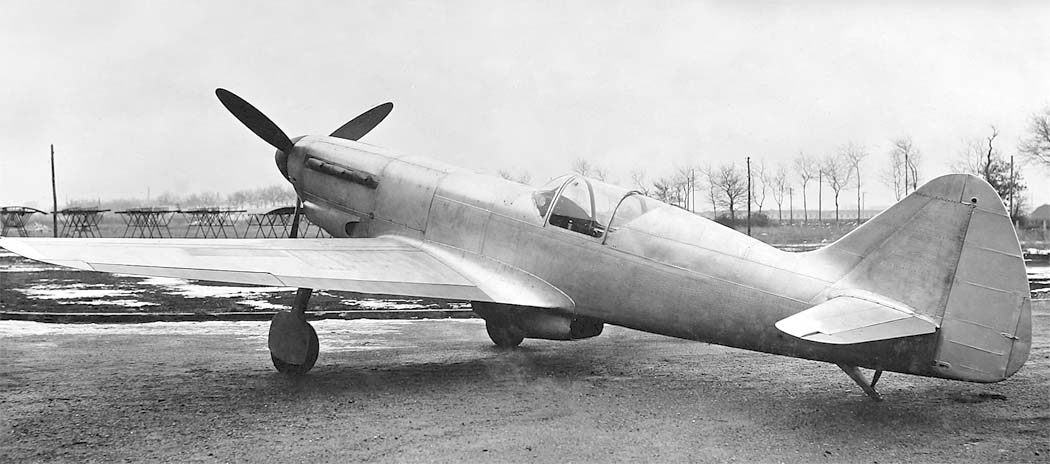
D.551-01 prototype fighter. Photo courtesy of airwar.ru
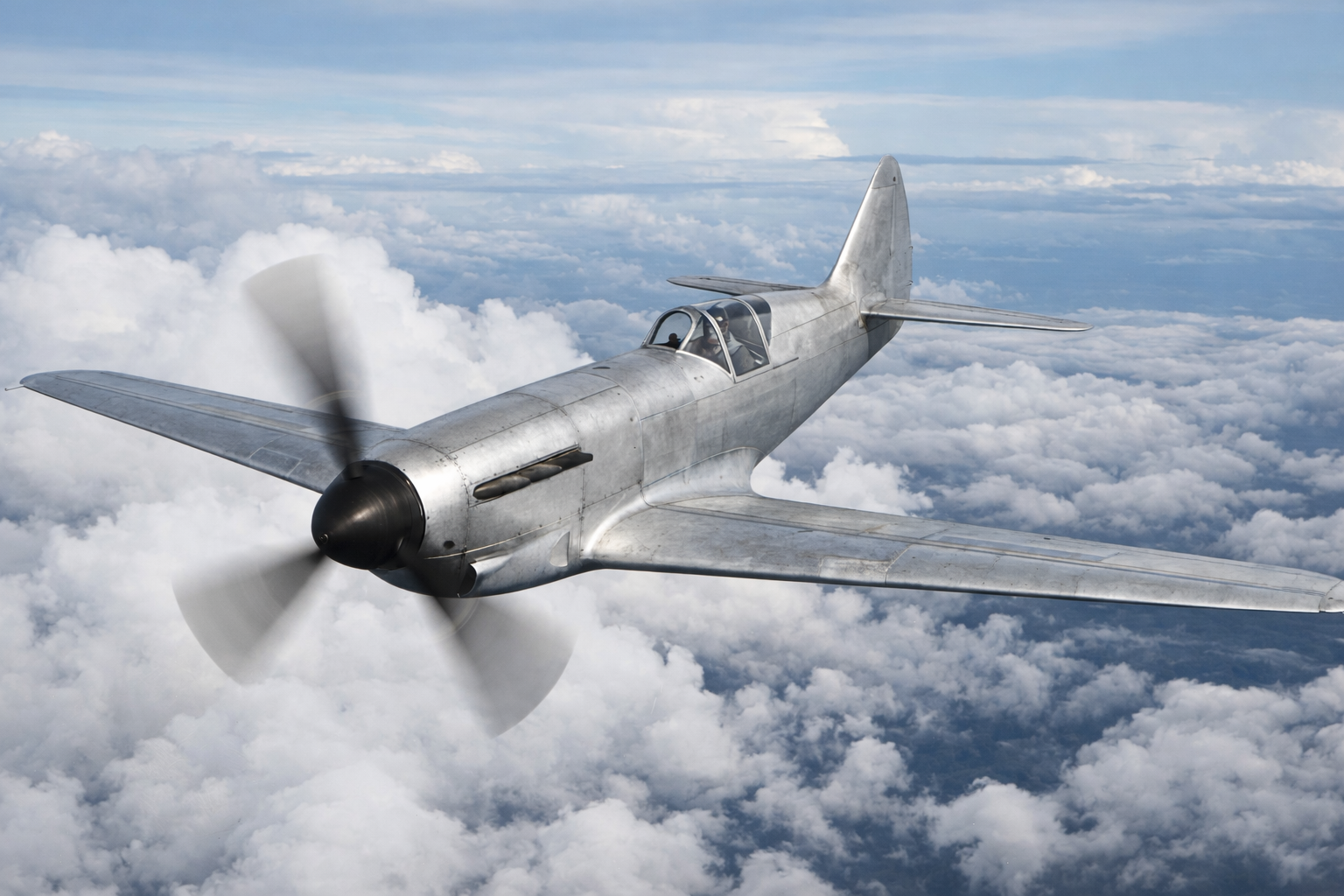
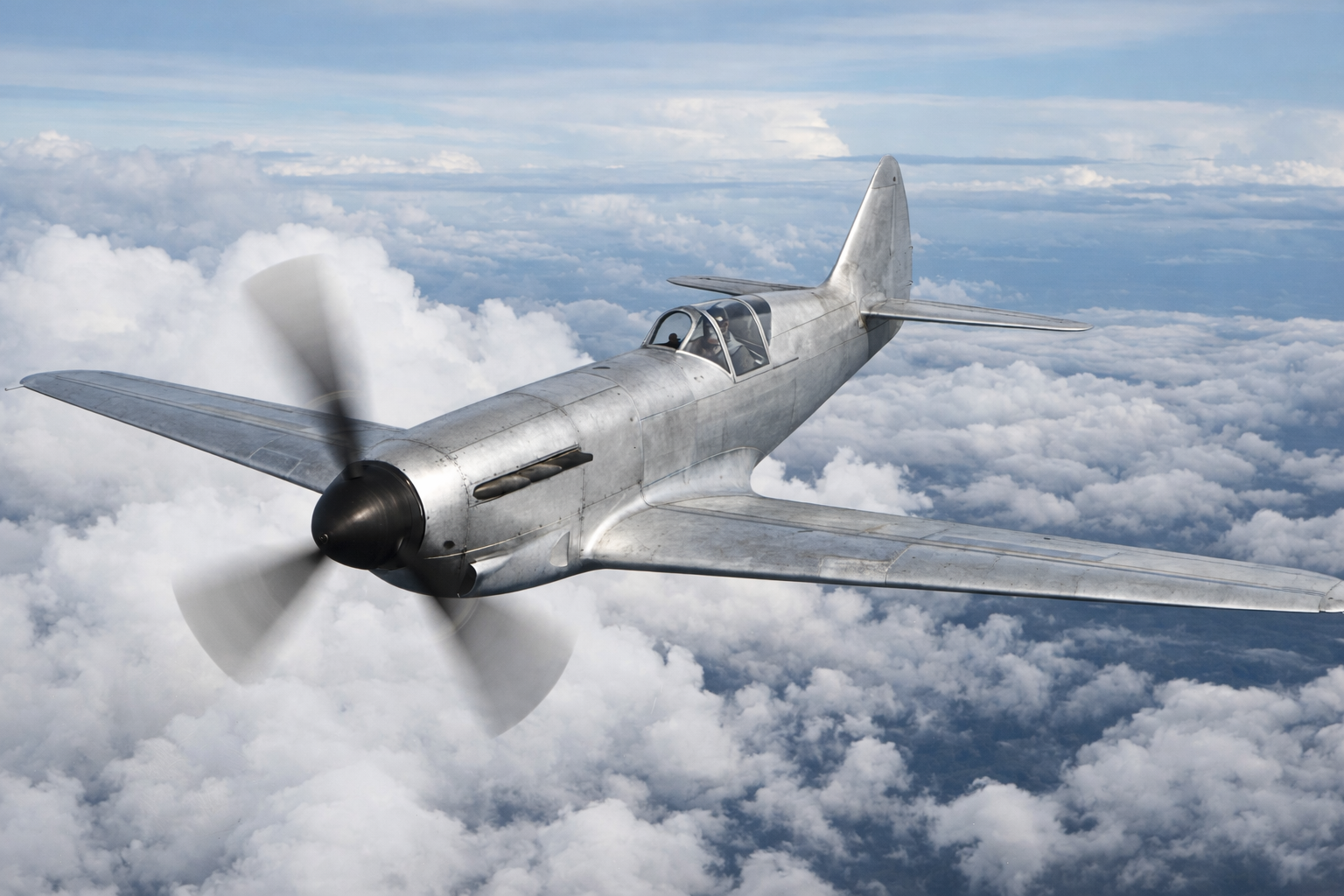
The D.551-01 experimental fighter in flight. Image generated by lmarena.ai
FLIGHT AND TECHNICAL SPECIFICATIONS
Type: Dewoitine D.550
Purpose: record-breaking aircraft
Status: prototype
Manufacturer: Société Nationale de Constructions Aéronautiques du Midi, Toulouse-Blagnac
Crew: 1 person
Powerplant: one 12-cylinder, inline, liquid-cooled HS 12Y-51 engine with a power output of 1,000 l.s. (735 kW)
Dimensions:
Wingspan: 8.20 m
; Length
: • original: 8.02 m •
after modification: 8.22 m
; Height: 2.72 m
; Wing area: 10.79 m²
Weight:
Takeoff weight: 1,814 kg (standard) •
1,950 kg (during the record flight)
Source: Text by Václav Němeček, Drawing by Martin Salajka, “Aircraft 39–45: Dewoitine D.550” “Aviation + Astronautics” 14/97, p. 41/925; 15/97, pp. 60–61/1012–1013
Translation first published at – https://vk.com/@710541705-dewoitine-d-550