A secret Soviet monster from a parallel world. A super-heavy tank with the agility of a light tank. Project 186, “Udarnik.” Why was it never put into production?

The early postwar decades in the Soviet Union were a time not only of rebuilding the devastated industrial sector but also of bold engineering experiments. In reality, heavy tanks were artificially limited by a political cap of fifty metric tons, but what would have happened if the military leadership had removed that cap and allowed designers to think in terms of absolute protection and power reserves? This question was recently posed by NarenKarthik1318, a researcher of alternative technical paths, whose analysis gave rise to a fascinating scenario for the development of the Soviet armored vehicle program. The project is based on the famous maxim of Academician Valentin Petrovich Glushko, originally devoted to aviation but perfectly applicable to tracked vehicles. “With a good engine, even a gate will fly,” the scientist used to say. Reimagined for armored vehicles, this idea became the foundation for the creation of Object 186, which was named “Udarnik.”
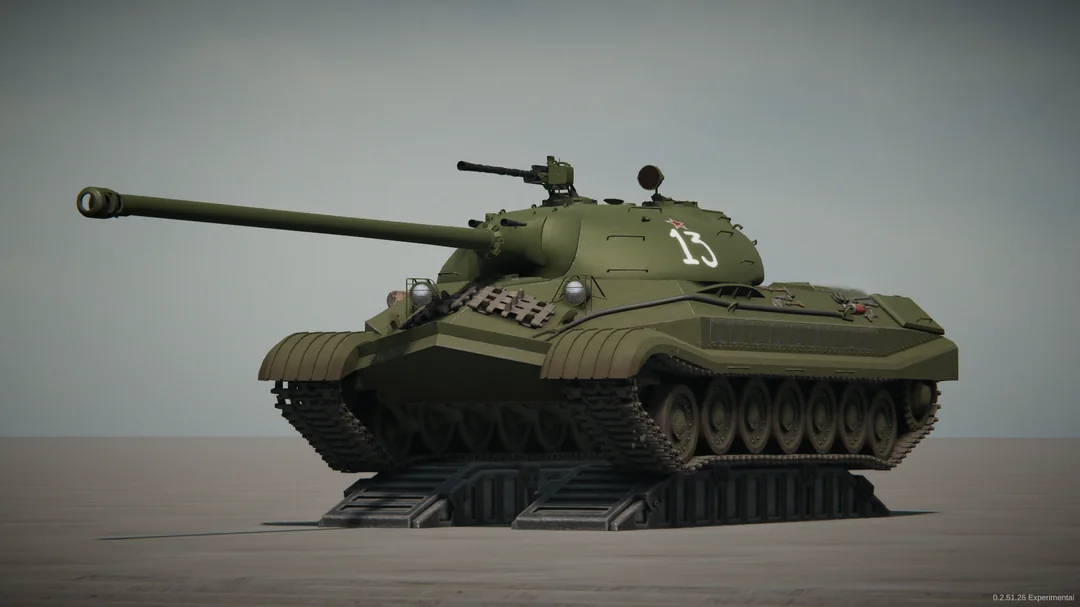
The Heart of the Machine
The key to bringing this concept to life was a powerplant developed in 1947 by design bureaus working at the intersection of the tank and aviation industries. We’re talking about a V-shaped, 24-cylinder engine with a displacement of 68 liters, capable of producing 2,000 horsepower. For its time, such a figure seemed fantastic, but it was precisely this powerplant that allowed engineers to avoid compromising between weight and maneuverability. The transmission and suspension were reinforced with a significant safety margin, and the cooling system featured an innovative forced-air cooling design. Together, these solutions made it possible to accelerate nearly 100 metric tons of armored steel to a speed of 90 kilometers per hour. In terms of dynamic performance, the vehicle was on par with light reconnaissance tanks, making it an elusive target for artillery in open terrain.
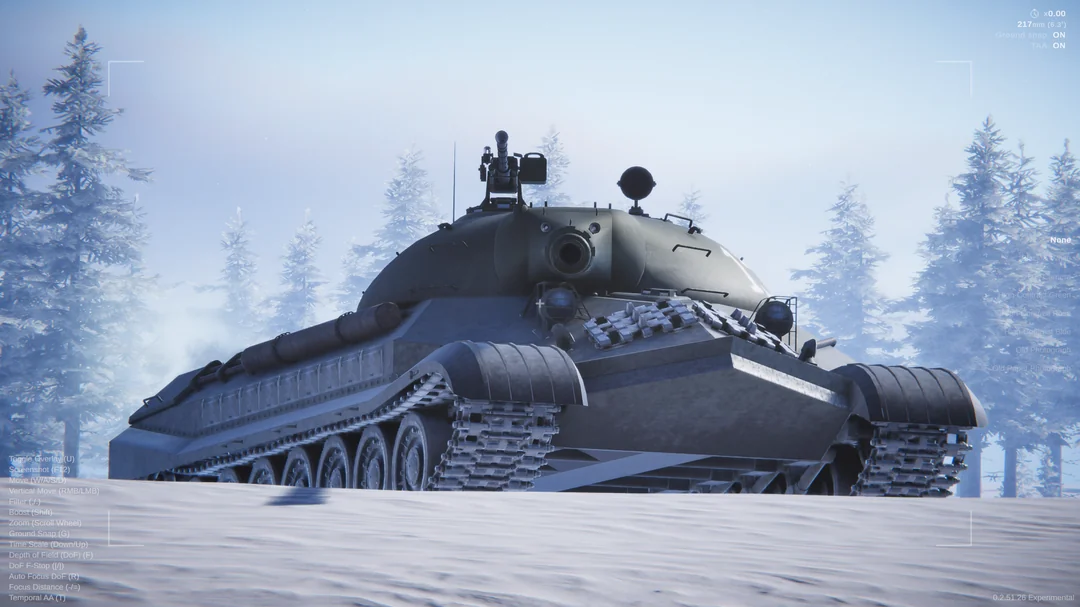
One hundred metric tons of absolute protection
The elimination of weight restrictions paved the way for a radical increase in survivability. Engineers allocated a full fifty metric tons for armor on the hull and turret, which was nearly double the armor mass of the legendary IS-7 (which, incidentally, had not yet been created in this world). The vehicle’s frontal profile was designed to be completely invulnerable to all kinetic and cumulative munitions available at the time. The upper frontal plate was between 250 and 300 millimeters thick with a 65-degree slope, while the lower section ranged from 200 to 240 millimeters at an angle of 55 degrees. The hull sides were protected by 150 millimeters of steel, supplemented by anti-cumulative screens, while the roof and bottom had a thickness ranging from 50 to 70 millimeters. The turret was cast, with the gun mantlet reaching 450 millimeters, while the smooth cheek plates and sides gradually tapered from 250 to 180 millimeters. This distributed armor turned the tank into a moving fortress capable of withstanding direct fire from any tank or anti-tank artillery in service at the time.
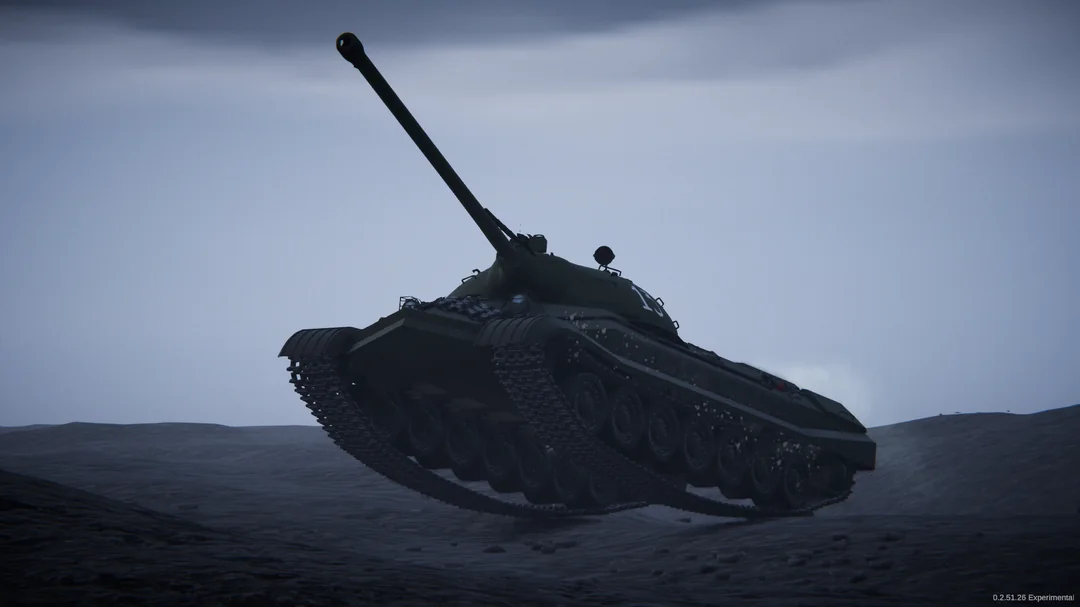
Fire, Trials, and the Verdict
The D-12 122-millimeter gun, standard on Soviet heavy tanks, was selected as the main armament. At the test ranges, the Udarnyk demonstrated excellent directional stability and remarkable maneuverability for its weight. The command generally praised the concept, but the tests revealed two critical shortcomings.
First, the innovative engine was still too unrefined. High loads quickly caused the cylinders to overheat, requiring significant improvements to the materials and the lubrication system.
Second, military acceptance testing revealed that the main armament lacked sufficient penetration capability. If a potential adversary were to develop a vehicle of a comparable class, the D-12 gun would not be able to reliably penetrate its frontal armor. The designers proposed installing more powerful guns, but this would have required redesigning the turret and reinforcing the recoil mechanism, which would have delayed mass production indefinitely.
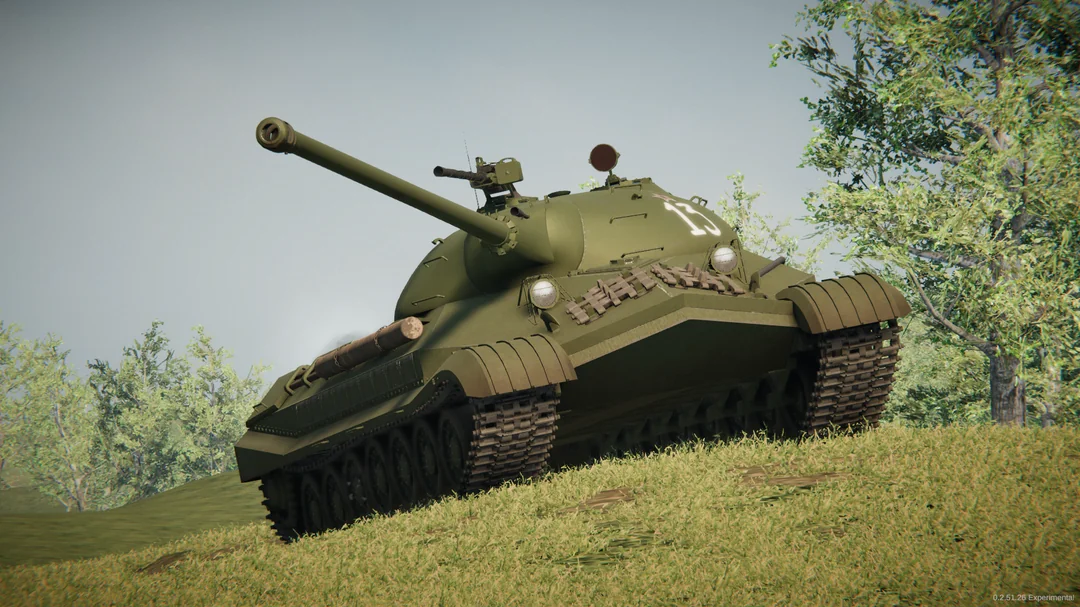
An Alternative Legacy
As a result, the Udarnik remained in the experimental vehicle category, but its concept was not forgotten. In this alternative branch of armored vehicle development, it was Object 186 that served as the starting point for a new generation of heavy tanks. The real IS-7, considered in this scenario as a direct evolution of the Udarnik, took on a completely different appearance and technical configuration. It inherited the reinforced running gear and the principles of armor distribution, but was designed around a modified engine and a new, larger-caliber gun. Thus, the abandonment of artificial weight limits in 1947 did not merely provide Soviet engineers with a single experimental prototype; it changed the course of the entire field’s development, making speed and absolute protection equal priorities in Soviet tank design.
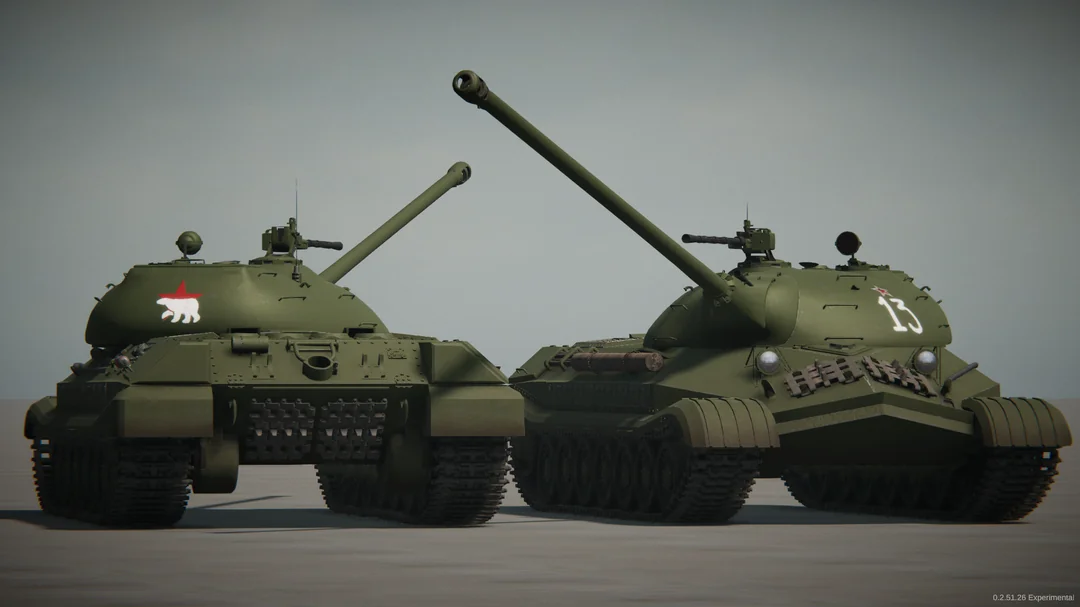
Tactical and Technical Specifications of Object 186 “Udarnik”
- Combat weight: 99.98 metric tons
- Crew: 5 people
- Engine: V24, displacement 68 liters, power 2,000 l. s.
- Maximum speed on the highway: 90 km/h
- Main armament: 122-mm D-12 rifled gun
Reservations;
- Upper front housing panel: 250–300 mm at an angle of 60–65°
- Lower front housing section: 200–240 mm at an angle of 50–55°
- Hull sides: 150–180 mm + cumulative armor plates
- Roof and bottom of the hull: 50–70 mm
- Tower front and gun mantlet: 400–450 mm of cast armor
- Cheeks and sides of the tower: from 250 mm to 180 mm
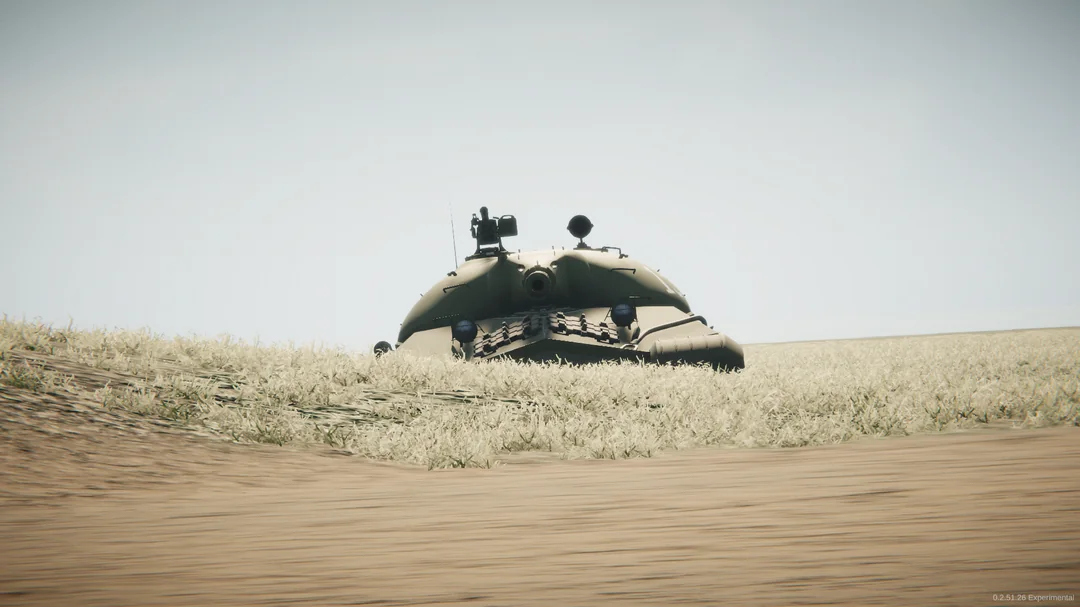
Source — https://www.reddit.com/r/SprocketTankDesign/comments/1tiis19/object_186_udarnik/