A military enthusiast focuses on tactics, while a professional focuses on logistics.

This vehicle is a further development (toward maximum simplification) of the T-35 coal-steam tank and is intended to replace the mass-produced Soviet T-26 and T-34 tanks.
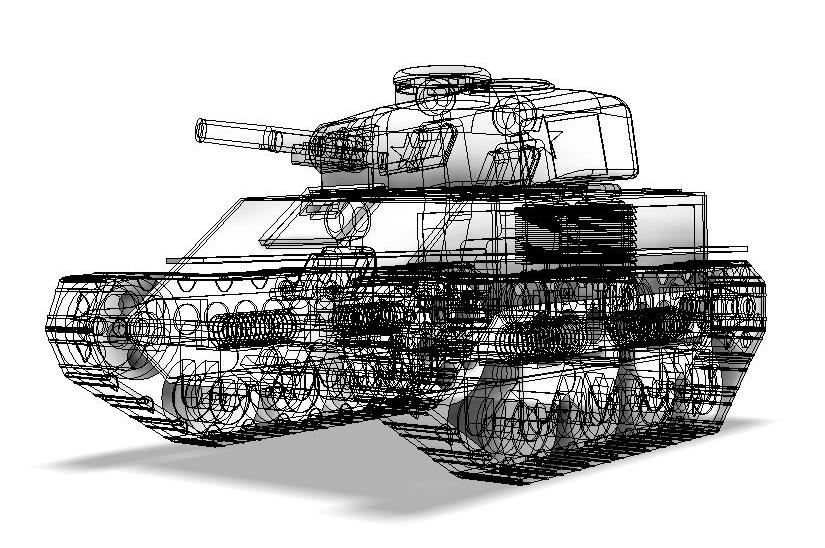
A steam-powered variant of the T-35 is described in the article https://alternathistory.ru/t-35up-ugolno-parovoj/. The vehicle was generally a success and could even have been used as an airship carrier, but supplying even a single company of steam-powered T-35s required the delivery of an incredible amount of coal and water, which ruled out the widespread use of such vehicles.
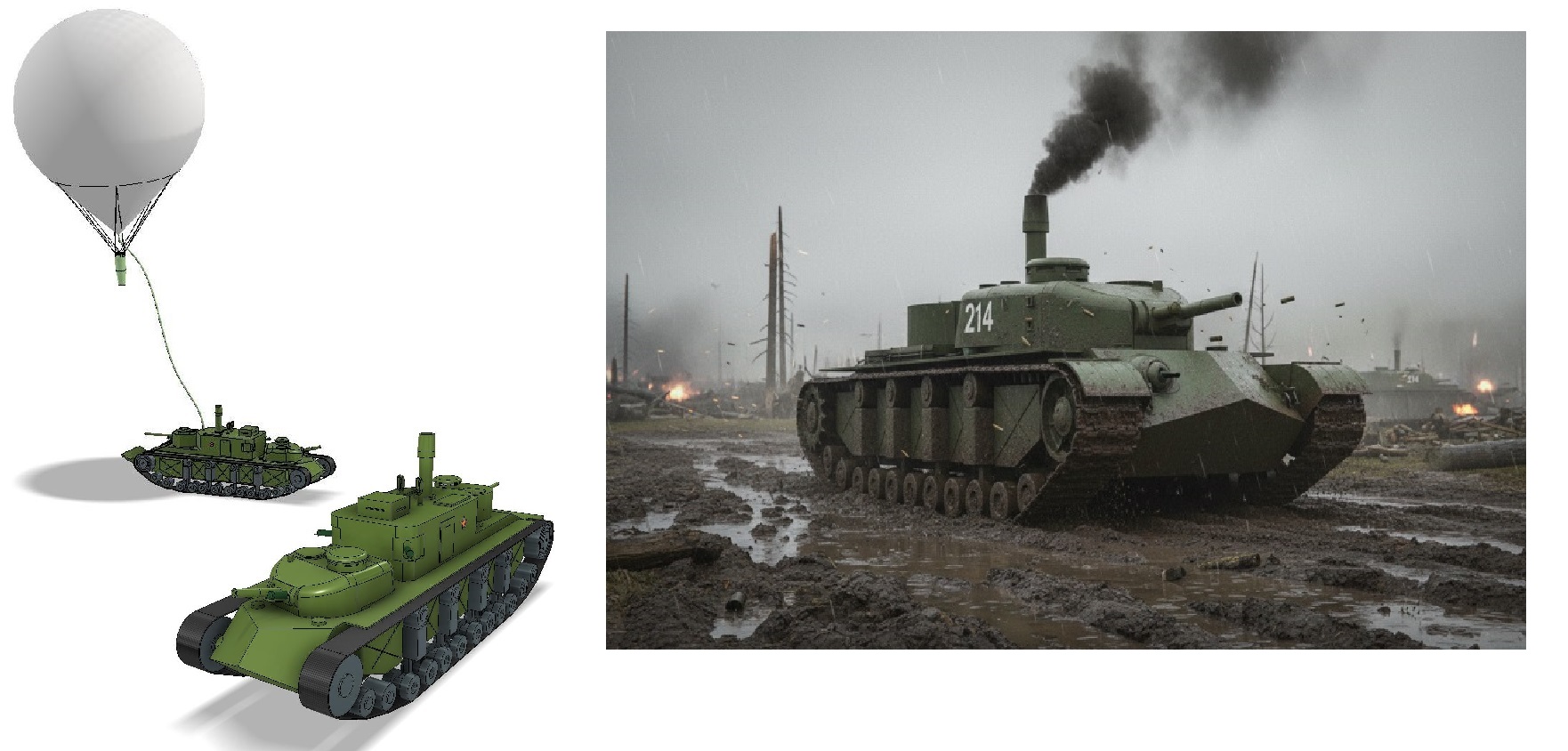
Consequently, there was a need to develop a more mass-produced vehicle designed to reinforce and support the infantry. This is how the concept of the T-35 infantry tank came about.
FOREIGN EQUIVALENTS
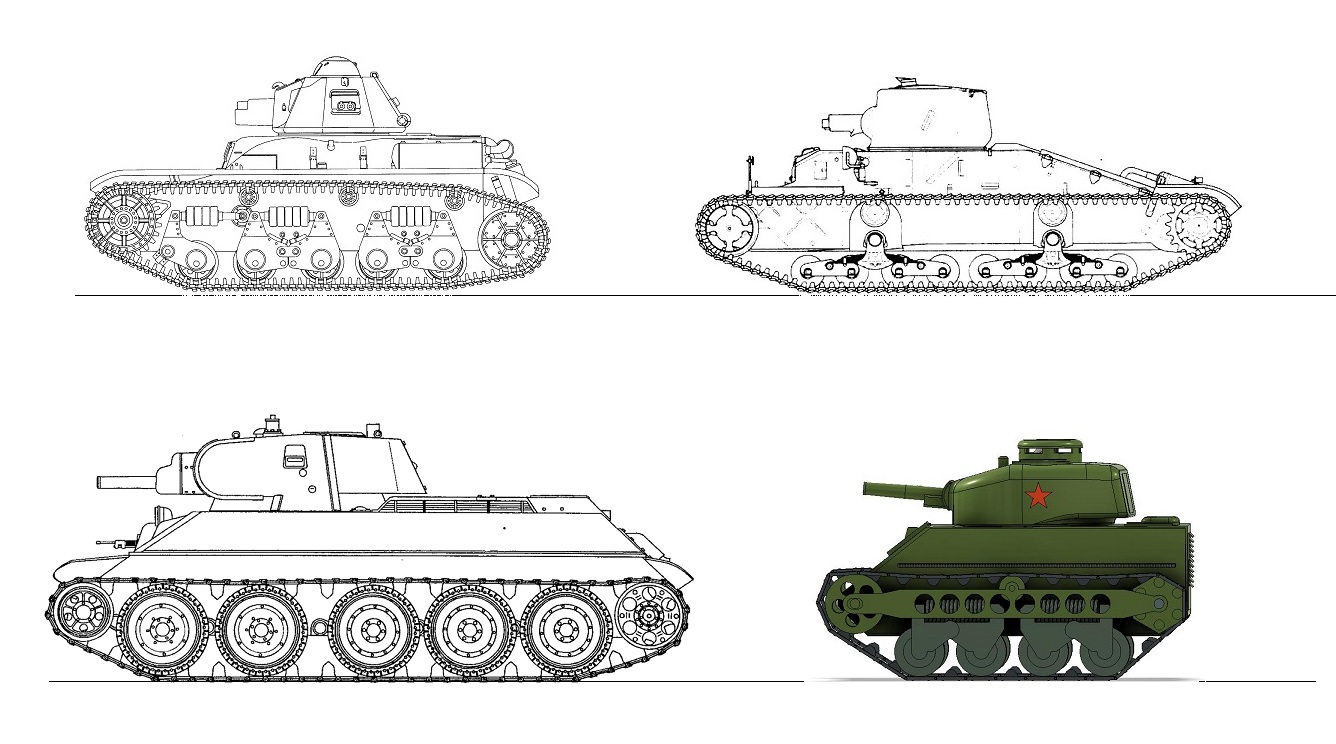
Classic examples of infantry tanks from the 1930s include the French R35 and the British Matilda Mk I.
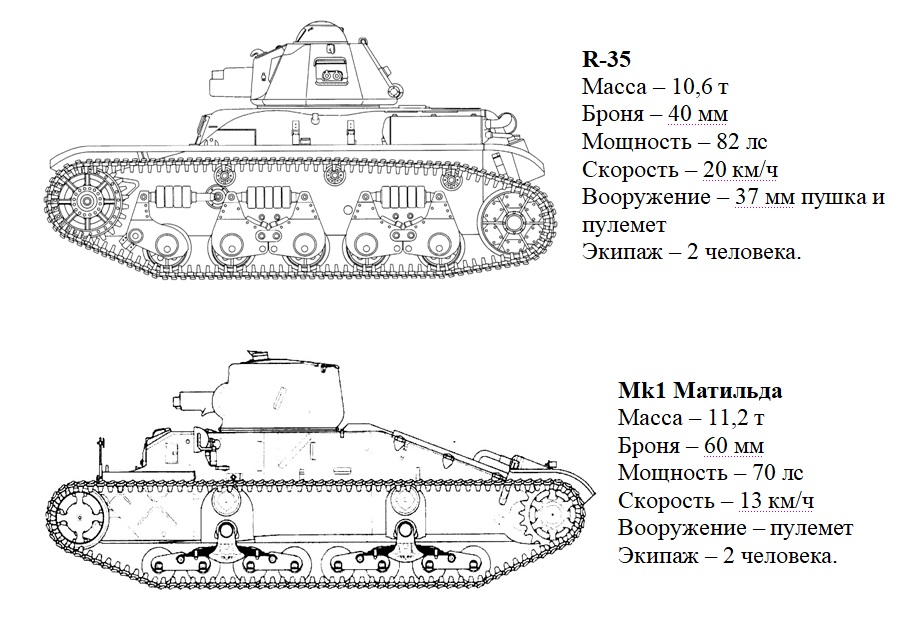
These are light tanks with low specific engine power; they are slow but feature substantial armor. A significant drawback of both vehicles is their single-seat turret and underpowered armament.
Additionally, when developing these vehicles, the designers sought to keep production costs as low as possible. For example, the Matilda, thanks to the use of an automotive engine and transmission, cost only 6,000 pounds. By comparison, the A1E1 Independent cost 77,500 pounds.
DOMESTIC EQUIVALENTS
Strictly speaking, there was no class of infantry tanks in the Red Army. To some extent, during the 1930s and 1940s, the T-26 and T-34 filled this niche. We won’t include pictures or technical specifications here, since all of this is well known and anyone interested can easily find the information themselves.
A key difference between Soviet mass-produced tanks and their foreign infantry tank counterparts was the two-man turret and significantly higher speed (30–50 km/h).
But it’s important to note that their actual speed was lower. The T-26 often suffered from a lack of power and engine overheating, forcing it to drive in a lower gear. And this was in its standard configuration, with thin bulletproof armor. When attempts were made to reinforce the armor protection using shielding, mobility suffered even more.
As for the T-34, this tank went into mass production “unfinished,” which is why its transmission components were not very reliable. As a result, the following would happen: “To
avoid the hassle of shifting gears, inexperienced driver-mechanics would shift into second (start) gear and remove the rev limiter even before the attack. They would then rev the diesel engine up to 2,300 rpm, thereby reaching a speed of up to 25 km/h, and maneuver by either reducing or increasing the engine speed. There’s no need to wonder how this affected the engine: of course, it quickly broke down.”
A great deal has also been written about the service life of the T-34’s diesel engine. It is also worth noting that, despite the engine’s fuel efficiency, the USSR faced problems with the supply of diesel fuel.
As for the armament of Soviet mass-production tanks, it is generally believed that the 45-mm gun was inadequate due to the low effectiveness of its high-explosive fragmentation shell, while the 76-mm gun generally met the requirements.
TECHNICAL SPECIFICATIONS for the T-35 Infantry Tank
Obviously, –•
It must be a light tank weighing 10–12 metric tons, but —
• With armor at least 40 mm thick•
Equipped with a 76-mm gun in a two-man turret (+machine gun)
• Aerial equipment – not required•
Trench-crossing capability – not required•
Speed – at least 10
km/h• Minimal requirements for logistics and maintenance
So how can we balance the specified weight, armor, and a two-man turret?
We need to optimize the tank’s geometry. The optimal shape for a tank, based on the armor-to-weight ratio, would be a hemisphere resting on the battlefield. This is the ideal scenario, and we should strive for it. In practice, this means we must make every effort to reduce the tank’s length.
The engine is a key component of the tank under design. Taking the coal-fired steam-powered T-35 as an example, it is perfectly clear that a steam engine is not a viable option. Moreover, in the context of the Soviet Union of the 1930s, the use of a gasoline or diesel engine was highly undesirable, as such a solution did not fit the concept of a mass-produced, budget-friendly tank. Therefore—
OIL ENGINE
Our late colleague Vadim Petrov maintained that an oil-powered (i.e., calorifier-type) engine was categorically unsuitable for tanks. Well, in principle, that’s true. With the exception of infantry tanks, where the advantages of oil engines may outweigh their disadvantages.
The main drawback of such engines is their low specific power output. While the T-35 steam engine has a specific power output of 7.5 ls/l, that of calorifier engines is typically around 2–3 ls/l. (See the table for an example.)
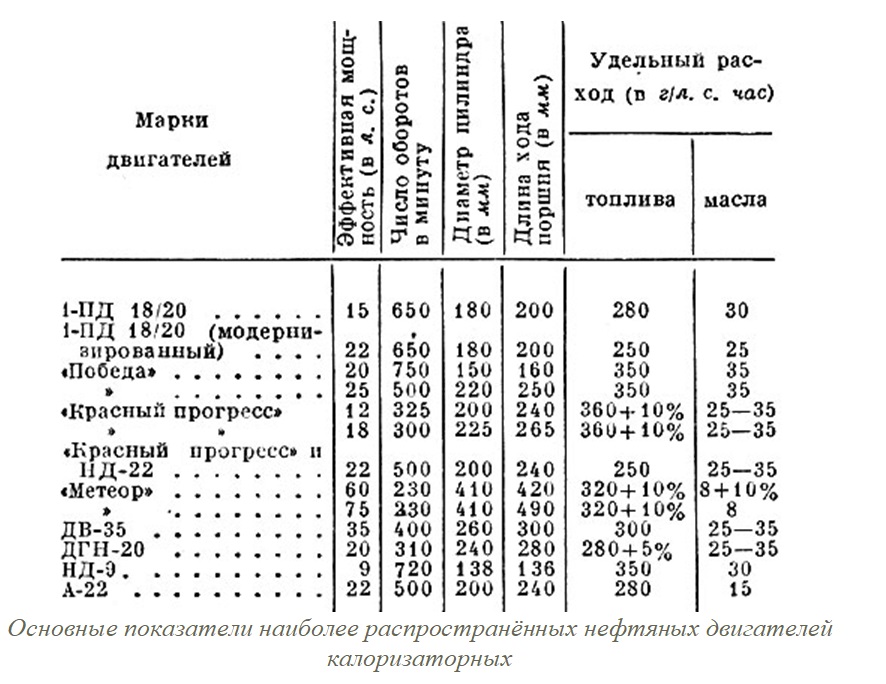
Therefore, if the piston diameter is kept the same as in a steam engine, a two-cylinder inline calorifier engine with a displacement of 20 liters will produce 40 ls of power.
This engine would be ideal for a multipurpose row-crop tracked tractor. But it would be a bit underpowered for a tank.
By the way, what about the possibility of using calorizer engines on tracked vehicles? They were used—and quite extensively and successfully, at that. See the figure—
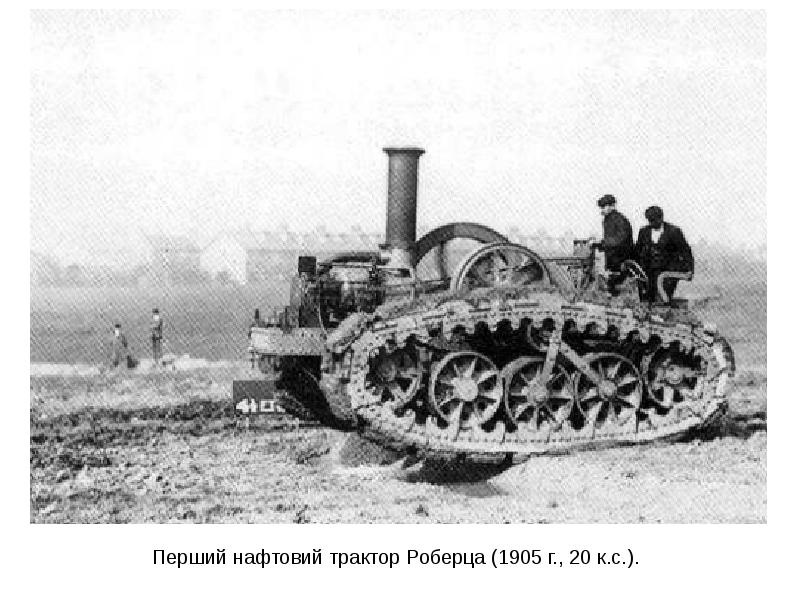
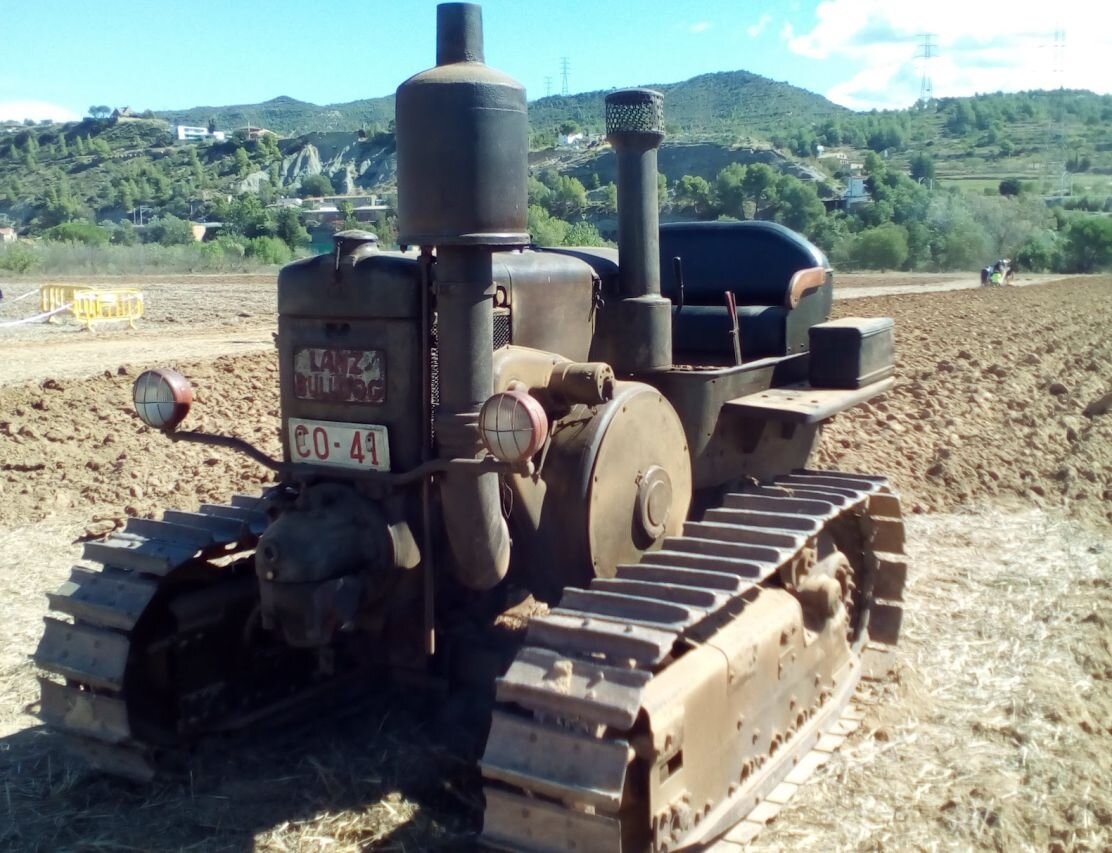
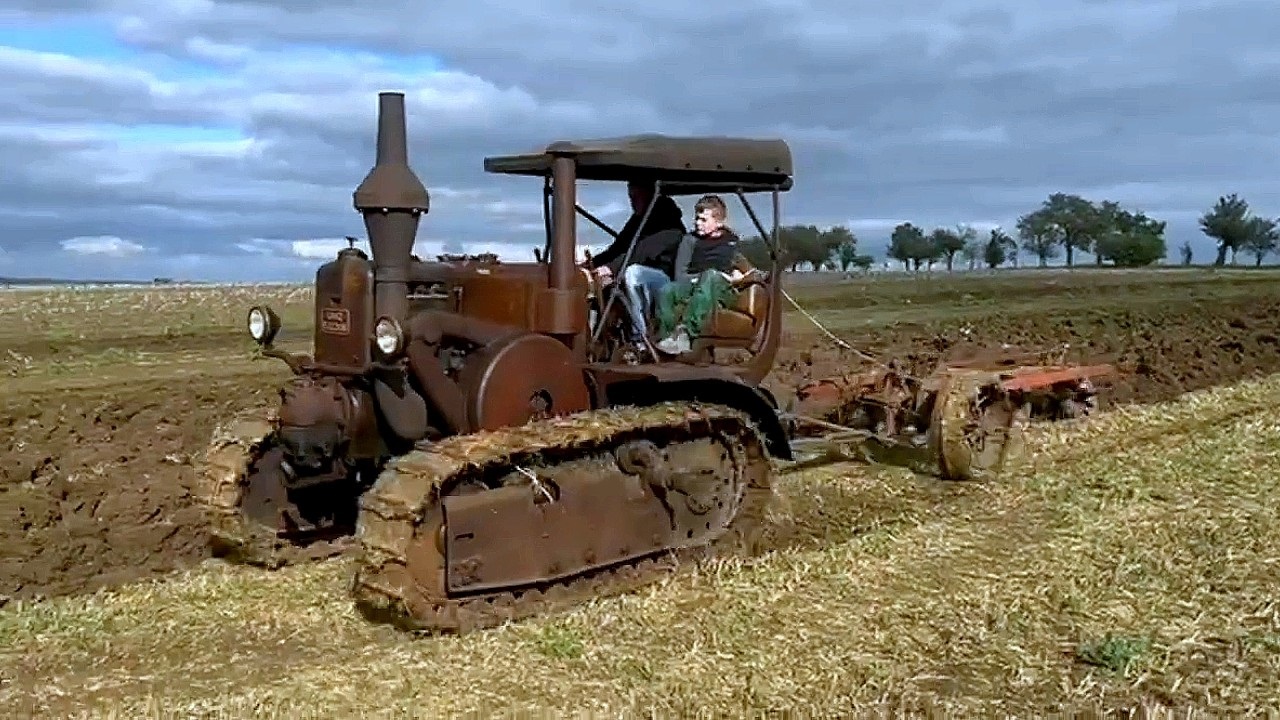
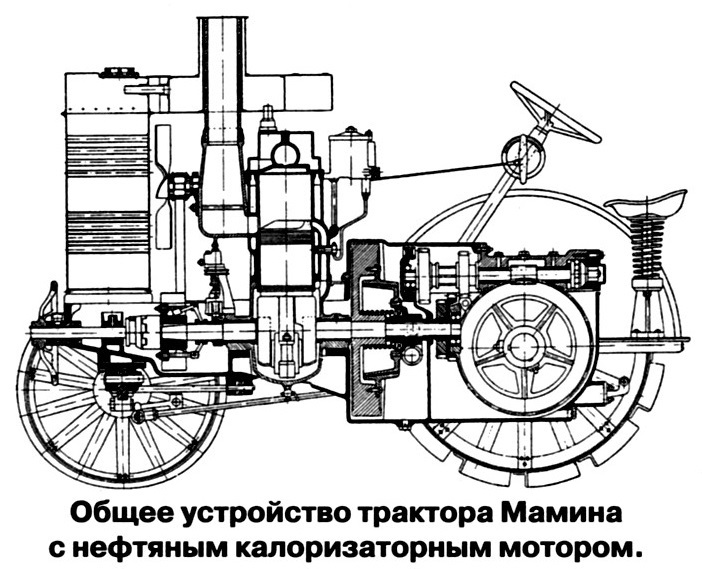
The last illustration shows a wheeled tractor. But look at the cylinder diameter and displacement!
For a tank, we’re designing an engine with a piston diameter of 300 mm and a displacement of 42 liters (that’s more than the T-34!) and get 84 ls of power at 300 rpm. That’s enough.
Another important layout decision that will help reduce the overall length is the transverse placement of the engine.
Furthermore, the engine shaft is aligned coaxially with the rear (drive) wheels and connected to them via two-speed planetary gearboxes, similar to those used on the British Ricardo tank. (See figures below.) As a result, the power train is so compact that the turret is shifted 200 mm backward
relative to the center of the tank.
The final drive ratios are 1:3 and 1:6, which provide a speed of 12–20 km/h in second gear at 300–500 rpm. This is quite in line with the standards of the time.
LAYOUT and description
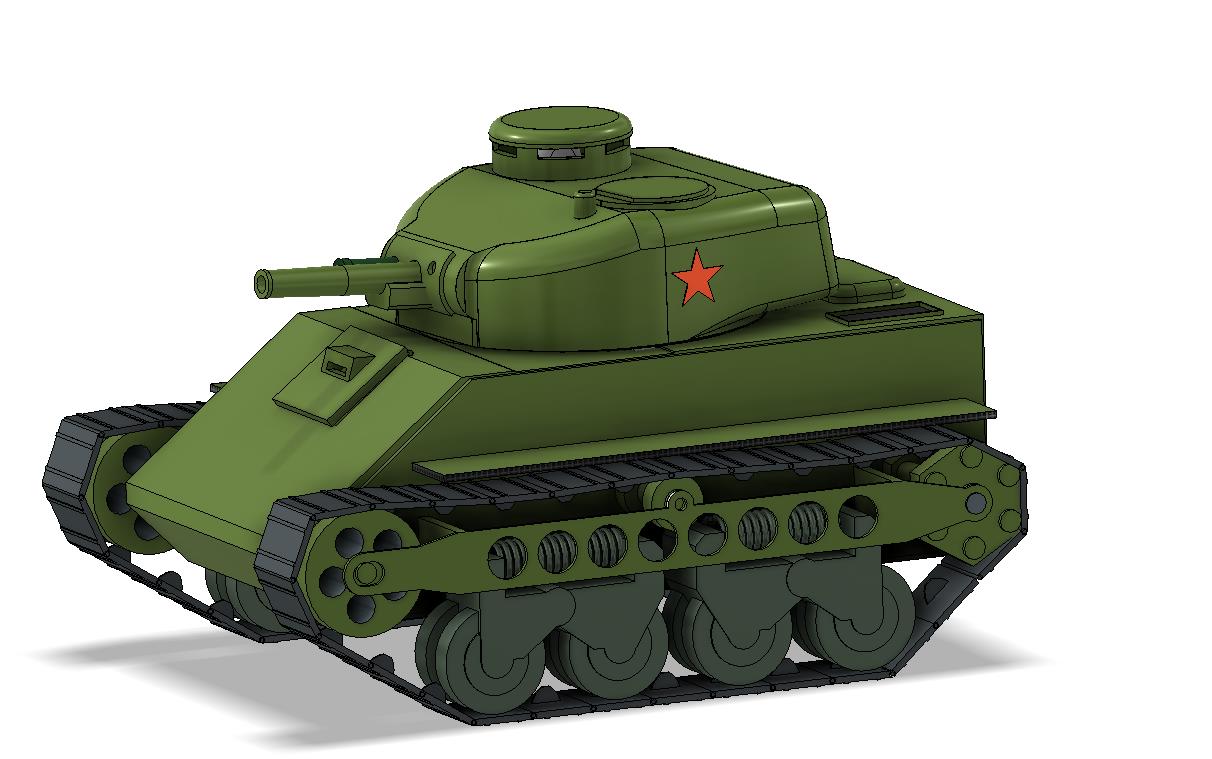
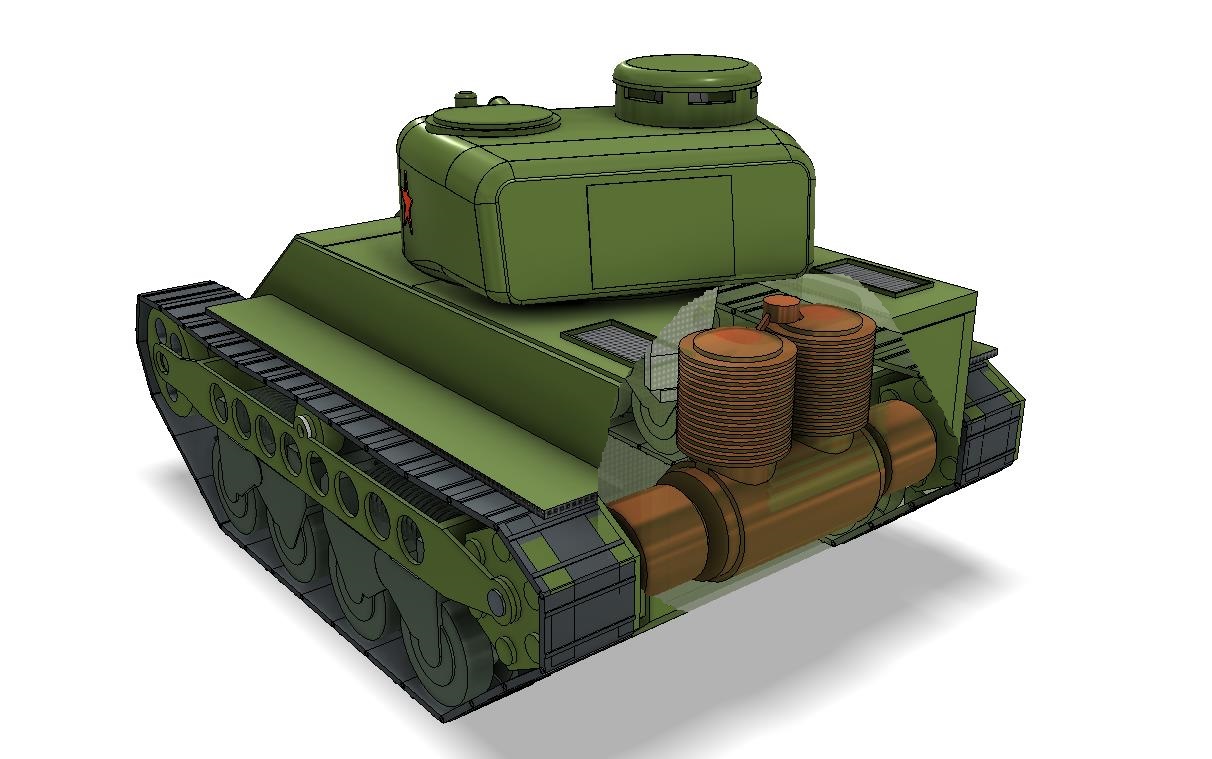
With the adopted layout, the hull length is only 3.5 m. This allows for the following armor specifications at a weight of 12 metric tons:
front—45 mm, sides—40 mm, turret—50 mm.
Armament consists of a KT-28 gun and a twin machine gun. The turret’s size allows for the installation of a more powerful gun once one is developed.
But even with its current gun, this tank surpasses the T-34 in firepower. This is because in the T-34, shells must be retrieved from boxes on the floor of the combat compartment, resulting in a practical rate of fire of 1–2 rounds per minute. Here, however, the ammunition is stored on either side of the driver and partially in the turret. And the rate of fire is 5 rounds per minute.
This vehicle, which is significantly cheaper than the T-34, also has the following advantages: •
Fuel supply is greatly simplified, since the engine runs on petroleum and anything else that burns;
• Training for driver-mechanics is greatly simplified. Since there are no serious fuel restrictions for training, and also because tractors (40 ls) and armored artillery tractors (84 ls) are produced on the same chassis. The drivers of these vehicles are, in principle, interchangeable.
• And for the same reason, there are no particular problems with spare parts.
Side panels. Comparison with historical counterparts:
MODERNIZATION RESOURCE
Some might argue that a tank with such minimal (on the low end) specifications has no potential for modernization. But that’s not the case.
Armament—as already mentioned—allows for the installation of a more powerful gun.
Armor. The armor is already on par with the T-34 and can be reinforced. For example, the frontal armor could be increased to 60 mm or more. Fortunately, the front road wheels in the current configuration are somewhat underloaded. The driver’s hatch—that’s the question. Should it be removed or left in place? That’s debatable.
Undercarriage. As the tank’s weight increases, the contact patch can be enlarged by using wider tracks—say, 500 mm instead of the original 400 mm. Then the weight can be increased to 15 metric tons.
Engine. A diesel engine can be equipped with a quick-start system. This requires a starter, glow plugs, and a kerosene primer tank. After starting and warming up, the fuel supply switches to the main tank.
In addition, the engine can be tuned for higher performance. To do this, aluminum pistons are installed, and the RPM is increased to 500–750 rpm (resulting in a speed of up to 20–30 km/h). The compression ratio is increased and supercharging is added. Power increases to 120–130 ls.
Thus, through minor modifications, the tank’s performance characteristics are significantly improved.
No problem.
The French and British tanks cited as examples were organized into tank brigades. Perhaps this was a convenient way to maintain the tank forces during peacetime. But how did these brigades perform in combat? Well, not particularly well, it turns out.
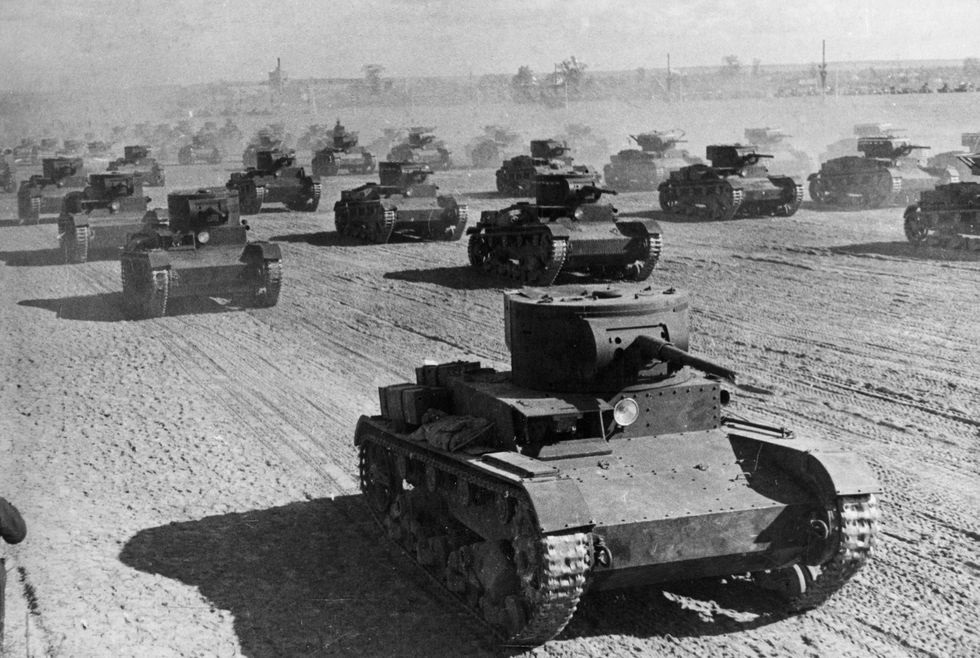
At that time, tank brigades were also being formed in the Red Army. However, combat experience in Mongolia and Finland revealed that coordination with the infantry was completely unsatisfactory. The photo shows a Soviet tank brigade during exercises. Where is the infantry?
There was also experience with using tank battalions as part of the Red Army’s infantry divisions. This experiment was also deemed unsuccessful, and the tank battalions within the infantry divisions were subsequently disbanded. This was because these tank battalions were mainly equipped with makeshift tanks of dubious combat value. And also because it was impossible to ensure full-scale maintenance of the tank battalions within the divisions. The crews did what they could, but for more serious repairs, the vehicles were sent to district repair bases. In the brigades, the maintenance situation was not much better.
So why organize tanks into battalions and brigades if maintenance is carried out elsewhere anyway, and the problem of coordination with the infantry remains unresolved?
Our proposal is to place the infantry T-35 tanks directly under the command of the rifle regiment commanders. After all, these tanks are a means of reinforcing the infantry, so they should be part of the regular complement of infantry units. There, the regiment commander will decide—depending on the situation—whether to gather all 10 tanks into a single force or distribute them individually or by platoon among the rifle battalions.
In our view, such a decision would allow for much more effective use of light tanks and improve coordination between infantry and tanks.
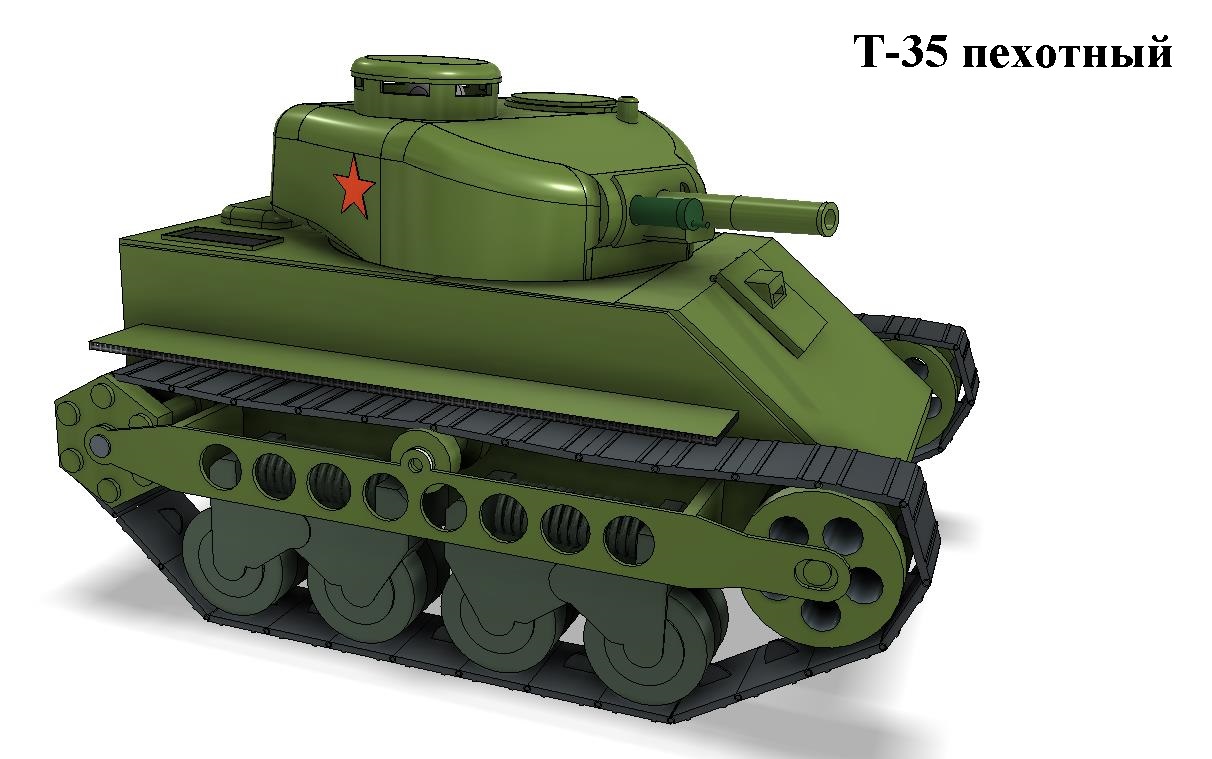
The proposed concept for the T-35 infantry tank is conceptual and, in many ways, perhaps controversial. It is intended primarily for discussion. For this reason, the rendering of the tank is, to a certain extent, schematic and conveys only the basic idea of the T-35 infantry tank.