An Alternative History of Soviet Armored Vehicles: The K-92 Prototype Tank, Which Could Have Replaced the T-54

The work on the K-90 tank, carried out by the Design Bureau of the Army Engineering Committee, could hardly be called a failure. Quite the contrary—the vehicle turned out to be quite respectable, demonstrating good mobility and an acceptable level of armor protection. There was simply no urgent need for it, since the PT-76—the vehicle it was intended to replace—had been successfully completed on time and put into mass production.
At the same time, the project’s designer, A. F. Kravtsov, was commended by his superiors, and his design bureau continued its work (in our world, that design bureau had been disbanded as redundant). The engineer was given a new, far more ambitious task: to create a full-fledged competitor to the T-54, equipped with a new 120-mm smoothbore gun that had never been used anywhere before.

Design
Armored hull and turret
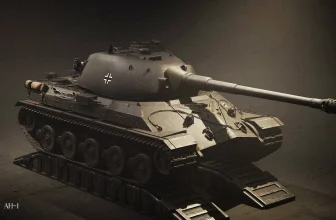
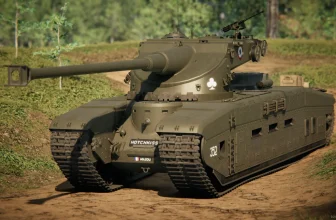
The K-92 was equipped with a massive cast turret featuring optimized armor angles. The frontal armor was up to 120 mm thick, which, combined with a 45-degree angle of inclination, provided protection equivalent to approximately 170 mm of homogeneous steel. The side armor was 80 mm thick, and the rear armor was 60 mm thick. The turret had a distinctive hemispherical shape with a deep rear compartment where part of the ammunition load was stored.
The tank’s hull was welded together from rolled armor plates of various thicknesses. The designers paid special attention to the efficient layout of the interior space, which made it possible to provide acceptable working conditions for the three-member crew despite the tank’s relatively compact dimensions.
Weapons
The main armament is the K-120 120-mm smoothbore gun, developed by the Kolomna Artillery Plant. The choice of a smoothbore system was a matter of principle: the designers sought to enable the effective use of shaped-charge projectiles, which could not be used in rifled guns. The reason is that imparting spin to the projectile in a rifled barrel caused the high-velocity jet to twist, drastically reducing its penetrating power. A smoothbore barrel eliminated the projectile’s spin, allowing the high-velocity jet to form optimally.
The gun was equipped with an original slotted muzzle brake and an ejector for removing propellant gases. The gun used a unitary cartridge system, which provided a rate of fire of up to 4–5 rounds per minute.
The ammunition load consisted of 36 rounds, stored in the fighting compartment and the rear compartment of the turret. The ammunition types included armor-piercing sub-caliber shells with a tungsten carbide core, high-explosive fragmentation shells, and shaped-charge shells designed to engage fortified positions and heavy enemy armored vehicles.
Additional armament included a twin 7.62-mm PKT machine gun and a 12.7-mm DShK anti-aircraft machine gun mounted on the commander’s turret.
Chassis and Powertrain
Weighing 45 metric tons, the tank was equipped with a 750-l.s. V-12 diesel engine based on aircraft engines. The specific power output was 16.7 horsepower per metric ton, which provided a maximum highway speed of up to 42 km/h.
The undercarriage consisted of 7 pairs of small-diameter support rollers on each side, each with an independent torsion bar suspension. The wide tracks, 650 mm wide, provided an acceptable ground pressure of approximately 0.85 kg/cm². The drive wheels were located at the front, which was unusual for Soviet tanks, as was the front-mounted engine.
Crew and Internal Layout
The tank’s crew consisted of three people: the commander, the gunner, and the driver-mechanic. This reduction in crew size was made possible by the compact arrangement of the ammunition load and the automation of a number of processes. The tank commander also served as the loader and was positioned on the right side of the turret, while the gunner was positioned to the left of the gun. The driver-mechanic took his place practically inside the turret, in a structural extension beneath the turret that resembled a naval barbette.
The tank was equipped with an R-10 radio and a TPU-4 intercom system for internal communication.
Tactical and Technical Specifications of the K-92
Combat weight: 45 metric tons
Crew: 3 people
Overall dimensions:
- Length with the gun forward: 8 m
- Hull length: 7.2 m
- Width: 3.4 m
- Height: 2.7 m
Reservations:
- Front of the housing: 120 mm / 45°
- Housing side: 80 mm / 0°
- Hull stern: 60 mm / 30°
- Front of the tower: 120 mm
- Tower side: 90 mm
- Tower thickness: 70 mm
Armament:
- 120-mm K-120 smoothbore cannon (36-round ammunition load)
- 7.62-mm twin machine gun (2,500-round ammunition load)
- 12.7-mm DShK anti-aircraft machine gun (500-round magazine)
Mobility:
- Engine: V-12 diesel, 750 l.s.
- Maximum speed on the highway: 42 km/h
- Maximum speed over rough terrain: 22 km/h
- Highway range: 280 km
- Crossable ditch: 2.8 m
- Climbing wall height: 1.0 m
- Fording depth: 1.4 m
The Fate of the Project
The vehicle turned out to be quite a success. Field tests conducted in 1949–1950 yielded good results: the tank reliably hit targets at ranges of up to 2,000 meters and demonstrated acceptable mobility and reliability of its running gear. High-explosive anti-tank shells proved to be an effective means of combating heavy armored vehicles, confirming the correctness of the choice of a smoothbore gun system.
However, due to the high complexity of production and manufacturing costs, the 120-mm gun was never adopted for service. The main problem was the insufficient effectiveness of sub-caliber armor-piercing shells at long ranges compared to traditional large-caliber rifled systems. Furthermore, the transition to a three-man crew, while reducing the size of the fighting compartment, increased the workload on each crew member and reduced combat effectiveness during prolonged operations.
As a result, the K-92 project was shut down in 1951. Kravtsov’s Design Bureau continued its work on improving traditional rifled systems, while the concept of a smoothbore gun firing cumulative projectiles was not further developed until a decade later, when new materials and technologies emerged that made it possible to create effective, flight-stabilized, fin-stabilized sub-caliber projectiles.
The K-92 went down in history as one of the most promising yet unrealized projects in Soviet tank design of the late 1940s — a vehicle that could have become a worthy alternative to the T-54 and one of the first tanks equipped with a smoothbore gun, but never found its place in service for reasons unrelated to any design flaws.


Source of illustrations: https://www.reddit.com/r/SprocketTankDesign/comments/1sowov6/fictional_soviet_tanks_k92/