A Tank Divided: France and Germany Promised to Replace the Leopard and Leclerc — Then Got Stuck at the Negotiating Table

France and Germany set out to build a tank that would shape European armies for decades to come. They had the money, two accomplished schools of tank design, and factories producing some of the world’s best-known fighting vehicles. All they seemingly had to do was combine the best of the Leopard 2 and Leclerc — and create a successor their competitors would envy.
By autumn 2026, the partners had reached a remarkable point: they publicly disagreed over whether their joint project still existed. France’s armed forces chief, Fabien Mandon, said Germany had withdrawn from the MGCS programme. Berlin denied it, and the French defence ministry subsequently confirmed that work would continue. Yet official explanations now put connectivity, automation, and robotics at the forefront. The future of a shared combat vehicle looks considerably less certain.
How did two established tank manufacturers reach a position where agreeing on a new tank was harder than unveiling one of their own?
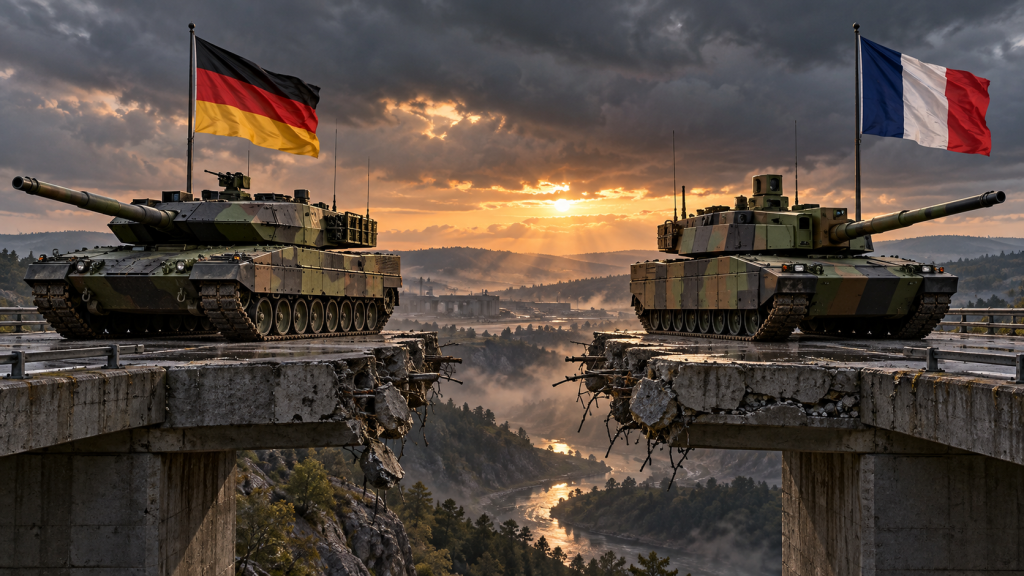
They Set Out to Build an Entire Armoured Family
MGCS stands for Main Ground Combat System. The name is cumbersome, but it captures the ambition fairly well. France and Germany wanted a family of vehicles capable of detecting an enemy, sharing information, and engaging targets with different weapons.
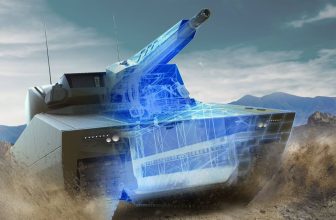
The concept outlined by the Bundeswehr envisaged a common chassis carrying different mission modules. For the tank itself, the options under consideration included an unmanned turret, a crew of two or three in a protected hull compartment, and a larger-calibre gun. At the same time, the military wanted a vehicle lighter than today’s heavy tanks. It was a demanding brief: hit harder, protect the crew better, and weigh less.
The logic is easy to picture. One vehicle detects a target, another receives its coordinates and opens fire, while a third protects the group. Reconnaissance drones extend its field of view, and remotely operated vehicles can take on some dangerous tasks. But fitting every tank with a good radio is not enough: the entire group has to function as a coordinated whole.
The French defence ministry described MGCS as a development of collaborative combat built around continuous data sharing. The programme was divided into eight technological areas, ranging from the platform and weapons to sensors, protection, and control systems. Each could have become a major development programme in its own right.
The ambition made sense. But the partners now had to agree on an entire combat system in which changing one element could affect all the others.
The Hardest Split Is Fifty-Fifty
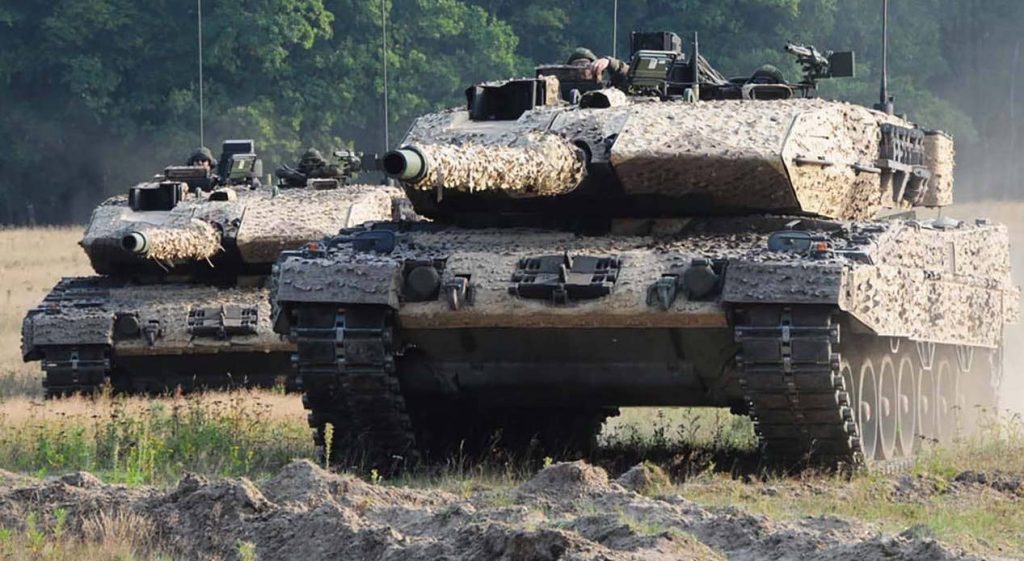
On paper, the partnership looked exemplary. In January 2025, KNDS Deutschland, KNDS France, Rheinmetall Landsysteme, and Thales signed an agreement to establish a project company. Each participant would hold 25 percent, with the national workshare divided equally between France and Germany. The official goal remained to replace the Leopard 2 and Leclerc around 2040.
But a quarter of a company and a quarter of a future tank are very different things. Developing the gun, writing the software, or manufacturing part of the hull might involve comparable sums, yet their value to a manufacturer can differ enormously. Some tasks provide control over a key technology and future upgrades. Others leave a company supplying components for someone else’s system.
Industrial workshare therefore involves much more than payment for the next contract. Who defines the vehicle’s architecture? Who controls the technical documentation? Whom will an overseas customer approach when it wants a new weapon? Who gets the work twenty years from now?
The participants had to create an effective combat system while preserving their own design capabilities. For a government, losing that expertise means becoming dependent on a partner; for a company, it risks surrendering the most profitable part of the market. Equal percentages helped formalise the alliance, but they could not settle those questions.
Even the Gun Shapes the Whole Tank
The clearest overlap of interests concerned the main gun. Rheinmetall developed a 130 mm system and presented it on the KF51 Panther demonstrator. The French side of KNDS promoted ASCALON, including a 140 mm version. Both companies were showing their own route to greater firepower.
From the outside, the disagreement might sound almost absurd: could a European project really get stuck over ten millimetres? Yet calibre is only the visible part of the choice. Behind it lie different ammunition, loading mechanisms, weapon installation requirements, and production lines.
A larger round has to be stored somewhere, moved to the breech, and loaded. The turret structure must absorb the gun’s recoil. Within a vehicle of fixed dimensions, designers have to balance firepower, ammunition capacity, and protected internal space. A decision about the weapon gradually becomes a decision about the entire tank.
The chosen ammunition will then have to be manufactured for decades. Selecting one system gives its developer a substantial advantage in future army contracts and export sales. Engineering competition inevitably becomes industrial competition.
The existence of two promising guns does not, by itself, prove that their rivalry derailed MGCS. It illustrates why the partners faced so many decisions in which a technical choice would also determine a commercial winner.
While the Shared Tank Waits, National Designs Go on Display
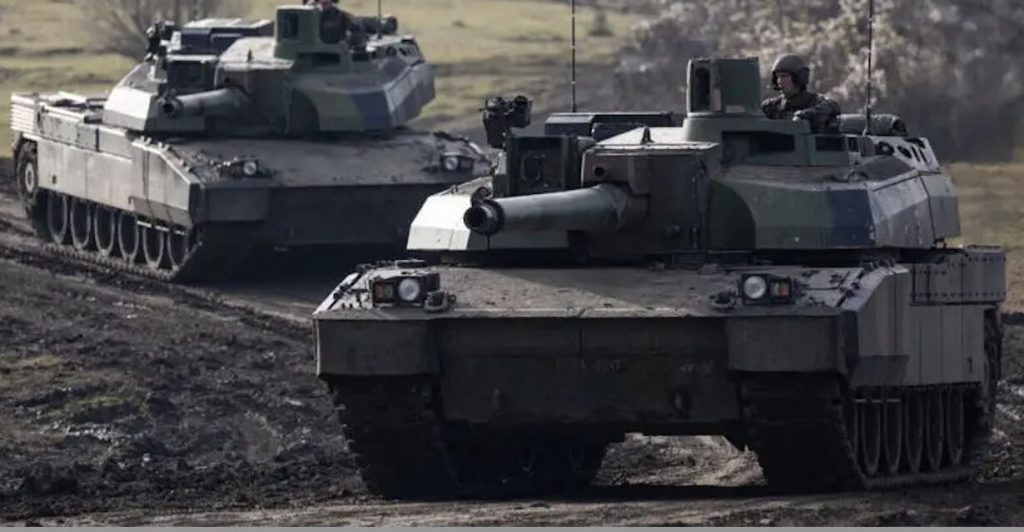
The story becomes particularly striking at defence exhibitions. There is certainly no shortage of new tank ideas there.
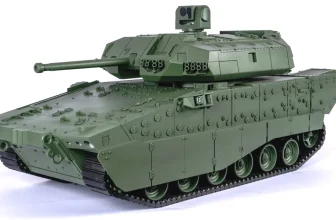
Back in 2024, KNDS presented two development paths: the Leopard 2 A-RC 3.0 and Leclerc Evolution. The former featured an unmanned turret concept and a crew of three. The latter retained a manned turret, while a fourth crew member occupied a station in the hull to operate additional sensors and weapons. KNDS described both as steps towards MGCS.
These vehicles expose a practical question: who will operate all the equipment aboard a future tank? Designers can reduce the crew and assign more functions to automation. Or they can add an operator so the commander does not have to manage the battle, reconnaissance drones, and several weapon systems simultaneously. Both approaches need testing, and neither is an obvious winner.
But parallel designs create uncomfortable competition for the joint programme. If a national vehicle proves good enough, an army can order it before the shared project is ready. Training facilities, spare parts, maintenance contracts, and upgrade plans will follow. Abandoning a system that has already been paid for will then become much harder.
By summer 2026, the need for interim solutions was out in the open. France launched an intermediate tank programme amid MGCS delays, and KNDS unveiled CAPINT, combining a German chassis with a French gun. Germany was also working on its own Leopard 2 successor alongside MGCS.
There is an almost cruel irony here: combining German and French components proved possible. Agreeing on a shared long-term programme was much harder.
Time Is Working Against the Joint Project
For a development programme, a delay of several years looks like an unwelcome entry in a schedule. For an army, it becomes a concrete problem: existing vehicles are ageing, spare parts are needed today, and training and procurement must be planned well in advance.
Any “interim” tank has a chance of becoming permanent. If it enters service, provides acceptable capabilities, and receives industrial support, the military will continue developing a vehicle it already knows. The longer the shared successor is delayed, the more money and effort will flow into alternatives.
There is also a technical trap. A programme looking twenty years ahead must account for future threats, but nobody can freeze its requirements for that entire period. New reconnaissance systems emerge, methods of attacking armoured vehicles change, and automation improves. Developers gain reasons to reconsider earlier decisions — and the schedule along with them.
MGCS brought two different timescales into collision. An advanced combat system requires lengthy research and development. Armies need a clear answer to the question of what will replace their old tanks. National designs can provide that answer sooner, even if they are less revolutionary.
What Will Remain of the Tank of the Future?
Official statements do not yet justify writing MGCS off completely. But continuing the programme and preserving its original ambition are separate questions.
Shared communications, compatible control systems, and automation can deliver real benefits even if the countries operate different national tanks. Such cooperation makes technical sense: vehicles do not have to be identical to exchange data and fight together. It nevertheless leaves the central question unresolved — will there be a common successor to the Leopard 2 and Leclerc?
That is where saving the project begins to diverge from saving its name. If both countries continue developing shared technologies while ordering their main battle tanks under separate national plans, European armies will gain useful innovations. The promise of a single tank will remain unfulfilled.
France and Germany entered MGCS with an unusual advantage: each already possessed a strong tank industry. That same advantage now allows each to seek its own way forward. While the shared tank of the future remains on the negotiating table, its potential substitutes are already taking their places on exhibition floors.