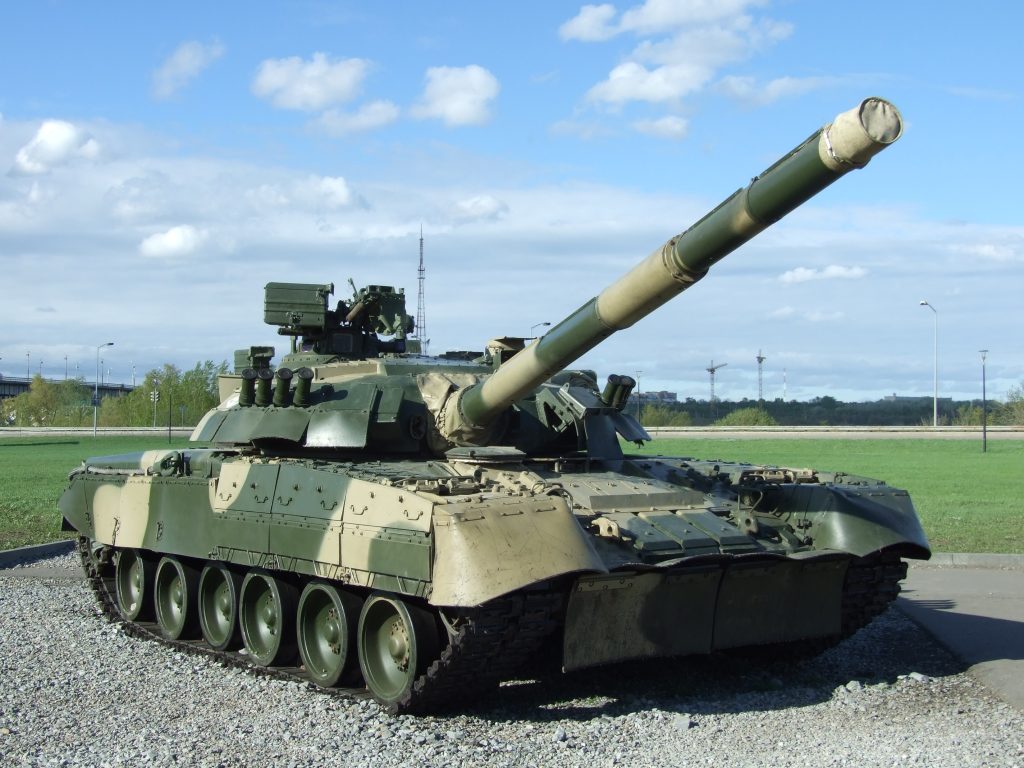
One tank still had a useful turret; another needed an upgrade. The solution resembled an organ transplant: combine the usable parts of two vehicles. The result was the T-80UE-1.
Two Relatives with Different Problems
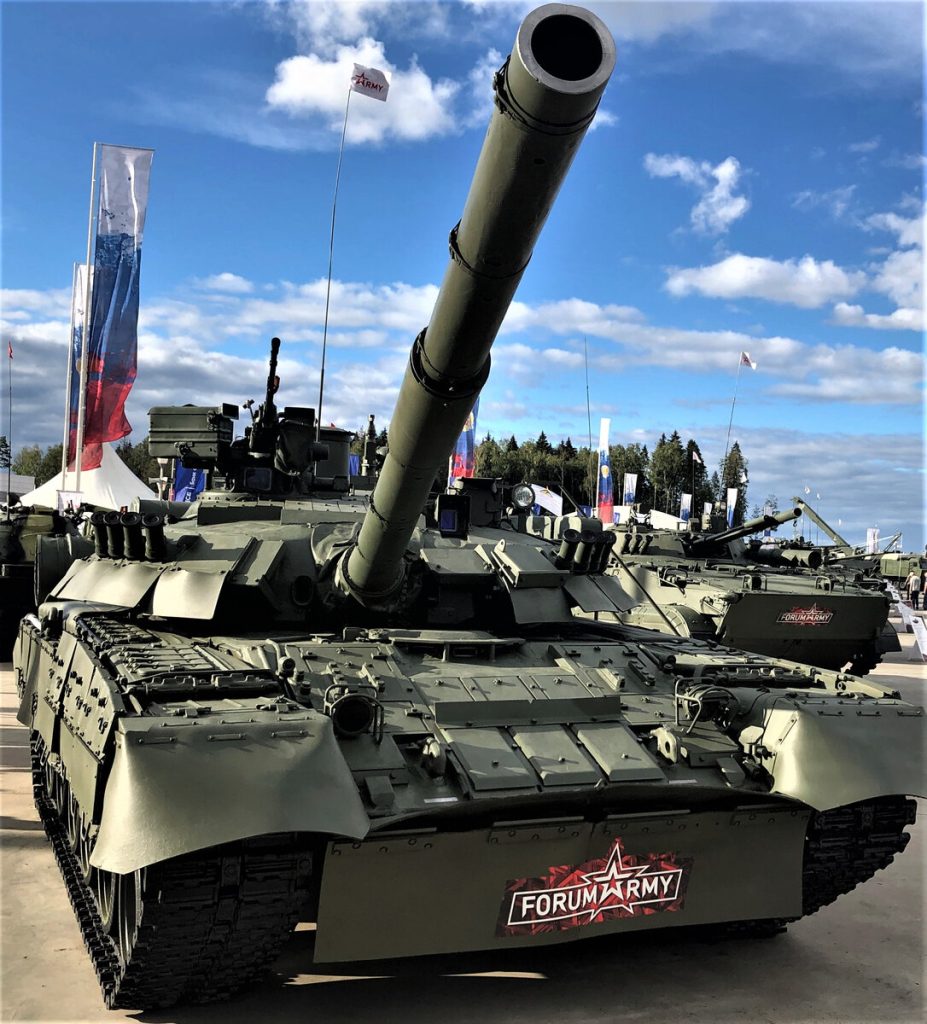
The T-80 is usually thought of as a turbine-powered tank. That is how it began: the vehicle entered service in 1976, with a purpose-built gas turbine engine developed by the Klimov design bureau. Getting there took extensive testing in snow, desert conditions, heat, and dust. Putting a turbine on tracks was an engineering challenge, not simply an eye-catching idea. As the family developed, however, its variants grew increasingly different in their equipment and combat capabilities. The name “T-80” alone no longer told you enough about the vehicle.
The designers’ patent explained the proposed transplant in practical terms. The chassis of the T-80UDs available at the time, including their Ukrainian-built 6TD diesel engines, had reached the end of their service life; restoring them required expensive components. Their turrets and armament still had useful life remaining. The turbine-powered T-80B and T-80BV, meanwhile, primarily needed upgrades to their combat capabilities. One relative could supply what the other lacked.
The transplant was made easier by their matching turret rings—the circular supports between turret and hull—and turret traverse drives. It also brought a remotely controlled machine-gun mounting, allowing the commander to fire with the hatch closed.
Swapping the Turret Was Only the Beginning
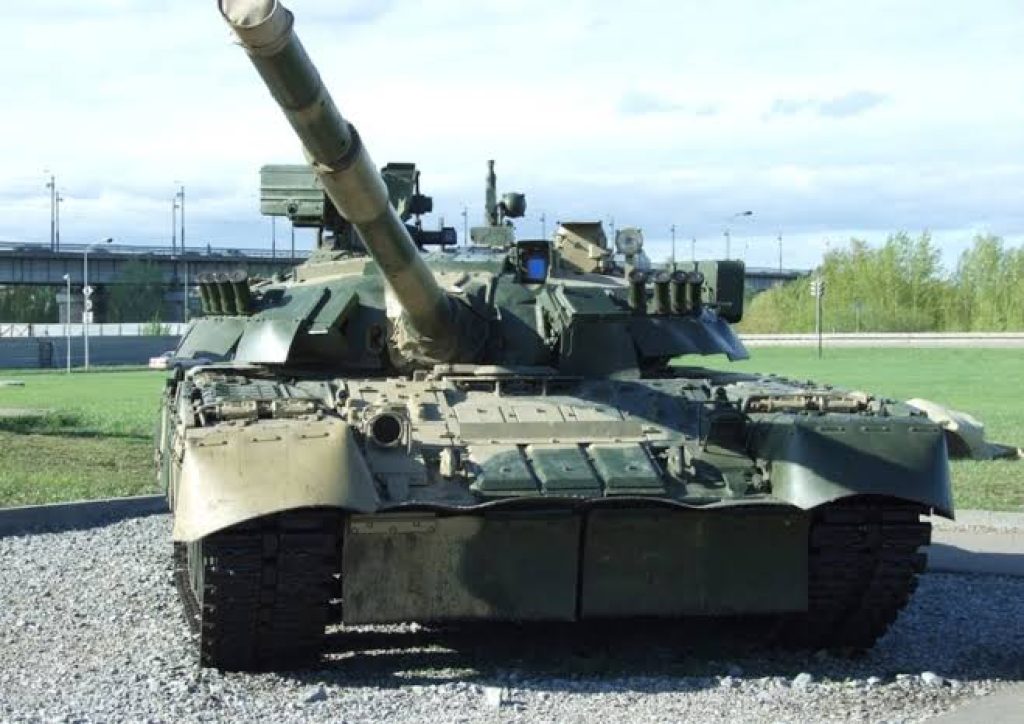
A tank is still more complicated than a children’s construction set. To accommodate a longer projectile, the proposed modifications included a cutout in the ammunition feed mechanism’s lever, with reinforcement around the weakened area. The ammunition still had to make its way through the tank to the gun. There were very physical obstacles to this upgrade.
Equally important changes were hidden in the instruments. In its description of the upgraded fire-control system, Spetsmash examined an awkward difference between firing by day and by night. In daylight, the gunner had a laser rangefinder and ballistic computer to help. Through the older night sight, range had to be estimated from the target’s apparent size and entered manually, while lead was judged by eye. Darkness therefore demanded more calculations from the crew precisely when observing the target was harder.
The 1A45-1 system allowed laser ranging and the ballistic computer to be used with the night sight and commander’s sight. Weapon stabilization was improved, and the system accounted for a wider range of firing conditions. In the technical documentation, this becomes a long list of devices and signals. For the crew, the purpose was much clearer: fewer manual steps before firing and more help from the equipment. The upgrade changed how the people inside the turret worked, as well as the tank’s appearance.
The T-80UE-1 entered service in April 2005. Work on the project continued: Spetsmash’s 2008 annual report records revisions to the design and repair documentation for Object 219AS-1. The vehicle later appeared in public, too. In 2019, Rostec reported that Omsk-built T-80UE-1s were taking part in the Tank Biathlon. This was an actual upgrade that progressed from development to operational use, rather than a single hybrid assembled for an exhibition.
Why Didn’t Every T-80 Get One of These Turrets?
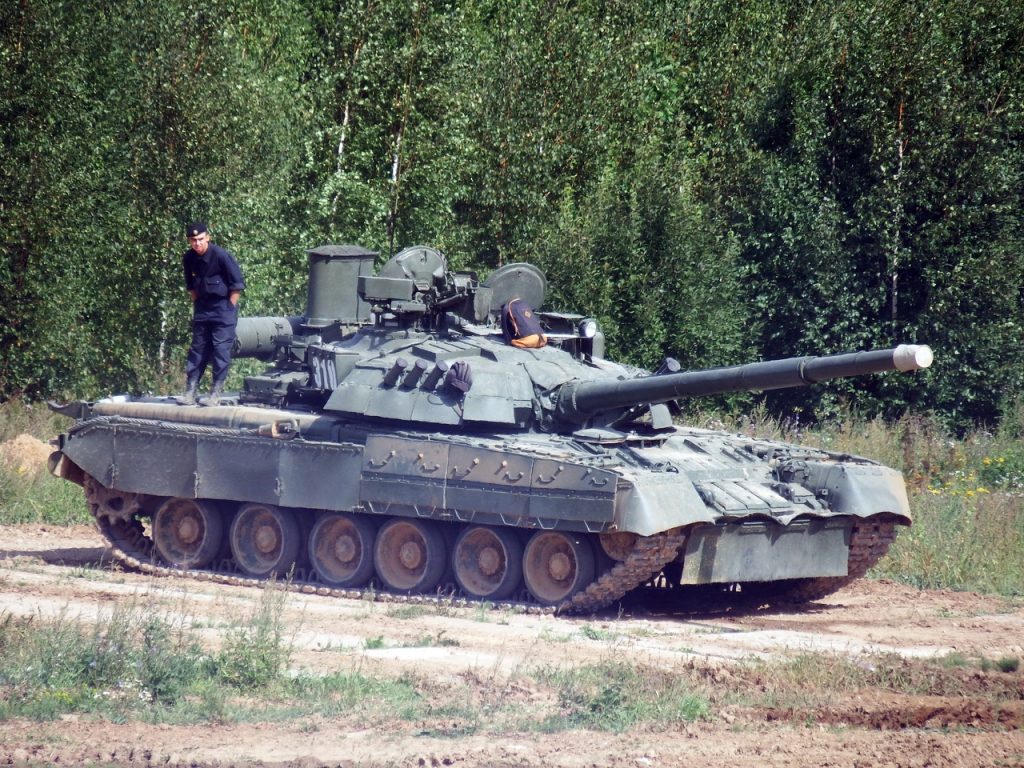
An unusual vehicle invites an appealing question: if the two halves fit so well, why not rebuild the entire fleet? But the scheme depends on suitable donor vehicles being available. Compatible components do not create extra turrets in storage. Assessing the potential scale of the programme requires information about their number and condition, as well as the cost of the complete job. An elegant combination alone is not enough to make that calculation.
There was also another way to upgrade the T-80BV. In 2017, a contract was signed for an overhaul and extensive modernization to the T-80BVM standard. The manufacturer’s published description lists the GTD-1250 engine, Sosna-U multichannel gunner’s sight, and Relikt explosive reactive armour. This is a separate programme with its own set of solutions. Its existence shows that transplanting the T-80UD’s fighting compartment was not the only way to give an older T-80 new equipment.
That is why the recent news about the T-80UE-1 needs careful reading. Citing OSINT researchers, Defense Express reports the use of T-80UD turrets and refurbished hulls from other T-80 variants. The current volume of assembly is not established, however, and the reported combinations of donor vehicles still require verification. What is described as “production” may involve a return to a long-established modernization scheme. The most intriguing part of the story was worked out by engineers two decades ago: how to preserve a useful fighting compartment when restoring its original tank had become too costly.