Pz.Kpfw.III, Polish-Style: What Could Have Become the Main Tank of Poland’s Armored Forces in World War II

The history of Polish tank development on the eve of World War II leaves a rather peculiar impression. On the one hand, Poland was by no means a country incapable of independently developing modern armored vehicles. Polish engineers designed highly effective observation devices, mastered the production of tank diesel engines, manufactured their own armored vehicles, and managed to transform the British Vickers 6-Ton into the considerably improved 7TP. On the other hand, when the war began in September 1939, Polish armored units still entered combat primarily with light vehicles, while work on the next generation of tanks had not progressed beyond prototypes and design projects.
But what if the Poles had been given a few more years?
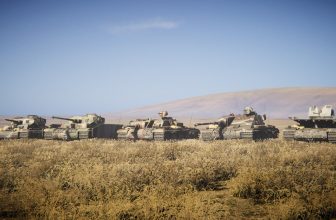
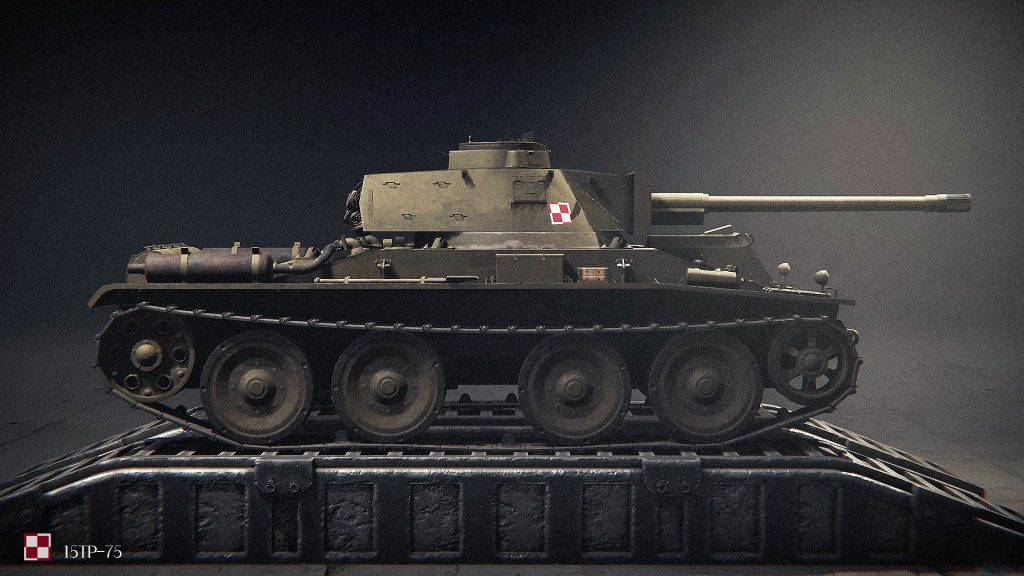
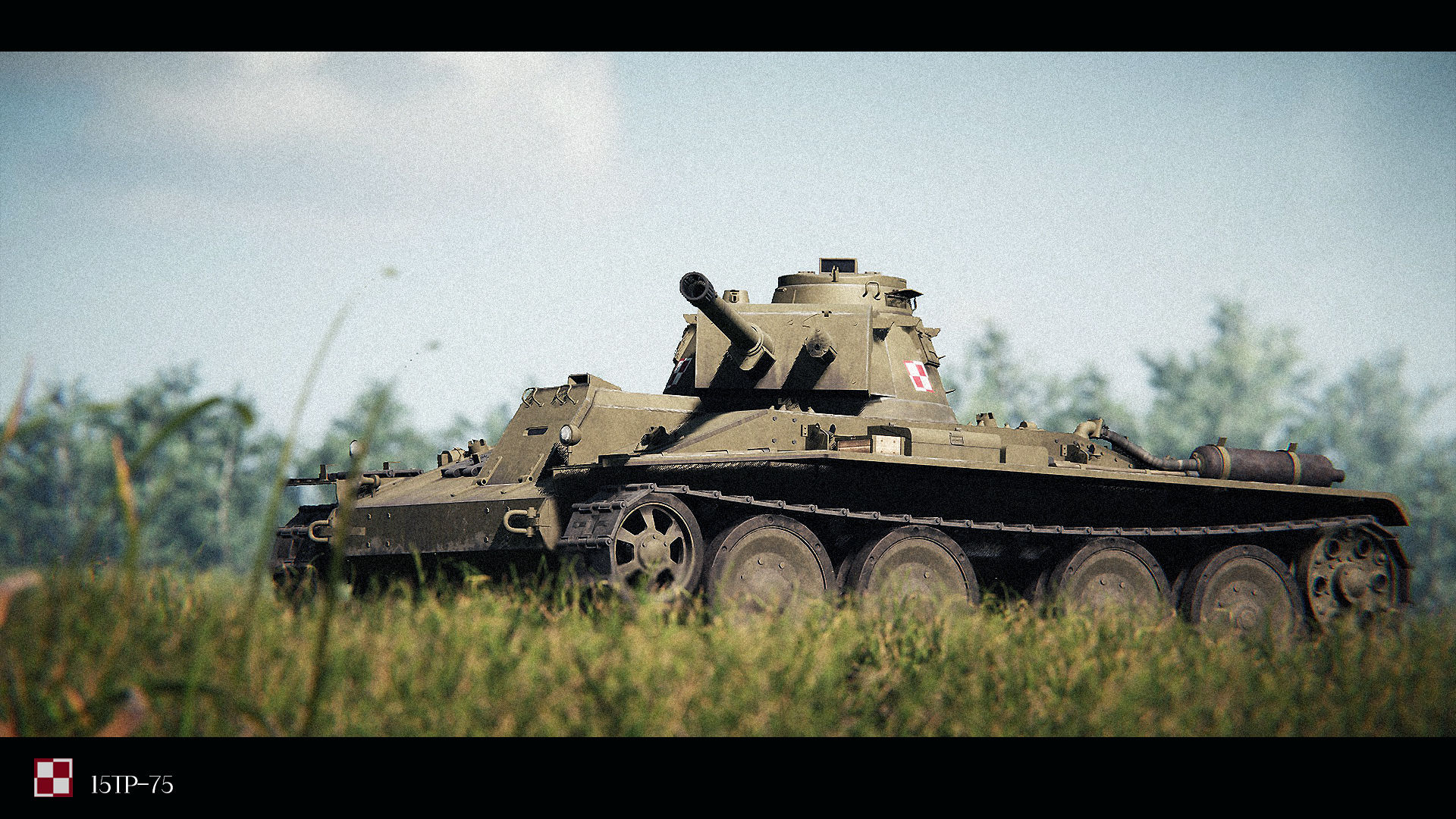
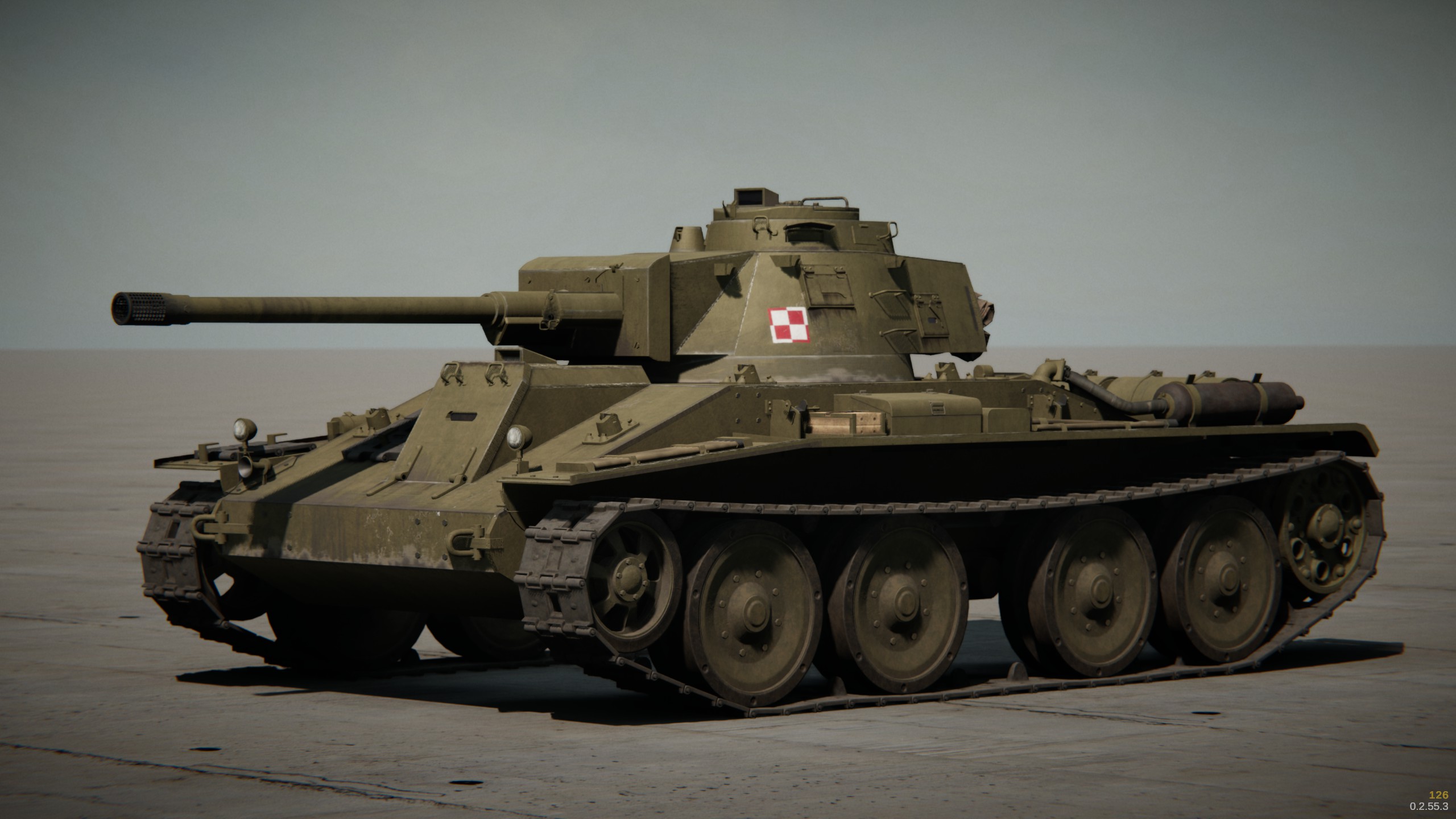
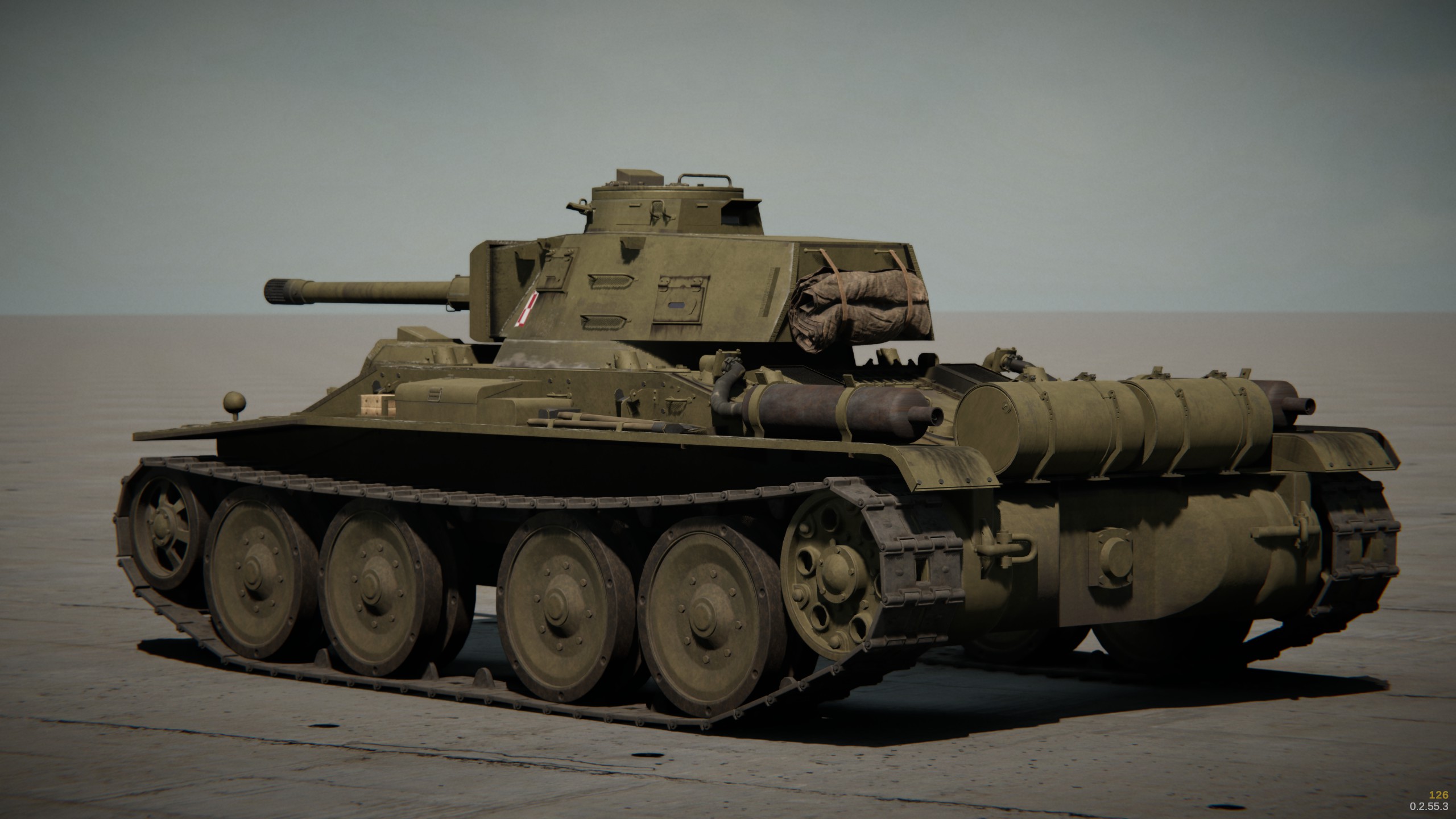
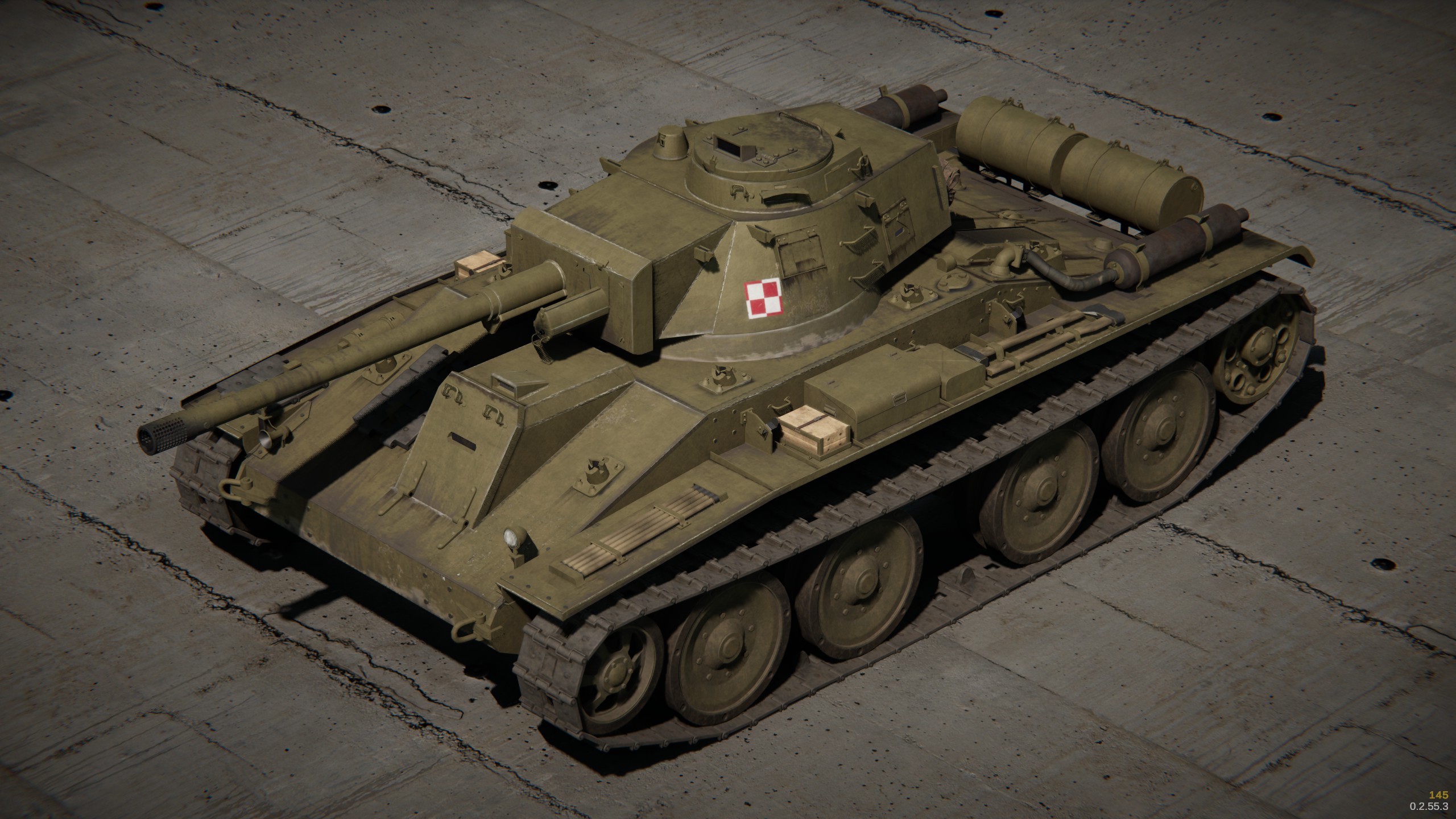
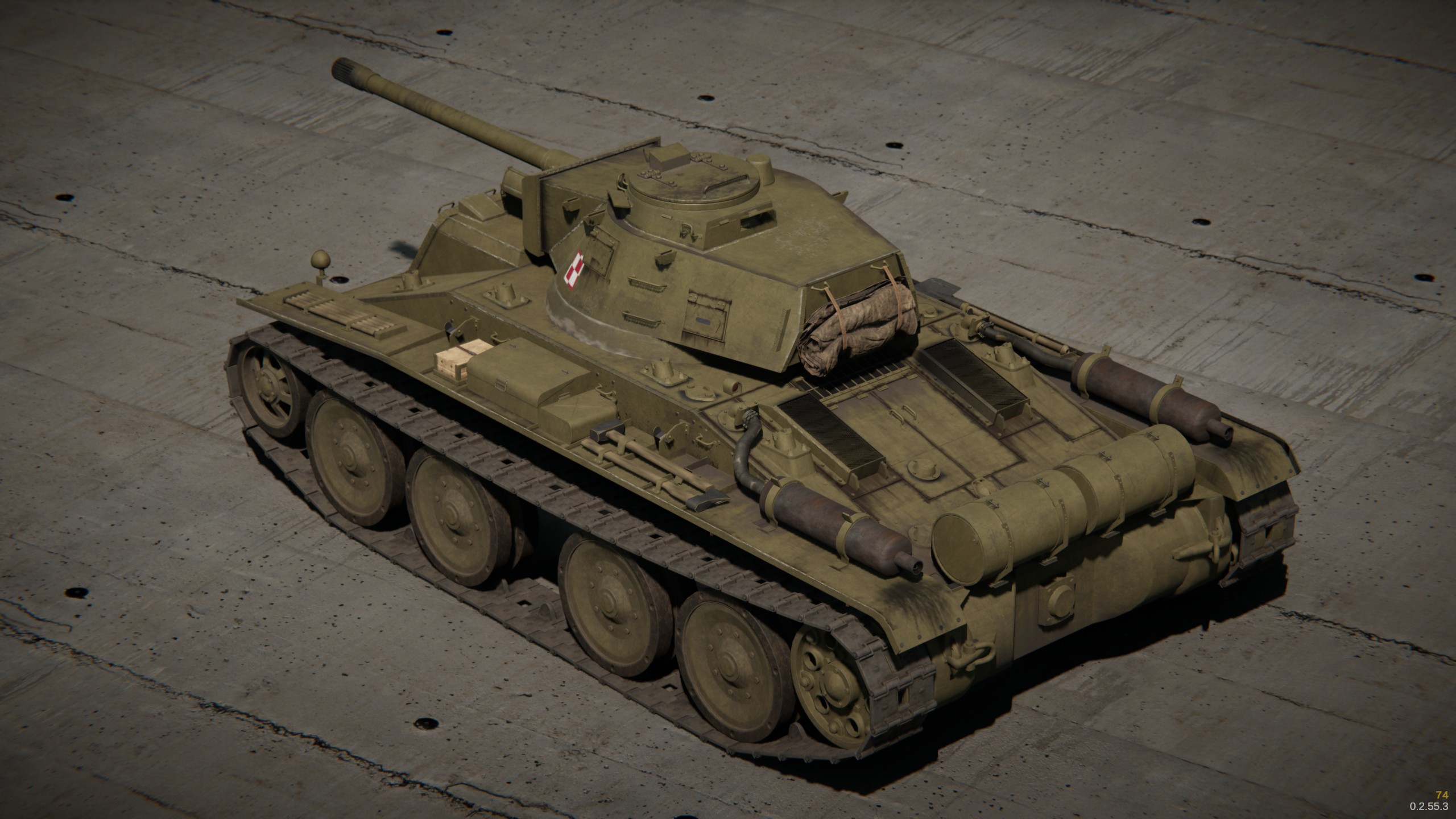
Our Western colleague MAFIALA attempted to answer precisely this question using the Sprocket tank-design simulator. His vehicle received the designation 15TP/75 and represents a further development of the real Polish 10TP and 14TP projects. The idea is simple: take a promising Polish chassis, increase its armor protection to roughly the level of the German Pz.Kpfw.III, and replace the usual 37 mm gun with a full-fledged 75 mm weapon. The result is a vehicle that, under more favorable historical circumstances, could realistically have competed for the role of Poland’s principal tank during the early years of World War II. The author himself describes the 15TP/75 as an improved 14TP with heavier armor and a 75 mm gun.
One important point should be made immediately: the 15TP/75 never existed as a real Polish tank project. It is a modern alternate-history reconstruction. Nevertheless, the individual components from which it is assembled have very real historical foundations, which makes it particularly interesting to consider whether such a vehicle could actually have appeared in Poland.
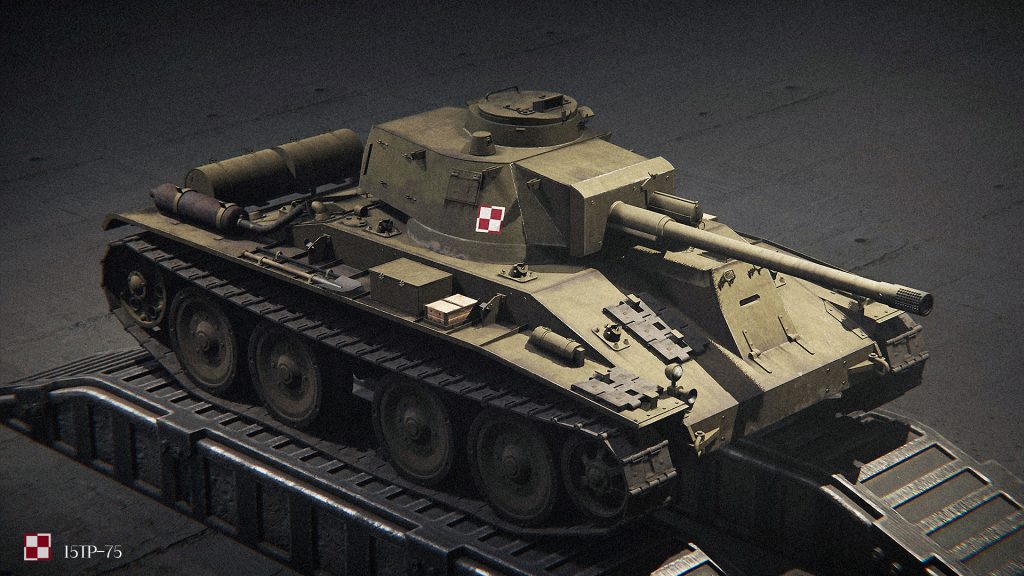
The 7TP — A Good Tank That Arrived Too Late
The 7TP is usually described as Poland’s principal tank of 1939. Strictly speaking, this is correct, although calling it merely a copy of the British Vickers 6-Ton would be unfair. Polish engineers substantially redesigned the original vehicle. The 7TP received a more powerful diesel engine, improved ventilation, the famous Gundlach rotating periscope, and, most importantly, the main single-turret version carried the very capable 37 mm Bofors wz.37 gun. Around 130 vehicles had been manufactured before the outbreak of the war.
Therefore, the description of its gun as “weak” in our introduction needs some qualification. The 37 mm Bofors was by no means a weak weapon by 1939 standards. It was perfectly capable of dealing with most German tanks encountered during the Polish Campaign. The real weakness of the 7TP was primarily its protection. Even after improvements, its maximum armor thickness was only about 17 mm. Fundamentally, it remained a mid-1930s light tank descended from the British six-ton design.
Simply adding more armor could not turn the 7TP into a proper medium tank. An entirely new chassis was required.
And the Poles actually developed one.
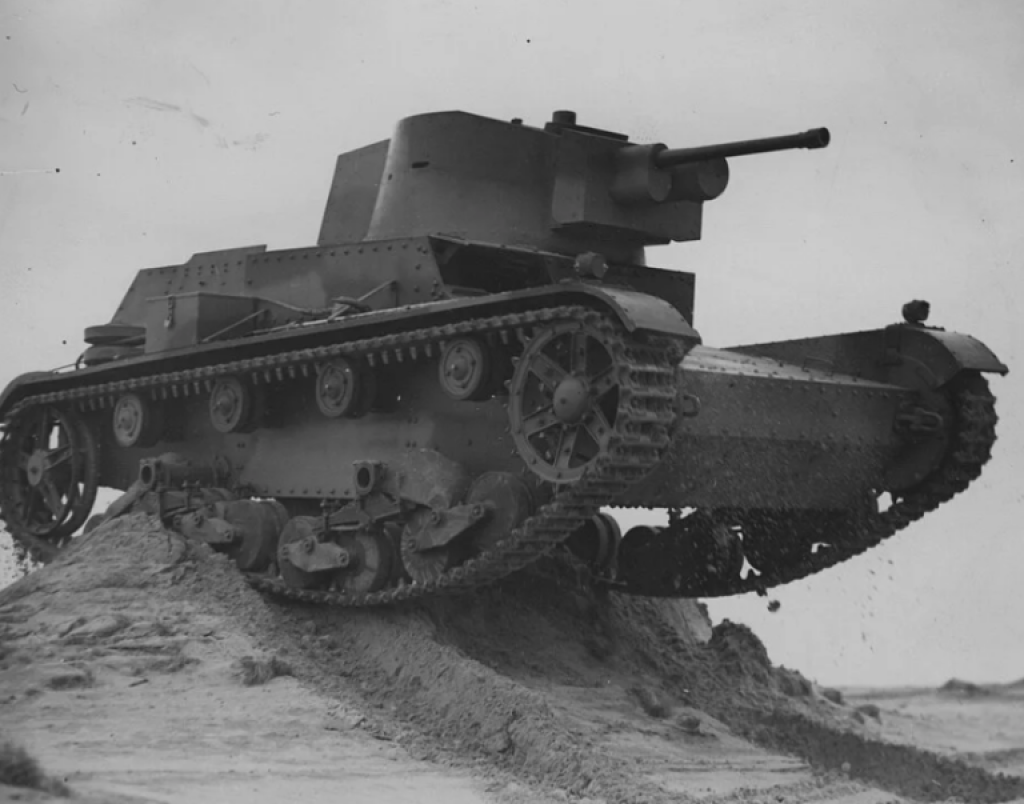
Tank 7TP
Poland’s Relative of the BT
Another branch of Polish tank development produced the 10TP. The vehicle was strongly influenced by the ideas of American designer J. Walter Christie and featured a convertible wheel-and-track suspension. In this respect, its history indeed resembled that of the Soviet BT series: the tank was intended to travel rapidly along roads on its wheels and switch to tracks before entering combat.
The 10TP weighed approximately 12.8 tonnes, had a crew of four, and carried the same 37 mm Bofors gun. Its approximately 210 hp American LaFrance engine allowed it to reach about 50 km/h on tracks. However, testing demonstrated the same problem that Soviet designers would eventually recognize as well: the convertible drive system greatly complicated the vehicle while consuming weight and internal volume for mechanisms that were rarely useful under actual combat conditions.
The next step was therefore intended to be the 14TP.
And this is where MAFIALA’s alternate-history vehicle becomes considerably more interesting.
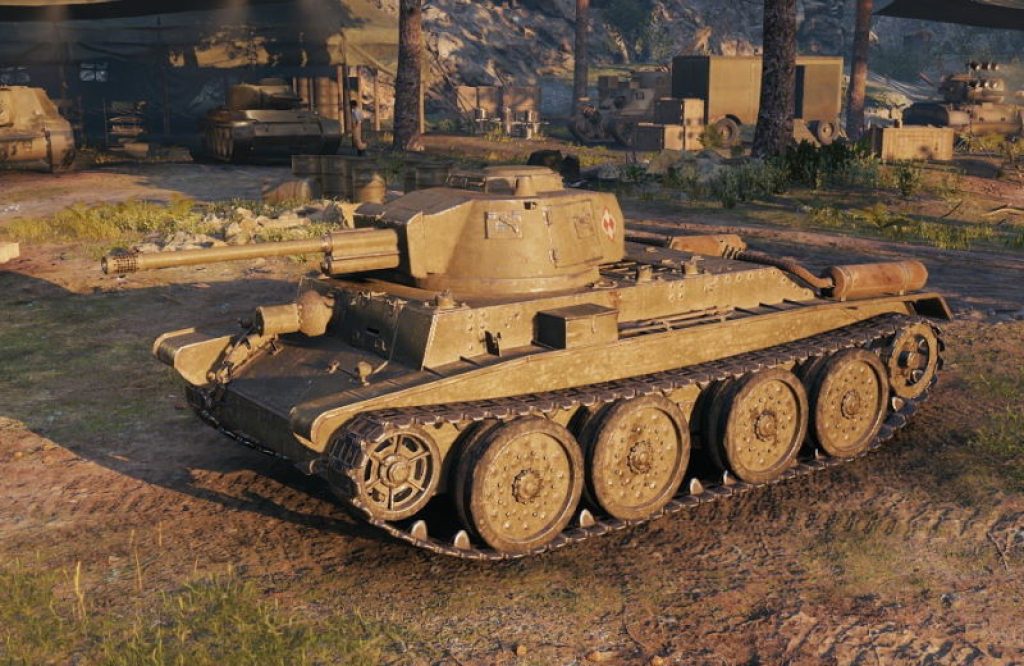
14TP with an enlarged turret and the 47mm wz. 39 gun in the game “World of Tanks”
14TP — One Step Away from a Medium Tank
The 14TP abandoned the convertible wheel drive. The weight and internal volume freed by its removal were intended primarily for improved protection and greater fuel capacity. The project had been prepared by approximately early 1938, and according to the generally accepted reconstruction of its development, a significant number of components for the prototype had already been manufactured by the end of that year. The main problem was the engine. The 10TP’s powerplant was no longer sufficient for the heavier vehicle. Polish engineers were looking for an engine developing roughly 300–400 hp, and one of the options reportedly considered was the German Maybach HL108 producing around 300 hp. The engine problem was never fully resolved before the outbreak of war.
It should also be remembered that the history of the 14TP is far from perfectly documented. Surviving records are fragmentary, and many specifications published today originate from postwar research rather than a complete set of original factory drawings. Exact figures should therefore be treated with caution.
Nevertheless, the general direction of development is perfectly logical: the 10TP evolves from a convertible fast tank into a fully tracked vehicle with a more powerful engine and stronger armor.
It is at this point in our alternate history that the 15TP/75 appears.
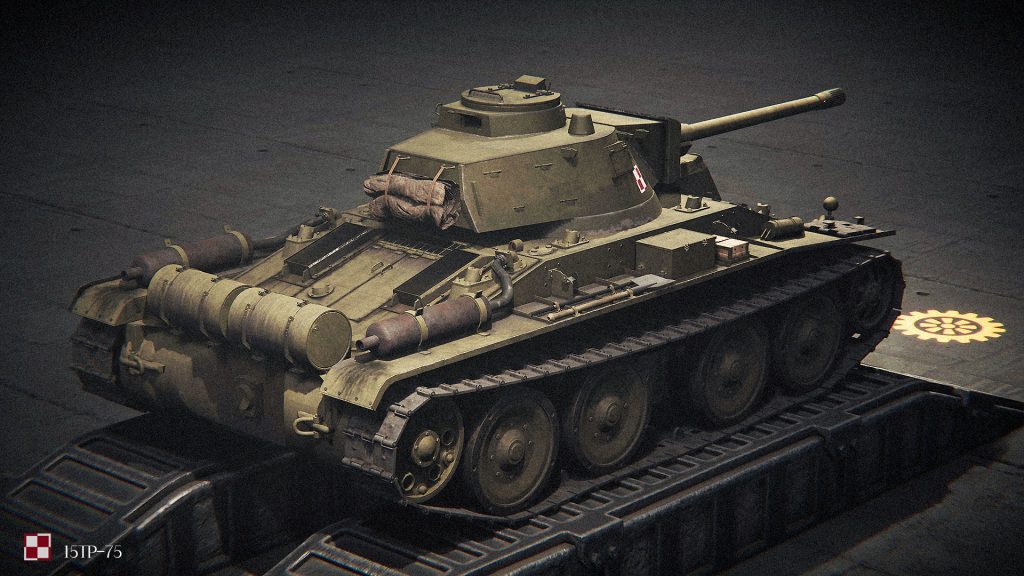
The Birth of the 15TP/75
Let us imagine that development of the 14TP begins somewhat earlier and that, by 1937–1938, the Polish military leadership reaches the conclusion that its next tank cannot simply be a heavier version of the 10TP. Europe is clearly moving toward a major war, meaning that the new vehicle must be capable not only of destroying enemy light tanks but also of supporting infantry, eliminating machine-gun positions, suppressing anti-tank guns, and engaging field fortifications.
Thus emerges the project that we can provisionally call the 15TP/75.
The designation would, of course, be somewhat misleading. Once a powerful gun, a larger turret, and serious armor protection were added, keeping the vehicle’s weight at exactly 15 tonnes would have been extremely difficult. If it really received protection comparable to the Pz.Kpfw.III Ausf.E, its actual combat weight would most likely have approached 18–20 tonnes. The German Pz.Kpfw.III Ausf.E itself weighed approximately 19.5 tonnes with 30 mm armor.
For Poland, however, this would have represented a major qualitative leap. Instead of yet another light tank, the country would have obtained a genuine medium-class fighting vehicle.
Armor Comparable to the German “Panzer III”
For the protection of our alternate-history 15TP, we can use the German Pz.Kpfw.III Ausf.E as a benchmark — one of Germany’s most modern medium tanks in 1939. Its turret had 30 mm armor on the front, sides, and rear. The hull was likewise protected by 30 mm plates on the front and sides, while the rear armor was approximately 20–21 mm thick.
The same basic protection scheme can plausibly be applied to the 15TP/75. Compared with the 7TP, this would mean almost doubling its maximum armor thickness. The vehicle would cease to be a tank that practically any proper anti-tank gun could confidently penetrate from long range.
There would, of course, be no miracle. Thirty millimeters of steel would very soon cease to be regarded as serious protection. But we are talking about 1939–1940. At that time, such armor was entirely consistent with European standards for a medium tank.
Moreover, through the rational positioning of some frontal armor plates, Polish designers could theoretically have achieved somewhat better protection than the nominal thickness alone might suggest. It is important, however, not to transplant later T-34 concepts onto this vehicle. The 15TP should remain a natural product of the Polish engineering school of the late 1930s rather than a 1941 tank that somehow appeared two years early.
A Polish Tank with a French “Seventy-Five”
The most distinctive feature of the 15TP/75, however, would not have been its armor.
Its main argument would have been the 75 mm gun.
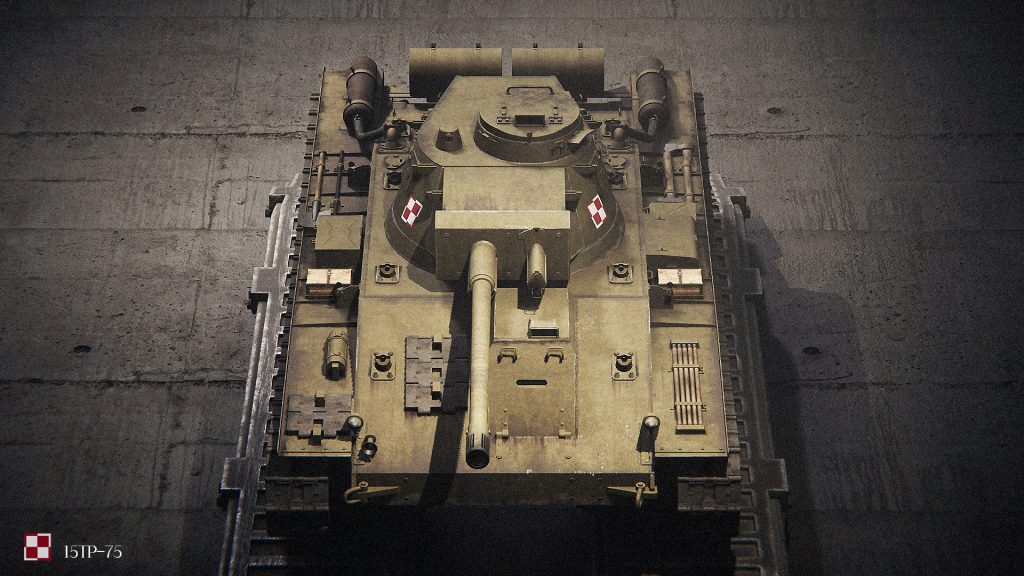
In our alternate history, the starting point is the 75 mm armata wz.1897, a weapon well known to the Polish Army and derived from the famous French Canon de 75 modèle 1897. Poland possessed a substantial number of these guns, which formed an important part of its divisional artillery. The original field weapon had a barrel approximately 2,721 mm long, a muzzle velocity of around 525–577 m/s, and an exceptionally effective hydropneumatic recoil system for its era.
Another historical correction is necessary here. The famous French “seventy-five” is often associated with Schneider, but its original design was not developed by Schneider. The work that led to its creation was directed by Joseph-Albert Deport, while Schneider later participated in the manufacture and development of related artillery systems.
Installing an unmodified wz.1897 field gun inside a tank would, of course, have been impossible. The original weapon together with its carriage weighed around 1,190 kg and had a very long recoil. The 15TP would therefore have required a specialized tank version with redesigned recoil mechanisms, breech, cradle, and mounting, together with a substantially larger turret.
The potential result, however, would have been extremely interesting.
In 1939, the German Pz.Kpfw.III Ausf.E was still armed with the 37 mm KwK 36. Its principal role was engaging enemy armored vehicles, while the larger gun was reserved for the Pz.Kpfw.IV. The Polish 15TP/75 would effectively combine both roles in a single vehicle.
A 75 mm high-explosive shell would give the tank completely different capabilities against infantry, artillery positions, and fortifications. With a suitable armor-piercing projectile, such a gun would also pose a serious threat to virtually any German tank of the early war years.
In other words, in terms of firepower, the Polish vehicle would have been ahead of the early Pz.Kpfw.III.
But Where Do You Put Such a Gun?
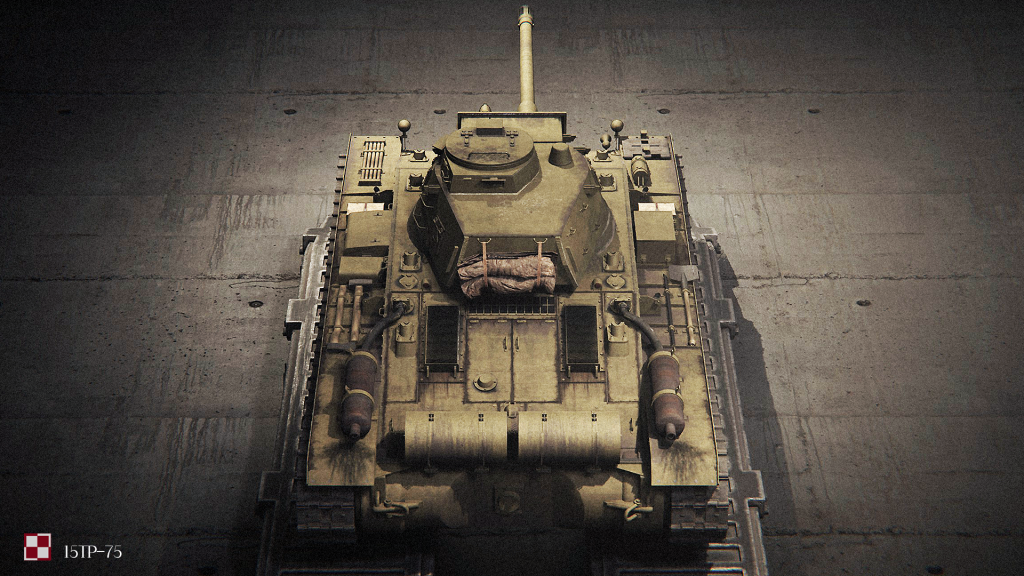
This is where the most difficult part of the project begins. Drawing a 75 mm barrel onto a turret is one thing; making the entire weapon system function properly is quite another.
A considerably larger turret ring would have been necessary. Inside the turret, there had to be room for the gun breech, recoil mechanisms, gunner, loader, and commander. Ammunition consisting of long, fixed 75 mm rounds would also occupy a substantial amount of internal space.
The turret of the 15TP/75 would therefore inevitably have been much larger than that of the 14TP. The most sensible arrangement would have been a proper three-man turret: the commander would be relieved of the duties of gunner or loader and could concentrate entirely on commanding the vehicle and observing the battlefield. The crew would therefore consist of five men — driver, radio operator/hull machine gunner, gunner, loader, and commander.
Here the Poles already possessed something valuable to contribute. Rudolf Gundlach’s rotating periscope was already fitted to the 7TP and provided the commander with all-round observation without forcing him to constantly change his position.
The result would have been a fascinating vehicle: in crew organization and armor protection it approached the German Pz.Kpfw.III, but it carried considerably heavier armament.
The Biggest Problem — the Engine
This is where alternate history collides most directly with reality.
Poland faced a serious shortage of powerful tank engines. Development of the 14TP had already effectively run into the problem of finding a suitable powerplant. The American LaFrance engine used in the 10TP was too weak, a Polish 300–400 hp engine was still under development, and attempts to acquire the German Maybach HL108 had not succeeded before the outbreak of war.
The 15TP/75 would have required at least 300 hp, and preferably around 320–350 hp. With a combat weight of roughly 19 tonnes, a 300 hp engine would provide a power-to-weight ratio of about 15.8 hp per tonne — almost identical to that of the Pz.Kpfw.III Ausf.E, which likewise had an engine producing roughly 300 hp and could reach approximately 40 km/h.
Where could such an engine have come from?
Within the framework of alternate history, the most logical solution would have been to acquire a foreign production license — from France or Britain — followed by the gradual establishment of domestic production in Poland. Another possibility would have been accelerated development of the indigenous 300–400 hp powerplant that Polish engineers were already working on. The engine, rather than the gun or armor, would probably have been the greatest obstacle between the 15TP and mass production.
If this problem could have been solved by 1938, everything else becomes considerably more plausible.
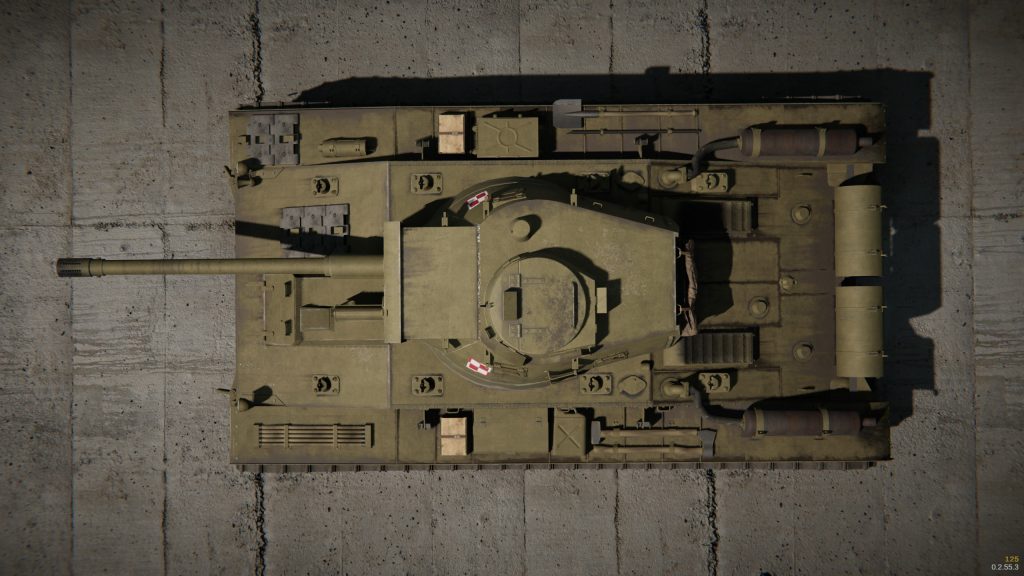
What the Production 15TP/75 Might Have Looked Like
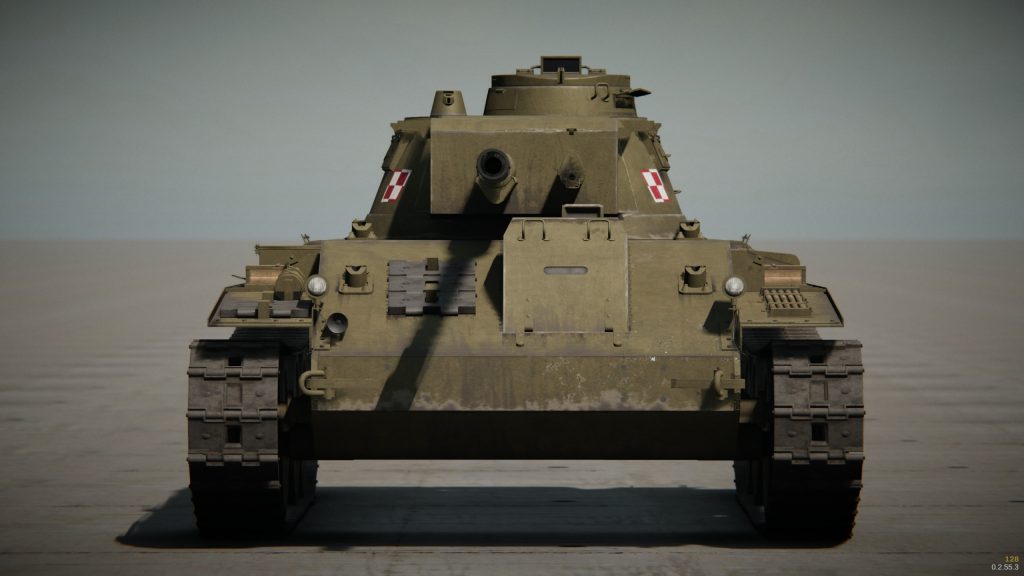
In its final form, the vehicle would have retained the general architecture of the Polish 10TP–14TP lineage: a rear engine compartment, a Christie-type suspension, and relatively large road wheels. The convertible wheel drive would have been abandoned completely — experience with the 10TP had already demonstrated the questionable value of such complexity.
The hull would have needed to be widened and strengthened to accommodate the larger turret. Frontal and side armor of approximately 30 mm would have corresponded to the German Pz.Kpfw.III of 1939. The main armament would have been a tank version of the 75 mm wz.1897, supplemented by a coaxial 7.92 mm wz.30 machine gun. Another machine gun could logically have been installed in the hull front for the radio operator.
A radio set should have been standard equipment on every line vehicle. The widespread use of radios was one of the major advantages enjoyed by German armored forces, and developing a modern Polish medium tank without reliable radio communications would have undermined much of the purpose of the project.
Even under extremely favorable circumstances, however, beginning true mass production before 1940 seems overly optimistic. A new turret, new gun, new engine, strengthened transmission, and extensive production retooling would all have been required. For the 15TP/75 to appear in meaningful numbers, the Polish Republic needed above all the one thing history refused to give it — time.
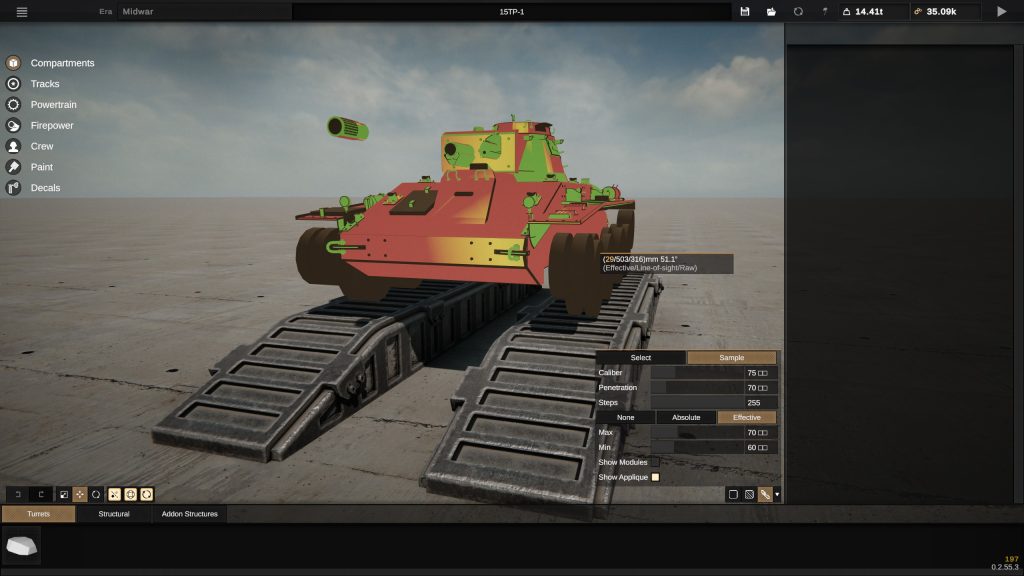
Estimated Specifications of the 15TP/75
- Type: Medium/cruiser tank
- Country: Poland
- Estimated development period: 1938–1940
- Combat weight: approximately 18–20 tonnes
- Crew: 5
- Armament: 1 × 75 mm tank gun derived from the armata wz.1897; 2 × 7.92 mm wz.30 machine guns
- Turret armor: front — 30 mm; sides — 30 mm; rear — 30 mm
- Hull armor: front — approximately 30 mm; sides — 30 mm; rear — approximately 20–21 mm
- Engine: gasoline engine, approximately 300–350 hp
- Power-to-weight ratio: approximately 15–18 hp/t
- Suspension: Christie type, tracked configuration only
- Maximum speed: approximately 40–45 km/h
- Operational range: approximately 150–200 km
Note: These specifications are a reconstruction for the alternate-history 15TP/75 and do not refer to any real Polish tank.
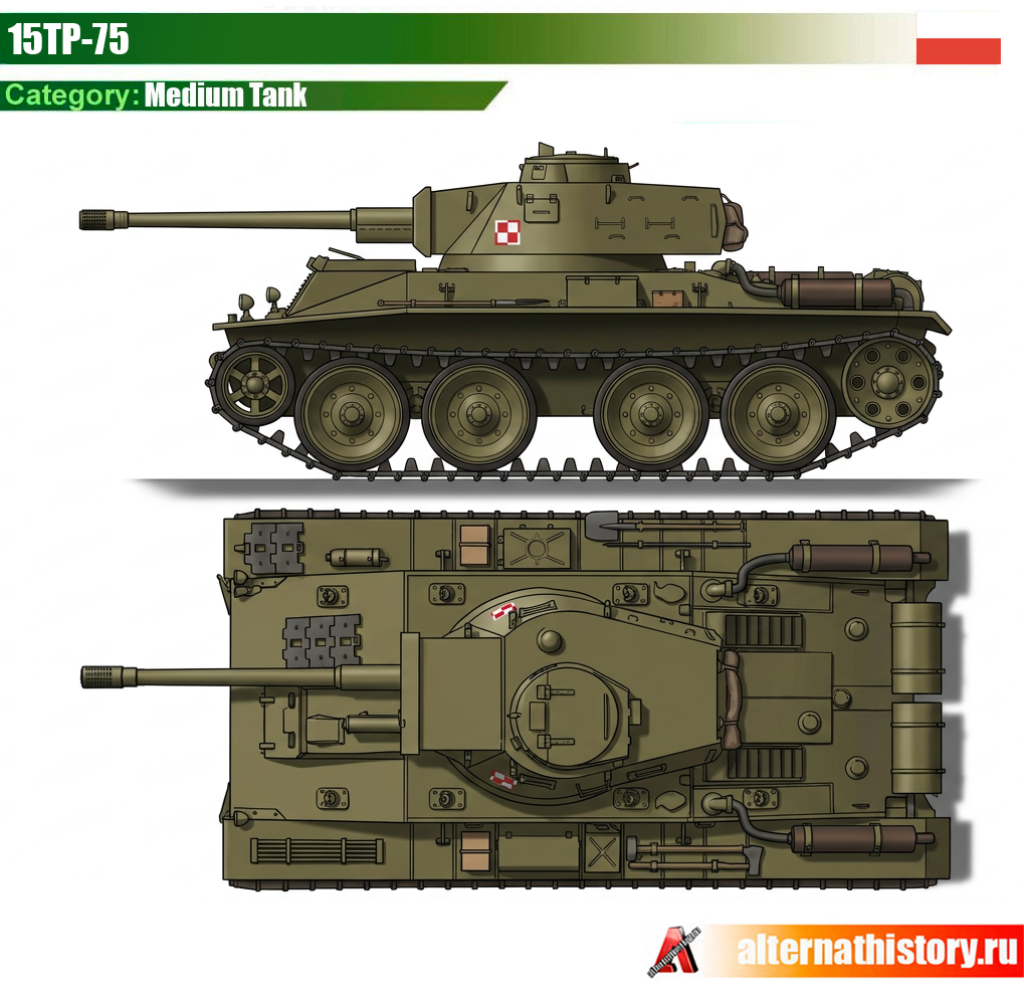
Could the 15TP/75 Have Changed September 1939?
This brings us to the main question. Suppose that, by some miracle, Poland had managed to field a hundred such vehicles by September 1939. Could they have stopped the Wehrmacht?
Most likely, no.
Poland’s defeat was not caused simply by the absence of one “correct” tank. Germany possessed an enormous advantage in the concentration of armored formations, air power, communications, and the ability to rapidly shift forces toward selected sectors. Then, on September 17, the Soviet Union invaded Poland from the east. Even several hundred very good medium tanks could not, by themselves, have changed that strategic situation.
At the tactical level, however, the difference could have been enormous.
An encounter between an early Pz.Kpfw.III or Pz.Kpfw.II and a 15TP/75 would have been very different from a clash between German armor and the light Polish 7TP. The Polish vehicle would have possessed protection comparable to the Pz.Kpfw.III while carrying a far more powerful high-explosive shell. German tank crews would have been forced to treat such an opponent very seriously.
The 15TP/75 would have been particularly dangerous in defensive combat. A well-camouflaged vehicle could engage tanks, anti-tank guns, infantry, and field positions with the same main weapon, while good optics, the Gundlach periscope, and radio communications would have allowed it to function not merely as another light infantry-support tank but as a genuine component of a modern mechanized formation.
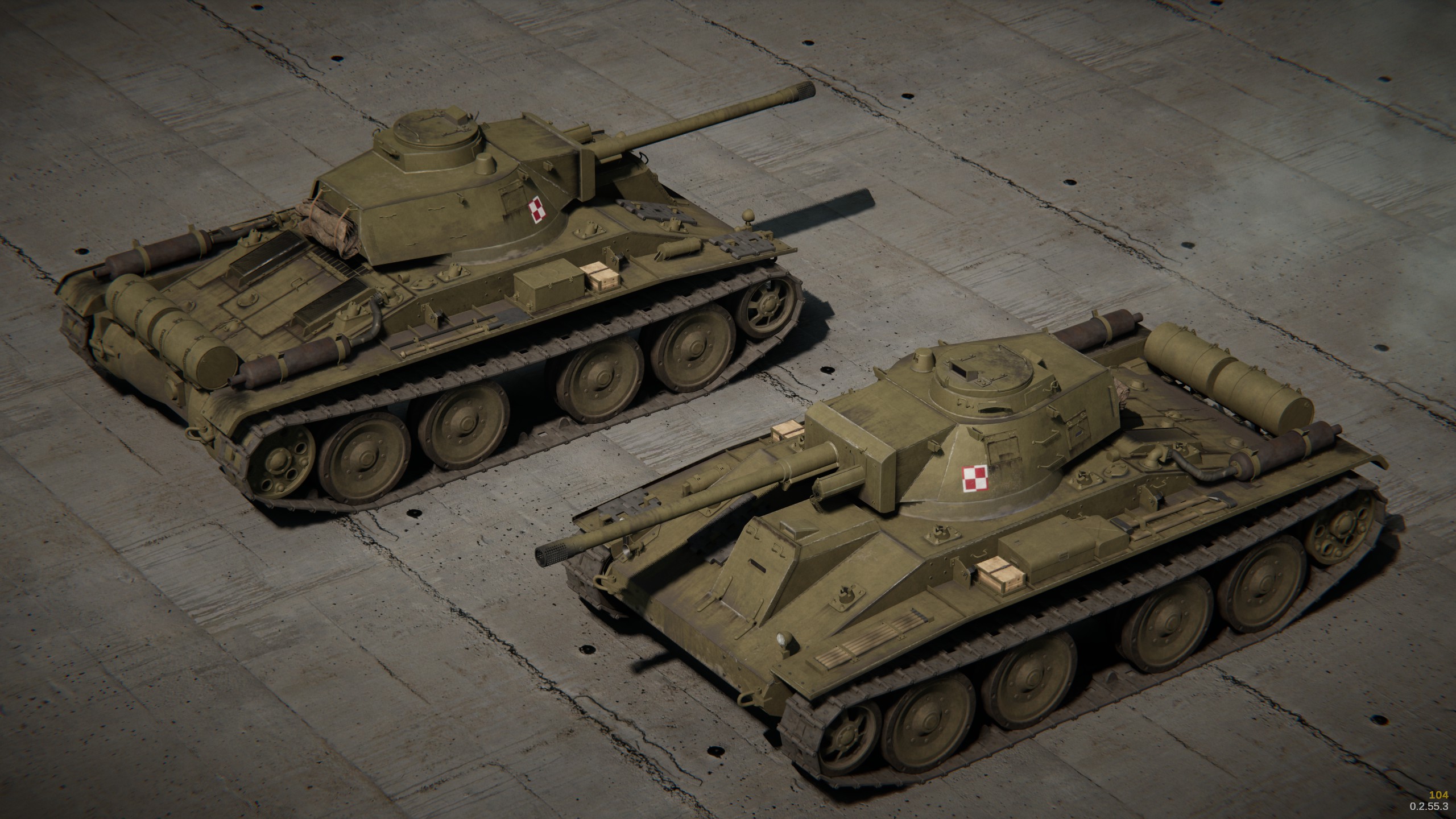
The Polish Pz.Kpfw.III That Never Was
What makes MAFIALA’s 15TP/75 particularly interesting is that creating such a vehicle does not require turning 1930s Poland into some fantastical industrial superpower. Almost the entire technological chain required for its development can already be seen in real history.
There was the 7TP, which demonstrated Poland’s ability to substantially improve a foreign tank design. There was the 10TP, which served as a testbed for a high-speed suspension. There was the 14TP project, in which the Poles abandoned the convertible drive and attempted to move toward a heavier, better-protected vehicle. There were the 75 mm wz.1897 guns, already thoroughly familiar to the Polish Army. Poland also possessed its own advanced observation equipment and practical experience in armored-vehicle production.
What was missing were several crucial elements: a powerful engine, sufficient time to develop a tank version of the 75 mm gun, adequate industrial capacity — and, above all, time itself.
The 15TP/75 should therefore not be regarded as a tank that Poland “almost built.” There is no historical evidence to support such a claim. But as an alternate continuation of the real 10TP → 14TP evolutionary line, the concept is surprisingly convincing.
Had World War II begun not in September 1939 but perhaps two or three years later, Polish armored units might indeed have entered the conflict with very different vehicles. Instead of numerous tankettes and a relatively small number of 7TPs, the symbol of Poland’s armored forces might have been something very much like this: a twenty-ton tank with 30 mm armor, a five-man crew, and a powerful 75 mm gun.
A kind of Pz.Kpfw.III, Polish-style — except armed in a way that the Germans themselves had not yet dared to arm their “Panzer III” in 1939.
Link – https://www.reddit.com/r/SprocketTankDesign/comments/1wfyoi6/15tp75/