An article from the Telegram channel “Alexey Isaev. ‘Iron Wind’.”
War and military equipment often require specific natural resources, such as certain metals. For example, cobalt.
When discussing cobalt during World War II online, people often refer to its use in the tank industry. But this is a misconception. The grades of armor steel that existed in the USSR in 1941 and were developed during the war did not require cobalt. Neither bulletproof armor nor shell-resistant armor (such as the well-known 8S, which was available in both rolled and cast forms) contained any cobalt. Wartime developments also did not involve the use of cobalt in armor.
A well-known quote by A.I. Shakhurin, the People’s Commissar for the Aviation Industry, comes closer to the truth:
“We took everything—or almost everything. For example, we took almost all of the aluminum, magnesium, cobalt, alloy steels, the vast majority of alloy pipes, and so on.”
The discussion was about heat-resistant alloys.
For the USSR, this was an extremely pressing issue. Suffice it to say that during negotiations with the Germans—in particular, during V. M. Molotov’s meetings with Schullenburg—the question of
“regarding the delivery of 30,000 metric tons of aluminum and 150 metric tons of cobalt.”
In February 1941, Germany replied that
“They expect to obtain cobalt from French-controlled Morocco, but there is no certainty that they will be able to do so.”
In January 1941, the State Planning Committee of the USSR, in summarizing the results of 1940, noted that
“The production of tungsten, molybdenum, tin, and cobalt is severely underdeveloped.”
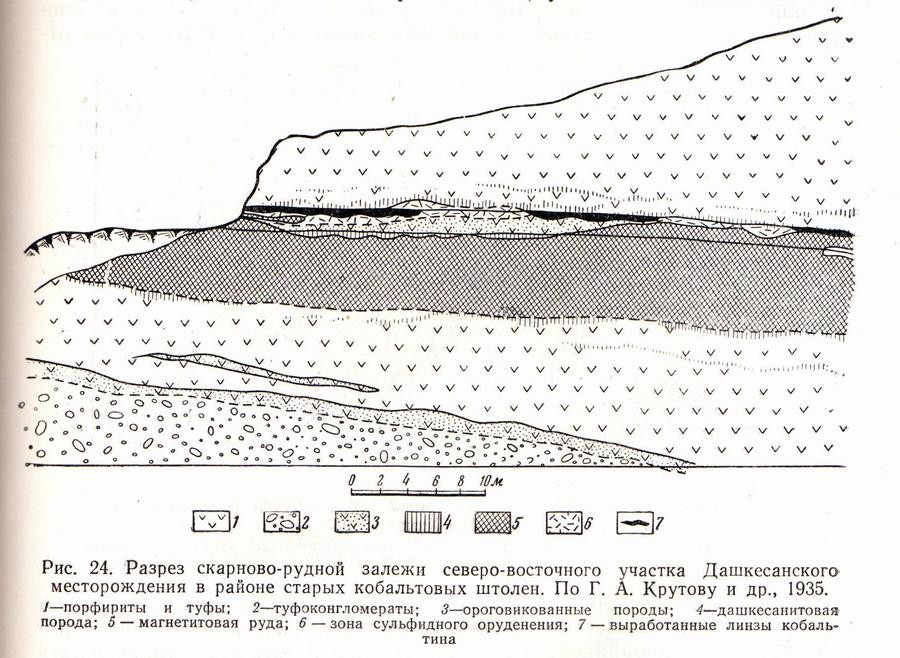
Being a large country made it possible to address this issue in one way or another. Regular readers of this column will surely guess that exploration in the Soviet Union began as early as the 1920s. Indeed, research was conducted in the Dashkasan region of Azerbaijan at the turn of the 1920s and 1930s. Initially, the deposit received a negative assessment. It wasn’t until 1937 that a pilot processing plant was built.
Dalstroy (see the series of videos about gold on Taktika) received cobalt only after the war. Norilsk supplied a small amount, and the Urals supplied some (20 metric tons in 1941). Under the Lend-Lease program, the U.S. supplied 5 metric tons (not thousands!) of cobalt and 7.1 metric tons of cobalt oxide between 1941 and 1945.
The cobalt mined in Dashkesan from 1941 to 1945 accounted for the bulk of the cobalt produced in the USSR. In reality, the deposit was practically completely depleted. But it was good to live in a big country where you could find what you needed, even if it wasn’t in the center.
Source: https://t.me/iron_wind/1719