All the details about the future Russian ShFDM airliner. Why is it needed, and what kind of engines will it be equipped with?

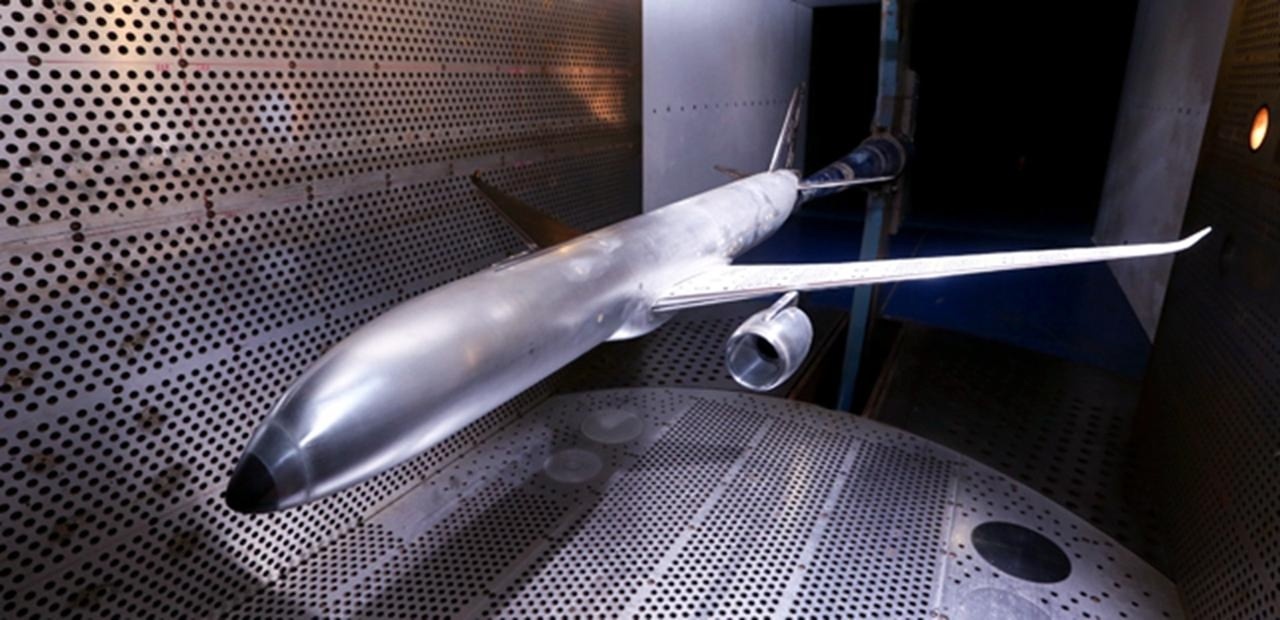
We have already published an overview article on our website about the upcoming new Russian wide-body long-range aircraft (SHFDM), which was recently patented. This article will provide more details about the aircraft and its technical specifications.
Contents:
Why replace the Il-96?
That’s a very interesting question. As is well known, the Il-96 is in serial production, but its production volume can hardly be called substantial. On average, one aircraft is produced per year, though they promise to increase that to two per year. The main customer is the government air fleet (SLO “Rossiya”). Russian airlines do not use the Il-96 for passenger transport; the only commercial operator in this sector is the Cuban state-owned airline Cubana. There are also cargo versions, the Il-96-400T, which are in service with the Russian carrier Sky Gates Airlines. However, these are all individual aircraft. All variants of the Il-96 are equipped with four PS-90 aircraft engines. The design is reliable but not modern—today, it is standard practice in this class of aircraft to use two more powerful and modern engines. But we did not have such an engine. The most powerful production aircraft engine of the late Soviet Union was the D-18T, used on the An-124 and An-225 military transport aircraft, which delivers more than 20 metric tons of thrust during takeoff. No version of it was ever developed for civilian aircraft, and today it is no longer in production at all. That is why the largest domestic passenger aircraft flies on four PS-90 engines, which were designed for the medium-sized Tu-204/214… What’s stopping us from building a large engine with 25–30 metric tons of thrust? Nothing at this point. Work on the PD-35 (with up to 35 metric tons of thrust) is progressing briskly. In fact, there’s already more than enough power available, so we can aim for even larger aircraft.
-
A necessary digression about the PD-35 on the Il-96.A number of “armchair experts,” who only occasionally fly as passengers, love to loudly proclaim: “Once the PD-35 is ready, just install two of them on the Il-96 instead of four PS-90s, and that’s it—we’re good to go.” If you hear something like that, hit that “expert” with whatever’s at hand—an aircraft undergoing such a “conversion” would require a virtually complete redesign, modifications, and testing. It would be easier to build a new aircraft specifically for the engine being developed.
A new long-range wide-body…
So here we are, looking at a new aircraft. Since a new, powerful engine is expected to be available within the next five years, now is the perfect time to start designing an aircraft to accommodate it. That said, there’s been talk in Russia that a new transport aircraft to replace the An-124 needs a payload capacity of 100 metric tons, and that it would be best suited for an engine more powerful than the D-18T but slightly smaller than the PD-35. And that’s where the PD-26 project comes in. Roughly speaking, it’s a slightly scaled-down version of the PD-35. The number in the name refers to the takeoff power. Meanwhile, no one is abandoning the PD-35; work on it is continuing at the UEC plants, and we’ve written about the tests here:
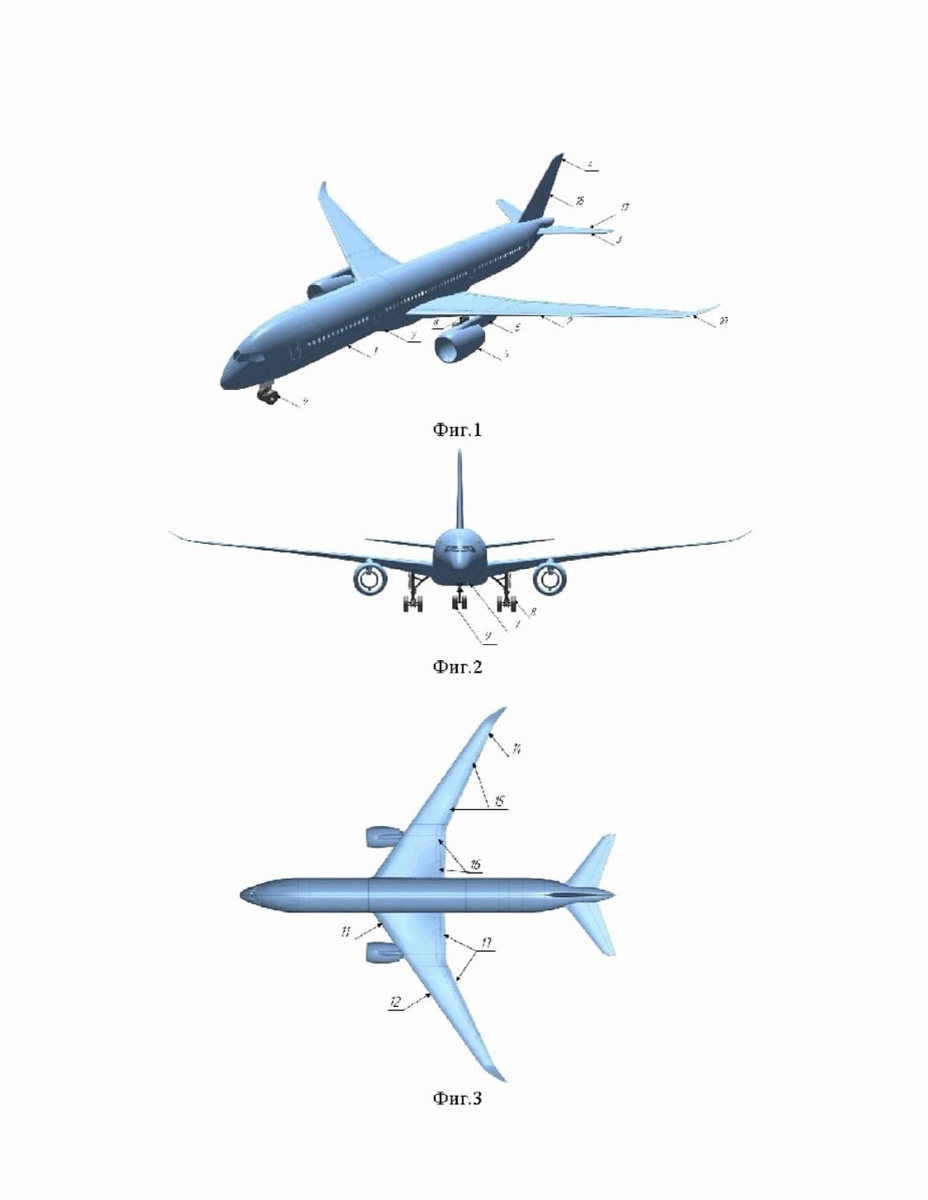
In August 2025, Russian media outlets and aviation blogs repeatedly published details from a newly filed patent for a promising wide-body long-range aircraft (WBLR). As many have correctly noted, this information is not final for this project. In fact, in the patent, Russian developers are securing their own intellectual property resulting from their participation in the CR-929 joint project with China. Therefore, if one looks closely at the publicly available illustrations accompanying the patent, the resemblance to the CR-929 is obvious.
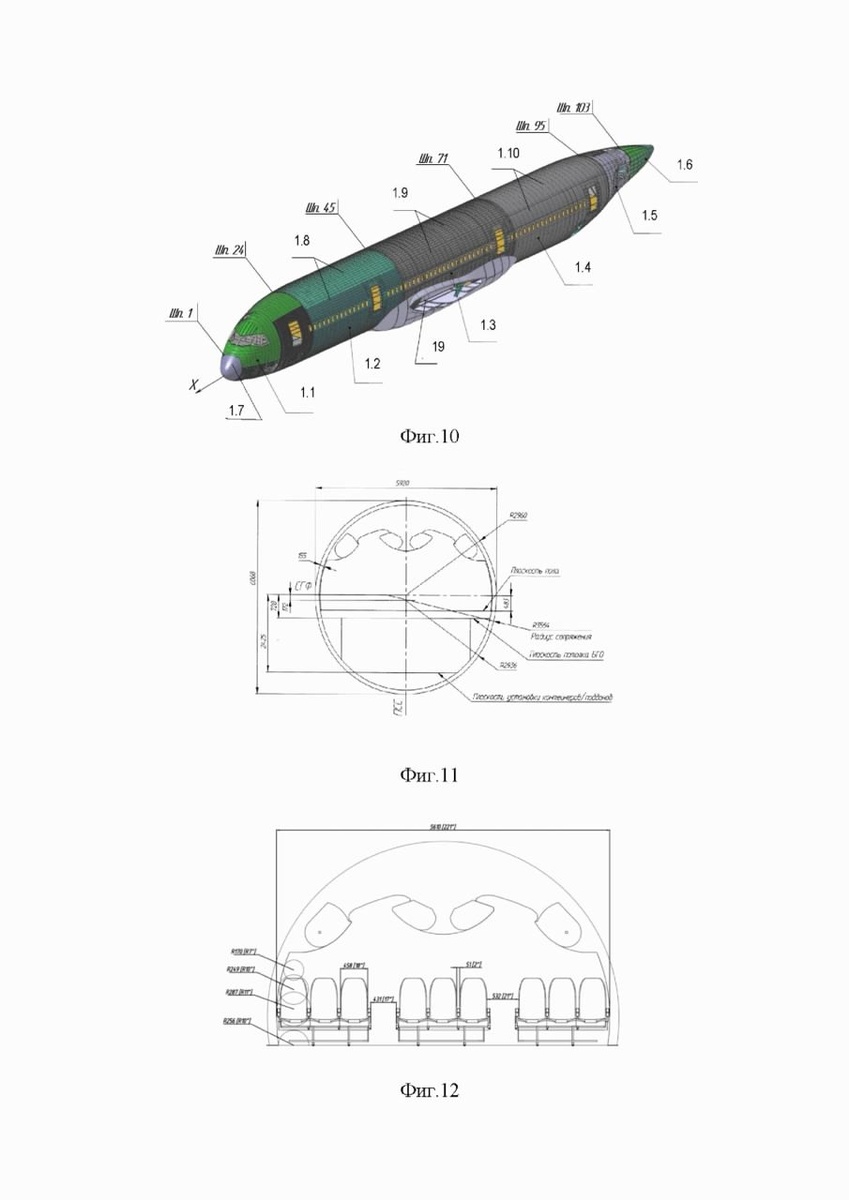
Why do we need yet another new plane?
After years of uncertainty and a lack of funding, the situation in the Russian aviation industry has begun to take on a more or less stable form since 2022. Cooperation chains have been established around the main civil programs for the fully import-substituted Il-114-300 with TV7-117ST engines, the “Superjet” with PD-8 engines, and the MS-21 with PD-14 engines, cooperative supply chains have been established, and all the necessary preparations for their mass production are underway, while the aircraft are completing the required test programs. At the same time, work is underway on the “Baikal,” “Ladoga,” and “Osveya” projects. Not to mention helicopters—things are picking up there as well. “Technosphere. Russia” (see links at the end of the article). However, in the long-range wide-body aircraft sector, there is still complete stagnation in our country. As previously mentioned, Voronezh continues to produce a maximum of 1–2 Il-96s per year, with no serious prospects for the aircraft’s commercial use, and the aircraft itself is a collection of compromise solutions designed to ensure Russia has its own wide-body aircraft. The attempt to create a “joint” modern CR929 with China “faster and cheaper” did not turn out as originally planned. This is, in fact, a problem common to all collaborations with other countries in the high-tech world. So we need to develop our own new large passenger aircraft—one that, most importantly, meets modern standards. Which is ultimately what we’re seeing now.
Source — https://dzen.ru/a/aL557rZMOx_c8FoS