The Aircraft Has Not Flown Yet, but Its Price Has Already Risen by 65%: Why France Cannot Launch the A321 MPA

France planned to turn the passenger-carrying Airbus A321XLR into a “flying frigate”—a large maritime patrol aircraft capable of hunting submarines, gathering intelligence, and attacking surface ships. The project looked particularly attractive after the collapse of the joint program with Germany: an existing commercial platform, French electronic systems, and nationally integrated weapons were supposed to guarantee strategic independence.
However, the main contract has not yet been signed, the first aircraft exists only as a model, and the program’s estimated cost has already risen from €2.768 billion to €4.574 billion. The difference is €1.806 billion, or 65%. The planned transition to full-scale development at the end of 2026 is now in jeopardy.
France has found itself in an uncomfortable position. Its old Atlantique 2 aircraft are gradually wearing out, their successor is required by the middle of the next decade, but the Defence Procurement Agency is unwilling to accept the current price.

It Is Not Yet a Cost Overrun, but That Does Not Make It Less Serious
Strictly speaking, describing the situation as a cost overrun is not entirely accurate. Series production of the A321 MPA has not begun, no prototype has been built, and the main contract with Airbus and Thales has not been signed. What has happened is a dramatic revision of the program’s preliminary cost estimate.
Documents attached to France’s 2026 budget valued PATMAR futur at €2.768 billion. The draft 2027 budget contains a figure of €4.574 billion. A parliamentary report states directly that negotiations with Airbus have stalled over the price, although they have not been terminated. The technical risk-reduction study was completed successfully: the aircraft can be built, but the government and industry cannot agree on what it should cost.
It is also important to understand that €4.574 billion is not the price of one aircraft. The total includes development of the specialized platform, integration of equipment and weapons, testing, and probably the production of an initial batch. The final number of aircraft has not yet been fixed in the French budget documents.
In other words, France is not facing an unexpectedly expensive airliner. It is facing the cost of turning a commercial A321XLR into a specialized anti-submarine aircraft.
Why Converting an Airliner Is So Expensive
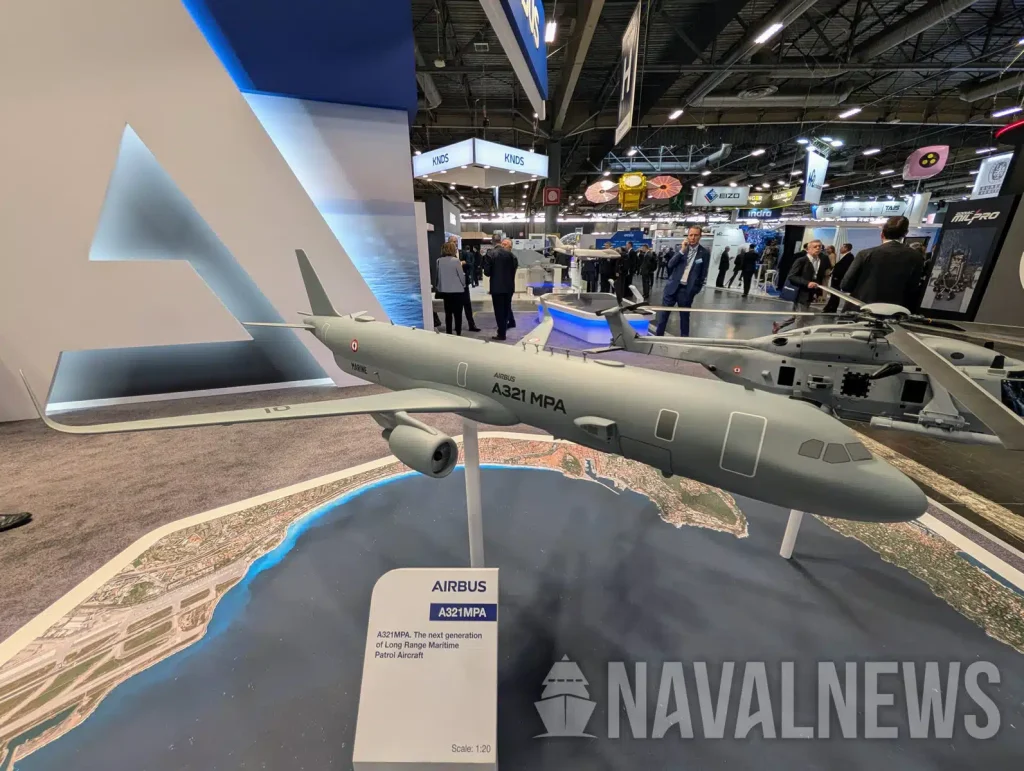
At first glance, the task appears relatively straightforward. Airbus has produced thousands of A320-family aircraft, maintenance infrastructure exists around the world, and the A321XLR offers both long range and a spacious cabin. All that seems necessary is to install a radar, add operator stations, and integrate weapons.
In practice, little more than the basic airframe and aerodynamic layout will remain unchanged. The A321 MPA is expected to receive an active electronically scanned array radar, an electro-optical system, electronic-intelligence equipment, a self-protection suite, and a magnetic anomaly detector. Inside the aircraft will be operator stations, powerful computers, and equipment for processing signals from active and passive sonobuoys.
The aircraft must also be able to deploy those sonobuoys, carry satellite communications, and integrate torpedoes and the future FMAN anti-ship missile. Airbus is promising an internal weapons bay, which will require major changes to the fuselage’s load-bearing structure.
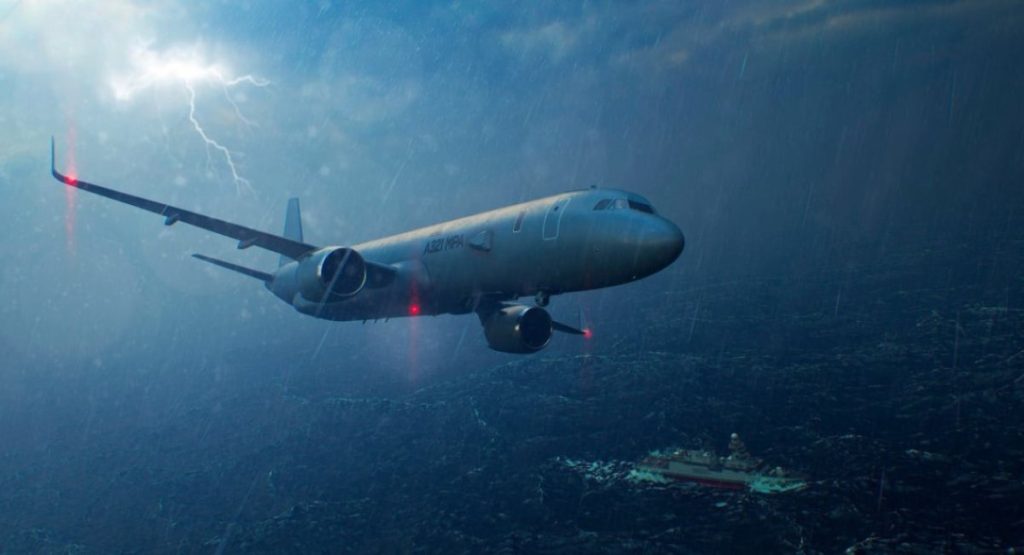
Low-altitude operations over the sea create another challenge. A passenger A321 is optimized for extended cruising in relatively calm air at high altitude. A maritime patrol version must spend hours operating at different altitudes, maneuver close to the water, and withstand a salty environment that accelerates corrosion.
Then come weapons trials, electromagnetic compatibility between numerous transmitters, cooling for mission computers, system redundancy, and military certification. The result is effectively a new aircraft built around an existing commercial airframe.
Why France Chose the A321
Airbus competed against Dassault Aviation, which offered a maritime-patrol version of the Falcon 10X business jet. The Falcon would be smaller, lighter, and potentially cheaper to operate, but the French Navy preferred the more spacious platform.
Maritime patrol missions can last for many hours. The aircraft must accommodate operators, mission equipment, rest areas, and sometimes a second crew. A larger fuselage means systems do not have to be squeezed into every available space and leaves room for future modernization.
The A321 can also accommodate a large weapons bay, heavy anti-ship missiles, and a considerable number of sonobuoys. For an aircraft expected to remain in service for several decades, spare internal volume may prove more valuable than modest savings in weight.
That is why Airbus describes the A321 MPA as a “flying frigate.” It is intended not merely to observe the sea but to locate submarines, classify targets, distribute intelligence, and employ weapons independently.
However, the 65% increase weakens one of the arguments behind the Airbus selection. The Falcon 10X has not officially returned to the competition, but such a large difference between the original and revised estimates inevitably raises questions about whether France made the right choice.
The Price of a Broken Partnership
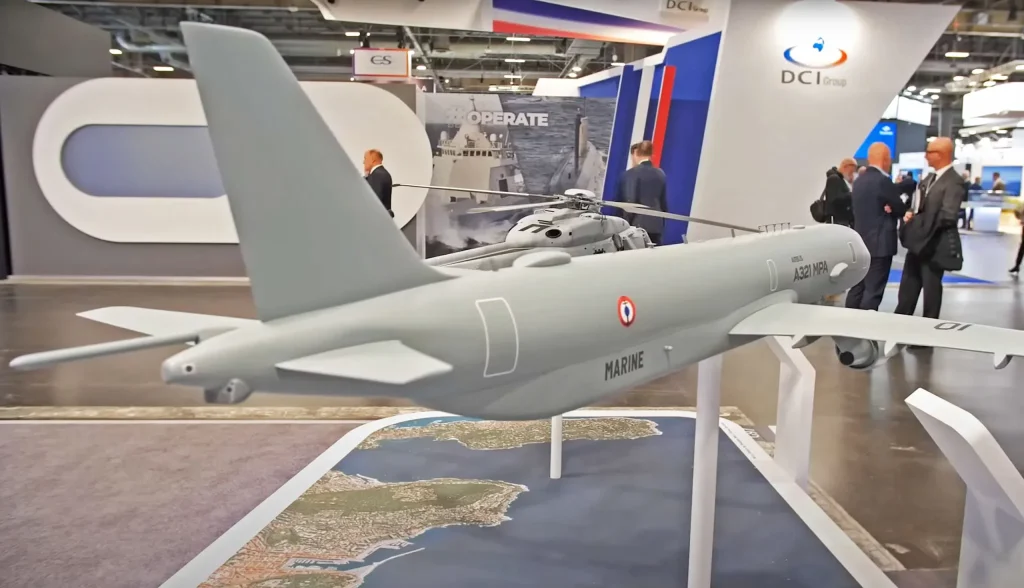
France initially expected to develop its next generation of maritime patrol aviation jointly with Germany under the MAWS—Maritime Airborne Warfare System—program. MAWS was supposed to be more than an aircraft: it would combine crewed platforms, drones, sensors, and information-sharing systems.
Germany eventually decided not to wait for the European project and purchased American Boeing P-8A Poseidon aircraft to replace its aging P-3C Orions. Once Berlin made that decision, the economic logic behind MAWS began to disappear. France was left as essentially the only major customer for a potentially new platform.
A joint program would have allowed the two countries to divide development expenses and order a larger production run. France must now bear most of the costs itself, while the smaller number of aircraft increases the share of development expenses attached to each airframe.
The collapse of MAWS cannot explain the entire price increase, however. A French parliamentary report also associates Airbus’s financial position with the difficulties of the A400M program. The suggestion is that, after suffering losses on the military transport aircraft, Airbus is assessing risk more cautiously and does not want to sign another complex fixed-price contract at an unrealistically low figure.
Airbus has not officially confirmed this connection. It remains an assessment made by the parliamentary rapporteur rather than an established fact.
The Old Atlantique 2s Cannot Wait Forever
France operates 18 modernized Atlantique 2 Standard 6 aircraft. They have received the modern Searchmaster radar and an upgraded combat system, but the modernization did little to renew their engines or airframes.
The aircraft entered service in the early 1990s. Corrosion and structural aging are already affecting availability and increasing maintenance costs. The French Navy expects to retire the Atlantique 2 by 2040, while the first A321 MPAs are tentatively expected to arrive in 2034–2035.
That may seem like ample time, but an anti-submarine aircraft cannot be developed in only a few years. After the contract is signed, France will still need to complete the design, build a prototype, validate the aerodynamic modifications, test the radar and acoustic suite, certify the safe use of torpedoes and missiles, and train the crews.
Even under the original schedule, the transition period would have been short. If the program’s launch is delayed by several years, the Atlantique 2 fleet will have to remain operational for longer, or the French Navy could temporarily face a shortage of maritime patrol aircraft.
The situation is especially sensitive because the Atlantique 2 helps protect French nuclear-powered ballistic missile submarines as they deploy into the ocean. The aircraft patrol the departure areas and search for foreign submarines that might attempt to follow France’s strategic missile carriers.
PATMAR futur is therefore connected not only to conventional maritime surveillance but also to France’s nuclear deterrent.
Three Unpleasant Options
Paris now has several possible courses of action. It can accept the revised cost and find an additional €1.8 billion. It can reduce the number of aircraft or postpone some equipment until later upgrades. Finally, it can delay the program and continue spending money to keep the aging Atlantique 2 fleet operational.
A fourth option theoretically exists: return to the Falcon 10X or purchase the American P-8A Poseidon. A new competition would consume several more years, however, while buying the Poseidon would mean abandoning the idea of a fully national system incorporating French equipment and sovereign weapons integration.
France’s Minister of the Armed Forces has confirmed that negotiations between the DGA and Airbus are continuing. Nevertheless, the planned transition to development by the end of 2026 is already in doubt. Future elections add another layer of uncertainty, as a new political configuration could revise defense priorities or postpone the decision once again.
The A321 MPA dispute has consequently become much more than an argument over price. France wanted a large sovereign aircraft independent of the United States and capable of replacing the Atlantique 2 for decades. After Germany withdrew from MAWS, however, Paris was left to pay almost the entire price of that independence.
The “flying frigate” has not yet made its first flight. So far, its only successful maneuver has been to raise its own price by almost €2 billion.