The Drawings Survived, but the Production Line Did Not: How Kazan Learned to Build the Tu-160 Again

The new “White Swan” looks almost identical to the Soviet bomber, down to the last line of its silhouette. Yet beneath that familiar exterior lies an industrial system rebuilt almost from scratch — from digital drawings and titanium suppliers to a giant vacuum welding facility.
The news that the Kazan Aviation Plant is “building White Swans again” makes it sound as if somebody simply dusted off an old assembly line and sent the workers back to familiar stations. In reality, there was no production line left to restart. After the collapse of the Soviet Union, Tu-160 production stopped, the vast network of participating enterprises was scattered across different countries and industries, some of the specialised equipment became obsolete or disappeared, and much of the manufacturing knowledge survived only in the memories of ageing specialists. The programme is therefore better understood not as the return of a single aircraft, but as the reconstruction of an entire vanished factory.
The latest reason for the Tu-160M to return to the headlines was an interview with Tupolev CEO Yuri Abrosimov. According to him, about 80 percent of the upgraded aircraft’s systems and equipment have been modernised. The plant also had to rebuild supply chains for materials and semi-finished products, re-equip workshops, update its flight-test facilities and restore the technologies required to manufacture large titanium structures. The programme itself, however, is not new. The decision to resume production was made in 2015, a contract for ten aircraft was signed in 2018, and the first newly manufactured Tu-160M made its maiden flight on January 12, 2022.
Why the Old Bomber Could Not Simply Be Built from the Old Drawings
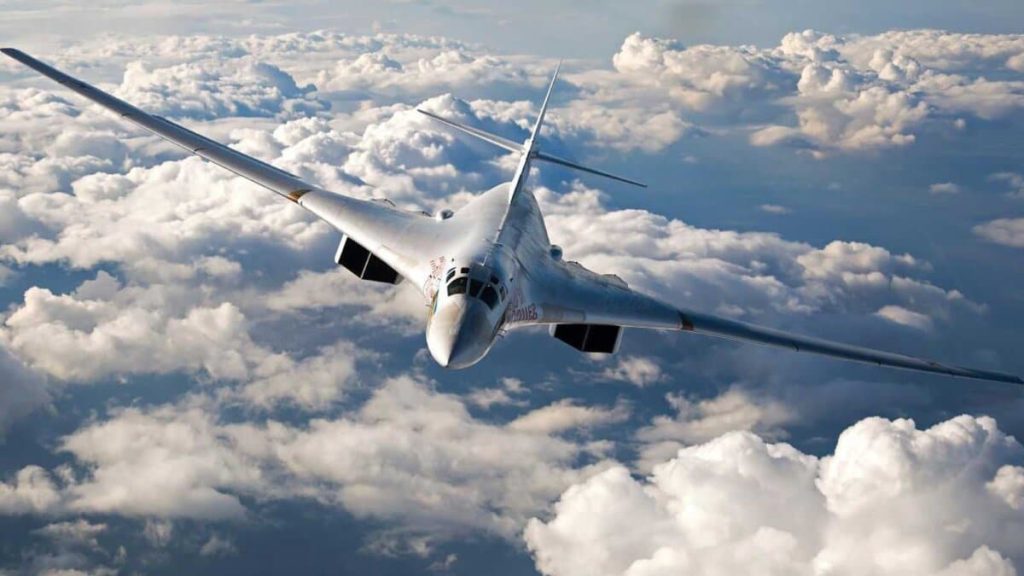
The Tu-160 was developed in the 1970s as a heavy supersonic strategic missile carrier with intercontinental range. It was given a variable-sweep wing: the outer wing panels spread forward for take-off and landing, providing greater lift, then sweep back at high speed to reduce drag. This configuration allows an enormous aircraft to combine manageable low-speed characteristics with a top speed exceeding Mach 2, but it comes at the cost of considerable weight and structural complexity.
The greatest loads converge in the centre of the airframe, where the wing pivots are located. This structure must withstand the aircraft’s weight, the thrust of four engines and the forces generated as the wing changes sweep. Steel would have been too heavy, while conventional aluminium alloys lacked the required strength and heat resistance, so titanium was used extensively in the load-bearing structure. Titanium is both strong and relatively light, but large components cannot be welded reliably in open air without protection: when heated, the metal reacts readily with oxygen and nitrogen, making the resulting joint brittle.
The solution was electron-beam welding in a vacuum. The component is placed inside a sealed chamber, the air is pumped out, and the joint is made with a focused beam of electrons. This produces a deep weld with a narrow heat-affected zone, but it requires an enormous installation, extremely precise tooling and subsequent vacuum annealing to relieve internal stresses. During the Soviet era, such a complex was built specifically for production in Kazan. Decades later, it effectively had to be recreated. Without it, a factory could possess a complete set of Tu-160 drawings and still be unable to manufacture the aircraft’s structural backbone.
The drawings presented another problem. The original documentation described the bomber in the language of the old industrial system, with Soviet standards, tooling, measuring equipment and suppliers that no longer existed. Scanning the sheets into a computer would not solve that. Engineers had to adapt the design to modern machinery, rebuild it as a set of digital models, verify dimensional chains and prepare electronic manufacturing and inspection processes. When officials say that the documentation was “fully digitised,” they are not describing the scanning of old blueprints. They are describing the engineering reconstruction of the aircraft in a digital environment.
Three Different Aircraft Sharing One Designation
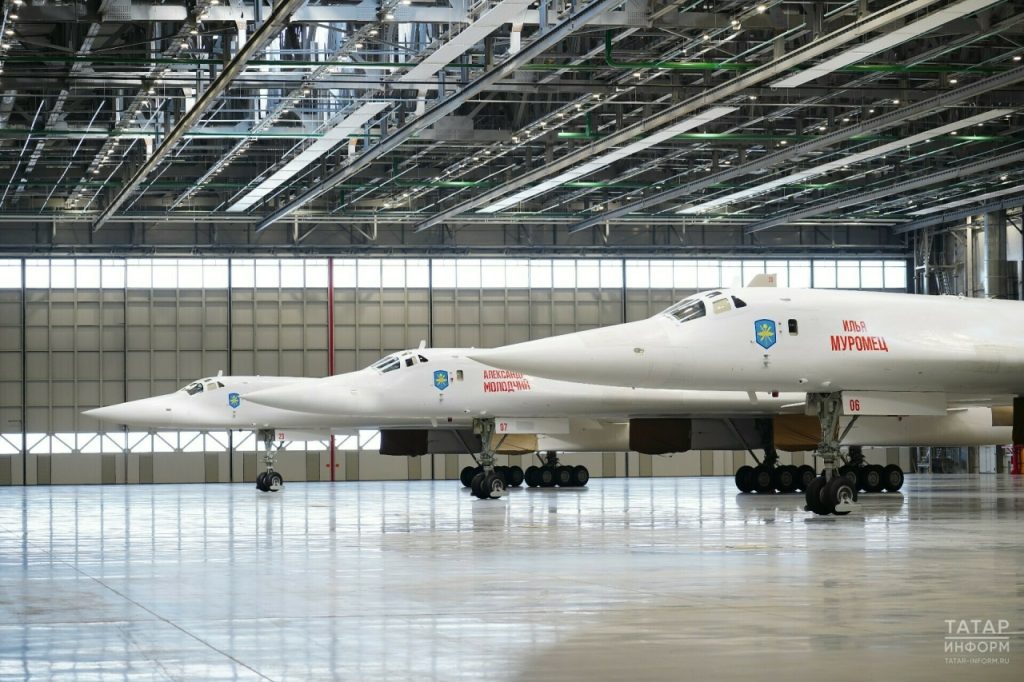
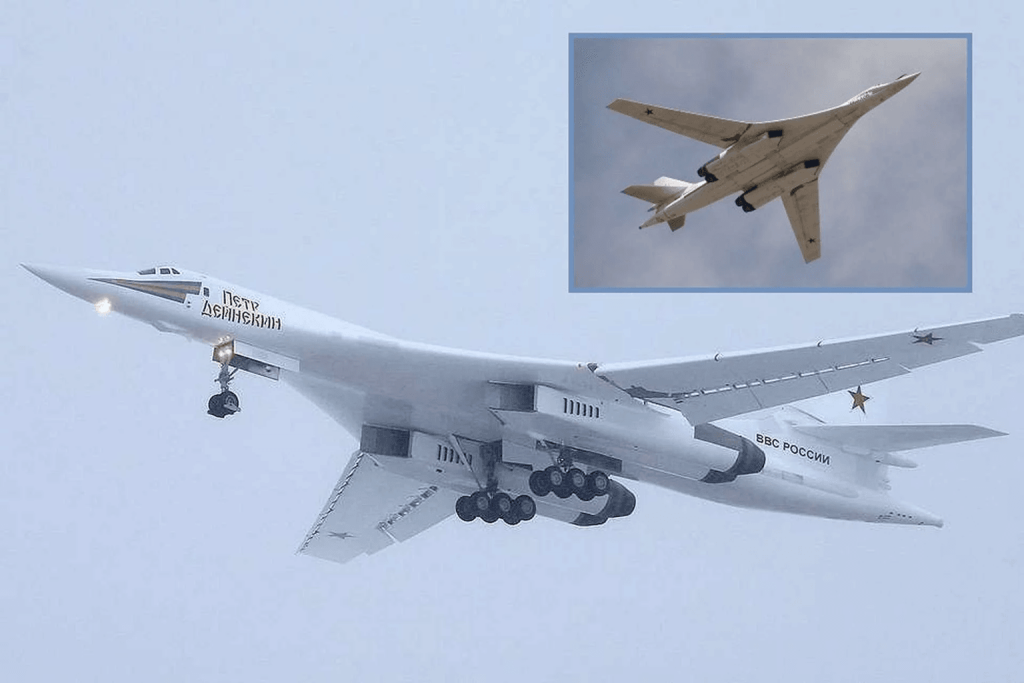
Much of the confusion surrounding the Tu-160M comes from the fact that the same designation is applied to aircraft with very different origins. The first group consists of Soviet-built operational Tu-160s undergoing deep modernisation. Their airframes have already accumulated flying hours, but they receive new onboard systems and engines. The second group consists of aircraft completed from unfinished structures and components left at the Kazan plant. This is how the bomber named Pyotr Deinekin came into being: it was rolled out in 2017 and flew in January 2018. The aircraft was essential for restoring lost manufacturing processes, but it cannot be described as a machine produced entirely after the restart.
The third group is the most significant part of the story: newly built, full-cycle Tu-160Ms. The first of these flew in January 2022. Such aircraft were once widely referred to as the Tu-160M2 to distinguish them from upgraded operational bombers, but official announcements have since settled on the common Tu-160M designation. As a result, headlines about a “new Tu-160M” may refer either to a newly manufactured aircraft or to an older airframe following modernisation. Without that distinction, it is impossible to judge either the production rate or the true scale of the programme.
What “80 Percent New” Actually Means
The widely repeated figure of 80 percent refers to systems and equipment, not to the proportion of the aircraft that has been redesigned from scratch. The Tu-160’s aerodynamic configuration, dimensions, layout and basic structural architecture remain unchanged. There is a practical reason for this: altering the wing, fuselage or air intakes would require a new, years-long programme of calculations and flight tests, at the end of which the result would effectively be a different aircraft.
The major changes are hidden inside the familiar white airframe. The Tu-160M receives new avionics, a digital cockpit, modern navigation equipment and new aircraft and weapons-control systems. Its modular avionics architecture is intended to make future upgrades easier, allowing individual components and software packages to be replaced without rebuilding the entire complex. For a missile carrier expected to remain in service for decades, that may matter far more than a dramatic change in appearance.
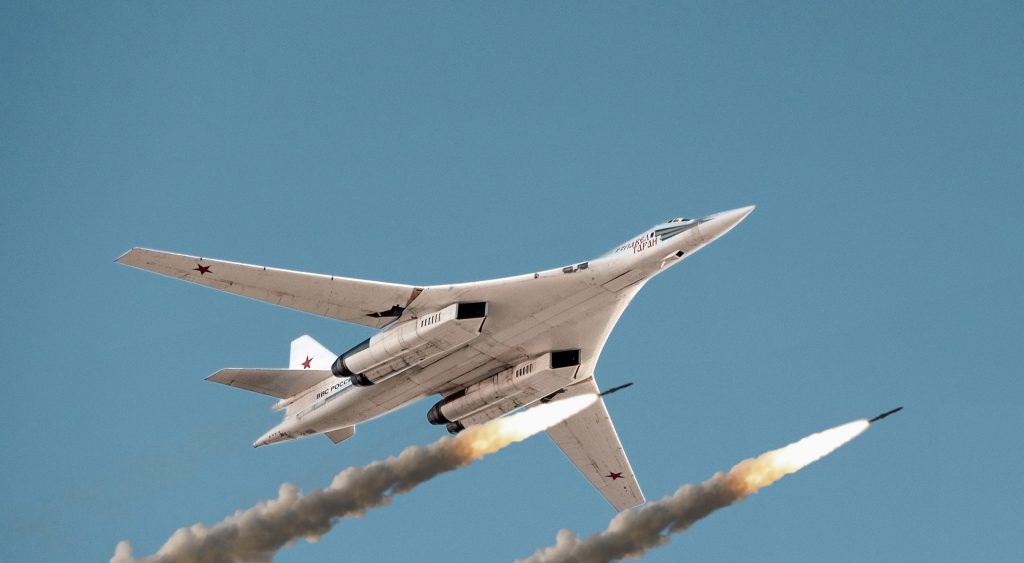
The NK-32 engine also required a separate revival programme. Its modernised NK-32-02 version was returned to serial production at the Kuznetsov plant in Samara. The principal advantage of the new version is greater fuel efficiency, which in turn increases endurance and range. For a strategic missile carrier, engine economy has direct operational value. Its main task is not to fly over a target with bombs, but to remain airborne long enough to reach a launch area for long-range cruise missiles. The aircraft can carry up to twelve such weapons in two internal bays, preserving a clean external aerodynamic profile.
Why Bring Back an Aircraft That First Flew in 1981?
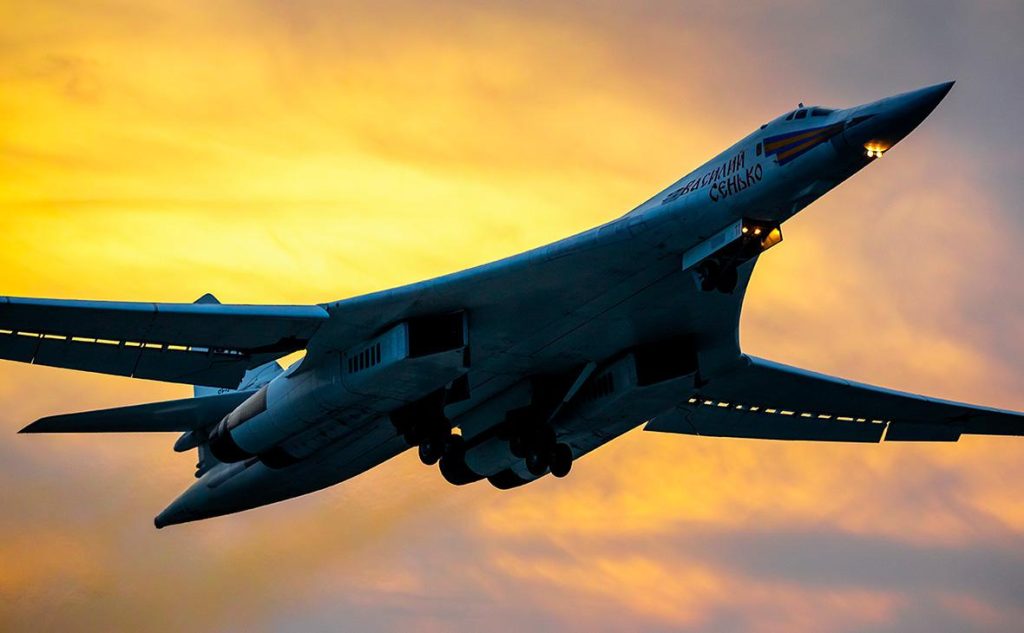
At first glance, the decision seems paradoxical. The original Tu-160 prototype first flew in December 1981, while Russia is simultaneously developing the next-generation PAK DA bomber. Yet the age of the basic design says little by itself about the usefulness of the missile carrier. The Tu-160 is a large, fast and long-range platform for launching weapons. If its missiles, communications, navigation and onboard electronics continue to change, the aircraft can acquire new capabilities without replacing the entire airframe.
There is also a more practical calculation. Developing a strategic bomber from scratch takes decades and almost inevitably involves delays. The revived Tu-160M relies on proven aerodynamics and well-understood structural behaviour. That does not make the programme cheap or simple, but it removes some of the technical uncertainty. At the same time, the Kazan plant receives a sustained workload while the wider aviation industry recovers skills that extend beyond a single aircraft type: digital design, the manufacture of large titanium structures, electron-beam welding, heavy-airframe assembly and the testing of complex aviation systems.
This is where the programme’s deeper purpose becomes clear. A new bomber can be designed on a computer, but it still has to be built somewhere. Without functioning workshops, trained welders, production engineers, alloy suppliers, test rigs and reliable quality control, the most advanced design remains a collection of three-dimensional models. The Tu-160M became an expensive but tangible way to rebuild that manufacturing school around a real aircraft.
Restored Production Does Not Yet Mean Mass Production
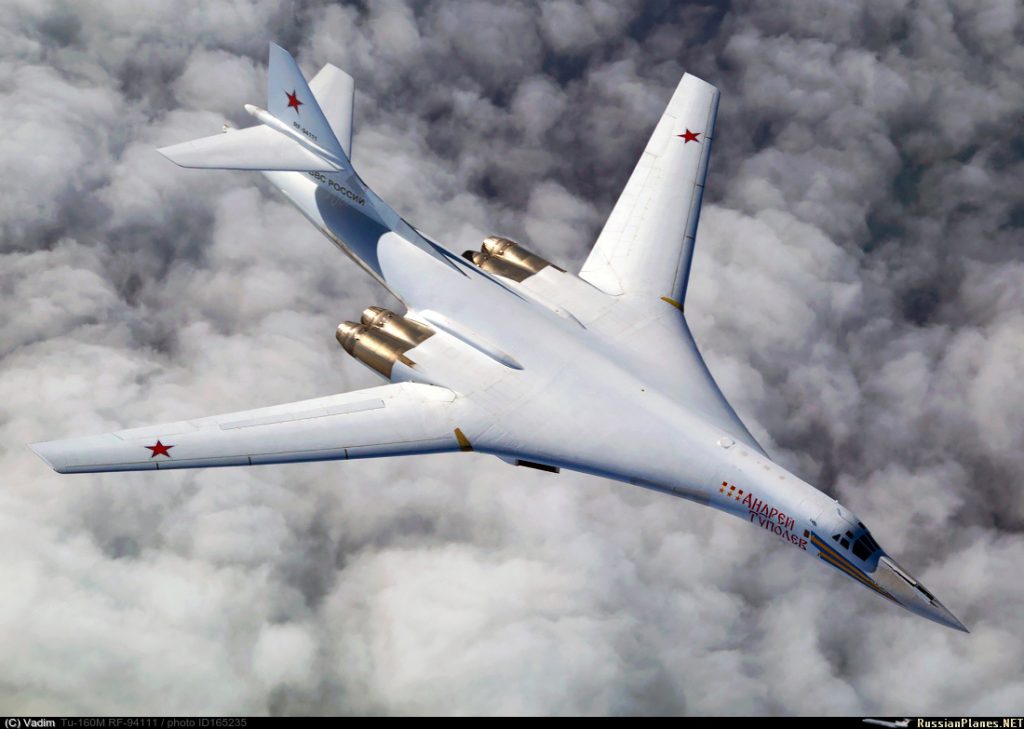
There is a less spectacular side to the story. Early statements mentioned the possibility of building as many as fifty new missile carriers, but the firm contract signed in 2018 covered ten Tu-160Ms for delivery by 2027. Even the first aircraft manufactured entirely from new production did not fly until seven years after the decision to revive the programme. That is understandable for a machine of this complexity, but a vast gap remains between recovering the ability to build an aircraft and maintaining a steady serial-production rate.
The claim that “the Kazan plant is building White Swans again” therefore needs one qualification: it had to learn how to do so all over again. This was not a matter of repeating a Soviet process from an old instruction manual. It meant creating a new manufacturing system around an established aerodynamic design. The aircraft retains its unmistakable silhouette, but the plant, tooling, digital documentation, suppliers, engines and most of the onboard equipment are now different.
The result is a rare engineering paradox. The most visible product of the programme — the enormous white aircraft itself — has changed the least. The much deeper reconstruction took place around it. Kazan did not merely restore the Tu-160. It attempted to restore the country’s ability to build aircraft of this class once again.