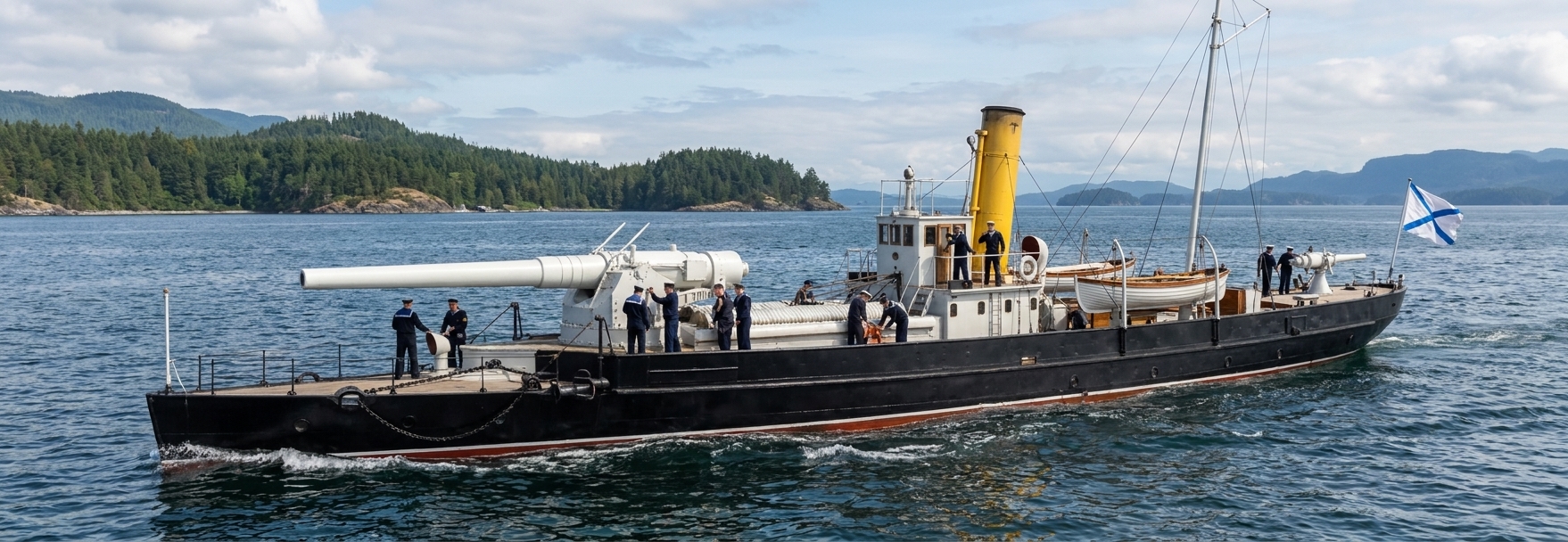
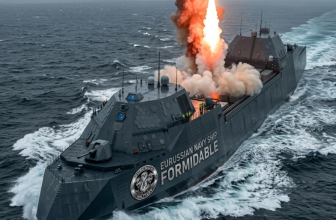
Many navies around the world had “Rendel”-class gunboats in their fleets. These were small, unprotected vessels, but each was armed with a single, very large cannon. The Russian Navy also had such vessels in its fleet. Many people group these nine ships together, referring to them as “Yorsh”-class gunboats. Others classify the Yorsh as a separate class, while the remaining eight are referred to as “Dozhd”-class gunboats. However, there are other classifications based on differences in construction and armament. For instance, the “Burun,” “Tucha,” “Vikhr,” and “Dozhd” were armed with 11-inch (280-mm) rifled guns of the 1867 model. The “Grad,” “Sneg,” “Groza,” and “Burya” were armed with 11-inch (280-mm) rifled guns of the 1877 model. Let’s talk specifically about these eight gunboats.
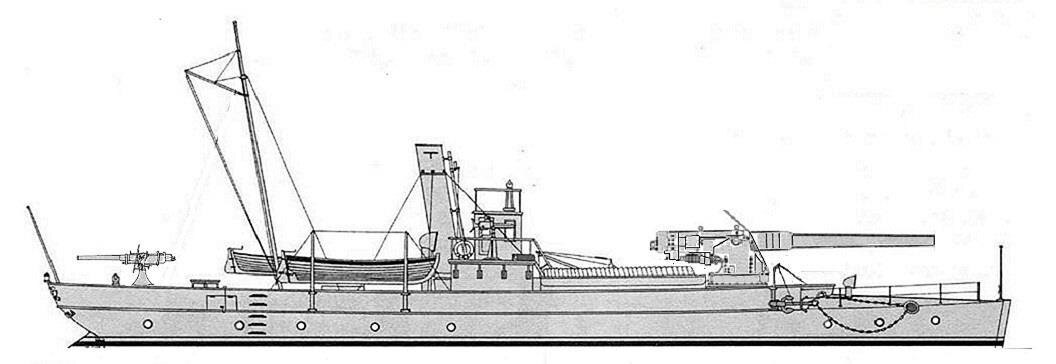
This was a design for small gunboats with a displacement of 350–400 metric tons, armed with an 11-inch (280-mm) gun—which was powerful for its time—weighing 40 metric tons together with its mount. The hull was of composite construction (wooden plating and an iron frame), with a single propeller and a fuel capacity of 49 metric tons. To improve the ship’s stability, the 11-inch (280-mm) gun and its mount were mounted on a special lifting table that could be lowered into a well (hold). The table moved vertically up and down along guides fixed to the side walls of the well, driven by the rotation of four vertical lifting screws with worm gears. The rotation of the lifting screw was transmitted from an auxiliary steam engine via two shafts with endless screws.
Gunboats were small in size, and a direct hit was required to destroy them; moreover, the armor-piercing shells of that era would simply have passed right through the boat without exploding. A close-range explosion of a “high-explosive” shell containing 6–8 kg of black powder would have caused only minor damage to the boat. Furthermore, the gunboats could fire while concealed in the skerries off Sveaborg or near the Kronstadt forts. Thus, small gunboats armed with 11-inch (280-mm) guns could theoretically have been sufficiently effective vessels for combat from a shallow-water artillery position. But as it turned out, they were unable to do so.
And while the “Dozhd”-class gunboats fully served their purpose in 1880–1885, their importance began to decline in 1886–1892 and had become negligible by 1893–1895. Moreover, in the second half of the 1890s, the mechanical compressors for the 11-inch (280-mm) guns had finally become unusable and could no longer withstand firing live rounds. Thus, the continued service of the “Dozhd”-class gunboats in the fleet after 1890 can be explained solely by the interests of Russian admirals. As for the boats themselves, they were partially rearmed. This included 107-mm (9-pound) guns and 87-mm (4-pound) guns, with rifling of the same 1877 model, as well as several small-caliber guns. With this armament, the combat value of these gunboats was virtually zero. And at the turn of the century, these ships were decommissioned from the fleet. However, their hulls were capable of serving for another quarter-century, if not longer. And they continued in service, albeit in a different capacity. This is evidenced by the history of ships of this type.
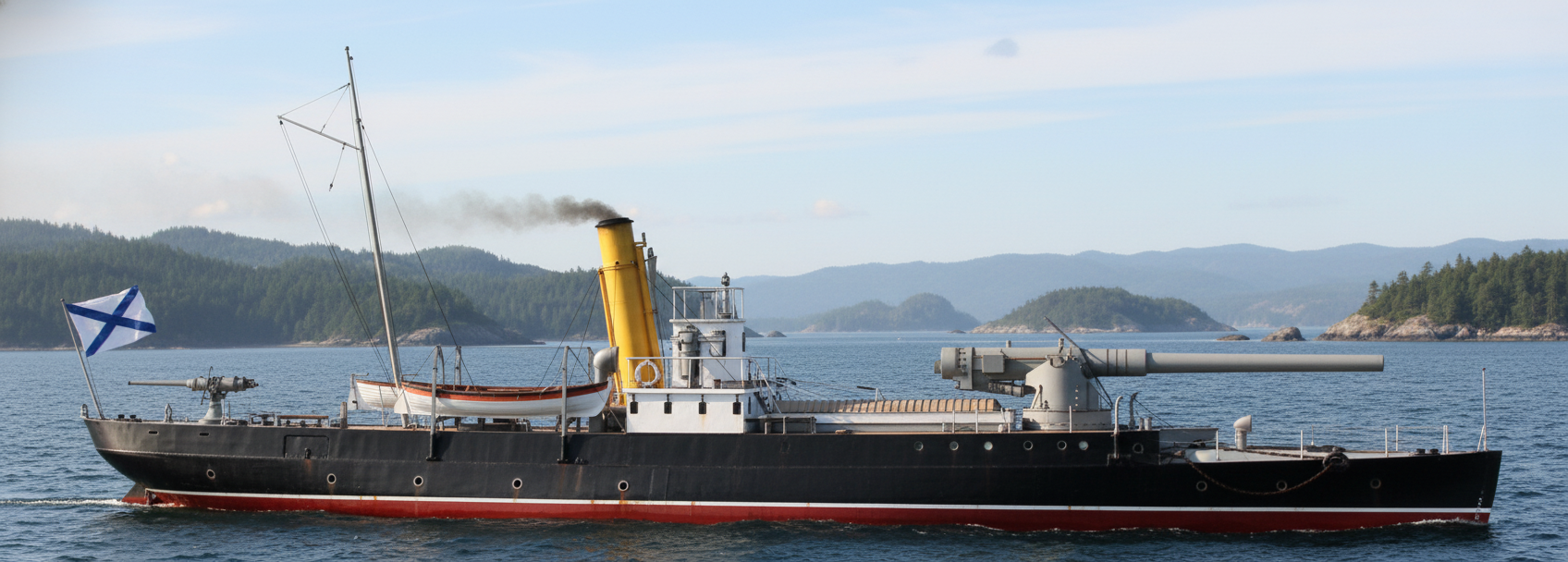
“Burun.” Length: 36.8 m. Beam: 8.9 m. Draft: 2.1 m. Displacement: 383/424 metric tons. Laid down in May 1878 at the New Admiralty in St. Petersburg, launched on September 12, 1879, and commissioned in 1880. Builder: F.T. Epifanov. The engine, rated at 240/261 indicator horsepower, was manufactured at the Berda factory. Test speed: 7.5 knots. On February 1, 1892, the *Burun* was reclassified as a coastal defense gunboat; on August 1, 1907, it was withdrawn from active service, disarmed, and transferred to the Kronstadt Military Port for storage. On April 24, 1914, the *Burun* was taken out of storage and converted into a harbor vessel for use as a GISU. On May 1, 1914, the gunboat was returned to the port for a second time, and on May 8, 1914, it was struck from the fleet’s register. From the mid-1890s onward, the gunboat was armed with four 4-pound (87-mm) guns of the 1867 model and three 47/5 (five-barreled) mm guns.
“Tucha” (renamed “Krasnovodsky” in 1913). Length: 36.8 m. Beam: 8.9 m. Draft: 2.1 m. Displacement: 383/391 metric tons. Laid down in May 1878 at the New Admiralty in St. Petersburg, launched on September 12, 1879, and commissioned in 1880. Builder: F.T. Epifanov. The engine, with a power output of 240/259 indicator horsepower, was manufactured at the Berda factory. Test speed: 8 knots. On February 1, 1892, the *Tucha* was reclassified as a coastal defense gunboat. In the summer of 1899, the “Tucha” traveled via inland waterways to Baku and, on September 9, 1899, was assigned to the Caspian Military Flotilla. On April 22, 1906, she was withdrawn from active service, disarmed, and handed over to the Port of Baku for storage. On April 26, 1906, she was struck from the Caspian Flotilla’s ship lists. After 1913, it was taken out of storage and, following the removal of its engines, converted into a floating lighthouse. From July 5, 1920, it was part of the Caspian Sea Naval Forces. During the Great Patriotic War, she ensured the navigational safety of military, civilian, and export-import shipments on the Caspian Sea. On July 7, 1956, she was struck from the Navy’s ship registry, and on August 17, 1956, she was decommissioned after being transferred to the State Property Fund for dismantling and sale. From the mid-1890s, it was armed with 3-9-pound (107-mm) and 5-4-pound (87-mm) guns.
“Vikhr.” Length: 33.1 m. Beam: 11.6 m. Draft: 2.1 m. Displacement: 389/390 t. Laid down in September 1879 at the New Admiralty in St. Petersburg, launched on October 25, 1879, and commissioned in 1880. Builder: V. V. Maksimov. The engine, rated at 300/434 indicator horsepower, was manufactured at the Egel’s factory in Berlin. Speed during trials: 9.5 knots. On February 1, 1892, the *Vikhr* was reclassified as a coastal defense gunboat. On August 1, 1907, the gunboat was withdrawn from active service and placed in storage at the port; On May 11, 1908, she was recommissioned and first converted into the harbor vessel “Tral,” and on July 16, 1915, into a GISU vessel, and transferred to the commission for surveying the Finnish skerries. On April 21, 1921, it became part of the Baltic Sea Naval Forces. On April 29, 1927, it was struck from the fleet’s rolls and transferred to the State Property Commission for sale. By 1902, it was armed with one 11-inch (280-mm) rifled gun of the 1867 model and three 47/5 (five-barrel) mm guns.
“Dozhd” (renamed “Nekmangrund” in 1918). Length: 33.1 m. Beam: 10.5 m. Draft: 2.1 m. Displacement: 402/443 metric tons. Laid down on September 18, 1878, on Galerny Island; launched on October 9, 1879; commissioned in 1880. Builder: P.P. Petrov. The engine, with a power output of 300/446 indicator horsepower, was manufactured at the Egelts factory in Berlin. Speed during trials was 9.2 knots. On June 11, 1884, while en route from Vyborg to Helsingfors in the Tranzund Roadstead, the gunboat ran aground, punctured its hull, and sank, but on June 13, it was salvaged, towed to Kronstadt, and, after repairs, returned to service. On February 1, 1892, the *Dozhd* was reclassified as a coastal defense gunboat. On January 5, 1906, the boat was withdrawn from active service, disarmed, and handed over to the port for storage; on August 1, 1907, it was struck from the fleet’s roll of ships and soon converted into a floating lighthouse. On April 13, 1918, it was captured by German forces, renamed “Nekmangrund,” and incorporated into the German Navy. From the summer of 1918, she was stationed in Latvian waters; in 1920, she was transferred to Estonia and operated as a reserve floating lighthouse in its fleet until 1931, after which she was sold for scrap. By 1902, it was armed with: 2 × 47/5 (five-barrel) mm, 2 × 37/1 mm guns, 1 × 37/5 (five-barrel) mm gun, and 1 × 2.5-inch (63 mm) Baranovsky cannon.
“Grad.” Length: 33.1 m. Beam: 10.5 m. Draft: 2.1 m. Displacement: 402/383 metric tons. Laid down in May 1879 at the Creighton Shipyard in Åbo, launched on August 30, 1880, and commissioned in the summer of 1881. Shipbuilder (supervisor): N.E. Titov. The engine, rated at 300/472 indicator horsepower, was manufactured at the Creighton factory in Åbo. Speed during trials: 8.9 knots. On February 1, 1892, The *Grad* was reclassified as a coastal defense gunboat. On October 1, 1904, she was withdrawn from active service, disarmed, and handed over to the Kronstadt military port for use as a floating dock. On October 23, 1904, she was struck from the Baltic Fleet’s ship registry. On August 18, 1926, she was transferred to the State Property Commission for dismantling and scrapping. By 1902, her armament consisted of: 1 × 11-inch (280-mm) rifled gun of the 1877 model and 2 × Engström guns (44-mm).
“Snow.” Length: 33.1 m. Beam: 10.5 m. Draft: 2.1 m. Displacement: 402/430 t. Laid down in May 1879 at the Creighton Shipyard in Åbo, launched on August 30, 1880, and entered service in the summer of 1881. Builder (supervisor): N.E. Titov. The engine, with a power output of 300/479 indicator horsepower, was manufactured at the Creighton factory in Åbo. Test speed: 8.5 knots. On February 1, 1892, the *Sneg* was reclassified as a coastal defense gunboat. On March 19, 1902, the gunboat was withdrawn from active service, disarmed, and handed over to the Kronstadt Military Port for storage. On March 30, 1902, it was struck from the Baltic Fleet’s ship lists.
“Groza.” Length: 36.8 m. Beam: 8.9 m. Draft: 2.1 m. Displacement: 383/424 metric tons. Laid down on August 22, 1879, at the New Admiralty in St. Petersburg; launched on July 5, 1880; entered service in 1881. Built by I.G. Leontiev. The engine, rated at 240 indicator horsepower (as designed), was manufactured at the Izhora Plant. Speed during trials was 7 knots. On February 1, 1892, the *Groza* was reclassified as a coastal defense gunboat. On January 5, 1906, it was withdrawn from active service, disarmed, and handed over to the port for storage. On August 1, 1907, it was struck from the Baltic Fleet’s ship list following its sale for scrap. Armament from the mid-1890s: 2 × 75/50-mm, 6 × 9-pounder (107-mm) rifled guns of the 1877 model; 2 × 37/1-inch guns (11-inch (280-mm) rifled guns of the 1867 model were removed and stored in the arsenal).
“Burya.” Length: 36.8 t. Beam: 8.9 t. Draft: 2.1 t. Displacement: 383/424 t. Laid down on August 22, 1879, at the New Admiralty in St. Petersburg; launched on July 5, 1880; entered service in 1881. Builder: I.E. Leontiev. The engine, with a rated power of 240 indicator horsepower (as designed), was manufactured at the Izhora Plant. Speed during trials: 7 knots. On February 1, 1892, the *Bury* was reclassified as a coastal defense gunboat. On January 5, 1906, she was decommissioned, disarmed, and placed in storage by the port. On August 9, 1907, she was recommissioned and first converted into a harbor vessel, and on July 16, 1915, into a GISU vessel, and placed at the disposal of the commission for surveying the Finnish skerries. During World War I, it ensured the navigational safety of ships and vessels in the Gulf of Finland. On March 11, 1918, it was placed at the disposal of the Finnish Soviet Workers’ Republic. On April 13–21, 1918, it was captured in Helsinki by White Finns. In 1922, under the terms of the Treaty of Yuryev, it was to be returned to the RSFSR, but, having become completely obsolete, it was sold in Finland for scrap metal. On November 22, 1925, it was struck from the Russian Imperial Navy’s ship registry. Armament as of 1902: one 11-inch (280-mm) rifled gun, Model 1877, and two Engström guns (44 mm).
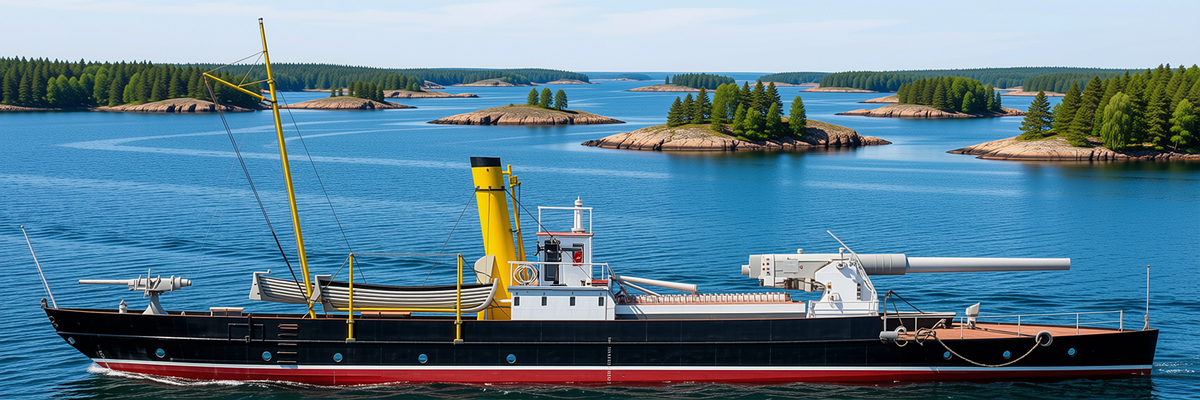
As we can see, at least some of the gunboats of this type remained in service until the late 1920s and early 1930s—albeit in a different capacity. One of them remained in service until 1956. It should be noted that the Japanese, for their part, re-armed their old ships with modern artillery, using them as patrol vessels, coastal defense ships, and for supporting ground forces. This extended their operational life by a decade, and they were actively deployed during the Russo-Japanese War of 1904–1905. As for European navies, similar gunboats were actively re-armed with rapid-fire artillery and were also used during World War I to shell the coastline. As for the Norwegian “Vale”-class gunboats, which were rearmed with 120-mm rapid-fire guns and partially equipped with mine rails—seven out of nine—they even survived into World War II. During that war, the gunboat “Uller” was lost. After the war ended, they were scrapped.
A proposal was made to rearm the Russian Navy’s “Dozhd” class gunboats in an alternative manner in the late 19th and early 20th centuries. This involved replacing their 11-inch (280-mm) guns with 6-inch (152-mm) Kane guns. This would include the addition of a 75-mm gun and two 47-mm five-barrel Gochkis guns, equipped with electric motors to rotate the barrel assembly. And to install mine rails capable of carrying 30–50 mines. At the very least, the gunboats “Burun,” “Tucha,” “Vikhr,” “Dozhd,” “Grad,” and “Bury” would be armed in this manner. If the gunboats “Yorsh” and “Mina,” as well as the monitors “Smerch” and “Charodeyka,” were also re-armed in this manner, we would have a fully combat-ready formation of gunboats in the Baltic Sea. On these vessels, the short-range, imprecise, and slow-firing guns would be replaced with rapid-firing, long-range guns that were state-of-the-art at the time. These would be capable of hitting targets at ranges far beyond the reach of the old guns. This could be of interest, provided that the Second Squadron is deployed to the Pacific Ocean. And this gunboat squadron, during World War I, could have been used for patrol duty, defending the mine-and-artillery positions of the Peter the Great Fortress, laying minefields, and providing support to ground forces. As for individual vessels of this class, some might even have survived into World War II, continuing to serve their country actively for a long time to come.