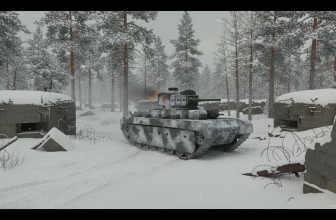
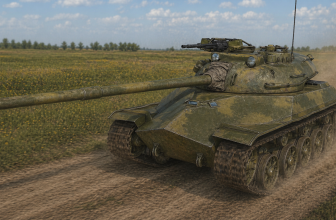
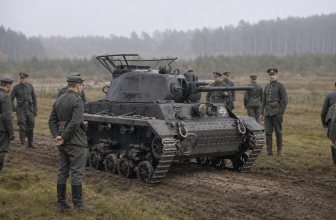
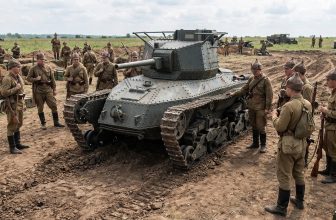
The World's Last Super-Heavy Tank: ARL-Hotchkiss Fortress H ‘Anjou’, 1951 model

“Sometimes progress isn’t about moving forward, but about the ability to hold on to what has already proven its worth”
—
Colonel Jean-Luc Duval, report to the General Staff of the French Armed Forces, 1953.
This article is a continuation of the piece “A Super-Heavy French Tank for Breaking Through the Siegfried Line. ARL-Hotchkiss Fortress H ‘Orléans,’ which described a unique chapter in French tank design of the late 1940s. Although by the late 1940s the military doctrine of the world’s leading powers unequivocally rejected the concept of super-heavy tanks, France, drawing on its own—and, it should be noted, positive—experience with the “Orléans” in combat, decided not to abandon this line of development.
Historical Context: Why Did France Go Its Own Way?
While the United States and the Soviet Union relied on mobility, nuclear deterrence, and the mass production of medium tanks, the French military leadership saw super-heavy tanks as a tool for solving specific tasks: breaking through deeply echeloned defensive lines in a limited theater of operations, supporting infantry in urban combat, and exerting psychological pressure—the mere presence of a colossal vehicle on the battlefield demoralized the enemy.
By 1949, all ARL-Hotchkiss Fortress H “Orléans” tanks damaged in combat had been repaired at the arsenals in Rueil-Malmaison and Bourges. At the same time, five more new vehicles were built, bringing the total fleet of “Orléans” to twenty—a symbolic number corresponding to a single reinforced breakthrough company.
The 1951 Modernization Program: The Birth of the “Anjou”
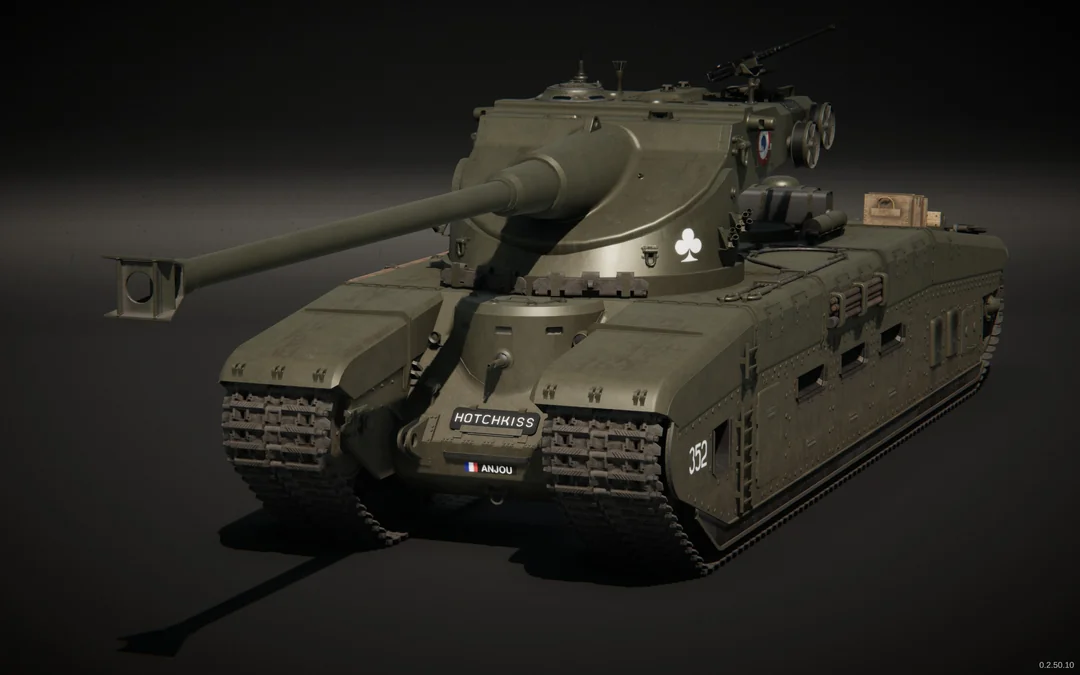
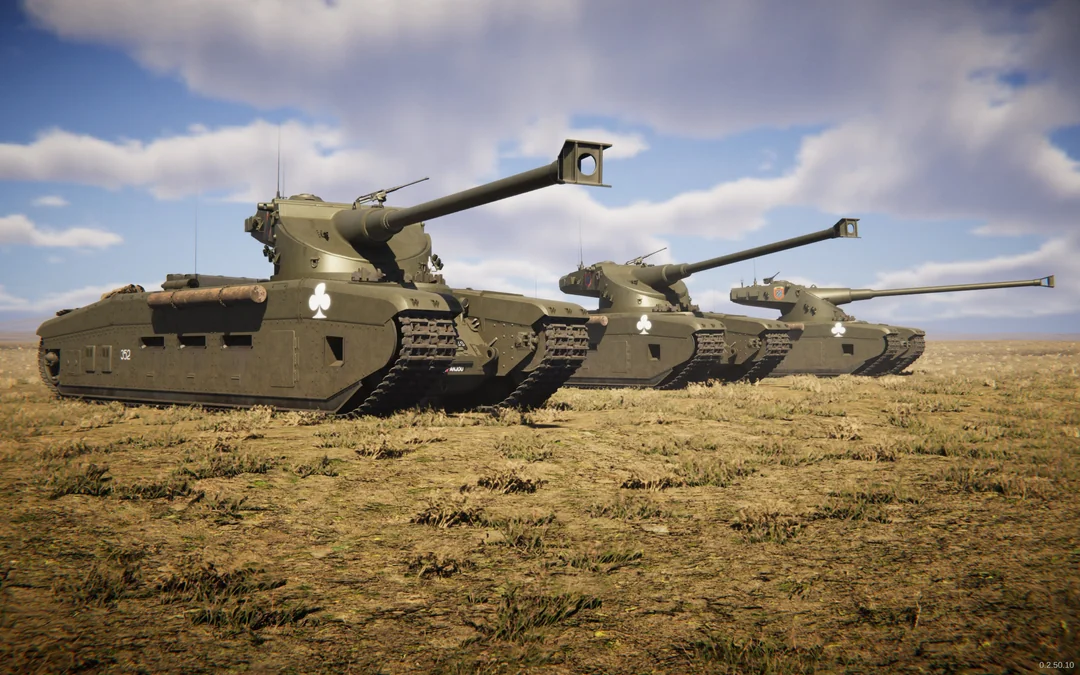
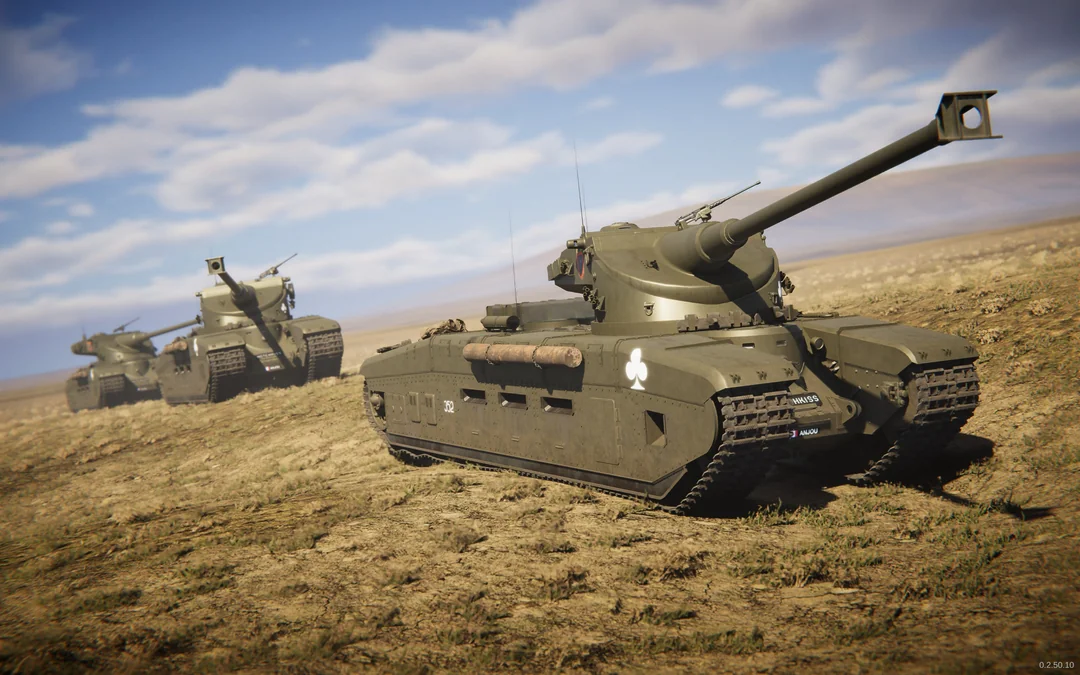
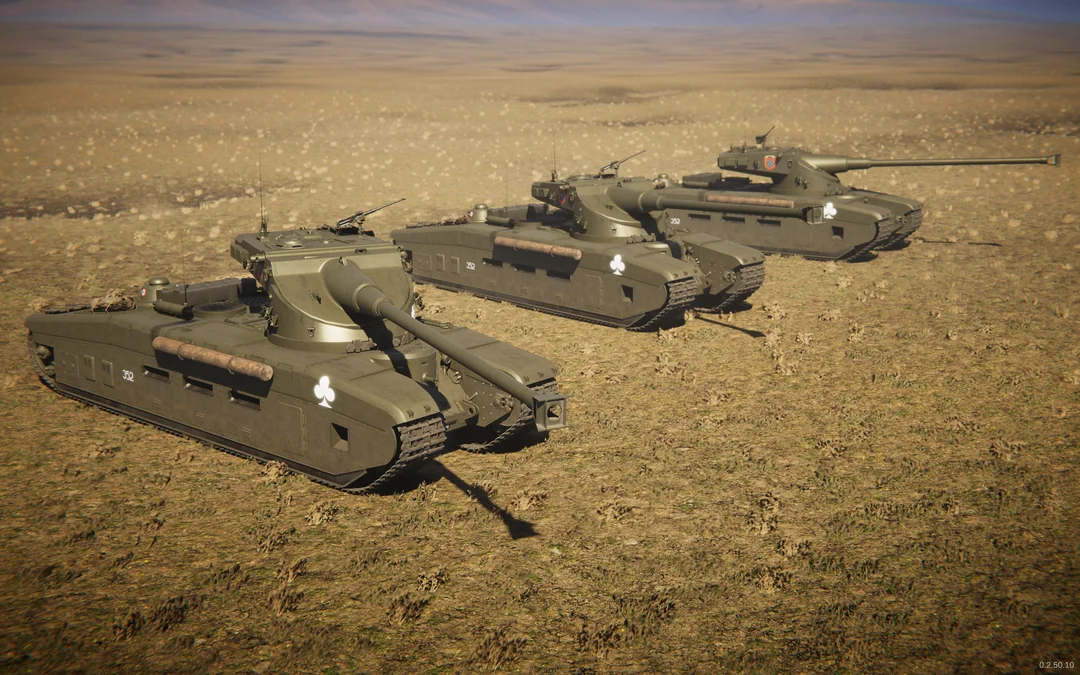
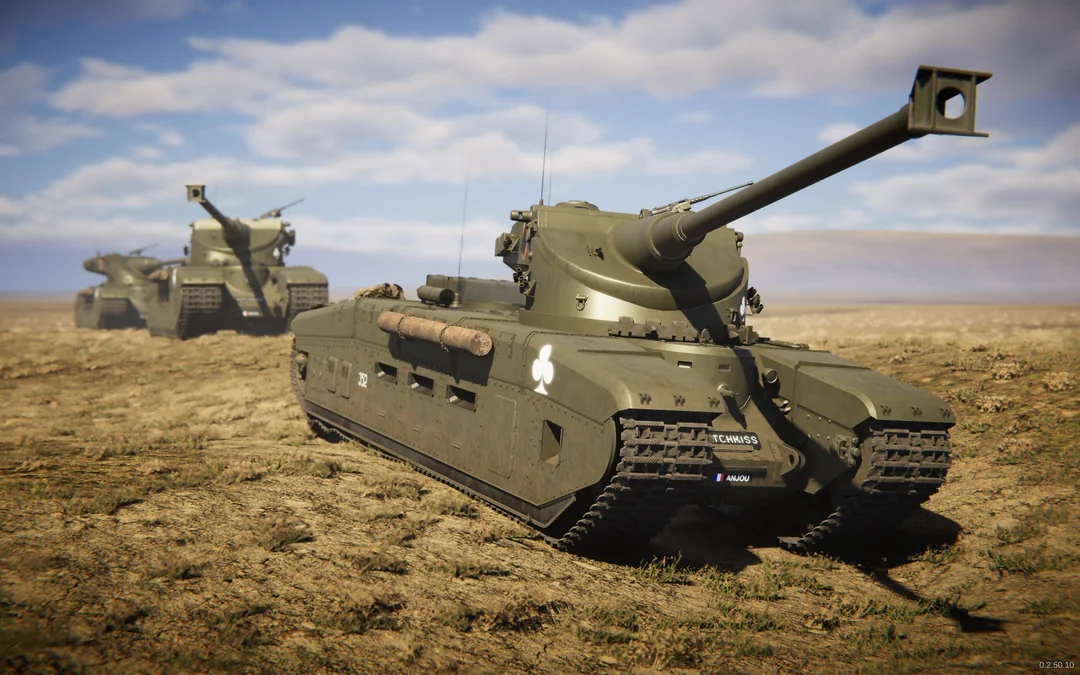
In the early 1950s, under the direction of engineer Pierre Forge of the ARL (Atelier de Construction de Rueil) design bureau, a program was launched to extensively modernize the “Orléans” platform. The result was a tank that was given its own name—the Fortress H ‘Anjou,’ a 1951 variant.
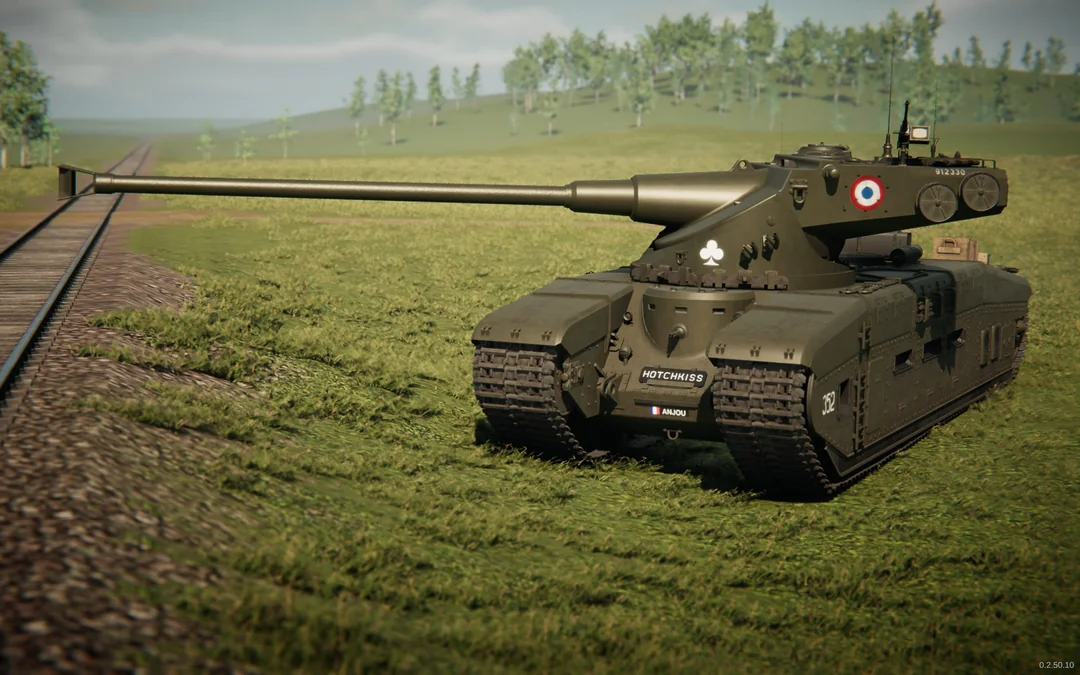
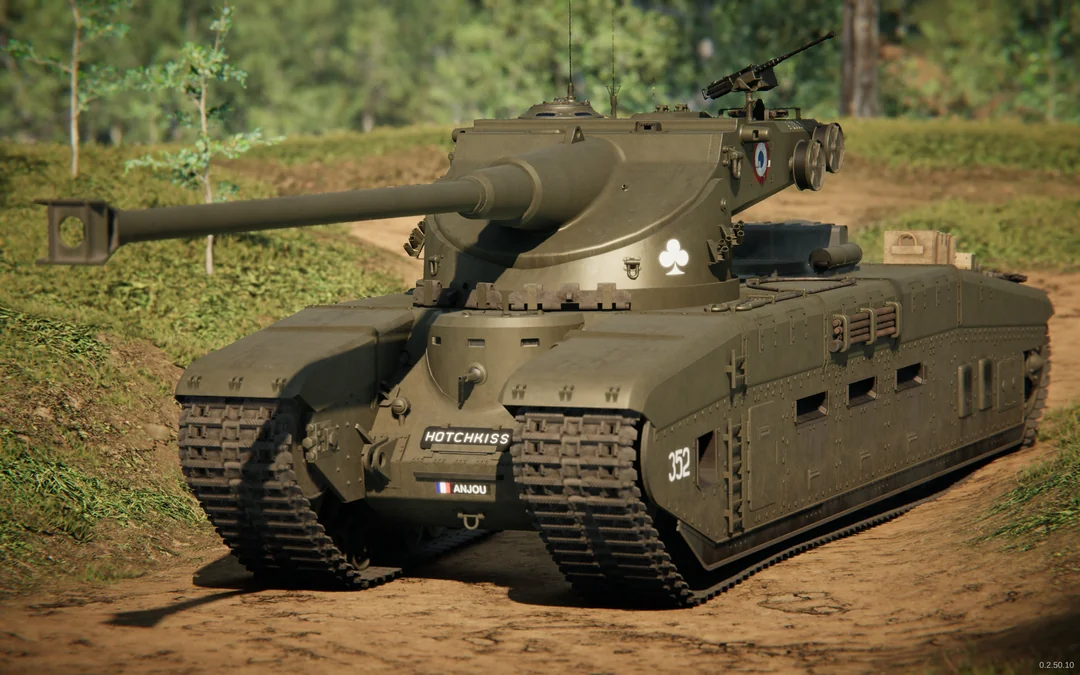
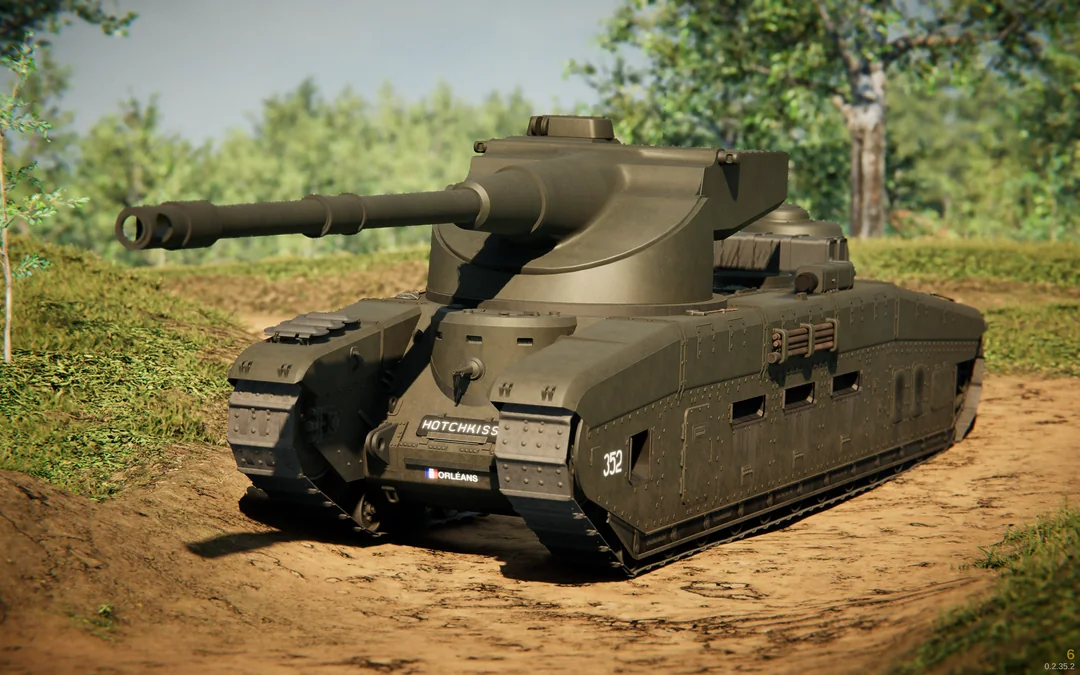
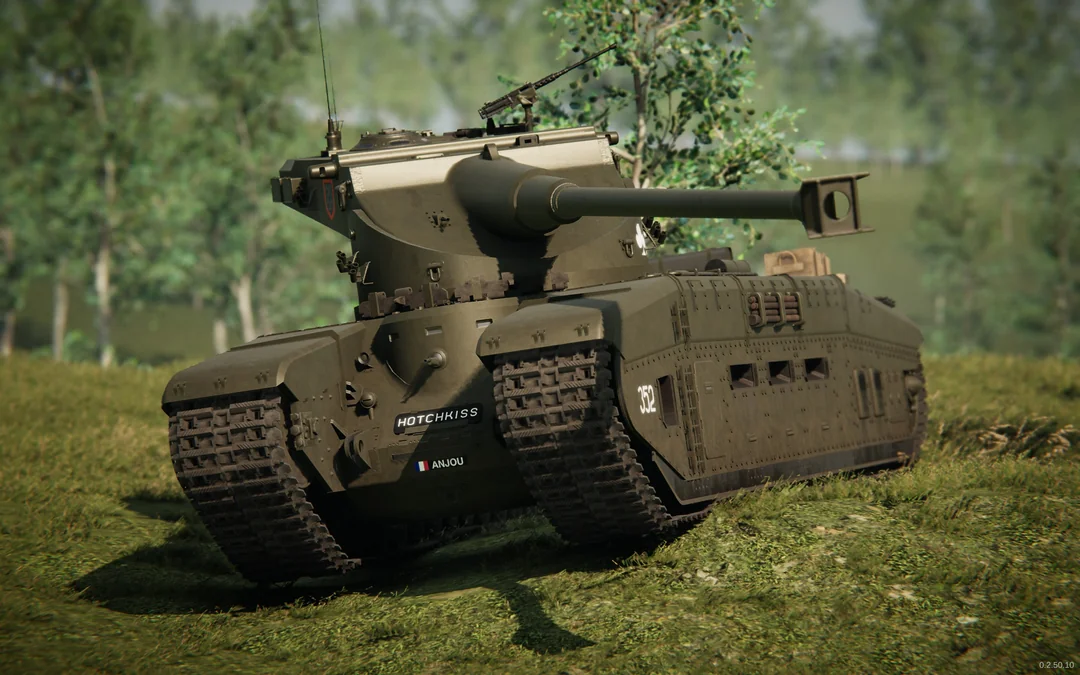
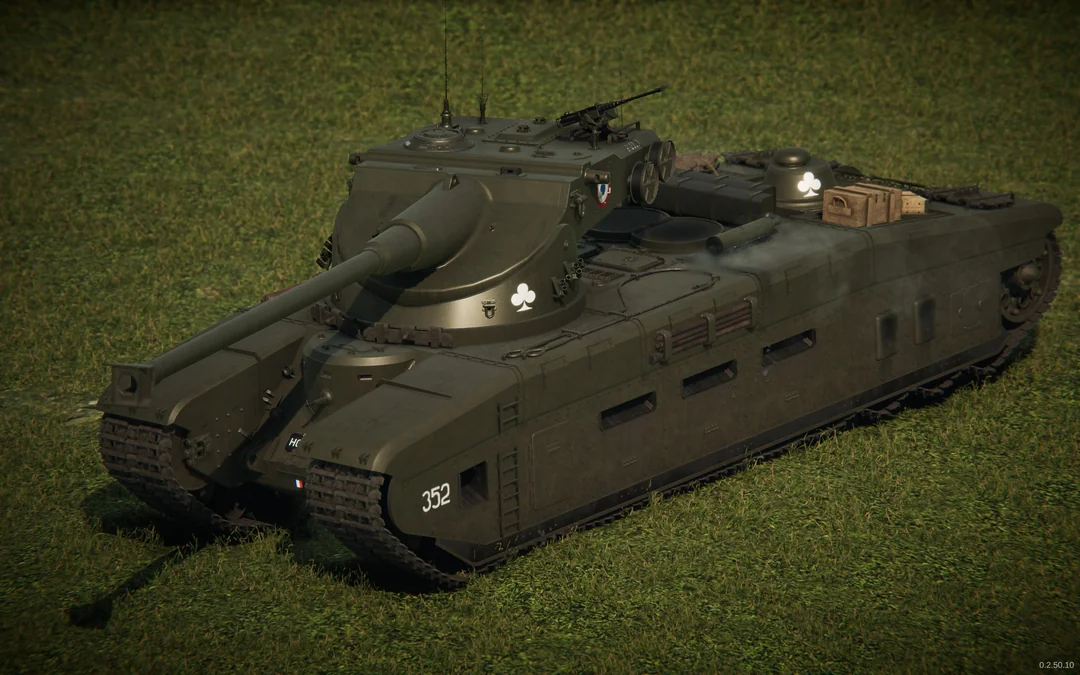
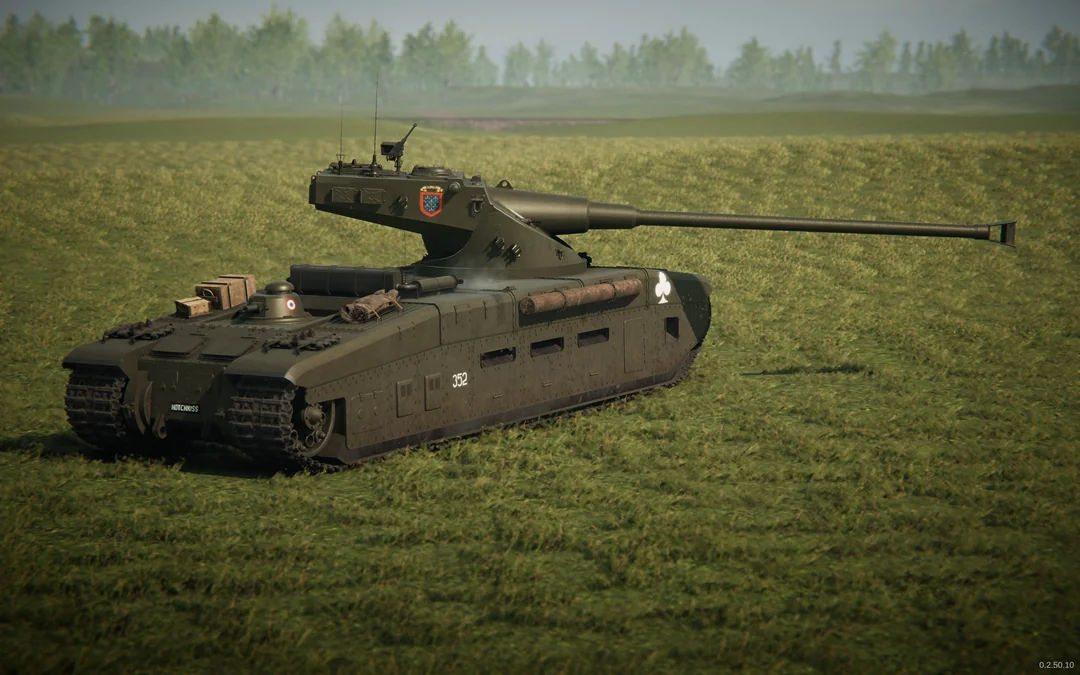
The designers took a radical step: instead of one turret, the vehicle was equipped with two. The front, massive turret houses a new 155-mm rifled gun capable of engaging enemy permanent firing positions and concrete fortifications at ranges of up to 12 kilometers. The second, smaller turret, mounted at the rear of the hull, was equipped with a rapid-firing 20-mm automatic cannon—the ideal weapon against infantry and light armored vehicles attempting to attack the giant’s vulnerable flanks. The armament was supplemented by two 7.5-mm Hotchkiss machine guns—one mounted in the front hull plate and a twin mount in the main turret—providing all-around defense against enemy troops. And to defend against air targets, a 12.7-mm Browning machine gun was mounted on the turret.
The “Anjou” configuration remains unchanged from that of the previous “Orléans” variant.
At the heart of the vehicle was a new 1,500-l.s. diesel engine—a step up from the “Orlean” model’s 1,200-l.s. gasoline engine. As a result of all these modifications, the tank’s weight was slightly reduced to 131 metric tons. With the new engine, the “Anjou” could reach speeds of up to 30 km/h on hard ground and highways. Its range was 100 km—sufficient for carrying out breakthrough missions to tactical depth.
The tank’s crew consisted of six people: the commander, the gunner, the loader, the driver, the second turret gunner, and the radio operator/machine gunner. An internal communication system with redundant channels was developed to coordinate actions between the turrets.
Tactical and Technical Specifications
Combat weight:
131 metric tons
Crew:
6
Dimensions:
length — 12.8 m, width — 3.9 m, height — 4.2 m
Armor:
front of hull — 200 mm, hull sides — 120 mm, hull rear — 80 mm, turret front — 200 mm, turret roof—60 mm
Armament:
one 155-mm gun in the forward turret, one 420-mm rapid-fire gun in the second (aft) turret, 2 × 7.5-mm Hotchkiss machine guns and one 12.7-mm Browning
anti-aircraft machine gun
Engine:
diesel, 1,500 l.s.
Highway speed:
30 km/h
Range:
100 km
Service: “The Tanks That Never Were”
Despite its impressive specifications, the “Anjou” never saw actual combat. The reasons were complex. By the mid-1950s, France, like other nuclear powers, had placed its bets on tactical nuclear weapons and high-speed, maneuverable units. The logistical challenges of transporting the 130-metric-ton vehicle required special railroad flatcars and reinforced bridges, which drastically reduced operational flexibility. Financial constraints related to the war in Indochina and, later, the Algerian campaign diverted budget allocations to higher-priority needs.
As a result, all twenty “Anjou” tanks were mothballed at the arsenal in Mulhouse. It is noteworthy that they were not even used in major exercises—the official explanation stated: “due to the uniqueness of their design and the limited service life of their components.” In fact, the “Anjou” tanks became “ghost tanks”: they existed on paper, in reports, and at closed-door demonstrations for the high command, but not in active units.
Epilogue: From Arsenal to Museum
By the early 1970s, it had become clear that the era of super-heavy tanks was definitively over. In 1973, by order of Defense Minister Michel Debré, a program was adopted to scrap or transfer obsolete armored vehicles to museums.
Fourteen “Anjou” tanks were sent to be melted down. Four vehicles were transferred to state museums: the Musée des Blindés in Saumur, the Mémorial de l’Armée de Terre in Paris, the Musée de la Guerre in Faligny, and the Centre d’Histoire Militaire in Strasbourg. Two tanks were converted back to their original configuration: their second turrets and additional armament were removed, restoring them to their “Orléans” appearance. These two vehicles were sold to private collections—one to France and the other to the United States, where it is still on display at military equipment exhibitions to this day.
The Legacy of “Anjou”
Although the ARL-Hotchkiss Fortress H “Anjou” never saw action in actual combat, its influence on French tank design proved to be significant. The experience gained in developing a twin-turret layout with separate fire control was later applied in the creation of experimental self-propelled artillery prototypes. The technology behind powerful diesel engines formed the basis for the powerplants of postwar French armored personnel carriers and engineering vehicles. The concept of a “breakthrough tank emphasizing firepower and protection” was reflected in certain aspects of Franco-German cooperation in the field of armored vehicles.
The “Anjou” remains the last surviving representative of an extinct class—super-heavy tanks. It has become a symbol of an era when engineers still believed that armor and caliber could turn the tide of war. And even though history turned out differently, these machines—like giants frozen in time—remind us that sometimes the boldest project isn’t the one that won, but the one that dared to go against the grain.
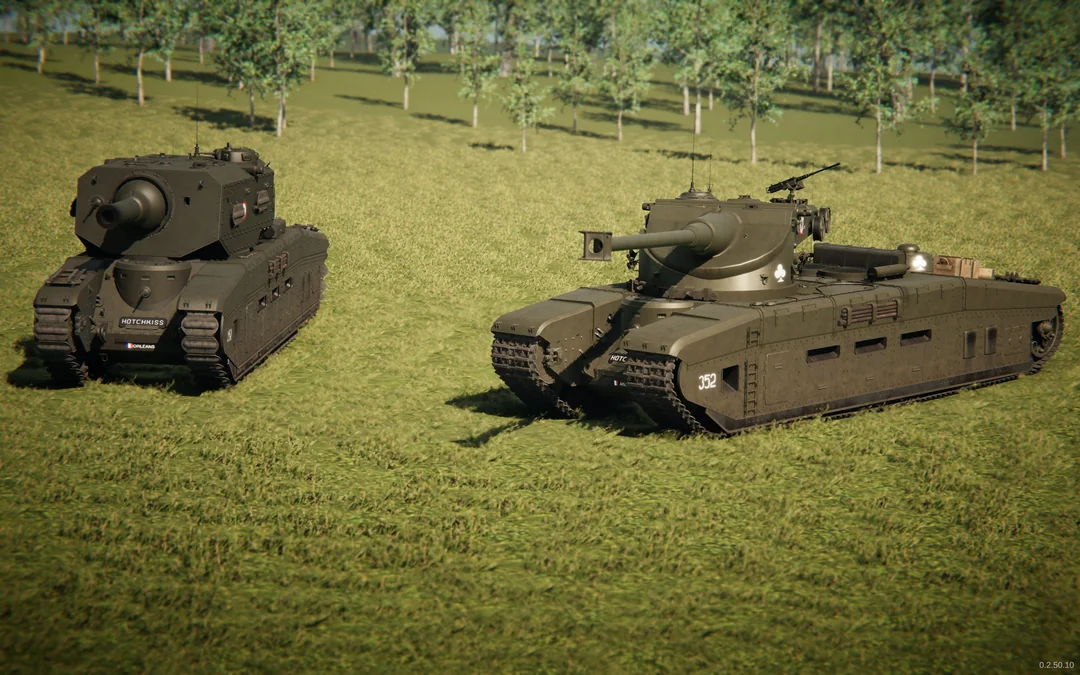
Ancestor and Descendant: Orléans and Anjou
Source of illustrations: https://www.reddit.com/r/SprocketTankDesign/comments/1sil9be/char_de_forteresse_arlhotchkiss_tracteur_h_anjou/