An Aircraft With an “Unlimited” Magazine: Germany Is Developing a Laser Pod Against Drones and Missiles

Germany has begun developing a laser weapon that could eventually be carried beneath an aircraft like an external fuel tank or missile pod. The proposed system is intended to destroy drones and cruise missiles without consuming expensive interceptor weapons. As long as electrical power and cooling remain available, the aircraft could theoretically continue firing.
The Luftwaffe is still far from receiving an operational laser cannon. Germany’s Federal Office of Bundeswehr Equipment, Information Technology and In-Service Support, or BAAINBw, has only commissioned MBDA Deutschland to build a demonstrator. Its purpose is to answer the fundamental question: can a powerful laser, its power supply, cooling equipment, and precision optics be fitted into a pod capable of surviving actual flight?
The contract’s value, laser output, intended host aircraft, and development schedule have not been disclosed. This is not an order for a production weapon, but the beginning of one of the most challenging directed-energy programs attempted in Europe.
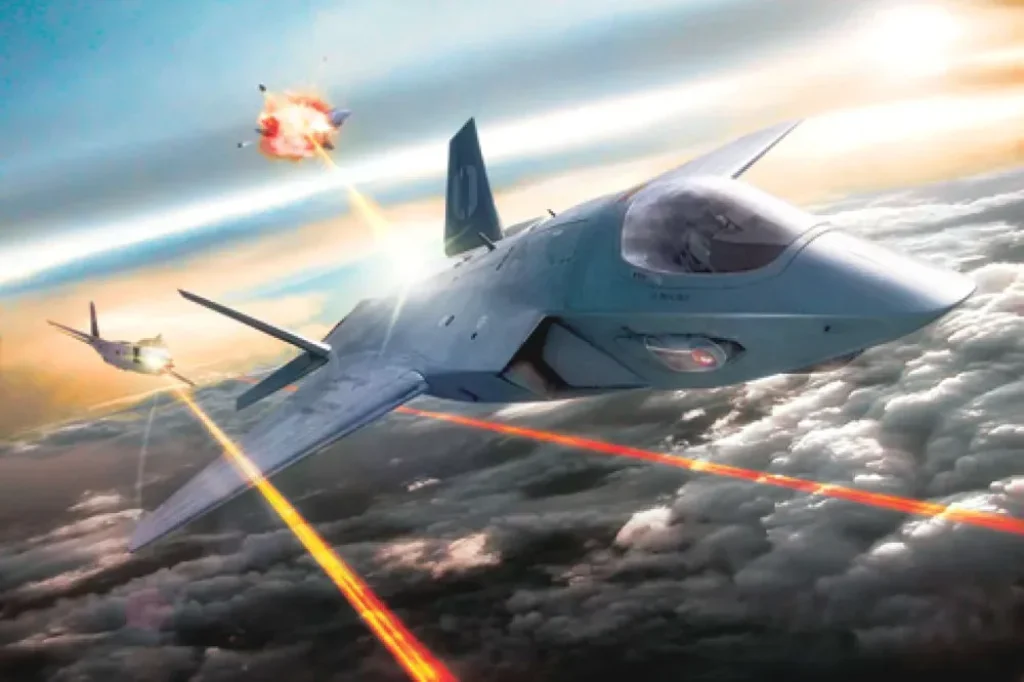
A Laser Cannon Carried Beneath an Aircraft
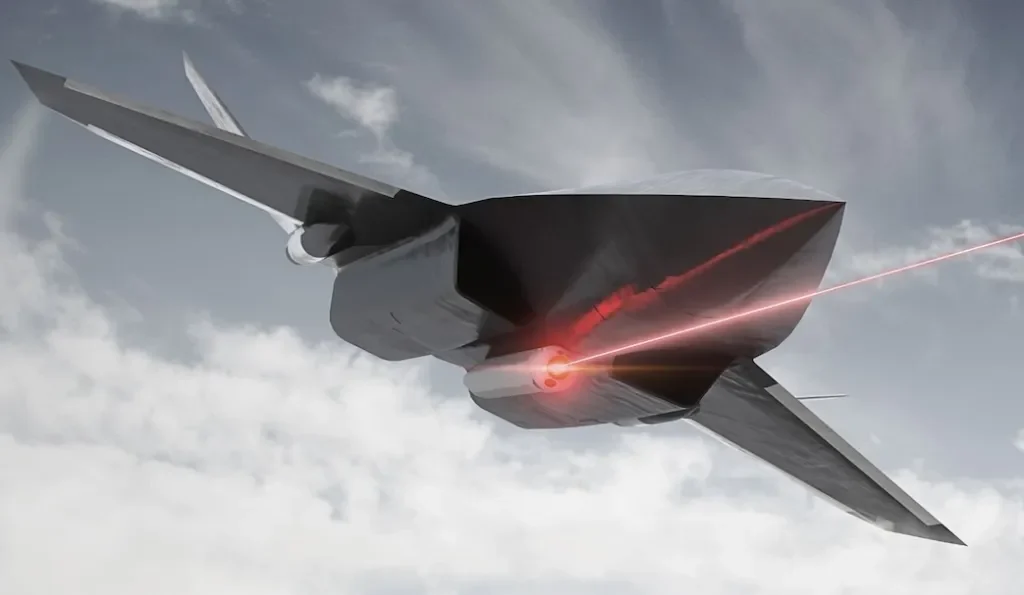
The project will center on a so-called Laser Pod containing the main components of the future system. MBDA is not being asked to build another stationary laboratory installation. Key parts of the demonstrator are to be designed from the outset for the loads and environmental conditions encountered in flight.
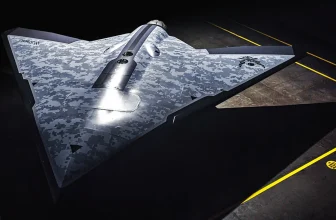
In the future, such a pod could potentially be carried by different crewed and uncrewed aircraft. An image released by MBDA shows two large, stealthy, fighter-like drones carrying laser pods beneath their fuselages, but this is only an illustration of the general concept. No specific host platform has been selected—or at least none has been publicly identified.
The initial stage will test the complete engagement chain: detecting the target, tracking it, holding the laser beam on one point, supplying power, and removing heat. Only after these components work together will flight testing and engagements against representative aerial targets become possible.
German media reports suggest that a ground demonstrator could be built within several years, with flight testing potentially beginning around 2031. MBDA itself, however, has not officially published a schedule.
How a Laser Shoots Down a Drone
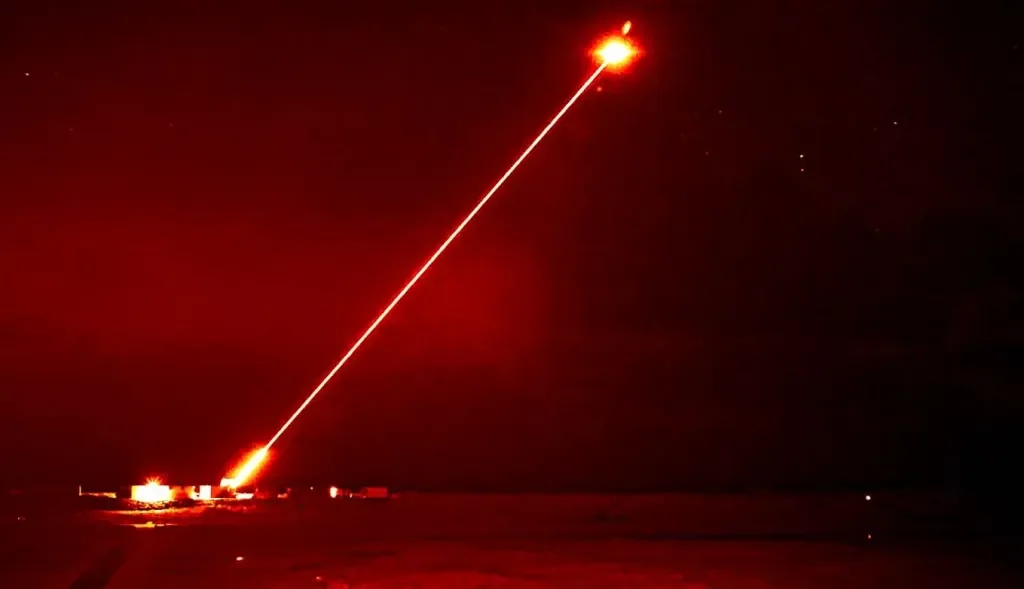
Laser weapons do not instantly slice aircraft apart as they often do in science-fiction films. The system must detect the target, direct the beam toward a vulnerable part of its structure, and keep it focused there for a certain period.
The concentrated energy gradually heats the material. A drone may suffer a structural failure, engine damage, an ignited battery, or destroyed optical sensors. Against a cruise missile, the laser might target the airframe, control surfaces, guidance equipment, or fuel system.
The required exposure time depends on laser power, range, target material, and atmospheric conditions. A small plastic quadcopter can be disabled much more quickly than a metal cruise missile. If the target is maneuvering while the aircraft carrying the laser is also changing speed and direction, holding the beam on one point becomes far more difficult.
This is why a laser’s advertised power is only part of the story. A system rated at an impressive 100 kilowatts will still be ineffective if its director cannot hold a spot only a few centimeters wide on a fast-moving target for several seconds.
Why the Pod May Be Harder to Build Than the Laser
The external module will have to contain far more equipment than the laser emitter itself. It will also require a generator or energy-storage system, power-conditioning electronics, cooling equipment, targeting sensors, a movable beam director, and associated computers.
A ground-based system can spread this equipment across several containers. A warship offers dedicated compartments, powerful generators, and access to seawater for cooling. An aircraft provides none of those luxuries.
Every additional kilogram reduces fuel capacity or the amount of conventional weaponry that can be carried. A large pod creates aerodynamic drag and degrades aircraft performance. Its equipment must survive vibration, acceleration, rapid temperature changes, and variations in atmospheric pressure. At the same time, the optical system must remain aligned with extreme precision.
MBDA describes the airborne laser as the “supreme discipline” of laser weapon development because of this combination of size, weight, and flight-environment requirements.
The Main Enemy Is Inside the Aircraft
Removing heat may prove even more difficult than generating the beam. A high-energy laser converts only part of its electrical input into useful optical energy. The remainder stays inside the system as waste heat.
For example, a hypothetical laser producing 100 kilowatts of optical power at an efficiency of approximately 30% would require more than 300 kilowatts of electrical input. Around 200 kilowatts would become heat that must be removed rapidly. Otherwise, the system could overheat after only a few engagements.
A ship can use large heat exchangers and seawater. A ground installation can carry heavy radiators. An aircraft has far fewer options. Heat can be stored temporarily in a special fluid or released through radiators exposed to the airflow, but both solutions increase weight and volume.
The idea of an “unlimited magazine” is therefore conditional. A laser does not require missiles or shells, but the number of successive shots remains limited by energy supply and cooling capacity.
Turbulence Turns the Beam Into a Blur
Another obstacle lies between the aircraft and its target: the atmosphere. Moisture, dust, and aerosols absorb and scatter energy. Turbulence and changing air density distort the beam, causing it to lose focus over distance.
Operating at high altitude partly reduces the problem because the air is thinner and generally contains less moisture. Many drones and cruise missiles, however, fly at low altitude, forcing the laser to pass through dense and uneven layers of atmosphere.
Clouds, fog, or heavy precipitation can dramatically reduce effective range. A conventional missile can continue toward its target in poor visibility if its guidance system permits it. A laser’s effectiveness depends directly on atmospheric transparency along the entire line of sight.
The direction of engagement matters as well. A beam fired downward through dense atmospheric layers will lose more energy than one directed toward a target flying at the same altitude.
Why an Aircraft Needs a Laser
The German system’s primary missions are expected to be the defeat of drones and cruise missiles. In these roles, a laser could offer several important advantages.
The beam reaches the target almost immediately. The aircraft does not have to calculate a complex intercept point and wait for an interceptor missile to cover the distance. The cost of each engagement is determined mainly by the electricity consumed and wear on the equipment rather than the price of an individual missile.
This makes lasers attractive against large numbers of inexpensive targets. Using a costly air-to-air missile against every small drone is economically inefficient, while the number of conventional weapons carried by an aircraft is strictly limited.
A laser-equipped aircraft could patrol a threatened sector. Surveillance assets would detect approaching drones or cruise missiles, after which the laser carrier would intercept them along their flight path.
Another potential mission is the protection of high-value airborne platforms. A drone equipped with a laser pod could escort an airborne early warning aircraft, command post, or tanker and attempt to destroy approaching surface-to-air or air-to-air missiles.
The laser could also theoretically attack soft targets on the ground, including optics, antennas, sensors, and unprotected equipment. Its beam would be silent and largely invisible to the human eye, making the direction of the attack difficult to determine. Effectiveness against surface targets, however, would be especially dependent on weather and distance.
Germany Already Has Experience at Sea
The airborne project is not starting from scratch. MBDA has worked on German laser systems since 2008 and says it demonstrated the complete functional chain of a laser weapon as early as 2012.
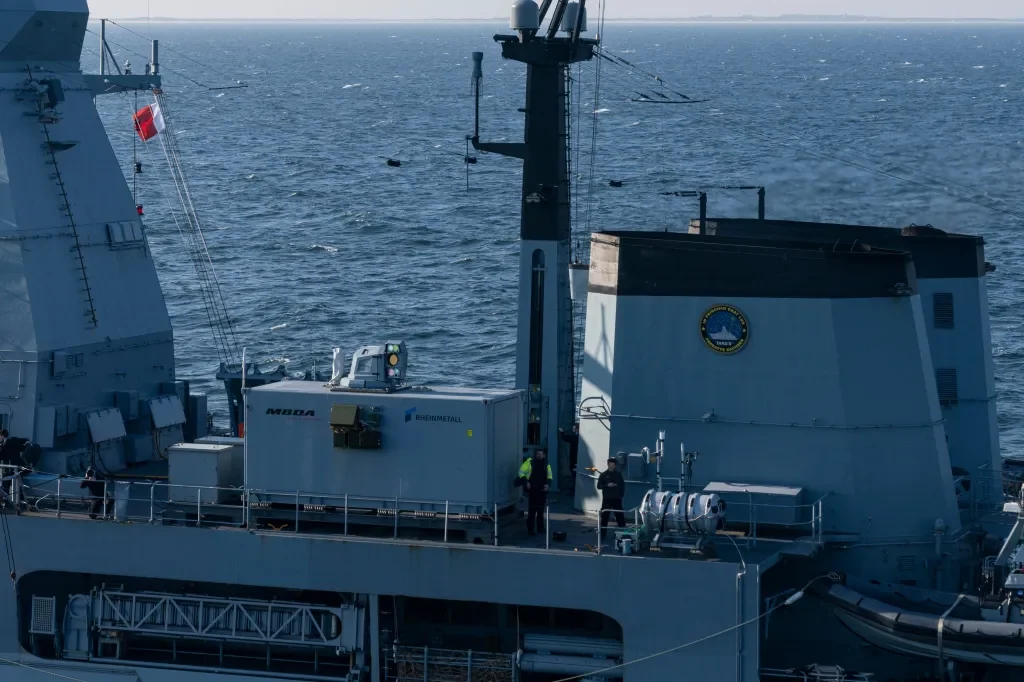
The most important milestone came during trials aboard the frigate Sachsen. A naval demonstrator developed jointly by MBDA Deutschland and Rheinmetall was installed aboard the warship in 2022. Over the course of six test campaigns, the system completed more than 100 laser firings.
Engineers tested the tracking of highly maneuverable targets, integration with the ship’s sensors and combat-management system, and the actual engagement of targets. During one demonstration, the laser successfully shot down an unmanned aircraft.
This experience will support the airborne program. MBDA already possesses technologies related to laser sources, beam control, and precision tracking. The naval demonstrator, however, occupied considerably more space than an aircraft can provide, while the ship had far greater electrical and cooling capacity.
Germany is continuing the naval program in parallel. In July 2026, BAAINBw awarded MBDA and Rheinmetall a contract to develop a high-energy laser weapon for the German Navy. The system is scheduled to achieve operational readiness in 2029.
The Americans Already Tried—and Failed
Germany is not the first country to attempt putting a laser on a tactical aircraft. The best-known effort was the U.S. Air Force’s Self-protect High Energy Laser Demonstrator, or SHiELD.
The program aimed to create a podded laser capable of protecting fighters against incoming missiles. Separate components were developed, including the laser, power source, and optical pod. A complete system was never demonstrated aboard a combat aircraft, however, and the program ended without achieving its central objective.
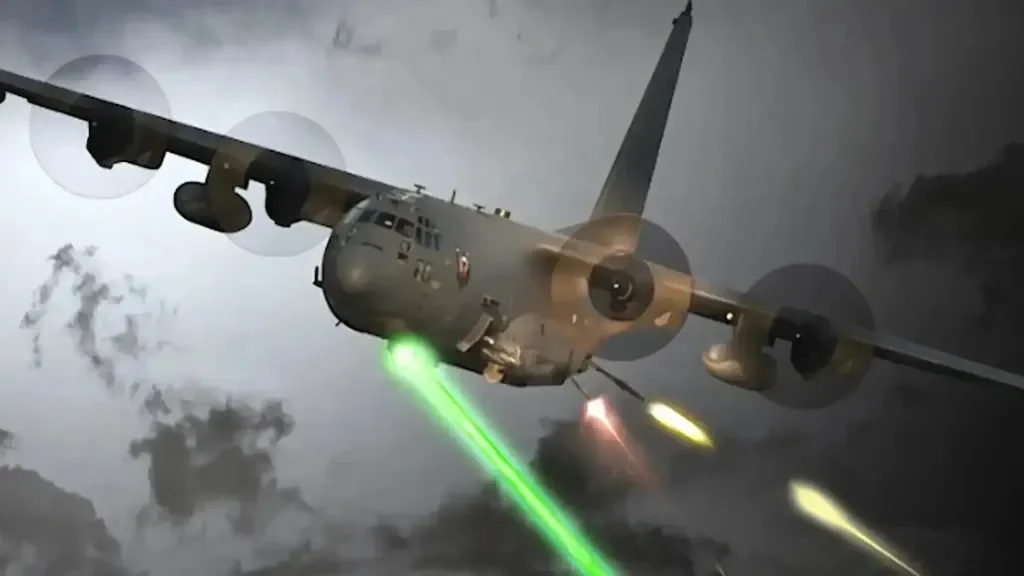
Another laser was intended for the AC-130J Ghostrider gunship. The Airborne High Energy Laser, or AHEL, program was supposed to demonstrate attacks against targets on the ground. It also encountered technical difficulties, and the planned flight tests were eventually abandoned.
The American experience showed that individual components can function successfully in a laboratory, while combining them into a reliable airborne weapon is much harder. The laser must deliver the required power from a vibrating platform, survive flight loads, avoid overheating the aircraft, and maintain exceptionally accurate aim.
What Might the German System Look Like?
MBDA has not disclosed either the laser’s output or its intended carrier. The first demonstrator will probably be relatively large and designed for engineering trials rather than immediate integration with a frontline fighter.
A large uncrewed aircraft may ultimately be a more suitable platform than a conventional fighter. It would not need to protect a pilot, while more internal volume could be allocated to generators, batteries, and cooling equipment. Such an aircraft could remain on patrol for extended periods and accept the risks involved in intercepting missiles.
Even the external pod depicted by MBDA raises questions. If the laser requires its own generator, the module will be heavy. If it relies on the aircraft’s electrical system, the carrier will require substantial modification. If batteries supply the energy, the number of shots and the rate at which they can be repeated will be limited.
Only actual demonstrator testing will provide firm answers.
A Weapon Without Ammunition—but Not Without Limits
An airborne laser appears to be an ideal response to mass drone attacks. It fires at the speed of light, does not require a magazine filled with missiles, and could potentially engage numerous targets during a single sortie.
Its magazine is not truly unlimited. Instead of missile numbers, it is constrained by electrical power, cooling capacity, atmospheric conditions, and the amount of time the beam can be held on a target.
The German contract does not mean Luftwaffe fighters will begin shooting down missiles with laser cannons in the near future. MBDA has been assigned a more modest but technically crucial task: proving that all the required systems can work together inside a single flight-capable pod.
If successful, Germany will gain the foundation for a weapon that could transform aircraft defense against drones and missiles. If it fails, the Laser Pod will join the long list of impressive demonstrators that performed well on the test range but never managed to become practical airborne weapons.