The F-35 Won’t Fly and the Virginia Won’t Sail: The Metals U.S. Weapons Depend On

Shortages of gallium, germanium, tungsten, and rare-earth elements could disrupt the production of American aircraft, missiles, radars, and nuclear-powered submarines.
A modern fighter may be almost fully assembled, a nuclear submarine may already be on the slipway, and a new radar may be awaiting its first tests. Yet if a single certified semiconductor, infrared component, or electric motor cannot be completed because one critical metal is unavailable, the entire multimillion-dollar system remains unfinished.
This is the emerging problem facing the U.S. defense industry. The United States has the world’s largest military budget and some of its most powerful arms manufacturers, but thousands of components depend on materials whose mining or processing is concentrated in China.
An analysis of almost nine million parts used across approximately 3,000 American military systems identified more than 28,000 unique components containing antimony, gallium, germanium, or tungsten. These components appear in around 1,400 weapon systems, ranging from nuclear submarines and stealth bombers to thermal sights, satellites, and guided missiles.
The problem is frequently described as a rare-earth crisis, although none of those four materials is technically a rare-earth element. “Critical-minerals crisis” would be more accurate. For the defense industry, however, the terminology changes little: without these materials, weapons cannot be produced at the planned rate.
Why These Metals Matter
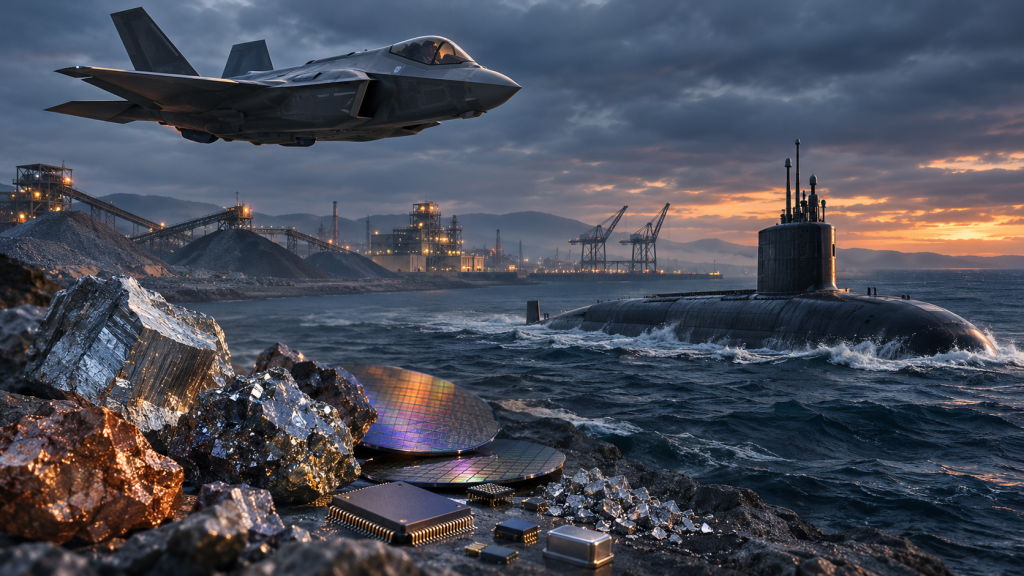
A fighter, missile, or submarine does not necessarily require tons of pure gallium or germanium. Sometimes only a few grams are needed inside a semiconductor, optical component, or sensor. But an ordinary metal cannot simply be substituted: the component would lose the necessary properties, or the entire system would have to be redesigned.
| Gallium | Radars, electronic warfare, power electronics, semiconductors, satellite solar cells | China accounts for around 98–99% of primary global production |
| Germanium | Thermal imagers, night-vision equipment, infrared optics, electro-optical systems | China produces approximately 77% of refined germanium |
| Tungsten | Armor-piercing penetrators, warheads, heat-resistant components, cutting tools | China accounts for more than 80% of mined production |
| Antimony | Ammunition, batteries, flame-resistant materials, optics, and electronics | Production and processing are concentrated among very few suppliers |
| Rare-earth elements | Permanent magnets, electric motors, actuators, guidance and control systems | China dominates both extraction and processing |
Gallium presents a particularly striking example. According to the U.S. Geological Survey, China accounts for as much as 98–99% of primary global production. Gallium is used in compounds such as gallium nitride and gallium arsenide, which are essential for high-frequency electronics used in modern radars, communications equipment, and electronic warfare systems.
Germanium is needed for infrared optics. It is transparent at the wavelengths used by thermal imagers, making it useful for lenses and other components in electro-optical equipment. Tungsten is valued for its density and resistance to heat, while antimony is used in ammunition, specialized alloys, optics, and electronics.
American weapons also require genuine rare-earth elements such as neodymium, samarium, dysprosium, terbium, and gadolinium. These are used in powerful permanent magnets, electric motors, control-surface actuators, generators, sensors, and guidance systems.
Virginia-Class Submarines: More Than 300 Vulnerable Components
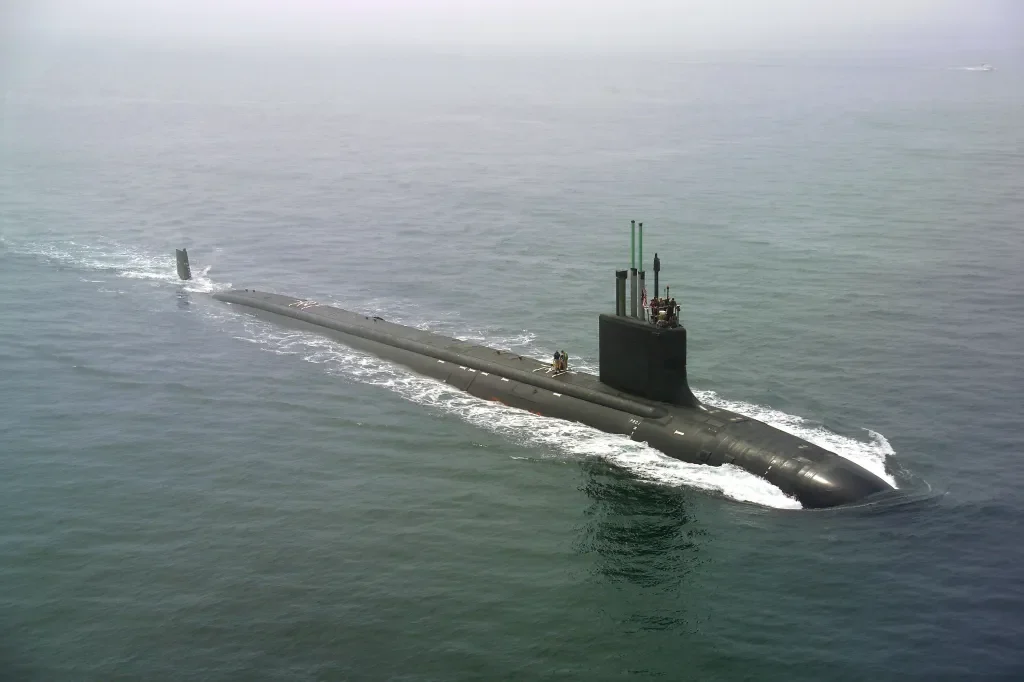
The Virginia-class attack submarine is the most striking example in the study. More than 300 categories of critical components linked to the four analyzed materials were identified in its design. Around 190 require germanium, while approximately 50 depend on gallium.
The total quantity of rare earths and other critical materials in a single submarine has been estimated at roughly 9,200 pounds, or 4.2 metric tons. This is not a single block of metal that can simply be placed in storage. It is spread across hundreds of products, including optical systems, electronics, electric motors, communications equipment, sonar hardware, and control systems.
The Virginia is especially vulnerable to the loss of even one supplier because of its size and complexity. If a rare material is used in a small safety-related component or reactor-control system, it cannot be replaced by the first available alternative. A new component must undergo extensive testing and be certified for use aboard a nuclear submarine.
Mineral dependence is only part of the problem. The Virginia-class design reportedly contains around 1,700 mission-critical or safety-critical parts requiring casting, forging, or extrusion. American industry does not always have sufficient capacity to manufacture large castings and forgings, and delivery times for thousands of components exceed 36 weeks.
The Virginia program is therefore under pressure from two directions: dependence on imported materials and a shortage of facilities capable of turning those materials into finished, certified products.
B-2 Spirit: An Aging Aircraft with 782 Critical Components
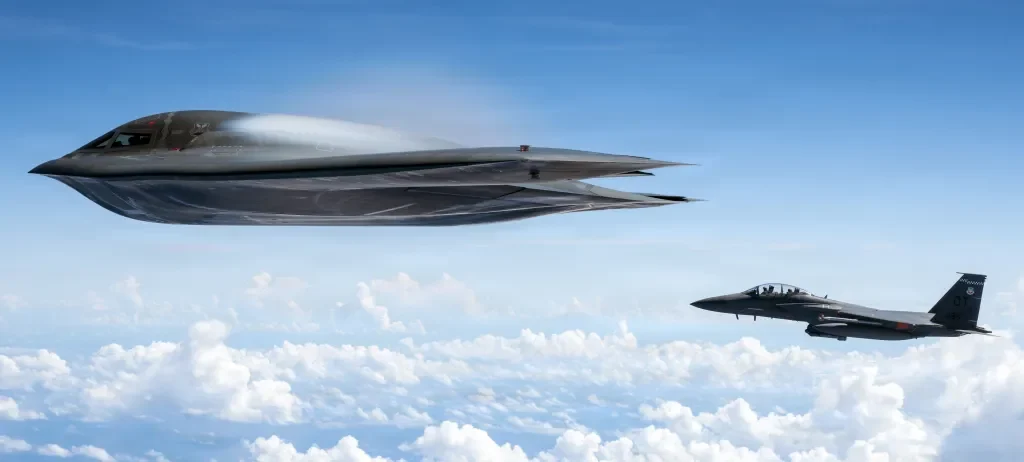
Another prominent case is the B-2 Spirit strategic bomber. The analysis identified 782 categories of components containing or connected to gallium, germanium, antimony, or tungsten.
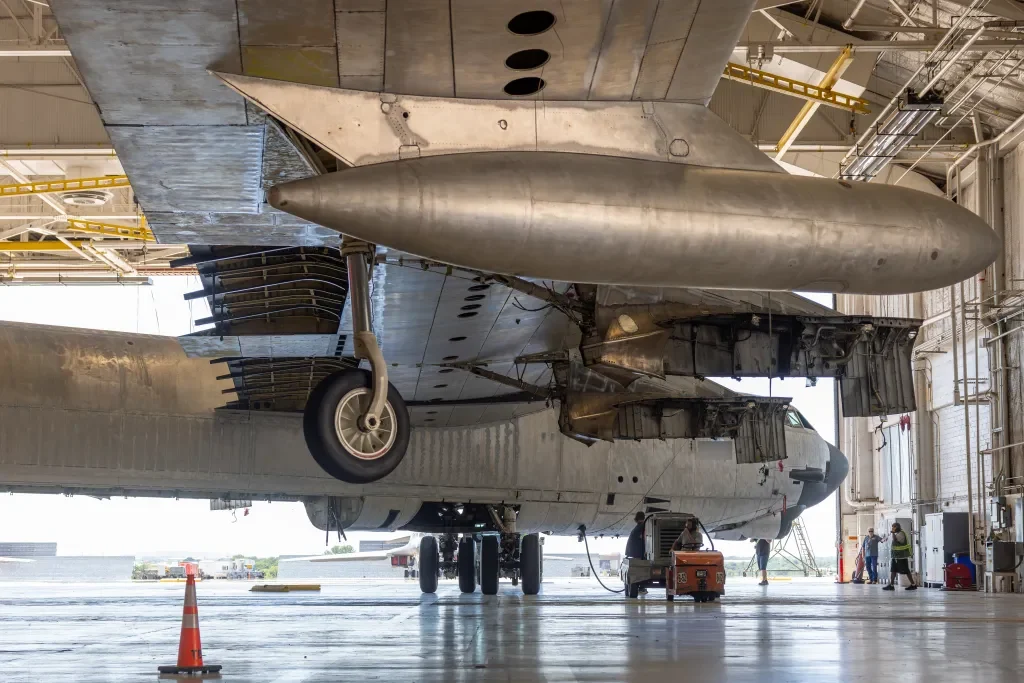
The B-2 is no longer in production, so an interruption would not stop the delivery of new bombers. It could, however, make the remaining fleet more difficult to maintain. Some components were designed more than 30 years ago. Original manufacturers may have closed, changed their production methods, or exhausted their inventories.
Producing a modern replacement may not be technically difficult. Proving that it is fully compatible with the aircraft, its electrical systems, and its low-observable characteristics is far more complicated. Testing and certifying a new component can take years.
Paradoxically, older weapons can sometimes be more vulnerable than new ones. The F-35 has a large and active supply chain, while the B-2 may depend on a small company that remains the sole approved source for an obscure component.
F-35: More Than 400 Kilograms of Critical Materials
One F-35 Lightning II reportedly requires around 900–920 pounds—approximately 410 kilograms—of rare-earth and other critical materials. They are found in the engine, actuators, radar, sensors, electronics, and guidance and control systems.
This figure does not mean F-35 production is about to stop immediately. Manufacturers maintain inventories, long-term contracts, and several layers of suppliers. The sheer scale of the program, however, turns even a modest shortage into a serious problem.
When more than 100 aircraft are produced annually, demand quickly grows to tens of tons of specialized materials and thousands of individual components. A single supplier can delay the delivery of a completed aircraft by failing to provide one relatively small electronic module.
The greatest danger may not be a total export ban, but slow and unpredictable approval of Chinese export licenses. A company may receive only part of the material it ordered or have no reliable delivery date for the next shipment. Under such conditions, planning a major production increase becomes extremely difficult.
Radars, Missiles, and Air-Defense Systems
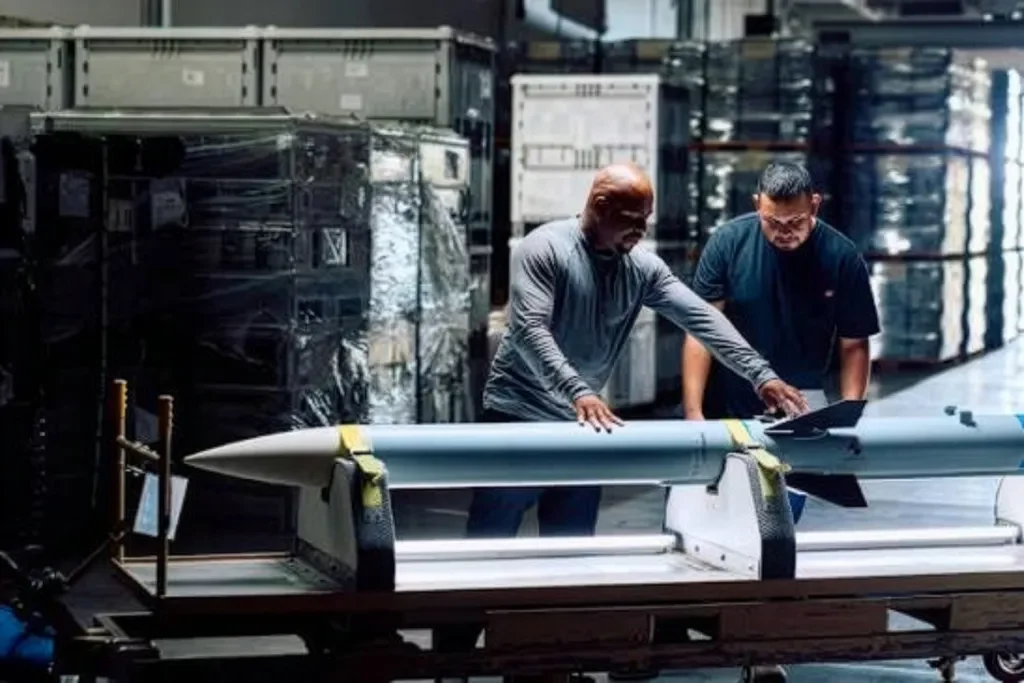
Gallium is particularly important for active electronically scanned array radars. Gallium nitride amplifiers tolerate high power and heat, allowing manufacturers to produce compact radars with greater detection range and improved efficiency.
Restrictions could therefore affect an entire range of military systems rather than one particular radar model:
- Fighter aircraft radars
- Naval and land-based air-defense radars
- Electronic warfare systems
- Missile seekers
- Secure communications equipment
- Military satellite hardware
Efforts to rapidly increase interceptor and drone production may be especially vulnerable. Each individual weapon requires only a small quantity of these materials, but demand rises sharply when production expands into the thousands.
Industry representatives already describe critical minerals as a major obstacle to increasing output to 1,000, 2,000, or 3,000 interceptors per year.
The difficulty is that a missile manufacturer may never purchase gallium directly. It buys a finished radar module or semiconductor from a subcontractor, which purchases wafers from another company. Dependence on China may be buried four or five levels down the supply chain and become visible only after deliveries stop.
Thermal Imagers, Tanks, and Helicopters
Germanium optics are used in night-vision equipment and thermal sights installed on armored vehicles, helicopters, ships, and reconnaissance systems.
The U.S. Department of Defense has specifically named Abrams tanks, Bradley fighting vehicles, Apache helicopters, and various naval systems among the platforms that depend on optical-grade germanium.
To reduce this vulnerability, the United States established a program to recover the material from retired equipment. Old optical systems are collected and dismantled, and the germanium is refined for reuse in military-grade optics.
The program can recover approximately 2.2–3 metric tons of germanium annually. This is a substantial quantity, but it cannot solve the problem by itself. Old systems must first be collected, demilitarized, disassembled, and processed. Recycled material may also be insufficient to support the repair of existing equipment and a rapid increase in new production at the same time.
The risk therefore extends beyond the manufacture of new tanks or helicopters. A vehicle that is otherwise fully operational may lose its ability to fight effectively at night because a replacement lens or thermal-imaging component is unavailable.
Ammunition Also Depends on Critical Materials
Tungsten is used in armor-piercing penetrators, warhead components, and parts exposed to extreme temperatures. It is also essential for the tools required to machine hard aerospace and missile alloys.
The United States has not mined tungsten commercially for almost a decade. The Pentagon is funding work on new domestic sources, but years can pass between geological exploration and the production of usable metal.
Antimony is used to harden lead alloys, as well as in primers, batteries, optics, and electronic components. A disruption would not necessarily stop all ammunition production immediately, but it would increase costs and force military and civilian customers to compete for a shrinking supply.
Rare-earth magnets, meanwhile, are found in the actuators of guided bombs and missiles. A small magnet may weigh only a few dozen or hundred grams, but without it an electromechanical control-surface actuator may not function. Replacing it with a weaker material would require redesigning the mechanism.
The Most Dangerous Component May Cost Only a Few Dollars
The vulnerability of American weapons is not determined by the total weight of imported metal, but by the absence of an alternative. A submarine may contain four tons of critical materials, yet its construction can be stopped by one small module produced at a single facility.
A revealing example was the February 2025 fire at the SPS Technologies plant in Pennsylvania. The facility manufactured fasteners for more than 1,000 weapon systems and was considered critical to approximately 90 programs. For the Tomahawk cruise missile and the MH-60 helicopter, it was reportedly the sole approved supplier of certain components.
Production is not expected to be fully restored before 2028. Technically, the required fasteners could be ordered from another manufacturer. In practice, the new supplier must first be evaluated, while its products must undergo testing and certification.
A single fire demonstrated how easily an enormous defense industry can be bottlenecked by one relatively small specialized plant.
The wider analysis also highlights vulnerabilities affecting the F/A-18 and EA-18G Growler, KC-135, B-52, C-130, and C-5. In these cases, the shortage of cast, forged, and cadmium-plated parts adds another layer of risk alongside critical-material dependence. Many original production lines have closed, while the remaining suppliers are overloaded.
Can the United States End Its Dependence Quickly?
The United States is investing hundreds of millions of dollars in domestic rare-earth, germanium, gallium, tungsten, and permanent-magnet production. It is creating strategic reserves, expanding recycling programs, and signing agreements with allied countries.
The Pentagon has funded the expansion of domestic germanium-wafer production for satellite solar cells, studies of potential tungsten deposits, and the restoration of rare-earth magnet manufacturing. Since 2020, more than $439 million has reportedly been awarded to establish domestic rare-earth supply chains.
A mine, however, cannot be opened by executive order alone. After a deposit is identified, permits must be obtained, followed by the construction of the mine, processing facility, and chemical plant. The material must then be refined and delivered to a manufacturer capable of producing a military-grade component. In the United States, the complete process can take decades.
Having a domestic mine also solves little if its concentrate must still be sent to China for processing. The most difficult step is often not extraction, but the chemical separation of individual elements and the production of finished alloys, magnets, and semiconductor materials.
Which Weapons Face the Greatest Risk?
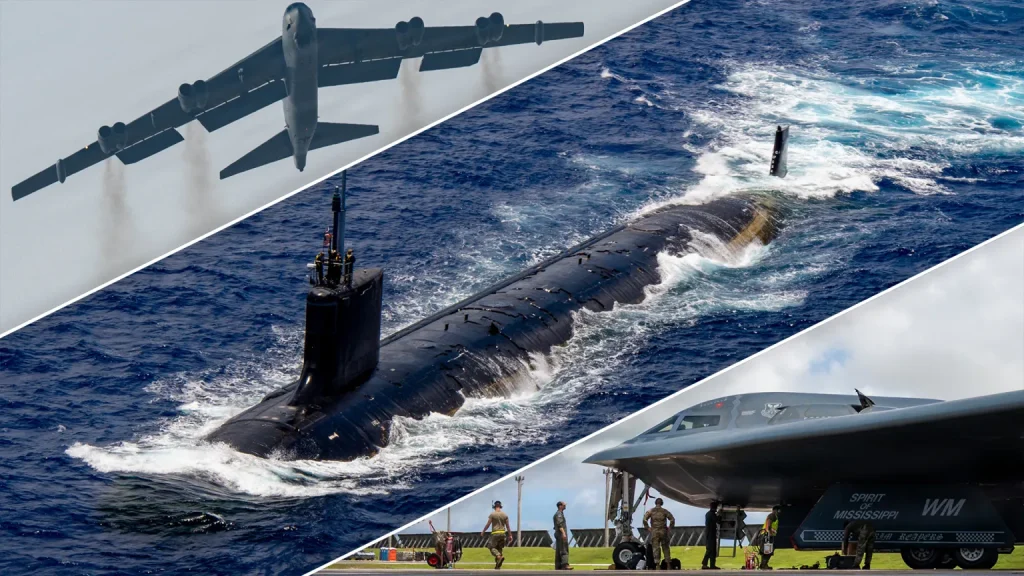
Based on the available evidence, the affected systems can be divided into three broad categories.
The greatest concentration of risk is found in Virginia-class submarines. They require hundreds of categories of critical components, large quantities of specialized materials, and numerous heavy castings and forgings. A delay involving one item can disrupt the entire construction schedule.
The most complicated spare-parts problem affects the B-2, B-52, KC-135, and other aging aircraft. Their production has ended, original suppliers are disappearing, and replacement components require new certification.
The greatest risk during a rapid production increase affects the F-35, advanced radars, missile interceptors, drones, and precision-guided weapons. Existing inventories and contracts may be sufficient under normal production conditions. Attempts to multiply output, however, would quickly reveal dependence on a small number of materials and suppliers.
A critical-minerals crisis would not leave the U.S. military without aircraft and submarines overnight. Its effects would be less dramatic but more persistent: delivery schedules would slip, components would become more expensive, old equipment might be cannibalized for parts, and plans to expand production would become much harder to execute.
The most advanced weapon in the world may depend on a tiny piece of metal whose existence is unknown even to the crew operating it. That is the central paradox facing the U.S. defense industry: it can build a stealth bomber or nuclear submarine, but it cannot always replace the sole supplier of a small germanium lens quickly enough.