China is joining the race to develop supersonic airliners. The first details about the Chinese COMAC C949 aircraft have been revealed.

In early 2026, the aviation industry received an unexpected boost. COMAC officially unveiled the preliminary specifications for its new project—the C949 supersonic passenger aircraft. This decision marked China’s entry into the long-awaited race to revive commercial supersonic aviation, which until recently had remained primarily a Western priority.
Context and Strategic Ambitions
Over the past few decades, supersonic passenger travel has been associated exclusively with the Concorde and the Tu-144. After they were retired, the industry came to a standstill, awaiting new technological solutions capable of combining high speed with economic viability and environmental requirements. However, in the 2020s, several international programs have once again turned to the concept of high-speed air travel. China, having already proven its capabilities in developing the C919 series of mainline airliners and the C929 wide-body aircraft, decided not to fall behind global trends. The development of the C949 became a logical continuation of the national strategy for technological sovereignty in aircraft manufacturing and for positioning the PRC as a leader in the next-generation aviation segment.
Initial details about the C949 project
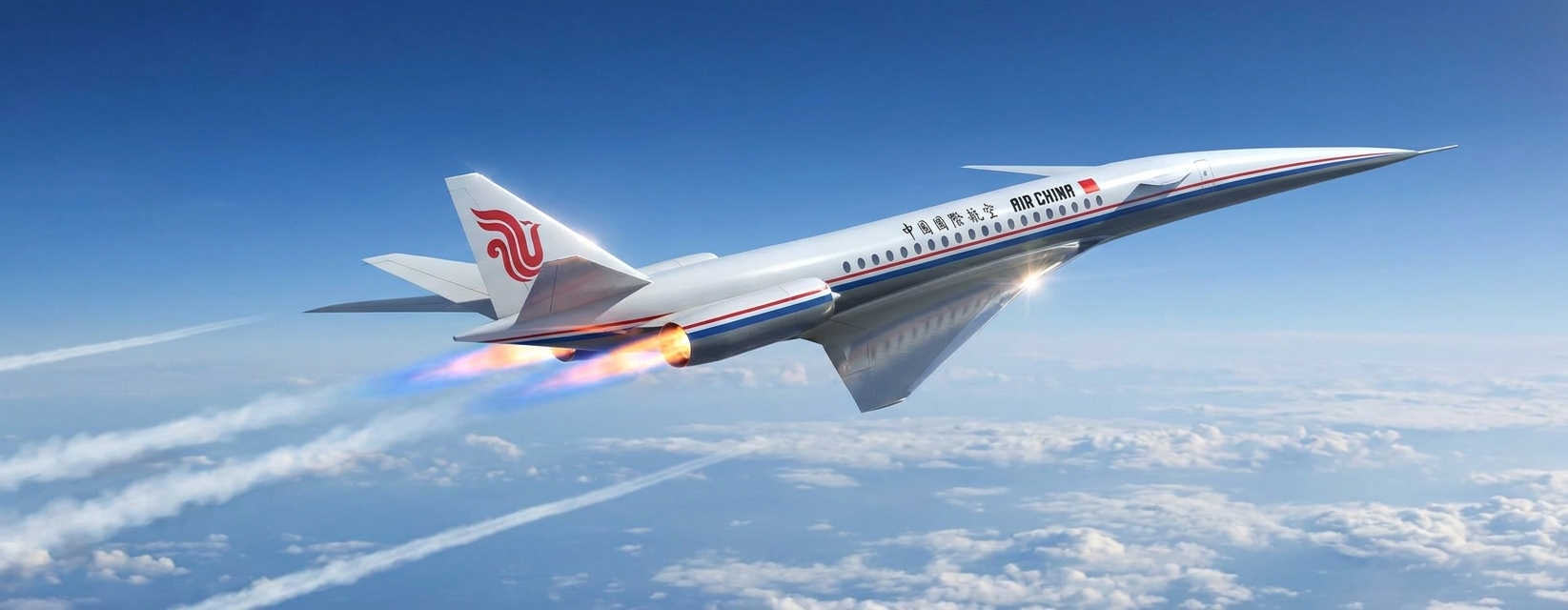
According to published reports, the C949 project is in the preliminary design and conceptual development stages. COMAC engineers are focusing on an aerodynamic configuration featuring an elongated fuselage, swept-back wings, and an integrated next-generation power plant. Particular attention is being paid to reducing sonic booms over populated areas, which should allow the aircraft to operate not only over oceans but also on land routes. The design calls for extensive use of composite materials based on Chinese research, which will reduce the airframe’s weight and improve fuel efficiency. Leading research institutes in China, including relevant academies of sciences and technical universities, are providing partnership support. The first demonstrators of key technologies are expected to be assembled by the end of this decade, and full-scale flight tests are set to begin in the early 2030s.
Technical Specifications of the COMAC C949 Project
- Cruising speed: up to 2.05 Mach
- Flight range: approximately 3,200 kilometers
- Passenger capacity: up to 120 seats in a two-class configuration
- Power plant: two turbofan engines with an optimized cycle for supersonic cruise
- Maximum takeoff weight: approximately 145 metric tons
- Cruising altitude: 16,500–18,000 meters
- External noise level: complies with the adapted ICAO standards for supersonic civil aviation
Technological Challenges and Market Prospects
The path to mass production of a supersonic airliner remains extremely challenging. The main barriers include the high cost of development, the need to undergo a lengthy certification process under new environmental standards, and the creation of specialized infrastructure to service this new type of aircraft. Chinese experts openly acknowledge these risks, but view the C949 not only as a commercial product but also as a technological testing ground for developing promising solutions in materials science, aerodynamics, and engine design. The project’s success could shift the balance of power in the global aircraft manufacturing market, which is dominated by Western corporations, and offer an alternative model for high-speed transportation in the densely populated Asia-Pacific region.
Conclusion
The release of the first details about the COMAC C949 demonstrates that China does not merely intend to observe the revival of supersonic commercial aviation, but aims to become one of its architects. Years of testing, refinements, and regulatory approvals lie ahead, but the very fact that such a program has been launched attests to the maturity of the Chinese aviation industry and its willingness to invest in projects with a long-term payback horizon. If the developers overcome the technological and economic barriers, the C949 could become a symbol of a new era of high-speed flights, where Asian engineering solutions will set the standards for the global market.