An Alternative Evolution of the KV-13—How Would It Have Changed the History of Soviet Tanks?

I create 3D models for my own enjoyment and, presumably, for the enjoyment of my readers. The purpose of this post is purely for entertainment and subjective aesthetic appeal. The models presented here have a hint of realism at a minimally satisfactory level (for me, personally). Plus, I’m currently processing the finished models through neural networks to make them more colorful.
A new iteration of the innovative “pike-nose” armor and sloped sides concept for a medium tank. Now based on the KV-13.
Main Objectives:
- Convert the KV-13 hull, used as the basis, to the T-10 armor layout.
- Install a new cast turret of an advanced design, armed with a long-barreled 85-mm gun. The turret and gun are taken from the Polish CS-57 Sokol tank model.
The result was the super-heavy tank Object 713, also known as the STTB Model 1947.
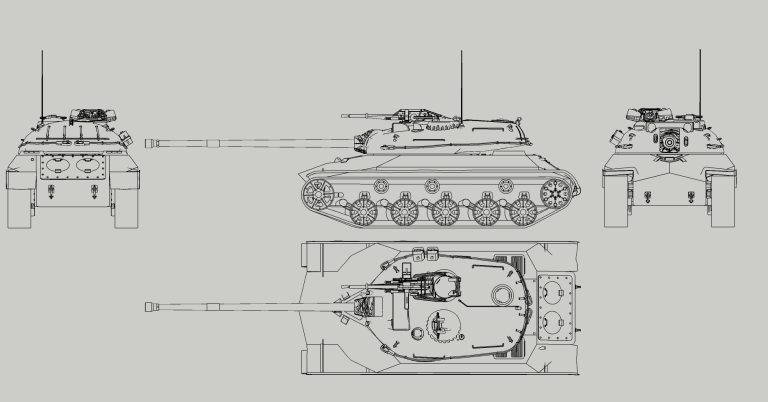
General diagram of a tank.
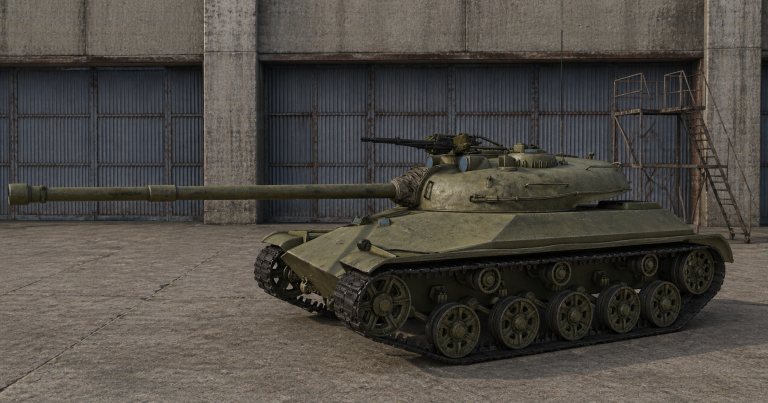
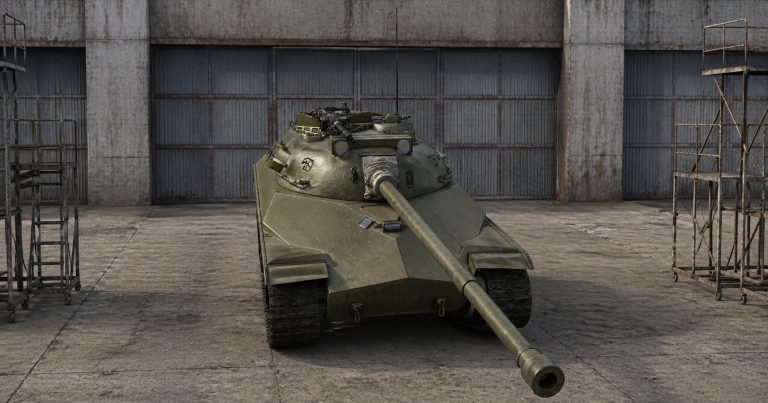
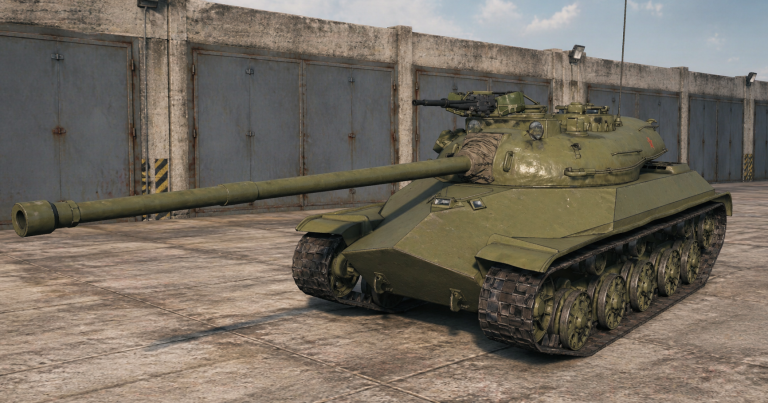
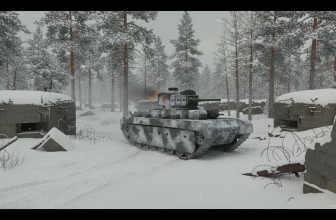
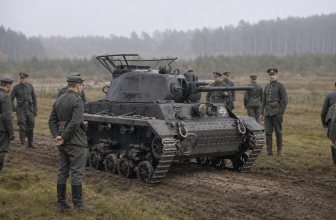
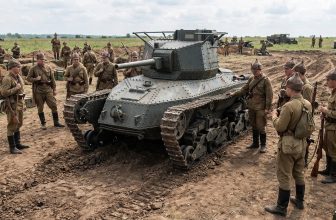
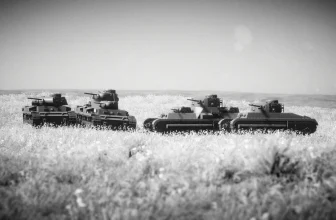
Photos of the tank before testing.
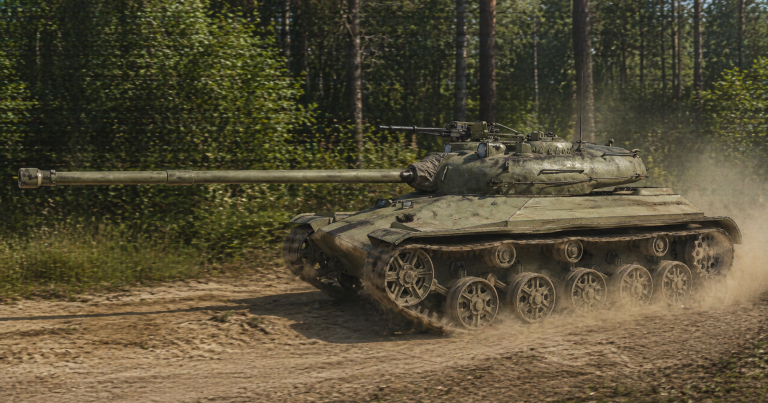
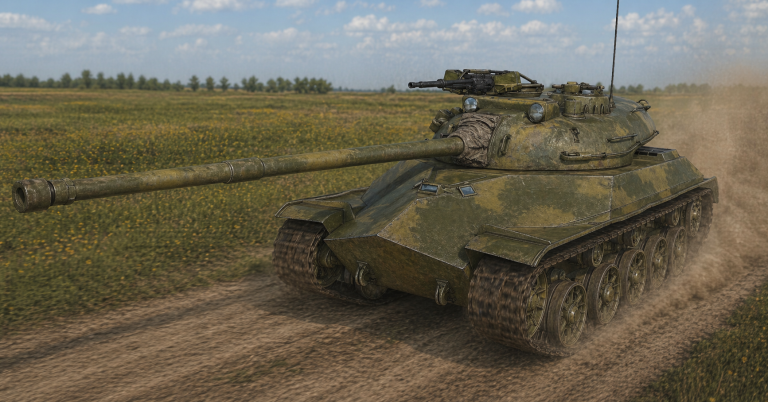 Photos of the tank from the tests.
History and Specifications:
A medium tank design as an alternative to Object 137 (T-54) was developed on the design bureau’s own initiative at the Chelyabinsk Tractor Plant under the leadership of Z. Ya. Kotin in 1946, following tests of the T-54 Model 46, which revealed numerous shortcomings.
The project was based on the KV-13 design from 1942, which was creatively reworked to incorporate the latest advances in tank design, particularly in the area of heavy tanks.
The design of the medium tank made extensive use of the principles of progressive armor, which had been implemented on the IS-3 and Object 260 (IS-7) heavy tanks. A number of other innovations were also incorporated, such as:
- Stereoscopic Rangefinder
- The main, partially mechanized ammunition load is stored in a turret compartment.
- A new 85-mm gun with shells having a higher muzzle velocity.
Thanks to its compact layout and various design solutions, the tank’s weight was kept within 35 metric tons, while maintaining a high level of armor protection—110 mm in the front hull and 100 mm in the side hull.
The tower, in turn, was designed as a cast hemispherical structure with an extended niche, which, according to the design, was intended to house the first-stage ammunition load.
The project was approved for the production of a prototype tank. Two tanks were built for testing in 1947. A series of factory and military trials were conducted in 1948–1949.
Among its strengths were noted: high armor protection for a medium tank, high rate of fire, excellent mobility, as well as excellent visibility and user-friendly observation devices for all crew members.
The following shortcomings were noted: insufficient firepower of the 85-mm gun, even in its high-power version; unreliability of the suspension; and engine overheating due to the MTO’s compact layout.
It was decided not to begin mass production of the tank because the T-54 medium tank, which was already in mass production, was being brought up to an adequate standard, and because the STTB did not offer any significant superiority over the T-54 in terms of technical characteristics.
However, the experience gained from its construction was applied to the design of the Object 730 (IS-8) heavy tank.
Tank TTT:
- Weight: 35 metric tons.
- Crew: 4 people
- Gun: 85-mm rifled gun with increased muzzle velocity.
- Engine: V-12 with 700 l.s. of power
- Specific power: 20 l.s. per metric ton.
- Maximum speed: 55 km/h.
- Ammunition load: 50 rounds.
- UVN: -8/+20°
- Housing dimensions: 110/80/60 mm.
- Tower armor: 220/135/80 mm.