Anduril Wants to Build Interceptors by the Thousands. Can One Modular Missile Do the Job?

Air defense has an awkward problem: stopping a relatively simple target can sometimes require an advanced, expensive missile. When there are many targets, inventories can run down quickly—and replenishing them can take years. U.S. company Anduril wants to change how interceptors are made: instead of designing a separate missile for every mission, it proposes a family built around a common architecture.
The new system is called Steelfin. Anduril says its variants will be able to counter cruise and ballistic missiles, as well as hypersonic threats. For now, however, these are the program’s stated goals. The company has not disclosed detailed performance figures, prices, or flight-test results.
A missile that can be configured for the mission
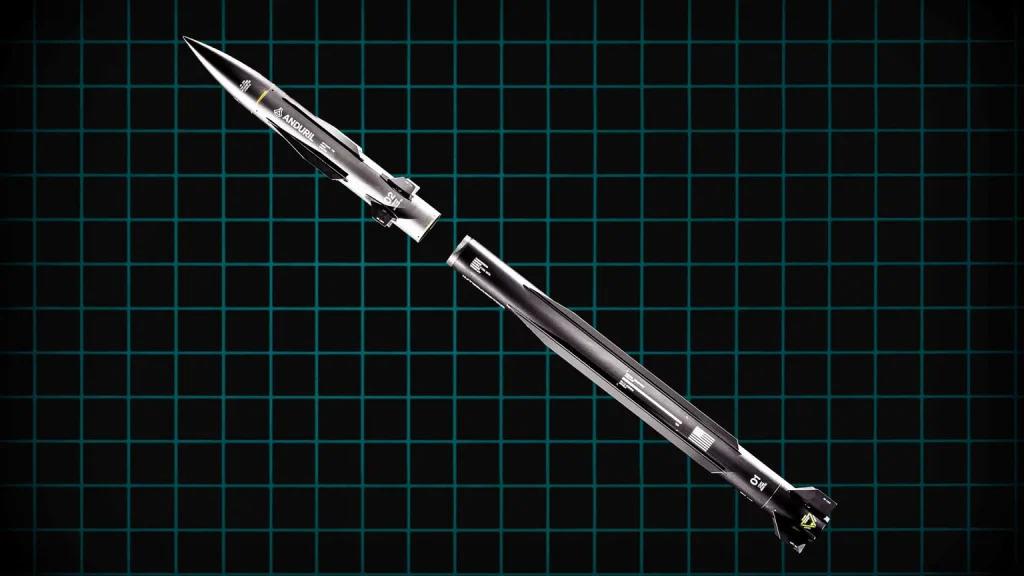
Steelfin is designed as a two-stage system. The first stage is a booster that can be changed to suit the required range and launch configuration. The second is the terminal interceptor, which is intended to provide a common core for different versions of the family.
That shared core would include the basic airframe, avionics, software, flight controls, and interfaces. Some components could be changed, including the seeker, mission equipment, and booster. Anduril’s aim is to adapt or upgrade the missile without spending years developing an entirely new model.
The company says Steelfin will offer two ways to destroy a target. One interceptor will use hit-to-kill, destroying the target through direct impact. Another will carry a blast-fragmentation warhead. This would let operators choose a missile for the mission instead of using the most expensive interceptor in the arsenal against every target.
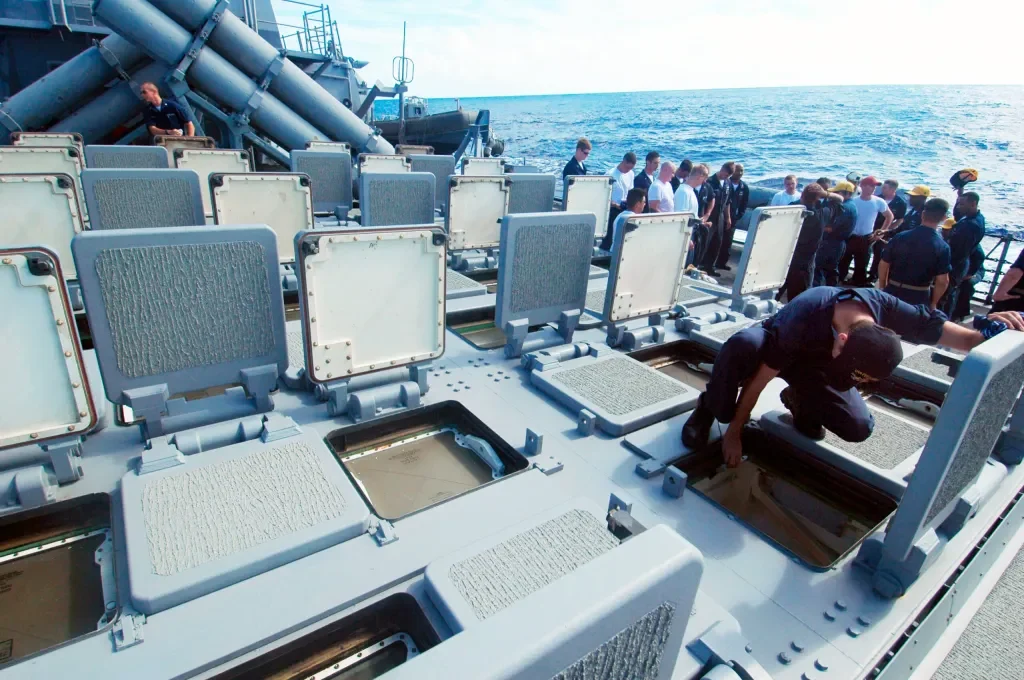
Anduril is considering boosters with diameters of 10, 18, and 21 inches. The size of the first stage will affect the missile’s range and interception altitude, but the company has not published performance figures for individual variants. It is also exploring configurations that would fit two or four missiles into a cell of the Mk 41 shipboard launch system. Those remain design options, not a confirmed operational configuration.
Designed to fit existing air-defense systems
Steelfin is being designed to work with existing launchers and command systems. Anduril has named the M903A2 ground launcher, the Mk 41 shipboard system, the Typhon system, and containerized launchers. The company has also cited the Aegis and Army IBCS fire-control systems.
For a customer, compatibility could make adoption easier: there would be no need to build a separate command network or develop a new launcher from scratch. But a compatibility claim does not mean the missile has already been launched from every one of these systems. Integration and operation within an actual air-defense network still need to be demonstrated.
The bet is on a shared production line
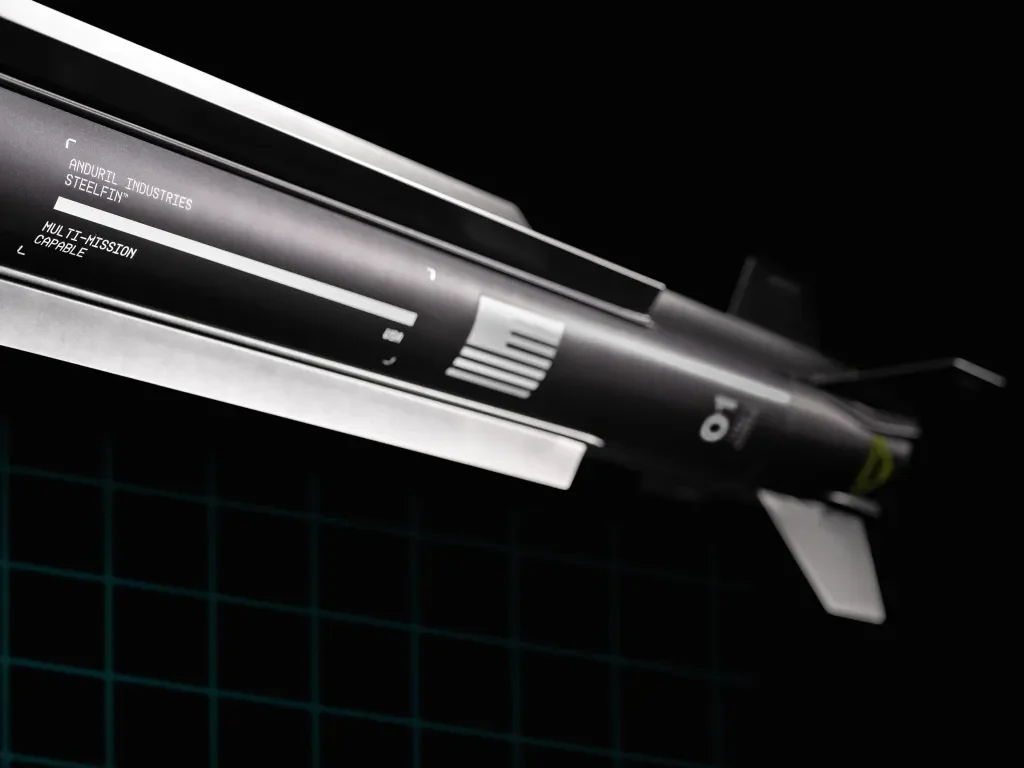
Modularity is meant to help Anduril with more than changing missile performance. The company also wants to standardize production. Different interceptors typically require different tooling, manufacturing processes, suppliers, and production sites. That makes it difficult to switch a factory quickly from one model to another.
Under Anduril’s plan, Steelfin variants would be built on a shared manufacturing base. Different boosters and terminal-stage components could be added depending on the required configuration. The company says this would let it shift production more quickly toward the variants in greatest demand.
Anduril says it aims to produce several thousand missiles a year in the near term. For now, that is a stated goal: the company has not provided a detailed production schedule or disclosed contracted quantities. Thousands of missiles on paper are not yet thousands of missiles coming off a production line and reaching the troops.
The closest analogue: the U.S. Navy’s Naval Modular Missile
In its basic design, Steelfin resembles the U.S. Navy’s Naval Modular Missile program. That project also envisions a common terminal-stage interceptor paired with different boosters to create versions for different missions and launch platforms. Proposals include fitting multiple missiles into a Mk 41 cell and developing a version for Virginia-class submarines.
The difference lies in each program’s intended focus. Naval Modular Missile is aimed primarily at the Navy’s ships and submarines. Anduril is pitching Steelfin for both ground-based and naval systems, emphasizing compatibility with existing infrastructure. Both programs are still in development, so it is too early to compare their real-world range, accuracy, or reliability. They are closest in architecture, not in proven combat performance.
For comparison with missiles already in service, Anduril uses PAC-3 and THAAD as benchmarks for cost and mission. A company representative said one Steelfin variant could perform around 80 percent of the PAC-3’s mission for less than half the cost, while a more advanced version could perform the THAAD mission for less money. Those are manufacturer claims: Steelfin has not yet completed flight testing, and its detailed specifications have not been published. The comparisons cannot yet be checked against public performance data.
Flight testing will be the real test
Anduril says it has conducted ballistic testing using representative vehicles for future Steelfin variants. Flight tests of the missiles are planned to begin in 2027. Until then, it will be difficult to judge whether the company can combine a broad range of missions, shared production components, and a lower price.
Steelfin also takes Anduril into a new field: the company has not previously developed or produced surface-to-air missiles. The idea is appealing—change selected components while keeping a common design and manufacturing base. But standardization can be difficult in practice. Different mission requirements may demand new components, additional testing, and compromises.
Anduril has not yet presented a solution to interceptor shortages. It has presented a new approach to designing and manufacturing them. If the common architecture holds up in testing, Steelfin could become a family of missiles that is easier to adapt and produce at scale. If it does not, modularity may remain a convincing idea that proved difficult to deliver.