Contents:
A few days ago, the Western military-technology website “The War Zone” published an interview with the director of the Ukrainian company “Brave1,” which develops and manufactures low-cost interceptor drones.
In this interview, my attention was drawn to a number of technical details that align with my own assumptions regarding the development of modern combat robotics and the battlefield’s gradual transition to fully automated systems. I have identified three key points:
AI FOR OVERCOMING HARDWARE LIMITATIONS
The first trend I’d like to highlight is the use of trainable artificial intelligence models to circumvent the limitations imposed by the use of inexpensive, commercial hardware.
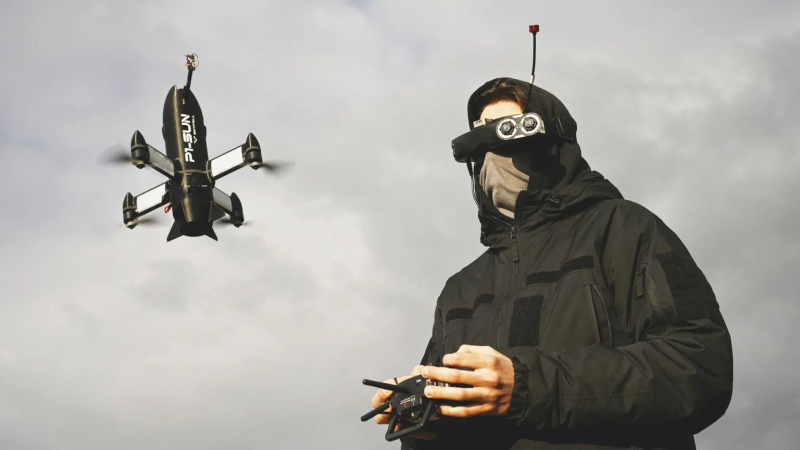
The fundamental problem with mass-produced, low-cost drones was the limitations of commercially available technology. Cheap sensor systems, especially cameras, are not particularly effective or high-quality. They are significantly inferior to the sensors used in high-end military equipment—such as cruise missiles. And it’s only natural that using high-tech sensors in equipment produced by the thousands per day (the interview specifically mentioned a figure of about 2,000 interceptor drones per day) is simply unrealistic.
As an alternative to expensive “hardware,” inexpensive “software” based on artificial intelligence (as it is understood today, of course!) is being offered — self-learning models “trained” to perform functions highly efficiently using existing equipment. For example:
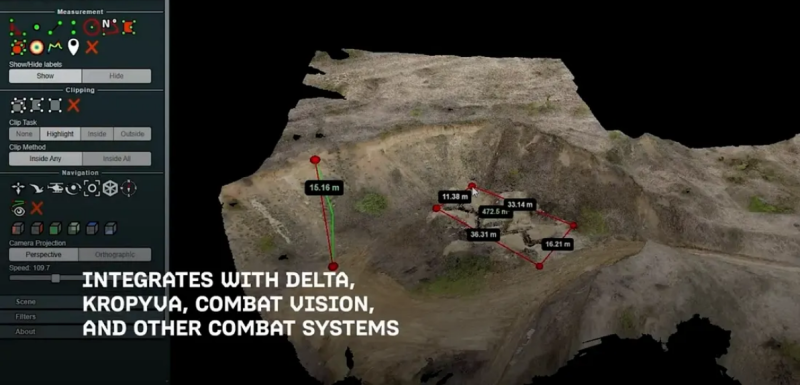
* Autonomous target recognition and tracking—enables the drone to perform electro-optical target acquisition using a standard (commercial) camera without the need for complex and expensive optics. In this case, the camera’s limited performance is compensated for by effective image processing and analysis algorithms, which make it possible to identify the target’s contours even against a relatively indistinct background;
* Autonomous target search and identification — allows the drone to independently search for and identify targets, whether pre-programmed or from a list of “targets of opportunity” (for example, a drone can be trained to patrol an area in search of tanks, and upon spotting something resembling a tank, to focus its attention on it);
* Autonomous navigation using topographic maps—topographic map-based navigation systems (such as the American TERCOM, used on BGM-109 “Tomahawk”) were long considered a hallmark of “high-end” weapons, as they required high-precision radar altimeters capable of scanning the terrain profile beneath the flying missile with the necessary resolution and matching it to a map stored in memory:
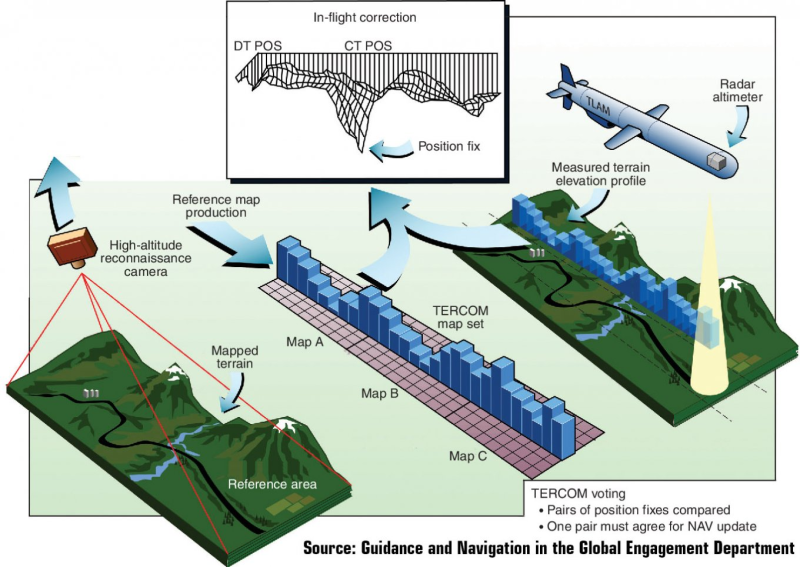
Currently, these functions can be implemented using a standard webcam, by applying algorithms that match images of the terrain with satellite maps stored in the drone’s memory. The resolution of modern webcams is more than sufficient to identify landmarks—such as rivers, distinctive landforms, or street patterns.
In essence, the autonomous target recognition and navigation technologies currently being implemented represent a “brute force approach using intelligence”—overcoming the limitations of low-cost commercial sensors through highly efficient data processing algorithms. This means that the capabilities of “low-end” weapons systems may soon come very close to those of “high-end” systems—while remaining affordable enough for mass production in large quantities.
AI IN THE DECISION-MAKING PROCESS
The following factor caught my attention in particular:

In fact, this involves replacing the “man-in-the-loop” principle (a person within the decision-making loop) with the “man-on-the-loop” principle (a person above the decision-making loop). The operator no longer makes decisions for the machine; he merely confirms—or rejects—the decision already made by the machine.
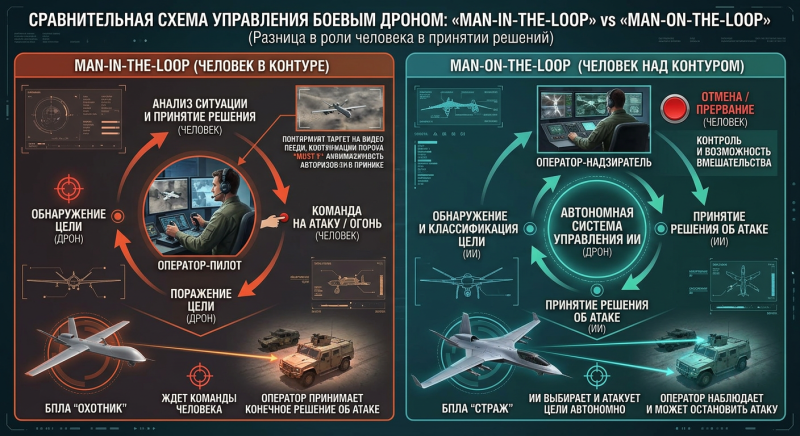
This approach makes it possible to drastically speed up the decision-making process and improve the response time of unmanned systems by several orders of magnitude. In fact, the human is no longer so much an operator as a “supervisor” of the drone — they do not give the drone commands on where to fly or what to do, but merely “review” the decisions made by the drone itself, intervening only when they see that the machine is making an obvious mistake.
Compared to the traditional approach, the operator’s workload is reduced by several orders of magnitude. The operator does not need to formulate a plan of action, assess the tactical situation, or make and adapt decisions on their own. All that is required of them is to assess whether the action plan proposed by the machine is appropriate for the situation. If the operator believes the action plan is appropriate, they confirm it; if not, they reject it. The operator can also intervene in the drone’s actions at any time if they see that the machine is making a mistake (for example, if it has somehow managed to mistake an unusual-looking empty space for a target).
This approach also allows a single operator to control the actions of multiple drones connected to a common network—by issuing instructions not to each individual drone, but to a shared AI that coordinates the actions of all the drones.
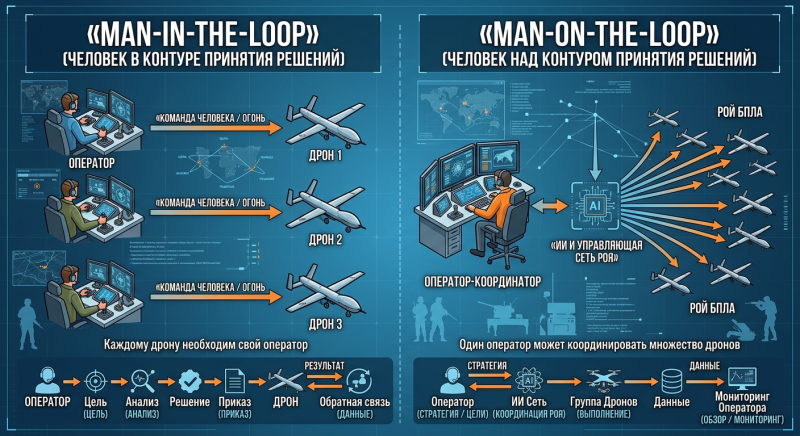
Looking ahead, it is likely that the situation—at least in areas such as air defense—will evolve toward reducing human intervention to the point where the machine only contacts the operator when it has any doubts.
MANAGE FROM ANYWHERE IN THE WORLD
Finally, the third key step toward FAW is the ability for operators to control the drones’ actions without being in their immediate vicinity:

For old-school (as funny as that may sound when referring to technology that dominated the market just a couple of years ago) remote-controlled drones, such a solution was technically feasible but impractical. Significant “ping” during video streaming made guiding the drone by a remote operator a rather ineffective task. The image from the drone’s camera often left much to be desired as it was, and if it also arrived with a delay…
However, now that we’ve transitioned to the “man-in-the-loop” principle, remotely controlling a drone from anywhere in the world seems like a perfectly realistic solution. The operator no longer needs to continuously monitor the drone’s flight manually; it is sufficient for the transmitted information to be enough to confirm the decision proposed by the machine. And for this purpose, even video with a significant delay—or even just a sequence of still frames—will suffice.
Of course, the development of the “Starlink” low-Earth orbit satellite constellation plays a huge role in making this possible—primarily the transition to “v2 mini” satellites, which use laser communication to exchange data with one another:
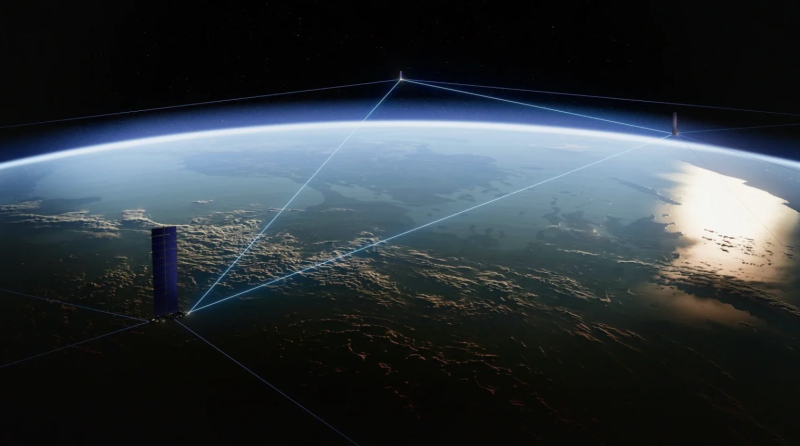
The high bandwidth and reliability of laser communication—which is not subject to interference, bandwidth limitations, or other issues typical of conventional radio — make it possible to minimize latency and transmit a sufficient volume of data globally, so that controlling a drone from another hemisphere becomes a perfectly feasible option. Latency, of course, remains, but it is kept to a minimum.
This means that methods of countering drones, such as “hunting down operators,” are rapidly becoming meaningless. The operator of a drone carrying out a strike in the Middle East could be sitting comfortably on the couch at home in Los Angeles, holding a game console controller, wearing VR goggles, and slippers with bunny ears. And it will be completely impossible to even figure out exactly where he is—let alone do anything to influence him.
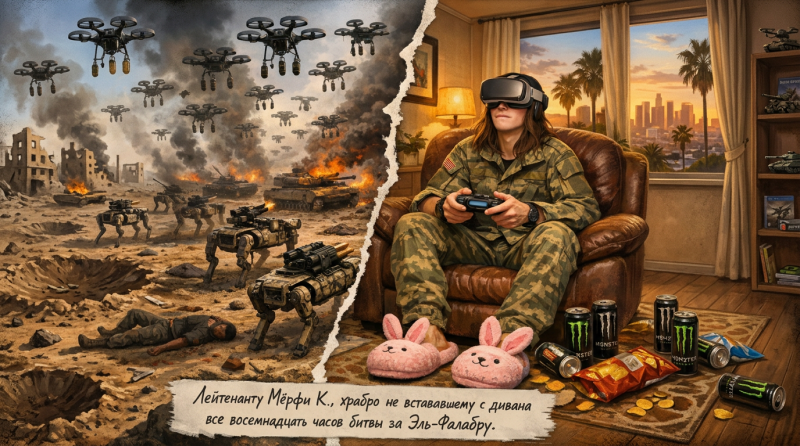
Jokes about “Chairborne troops” may soon become a grim reality…
First, a much larger portion of the country’s population can be involved in remotely controlling drones than can be directly deployed on the battlefield. Second, drone control can be “outsourced” to foreign operators. I foresee the emergence, in the relatively near future, of private military companies whose sole “product” will be the provision of professional drone operator services (especially gamers with quick reflexes…).
CONCLUSION
I consider the three factors outlined above to be important technological steps toward the era of FAW—Fully Automated Warfare—and the complete and definitive obsolescence of the human soldier as a component of the battlefield.
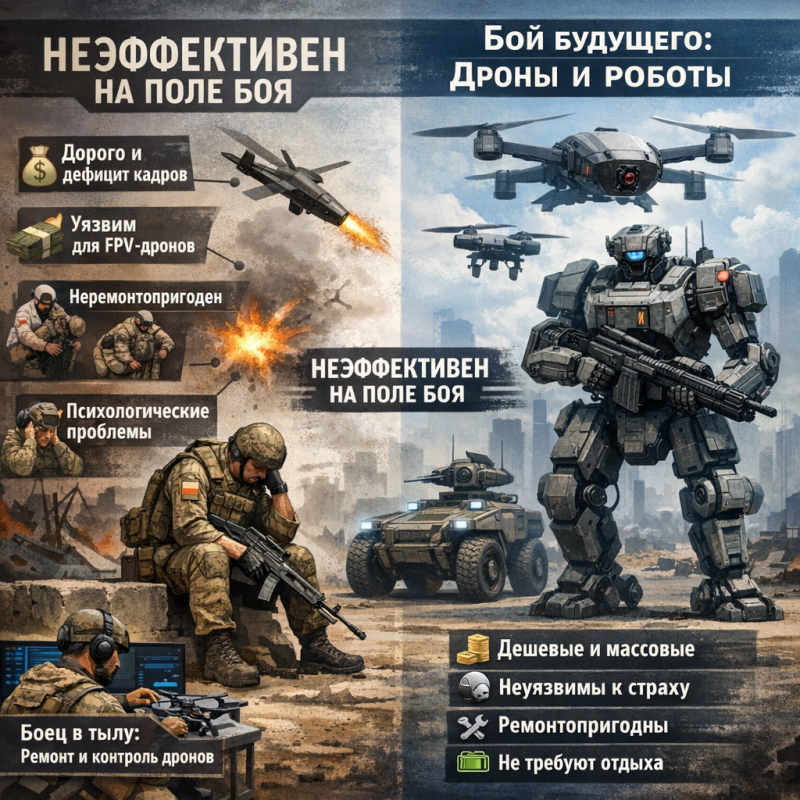
From a modern perspective, it is already quite clear that the role of an infantry soldier is utterly hopeless in a robot war. The most critical factors are as follows:
* An infantry soldier is expensive, and (given that the demographic transition is coming to an end worldwide) will only become more expensive in the future;
* An infantry soldier is extremely vulnerable to inexpensive self-guided weapons (primarily FPV drones), and his protection can be improved only to a limited extent due to the inherent limitations of the platform;
* The infantry soldier is beyond repair; any significant damage cannot be repaired in the field;
* An infantry soldier has a psyche that, from the standpoint of combat effectiveness, creates nothing but problems, and damage to which cannot be quickly and easily repaired;
* It is much more effective to use the same infantry soldier as a drone controller or repair technician in the rear;
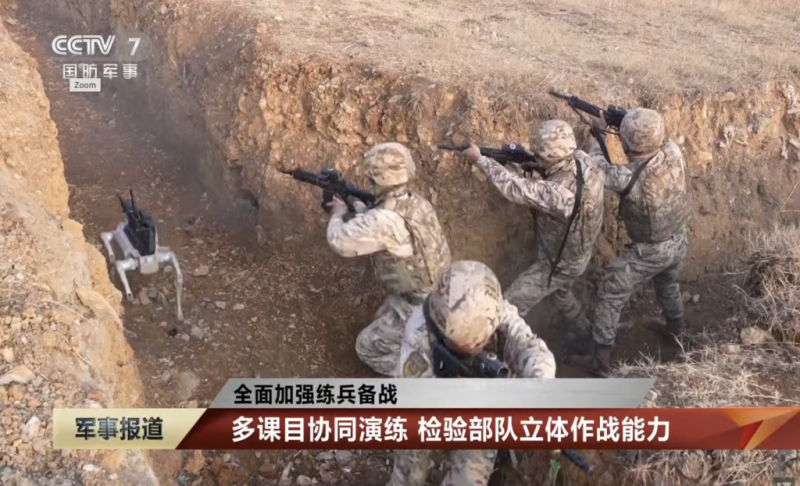
A Chinese robot wolf leads infantry through a trench
Ironically, China—a country that until recently was viewed as possessing a virtually inexhaustible supply of human resources—is now the one paying the most attention to replacing infantry soldiers with robots. Apparently, the Chinese were the first to realize that this resource must be preserved at all costs, and that valuable human labor should not be used where cheap, mass-produced machines can be deployed. And I suspect that in the coming decades, this trend will become dominant worldwide; the advantages of FAW are all too obvious, and there are simply no reasonable alternatives in sight.
P.S. And TedColumbus Faro isn’t to blame for anything!