An article by Anton Malakhov from the WARSPOT website, dated May 1, 2014.
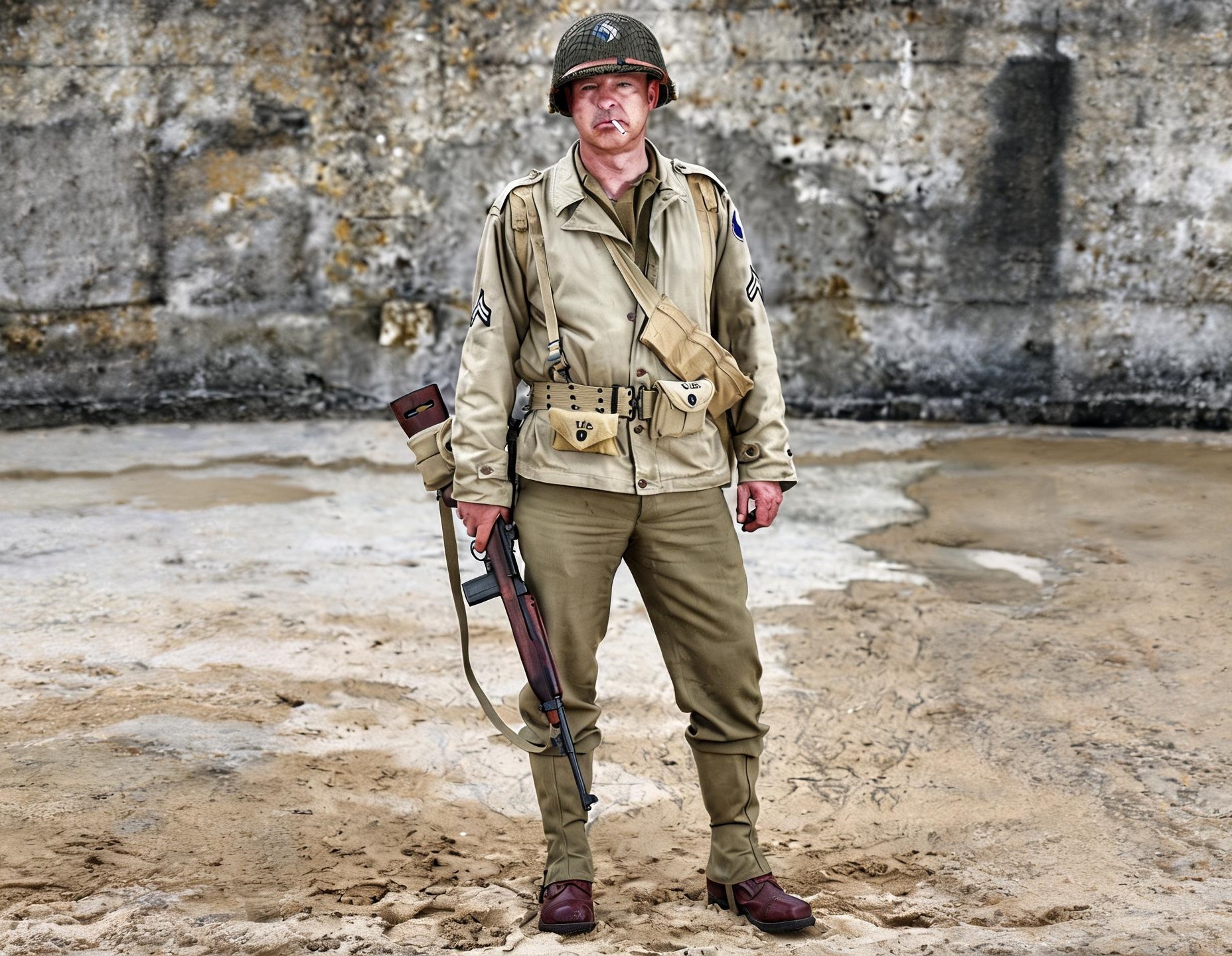
In previous installments, we’ve already looked at many important items of the U.S. Armed Forces soldier’s uniform that he wore during World War II, but now it’s time to talk about one of the most important items—the everyday uniform.
And so Joe received the uniform he had worn at training camp. He’s supposed to head to the front soon, but first he has to go into town. For that, he’ll be issued a service uniform.
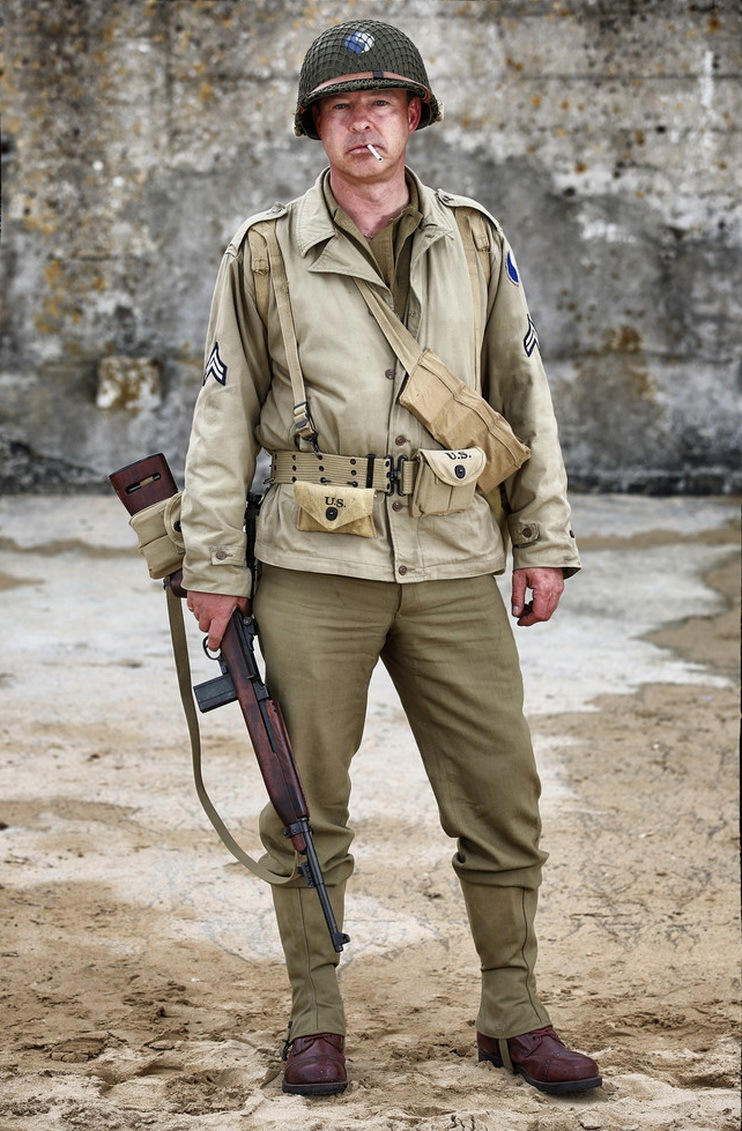
The service uniform became the standard uniform worn by American soldiers during World War II. There were two versions of this uniform: a summer version and a winter version. The summer everyday uniform (service uniform, cotton, khaki) consisted of a cotton shirt and pants designed for the army in 1938. This was the first prototype, which was undoubtedly refined over time. Let’s start with a description of the first “pattern”: the beige shirt, made of heavy cotton fabric, had two small chest pockets fastened with buttons. Compared to the sleeves of the work uniform, the long sleeves were fairly narrow but did not restrict movement and had cuffs fastened with two plastic buttons. The shirt had a fold-down collar with lapels. This collar style was chosen for maximum comfort in a hot climate. The shirt fastened with seven plastic buttons.
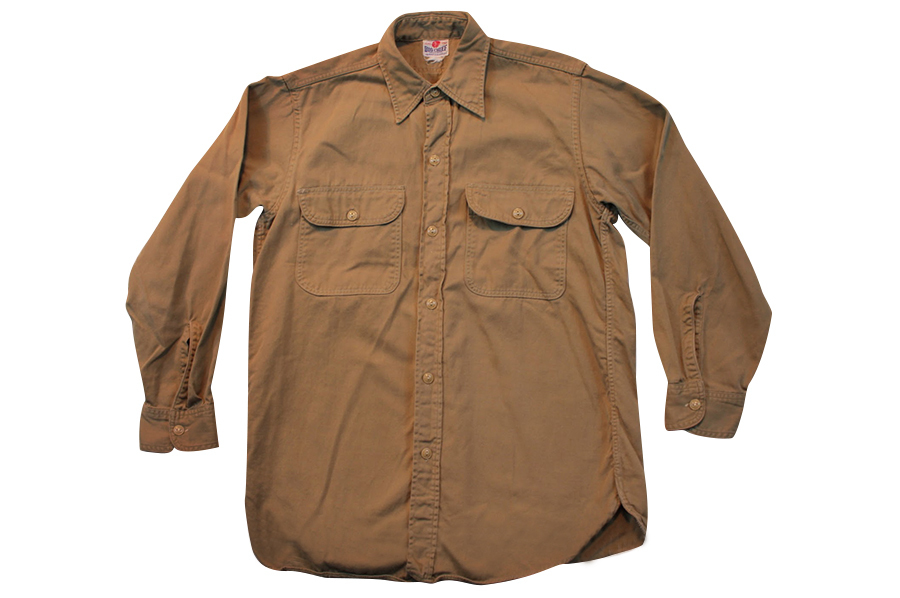
Summer Shirt
The pants were made of the same cotton fabric as the shirt. They had a high waistband and wide legs that did not restrict movement. When not in combat, regulations required soldiers to iron long creases into their pants, starting right at the waistband. The pants also featured two front and two back inset pockets, as well as a small pocket for a watch or lighter. The fly was fastened with five buttons, the first of which was external and made of metal. The remaining four were concealed by a special external flap and were made of plastic.
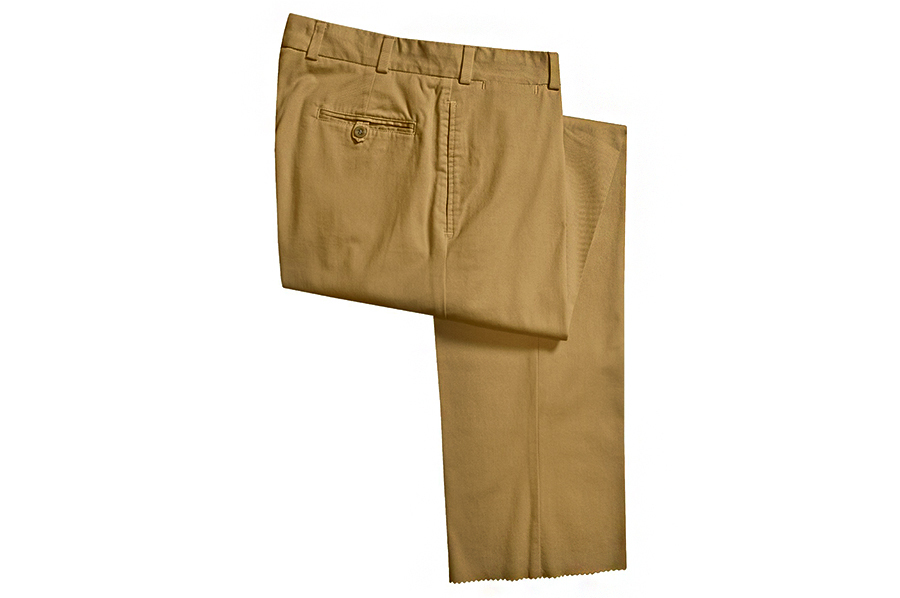
Summer Pants
The second version of this design appeared in 1941 and featured minor design changes, the most significant of which were the addition of a “gas” valve on the pants and shirt, the replacement of the steel outer button on the pants with a plastic one, and a general change to a lighter color. Originally, this uniform was intended to be the standard issue for infantry on the Pacific Front; however, soldiers preferred the work uniform because it was more comfortable and practical for combat.
Unlike the summer uniform, the winter uniform was in the highest demand at the ETWD and became the standard issue for all U.S. infantry units in Europe.
The winter uniform set consisted of a shirt (Shirt, Flannel, OD, Coat Style) and pants (Trousers, Wool, Serge, OD, Light Shade). Both items were made of wool flannel, but the shirt was designed in 1934, while the trousers were not introduced until 1937.
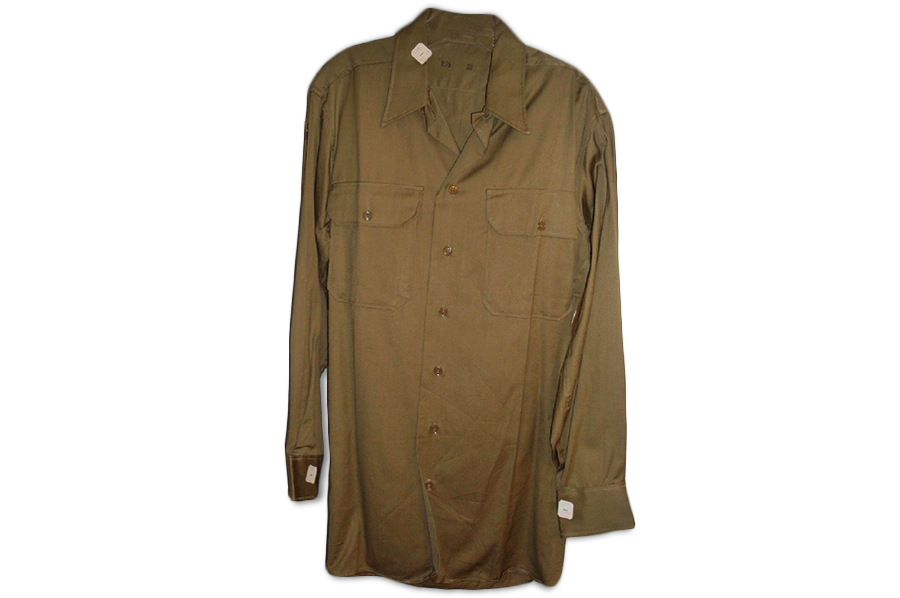
1937 Model Winter Shirt
The first changes to the shirt’s design were introduced with the advent of pants—in 1937. The shirt had long sleeves with cuffs fastened by two plastic buttons and two chest pockets, also fastened with plastic buttons. This model introduced a “formal” collar. Undoubtedly, this change was dictated by the specific requirements of wearing a winter uniform and by climatic conditions. The winter shirt, just like the summer one, fastened with seven buttons.
Winter-issue pants were virtually identical in cut to the summer ones: the same wide legs, high waistband, fly fastened with five buttons, and five pockets; however, unlike the summer pants, the winter ones underwent a much more significant modernization. For example, in 1941, both the pants and the shirt from the winter uniform set were equipped with a “gas valve.”
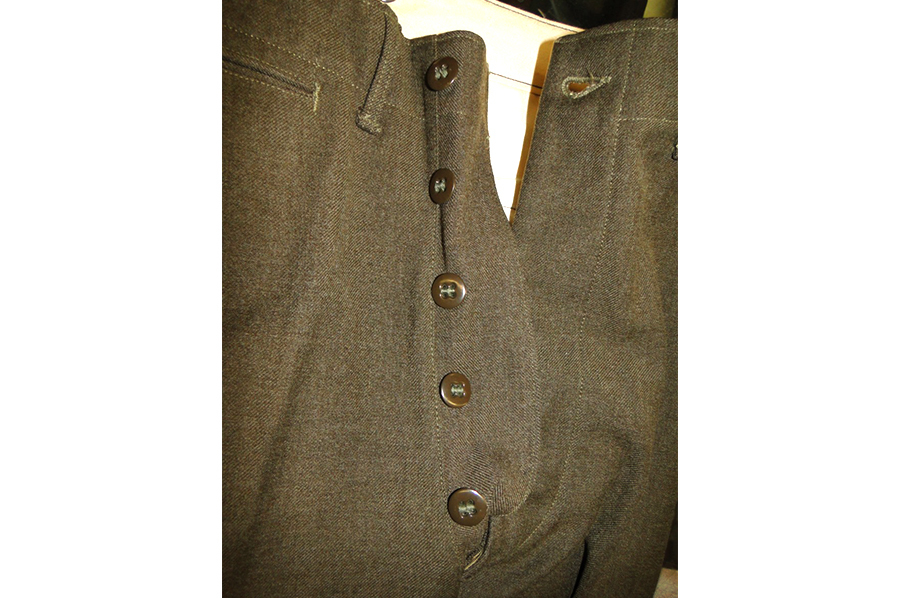
Leg opening of 1941-model pants
This was followed by more formal changes:
In 1943, the pants were designated “Trousers, Wool, Serge, OD, Light Shade, Special,” were given lower back pockets, and changed to green instead of beige, as in the first version, as indicated by the code “OD” — “Olive drab”
In that same year, 1943, the pants were given another name—“Trousers, Field, Wool, Serge, 18 oz, Special”—but underwent no significant changes other than the fabric weight.
The last modification took place in 1945. Trousers of this model were made from a coarser fabric and dyed brown. They also featured patch back pockets and were designated “Trousers, Field, Wool, Serge, OD 33, 18oz, Special.” These changes were necessary to allow the trousers to be worn with the Ike Jacket, which had become popular among American soldiers as a dress uniform. Trousers of this model were manufactured in England.
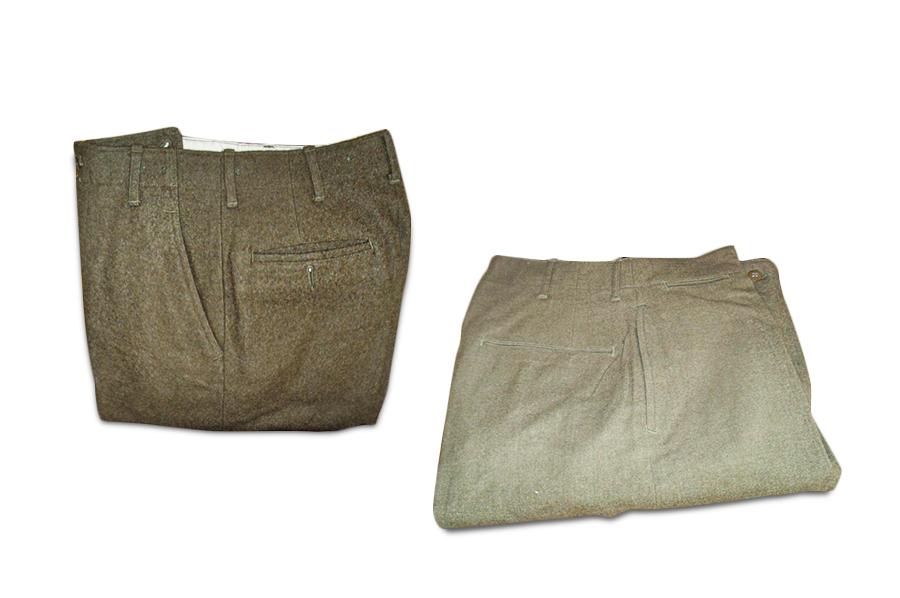
“18oz” and “Special”
Soldiers from all branches of the U.S. Armed Forces (with the exception of the Marine Corps, since all of their uniforms were designed separately and bore names distinct from those of the Army) wore the everyday uniform during World War II. The design of this particular uniform was both aesthetically and functionally modern, while at the same time preserving the traditions established by early uniform models, making it a fine example of global uniform design.