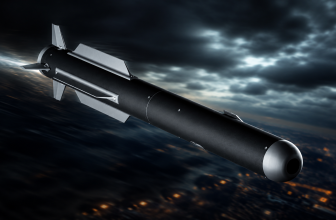
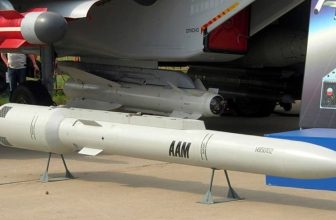
"Arrows Against Aircraft Carriers": The U.S. Is Turning the ARRW Hypersonic Missile Into a Ship-Killer

Just a few years ago, the American AGM-183 ARRW hypersonic missile seemed like a project on the brink of being scrapped. After a series of failed tests, the U.S. Air Force effectively shut down the program, and many had already written off the missile as just another costly experiment in the era of the hypersonic arms race. But now the ARRW is making an unexpected comeback—and in a far more dangerous form.
The U.S. military plans to develop a new version of the missile capable of striking moving targets. Simply put—ships. And while the original ARRW was primarily viewed as a means of striking stationary targets, the new modification turns it into a potential weapon against Chinese aircraft carrier groups in the Pacific Ocean.
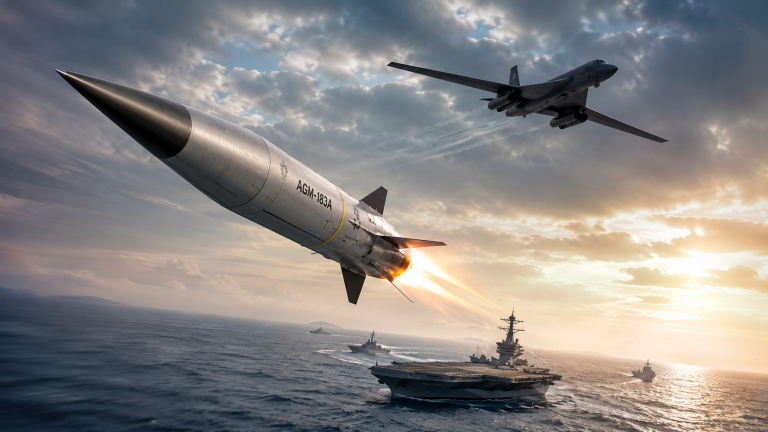
The Return of a Rocket That Had Already Been Written Off
The history of the ARRW is actually quite strange. In the late 2010s, the U.S. became suddenly alarmed that Russia and China had pulled ahead in the hypersonic arms race. The emergence of the “Kinzhal,” the “Avangard,” and Chinese hypersonic systems triggered an almost panicked reaction in Washington. Against this backdrop, Lockheed Martin was awarded a contract to develop the AGM-183 ARRW—the Air-launched Rapid Response Weapon.
The concept seemed extremely ambitious. The bomber was supposed to launch a large booster rocket that would accelerate the hypersonic module to tremendous speeds. After separation, the warhead would transition to glide mode in the upper atmosphere, maneuvering at hypersonic speeds along a complex trajectory.
The main advantage of such systems is their combination of speed and unpredictability. A conventional ballistic missile follows a more or less predictable trajectory. A hypersonic warhead can change its direction, altitude, and angle of attack. For modern missile defense systems, this poses a real headache.
But the program quickly ran into problems. Test flights failed one after another. The missiles either failed to separate from the aircraft, lost control, or failed to achieve their intended performance parameters. In 2023, the U.S. Air Force effectively declared the project a failure and announced it was halting procurement. At the time, it seemed that the Pentagon would definitively shift its focus to another program—the HACM hypersonic winged missile.
However, the ARRW unexpectedly survived.
Now the target is China’s navy
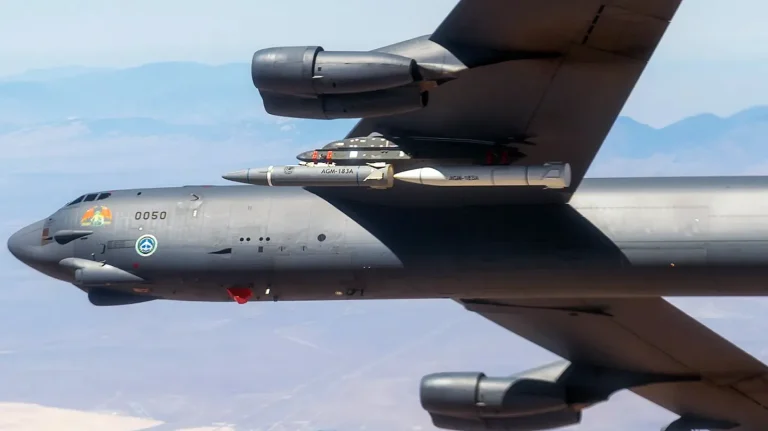
According to new U.S. Air Force budget documents, hundreds of millions of dollars have been allocated for the ARRW Increment 2 version. The main difference in the new variant is the addition of a guidance system and a data link, which enable it to attack moving targets.
This fundamentally changes the very philosophy of the rocket.
Until now, hypersonic boost-glide systems were primarily viewed as weapons designed to strike pre-determined targets: mines, headquarters, command centers, airfields, or air defense installations. But a ship is a whole different story. An aircraft carrier strike group is constantly changing course and speed. During the missile’s flight, the group could have moved dozens of kilometers away.
To hit such a target, a missile must not only travel at tremendous speed, but also receive real-time data updates during flight and then autonomously lock onto the target during the terminal phase.
That is exactly what the Americans are trying to do right now.
In fact, the U.S. is following the same path as China with its hypersonic anti-ship systems, such as the YJ-21/KD-21. The Chinese have long been counting on destroying American aircraft carriers while they are still far from Taiwan. Now Washington clearly wants to deliver a mirror response.
The bomber is once again the top predator
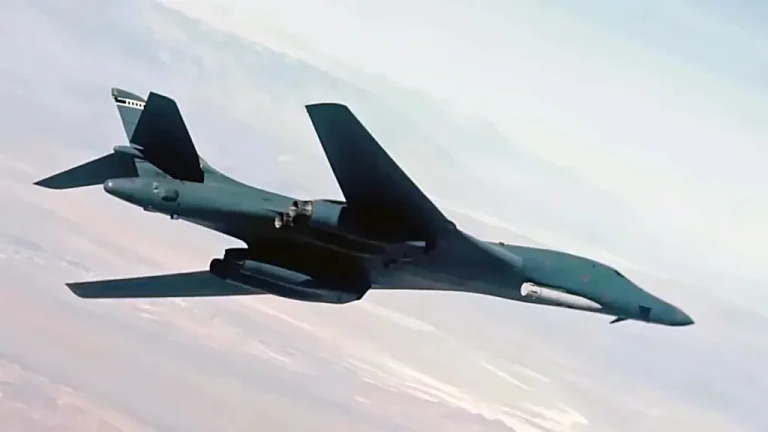
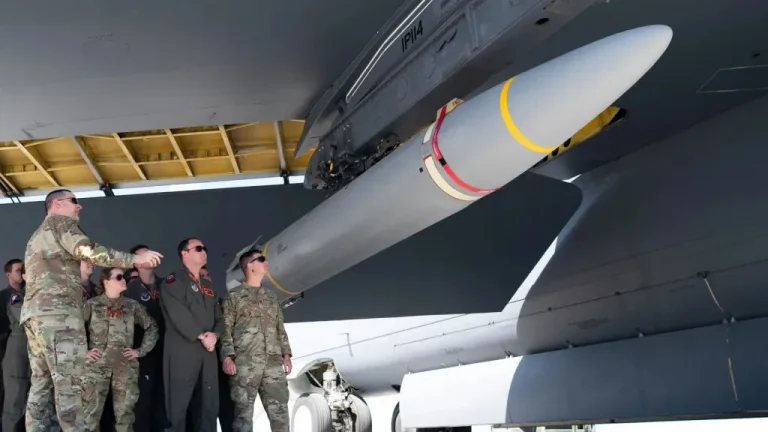
The delivery platform for the new missile is particularly interesting. In addition to the B-52, the B-1B Lancer is playing an increasingly prominent role. The Americans recently unveiled this bomber with an ARRW mounted on an external pylon for the first time.
And that is a very telling point.
During the Cold War, the B-1 was developed as a supersonic, penetrating nuclear-weapons delivery platform. After the collapse of the Soviet Union, the aircraft gradually evolved into a platform primarily for conventional strikes in the Middle East. But now its role is changing once again.
The B-1 has an enormous payload capacity and can carry heavy missiles on external pylons. In the Pacific Ocean, this turns the aircraft into a sort of “missile truck,” capable of launching hypersonic weapons from great distances.
Moreover, we are no longer talking about isolated test launches. The Americans are simultaneously modernizing the bombers themselves, restoring their ability to deploy heavy, long-range weapons on a large scale.
The hypersonic race is reaching a new level
The most important aspect of this story isn’t even the missile itself, but the shift in the U.S. approach to naval warfare.
For the past twenty years, the U.S. Navy has felt virtually invincible. The aircraft carrier strike group was considered the primary instrument of global pressure. But the emergence of Chinese hypersonic anti-ship systems has jeopardized this concept.
Now a new phase of the race is beginning—the development of hypersonic weapons for targeting large maritime targets.
And if the ARRW Increment 2 does indeed receive a fully-fledged guidance system for tracking moving targets, then we won’t be talking about just another expensive missile. It will be an attempt to reshape the very architecture of 21st-century naval warfare.
based on https://www.twz.com/air/new-version-of-bomber-launched-arrw-hypersonic-missile-is-a-ship-killer