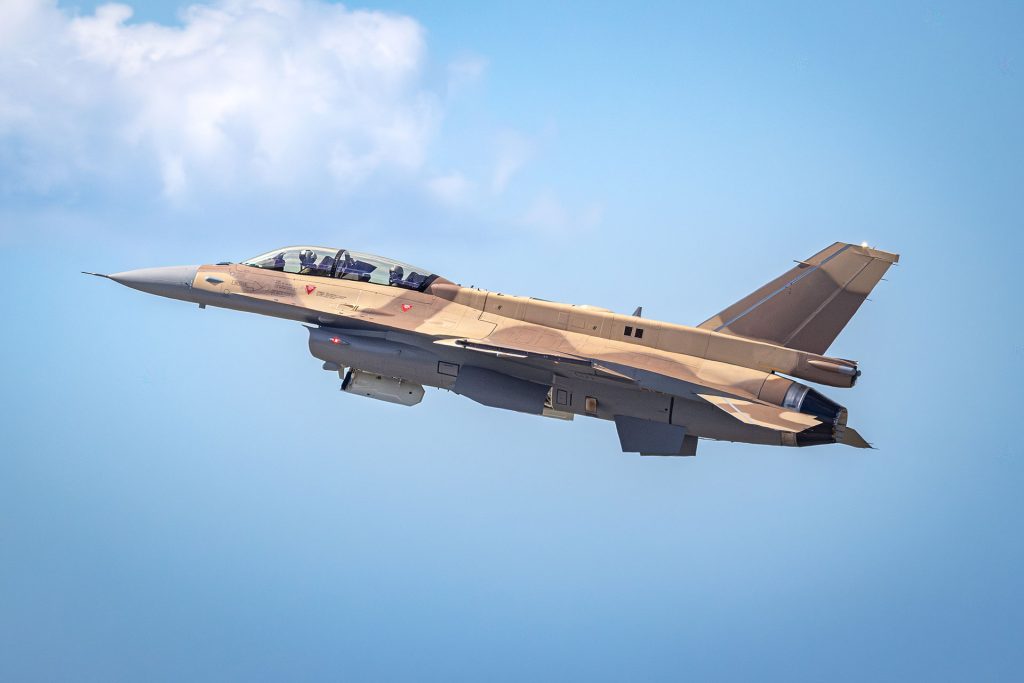
At first glance, Morocco’s new F-16 looks like another aircraft from a familiar family. The same distinctive shape, the intake beneath the fuselage, the single engine. Yet its designation includes Block 72—the rarer branch of today’s Vipers. While most buyers of new F-16s choose General Electric engines, Morocco is sticking with Pratt & Whitney. There is a practical reason for that choice: the new aircraft needs to fit into an established fleet.
On October 6, 2026, Lockheed Martin announced the Moroccan aircraft’s first flight in Greenville, South Carolina. It still faces testing before delivery to the customer. The milestone is technically interesting: a newly built F-16 has taken to the air with modern electronics, a longer airframe service life, and an engine from a family Moroccan technicians have maintained for years.
The Last Two Digits Start with the Engine
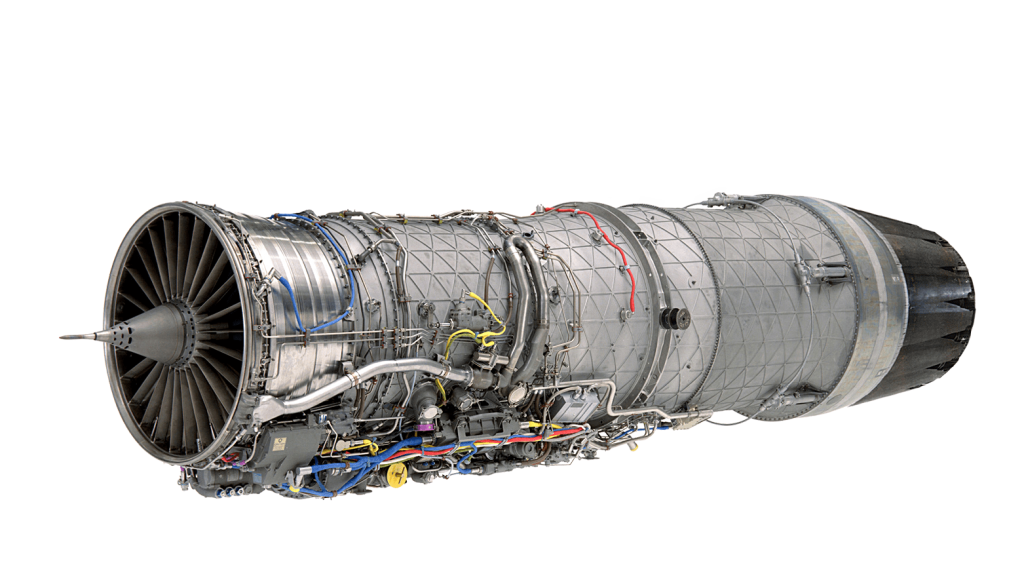
The main difference between new Block 70 and Block 72 aircraft is their powerplant. The former uses the General Electric F110-GE-129; the latter uses the Pratt & Whitney F100-PW-229. Block 72 is not a step beyond Block 70. They are parallel versions of the same modern family, distinguished by their engines.
Pratt & Whitney lists the F100-PW-229’s maximum thrust as 129.7 kN, or 29,160 pounds of thrust. GE documentation places the F110-GE-129 in the 129 kN thrust class. The difference between those published figures is too small to declare either version fundamentally more powerful. Installed thrust also varies with altitude, speed, inlet conditions, and operating regime.
The engines’ internal designs differ more substantially. For example, the F100-PW-229 has a bypass ratio of 0.36, compared with 0.76 for the F110-GE-129. This figure expresses the ratio of airflow through the bypass duct to airflow through the engine core. It describes how air moves through the engine, but it cannot, on its own, tell us which fighter is faster or more fuel-efficient. That requires performance data for the complete propulsion installation under specific operating conditions.
Morocco had a reason to retain the F100 long before Block 72 appeared. In 2010, Pratt & Whitney announced a contract to supply F100-PW-229 EEP engines for the country’s earlier F-16 order. Choosing a new aircraft with an engine from the same line therefore preserves continuity in technician training, supply, and maintenance. This is an engineering and operational explanation for the choice, rather than evidence that Pratt & Whitney is superior to GE.
The F100-PW-229 incorporates modular maintenance and Digital Electronic Engine Control, or DEEC. The system regulates engine operation, monitors its condition, and helps identify faults. The EEP package develops that maintenance approach further: according to the manufacturer, the interval between depot maintenance visits increases from 4,300 to 6,000 Total Accumulated Cycles, or TAC. These are cycles counted under a defined accounting method, not flight hours or the number of sorties.
Behind the Familiar Nose, a Different Way of Seeing
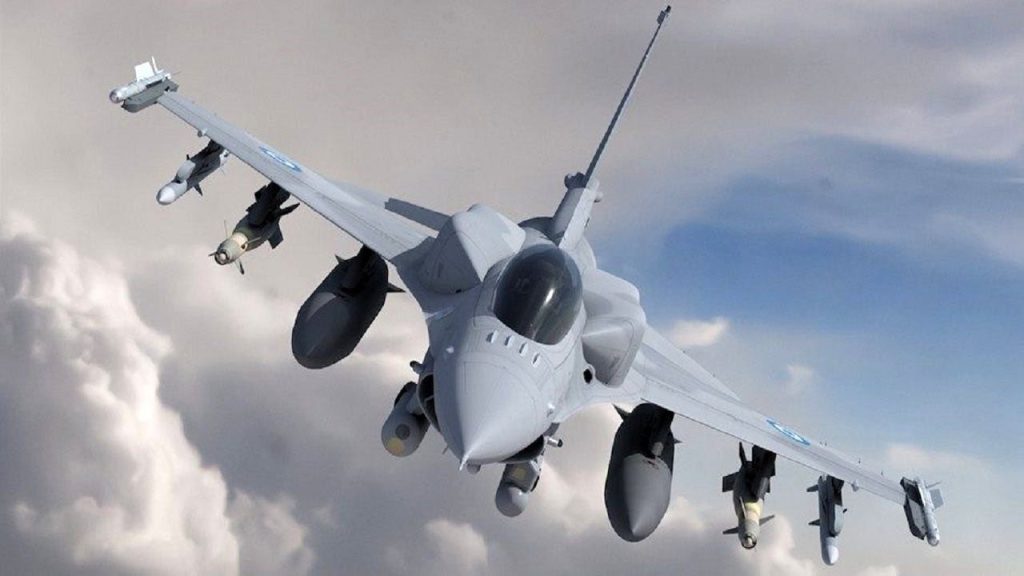
The biggest change in combat capability sits ahead of the engine: Northrop Grumman’s AN/APG-83 SABR radar. It is explicitly listed in Morocco’s 2019 notification of a possible sale. This is an active electronically scanned array, or AESA, radar.
An AESA steers its beam electronically. To shift the beam within its operating sector, it adjusts signals across numerous transmit/receive modules instead of physically turning the antenna each time. This gives the radar greater flexibility in allocating time between search and tracking. Northrop Grumman also advertises interleaved modes, moving-target capabilities, and surface mapping.
For the F-16, the way this radar fits into the aircraft is particularly important. The APG-83 was designed to replace earlier radars while remaining within existing electrical power and cooling limits. According to its developer, integration requires no structural modifications or changes to those standard systems. The new electronics had to fit inside an established engineering envelope; otherwise, upgrading the large worldwide F-16 fleet would become considerably more complicated.
The radar still needs an effective interface with the crew. Block 70/72 aircraft feature a color Center Pedestal Display, or CPD, showing tactical information, maps, and targeting-pod imagery. Morocco’s package also included AN/AAQ-33 Sniper targeting pods, the Joint Helmet Mounted Cueing System, or JHMCS, and Link 16 terminals. These components perform different tasks: the radar detects and tracks, the pod provides electro-optical imagery, the helmet helps direct target cueing, and the datalink enables information exchange.
The defensive equipment has evolved too. The original 2019 document listed the AN/ALQ-211 AIDEWS. A later DSCA memorandum, issued in 2024, included Morocco among the countries with specified nonrecurring cost recoupment charges for the AN/ALQ-254(V)1 Viper Shield. An early sale authorization therefore should not be treated as a fixed inventory of the eventual aircraft.
Viper Shield is a digital electronic warfare suite designed to work alongside the APG-83. According to L3Harris, its software-defined architecture makes subsequent upgrades easier. However, the system’s inclusion in the program does not allow a photograph of the first flight to establish which configuration has already been installed and activated on that particular aircraft.
A New Airframe and an Upgraded F-16 Are Different Purchases
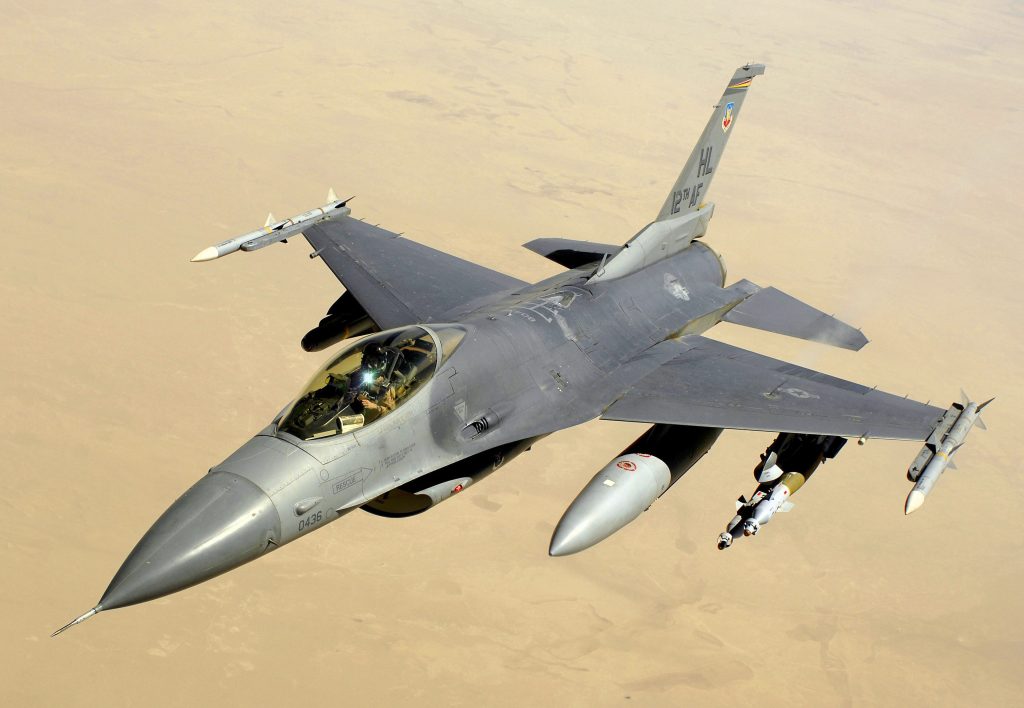
There are two routes to a modern F-16V: build a new Block 70/72 aircraft or upgrade the electronics of an existing one. Both paths were approved for Morocco in 2019: a possible purchase of 25 new F-16C/D Block 72 aircraft and a separate upgrade of 23 existing fighters to the F-16V configuration.
Shared equipment brings their capabilities closer together, but it does not make their structures identical. Lockheed Martin specifies a designed airframe service life of 12,000 hours for new Block 70/72 aircraft—50 percent more than for earlier production F-16s. Replacing an older aircraft’s radar and computers does not erase its load history or give it the service life of a new airframe.
Another option available within the family is conformal fuel tanks mounted along the fuselage. They increase fuel capacity while keeping underwing stations available that might otherwise carry external tanks. The tanks and their additional fuel also add weight, so the benefit depends on the mission and the aircraft’s load. Provision for fitting them does not mean every aircraft necessarily flies with them.
Block 70/72 equipment also includes the Automatic Ground Collision Avoidance System, or Auto GCAS. It assesses the aircraft’s position relative to the terrain and can initiate a recovery maneuver when a collision is imminent. This is particularly valuable if the pilot loses consciousness under high G or cannot react in time. The system had already been used on earlier F-16s, so its inclusion reflects the modern equipment standard rather than an exclusively Moroccan modification.
Morocco’s Block 72 is interesting for the way it combines continuity with renewal. It retains a familiar engine line, while its sensors, data exchange, protection, and new airframe service life are intended to support decades of operation. The rare designation stems from the choice of powerplant. Much of the transformation lies in places an airfield photograph cannot reveal.