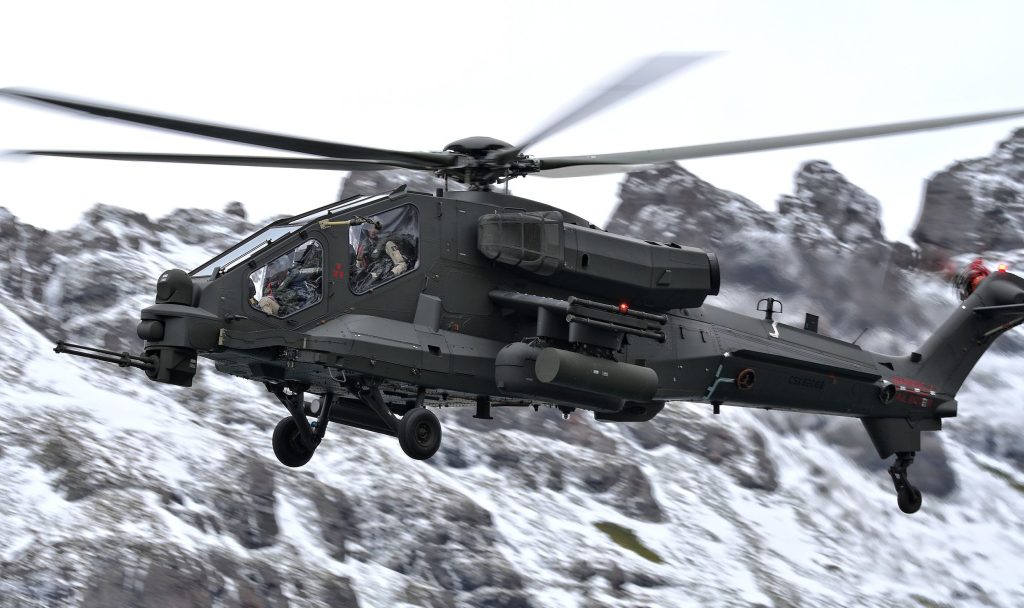
Italy’s AW249 Fenice has a familiar silhouette: a narrow fuselage, two pilots seated one behind the other, a cannon beneath the nose and missiles on side-mounted pylons. Yet this is an aircraft with a maximum takeoff weight of 8.3 tonnes, designed to replace the lighter AW129 Mangusta. Why did Italy need a new helicopter if its armament still starts with a 20 mm cannon?
The Mangusta’s replacement offers more room to grow—in carrying capacity, engine power, onboard equipment and future upgrades. Named Fenice, Italian for “Phoenix,” the AW249 is intended for Italian Army Aviation. Development began in 2017, and the first prototype flew in the summer of 2022. Its missions will include reconnaissance, escorting other aircraft, supporting ground troops and engaging targets. Those tasks demand a combination of range, firepower and the ability to operate in difficult conditions.
More Power—and More Than Just Weapons to Carry
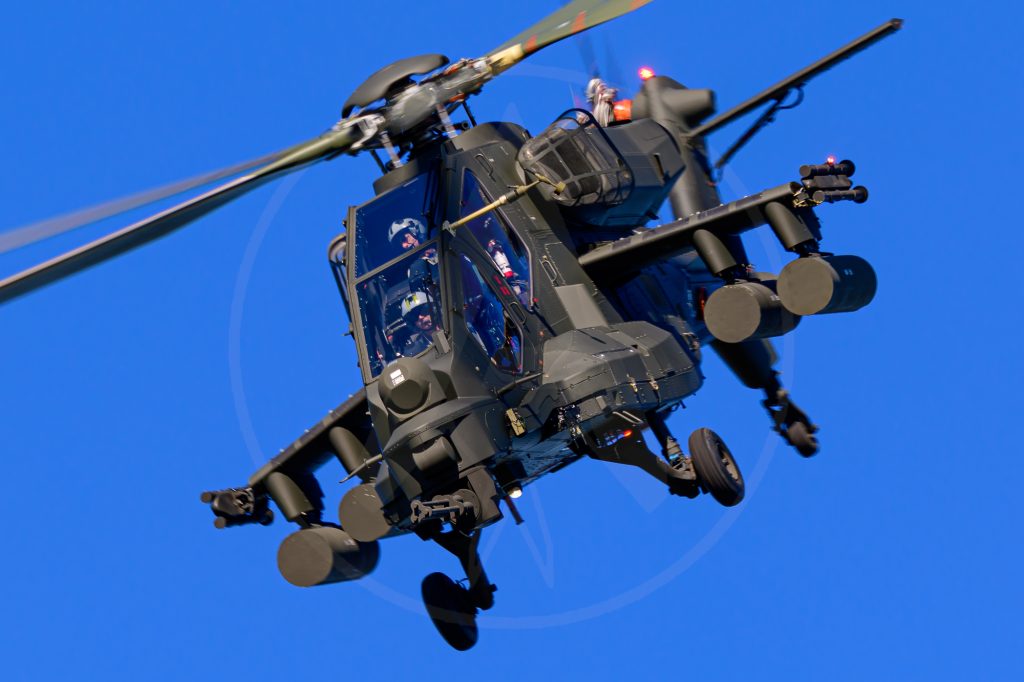
The AW249 uses two General Electric CT7-8E6 turboshaft engines. Leonardo’s official brochure lists a takeoff rating of 2,503 shaft horsepower for each. That power is particularly valuable in hot weather and at high altitude: thinner air reduces a helicopter’s performance, while its weapons and fuel remain just as heavy. The extra power helps it operate where a less capable aircraft would have to reduce its load.
The engines drive the rotor through a transmission with limits of its own. Adding their maximum outputs together does not tell us how much power can actually reach the main rotor. Engines, gearboxes, rotor and structural limits all have to work together. The choice of the CT7 also has a practical side: Avio Aero points to commonality with engines used by other helicopters in Italy’s armed forces, helping simplify maintenance and supply.
The manufacturer lists the AW249’s useful load as 2,800 kilograms. That does not mean it can carry that weight in weapons, add a full fuel load and still achieve maximum range. Carrying capacity has to be divided between load and endurance. An attack helicopter also needs room for the years ahead, as new sensors, protection systems and other equipment are added during its service life. Building in that margin allows the aircraft to develop beyond its initial configuration.
A Cannon, Missiles and Layers of Protection
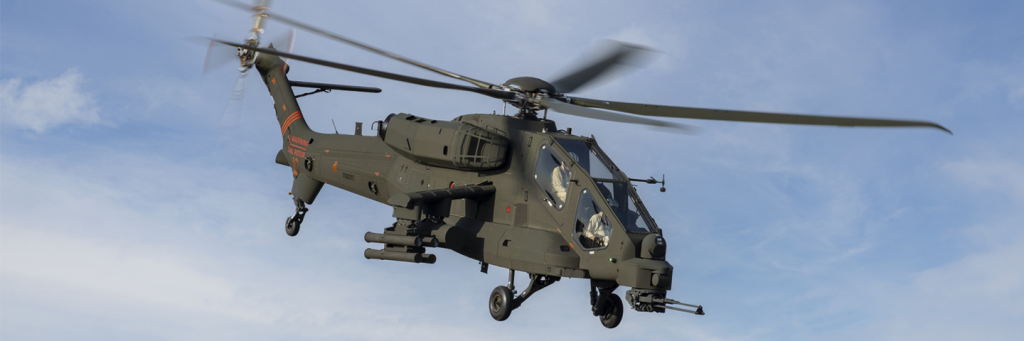
Beneath the Fenice’s nose sits a three-barrel 20 mm cannon. Its mounting allows it to aim within the turret’s firing arc without turning the entire helicopter each time. The side-mounted stations accommodate several weapon types: guided and unguided 70 mm rockets, air-to-ground missiles and air-to-air missiles. Italian Army material identifies the SPIKE anti-tank missile family. The exact loadout will depend on the mission and the approved configuration.
Each weapon has a different job. The cannon provides direct fire support, while rockets and missiles offer other engagement ranges and ways to attack different targets. But a suitable weapon is only part of the equation: the crew must first find the target, identify it and obtain the information needed to engage it. The AW249’s observation and information-processing systems are therefore integral to its design.
Protection comes in several layers too. Leonardo lists armoured crew seats, protected fuel tanks and design features intended to reduce the consequences of a crash landing. A threat-warning and countermeasures suite is also planned, alongside measures to reduce detectability. These serve different purposes: alerting the crew, making the aircraft harder to hit, preserving its ability to function after damage and helping its occupants survive a hard landing. They give the crew several chances to survive an emergency.
A New Cockpit for Two
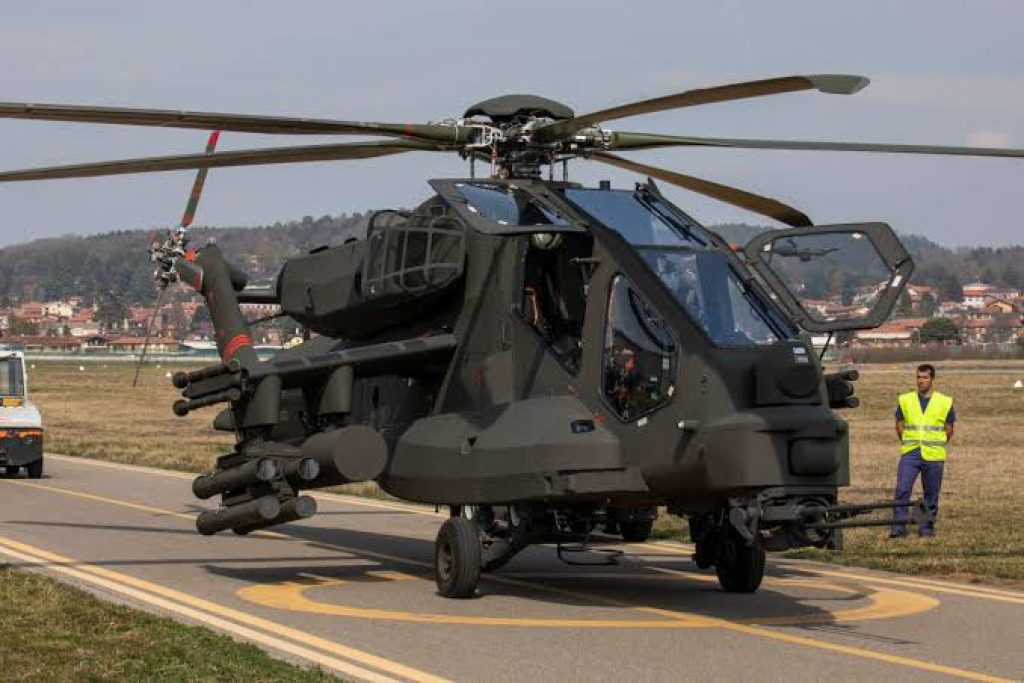
The AW249’s crew sit in tandem. This arrangement keeps the frontal profile narrow, while the cockpit equipment must allow two people to fly the aircraft and carry out its combat mission together. Large multifunction displays present information, and a helmet-mounted system places imagery and symbols directly in the pilot’s field of view. A battle management system brings together information from different sources, helping the crew connect flight data with what is happening around them.
The developers tested the cockpit using a full-size mock-up, assessing the placement of screens and how easily the controls could be reached. A simulator was then used to refine the interface and evaluate crew workload. This is a very tangible engineering problem: the right function must be easy to find and use while the pilot is occupied with flying and cannot devote full attention to a menu. More electronics alone will not make a better cockpit.
One of the AW249’s planned capabilities is working with drones, including receiving their data and controlling compatible aircraft through a broadband data link. This would let the crew use observations from another vantage point, expanding their view of the situation. However, an open avionics architecture does not make every drone compatible: each system must be integrated and tested. In June 2026, Leonardo reported that this work was already underway with an unmanned system selected by the Italian Army.
By then, four AW249s had been built, including three pre-production aircraft; deliveries and initial service entry were expected to begin in 2028. The Phoenix retains the familiar shape of an attack helicopter, while its development rests on a larger platform, powerful engines and equipment designed for future upgrades. The completion of testing and its subsequent service with Army Aviation will show how successfully those choices come together.