Black Hawk Gets a New Nose: Why an Old Helicopter Needs a Swappable Bay for New Electronics

The Black Hawk is being prepared for a noticeable change in appearance. Sikorsky is developing an enlarged nose section for the H-60 family that can be fitted to both new helicopters and aircraft already in service. It will provide roughly twice the internal space of the standard nose on current-generation H-60s. The company aims to offer the upgrade within approximately the next year, although development is still underway.
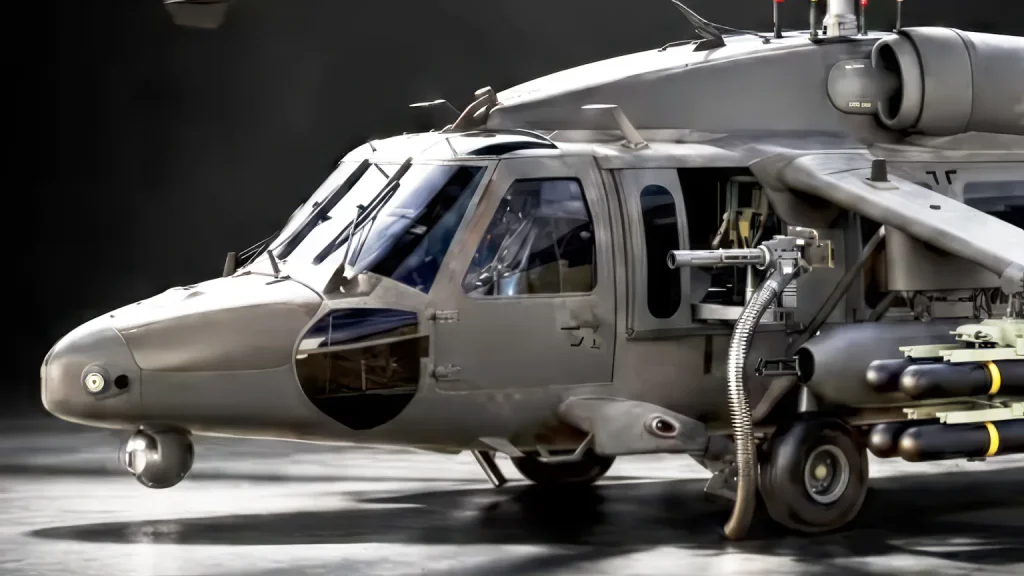
The reason is practical: the helicopter needs more equipment, but space ahead of the cockpit is limited. Radars, cameras, communications systems, and sensors for autonomous flight all need somewhere to be installed, connected, and maintained. The new nose is intended to provide a more convenient bay for this equipment.
Space That Sensors Compete For
For many sensors, the front of a helicopter is an attractive location, providing a view in the direction of flight. But installing a device is only the beginning. It needs mounting points, wiring, a suitable field of view, and access for repairs.
As more equipment is added, these requirements start getting in each other’s way. A good position for one device may already be occupied by another, while a neighbouring unit can block access to a connector. Electronics also generate heat that must be removed from an enclosed compartment.
Sikorsky has already produced 3D-printed mock-ups of the new section to check access to its internal spaces. The exhibition model’s nose opens from the top, and the developers are also addressing equipment cooling.
Such checks may seem mundane, but they directly affect helicopter readiness. If replacing a small component requires dismantling half the compartment, the benefits of new equipment can easily come with additional hours of maintenance.
One Helicopter, Different Equipment Packages
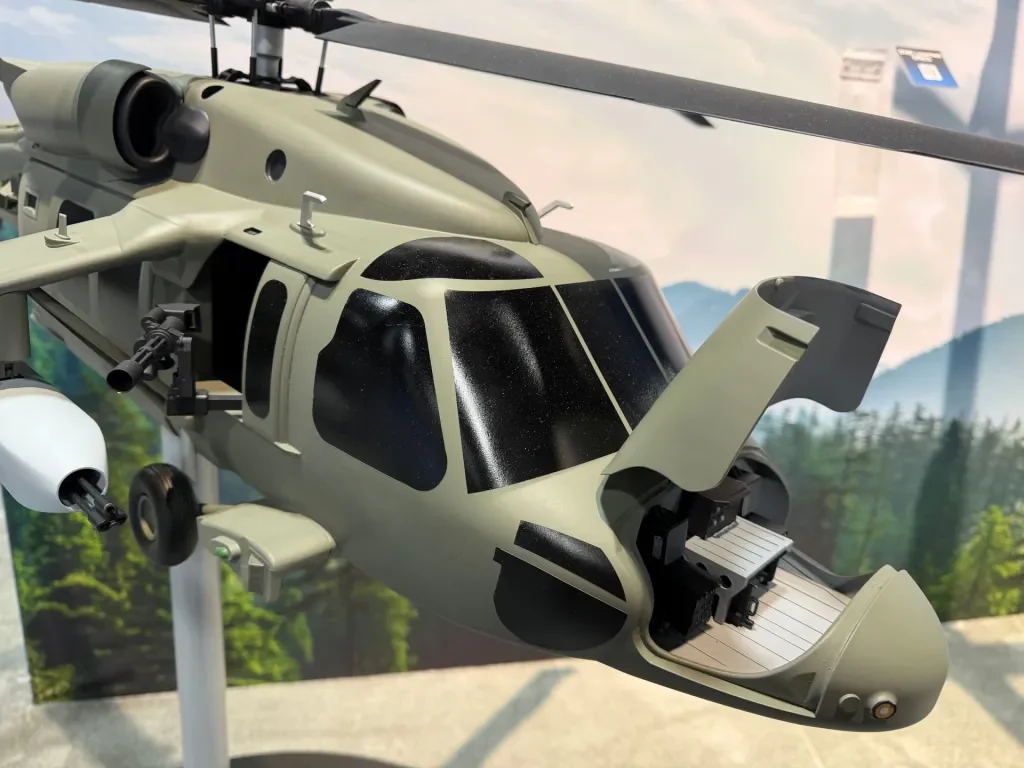
The central idea is modularity. The enlarged section should accommodate different equipment packages tailored to each aircraft’s mission. Lockheed Martin describes it as a reconfigurable, open-architecture solution with additional space for sensors and electronics.
For operators, this could mean upgrading the equipment while retaining the helicopter itself. A new surveillance system, for example, should fit into a designated space and connect to the onboard systems, rather than require another bespoke modification.
A swappable nose alone, however, does not turn a transport Black Hawk into a fully equipped gunship. That would require weapons, appropriate control systems, and other changes. The nose section provides room for equipment that helps the helicopter perform its assigned role.
Sikorsky has not yet finalised how the modules will be exchanged or how long the process will take. The promise of rapid reconfiguration still needs to become a specific maintenance procedure.
Room for Future Upgrades
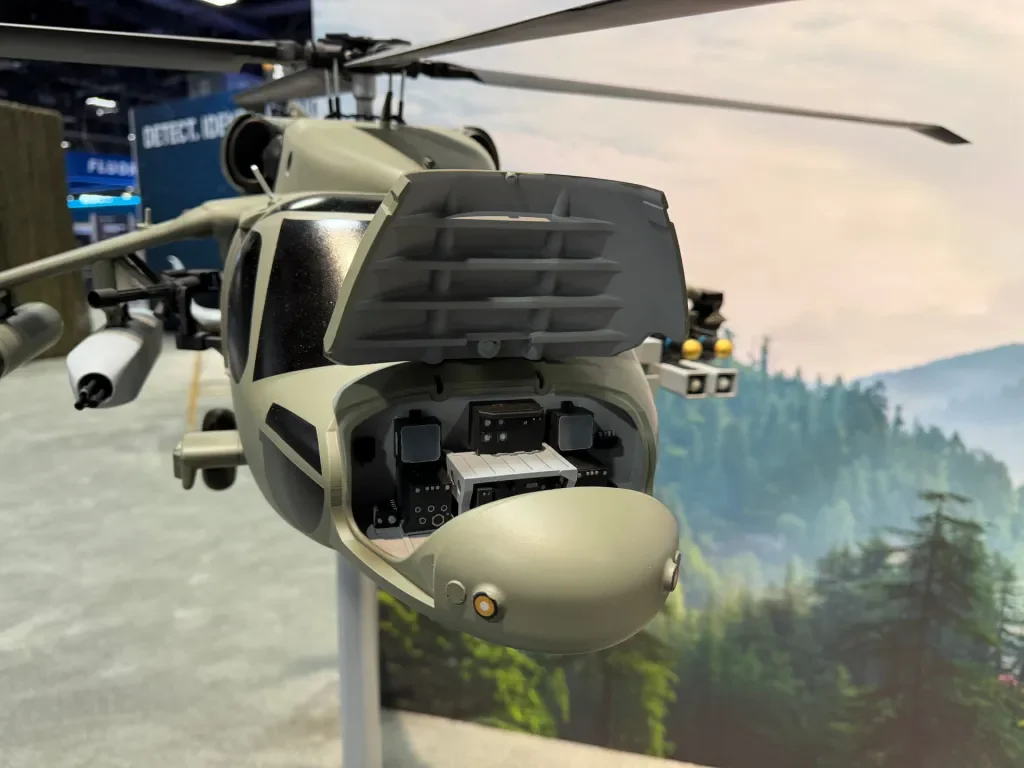
The modular nose is part of a broader Black Hawk development effort. The manufacturer links that effort to new engines, a digital architecture, and flight automation. Additional space ahead of the cockpit should help accommodate equipment supporting future capabilities.
Space is only one part of the challenge, though. Any new equipment adds weight, consumes electricity, and generates heat. It must be integrated with the other systems and then tested aboard the helicopter. An open architecture makes that work easier, but does not eliminate it.
The proposed upgrade has a clear purpose: give a well-established aircraft a convenient home for equipment it was never originally designed to carry. Its success will be measured in practical terms — how useful that equipment proves to be, and how easily technicians can install, replace, and repair it.