A vintage article from the January 1977 issue of *Aeroplane Monthly* that I think will be of interest to readers and colleagues.
Contents:
Editor’s Note: In this article, Richard Riding tells the story of a race plane that failed to make a name for itself.
The Comper Streak, a miniature single-seat racing monoplane, was originally designed to compete in the ill-fated international air races, the first of which were scheduled to begin in Portsmouth in August 1933. At that time, Hitler began to take action, and the races never took place—officially due to
“an uncertain political situation,”
although many believed there were other reasons for the cancellation. Development of the Streak aircraft was shelved, although three-view drawings of the Streak—a specially designed Hendy 3303—appeared in the May 11, 1933, issue of the magazine.
That same month, on May 28, Flight Lieutenant (Captain) Nicholas Comper (Flt Lt Nicholas Comper) flew a Comper Swift (civil registration number G-ABWW) to Étampes, France, to take part in the 1933 Deutsch de la Mer race. Although his Swift had been specially fitted with a 146-horsepower Gipsy Major Special engine for the race and its aerodynamics had been refined, Nicholas Comper’s chances were slim. Some of the French competitors flew aircraft whose engines were more than twice as powerful as the Swift’s engine, even though their total displacement remained within the 8-liter limit set by the rules.
Komper’s chances diminished significantly when the engine experienced oil cooling problems during the race, forcing Swift to fly at a speed of 149 miles per hour (240 km/h). This result was particularly disappointing because the previous year, the same aircraft—equipped with a less powerful Gipsy III engine—and piloted by Flight Lieutenant (Captain) Edward Fielden, had taken second place in the King’s Cup air race with a speed of 156 miles per hour (251 km/h). However, the victorious French aviators were courteous enough—much to Nicholas Comper’s delight—to wait to open the champagne until he had finished his run in the race.
Nicholas Comper decided to compete in the 1933 Deutsch de la Merth race, and by the end of 1933, he had already begun preparing the Streak aircraft for the competition. At that time, the Comper Aircraft Company (Comper), based in Hendon, was wrapping up mass production of the Swift, and the company was urgently seeking a replacement for it. A three-seat low-wing monoplane with folding wing struts and retractable main landing gear had just been unveiled; the aircraft, with which the company hoped to improve its position, was named the Mouse in honor of Flight Lieutenant (Captain) Fielden’s nickname.
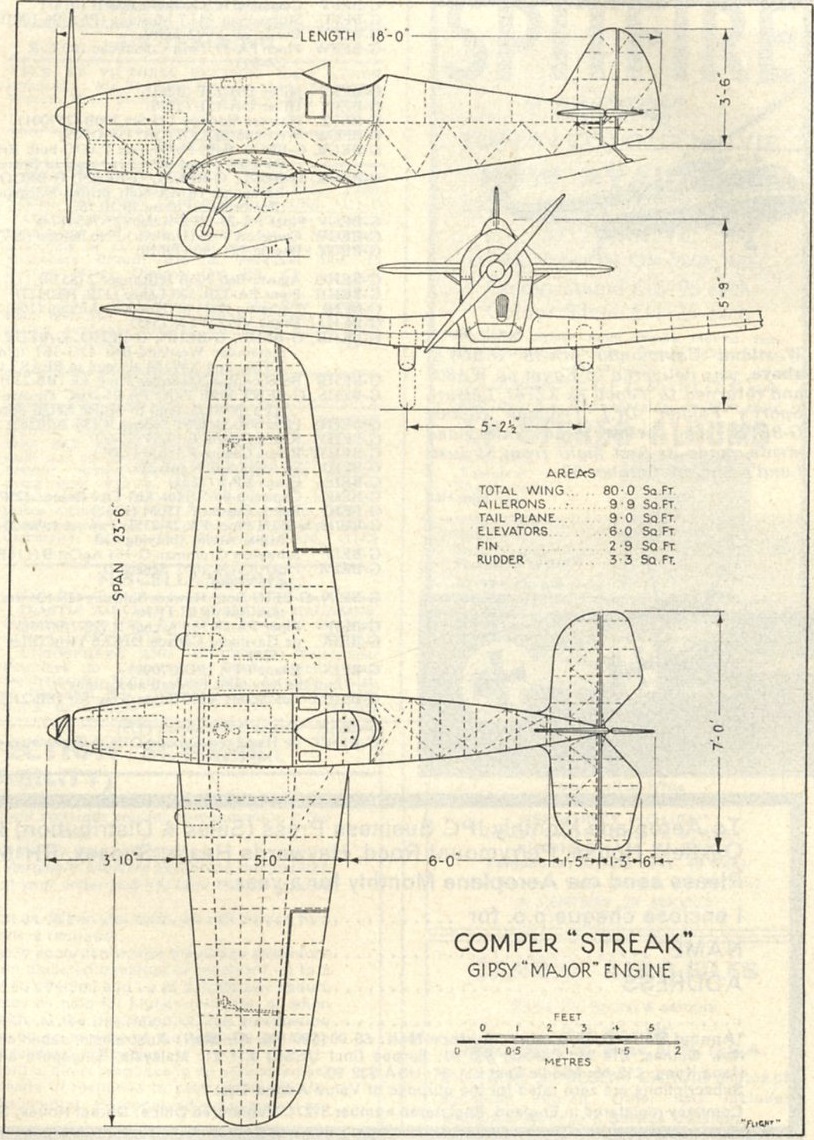
Diagram of the Comper Streak racing plane
When the Streak rolled off the Comper assembly line in April 1934, it resembled the Swift, with a low-mounted wing and retractable main landing gear. In fact, the Streak embodied features of two earlier Comper aircraft: the high-wing Swift and the low-wing Mouse. The wing’s plan view resembled that of the Mouse, and the retractable main landing gear was very similar, albeit smaller in size. Although the Deutsch-de-la-Mert race regulations specified a maximum engine displacement of eight liters, Nicholas Comper decided to install a 146-horsepower Gipsy Major with a high compression ratio, a displacement of only 6 liters, and no supercharger. Comper believed this was the only British engine suitable for the Streak.
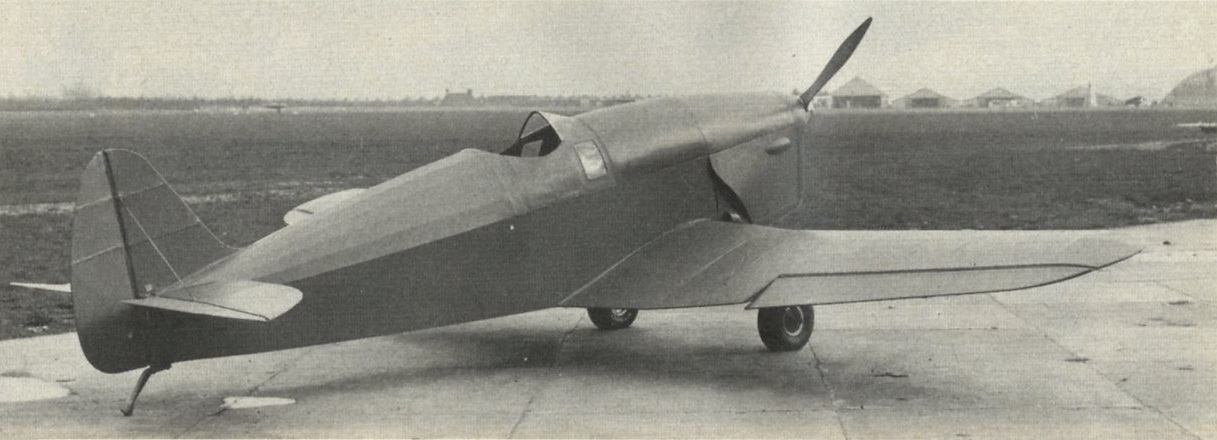
The Comper Streak racing plane shortly after rolling out of the assembly shop; Heston, April 1934. The weight compensators have not yet been installed. Photo from *Flight* magazine
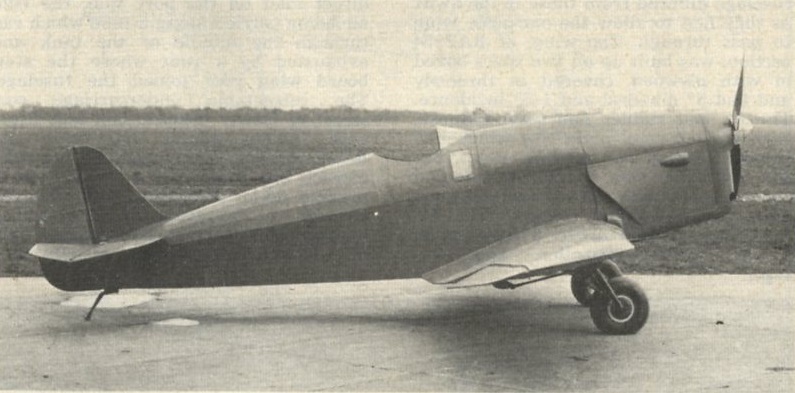
A Comper Streak racing plane before the installation of ballast weights. Photo from *Flight* magazine
The First Flutter
On April 12, 1934, the Streak was ready to fly, and Nicholas Comper took to the air to thoroughly test the small plane’s capabilities. After about 20 minutes, his confidence in the aircraft was so great that he decided to impress the company’s high-ranking executives gathered below. Nicholas Comper dove and began a high-speed flyby at low altitude over the Comper factory. One of those watching the plane pick up speed was George Errington, who later became the chief test pilot at Airspeed Ltd. He recalled:
“When Nick Comper leveled off in front of the astonished audience, we all heard the terrifying crash of the plywood skin and saw the ailerons disappear into a fog of high-frequency vibrations. Nick experienced a terrible aileron flutter, for which there was no countermeasure—weight compensators (which became mandatory from that point on).”
Nicholas Comper climbed sharply to slow down, and then carefully continued level flight, heading toward the nearby Great West airfield, which is now part of Heathrow Airport. There, the shaken pilot, along with Errington, inspected the damage. It was surprising that the ailerons remained intact; each aileron’s hinged eye bolt had cut a vertical slit in the wall of its rear spar between the stringers, and lateral movements of the control stick had no effect on the ailerons. The Streak was transported back to Heston, and work began at a feverish pace on repairs, testing, and preparing the aircraft for the Deutsch de la Mère race, with only six weeks remaining until the start.
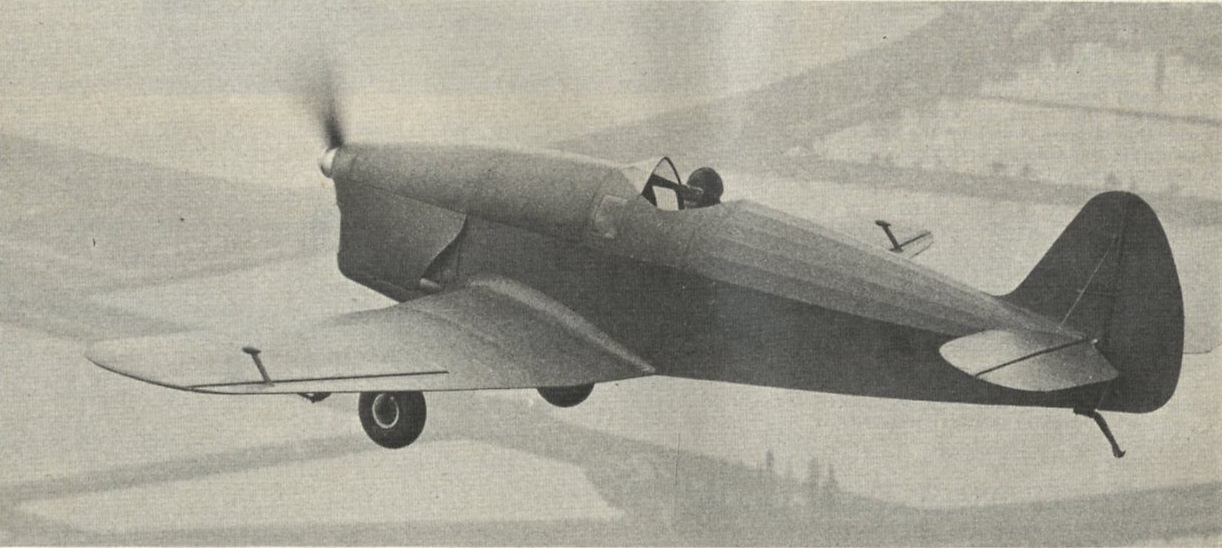
A Comper Streak racing plane with ballast weights installed, in flight. Photo from *Flight* magazine
Before discussing the results of the races in Étampes, it’s worth taking a look at the design of this sleek little airplane. Structurally, its fuselage differed little from that of its predecessor. The Streak’s fuselage consisted of spars made of spruce and reinforced by a Warren truss, whose struts were also made of spruce. Structurally, the fuselage consisted of two sections, separated immediately behind the pilot’s cockpit. The lower stringers in the central section of the fuselage differed from those of the Swift, as they had to accommodate the monocoque wing. The main structural element of the wing was a box section formed by two spars connected to each other with plywood. The wing utilized the RAF 34 airfoil; the transverse V-angle of the wings was 5°, and the angle of attack was 1.5°. The tailplane and rudder had steel rear struts, flanged steel sheet ribs with flanged edges, and tubular leading and trailing edges. The horizontal stabilizer had long, slender spars made of spruce, plywood ribs, and a fabric covering. The powerplant consisted of a single Gipsy Major inline engine producing 146 l.s. and driving a Fairey fixed-pitch metal propeller. The engine was mounted on an engine frame welded from square-section steel tubes and neatly enclosed by an aluminum sheet cowling. The main fuel tank, with a capacity of 29 gallons (132 liters), was located in front of the pilot, and two additional tanks, each with a capacity of 8½ gallons (38.6 liters), were mounted in the wing consoles between the spars on a well-designed suspension system. In an emergency, fuel could be quickly jettisoned via quick-dump valves—a useful feature, considering that fuel accounted for more than a quarter of the aircraft’s total weight.
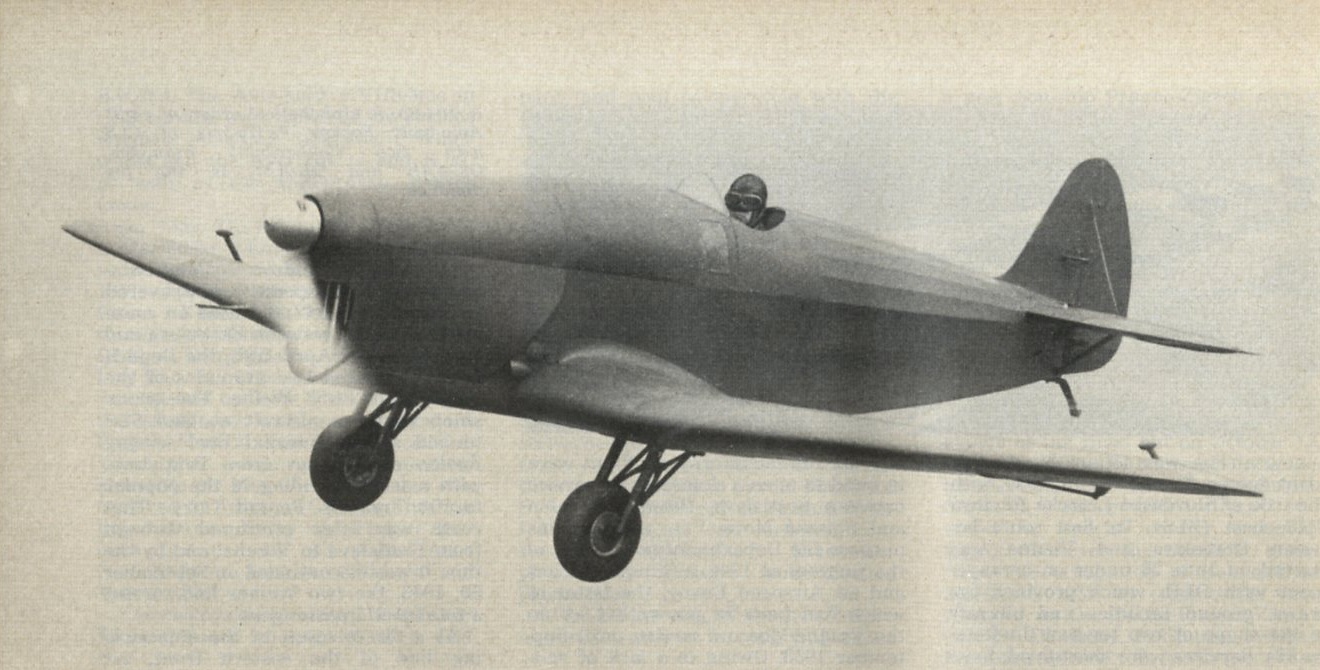
Flight Lieutenant (Captain) Nicholas Comper flies the Comper Streak race plane shortly after it was equipped with ballast weights. Photo from *Flight* magazine
The 2½-gallon (11.4 L) oil tank was cooled directly through an opening in the left side of the engine cowl. Cool air was drawn in through a pipe running through the center of the tank and exhausted through a vent where the root of the right wing spar joined the fuselage. The retractable landing gear consisted of struts equipped with shock absorbers and wheels fitted with Dunlop tires and Bendix brakes. The wheels did not retract completely but protruded a few inches to prevent serious injury to both the pilot and the aircraft in the event of a landing with the landing gear retracted. This feature had already proven its worth when the Mouse landed on its fuselage during one of its first test flights.
On May 18, the Streak received its airworthiness certificate and civil registration number G-ACNC, and when Nicholas Comper flew his plane to Étampes on May 22, he likely had mixed feelings about his chances. Although Comper kept the specifications of his plane a secret, he must have realized from the very beginning that the Streak would not be able to exceed 202 miles per hour (325 km/h)—the speed at which last year’s race winner had won.
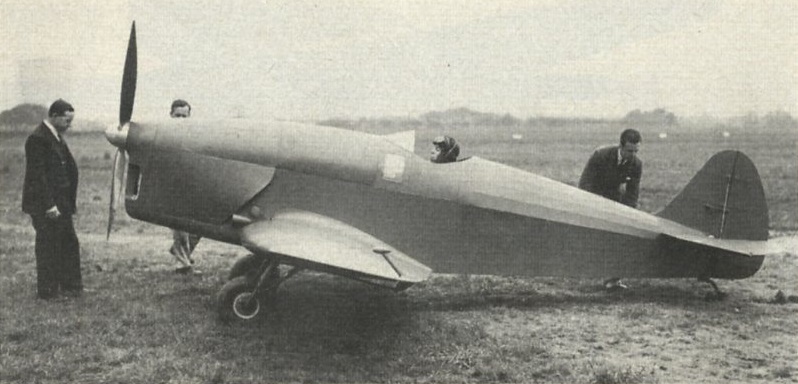
J. Graham, plant manager at Comper, inspects the Comper Streak racing aircraft while Nicholas Comper sits in the cockpit; Heston, April 1934. Photo from *Flight* magazine
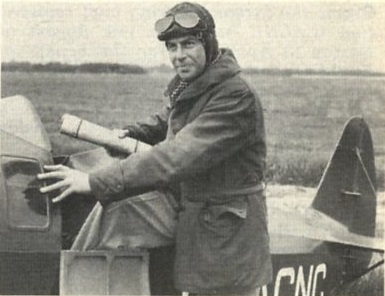
36-year-old Flight Lieutenant (Captain) Nicholas Comper is preparing to demonstrate the Comper Streak race plane to a photographer from *Flight* magazine. Photo courtesy of *Flight* magazine
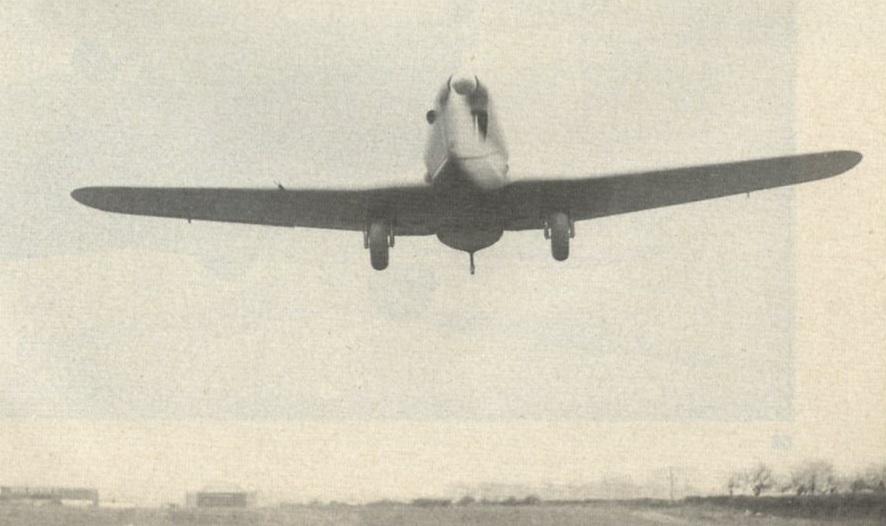
The Comper Streak racing plane demonstrates its excellent takeoff performance. Photo from *Flight* magazine
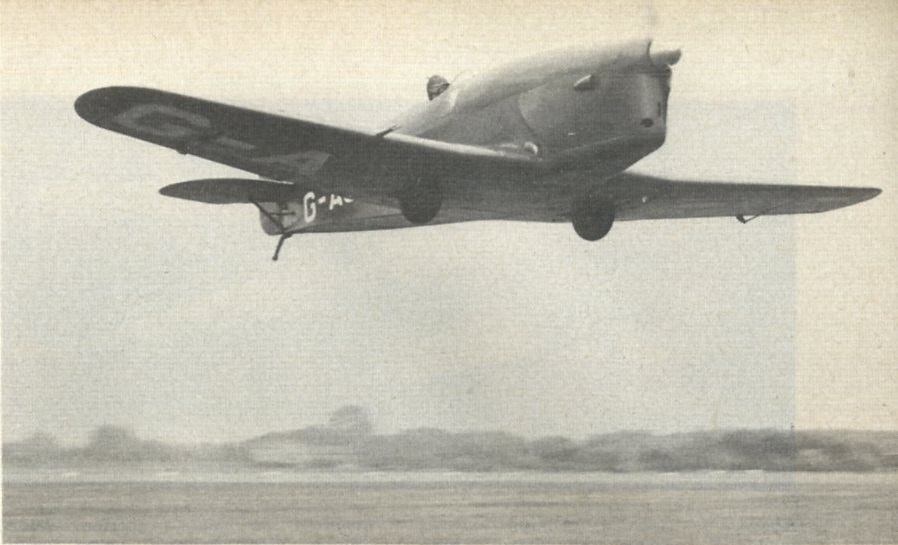
The Comper Streak racing plane, with the civil registration number G-ACNC painted on its wing and fuselage, is flying at low altitude for a photographer from *Flight* magazine. The photo was taken in Heston in April 1934. Note how the wheels of the retracted main landing gear protrude and the glass panels directly below the windshield, which provide the pilot with additional forward and downward visibility. Photo from *Flight* magazine
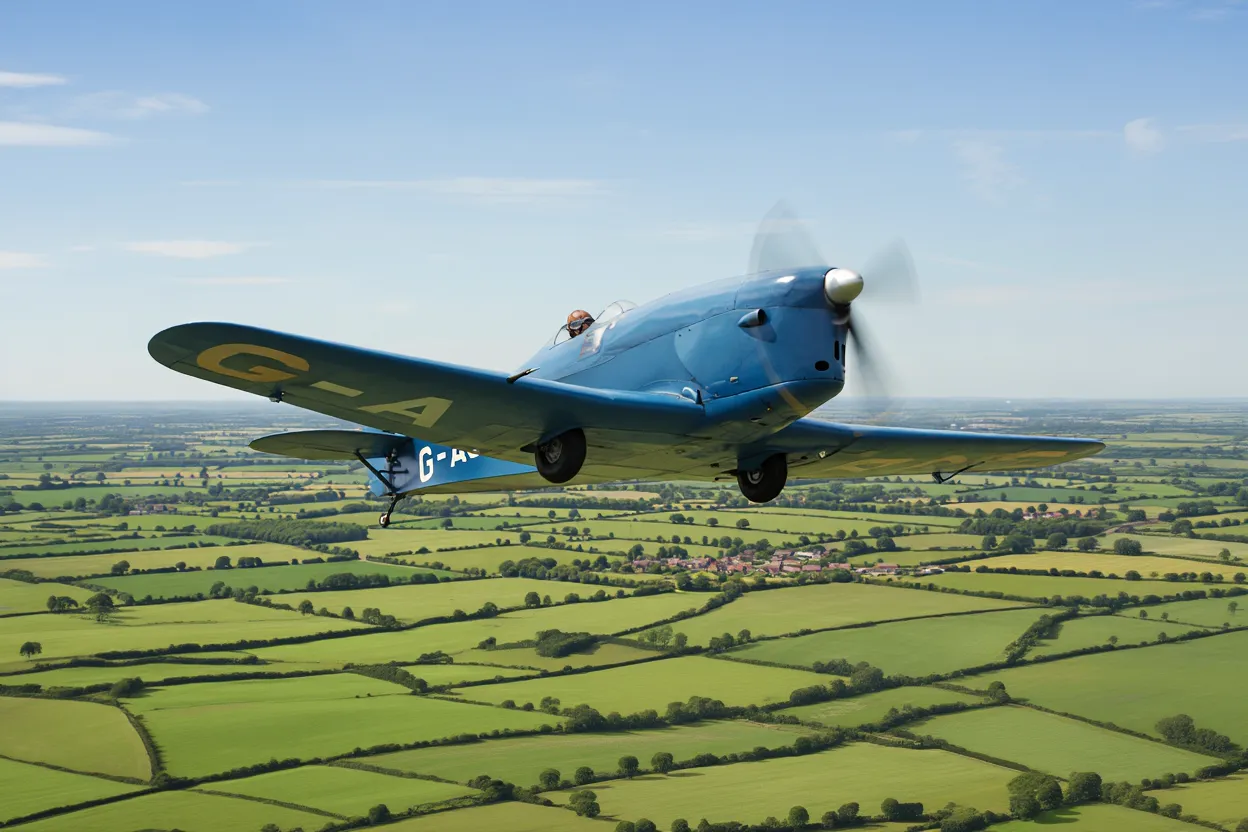
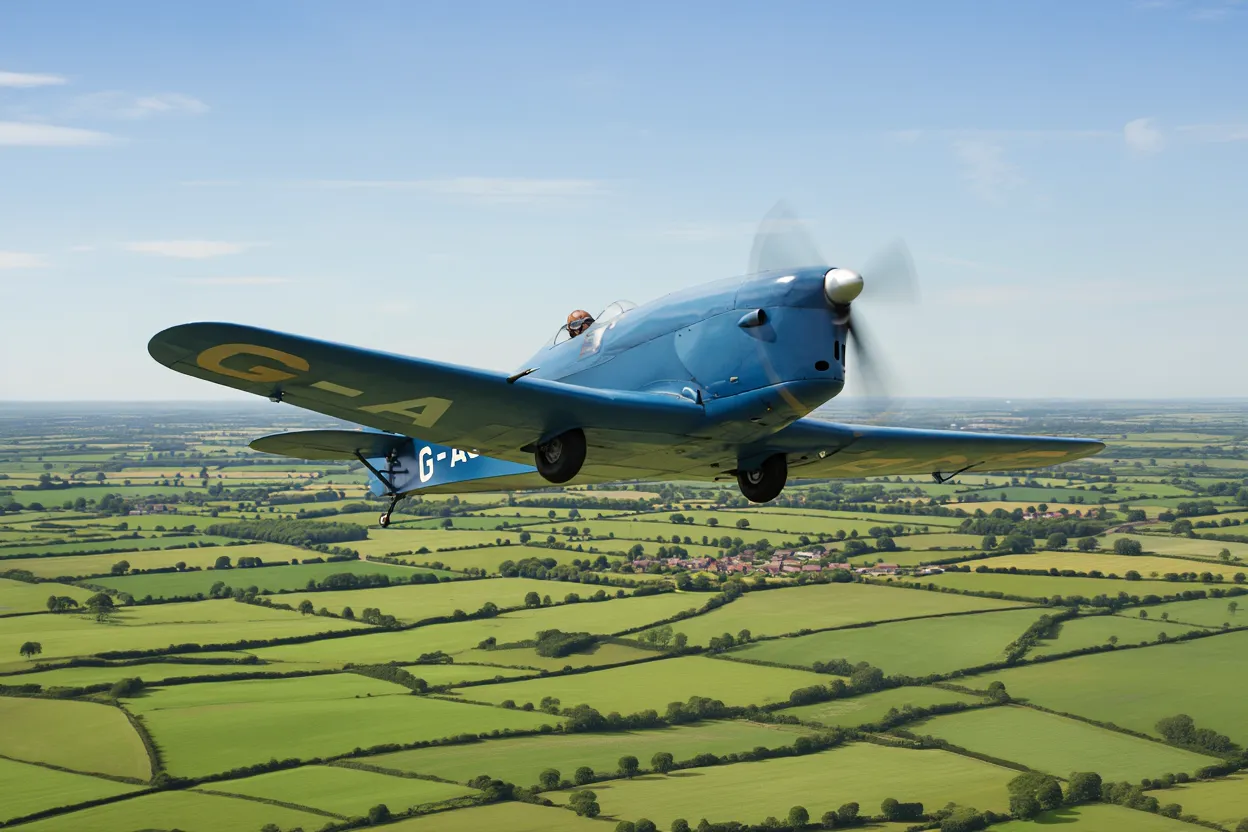
A Comper Streak racing plane in flight. Image generated by lmarena.ai
Powerful Competitors
Once again, the racing planes built by the French companies Potez and Caudron were equipped with engines twice as powerful as those in Nicolas Comper’s Streak. The triangular race course, spanning 2,000 kilometers, consisted of two stages, each comprising ten laps. Participants were required to make one mandatory stop, and all other stops were added to the flight time. Nicolas Comper hoped to exploit a “loophole” in the race regulations, believing he could complete each lap without refueling, while the French teams’ more powerful and fuel-hungry engines would likely require more frequent refueling.
As in 1933, Nicolas Comper was the only non-French participant, since the Italians withdrew due to a lack of time to prepare. During the first round, which took place on the morning of May 27, the Streak posted an average speed of 172.7 miles per hour (277.9 km/h) over ten laps. However, during the second run, the main landing gear legs failed to retract, and Nicolas Comper was forced to pull off the track after the sixth lap. The race winner, Maurice Arnoux, flying a Caudron C450, recorded an average speed of 244 miles per hour (393 km/h), which significantly surpassed the best result achieved by Komper’s aircraft.
Just a few weeks later, the Streak was back in competition: the King’s Cup races took place in Hatfield on July 13–14. Six Comper aircraft took part in these competitions: two Swifts with Pobjoy engines, one Mouse, a single-seat Streak, a two-seat Streak equipped with a 90-horsepower Pobjoy Niagara engine and named Kite, and a Swift with a Gipsy engine. The Streak, assigned race number 36, was entered by the Viscountess of Wakefield of Highgate and piloted by Nicholas Comper. The Streak posted a fairly promising result, managing to reach a speed of 180 miles per hour (290 km/h), however, Comper was forced to pull off the race course in Wittering, having recorded an average speed of 175.2 miles per hour (281.9 km/h) in the first leg.
Due to financial difficulties and a general lack of interest in the types of aircraft the company offered, the Comper Aircraft Company Ltd was reorganized into the Heston Aircraft Company in August 1934. The resignations of all members of the Comper board of directors, including Nicholas Comper himself, were accepted; the design department was disbanded and replaced by a new team. Nicholas Comper entered into a partnership with F. R. Walker and founded the engineering firm Comper and Walker Ltd, or, as the magazine *The Aeroplane* wrote
“a sort of aviation version of ‘Tetushki for Everyone’ [1]“
Since its founding in Hutton in 1929, Comper has produced 41 Swift aircraft, as well as the Streak, Mouse, and Kite models, and an autogyro based on the Swift airframe. There were, of course, other projects that were never realized. The fact that its aircraft took up two pages in the 1933 edition of *Jane’s All the World’s Aircraft* speaks volumes about this small company.
The Streak’s last public appearance took place in 1935 at the King’s Cup air races. Piloted by Philip de Walden Avery, the aircraft achieved an average speed of 173.2 miles per hour (278.7 km/h). The Streak was then consigned to oblivion and finally scrapped in Heston in 1937.
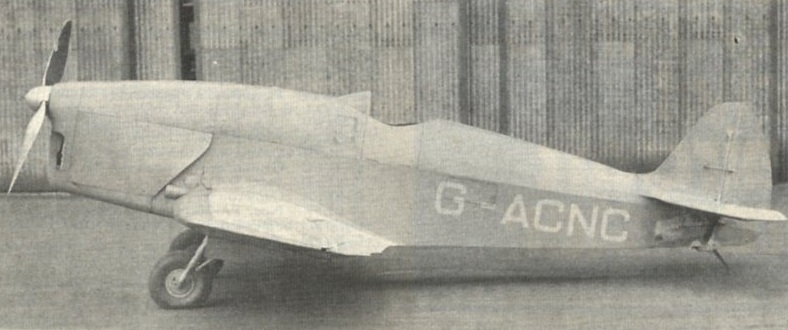
A Comper Streak during the King’s Cup races, 1935. Note the addition of landing gear flaps—presumably, this was done to increase the aircraft’s speed. Photo from *The Aeroplane* magazine
FLIGHT AND TECHNICAL SPECIFICATIONS
Тип: Comper Streak
Intended use: racing aircraft
Status: One-off production
Crew: 1 person
Powerplant: one air-cooled de Havilland Gipsy Major four-cylinder inline opposed-piston engine, producing 146 l.s.
Dimensions:
Wingspan: 23 feet 6 inches (7.2 m)
; Length: 18 feet 8 inches (5.7 m)
, height 5 feet 9 inches (1.8 m)
, relative wing aspect ratio 5.8
, area:
• wing 80.0 sq. ft. (7.43 m²)
• Ailerons: 9.9 sq ft (0.92 m²)
• Horizontal stabilizer: 9.0 sq ft (0.84 m²)
• Elevators: 6.0 sq ft (0.56 m²)
• keel: 2.9 sq. ft. (0.27 m²)
• rudder: 3.3 sq. ft. (0.31 m²)
Weight:
Empty weight: 880 pounds (399 kg)
; Total weight: 1,429 pounds (648 kg)
Wing loading: 18.75 pounds per square foot (91.55 kg/m²)
Fuel consumption: 11.5 gallons per hour (52.3 L/h) at 2,400 revolutions per minute
[1] Universal Aunts (“Aunts for Everyone”)—a private London agency that provides various in-home services, such as childcare, etc. Source: great_britain_en_ru.academic.ru
источник: Richard Riding «Pre-war Ultra-lights No 10—Comper Streak» «Aeroplane Monthly» 1977-01, pages 50-53
Translation first published at – https://vk.com/@710541705-pre-war-ultra-lights-10