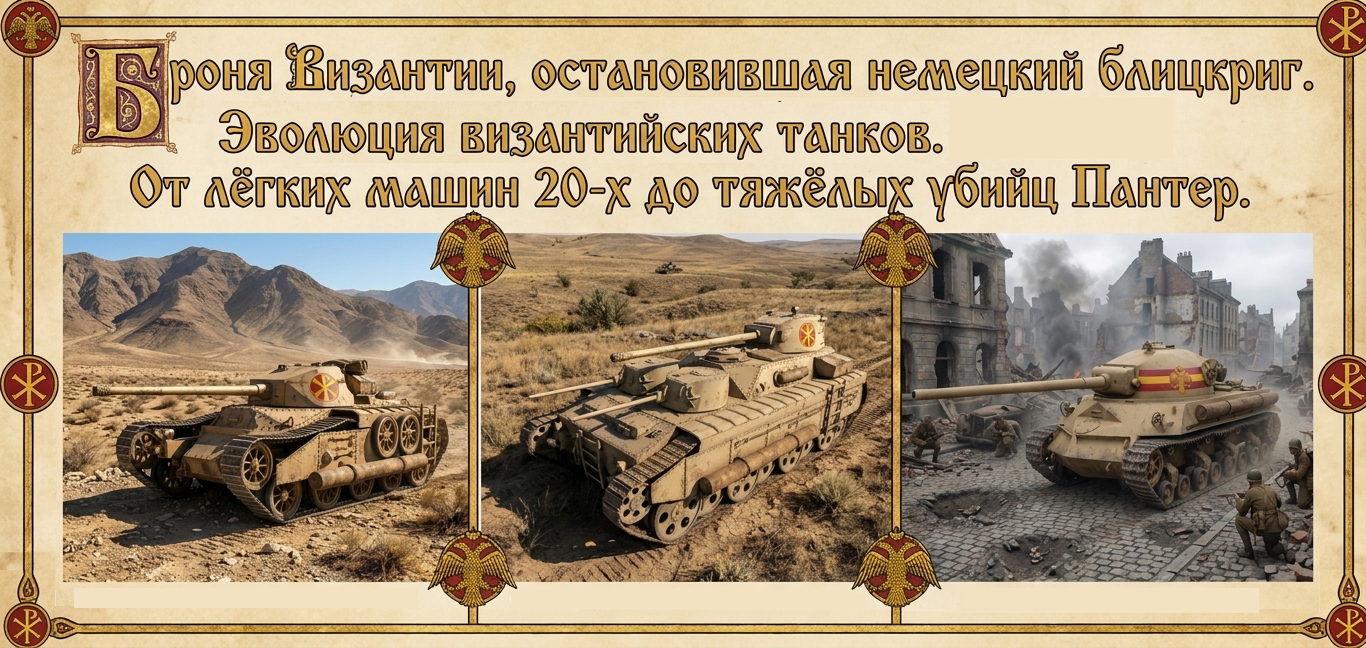
Byzantine Armor That Halted the German Blitzkrieg. The Evolution of Byzantine Tanks: From Light Vehicles of the 1920s to Heavy Panther-Killers

Following the battleship “Mancikert” from the surviving Byzantine Empire, I decided to imagine what the tanks of our Megagresia might look like. To do this, I chose a line of vehicles originally designed by my colleague Racercowan for a hypothetical state in the SprocketTankDesign community on Reddit. It’s important to remember: in this reality, Byzantium is a fairly developed power whose industrial and technological level is comparable to that of Austria-Hungary in the early 20th century. This allowed them to establish their own school of armored vehicle design, based on a combination of Mediterranean engineering traditions and adaptations to the conditions of the Balkan and Italian fronts (as a reminder, in this world, Byzantium controls southern Italy and Sicily).
Chapter I. AA-1 “Prodremos” (Prodromos)
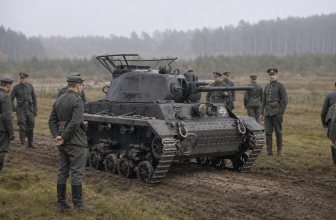
The history of Byzantine tank manufacturing began in the mid-1920s, when the Empire’s General Staff recognized the need to mechanize its forces. The first prototypes were assembled within the walls of the Constantinople Arsenal from imported components; however, by 1926, engineers at the Chalcedon Motor Plant had presented a fully domestically produced powertrain for the Empire’s future armored vehicles. The vehicle was designated AA-1 and given the name “Prodromos,” symbolizing the dawn of a new era for the Byzantine land forces.
The design was simple and easy to repair, which was in line with the doctrine of positional defense along the Thracian Wall. The hull was riveted together, the suspension relied on leaf springs, and the three-man crew ensured basic operational autonomy. The tank underwent field trials in 1927 and was adopted in a limited production run for training tank crews and refining tactics for coordination with the infantry. Although the vehicle never saw combat, it became the foundation for all subsequent developments.
Technical Specifications of the AA-1 “Prodromos”:
- Weight – 14 metric tons
- Crew: 3 people
- Dimensions: length – 4.8 m, width – 2.4 m, height – 2.3 m
- Reservations:
- front of the housing – 30 mm,
- hull side thickness – 20 mm,
- hull thickness – 16 mm,
- bottom – 6 mm,
- building roof – 8 mm,
- front of the turret – 30 mm,
- gun muzzle – 40 mm,
- tower side – 20 mm,
- tower ammunition—20 mm,
- Tower roof – 8 mm •
- Armament: 46.8-mm (0.1 cubit) automatic cannon (loaded with 2-round clips), 1 twin 7.92-mm “Fema” machine gun, Model 1927
- Engine: a 120-liter XMZ “Konstantin” 6-cylinder gasoline engine
- Speed on the highway: 24 km/h; on rough terrain: 12 km/h
- Range – 110 km
- Years of production: 1927–1930; a total of 24 units were built
Chapter II. AA-5 “Prodromos II”
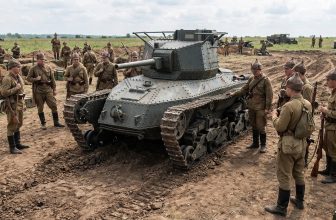
Around the turn of the 1920s and 1930s, Byzantine engineers conducted a series of experiments on the suspension system, testing hybrid designs featuring torsion bars and improved springs. Ultimately, a configuration with reinforced rollers and shock absorbers was selected, allowing for an increased load on the chassis without sacrificing maneuverability. The new model was designated AA-5 “Prodromos II.” Its main distinguishing features were a new 150-l.s. gasoline engine and a long-barreled 40-mm cannon with improved ballistics. The capability to fire two-round bursts was eliminated, as the increased weight of the shells and the need to simplify the design required manual reloading. The armor remained identical to that of its predecessor, but the vehicle’s weight increased to 16 metric tons. Its speed decreased only slightly, while its off-road capability on Balkan terrain improved.
- Weight – 16 metric tons
- Crew: 3 people
- Dimensions: length – 5.1 m, width – 2.5 m, height – 2.4 m
- Reservations: Same as AA-1 “Prodromos”
- Armament: 46.8-mm (0.1 cubit) long-barreled manually loaded cannon, 1 twin-mounted 7.92-mm “Fema” machine gun
- Engine: HMZ “Konstantin” gasoline engine with a power output of 150 l. s.
- Speed on the highway: 22 km/h; on rough terrain: 11 km/h
- Range: 130 km
- Specific soil pressure – 0.74 kg/cm²
- Years of production: 1930–1938; a total of 112 units were built
With the outbreak of World War II and the first encounters with German medium tanks, the command initiated a modernization program. The resulting AA-5M “Stratiot” variant featured reinforced frontal armor on the hull and turret up to 40 mm thick, as well as a tuned engine with an output of 210 l. s. The widespread conversion of the fleet to the “Stratiot” standard enabled Byzantine armored brigades to hold their positions despite the enemy’s numerical superiority. The vehicles were actively deployed in Thrace and Italy, where their long-range 40-mm guns successfully struck the sides and rears of early German vehicles.
TTX AA-5M “Spartiot”:
- Weight – 17.5 metric tons
- Crew: 3 people
- Dimensions: length – 5.1 m, width – 2.5 m, height – 2.4 m
- Armor: hull front – 40 mm, turret front – 40 mm; the remaining areas are identical to those of the AA-5
- Armament: 46.8-mm (0.1 cubit) long-barreled cannon, 1 twin 7.92-mm “Fema” machine gun
- Engine: XMZ “Konstantin-B” gasoline engine with 210 l. s. of power
- Speed on the highway: 26 km/h; on rough terrain: 14 km/h
- Range: 150 km
- Years of conversion: 1940–1943; 87 vehicles were converted
Chapter IV. AA-6 “Akrit”
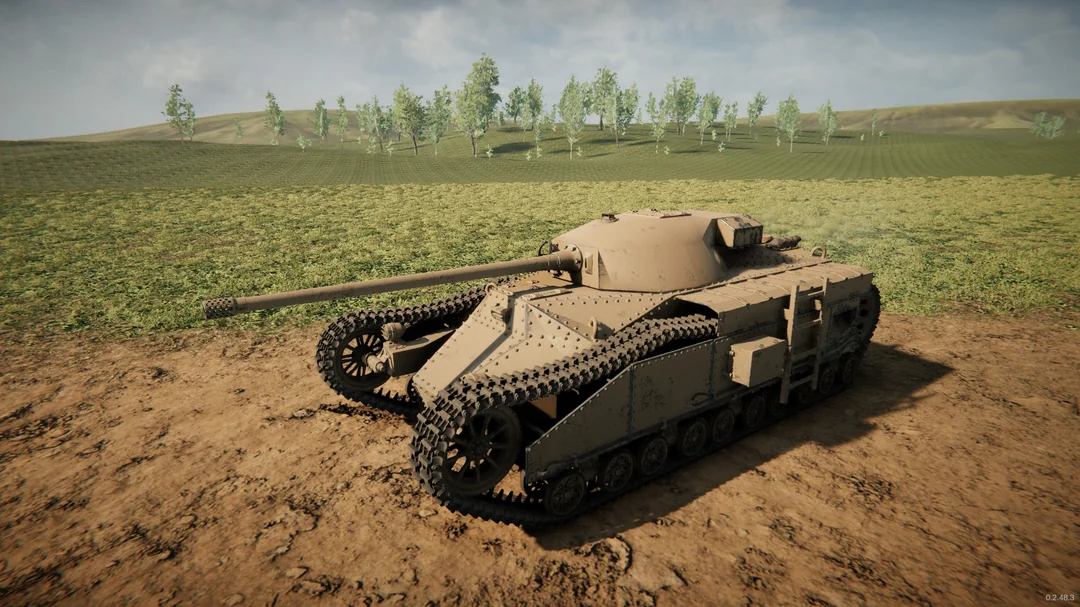
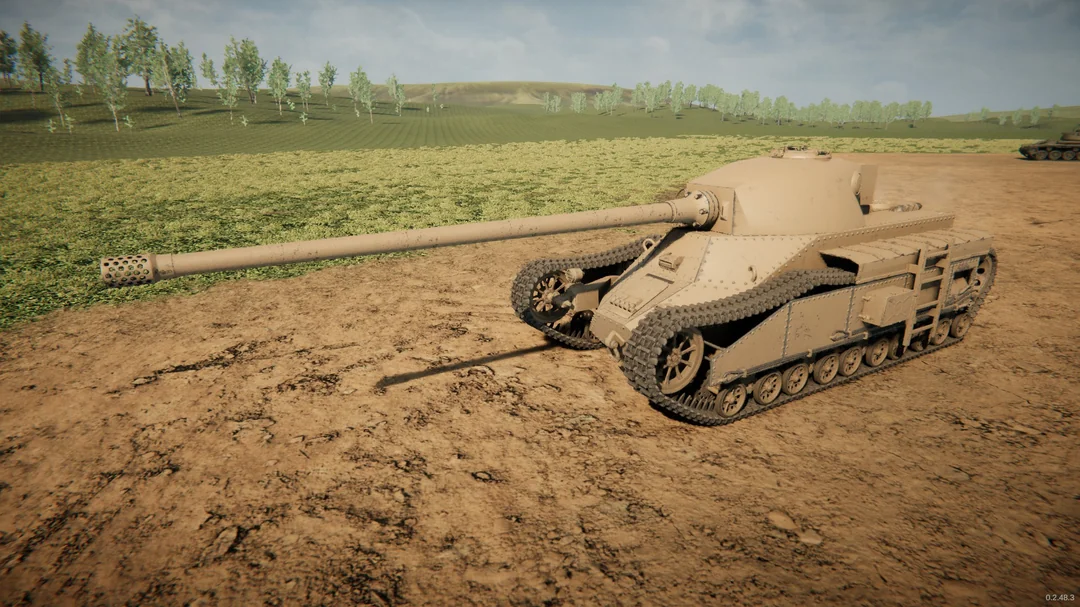
An attempt to mount heavy artillery on a light chassis led to the development of the AA-6 “Akrit” project. Engineers had planned to install a 102-mm gun, but the recoil force and the dimensions of the breech proved incompatible with the hull design. The suspension deformed during firing, and the center of gravity shifted so much that the tank lost stability on slopes. Despite the installation of an additional counterweight and reinforcement of the hull bottom, the vehicle proved critically unreliable. Only two prototypes were built, both of which were scrapped after range testing. The project clearly demonstrated the limits of the light chassis’s evolution and prompted the design bureau to develop a specialized heavy chassis.
Technical Specifications of the AA-6 “Acrit”:
- Weight – 18.5 metric tons
- Crew: 4 people
- Dimensions: length – 5.9 m, width – 2.6 m, height – 2.6 m
- Armor: hull front – 40 mm, sides – 20 mm, stern – 16 mm, turret front – 35 mm
- Armament: 93.6-mm (0.2 cubits) field gun modified for use on a tank, 1 twin 7.92-mm machine gun
- Engine: XMZ “Konstantin-B” gasoline engine with 210 l. s. of power
- Speed on the highway: 18 km/h; on rough terrain: 8 km/h
- Range: 100 km
- Status: Project canceled in 1939; 2 prototypes were built
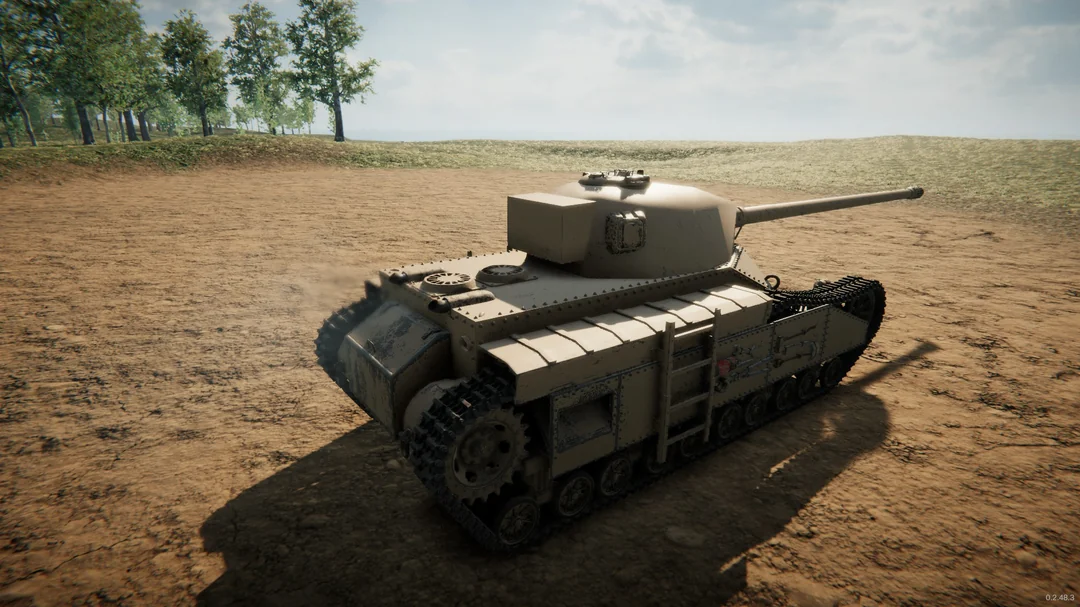
Chapter V. B.A.P. (Heavy Artillery Carriage) Mark I
In the mid-1930s, influenced by global trends, Byzantine military theorists began experimenting with multi-turret configurations. The result was the Β.Α.Π. Mark I, or Heavy Artillery Tank. The vehicle featured a complex layout with the engine positioned centrally and the main turret at the rear, as well as two small turrets mounted at the front. Its main engineering feature was a staggered running gear with overlapping road wheels, reminiscent of solutions that would later become widely used in Germany. This design ensured a smooth ride and even load distribution, but it complicated maintenance and repairs in the field. The tank was equipped with a powerful 400-silyny engine, which allowed it to reach speeds that were respectable for its weight. Its armament included a main 40-mm cannon with a machine gun and two 20-mm automatic cannons in small turrets, designed to engage infantry and light vehicles. Only a few prototypes were built. The vehicle demonstrated good firepower at the test range but proved too demanding in terms of logistics and crew qualifications, so mass production did not proceed.
Technical Specifications for the B.A.P. Mark I:
- Weight – 25 metric tons
- Crew: 5 people
- Dimensions: length – 6.8 m, width – 3.1 m, height – 2.8 m
- Armor type – rolled homogeneous steel
- Armor: hull front – 30 mm, hull sides – 20 mm, hull stern – 15 mm, hull bottom – 15 mm, hull roof – 10 mm, main turret front – 30 mm, gun mantlet – 20 mm, main turret side – 20 mm, main turret rear – 20 mm, main turret roof – 15 mm, sub-turret front – 20 mm, side of the secondary turrets – 15 mm, rear of the secondary turrets – 10 mm
- Armament: main turret—a 46.8-mm cannon and a twin 7.92-mm machine gun; secondary turrets—two 20-mm automatic cannons • Engine: 12-cylinder gasoline engine with 400 l. s.
- Speed on the highway: 30 km/h; on rough terrain: 16 km/h
- Range – 200 km
- Suspension type: staggered with overlapping rollers and individual torsion bars
- Years of testing: 1935–1937; 5 units were built
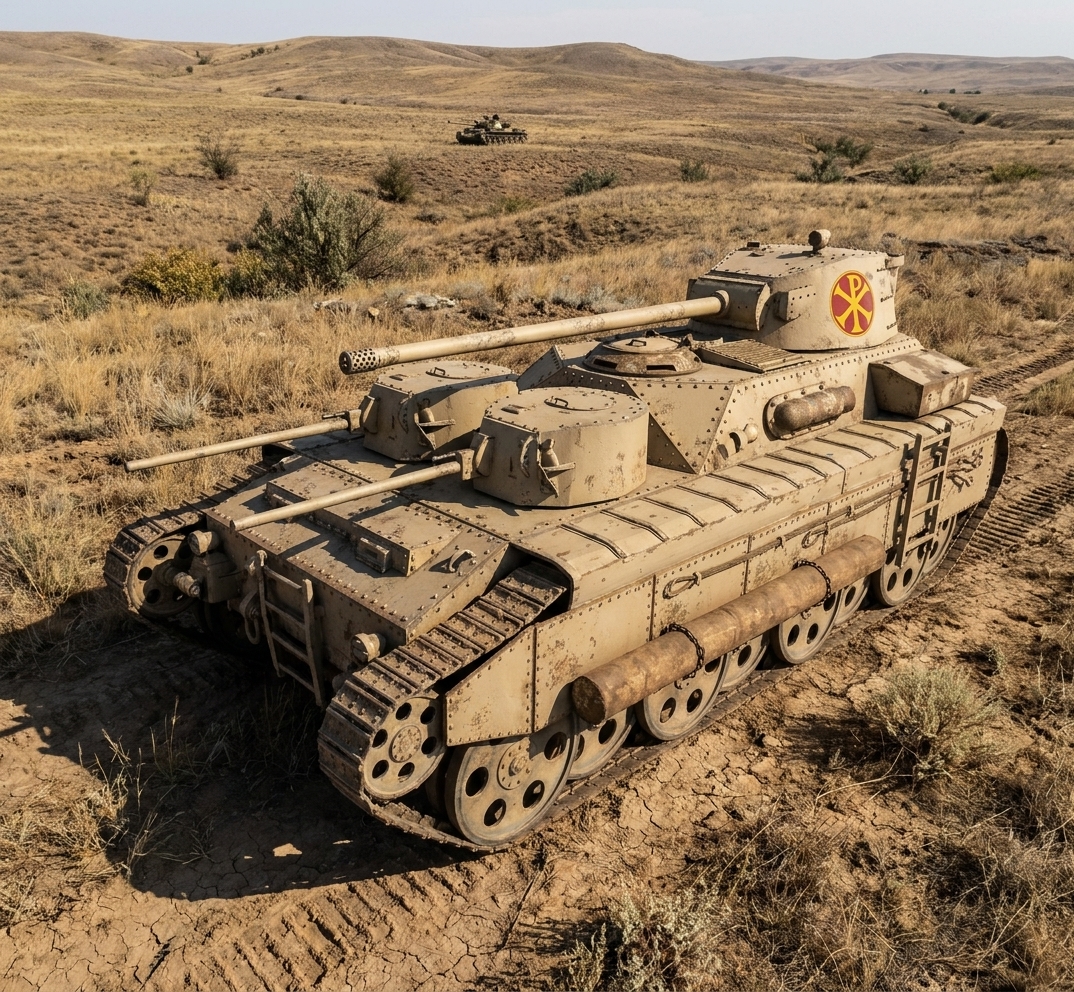
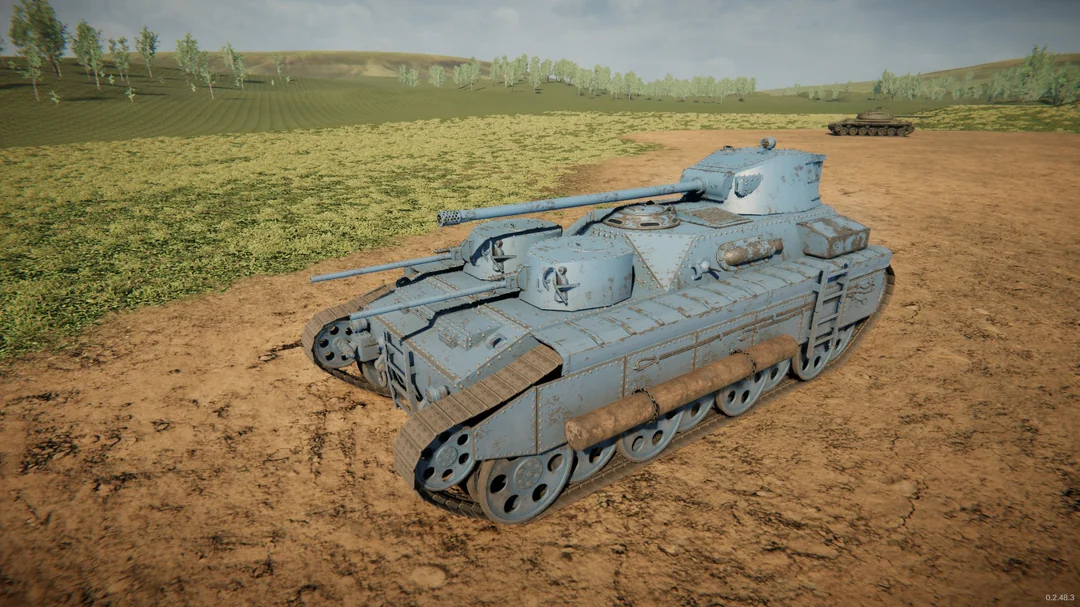
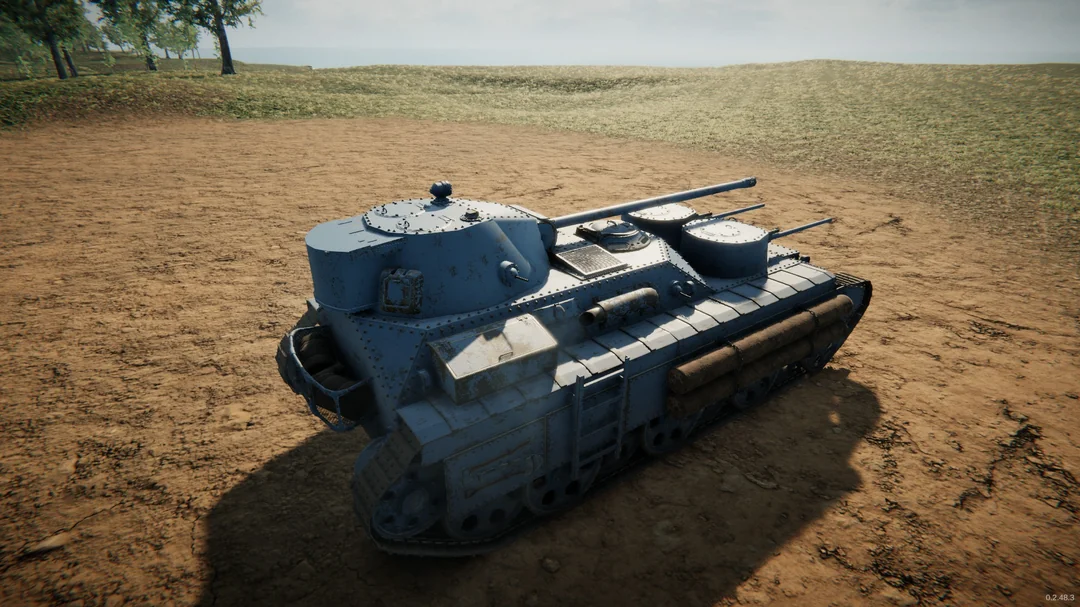
Chapter VI. AA-10 “Cataphract”
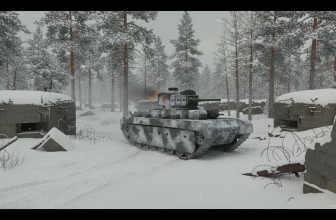
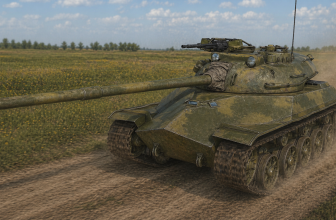
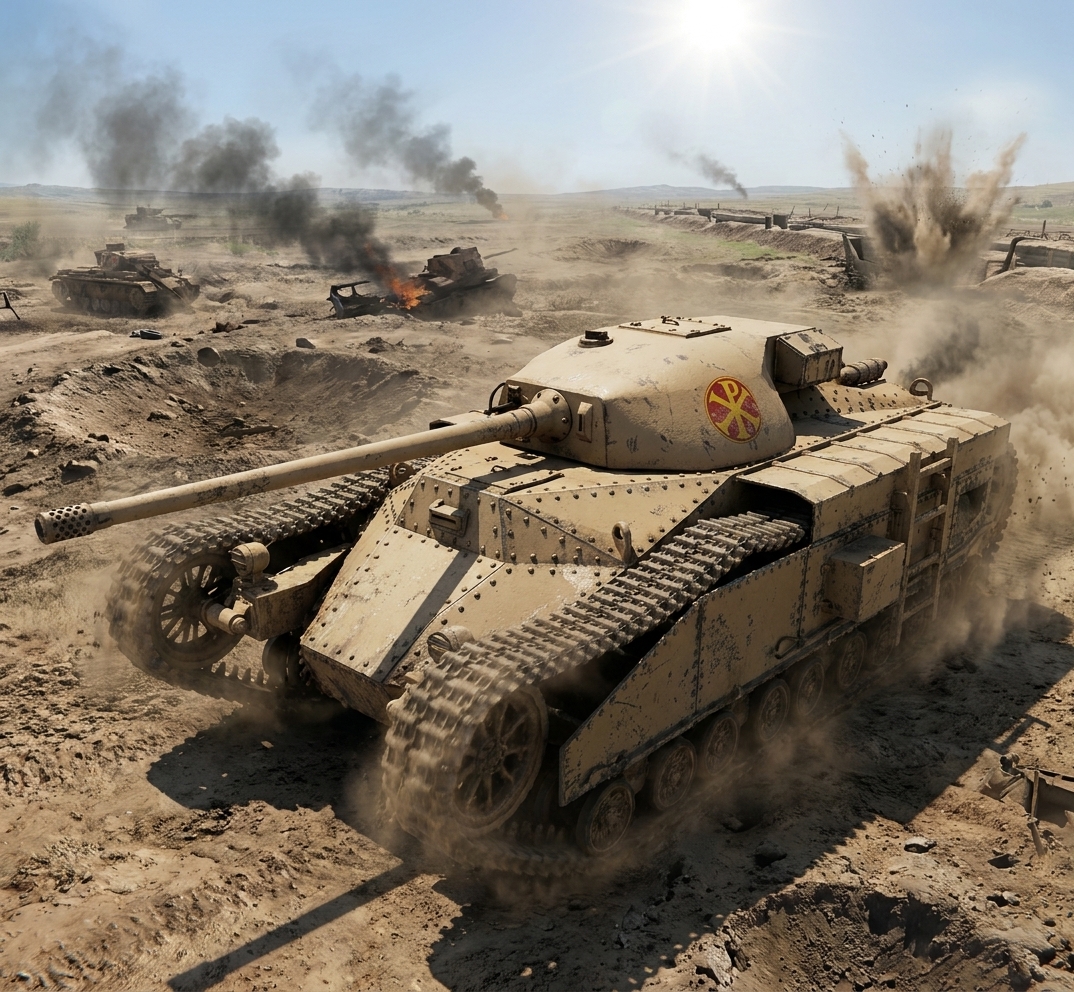
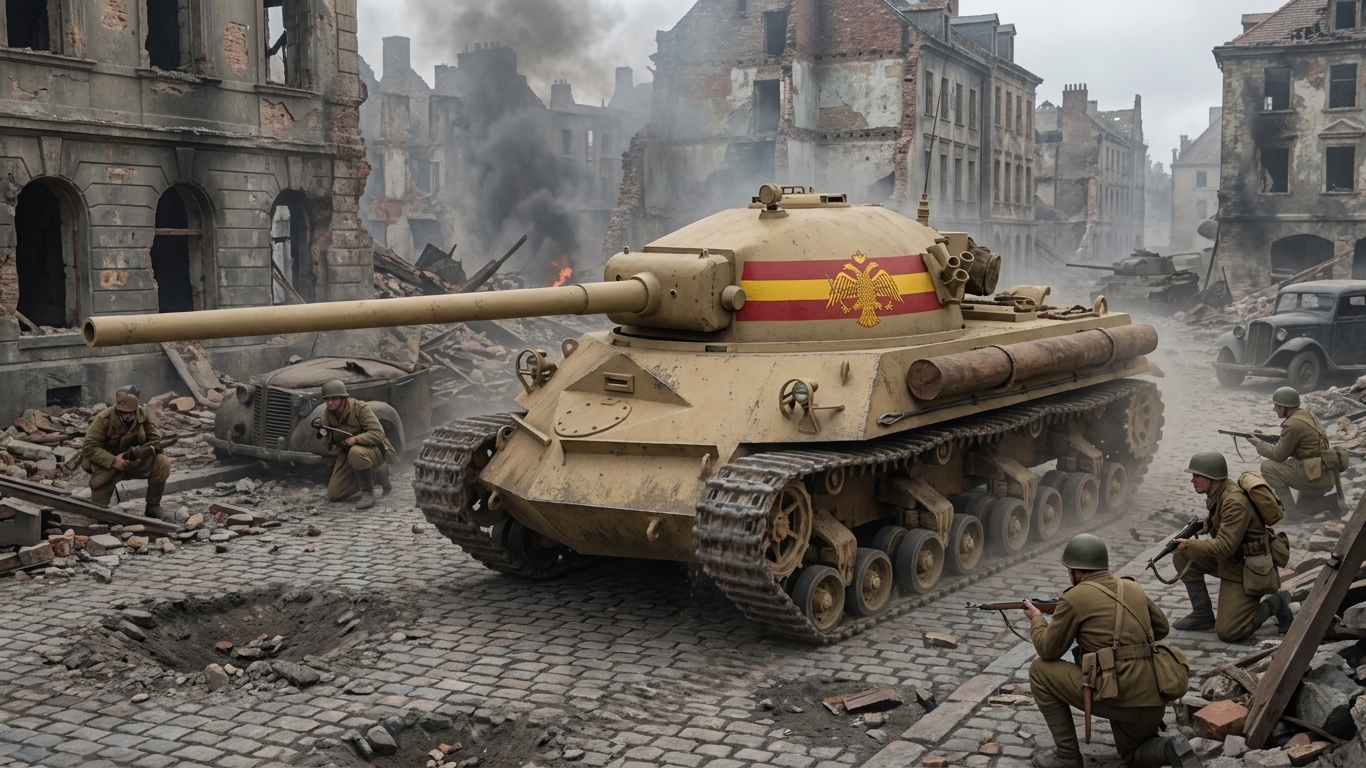
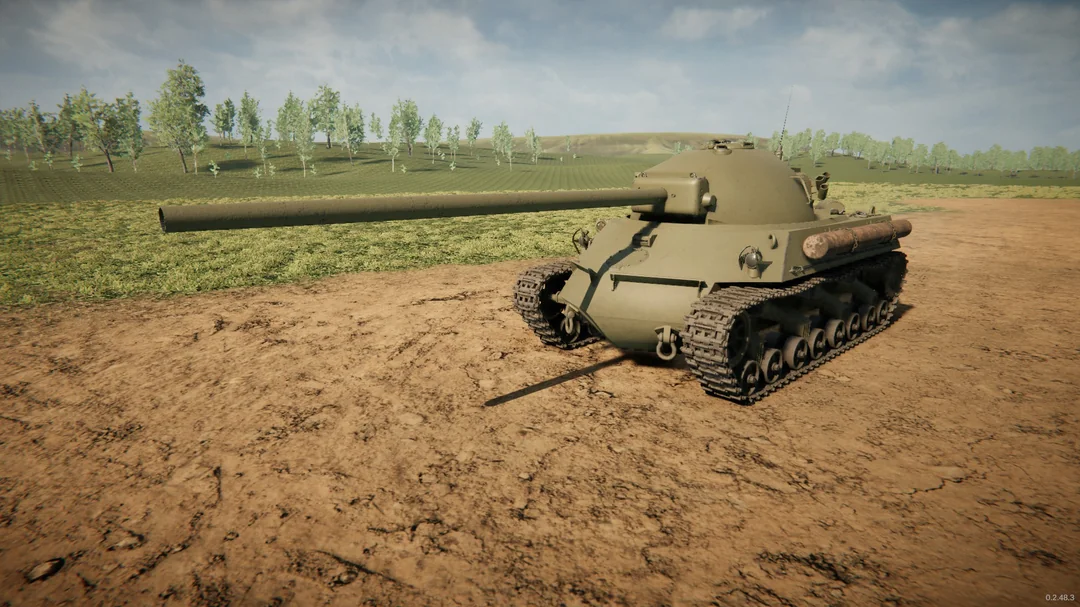
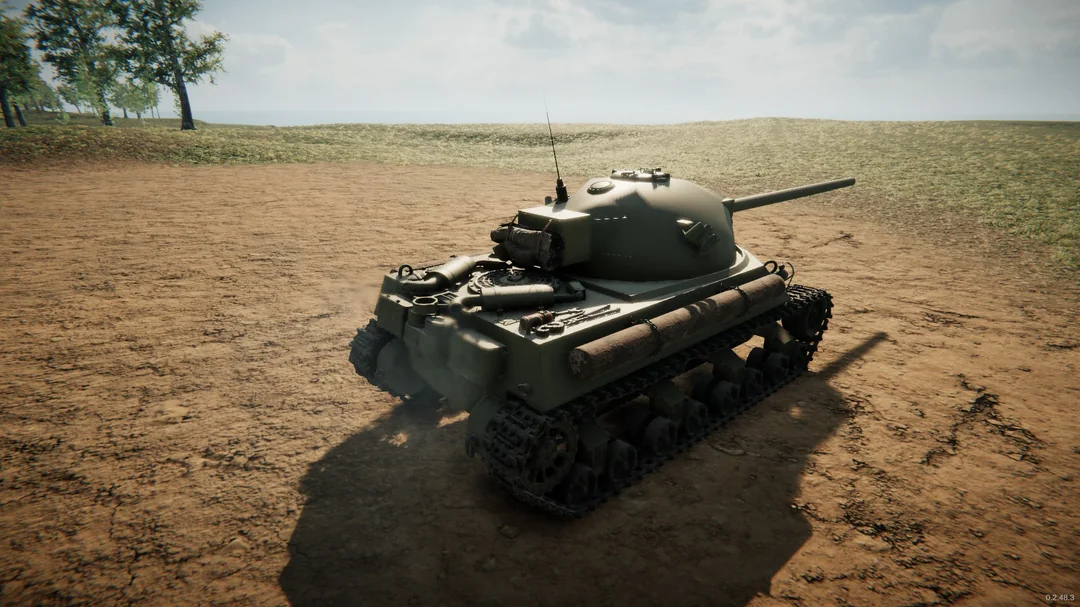
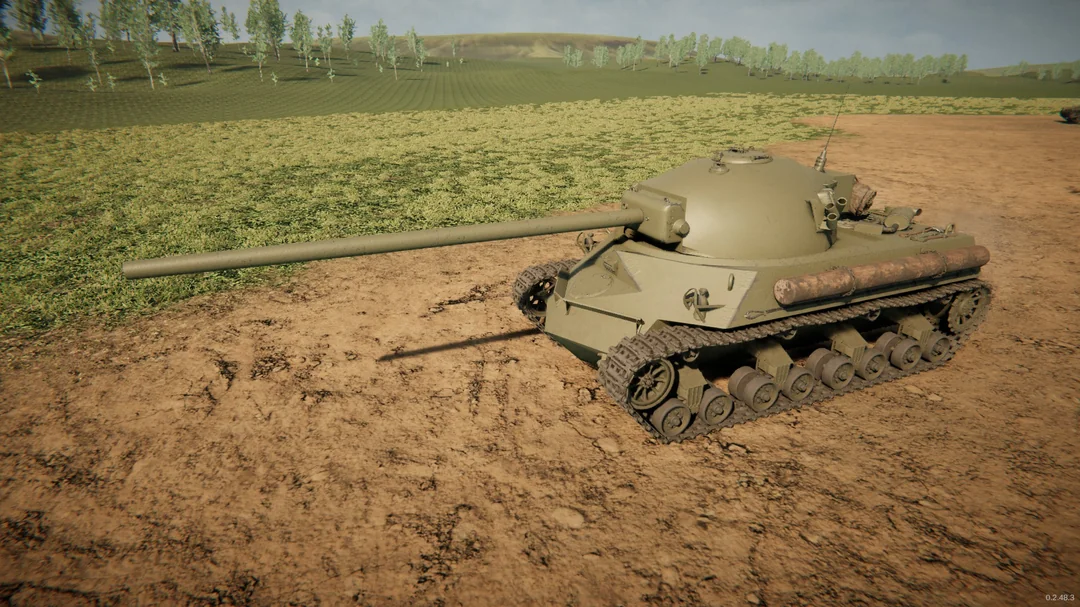
The culmination of Byzantine tank design was the AA-10 “Cataphract” heavy tank, developed as a direct response to the emergence of the German “Panther” tanks. Designers finally obtained a specialized chassis capable of carrying a 102-mm gun without overloading the suspension. The armor was designed with sloped plate angles, which increased shell resistance without a significant increase in weight. The front of the hull and turret was made of 80-mm homogeneous steel, and the gun mantlet was reinforced to 100 mm. A 600-silny gasoline engine, housed in the rear compartment with an improved cooling system, provided mobility on par with that of enemy medium tanks. Wide tracks reduced ground pressure, allowing the vehicle to move confidently along the Balkan roads, which had become muddy after the rains. The “Kataphrakt” entered service in 1943 and played a decisive role in the liberation of Italy. Its long-range, powerful 102-mm gun could penetrate the frontal armor of a “Panther” from a distance of up to 800 meters, while its reliable transmission allowed for long marches without breakdowns. It was these vehicles that became the very “sharp sword” that confidently advanced through the Apennines.
Technical Specifications of the AA-10 “Cataphract”:
Conclusion
The evolution of Byzantine armored vehicles is a classic example of adapting industrial capacity to the demands of modern warfare. From the experimental “Prodromos” to the heavy “Kataphrakt,” the engineers of Megagresia navigated a path of trial and error and engineering breakthroughs, relying on their own manufacturing base and a clear understanding of the theaters of war. The German blitzkrieg, so effective in the open steppes and on the wide highways of Central Europe, encountered an echeloned defense in Thrace and the Balkans, where Byzantine tanks served as mobile nodes of resistance. Their armor, armament, and reliability made it possible to hold back the Wehrmacht’s onslaught, turning local skirmishes into grueling wars of attrition for which the Third Reich was ill-prepared. This series, inspired by alternative history concepts, comes to life within the framework of this story, demonstrating how the surviving empire managed to carve out its place in the annals of 20th-century armored warfare.