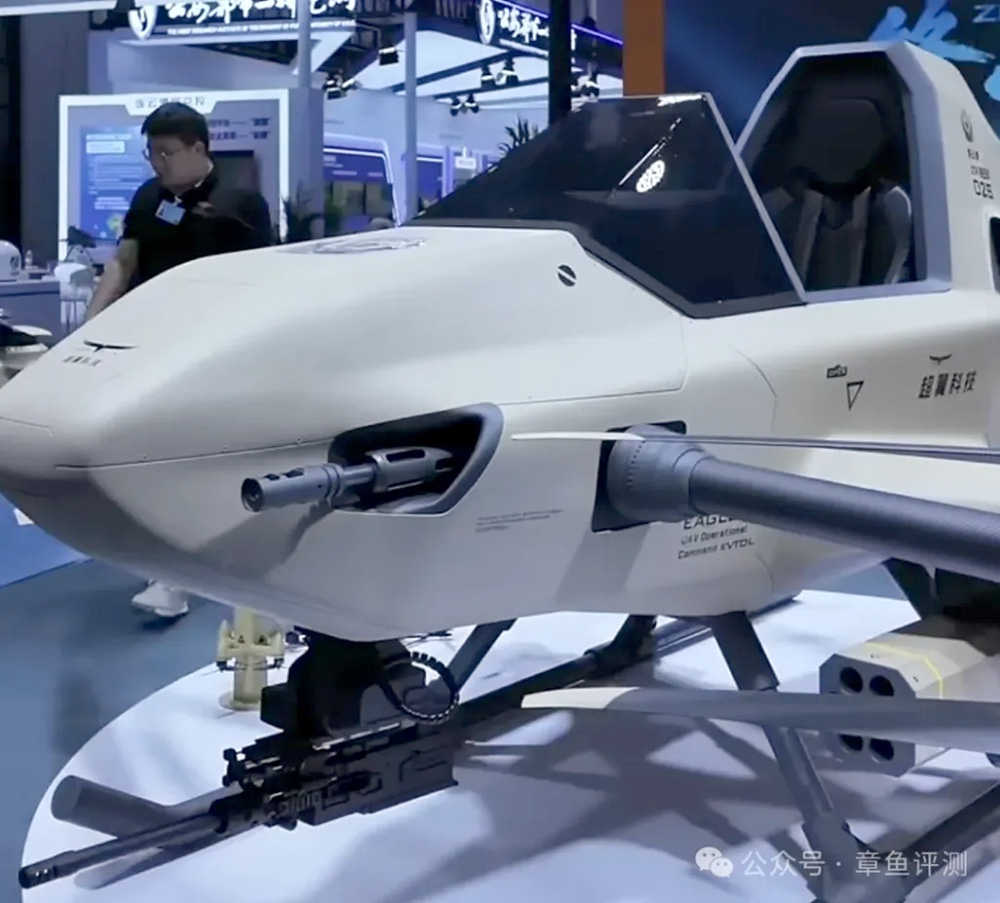
Chinese developers continue to amaze the world with new military technologies. In October 2025, the ZR-300, a single-seat electric strike aircraft capable of vertical takeoff and landing, was unveiled in China; many observers have dubbed it an “armed air taxi.” A post on the China Armi channel, cited by Rossiyskaya Gazeta, provides an overview of what this aircraft is and what tasks it is capable of performing.
Concept and Purpose of the Device
The aircraft was conceived as a versatile platform for law enforcement agencies. Its key feature is a combination of a helicopter’s maneuverability, the ease of controlling a quadcopter, and combat capabilities comparable to those of a light attack aircraft. At the same time, the use of an electric powerplant makes the drone virtually silent at low altitudes, which significantly enhances its stealth when carrying out missions in urban environments or over rugged terrain.
Modularity and Armament
The platform’s modular design allows for quick reconfiguration of the vehicle’s mission. In its base configuration, it carries a 5.56 mm coaxial machine gun with a rate of fire of up to 600 rounds per minute. If necessary, the machine gun can be replaced with a cluster of unguided rockets or an electronic warfare module capable of jamming enemy signals at a range of up to five kilometers. This flexibility makes the ZR-300 an effective tool both for countering drones and for supporting ground units.
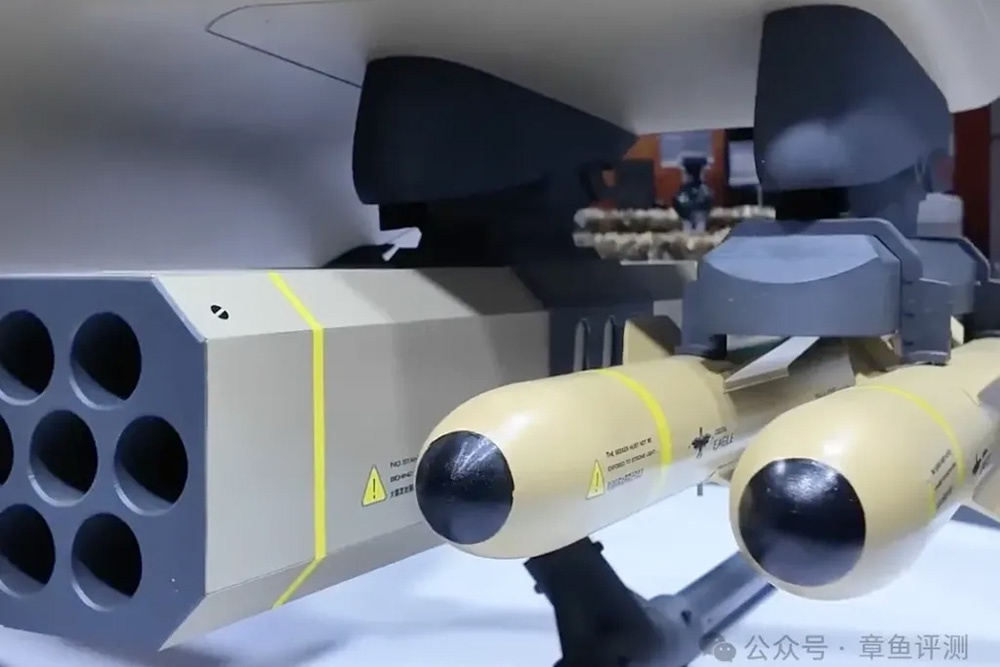
Control Systems and Autonomy
The drone can be controlled either manually by a pilot or automatically—along a pre-programmed route or using artificial intelligence systems. This opens up possibilities for using the drone in environments with intense electronic countermeasures, where direct communication with the operator may be disrupted.
Testing and Performance Evaluation
At the time of the presentation, the drone was already undergoing testing with public safety units in Lianyungang. Experts noted its resilience to harsh weather conditions, ease of maintenance, and high precision in striking targets. Experts suggest that in the future, such drones could become a standard component of the Chinese Army’s tactical units, complementing traditional army aviation in reconnaissance, fire support, and perimeter security missions.
Civil Society Perspectives on the Platform
In addition to military applications, the platform can be used for civilian purposes. Thanks to its modular design, the space normally occupied by combat equipment can be fitted with a container holding fire-suppressant, a medical module, or a cargo delivery system. This makes the ZR-300 a promising solution for fire departments, rescue teams, and logistics companies in hard-to-reach regions.
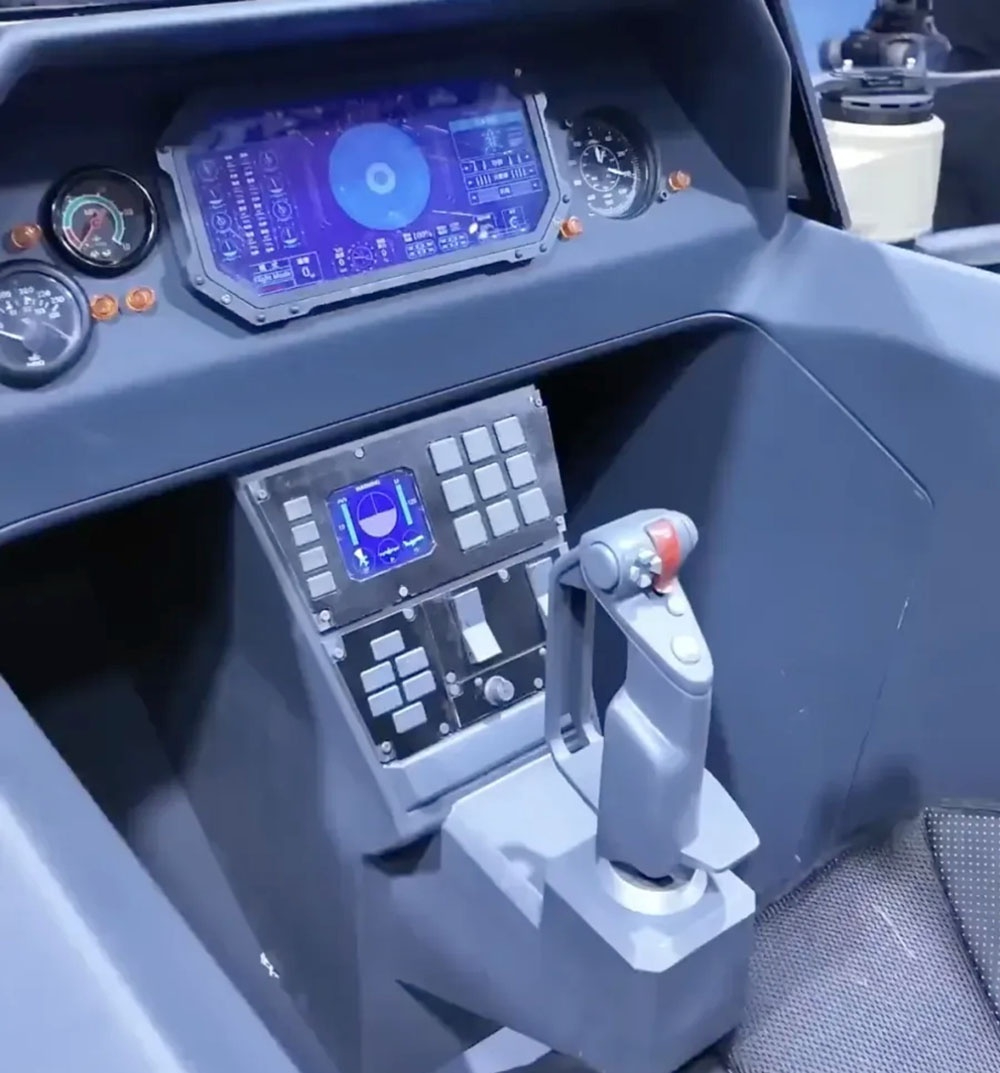
Tactical and Technical Specifications of the ZR-300
- Weight of the unit: approximately 450 kg
- Load capacity: up to 200 kg
- Flight duration: up to 90 minutes
- Maximum range: up to 300 km
- Operating range: up to 120 km
- Power plant type: electric
- Control modes: manual, automatic
- Primary armament: 5.56 mm underbarrel machine gun (600 rounds/min)
- Additional options: unguided missiles, electronic warfare module (suppression range up to 5 km)
- Design: modular, with the ability to quickly change the payload
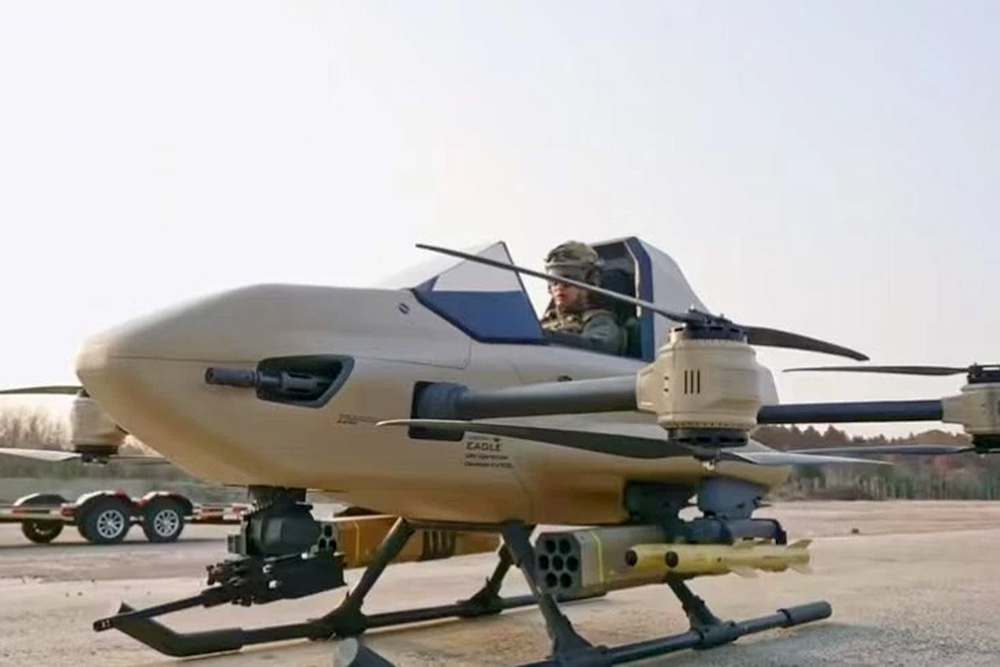
Results and Outlook
The Chinese ZR-300 is not just an “air taxi with a machine gun,” but a well-designed, multipurpose platform capable of adapting to a wide range of missions. Its emergence demonstrates that the line between civilian and military unmanned systems continues to blur. Technologies originally developed for passenger transport are finding applications in law enforcement agencies, and vice versa.
Experts note that this convergence creates new challenges for international security, but at the same time opens up opportunities for more effective solutions to local problems—from counterterrorism to disaster relief. Successful field testing of the ZR-300 could accelerate the adoption of similar systems not only in China but also in other countries that are closely monitoring developments in military technology.
For now, the aircraft remains a niche solution for special operations units, but its design—lightweight, electric, modular, and armed—could set the trend for the next decade in the development of tactical aviation. Only time and real-world combat experience will tell what will come of this in the long run.