It Was Supposed to Be Replaced 20 Years Ago. Why Is Europe Turning to the An-124 Again?

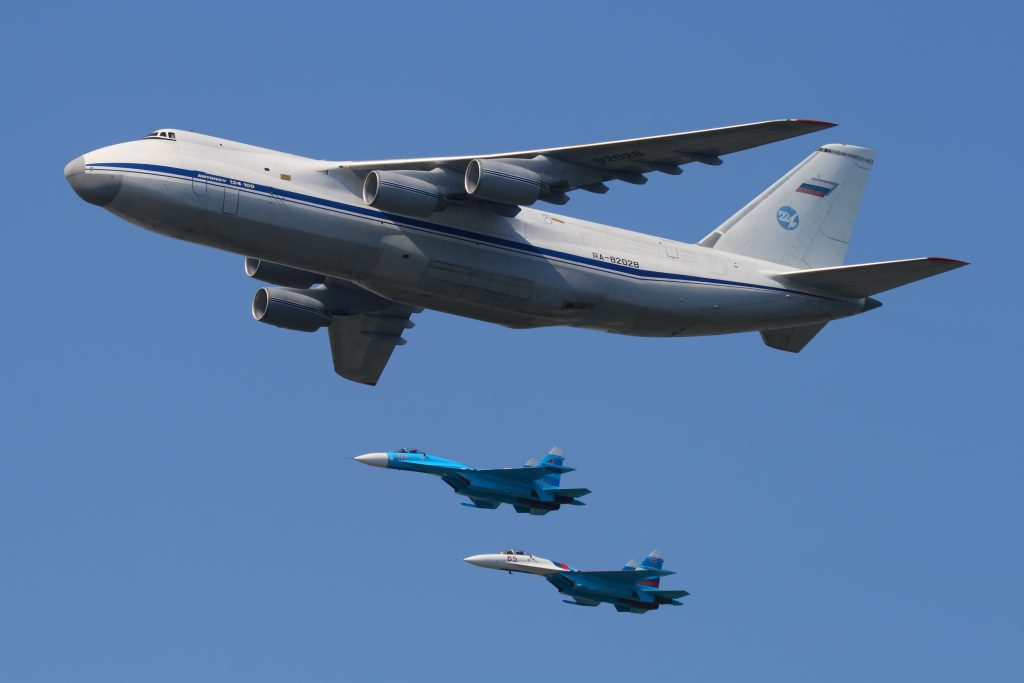
The name of the SALIS program originally contained a word that now sounds almost ironic: Interim. In 2006, several NATO countries agreed to jointly charter An-124 heavy transport aircraft to fill a gap in strategic airlift capability. At the time, the arrangement really did look temporary. Europe was developing its own Airbus A400M, the American C-17 Globemaster III was in production, and the need to move cargo weighing close to 100 tonnes arose rarely enough that buying and maintaining a dedicated fleet of giant transports made little economic sense. Twenty years have passed. The A400M has long since entered service, C-17 production has already ended, yet the “temporary” An-124 remains part of NATO’s strategic transport system. As of 2026, SALIS provides nine participating countries with assured access to five Ruslan aircraft, with one required to be available within 72 hours of a request.
Now the story has taken another turn. Europe is examining how to handle strategic airlift requirements over the coming decades, and one of the options under consideration is once again the An-124 — this time involving a major modernization of the existing aircraft. At first glance, the situation seems rather strange. Europe has one of the largest aerospace industries in the world, serially produces the modern A400M, and has invested billions of euros in its own military transport aviation. So why is an aircraft that first flew in 1982 still proving so difficult to replace?
The answer begins with something simple: the An-124 and A400M may appear to perform the same job, but in reality they belong to entirely different weight classes.
Thirty-Seven Tonnes Versus One Hundred and Twenty
The A400M was designed as a versatile military transport. It can carry armored vehicles and helicopters, drop paratroopers and cargo, operate from short and relatively austere runways, and perform tactical missions that would be completely unsuitable for an An-124. The current A400M has a maximum payload of 37 tonnes and a cargo hold volume of around 340 cubic meters. Airbus is already working to increase the permitted payload to 40 tonnes, but that will not fundamentally change the aircraft’s class.
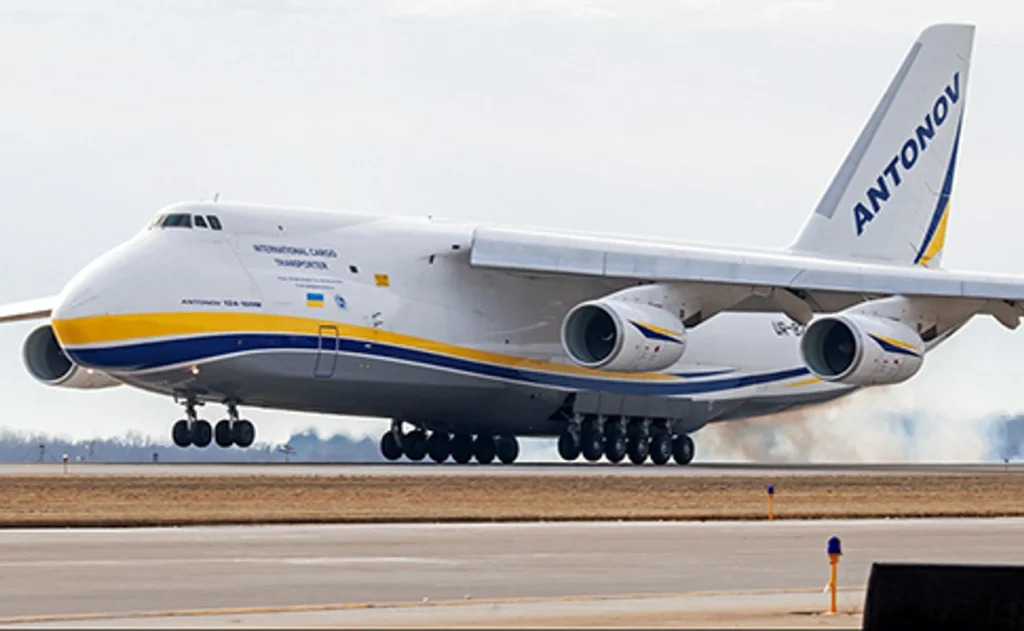
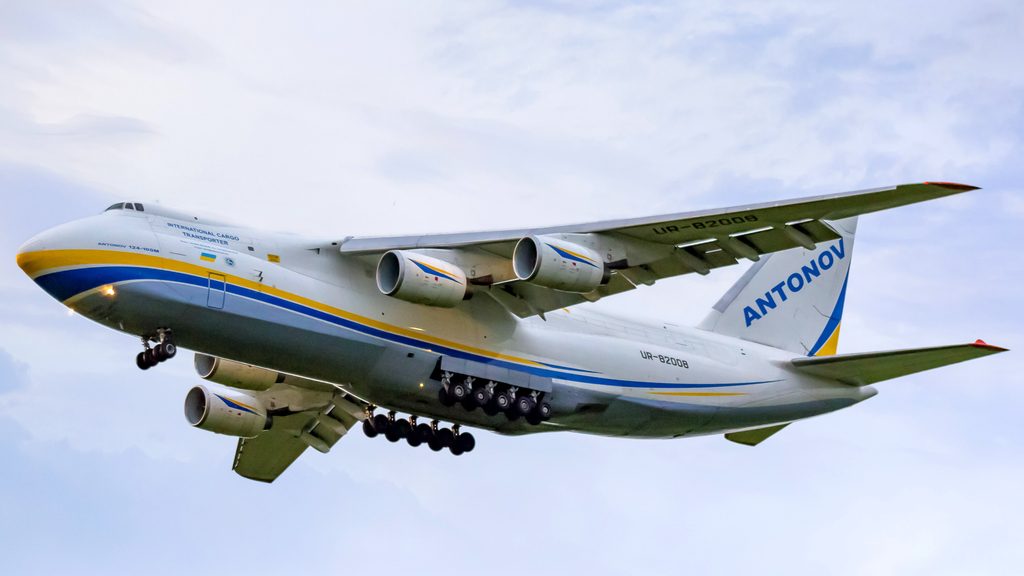
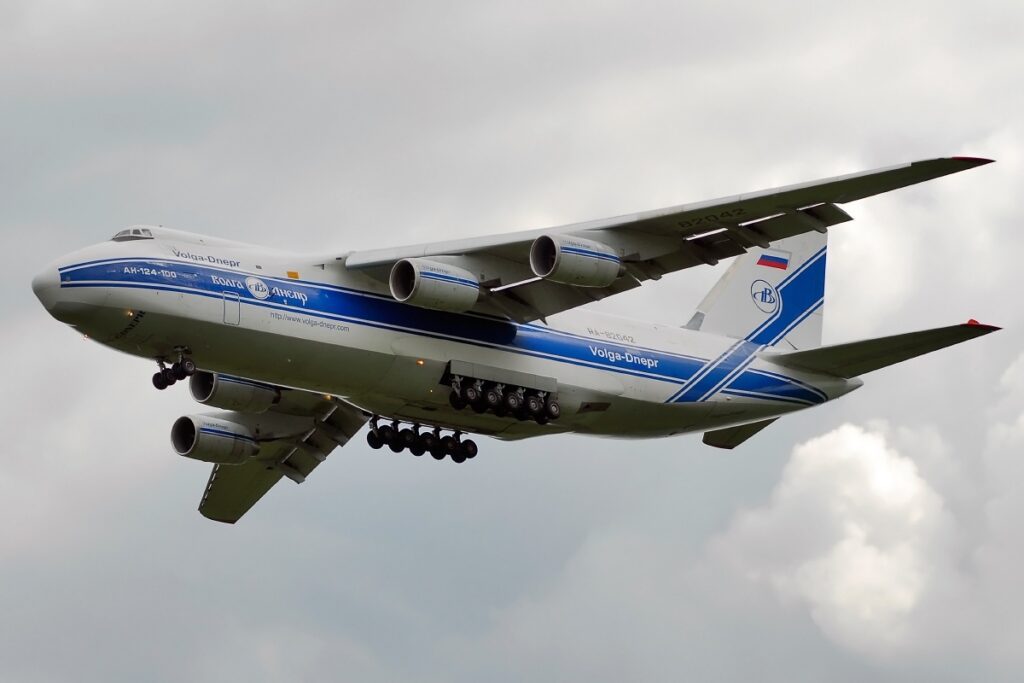
The An-124 was designed according to a very different philosophy. A standard An-124-100 can carry up to 120 tonnes, while the upgraded An-124-100M-150 raises maximum payload to 150 tonnes. Yet even those figures do not fully explain the difference. The Ruslan’s cargo hold is 36.5 meters long excluding the ramp, 6.4 meters wide and 4.4 meters high, with a volume of roughly 1,040 cubic meters. The aircraft allows loading from both the nose and rear and carries its own overhead cranes with a combined lifting capacity of up to 30 tonnes. In other words, it was designed not simply to carry heavy loads, but to accommodate cargo that is physically difficult to fit into an ordinary transport aircraft.
This is where payload figures can become misleading. A piece of military equipment weighing 30 tonnes may fit perfectly well inside an A400M. Another object weighing exactly the same may be too tall, too wide or too long. Sometimes it can be dismantled, but that requires time, specialist personnel and reassembly at the destination. Other loads simply cannot be conveniently broken down at all. In strategic airlift, therefore, cargo hold dimensions can be just as important as maximum payload.
The result is straightforward. The A400M has indeed covered a huge proportion of Europe’s military transport requirements, but it never became a smaller An-124 — because it was never intended to be one.
Then Why Not Simply Buy More C-17s?
That is where another category of aircraft comes in. Boeing’s C-17 Globemaster III occupies the space between the A400M and An-124, carrying heavy armored vehicles and large cargo over intercontinental distances. European countries know the aircraft well: the United Kingdom operates its own C-17 fleet, while another three aircraft are flown by the multinational Heavy Airlift Wing at Pápa Air Base in Hungary under the Strategic Airlift Capability program. NATO therefore relies on two different models for accessing heavy strategic airlift — jointly operated C-17s and chartered An-124s.
The problem is that Europe cannot simply order another batch of Globemasters. C-17 production ended in 2015, and reopening the production line for a relatively small European order would itself become a major industrial program. Buying second-hand aircraft is not a systematic solution either: there simply is no readily available market containing dozens of surplus C-17s.
And even the C-17 is not a complete substitute for the Ruslan. It is much better suited to military operations and can use airfields where sending an An-124 would be impractical, but its maximum payload and cargo dimensions remain below those of the Soviet-designed giant. Europe’s strategic airlift system has therefore effectively developed several layers. The A400M performs most military transport missions, the C-17 handles much heavier loads, and the An-124 remains available for exceptionally large and awkward cargo.
The problem is that the uppermost layer of this system depends on an aircraft that is no longer in production.
The “Temporary” An-124 Was Simply Too Useful
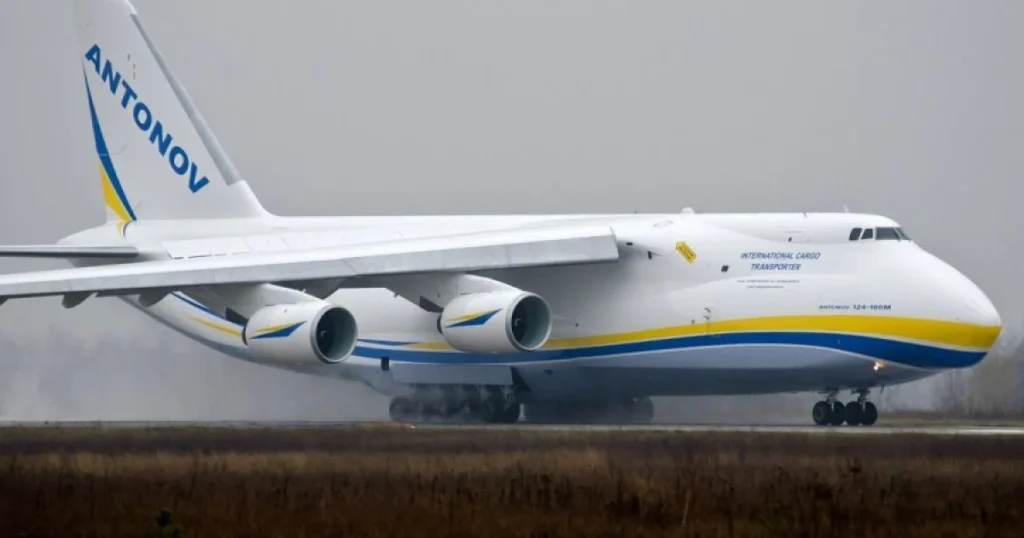
When SALIS was created twenty years ago, chartering An-124s made perfect sense. Strategic heavy airlift is needed continuously, but the requirement for an aircraft in the Ruslan’s class arises much less frequently than the need for ordinary military transports. Buying dozens of giant aircraft, training crews, building infrastructure, maintaining spare-parts inventories and paying for their upkeep just to perform a limited number of specialized missions each year would have been enormously expensive.
Joint chartering provided the capability only when it was actually needed. That system continues to operate today. Under the current SALIS arrangement, one An-124 must be available to participating countries within 72 hours, a second within six days, a third within nine days, while another two are available subject to availability. The nine participating countries commit to using at least 1,500 flight hours annually. NATO says SALIS aircraft are used almost daily for national requirements as well as NATO and EU missions.
Seen from that perspective, the twenty-year lifespan of this “temporary solution” no longer looks like the result of someone simply forgetting to replace it. As long as a usable An-124 fleet existed, developing an entirely new European super-heavy transport aircraft from scratch was difficult to justify economically. Europe was effectively buying not the aircraft themselves, but a required number of hours of access to a unique transport capability.
That model, however, has an obvious limit.
The aircraft are getting older.
Build a New Aircraft or Rebuild the Old One?
An-124 production ended long ago, while the surviving aircraft will inevitably require increasing attention as they age. Europe cannot simply abandon the ability to move exceptionally large cargo either. That is where the current interest in modernization comes from.
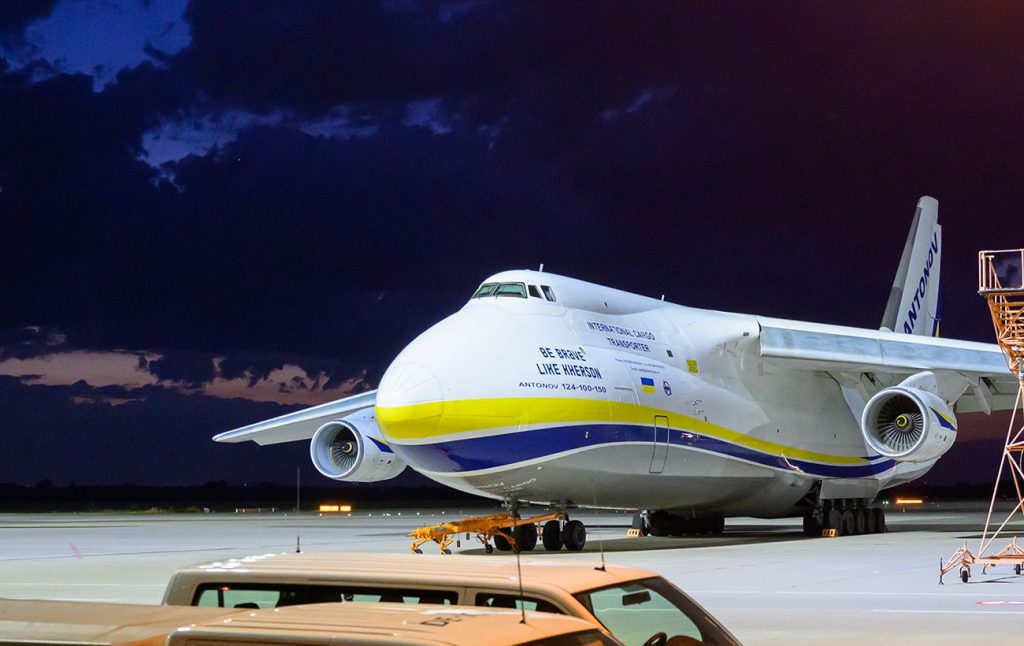
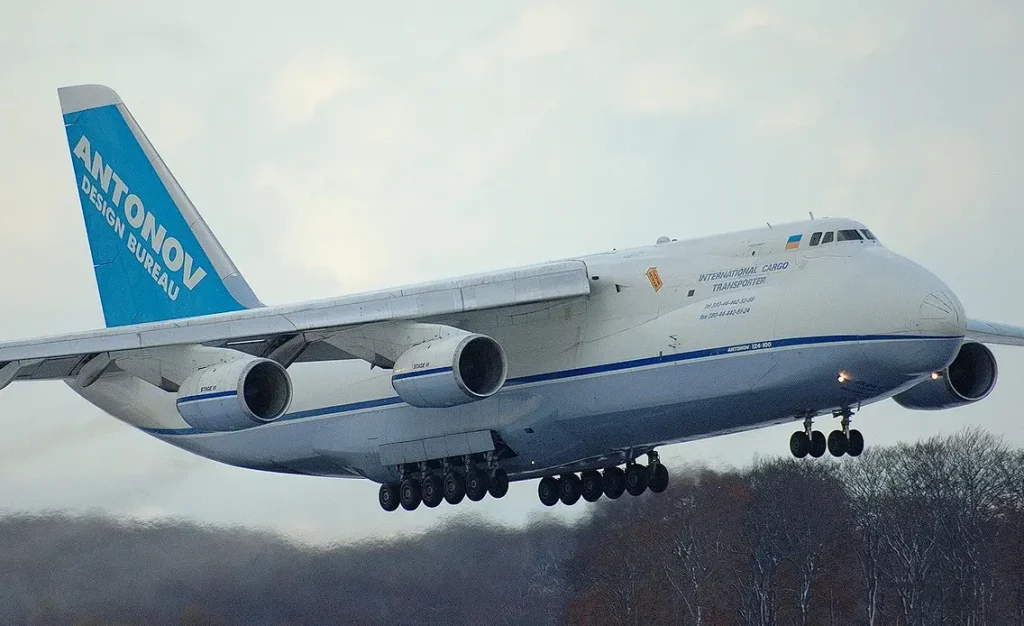
The An-124 itself has already demonstrated how far this approach can go. Antonov Airlines operates upgraded An-124-100M-150 aircraft with strengthened fuselage structures, cargo floors and ramps, as well as improved braking, navigation and other systems. Maximum payload was increased from 120 to 150 tonnes. The Ruslan, therefore, has not remained frozen in its early-1980s configuration — its capabilities have already been expanded several times.
The next modernization would be considerably more difficult. This is no longer simply a question of replacing instruments in the cockpit. If Europe intends to keep these aircraft flying for decades, it will have to address engines, avionics, spare parts, structural life and the replacement of components that are no longer manufactured or readily available. The longer the An-124 is expected to survive, the more of the old aircraft will effectively have to be recreated.
The alternative sounds easier only on paper: develop an entirely new European heavy transport aircraft.
Such an aircraft could be designed from the outset around modern engines, digital avionics, a European supply chain and current NATO requirements. But before the first production aircraft appears, there would be years of requirement definition, design work, prototype construction, testing and industrial preparation. And because such an aircraft would have to be substantially larger than the A400M, the program would inevitably be extremely expensive for what would probably remain a relatively small production run.
This is why modernizing existing An-124s makes the most sense as a bridge between two generations. It does not necessarily eliminate the need for a future European heavy transport aircraft. On the contrary, it could provide the time required to develop one.
Why Not Simply Build a Bigger A400M?
This question illustrates why the problem has proved so difficult. The A400M is not a failed attempt to replace the Ruslan. It is a successful aircraft designed around a completely different set of requirements. It can deliver up to 37 tonnes of cargo to short and relatively austere runways, conduct airborne operations, act as an aerial tanker and operate much closer to the tactical environment. Airbus itself emphasizes the combination of strategic range and the ability to use short, unprepared airfields.
The An-124 sacrifices much of that flexibility in exchange for cargo volume and payload. Its task is to accept an enormous object at one location with suitable infrastructure, fly it to another prepared airfield, and unload it there. Demanding both A400M-like tactical flexibility and An-124-class payload from a single aircraft would result in an exceptionally large, expensive and complicated machine.
That is precisely why military transport aviation has divided into different classes. A versatile aircraft works extremely well until the cargo no longer fits inside it. At that point, all its other advantages cease to matter.
And that explains why the Ruslan has outlived the replacement that was once expected to make it unnecessary.
The Aircraft Grew Old. Its Mission Did Not
The An-124 was created in a completely different era, but the physical dimensions of military equipment have not disappeared. Helicopters, engineering vehicles, aircraft components, air-defense systems and other large pieces of equipment still need to be moved quickly between countries. Sea transport is far cheaper, but transit times are measured in weeks. Rail transport depends on routes and infrastructure. Sometimes an enormous piece of equipment simply has to travel thousands of kilometers within hours or days.
At that point, the age of the aircraft stops being the most important question. What matters is whether the cargo fits inside it.
That is the strange story of the An-124 in Europe. Twenty years ago, chartering Ruslans really was intended to fill a strategic airlift gap without immediately creating a huge dedicated fleet. Since then, the A400M has entered service, European countries have gained access to C-17s, and military transport aviation has become considerably more modern. Yet the requirement to move the heaviest and most oversized cargo has never disappeared. A standard A400M carries 37 tonnes, while an An-124-100 can take 120 tonnes and upgraded versions can reach 150.
So the current discussion about another modernization of the Ruslan does not mean Europe has suddenly decided to return to an aircraft from the 1980s. If anything, it demonstrates the opposite: after two decades, it has become clear that a modern replacement can certainly be designed, but making such an aircraft economically and industrially viable is far more difficult than it once appeared. The An-124 has grown old, but the mission it was designed to perform has not. And while a new aircraft in its class exists only as a future project, a twenty-year-old “temporary solution” may once again be the quickest way to buy another decade of time.