Deployment of the U.S. Navy around Iran
…it looks quite classically elegant:
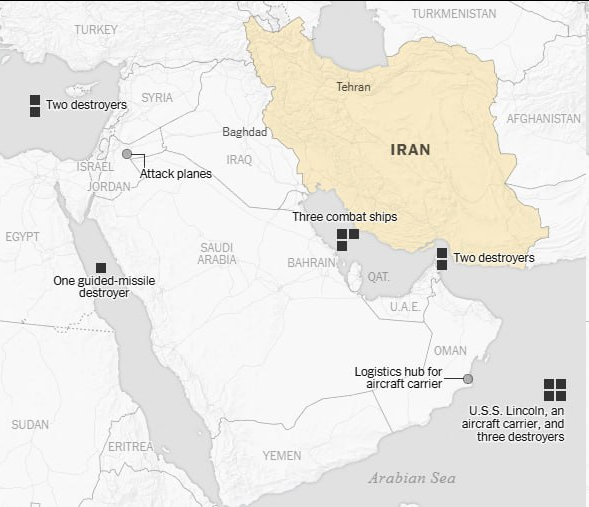
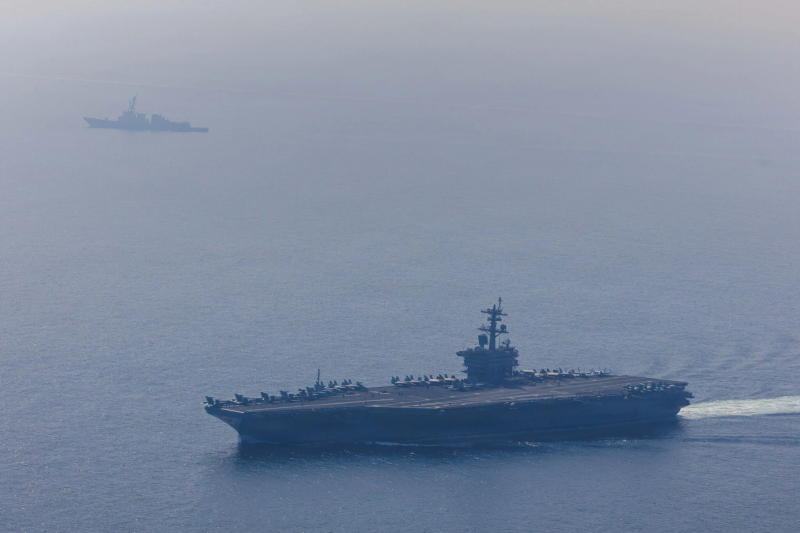
* Carrier Strike Group CAG-3, led by the nuclear-powered supercarrier CVN-72 USS “Abraham Lincoln,” accompanied by the destroyers DDG-74 USS “McFaul” (detached from DESRON 26), the destroyer DDG-111 USS Spruance, and the destroyer DDG-121 USS Frank I. Petersen Jr. (both from DESRON 2), is maneuvering in the northern part of the Arabian Sea—remaining within striking distance for carrier-based aircraft to target Iranian territory, while staying beyond the effective range of Iranian coastal missiles and light naval forces.
* At the entrance to the Persian Gulf, in the Strait of Hormuz, the destroyers DDG-112 USS “Michael Murphy” and DDG-57 USS “Mitcher” (both from DESRON 2) have been deployed. Iran has repeatedly threatened to block the Strait of Hormuz to oil tankers in the event of hostilities (though it has never actually followed through on that threat…), and these two destroyers have clearly been deployed to establish control over this strategic chokepoint;
* A task force of “Independence”-class littoral combat ships has been deployed directly in the Persian Gulf—LCS-16 USS “Tulsa,” LCS-30 USS “Canberra,” and LCS-32 USS “Santa Barbara.” These high-speed combat ships were specifically designed for operations in narrow, shallow waters against enemy “mosquito” forces and are ideally suited to counter the numerous combat boats of the Iranian Navy and the IRGC Navy.
(I would like to note separately that all three LCS vessels are configured as high-speed minesweepers, i.e., with mine-countermeasure modules as standard equipment. Clearly, their mission also includes countering Iranian attempts to lay mines in the Persian Gulf.)
* The destroyers DDG-80 USS “Roosevelt” and DDG-84 USS “Buckley,” part of DESRON 60, have been deployed in the Mediterranean Sea. Their mission is most likely to provide missile defense for Israel against the very real threat of Iranian missile attacks;
* The destroyer DDG-119 USS “Dilbert D. Black” is patrolling the Red Sea; its mission appears to be ensuring the safety of commercial shipping and deterring Yemeni separatists from attempting to intervene in a potential conflict;
* Finally, a substantial reinforcement is heading toward the potential conflict zone—the CAG-12 aircraft carrier strike group, led by the nuclear-powered supercarrier CVN-78 USS “Gerald R. Ford,” escorted by the destroyers DDG-81 USS “Winston S. Churchill,” DDG-96 USS “Bainbridge,” and DDG-72 USS “Mahan” (all part of DESRON-2);
Overall… the deployment of the U.S. Navy appears to be aimed primarily at deterring Iranian attempts to counterattack, especially within the vulnerable area of the Persian Gulf and the Strait of Hormuz. The deployment of patrol forces in these positions (supported by carrier-based and coastal aviation) allows the Americans to at least partially neutralize the immediate Iranian threat to strategic oil supply routes in the region. In the long term, the Americans are likely counting on the depletion of Iranian coastal and naval forces through intensive aerial bombardment, the laying of mines (primarily aerial mines) at Iranian naval bases, and the disruption of Iran’s command-and-control system.
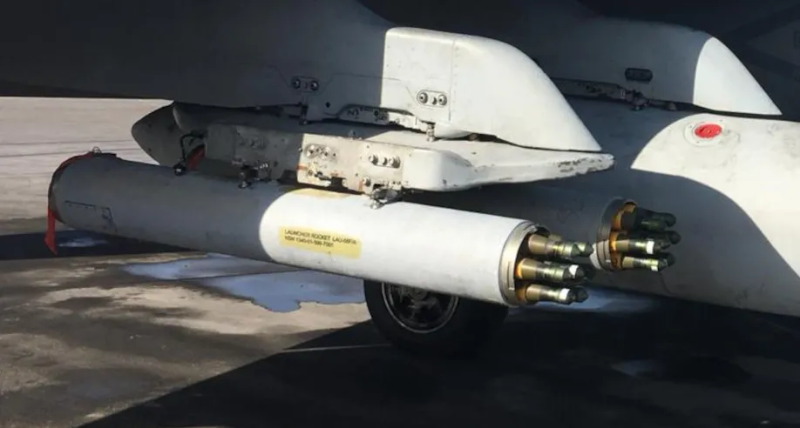
P.S. It is interesting to note that the Americans have clearly learned lessons from their long-running campaign against Yemeni separatists in the Red Sea. The air units currently being deployed in the Middle East have been re-equipped with AGR-20 “Falco” anti-drone guided missiles — 70-mm “Hydra” rockets with a laser homing unit and a contactless fuze. The use of these lightweight missiles (carried in pods of seven per hardpoint) allows for a significant increase in fighter jets’ ammunition load—which is particularly important in the context of defending against numerous enemy drones.