Europhantom Instead of Eurofighter. How Europe Could Have Developed Its Own Fighter Jet as Early as the 1970s

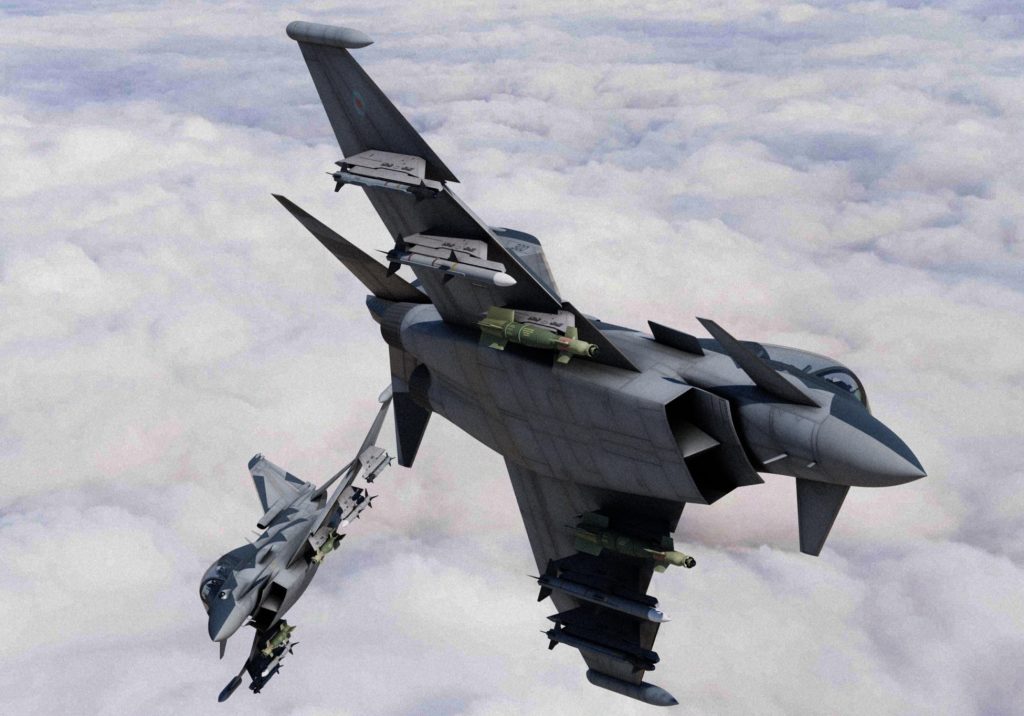
Let us imagine that in 1967, the governments of the United Kingdom, West Germany, and Italy decided to abandon the development of a new variable-sweep-wing aircraft and instead acquire a license for the American McDonnell Douglas F-4 Phantom II. European engineers would receive permission to substantially redesign the original aircraft and install their own engines, armament, and onboard equipment. The result would be the EF-4K Europhantom — an aircraft retaining the fundamental characteristics of the Phantom’s aerodynamic configuration but effectively becoming an entirely new European fighter.

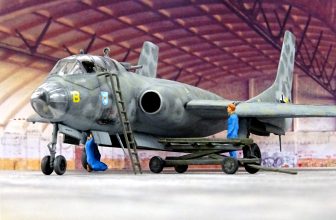
Europhantom at an airfield
Historical Background
By the mid-1960s, the air forces of European NATO countries faced the challenge of replacing a significant proportion of their combat aircraft. Britain operated the English Electric Lightning and was preparing to introduce the American Phantom, while West Germany and Italy made extensive use of the Lockheed F-104 Starfighter. Despite their impressive flight performance, these aircraft were gradually becoming less capable of meeting the requirements of future aerial warfare.
In 1965, Britain and France began jointly developing the AFVG aircraft with variable-sweep wings. However, in June 1967, France withdrew from the program. The British government was forced to seek new partners while taking into account the limitations of its national budget.
In our reality, the solution was the international MRCA program, originally intended to develop a multirole combat aircraft. During 1968–1969, Britain, West Germany, and Italy emerged as its participants. The Panavia company was subsequently established, and the outcome of their cooperation was the Tornado.
In the alternative timeline considered here, events unfold differently. Following the termination of Anglo-French cooperation, the British Ministry of Defence concludes that developing an entirely new aircraft would take too much time. Priority is therefore given to creating a European fighter using existing American technologies.
Establishment of the European Aviation Consortium
In early 1968, Britain proposes a joint European Fighter Aircraft program to West Germany and Italy. The future aircraft is to be based on the F-4 Phantom II, which is already in service with the United States Navy and Air Force and is being supplied to foreign allies.
This decision has a strong economic justification. The Phantom is a well-proven twin-engine fighter capable of high speeds, carrying a substantial weapons load, and operating in various weather conditions. Using its existing design makes it possible to avoid some of the most expensive initial development stages, although extensive modernization still requires considerable research.
British participation proves particularly important, as the country already has experience developing its own version of the American aircraft. The real British Phantom FG.1 and FGR.2 variants are equipped with Rolls-Royce Spey engines, requiring modifications to the air intakes, fuselage, and several auxiliary systems.
In 1969, the governments of the three countries conclude an agreement with McDonnell Douglas. The American company grants a license to use the basic structural features of the F-4, while European manufacturers receive permission to develop new propulsion systems, airframe components, and weapons systems. The agreement restricts independent exports of the aircraft to third countries but provides for a gradual expansion of the consortium’s authority.
Management of the program is entrusted to a newly established organization, Europhantom Industries. Britain’s British Aircraft Corporation is responsible for the overall layout and aircraft integration, West Germany’s Messerschmitt-Bölkow-Blohm handles certain airframe components and control systems, while Italy’s Fiat Aviazione is assigned individual assemblies, equipment, and the organization of final assembly production.

British Phantom FG.1 fighters
From a Licensed Phantom to a New Aircraft
The initial project envisages installing European avionics and engines in the F-4 airframe with minimal modifications. However, preliminary studies soon reveal that the requirements of the participating countries differ considerably. Britain needs an all-weather interceptor capable of operating over the North Sea, West Germany requires a maneuverable tactical fighter to defend Central Europe, and Italy expects a versatile aircraft suitable for both intercepting aerial targets and striking ground targets.
It proves impossible to satisfy all these requirements through a simple modernization of the American aircraft. In 1970, a decision is made to undertake an extensive redesign of the airframe while retaining the general twin-engine configuration and swept wings.
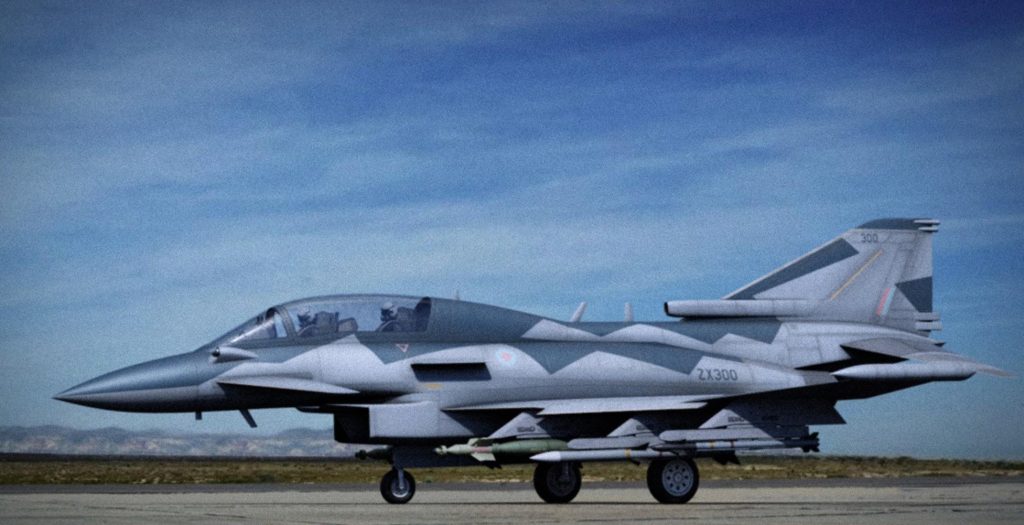
The new aircraft receives a more compact fuselage, a modified nose section, and an upgraded wing with improved high-lift devices. The engines are mounted side by side in the lower fuselage, preserving a characteristic feature of the original Phantom. Much of the structure is manufactured from aluminum alloys, while composite materials are planned for certain less heavily loaded components.
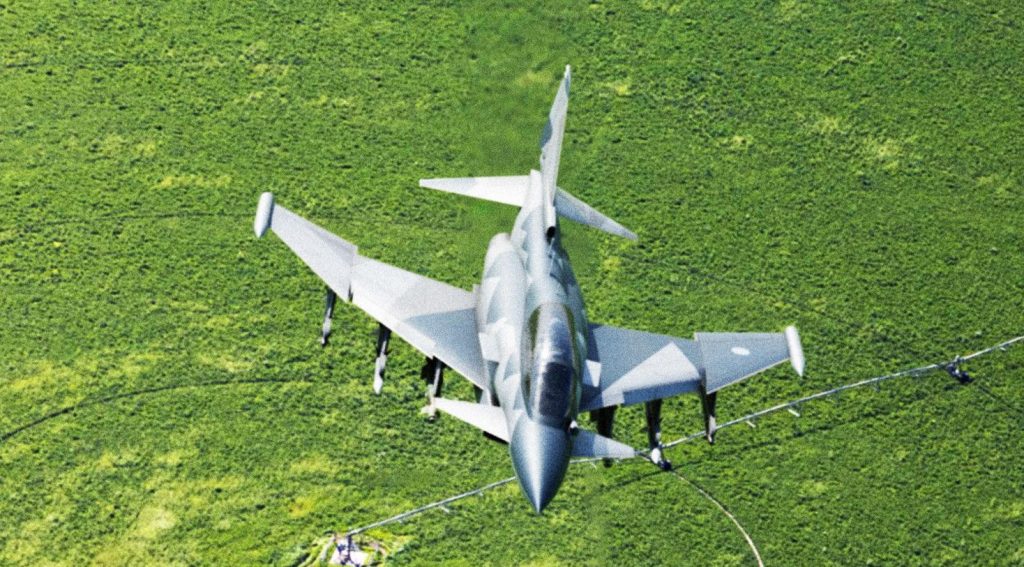
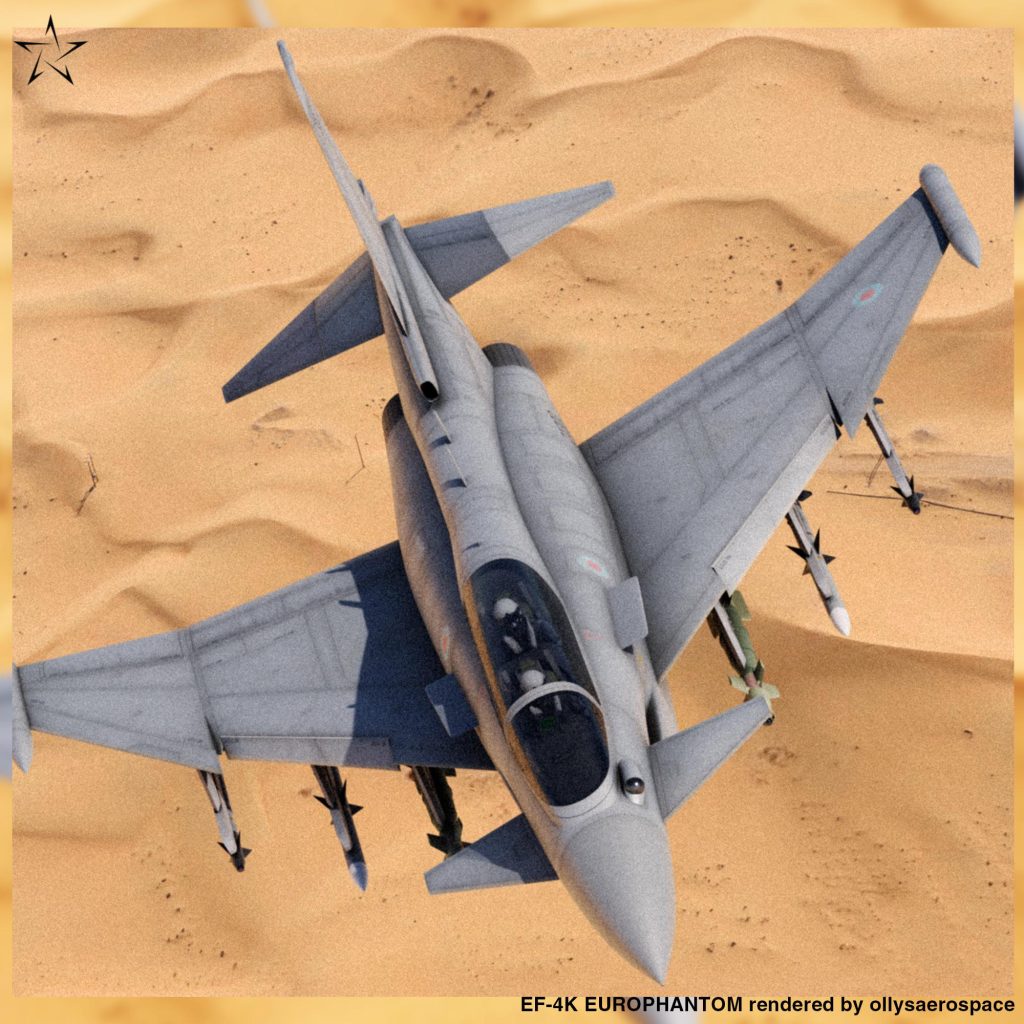
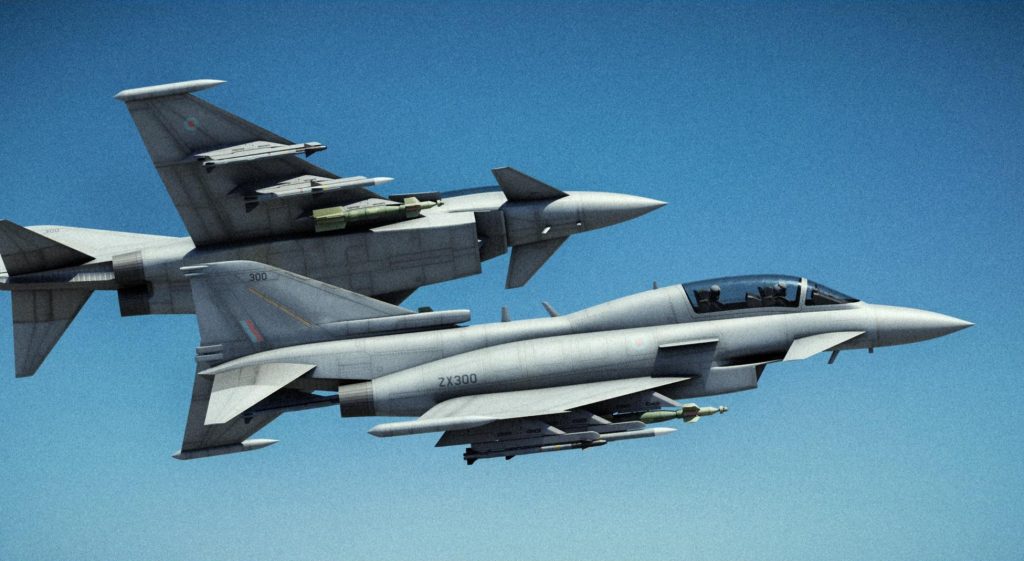
The most unusual innovation is the addition of canards. Small movable control surfaces are positioned ahead of the main wing, while the conventional horizontal tail surfaces are retained. Thus, the Europhantom acquires a three-surface aerodynamic configuration.
Development is accompanied by research into stability, aircraft behavior at high angles of attack, and the interaction between airflow generated by the canards and the main wing. Retaining the horizontal tail makes it possible to avoid completely abandoning conventional control methods, but it also requires the coordinated operation of several aerodynamic surfaces.
Features of the Aerodynamic Configuration
The principal advantage of using the Phantom design is the ability to draw upon extensive operational experience with the American aircraft. Its swept wing provides acceptable performance at high speeds, while the twin-engine configuration combines substantial thrust with a long flight range.
However, the original F-4 is characterized by considerable weight and less-than-ideal performance during intensive maneuvering. Improving maneuverability becomes one of the main objectives of European engineers.
To address this problem, the design incorporates movable canards, improved leading-edge slats, and more effective control actuators. The canards are intended to improve pitch control and, under certain flight conditions, reduce the loss of lift associated with trimming the aircraft.
At the same time, the effectiveness of this configuration depends on the specific geometry of the airframe. Vortices generated by the canards can have a beneficial influence on airflow over the main wing, but unfavorable combinations of angles of attack can create additional stability problems. The project therefore предусматривает an automatic stability augmentation system and coordinated control of the aerodynamic surfaces.
The combination of canards, swept wings, and a conventional horizontal tail becomes the defining feature of the EF-4K. It does not guarantee superiority over every contemporary fighter, but it potentially allows improved maneuvering performance compared with the original Phantom.

Propulsion and Onboard Equipment
Two British Rolls-Royce Spey afterburning turbofan engines are selected for the first prototypes. This propulsion system is already used on British Phantoms, significantly reducing the technical risks associated with the program.
Later, the development of a new European engine is planned, combining the achievements of British, West German, and Italian industry. In this alternative timeline, this program becomes the predecessor of the RB199 engine family, which, in actual history, powered the Tornado.
The first production Europhantoms are equipped with an analog weapons control system, a pulse-Doppler radar, an inertial navigation system, and an electronic countermeasures suite. Their equipment also includes an identification friend-or-foe system, radio navigation instruments, and data exchange equipment for communication with ground-based control stations.
The crew consists of two members seated in tandem. The pilot occupies the front cockpit, while the radar and weapons systems operator sits behind. This crew arrangement meets British requirements for all-weather interception and reduces the pilot’s workload during long flights.
Testing and the Beginning of Serial Production
The first experimental EF-4K takes to the air in 1973. Testing is conducted primarily at British airfields, with specialists from all three countries participating. During the initial phase, particular attention is paid to stability, behavior at high angles of attack, and the operation of the new control system.
The most serious difficulties arise in coordinating the canards and horizontal tail surfaces, as well as achieving the aircraft’s calculated performance at supersonic speeds. The air intakes also require additional research, since their shape determines engine efficiency under different flight conditions.
By 1975, most of these problems have been resolved. Following the completion of government acceptance trials, the three countries decide to begin serial production.
The first EF-4Ks enter operational service in 1977. In Britain, the new aircraft gradually replace the Lightning and some early Phantom variants. In West Germany, they are used to re-equip fighter units operating the F-104, while in Italy they become the foundation of the modernization of the country’s fighter aviation.
Serial production is divided among factories in the three participating countries. Individual components are manufactured by national companies and then delivered to final assembly lines. Despite the difficulties of international cooperation, the program allows the countries to preserve their national engineering teams and support the development of the European aviation industry.
Armament and Combat Employment
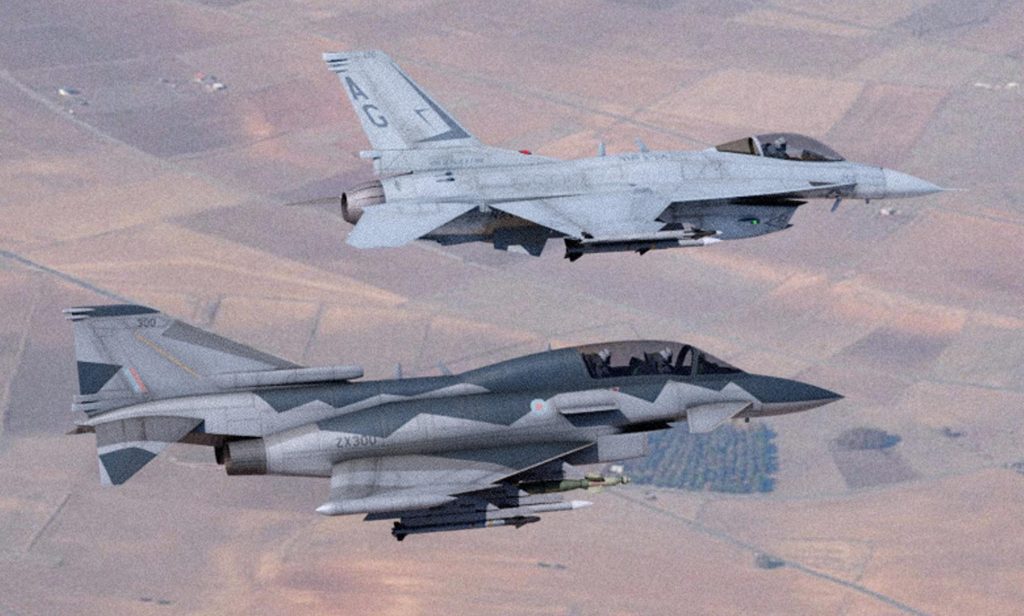
The Europhantom’s primary missions are achieving air superiority and intercepting enemy aircraft. Initially, AIM-7 Sparrow guided missiles are used to engage targets beyond visual range, while AIM-9 Sidewinders provide short-range air-to-air capability. Later, the integration of new European missiles developed under joint NATO programs is planned.
For maneuvering air combat and ground attack, the aircraft is equipped with an internally mounted 27 mm cannon. External hardpoints allow it to carry conventional aerial bombs, unguided rockets, and additional fuel tanks. British and Italian variants also receive equipment for employing precision-guided air-to-ground weapons.
Compared with the American Phantom, the new aircraft is intended to have somewhat lower weight, improved performance at high angles of attack, and more advanced equipment. However, its advantages in terms of flight range, payload, and operating efficiency depend on the particular variant.
The complexity of the design remains a serious limitation. Two engines, two crew members, and additional aerodynamic surfaces increase maintenance requirements. Consequently, the Europhantom cannot become an inexpensive mass-produced fighter comparable in cost to lighter single-engine aircraft.
Technical Specifications of the EF-4K
Estimated specifications for the first production variant in this alternative-history scenario.
- Developing countries — United Kingdom, West Germany, Italy.
- Manufacturer — Europhantom Industries international consortium.
- Type — multirole supersonic fighter.
- First flight — 1973.
- Entry into service — 1977.
- Crew — 2.
- Length — approximately 18.5 m.
- Wingspan — approximately 11.5 m.
- Maximum takeoff weight — approximately 26,000 kg.
- Powerplant — 2 Rolls-Royce Spey engines with afterburners.
- Maximum speed — estimated at approximately Mach 2 at high altitude.
- Service ceiling — approximately 17,000 m.
- Primary armament — guided air-to-air missiles.
- Cannon armament — 1 × 27 mm aircraft cannon.
- Additional armament — guided and unguided aviation weapons.
- Aerodynamic configuration — swept wing, canards, and conventional horizontal tail surfaces.
The figures given are approximate. They do not refer to a real aircraft development program and have not been verified by aerodynamic calculations or flight testing.
Modernization and Further Development
By the late 1970s, it becomes clear that the original Europhantom design requires modernization. The main improvements concern onboard equipment, the control system, and the powerplant.
In the early 1980s, the EF-4K Block 2 variant appears, featuring an improved radar, digital computing systems, and new electronic countermeasures equipment. At the same time, engineers begin introducing a more advanced electronic flight control system, allowing more effective use of the three-surface aerodynamic configuration.
The most substantial changes are planned for the propulsion system. Specially developed European engines are expected to provide improved fuel efficiency and simplify operation. However, their introduction requires modifications to the air intakes, internal systems, and rear fuselage, effectively making the upgraded aircraft a separate subvariant.
By the mid-1980s, the Europhantom remains one of the most important fighters in several European NATO countries. Its development is accompanied by a gradual transition to new weapons and improvements in electronic equipment.
At the same time, the modernization potential of the basic design is gradually being exhausted. Increasing equipment weight, growing demands for maneuverability, and the appearance of new American and Soviet fighters force European countries to consider an aircraft of the next generation.
Impact on the European Aviation Industry
The main result of the EF-4K program is the establishment of lasting international cooperation in combat aircraft development. Britain, West Germany, and Italy gain experience in jointly designing airframes, engines, onboard equipment, and aviation weapons.
Unlike in actual history, where the principal result of cooperation between the three countries was the Tornado strike aircraft, the alternative program is primarily focused on developing a fighter. This determines a different direction for the development of European aviation technologies.
The success of the Europhantom allows work on modern flight control systems, radar equipment, and air combat weapons to begin earlier. At the same time, abandoning the Tornado program creates a gap in specialized strike aviation, which individual countries are forced to address through other means.
By the late 1980s, the consortium begins researching a future fighter with improved aerodynamics, more advanced engines, and digital flight controls. In this alternative chronology, the new program becomes a direct continuation of the Europhantom project.
Thus, the European aviation industry develops its own expertise in designing modern fighters considerably earlier than in actual history.
Instead of an Afterword
The EF-4K Europhantom represents an example of an alternative development path for European military aviation, in which the use of an American technological foundation makes it possible to accelerate the creation of an indigenous multirole fighter.
Despite the unusual nature of such a program, its underlying assumptions appear reasonably plausible. Britain did indeed possess experience adapting the Phantom to European engines, West Germany and Italy were interested in replacing aging aircraft, and international cooperation was already regarded as the principal means of preserving Europe’s aviation industry.
At the same time, creating such an extensively redesigned aircraft during the first half of the 1970s would have required substantial financial and technical resources. Introducing a new aerodynamic configuration while maintaining a short development schedule would have been a particularly difficult challenge.
Therefore, the Europhantom’s entry into service in 1977–1978, followed by an extended modernization program, appears to be the most plausible scenario.
Ultimately, the greatest value of the program might not have been the aircraft itself, but the experience accumulated during its development. Having mastered joint production and the development of new aviation systems, European countries would have been able to move toward creating a fully independent next-generation fighter as early as the 1980s.
And in that case, the Eurofighter Typhoon familiar to us today might either have appeared considerably earlier in a different technical form or never have existed at all, having been replaced by an entirely different European fighter.
Sources
- https://www.reddit.com/r/ImaginaryAviation/comments/1xwdt8e/ef4k_europhantom_by_me/
- https://www.raf.mod.uk/what-we-do/our-history/air-historical-branch/regional-studies-post-coldwar-narratives/developments-in-air-defence-1945-1970/
- https://panavia-tornado.com/History/overview.htm
- https://archives.nato.int/uploads/r/null/1/4/145704/0045_NATO_Facts_and_Figures_1981_ENG.pdf