Japan’s Answer to the Valkyrie. How the Mitsubishi-Messerschmitt MM-170 Raijin Supersonic Strategic Bomber Became the Terror of the Pacific

In the mid-1960s, the United States Air Force introduced the North American B-70 Valkyrie supersonic strategic bomber, capable of reaching speeds of approximately 3,000 km/h. Its appearance came as a tremendous shock to the military leadership of the Japanese-German bloc. American aircraft could now carry out nuclear strikes with near impunity, remaining beyond the reach of most fighter aircraft.
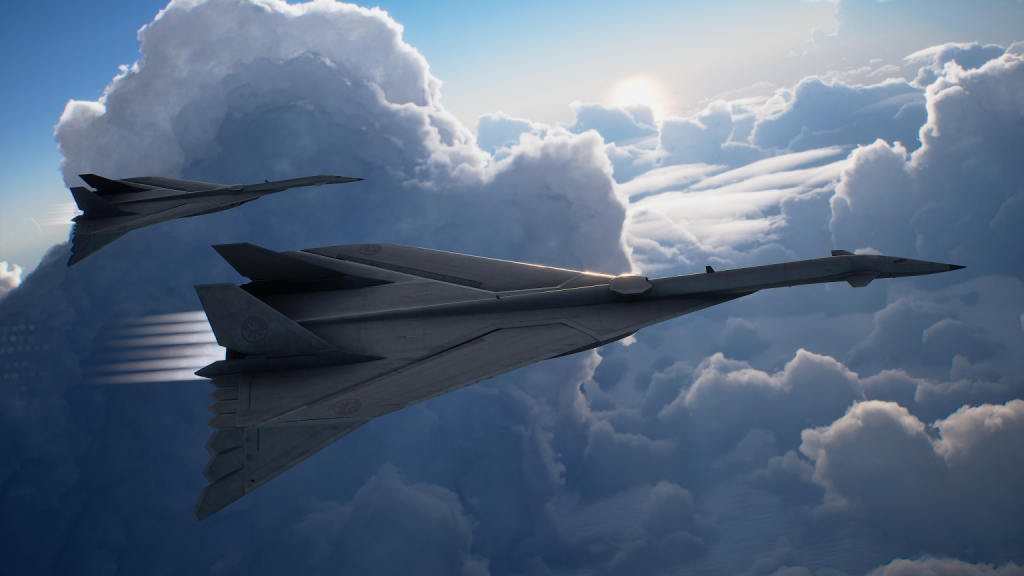
The response was the Mitsubishi-Messerschmitt MM-170 Raijin, an enormous six-engine bomber with variable-geometry wings, capable of reaching almost three times the speed of sound. It was named after the Japanese god of thunder, a name that perfectly suited the appearance and capabilities of the new aircraft. But how had Germany and Japan become allies in a Cold War against the Soviet Union and the United States?
A World in Which Germany Never Invaded the Soviet Union
The point of divergence occurred in 1941. Instead of attacking the Soviet Union, the German High Command decided to continue its offensive in the south, seeking to capture the oil fields of the Middle East and advance toward India.
After defeating British forces in Egypt, German armored formations advanced through Palestine, Iraq, and Iran. Meanwhile, the Imperial Japanese Army, advancing from Southeast Asia, reached India’s eastern borders.
In 1943, the advance units of the two armies met in central India, effectively dividing Britain’s Asian possessions between them.
This change in the geopolitical situation produced entirely different consequences. The United States never imposed a complete oil embargo on Japan, and Tokyo consequently refrained from attacking Pearl Harbor. Germany, meanwhile, never went to war against the Soviet Union.
By the late 1940s, two opposing blocs had emerged: the Japanese-German Axis, which controlled much of Europe and Asia, and the Soviet-American Alliance, established to contain its expansion.
During the 1950s, both sides acquired nuclear weapons. The resulting arms race gradually developed into a confrontation involving strategic bombers, missiles, and air defense systems.
The American Valkyrie Changes the Rules of the Game
In 1965, the United States Air Force received its first production B-70 Valkyrie bombers. These enormous aircraft, powered by six jet engines, could fly at altitudes exceeding 20 kilometers at three times the speed of sound.
In actual history, the B-70 program was canceled in 1961, and only two experimental XB-70 aircraft were built. In our alternative world, however, the prolonged confrontation with the Japanese-German Axis forced Washington to bring the aircraft into full-scale production.
The appearance of the Valkyrie caused considerable alarm in Tokyo and Berlin. Contemporary interceptor fighters struggled to engage such a target, while developing an effective air defense system required enormous expenditures.
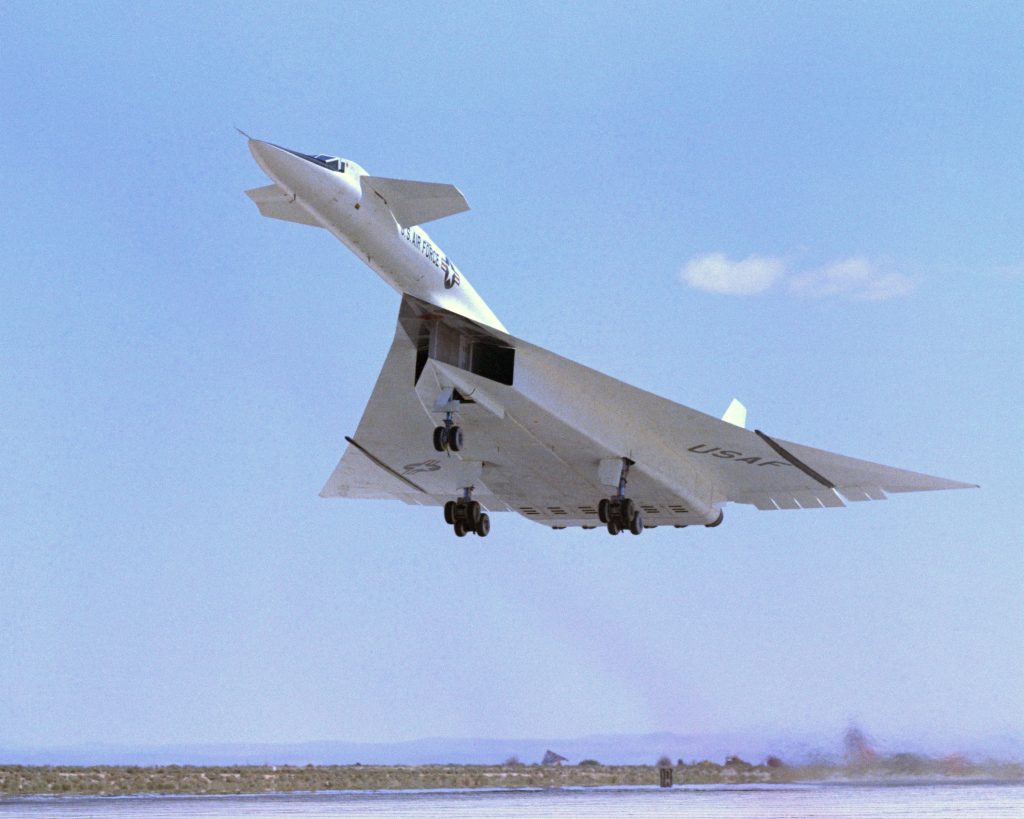
North American XB-70 Valkyrie
In 1966, Germany and Japan signed an agreement to jointly develop a strategic bomber capable of countering the American aircraft. The Mitsubishi-Messerschmitt Corporation was established specifically for this program, combining German expertise in high-speed aviation with Japanese achievements in electronics and materials science.
The project received the designation MM-70 and, within the Japanese military aviation designation system, became the MM-170 Raijin.
An Aircraft Unlike Any Other
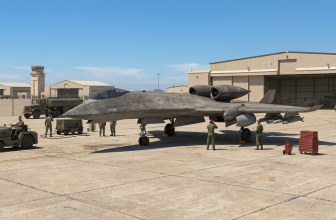
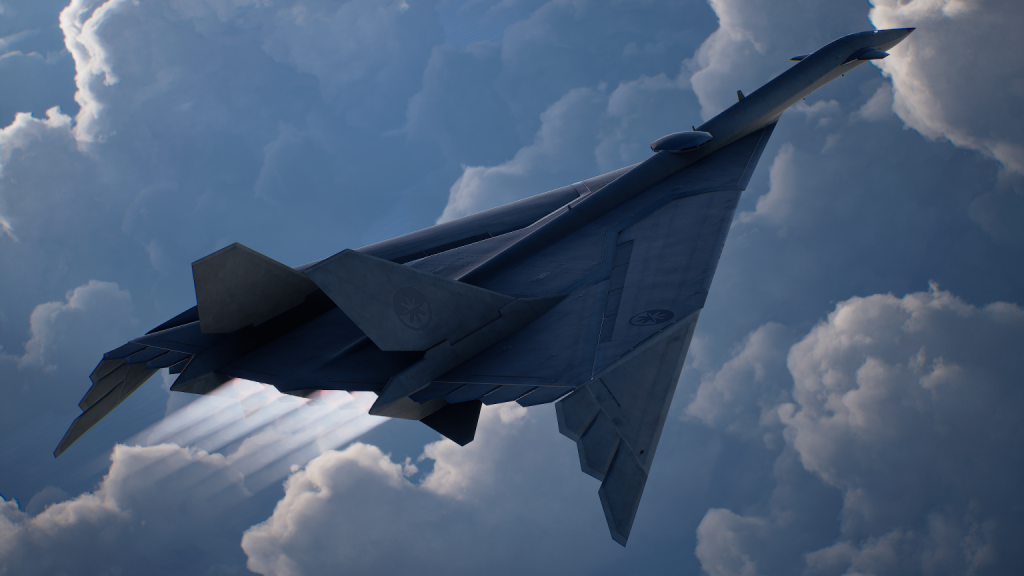
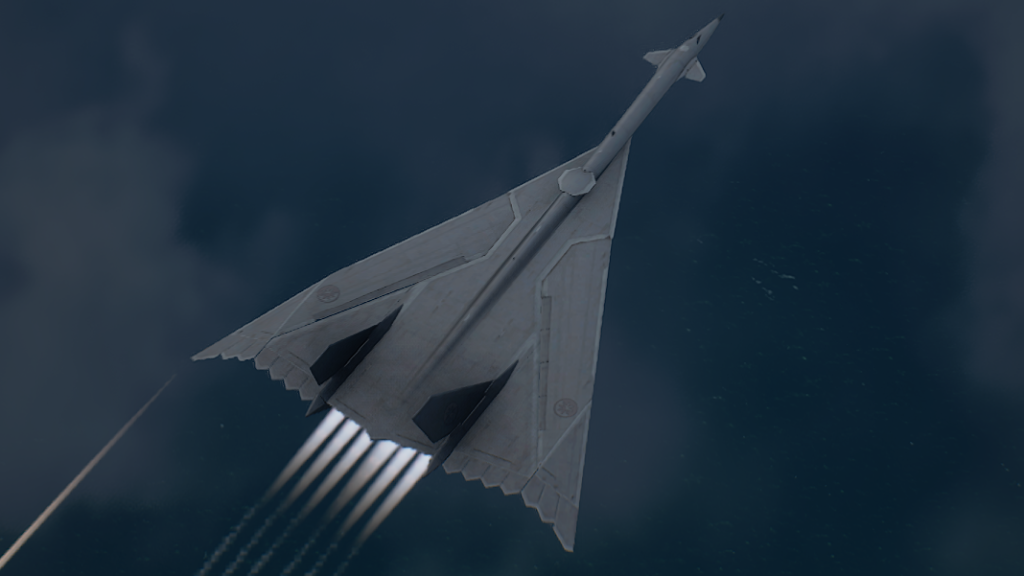
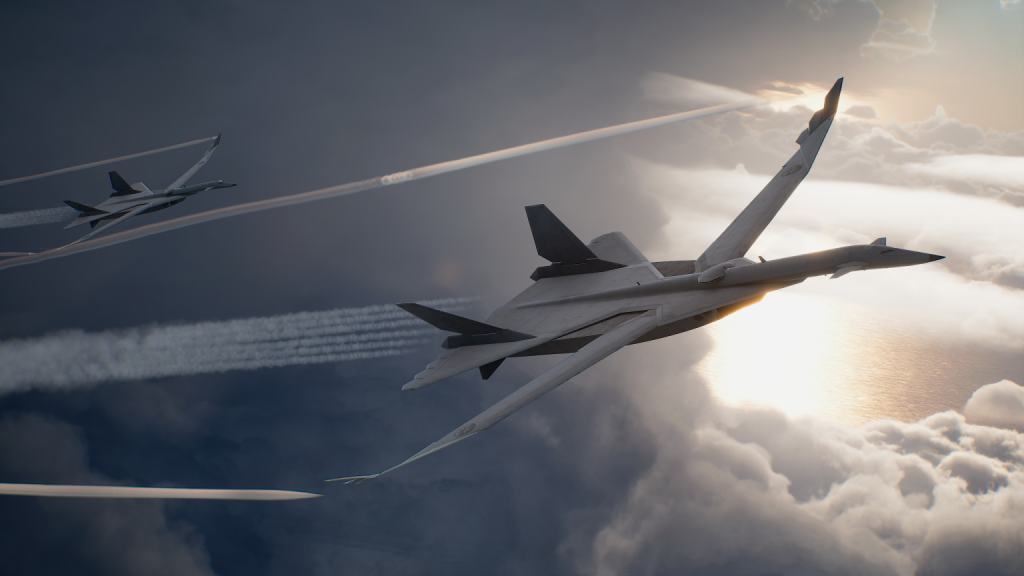
The designers decided against simply copying the American Valkyrie. The new bomber’s most distinctive feature was its combination of a delta-shaped main lifting wing with movable outer wing panels capable of changing their sweep angle.
At high speeds, the outer panels swept backward, reducing aerodynamic drag. During takeoff and landing, they moved to a less swept position, improving the wing’s lift characteristics.
Additional forward horizontal control surfaces provided pitch control, while the two vertical stabilizers featured adjustable installation angles.
Six powerful turbojet engines were installed in the rear fuselage. Particular attention was paid to the heat resistance of the structure, since prolonged flight at approximately Mach 3 caused intense aerodynamic heating.
Initially, the designers hoped to achieve a speed of 3,500 km/h. However, calculations showed that this was an excessively ambitious target for an operational aircraft of the late 1960s. Consequently, the design team settled on a calculated cruising speed of Mach 2.7.
The Long Road to the Skies
The first MM-70 prototype was completed at Mitsubishi’s Nagoya factory in the summer of 1971. A substantial proportion of its components were manufactured by German companies, while final assembly took place in Japan.
On October 3, 1971, the aircraft made its maiden flight.
Testing immediately revealed serious shortcomings. The most dangerous were vibrations affecting the movable outer wing panels and overheating of certain components during prolonged supersonic flight.
Refinement of the aircraft took almost four years. During this period, new heat-resistant alloys were introduced, the engines were improved, and an automatic flight control system was developed.
In the summer of 1975, the third prototype exceeded 3,000 km/h for the first time, and assembly of the initial limited production batch began the following year.
In 1978, the MM-170 Raijin officially entered service with the Imperial Japanese Air Force.
Technical Specifications of the MM-170 Raijin
Proposed specifications of the 1978 production bomber:
-
Crew — 4.
-
Length — 78 m.
-
Wingspan — 34 to 54 m.
-
Height — 16 m.
-
Maximum takeoff weight — 320 tonnes.
-
Engines — 6 × Mitsubishi-Messerschmitt MMJ-30.
-
Maximum thrust per engine — 170 kN with afterburner.
-
Cruising speed — 2,850 km/h (Mach 2.7).
-
Maximum speed — approximately 3,100 km/h.
-
Service ceiling — 22,000 m.
-
Flight range — 10,000 km in economical subsonic flight.
-
Combat radius — up to 3,500 km with a mixed flight profile.
-
Maximum combat payload — 25 tonnes.
-
Armament — nuclear and conventional aerial bombs, later supplemented by long-range cruise missiles.
Technical Features
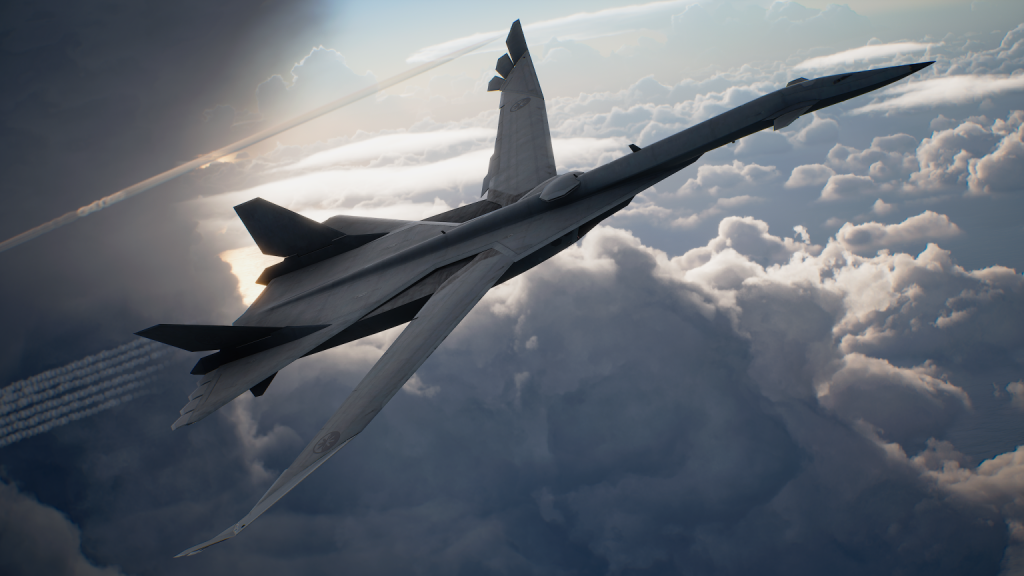
The most distinctive feature of the MM-170 Raijin was its unique aerodynamic configuration, developed through the combined efforts of Japanese and German engineers. Although variable-sweep wings were no longer considered a revolutionary idea by the mid-1960s, the Mitsubishi-Messerschmitt designers went considerably further, creating a complex system for controlling the geometry of the aircraft’s lifting surfaces.
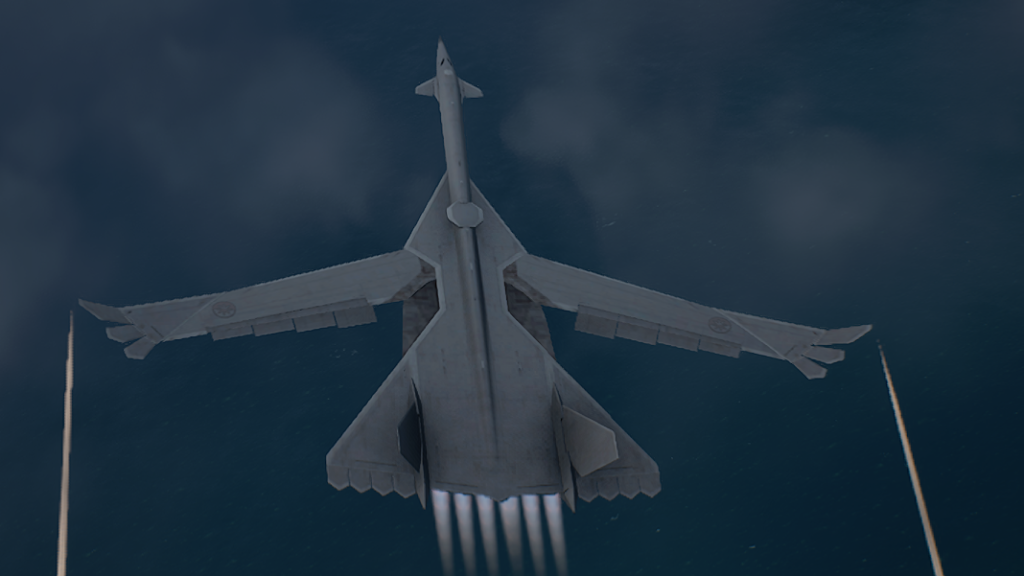
In addition to conventional pivoting outer wing panels, the aircraft featured movable wingtips resembling the spread feathers of a bird. These relatively small aerodynamic surfaces could change their positions independently of one another, providing additional stability and controllability at low speeds.
The system played a particularly important role during takeoff and landing. The enormous bomber, weighing more than 300 tonnes, required extremely long runways, which severely restricted the number of airfields suitable for its operation. The movable wingtips, working together with the wing’s high-lift devices, improved the aircraft’s low-speed characteristics, increased control effectiveness, and reduced the runway length required for takeoff and landing.
At supersonic speeds, these surfaces were moved into positions that minimized aerodynamic drag. The entire system was controlled automatically by an onboard computer that continuously monitored the aircraft’s speed, altitude, G-forces, and attitude.
The Raijin’s second revolutionary feature was its own long-range radar detection and aerial self-defense system. Unlike conventional strategic bombers, which relied on escort fighters and electronic warfare equipment, the MM-170 could independently detect approaching enemy aircraft and attack them from considerable distances.
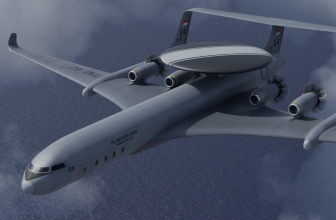
For this purpose, a small streamlined radome containing the antenna of a long-range radar system was installed on top of the fuselage. Functionally, this system turned the bomber into a miniature airborne early warning and control aircraft, although its all-round surveillance capabilities remained inferior to those of specialized AWACS aircraft.
The radar complex could detect airborne targets at long ranges, track them, and transmit guidance data to ultra-long-range air-to-air missiles. These missiles were exceptionally large and heavy, making their use by conventional fighters extremely difficult. The enormous MM-170, however, could carry several such missiles in its internal weapons bays without creating additional aerodynamic drag.
As a result, the Japanese strategic bomber became an unusual hybrid of a strike aircraft and a heavy airborne interceptor. When enemy fighters approached, the crew could attempt to destroy them before they reached the launch range of conventional air-to-air missiles, without interrupting the primary mission.
Admittedly, this concept had significant limitations. The relatively compact radar antenna could not fully replace a specialized AWACS aircraft, while the ultra-long-range missiles were most effective against targets that had been detected early and could be tracked continuously by radar. Furthermore, launching heavy missiles at extremely high speeds required complicated technical solutions.
Nevertheless, the combination of an unusual wing, six powerful engines, and a unique defensive system made the MM-170 one of the most technologically complex combat aircraft of its era. According to the Japanese designers’ concept, the Raijin was intended not merely to evade enemy interceptors through sheer speed, but to destroy them independently long before they could close to effective engagement range.
The Terror of the Pacific
The first production MM-170 bombers were delivered to Misawa Air Base in northern Japan. Later, the aircraft were stationed in Taiwan, Manchuria, and at airfields throughout Japanese-controlled territories in Southeast Asia.
The Raijin’s primary mission was nuclear deterrence against the Soviet-American bloc. The bombers regularly conducted demonstration flights over the Pacific Ocean, approaching areas monitored and defended by American and Soviet aviation.
The most famous incident involving the MM-170 occurred in 1981. Two Japanese bombers conducted an extended flight over the northern Pacific, alarming American military commanders. Several fighters were scrambled to intercept them, but the Japanese aircraft increased their speed and escaped pursuit.
Nevertheless, it gradually became clear that high speed did not guarantee invulnerability. Soviet and American surface-to-air missile systems continued to improve, while new interceptors could engage bombers with long-range missiles.
Consequently, by the mid-1980s, the MM-170 fleet began undergoing conversion into missile carriers capable of striking targets without entering the most dangerous areas of enemy air defenses.
The Most Expensive Aircraft of the Japanese Empire
Despite its impressive performance, the MM-170 proved extraordinarily expensive.
Each bomber required a specially prepared airfield, extremely complicated maintenance, and enormous quantities of fuel. The movable wing components were particularly costly to maintain because they experienced tremendous loads during supersonic flight.
A total of 64 aircraft were built between 1976 and 1986. Of these, 42 entered service with the Japanese Air Force, while the remaining 22 were delivered to the German Air Force, where they retained the MM-170 designation.
By the late 1980s, further production was deemed unjustified. The emergence of intercontinental ballistic missiles and stealth bombers gradually deprived enormous supersonic aircraft of their original advantages.
Nevertheless, the Raijins remained in service for almost another two decades. The last Japanese MM-170 was retired in 2004.
The Would-Be Master of the Skies?
The Japanese Raijin never became a weapon capable of securing decisive superiority over the Soviet-American bloc. However, its development had enormous technological significance.
The joint Mitsubishi-Messerschmitt program enabled Germany and Japan to master the production of large supersonic aircraft, sophisticated automatic flight control systems, and heat-resistant aircraft structures.
Many of these technologies were subsequently incorporated into new military and civilian aircraft.
But the most important aspect was something else. The MM-170 became a symbol of an era when the two major powers of the Axis sought to counter American technological superiority not through numbers, but by creating even more advanced weapons.
And although the Cold War in this world never escalated into a full-scale military confrontation, the enormous Raijins remained forever among the most recognizable symbols of the rivalry between the two military-political blocs.
About the Original Aircraft
In reality, the aircraft depicted does not belong to Japan or Germany. Its original name is Ladon. It is a fictional strategic bomber belonging to the Republic of Sotoa in the video game Ace Combat 8: Wings of Theve.
Within the game’s fictional universe, the aircraft possesses extraordinary capabilities, including speeds exceeding Mach 5, variable-geometry wings, and the ability to carry unmanned aerial vehicles.
As for transferring this unusual aircraft to an alternative Japanese Empire during the Cold War, giving it a new designation, technical specifications, and development history — that was entirely the idea of yours truly.